Alphabet(GOOG)

Search documents
AI投资热潮推动科技巨头加码融资 Alphabet(GOOG.US,GOOGL.US)拟发行约150亿美元高评级债券
Zhi Tong Cai Jing· 2026-02-09 14:32
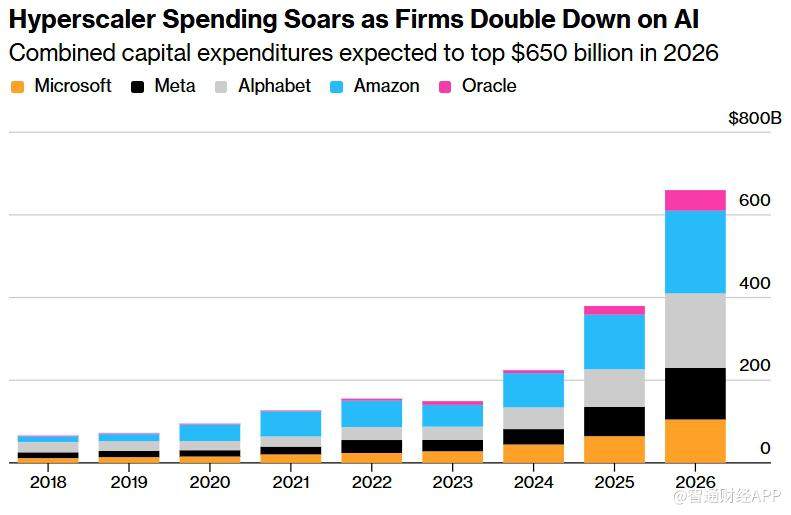
在人工智能投资热潮持续升温之际,谷歌母公司Alphabet(GOOG.US,GOOGL.US)正计划通过发行美国高评级美 元债券筹集约150亿美元。知情人士称,此举将进一步加入走在AI投资前沿的企业密集融资行列。 大型云计算公司,也被称为"超大规模云服务商(hyperscalers)",今年预计将投入超过6500亿美元用于扩建人工智 能基础设施。自去年以来,这一群体已向债券市场大量发债,并被投资者踊跃吸纳,但与此同时,市场对AI支 出过快、可能催生泡沫的担忧也在升温。 Alphabet上周表示,预计今年资本开支最高将达到1850亿美元,远超市场此前预测。同时,公司公布的第四季度 业绩也整体好于彭博汇总的分析师平均预期。 该公司上一次进入美国债市是在去年11月,当时融资175亿美元,吸引了约900亿美元认购。其中包括一只50年 期债券,这是去年美国美元计价科技企业中期限最长的一笔债券发行,且该债券在二级市场表现持续走强。同 期,Alphabet还在欧洲市场发行了65亿欧元债券。 根据测算,到2029年,人工智能、云基础设施和数据中心相关的资本支出累计规模有望达到3万亿美元。 就在上周,甲骨文(ORCL.US)通 ...


万亿美元市值蒸发后,科技巨头股表现持稳
Xin Lang Cai Jing· 2026-02-09 14:22
Group 1 - After a week of over $1 trillion in market value evaporating, tech giants' stocks remained stable in pre-market trading on Monday [1][5] - In pre-market trading, Oracle rose by 1.6% and Microsoft by 0.8%, while Metaverse fell by 0.2%, Amazon remained flat, Alphabet dropped by 0.5%, and Nvidia retreated by approximately 0.9% after a 7.9% rebound on Friday [2][5] - Amid the AI boom, major companies announced substantial capital expenditure plans for 2026, raising market concerns [6][7] Group 2 - Last week, tech giants raised their capital expenditure forecasts while ramping up investments in AI, which heightened market anxiety [7] - Amazon, Alphabet, Microsoft, and Metaverse disclosed that their combined capital expenditures for Q4 last year reached approximately $120 billion, with projections for 2026 nearing $700 billion, surpassing the GDP of countries like the UAE, Singapore, and Israel [7] - Deutsche Bank's global macro research head noted that last week was the worst for the "Fabulous Seven" since April last year, with a 4.66% drop in stock prices [7] Group 3 - Analysts expect continued growth in capital expenditures for large-scale cloud service providers [9] - Morgan Stanley reported that as the number of tokens processed monthly grows exponentially, the revenue growth rates for Google Cloud, Amazon Web Services, and Microsoft Cloud are accelerating, leading to increased commitments for data center investments [9] - Nvidia's CEO stated that the current demand for computing power remains high, justifying the substantial capital expenditures in AI infrastructure by the tech industry [8]



Alphabet looks to raise about $15 billion from US bond sale, Bloomberg News reports
Reuters· 2026-02-09 13:49
Alphabet is looking to raise about $15 billion from a U.S. high-grade dollar bond sale, Bloomberg News reported on Monday, citing people with knowledge of the matter. ...

TotalEnergies signs 15-year solar PPA with Google
Yahoo Finance· 2026-02-09 13:35
Core Insights - TotalEnergies has signed two long-term power purchase agreements (PPAs) with Google to provide 1GW of solar energy in Texas over 15 years, generating 28TWh of energy for Google's data centers [1][2] - The construction of the Wichita and Mustang Creek solar sites is expected to begin in Q2 2026, contributing to local job creation and tax revenues [1][4] - TotalEnergies' strategy focuses on delivering renewable energy solutions that support the decarbonization goals of digital players, particularly data centers [5] Company Developments - The newly established PPAs enhance previous agreements for 1.2GW secured by Clearway, a renewable energy company partly owned by TotalEnergies [2][3] - TotalEnergies operates a portfolio in the US with a total gross capacity of 10GW, including onshore solar, wind, and battery storage assets [5][6] - The agreement with Google represents the largest renewable PPA volume ever signed by TotalEnergies in the US [4]

Futures Flat, Erase Overnight Losses As Nervous Traders Brace For Key Week
ZeroHedge· 2026-02-09 13:34
Market Overview - S&P futures are unchanged, with Nasdaq futures dipping 0.2%, indicating a continuation of last week's volatility focused on AI impacts [1][4] - The yield on 10-year Treasuries rose by three basis points to 4.24% after reports of China advising banks to limit Treasury exposure, potentially increasing the risk of a "Sell America" trade [1][17] - The dollar decreased by 0.3%, which supported gold and silver prices, while Bitcoin fell below $69,000 [1][19] Corporate News - Nvidia-backed Firmus Technologies secured a $10 billion loan from Blackstone-led funds to enhance its data center rollout [3] - Cleveland-Cliffs (CLF) shares fell 3% after its fourth-quarter adjusted EBITDA missed analyst estimates [5] - Eli Lilly (LLY) shares rose 1% following its agreement to acquire Orna Therapeutics for up to $2.4 billion [5] - Hims & Hers Health (HIMS) shares tumbled 20% after announcing it would stop selling a copycat version of the Wegovy weight-loss pill [5] - Kroger Co. (KR) shares increased by 5% after naming Greg Foran as CEO [5] - Kyndryl Holdings (KD) shares plummeted 40% after reporting adjusted earnings per share that missed estimates [5] - Li Auto's ADRs (LI) fell 3% after a downgrade from JPMorgan due to competitive pressures in the EV market [5] - Monday.com (MNDY) shares dropped 14% after providing revenue guidance that missed analyst expectations [5] - SoFi Technologies (SOFI) shares gained 3% following an upgrade from Citizens [5] - Tegna Inc. (TGNA) shares rose 9% after receiving support for a proposed acquisition by Nexstar Media Group [5] Economic Data and Predictions - The upcoming employment report is expected to show a payroll increase of 69,000 in January, the best in four months, with a notable revision to previous payroll growth expected [9] - CPI data may show lukewarm results due to offsetting price changes in cars and medical commodities [9] - Goldman Sachs predicts continued choppy trading in stocks, with systematic strategies expected to be net sellers, potentially triggering about $33 billion in selling this week [4]




Alphabet Looks to Raise About $15 Billion From US Bond Sale
Yahoo Finance· 2026-02-09 13:30
Group 1 - Alphabet Inc. is planning to raise approximately $15 billion through a US high-grade dollar bond sale, contributing to a trend of increased borrowing among companies involved in the artificial intelligence investment boom [1] - Major cloud-computing companies, referred to as hyperscalers, are projected to invest over $650 billion this year to enhance AI infrastructure, with a significant amount of debt being issued to finance this expansion [2] - Alphabet is structuring its bond sale into as many as seven parts, with initial pricing discussions for the longest bond maturing in 2066 set at a premium of about 1.2 percentage points above Treasuries [3] Group 2 - In addition to the US dollar bond offering, Alphabet is also exploring potential debt offerings in Swiss francs and sterling, including a rare 100-year note [4] - The company announced plans to spend up to $185 billion this year, exceeding previous forecasts, and reported fourth-quarter earnings that surpassed analyst estimates [5] - Capital spending in AI, cloud infrastructure, and data centers is expected to reach a total of $3 trillion by 2029, according to Bloomberg Intelligence [6]
X @Bloomberg
Bloomberg· 2026-02-09 13:11
Alphabet is tapping the US high-grade bond market, adding to a borrowing spree by companies at the forefront of the artificial intelligence investment boom https://t.co/1VNli1qs5T ...

美国社交媒体成瘾案开庭审理,或成判例
Xin Lang Cai Jing· 2026-02-09 13:07
Core Viewpoint - The trial in Los Angeles against major social media companies like Facebook and YouTube is set to begin, focusing on allegations that their platforms contribute to addiction among teenagers, which could set a precedent for future cases [1][2]. Group 1: Trial Details - The trial is scheduled to last 6 to 8 weeks, with several tech executives, including Meta's CEO Mark Zuckerberg, expected to testify [1]. - This case marks the first time these tech companies will defend themselves in front of a jury, and the outcome could significantly impact their operations and interactions with young users [1]. Group 2: Allegations and Responses - The plaintiff, a 19-year-old identified as "KGM," claims that early exposure to social media led to smartphone addiction, worsening her depression and suicidal tendencies [1]. - The defendants argue that their products do not intentionally harm children and cite various safety measures they have implemented over the years [2]. - Meta has stated that the claims oversimplify the causes of mental health issues among teenagers, asserting that the factors are more complex [2]. Group 3: Broader Implications - Experts suggest that this trial is just the beginning, with hundreds of similar lawsuits expected from parents and school districts against tech companies for creating addictive social media environments [2]. - Another case in New Mexico is also set to begin, where Meta is accused of failing to protect minors from sexual exploitation, which the company denies [2].
资本支出大幅增加将对谷歌、亚马逊、元宇宙构成资金挤压
Xin Lang Cai Jing· 2026-02-09 13:00
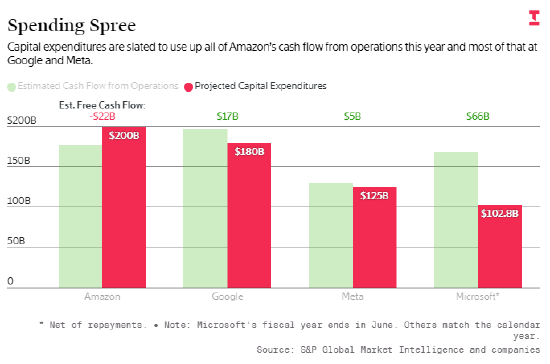
科技巨头今年计划大幅增加资本支出,这几乎会让亚马逊、谷歌和元宇宙平台的自由现金流消耗殆尽。 这将迫使其中部分企业做出艰难抉择,比如是否终止股票回购,或是进行更多举债。 好消息是,这些科技巨头均具备进一步举债数千亿美元的能力,远超其当前的负债规模。 近年来,多数科技巨头开始通过分红和股票回购的方式向股东返还现金,谷歌和元宇宙平台便是双管齐 下的代表。但今年这一举措或难以为继 —— 为扩大人工智能算力而产生的资本支出,几乎会吞噬企业 经营活动产生的全部现金。 谷歌和元宇宙平台已开始缩减股票回购规模。不过,取消分红一事却棘手得多,因为两家企业均在 2024 年才首次推出分红政策,而这一政策此前显著提升了其股票对投资者的吸引力。 亚马逊则无需面临这一难题:该公司自 2022 年起便未进行过股票回购,且从未实施过分红。但据标普 全球市场情报数据显示,亚马逊今年计划资本支出达 2000 亿美元,高于分析师预估的 1780 亿美元经营 活动现金流,这意味着与其他两家企业不同,亚马逊今年必然会出现现金消耗。 去年 11 月,亚马逊发行了 150 亿美元债券以充实现金储备,截至 12 月 31 日,其手持现金达 1230 亿美 ...
AI 广告全面入侵超级碗
3 6 Ke· 2026-02-09 12:56
Group 1 - The core observation is that AI advertisements dominated this year's Super Bowl, indicating a shift from a technical competition phase to a phase focused on public perception and relationship building with consumers [1][2] - The Super Bowl serves as a magnifying glass for industries that are wealthy, anxious, and eager to be understood, highlighting the importance of narrative in AI marketing [1][2] - The 2026 Super Bowl is seen as a pivotal moment for the AI industry, marking a significant transition in how AI is presented to the public [1][2] Group 2 - AI advertisements became a battleground for various companies, from startups to established tech giants, all trying to explain what AI is and why consumers should choose their products [2][4] - Anthropic's aggressive advertising strategy targeted OpenAI, using humor and satire to critique competitors' practices, which resonated widely on social media [2][4] - OpenAI's advertisement took a more restrained approach, focusing on a lifelong journey of knowledge and self-actualization, emphasizing the tool-like nature of AI [4][5] Group 3 - Google utilized emotional storytelling in its advertisement, portraying AI as a comforting tool for a single mother and her child, addressing public concerns about AI [8][10] - Amazon's Alexa+ employed dark humor to address fears surrounding AI, suggesting that while AI is intelligent, it is not a threat [10][11] - Meta showcased wearable AI technology through relatable scenarios, indicating a desire to integrate AI into everyday life [13][14] Group 4 - The role of AI in advertising is evolving, moving from a background tool to a central character, though the effectiveness of this shift varies [17][18] - Some advertisements, like Svedka's, faced backlash for creating a disconnect with audiences, highlighting the challenges of integrating AI into brand narratives [19][20] - Artlist's rapid production of a Super Bowl-level advertisement using AI tools signals a shift towards faster, lower-cost advertising methods, challenging traditional production timelines [20][21] Group 5 - The focus of advertisements is shifting from showcasing technology to building brand trust and addressing ethical concerns related to AI [23][24] - As AI becomes more integrated into daily life, brands must confront issues of privacy and trust, moving beyond mere efficiency [23][24] - The aesthetic of AI advertising has transitioned from futuristic themes to relatable, everyday scenarios, reflecting changing public sentiments towards AI [24][25] Group 6 - The emergence of B2B brands like Ramp in high-profile advertising indicates a blurring of lines between individual and corporate productivity in the AI era [25][26] - The 2026 Super Bowl marked a peak in AI exposure, but narratives emphasizing the wonder of AI have declined, suggesting a move towards a "post-mythical" era for AI [25][26] - The role of advertising is evolving from creating awe to providing clarity and reassurance about AI's impact on society [26][27] Group 7 - The advertisements from this year reflect a broader attempt to establish a social relationship with technology rather than merely showcasing its capabilities [27][28] - The 2026 Super Bowl is positioned as a potential turning point for how AI interacts with the world, with advertising serving as a translator in this adaptation process [28][29]