Alphabet(GOOG)

Search documents
Nebius vs. Alphabet: Which AI Cloud Stock is the Better Buy?
ZACKS· 2026-02-26 15:51
Core Insights - The rapid rise of artificial intelligence (AI) is reshaping the cloud computing sector, with AI-enabled infrastructure becoming a focal point for investors [1] - Nebius Group N.V. (NBIS) and Alphabet Inc. (GOOGL) represent two different strategies in the AI cloud market, with Nebius focusing on specialized AI cloud services and Alphabet leveraging its diversified ecosystem [1] Market Overview - The global cloud AI market was valued at approximately $121.74 billion in 2025 and is projected to grow to $1,728.40 billion by 2033, reflecting a compound annual growth rate (CAGR) of 39.3% from 2026 to 2033 [2] - This growth trend benefits both Alphabet and Nebius, but the impact is not uniform across both companies [2] Nebius Group N.V. (NBIS) - Nebius is experiencing strong demand from large accounts, hyperscalers, AI startups, and enterprise clients, with GPU usage increasing significantly [3] - The company reported an 830% year-over-year revenue increase in its core AI cloud business for Q4 2025, with adjusted EBITDA turning positive and margins expanding to 24% [4] - Nebius is expanding its AI cloud platform through organic growth and strategic acquisitions, with a strong sales pipeline projected to exceed $4 billion in Q1 2026 [5][6] - The company plans to invest between $16 billion and $20 billion in capital expenditures in 2026, which poses risks if revenue growth does not align with this capital-intensive strategy [7] Alphabet Inc. (GOOGL) - Google Cloud's revenue grew 35.8% year-over-year to $58.71 billion in 2025, driven by investments in infrastructure and AI services [10] - Alphabet is enhancing its AI capabilities with products like Gemini and advanced infrastructure, which are expected to sustain robust revenue growth [11] - The company has a diversified business model that reduces reliance on any single revenue stream, with advertising revenues rising 11.4% year-over-year to $294.69 billion in 2025 [13] - Despite strong growth, Alphabet faces challenges such as regulatory scrutiny and rising costs associated with AI investments [15] Valuation and Performance - Nebius shares are trading at a Price/Sales ratio of 50.26X, while Alphabet's is significantly lower at 9.5 [21] - Analysts have revised earnings estimates downward for Nebius, while there have been significant upward revisions for Alphabet [22][24] - Both companies currently hold a Zacks Rank 3 (Hold), but GOOGL is viewed as the stronger investment option due to its scale and diversified revenue [25]




驾驭人工智能革命的影响
GWI· 2026-02-26 15:38
Investment Rating - The report does not explicitly provide an investment rating for the industry Core Insights - The artificial intelligence revolution is reshaping the global economy and changing the way water resources are managed, necessitating a strategic framework to address the increasing water demand associated with AI [3][6] - The report identifies three core industries driving the new economy: data centers, semiconductor manufacturing, and the power generation sector [6] - By 2025, the freshwater withdrawal for the new economy is projected to reach 23.7 cubic kilometers, a 38% increase from 2020, with a further 129% increase expected by 2050 [7][24] - The water consumption intensity of the AI sector is significantly lower than that of traditional industries, with AI's industrial water withdrawal only accounting for 3.7% of the total [7][53] Summary by Sections Water Resource Management in Economic Transformation - All economic transformations require adjustments in water resource management, and the AI revolution is no exception [14] - The report emphasizes the need for a comprehensive water resource transformation to support the AI economy while ensuring community access to affordable and safe water [4][12] Water Footprint of Artificial Intelligence - AI consumes water through three main channels: on-site cooling of data centers, off-site power generation, and semiconductor manufacturing [20] - The water footprint of using AI for 30 minutes is approximately 616 milliliters, with the majority of water consumption arising from power supply to data centers [21][20] Semiconductor Industry Water Resource Risks - The semiconductor industry faces a potential increase in water demand of over 600% by 2050, primarily due to the rising intensity of water consumption in chip manufacturing [27][28] - The production of ultra-pure water for semiconductor manufacturing is highly water-intensive, requiring up to four cubic meters of raw water to produce one cubic meter of ultra-pure water [28] Data Center Water Usage - Data centers' water usage efficiency varies based on cooling technology and geographical location, with significant differences in water consumption based on operational strategies [41][58] - The report highlights that while data centers are increasing their water efficiency, the total volume of water used for cooling is expected to grow significantly due to rising energy demands [50][48] Geographic Distribution of Data Centers - New data center construction is expected to concentrate in areas already facing water resource pressures, raising concerns about future water availability [62][64] - The selection of data center locations is increasingly driven by energy availability rather than water resource considerations, leading to potential operational risks [19][62] Water-Energy Nexus - The transition to renewable energy sources is expected to reduce the upstream water footprint of data centers, as the industry shifts from high-water coal energy to lower-water natural gas and renewable sources [65]


Waymo to bring driverless cars to Chicago, eyes Midwest expansion
Fox Business· 2026-02-26 15:32
Core Insights - Waymo is expanding its autonomous ride-hailing business into Chicago, marking a significant urban expansion and a test of its technology in a complex environment [1][2][11] - The company has begun initial mapping and manual vehicle testing in Chicago, laying the groundwork for future operations [1][6] - Waymo's autonomous driving system has logged over 127 million fully autonomous miles, demonstrating a significant safety advantage over human drivers [3] Expansion Details - Chicago represents one of Waymo's largest urban expansions to date, aiming to establish a foothold in the Midwest [2][11] - The expansion is part of a broader strategy to enhance road safety and accessibility while fostering local economic growth [6][8] - The timeline for fully driverless public service in Chicago has not been disclosed [1] Safety and Community Engagement - Waymo's vehicles reportedly experience up to 10 times fewer serious injuries or worse collisions and 12 times fewer pedestrian collisions compared to human drivers [3] - Local leaders, including Kam Buckner, emphasize the importance of this initiative for safer streets and innovation in transportation [8] - Safety advocates express cautious optimism about the potential of autonomous vehicles to reduce crashes caused by impaired driving if deployed responsibly [9]

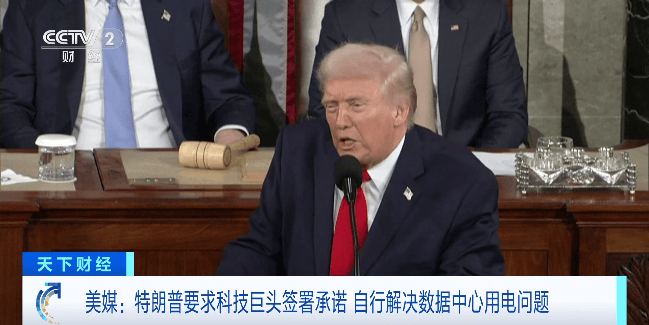
美媒:特朗普要求科技巨头签署承诺 自行解决数据中心用电问题
Sou Hu Cai Jing· 2026-02-26 15:10
(央视财经《天下财经》)在24日发表的国情咨文中,美国总统特朗普表示,他将要求科技公司自行解 决高能耗数据中心用电问题,避免影响普通民众用电价格。据美国媒体25日报道,有官员证实,多家科 技巨头将在下周签署相关文件。 一位白宫官员表示,亚马逊、谷歌、Meta、微软等科技巨头高管将在3月4日参加与特朗普的会议并签 署承诺文件,这些企业将通过购买或自建发电设施等方式,满足新建AI数据中心的用电需求,确保普 通美国人的用电价格不会随着整体需求提升而增加。特朗普曾在2024年竞选期间承诺,将在上任后18个 月之内实现电价减半。但受交通领域电气化程度提升、数据中心与工业运营用电需求激增等多重因素影 响,从去年1月到12月,美国居民用电平均价格不降反升,由每千瓦时15.94美分涨至17.24美分,涨幅约 为8%,明显高于整体通胀率。有统计显示,美国接下来计划建设的数据中心约为680个,其中部分超大 型数据中心的耗电量足以供数百万个家庭日常使用。 不过也有分析认为,目前电力成本上涨的主要压力来自输电、配电等环节,而不是发电;即使科技巨头 自备发电设施,能源价格能否降低也存在许多变数。例如,这些公司依然要依赖电网来输送或获取 ...

1 Top Quantum Computing Stock to Buy in 2026
Yahoo Finance· 2026-02-26 15:05
Core Viewpoint - The share prices of small quantum computing companies have surged recently, but investor sentiment has turned cautious due to concerns over tech stock overexposure, geopolitical risks, and tariffs. A recommended strategy for investors is to consider Alphabet as a stable investment in the quantum computing space. Group 1: Alphabet's Position in Quantum Computing - Alphabet is making significant advancements in quantum computing, having released the Willow chip in 2024, which reduces quantum computing error rates substantially [5] - The company is progressing through a defined roadmap with six milestones, currently at the third milestone, aiming to build a large, error-corrected one-million-qubit quantum computer [6] - Alphabet's established presence in technology allows it to invest heavily in emerging tech without needing immediate returns, as evidenced by its financial success with $2.87 in earnings per share and $102 billion in sales for Q3 2025 [7] Group 2: Alphabet's Broader Technological Leadership - Alphabet is a leading player in artificial intelligence (AI), with 750 million monthly active users of Google Gemini and a recent multibillion-dollar deal to provide the AI model for a new version of Apple's Siri [8] - In the autonomous vehicle (AV) sector, Alphabet's Waymo self-driving car service is operational in six U.S. cities and plans to expand to over a dozen by the end of the year, positioning itself well to capitalize on the opening commercial market [9]

“一小时内完成了三年战略规划”——谷歌云生态公司CEO谈AI落地
Sou Hu Cai Jing· 2026-02-26 13:51
Core Insights - The discussion highlights the transition of enterprise AI from a novelty phase to a stage where it can deliver tangible business results, emphasizing the importance of data integrity for AI effectiveness [2][3] - Promevo, as a Google Cloud Premier Partner, focuses on helping businesses implement AI solutions effectively, showcasing a successful case study with Gold Bond [5][8] Group 1: AI Implementation and Challenges - The CEO of Promevo, Karthik Kripapuri, identifies data silos as the primary obstacle to AI's potential, rather than computational power or model capabilities [3][4] - He emphasizes the need for a unified data source within organizations to enable AI models to provide actionable insights [3][4] Group 2: Trust in Google AI - Kripapuri explains why enterprises prefer Google over open-source models, citing the need for managed services and the "gray box" feature of Google’s Vertex AI, which allows for adjustable model transparency [4][5] - The ability to control data sovereignty and intellectual property protection is crucial for building trust with enterprise clients [4] Group 3: Successful Case Studies - The Gold Bond case illustrates a successful AI adoption path, achieving 70% employee engagement through a structured approach that includes setting quantifiable KPIs and involving business leaders [5][6] - Promevo's internal AI applications have led to significant operational efficiencies, such as automating financial processes, allowing teams to take time off during critical periods [6][8] Group 4: Innovative Practices - Promevo encourages a bottom-up approach to AI implementation, allowing employees to propose and develop solutions, which fosters a culture of innovation [6][8] - The company has integrated learning time into its schedule, promoting continuous education and internal hackathons to drive AI use cases [6][8] Group 5: Strategic Planning Efficiency - Promevo utilized AI to streamline its strategic planning process, completing a three-year strategic alignment in just one hour, demonstrating the efficiency gains from AI integration [7][8]

国信通信·行业专题报告:数据中心互联技术专题:AI变革推动OCS新技术快速发展
Guoxin Securities· 2026-02-26 13:02
Investment Rating - The report maintains an "Outperform" rating for the industry [2] Core Viewpoints - Optical Circuit Switch (OCS) technology enables direct switching of optical signals between fiber ports without optical-electrical-optical (O/E/O) conversion, significantly reducing latency and power consumption, with potential power savings of over 30% for AI computing clusters and data center interconnect systems [3][4][92] - The OCS market is expected to grow rapidly, with a projected market size exceeding $2.5 billion by 2029, driven by increasing demand for AI data centers and enhanced customer penetration [4][79] - OCS technology has four main technical routes: MEMS, liquid crystal, piezoelectric, and silicon waveguide, with MEMS being the fastest to commercialize, primarily led by Google [4][14][92] Summary by Sections 1. OCS as a New Photonic Interconnect Technology - OCS technology avoids traditional bandwidth bottlenecks and power losses associated with electrical switching, offering high bandwidth capacity and low latency [3][13] - The four main technical routes for OCS are MEMS, liquid crystal, piezoelectric, and silicon waveguide, each with different cost, performance, and technical difficulty trade-offs [14][92] 2. OCS Applications for AI Data Centers - Google has been at the forefront of developing ASIC chips, with the TPU reaching its seventh generation, indicating a strong push towards integrating OCS technology in data centers [51][64] - The TPU architecture utilizes OCS technology to interconnect thousands of TPU chips, enhancing performance and efficiency [64][71] 3. OCS Industry Chain Company Layout - Various companies are positioned within the OCS industry chain, including Silex, Tengjing Technology, and Zhongji Xuchuang, each focusing on different aspects of OCS technology and components [83][84] - Companies like Lumentum and Coherent are key suppliers for MEMS and liquid crystal OCS solutions, indicating a robust supply chain for OCS technology [4][14][84] 4. Investment Recommendations - The report suggests focusing on companies within the OCS supply chain, particularly those with deep collaborations with leading global firms, such as Zhongji Xuchuang and Guangxun Technology, as they are expected to benefit from the growth in OCS technology [4][90]


美股盘前要点 | 英伟达季绩及指引双双超预期!特斯拉中国“变相降价”促销
Ge Long Hui· 2026-02-26 12:37
Group 1 - US stock index futures showed slight increases, with Nasdaq futures up 0.04%, S&P 500 futures up 0.1%, and Dow futures up 0.11% [1] - Major European indices rose, with Germany's DAX up 0.51%, UK's FTSE 100 up 0.12%, France's CAC up 0.95%, and the Euro Stoxx 50 up 0.42% [1] Group 2 - Nvidia reported a record Q4 revenue growth of 73% year-over-year, reaching $68.1 billion, with strong guidance for Q1 and expectations for chip revenue to exceed $500 billion [1] - Nvidia's CFO stated the company has been approved to export a small quantity of H200 chips to China, but has not yet generated any revenue from this [1] Group 3 - Apple has finalized orders for LPDDR5X chips from Samsung's DS division for the iPhone 17 series, with prices increasing by 100% [2] - Alphabet has restructured its robotics software subsidiary Intrinsic back under Google, enhancing its focus on physical AI [1] Group 4 - Tesla has introduced a five-year zero-interest financing plan in China, effectively lowering vehicle prices [2] - Eli Lilly's Orforglipron has shown superior results in blood sugar control and weight loss compared to semaglutide in Type 2 diabetes trials [2] - AMD and Nutanix are collaborating to develop an open full-stack AI infrastructure platform [2] - SK Hynix and SanDisk have initiated a global standardization process for high-frequency flash memory [2] Group 5 - Toyota reported a 4.7% year-over-year increase in global vehicle sales for January, totaling 822,577 units [2] - JD.com has launched a "100 Billion Supermarket" channel, planning to invest over 20 billion in product subsidies over the next three years [2] - Stellantis reported a 2% decline in revenue year-over-year to €153.5 billion, with a loss of €22.3 billion attributed to electric vehicle business write-downs [2] - Salesforce's Q4 revenue grew 12% year-over-year to $11.2 billion, but organic subscription revenue guidance for the new fiscal year fell short of expectations [2] - Zoom Communications reported mixed Q4 results, with Q1 adjusted profit guidance below expectations [2] - Synopsys reported a 65% year-over-year revenue increase in Q1, reaching $2.41 billion, but lowered its profit guidance for the current fiscal year [2] - Paramount's Q4 revenue of $8.15 billion exceeded expectations, but the loss per share widened to $0.52 [2] - Baidu's Q4 revenue grew 5% quarter-over-quarter to ¥32.74 billion, with AI computing subscription revenue soaring 143% year-over-year [2] - Trip.com reported a 21% year-over-year revenue increase in Q4, reaching ¥15.4 billion, with non-GAAP profit of ¥3.48 billion, both exceeding expectations [2]


从登月计划到工业落地:谷歌机器人战略的收缩与反击
美股研究社· 2026-02-26 12:34
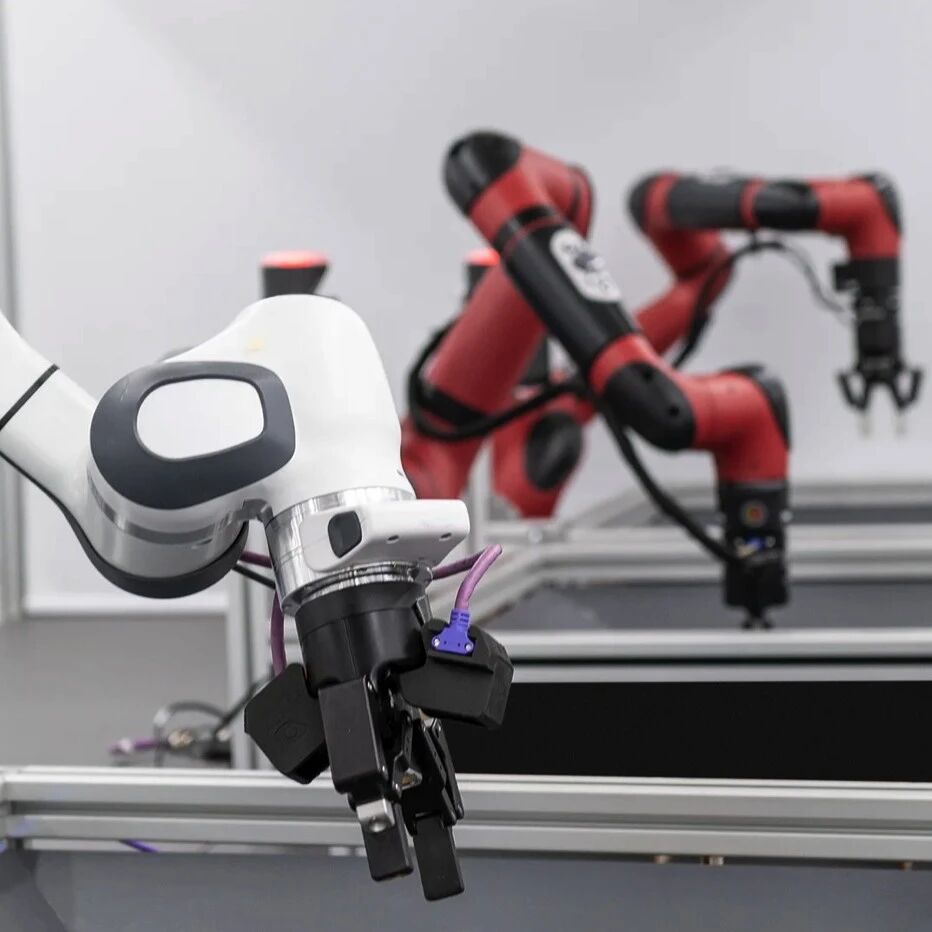
Core Viewpoint - The article discusses Google's strategic decision to reintegrate its robotics software company, Intrinsic, back into its core operations, marking a shift from an experimental approach to a focus on core strategic capabilities in robotics and AI [1][6][15]. Group 1: Strategic Shift - Google's reintegration of Intrinsic signifies a strategic contraction and resource reallocation, responding to the need for a more focused approach in the competitive landscape of AI and robotics [12][15]. - The move reflects a recognition that merely relying on cloud-based algorithms is insufficient for establishing dominance; physical integration of AI capabilities is essential [3][10]. Group 2: Competitive Landscape - In the robotics sector, Amazon and Tesla have established significant commercial scale, with Amazon leveraging warehouse robots for logistics efficiency and Tesla focusing on humanoid robots for manufacturing and service industries [8][9]. - Google's previous strategy was fragmented, lacking a clear commercial path, but the reintegration of Intrinsic indicates a shift towards viewing robotics as a practical application of AI capabilities rather than a distant goal [8][12]. Group 3: Technological Integration - Intrinsic's core product, Flowstate, aims to simplify programming complexities in robotics, allowing users to create applications without extensive coding, positioning it as a potential "Android system" for robotics [5][6]. - By reintegrating Intrinsic, Google can leverage its advanced AI models, enhancing the capabilities of robots to understand natural language and perform complex tasks, thus transforming the competitive landscape [6][13]. Group 4: Future Opportunities - The integration of Flowstate with Google's AI models could enable robots to evolve from mere executors of tasks to intelligent agents capable of understanding and planning actions based on natural language instructions [13][15]. - The article emphasizes that the next phase of AI competition will occur in physical environments, where the ability to integrate AI with real-world applications will be crucial for success [9][10].
Hidden AI Costs? Big Tech Hyperscalers Hold $662 Billion In Off-Balance-Sheet Data Center Leases: Report - Amazon.com (NASDAQ:AMZN), Blackstone (NYSE:BX)
Benzinga· 2026-02-26 12:02
Core Insights - The race to build AI infrastructure has resulted in significant financial obligations for tech giants, with long-term data center lease commitments not yet classified as current liabilities, thus not appearing on balance sheets under GAAP [1] Group 1: Financial Commitments - By the end of 2025, companies are projected to have accumulated $969 billion in total undiscounted future lease commitments, which will pressure traditional accounting metrics as these leases take effect [2] - The unrecorded $662 billion in lease commitments represents approximately 113% of the combined adjusted debt of the five hyperscalers [3] Group 2: Lease Terms and Equipment Lifespan - The shift towards shorter lease terms is driven by the shorter lifespan of AI hardware, which typically lasts only four to six years compared to the traditional 10–15 years for data center leases [4] - To make shorter lease terms viable for landlords, these deals are often supported by substantial off-balance-sheet guarantees from tenants [4] Group 3: Accounting Concerns - There are allegations that some companies may be overstating the useful life of their AI hardware to delay expenses and avoid impacting current earnings, despite rapid technological changes [5]