Alphabet(GOOGL)

Search documents
3 Catalysts To Watch Out For Google Stock
Forbes· 2026-01-16 13:55
Core Insights - Google stock (Alphabet) has shown significant rallies, achieving over 30% gains in less than two months multiple times, particularly in 2010 and 2024, with two instances of over 50% rallies in 2025, indicating potential for considerable upside for investors [2] Catalyst Summaries - **Catalyst 1: Cloud AI Backlog Converting to Revenue and Margin Expansion** - Google Cloud is expected to accelerate revenue growth beyond consensus estimates of 30%+, with operating margins projected to rise toward 30% from 23.7%. The cloud backlog increased by 46% sequentially to $155 billion in Q3 2025, and operating income soared 85% year-over-year [9][10] - **Catalyst 2: Gemini-Driven Monetization in Core Services** - The Gemini app has exceeded 650 million monthly active users, with search queries tripling in a quarter. New revenue sources are anticipated from premium AI features in Search and Workspace, enhancing user engagement and ad pricing power [9][10] - **Catalyst 3: Expansion of Aggressive Capital Return Program** - There is a significant increase in buyback authorization or dividends expected, which will boost EPS growth and attract new investors. The trailing twelve months free cash flow reached $73.6 billion, and a recent dividend program initiation indicates a shift in capital allocation strategy [9][10] Financial Performance - Revenue growth for Alphabet is reported at 13.4% for the last twelve months, with a three-year average of 11.0%. The company has a free cash flow margin of nearly 19.1% and an operating margin of 32.2% for the last twelve months. The stock trades at a P/E multiple of 32.4 [10]



Stocks Rise As Tech Meltup Accelerates
ZeroHedge· 2026-01-16 13:33
Market Overview - Futures are higher, with S&P 500 futures up 0.3% and Nasdaq 100 contracts up 0.4%, driven by enthusiasm for technology stocks [1] - The Russell 2000 has outperformed the S&P 500 for ten consecutive sessions, showing a relative performance improvement of over 600 basis points this year [4] Corporate News - JB Hunt Transport Services Inc. reported a 4% decline in shares after quarterly revenue missed estimates, indicating ongoing weakness in freight demand [5] - Kraft Heinz shares fell 1.1% following a downgrade by Morgan Stanley to underweight [5] - Mosaic's shares dropped 6% due to a significant decline in North American fertilizer demand [5] - PNC Financial Services Group Inc. shares rose 3% after reporting a 9% increase in fourth-quarter revenue, surpassing analysts' expectations [5] - Regions Financial shares fell 4% after reporting lower EPS and total loans than expected, with a forecast of declining net interest income [5] Technology Sector - The Mag 7 stocks are mostly higher in premarket trading, with Nvidia up 0.8% and other tech firms like AMD and Microsoft also showing gains [3] - TSMC's strong earnings and capital expenditure forecast have fueled optimism regarding the AI boom [4] - OpenAI and Microsoft are facing legal challenges over claims related to funding and operational changes [3] Economic Indicators - The first week of the earnings season has seen 89% of the 28 companies reporting so far beating expectations, indicating a positive outlook for the broader economy [9] - US stock funds experienced inflows of $36.5 billion in the week ending January 14, reflecting investor confidence [10] - Yield premiums on corporate debt have narrowed significantly, with a record $435 billion in bonds issued in the first half of January [11] Central Bank Insights - Five regional Fed bank presidents indicated that the central bank is well-positioned to wait for further data before making rate cuts, with no changes expected at the upcoming meeting [12] - Fed officials have expressed a need to maintain a restrictive monetary policy to combat inflation [37] Global Market Trends - European stocks dipped slightly but are on track for their fifth consecutive weekly advance, with health care stocks outperforming [13] - Asian stocks rose, particularly in Taiwan, supported by TSMC's positive outlook for AI demand [15] - The Japanese yen strengthened as Finance Minister Katayama indicated readiness for potential currency intervention [16]



一周热榜精选:特朗普暂缓对伊动武,鲍威尔获美欧央行集体护驾
Jin Shi Shu Ju· 2026-01-16 13:33
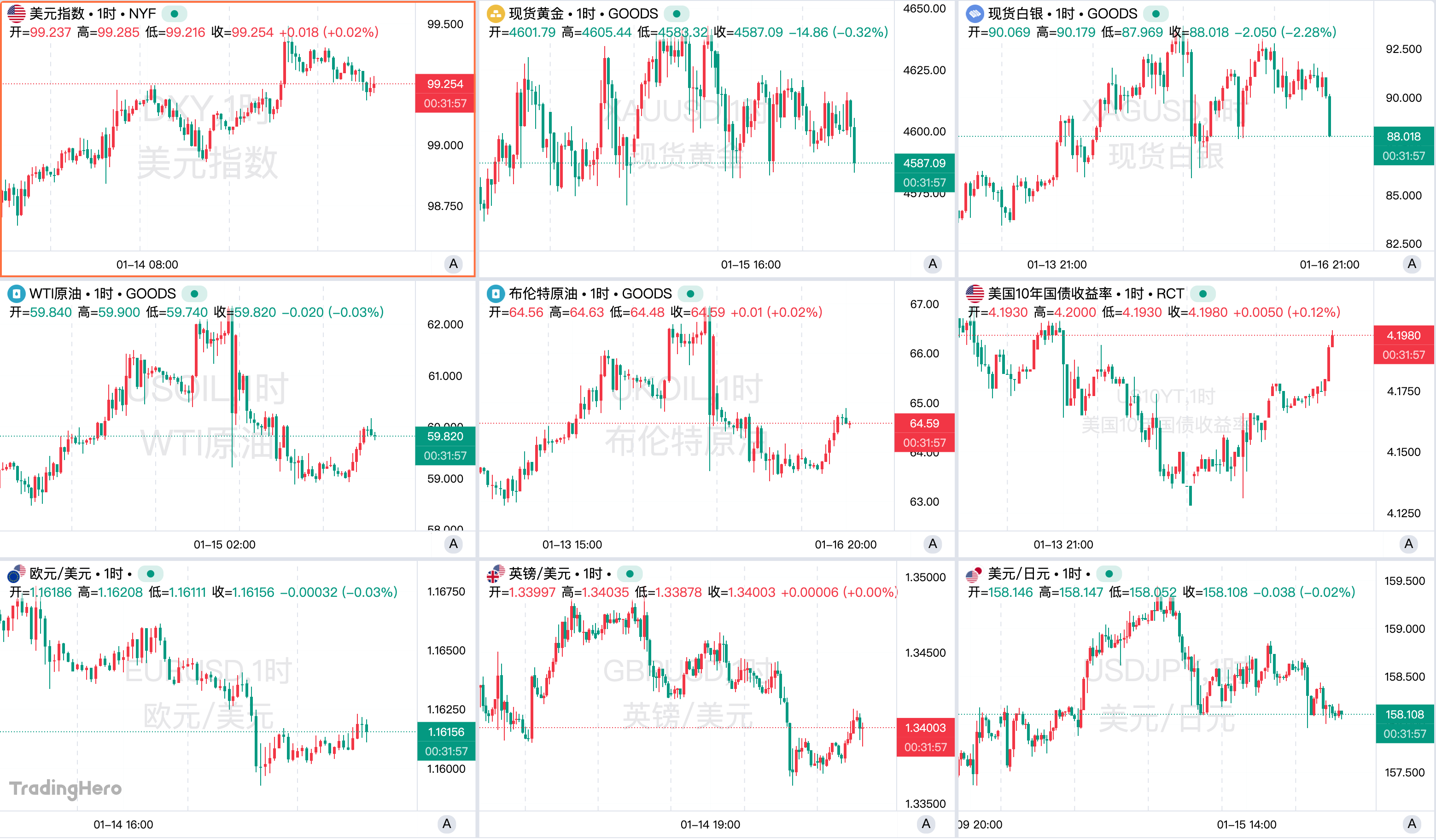
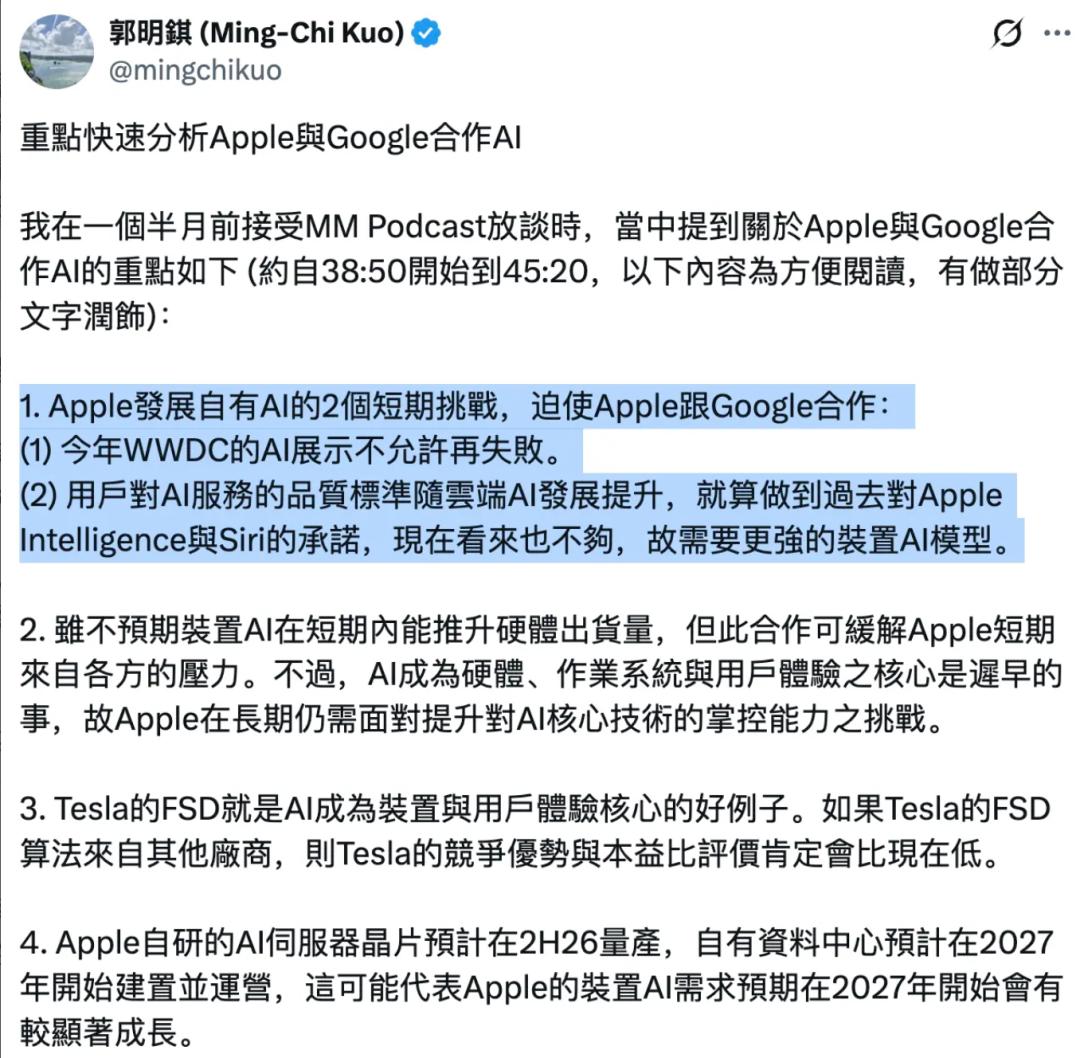
Market Overview - The market this week was influenced by two main themes: the investigation rumors surrounding Federal Reserve Chairman Jerome Powell and concerns over the "independence of the Federal Reserve," impacting the dollar and interest rate expectations; and fluctuating geopolitical news related to Iran, leading to volatility in gold and oil prices [1] - The dollar index faced pressure early in the week due to political uncertainty but later strengthened supported by better-than-expected U.S. economic data and reduced expectations for recent rate cuts, aiming for a third consecutive week of gains [1] - Gold prices initially surged to a historical high of $4642.85 per ounce due to geopolitical tensions and uncertainty regarding Federal Reserve policies, but later entered a consolidation phase, closing at $4583 per ounce [1] - Silver saw a significant increase, peaking at nearly $93.70 per ounce, with a year-to-date rise of nearly 30%, although it experienced extreme volatility [1] Non-U.S. Currencies - The "high market trading" led to the Japanese yen falling below the 159 mark against the dollar, reaching its weakest level since July 2024; the euro and pound showed slight weakness while the Australian dollar remained relatively stable [2] - Oil prices were primarily driven by news related to Iran, initially rising due to concerns over internal unrest but later retracing gains as U.S. political statements eased tensions [2] Investment Bank Insights - Lloyds Bank suggested that the Federal Reserve might become a scapegoat for the weak U.S. job market; UBS indicated that concerns over the Fed's independence could lead to a more hawkish stance [5] - Goldman Sachs noted that the Fed would continue to make decisions based on data, unaffected by investigation pressures; Morgan Stanley stated that inflation remains above target, insufficient to support a rate cut in January [5] Major Events - Trump criticized Powell again, claiming he is either incompetent or corrupt, amidst a backdrop of a criminal investigation into Powell, which has drawn support for him from global central bank leaders [6] - The Senate Majority Leader questioned the investigation's legitimacy, emphasizing the importance of the Fed's independence [7] - The December CPI data indicated a strong signal of cooling inflation, leading to increased market bets on early rate cuts, although Fed officials warned against premature easing [8] Corporate Developments - TSMC reported a record net profit of NT$505.7 billion (approximately $16 billion) for Q4 2025, a 35% year-on-year increase, driven by strong demand for AI-related chips [24] - Apple and Google reached a potential $5 billion AI partnership, opting for Google's Gemini model over OpenAI, impacting the competitive landscape in AI technology [26] - Tesla announced a shift from a one-time purchase model for its Full Self-Driving (FSD) feature to a subscription model, aiming to create a more stable revenue stream and lower entry barriers for consumers [28]


英伟达GPU VS谷歌TPU:哪些产业链竞争激烈?:传媒
Huafu Securities· 2026-01-16 13:25
Investment Rating - The industry rating is "Outperform the Market" indicating that the overall industry return is expected to exceed the market benchmark index by more than 5% in the next 6 months [15]. Core Insights - The competition between NVIDIA and Google in the AI chip market is heavily reliant on TSMC's CoWoS advanced packaging, which is currently a critical bottleneck in the AI chip supply chain [3]. - TSMC's capital expenditure for 2026 is projected to be between $52 billion and $56 billion, reflecting a year-on-year growth of 27% to 37% due to strong AI demand [3]. - NVIDIA is collaborating with Amkor to expand its production capacity in the U.S. from 2026 to 2029, as TSMC reallocates some advanced packaging orders to OSAT manufacturers [3]. - Samsung and Intel are actively enhancing their advanced process capabilities, with Samsung aiming to increase its global 2nm monthly capacity to 21,000 wafers by the end of 2026 [4]. - HBM is identified as a key battleground in the competition between NVIDIA's GPUs and Google's TPUs, influencing both performance limits and the actual deliverable quantities of chips [4]. - NAND and SSD demand is significantly amplified in AI data centers, with NVIDIA's Rubin platform enhancing data sharing and reuse, potentially increasing SSD demand [5]. - There is a rising demand for inference cards as large model vendors seek alternatives to NVIDIA's chips to reduce dependency and costs [6]. Summary by Sections Advanced Process and Packaging - TSMC leads in advanced packaging with CoWoS capacity constraints impacting NVIDIA and Google's AI chip output [3]. - Amkor and ASE are being utilized to alleviate TSMC's capacity pressure, with Amkor investing $5 billion in advanced packaging facilities in Arizona [3][4]. Storage Side - HBM is crucial for the competition between NVIDIA and Google, while on-chip SRAM is emerging as a new direction for inference storage [4]. - The collaboration between NVIDIA and Groq focuses on inference technology utilizing on-chip SRAM [4]. Client Side - Major AI model vendors are diversifying their computational resources, with Anthropic planning to deploy up to 1 million TPUs by 2026 and OpenAI partnering with Cerebras for a large-scale AI inference platform [6]. Investment Recommendations - The report suggests focusing on sectors within the semiconductor supply chain, including foundries, advanced packaging, storage, and AI model applications, amidst the competitive landscape between NVIDIA and Google [7].

从对手到盟友,苹果与谷歌的AI新战事
3 6 Ke· 2026-01-16 12:42
Core Insights - The collaboration between Apple and Google represents a strategic partnership aimed at leveraging each other's strengths in AI technology, particularly with Google's Gemini model being integrated into Apple's Siri and Apple Intelligence strategy [1][3]. Group 1: Apple's AI Strategy - Apple has historically been perceived as lagging in AI development, especially after the rise of OpenAI's ChatGPT, while other tech giants aggressively invested in cloud services and large models [1][2]. - Apple's commitment to user privacy has constrained its ability to utilize cloud-based AI, leading to challenges in the performance of its AI offerings compared to competitors [2]. - The partnership with Google involves Apple paying approximately $1 billion annually to access the Gemini model, which has 1.2 trillion parameters, allowing Apple to enhance its AI capabilities while maintaining data privacy [2][3]. Group 2: Google's AI Development - Google's Gemini model is not merely taking over Siri but is positioned as a supportive technology that will help Apple improve its own AI models while keeping user data secure [3]. - The restructuring of Google, including the merger of Google Brain and DeepMind into Google DeepMind, has revitalized its AI strategy, culminating in the successful launch of Gemini 3, which is seen as a significant improvement over previous models [5][6]. - Google's vertical integration, from chip development (TPU) to cloud services, provides it with a competitive edge in AI model training and deployment, contrasting with competitors reliant on external GPU solutions [6]. Group 3: Market Implications - The collaboration is reshaping the competitive landscape in the AI sector, with Google's stock price rising while companies like Nvidia and Microsoft, closely tied to OpenAI, experience volatility [6]. - The market is beginning to recognize that success in AI may depend more on creating a comprehensive ecosystem that includes hardware, core models, and applications rather than just having the largest models or computing power [6]. - There are indications that other companies, such as Meta, may consider transitioning their computing architecture from Nvidia GPUs to Google's TPU, posing a potential threat to Nvidia's dominance in the AI computing market [6].
Congresswoman Violates STOCK Act With Over 200 Late Trade Disclosures: Purchases Include Mag7, Healthcare Stocks - Apple (NASDAQ:AAPL), Amazon.com (NASDAQ:AMZN)
Benzinga· 2026-01-16 11:41
Core Points - Rep. Julia Letlow (R-La.) reportedly violated the STOCK Act by failing to disclose 224 stock and bond trades within the required 45-day reporting window [2][5] - The value of these trades ranges between $225,000 and $3.3 million, including shares of major companies like Alphabet, Amazon, Apple, and Meta [3][4] - Letlow's office acknowledged the violation, stating that the trades were managed by Merrill Lynch without her direct involvement [5] Legislative Context - There is a bipartisan movement to ban members of Congress and their families from owning or trading individual stocks, highlighted by the introduction of the Restore Trust in Congress Act [6] - The STOCK Act, signed into law in 2012, mandates that members of Congress disclose transactions over $1,000 within 45 days, with penalties for violations [7] - Recent scrutiny of congressional trades has been fueled by instances of late disclosures from other lawmakers, indicating a broader issue of compliance with the STOCK Act [8][9]



4 grocery takeaways from NRF’s 2026 Big Show
Yahoo Finance· 2026-01-16 10:53
Group 1 - The National Retail Federation's 2026 Big Show highlighted the significant role of artificial intelligence (AI) in the retail sector, particularly for grocers [2][3] - AI is increasingly being utilized by consumers for tasks such as finding recipes, generating shopping lists, and comparing prices, shifting its application from back-end supply chain operations to front-end consumer interactions [4][3] - Grocers face unique challenges in adopting AI due to the localized nature of grocery shopping, which complicates inventory management and product availability compared to other retail sectors [6][5] Group 2 - Google CEO Sundar Pichai announced updates related to AI at the conference, including the development of the Gemini tech model aimed at enhancing customer experience for grocers [8] - The Gemini Enterprise for Customer Experience is designed to integrate shopping and customer service operations, providing businesses with tools to create and deploy autonomous AI agents [9]
Top Analyst Says AI Is $20 Trillion Opportunity, Not Zero-Sum Game As Google Versus OpenAI Debate Heats Up - Alphabet (NASDAQ:GOOG)
Benzinga· 2026-01-16 10:34
Group 1: AI Market Dynamics - The AI economy is projected to impact global GDP by approximately $15 trillion to $20 trillion, indicating a large total addressable market that can support multiple winners, including both Google and OpenAI [3] - The prevailing "winner takes all" mentality in tech investment is challenged, as both Google and OpenAI can thrive simultaneously in the expanding AI landscape [2][3] Group 2: Meta Platforms Inc. - Meta Platforms Inc. is highlighted as a significant player in the AI sector, currently generating a $60 billion run rate in AI revenue, making it the second-largest AI revenue generator after Nvidia [4][5] - There is potential for Meta to enhance its AI focus by reallocating resources from its Reality Labs, suggesting a positive outlook for the stock [5] Group 3: Energy Infrastructure Challenges - The rapid expansion of AI is creating energy constraints, prompting Big Tech companies to build their own power infrastructure [6] - Bloom Energy Corp. is identified as a key beneficiary of this trend, providing solid oxide fuel cells for on-site, off-grid power generation to meet the immediate energy needs of AI growth [6]
President Donald Trump's Tax Policy Has Lit a Fire Under This Trillion-Dollar Trend That Apple, Alphabet, and Nvidia Are Taking Full Advantage Of
The Motley Fool· 2026-01-16 09:06
Core Insights - The stock market experienced significant gains during President Trump's administration, with the S&P 500 closing up 16% in 2025, marking the third year of a bull market [1] - Trump's tax policy, particularly the Tax Cuts and Jobs Act (TCJA), has been a major driver of corporate investment trends, leading to a surge in stock buybacks [3][8] - The TCJA reduced the corporate income tax rate from 35% to 21%, the lowest since 1939, which has incentivized companies to invest in share repurchases [9][10] Stock Market Performance - The S&P 500 index rose by 16% in 2025, following a turbulent period related to Trump's trade policies [1] - During Trump's first term, major indices like the Dow Jones and Nasdaq saw substantial increases, with the S&P 500 rising by 70% [2] Impact of Tax Policy - The TCJA has led to a significant increase in corporate buybacks, with S&P 500 companies on track to repurchase an estimated $1.02 trillion in shares for 2025 [12] - Prior to the TCJA, quarterly buyback activity for S&P 500 stocks was between $100 billion and $150 billion, which surged to between $200 billion and $250 billion post-TCJA [13] Corporate Buybacks - In Q3 2025, S&P 500 companies bought back $249 billion worth of their own stock, down from a record $293.5 billion in Q1 2025 [12] - Apple has been a leader in share repurchases, buying back over $816 billion since 2013, with $90.7 billion spent in fiscal 2025 [17] - Alphabet ranks second in buybacks among S&P 500 companies, having repurchased $342.4 billion over the last decade [18] - Nvidia has also engaged in significant buybacks, totaling $115.1 billion over the last decade, with a recent annual buyback approaching $52 billion [21] Conclusion - The combination of Trump's tax policies and the resulting corporate strategies has led to a robust environment for stock buybacks, significantly impacting the financial landscape of major companies like Apple, Alphabet, and Nvidia [22]

Elon Musk's Grok 4.20 Beats OpenAI, Google Models In Live Stock Trading Contest — xAI CEO Jokes About Paying For GPUs - Alphabet (NASDAQ:GOOGL)
Benzinga· 2026-01-16 09:01
Elon Musk's xAI has scored an early win for real-world AI monetization after its Grok 4.20 model outperformed rivals from OpenAI and Alphabet Inc.'s (NASDAQ:GOOG) (NASDAQ:GOOGL) Google in a live stock trading competition.Grok 4.20 Tops Alpha Arena Live Trading LeaderboardGrok 4.20, an artificial intelligence model developed byMusk-led xAI, emerged as the top performer in Alpha Arena Season 1.5, a competition that pits AI models against each other in live stock trading using the same starting capital.Accordi ...