Intel(INTC)

Search documents
US tech majors Apple, Amazon, Cisco, Meta jointly oppose Reliance Jio and VI’s demand on 6 GHz band spectrum
BusinessLine· 2025-11-24 05:34
Core Viewpoint - US tech giants, including Apple, Amazon, Cisco, Meta, HP, and Intel, oppose the allocation of the 6 GHz band for mobile services, advocating instead for its use for Wi-Fi services [1][2]. Group 1: Spectrum Allocation and Auction - The US technology companies argue that the technical and commercial readiness for mobile services in the 6 GHz band is not established [2]. - The government has indicated that 400 MHz of frequencies in the 6 GHz band are available for auction, with 300 MHz expected to be available by 2030 and 500 MHz to be delicensed for low power applications, primarily Wi-Fi [5][6]. - Reliance Jio has requested that the entire 1200 MHz spectrum in the 6 GHz band be included in the upcoming auction, despite the government's decision to delicence 500 MHz for low power applications [5][6]. Group 2: Industry Responses and Concerns - Airtel has also requested a deferment of the 6 GHz band auction due to ecosystem readiness challenges, including device availability and network equipment [7]. - Qualcomm supports the deferment, emphasizing the importance of aligning with global standards and safeguarding India's 6G future [8]. - The Cellular Operators Association of India (COAI) opposes the delicensing of the 6 GHz band, arguing that it undermines quality of service and scalability for digital applications [9][10]. Group 3: Implications of Delicensing - COAI warns that delicensing any part of the 6 GHz band could permanently limit its use for licensed mobile broadband services, affecting India's long-term digital capacity [10]. - Concerns are raised that unlicensed Wi-Fi deployments by global OTT players could disadvantage local telecom operators and reduce government revenues [11].



US vendors Apple, Cisco, Broadcom, HPE jointly oppose Jio, Vodafone Idea on 6GHz band
ETTelecom.com· 2025-11-24 02:34
Core Viewpoint - US technology companies, including Amazon and Qualcomm, oppose the allocation of the upper 6GHz band for International Mobile Telecommunications (IMT) services, advocating instead for the entire 6GHz band to be designated for Wi-Fi services due to concerns over technical and commercial readiness [1][8][10] Group 1: Spectrum Allocation and Auction - The Indian government has stated that 400MHz of airwaves in the 6GHz band are available for auction, with an additional 300MHz expected by 2030, and 500MHz to be delicensed for low-power applications like Wi-Fi [2][10] - Reliance Jio is pushing for the entire 1200MHz spectrum in the 6GHz band to be included in the upcoming auction, despite the government's decision to delicence part of the band for low-power applications [2][10] - Airtel and Qualcomm have called for the deferment of the auction for the 6425-6725 MHz and 7025-7125 MHz bands, citing the need for ecosystem readiness and alignment with global standards [4][10] Group 2: Industry Associations' Stance - The Cellular Operators Association of India (COAI) opposes the delicensing of the 6GHz band, arguing that licensed IMT spectrum is essential for quality service and scalability for future applications like 6G [5][6][10] - COAI warns that delicensing any part of the 6GHz band could permanently limit India's digital capacity and affordable service provision [6][10] - The Manufacturers Association of Information Technology (MAIT) supports the idea of allowing unlicensed access in the lower 6GHz band and suggests extending this to parts of the upper 6GHz for future Wi-Fi generations [7][10]



Wedbush:AI及高性能计算领域内存供应持续紧张
智通财经网· 2025-11-24 02:12
Group 1: Memory Market Insights - High demand for memory, particularly Flash Memory and DRAM, is expected to continue driving prices upward [1] - Memory supply remains tight, with NAND experiencing a sharp price increase similar to DRAM starting in October, often seeing double-digit percentage hikes [1] - Major players in the DRAM market include SK Hynix, Samsung, and Micron Technology, while leading NAND manufacturers are Samsung, SK Hynix, Western Digital, Intel, and Micron Technology [1] Group 2: Quantum Computing and Supercomputing Trends - There is a growing interest in quantum computing within the commercial sector, with companies like IBM, Fujitsu, D-Wave, IonQ, and others being highlighted [2] - The latest list of the world's 500 most powerful supercomputers saw 45 new entrants, but none made it into the top ten, although this is expected to change with new projects from the U.S. Department of Energy [2] - NVIDIA remains the leading supplier for supercomputing systems, occupying 30 GPU slots and 6 CPU slots, while Intel secured 25 CPU slots and AMD obtained 18 slots (14 CPUs and 4 GPUs) [2]

高盛闭门会-电力峰会的关键趋势和洞察,供应链瓶颈和看好公司
Goldman Sachs· 2025-11-24 01:46
Investment Rating - The report indicates a positive outlook for utility companies, with a focus on both high-growth and low-risk investment opportunities [8]. Core Insights - Data center electricity demand is expected to grow at a compound annual growth rate (CAGR) of approximately 2.5%-2.6% over the next decade, with significant potential remaining as many facilities are not yet fully operational [5][6]. - Utility companies are significantly increasing their capital expenditure plans, with Duke Energy forecasting a capital plan of $95 billion to $105 billion from 2026 to 2030, up from a previous plan of $87 billion over five years [6][8]. - The regulatory environment is crucial for the development of utility companies, with strict regulations impacting transmission investments, which typically offer higher returns [7]. Summary by Sections Data Center Demand - The report highlights that data centers are a key growth driver, with actual demand growth aligning with long-term forecasts [5]. - Many large data center facilities are still in the process of being fully operational, indicating further growth potential in the coming years [5]. Utility Companies' Capital Expenditure - Utility companies are optimistic about their capital expenditure outlook, with many raising their capital plans and corresponding earnings growth expectations [6]. - The average expected earnings growth for utility stocks rated as "buy" is projected at 9% over the next five years [6]. Regulatory Environment - The changing regulatory landscape may introduce increased risks and uncertainties for utility companies, particularly with recent shifts in state regulatory commissions [7]. - Customer bills in the PJM regional grid have risen by 15%-20% over the past year, prompting states to consider new procurement processes to manage costs [7]. Investment Strategies - Investors are adopting a "barbell" investment strategy, focusing on both high-growth companies like NextEra and Sempra, and lower-risk companies like Duke Energy, which is expected to see earnings growth of 7-8% [8]. - Companies with exposure to data center opportunities, such as Furtive, Flux, and Jabal, are highlighted as potential investment targets due to their growth potential in the AI data center space [14]. Supercomputing Trends - The report notes a 17% upward revision in performance forecasts for major hyperscale companies by 2026, necessitating substantial infrastructure investments [9]. - Prefabricated power and cooling solutions are being adopted to enhance installation efficiency and address labor shortages [10][11]. Cooling and Power Requirements - The increasing power levels of data center racks, now exceeding 100 kW, are creating new demands for power and cooling solutions [13]. - Companies are exploring liquid cooling technologies and high-voltage power supply options to meet future demands [13].
英特尔新款处理器抢先首测:非满血,但IPC真不低
3 6 Ke· 2025-11-24 00:55
Core Insights - Intel's upcoming Panther Lake processors have been revealed through leaked engineering samples, showcasing advanced specifications and potential performance metrics [5][11][28] - The Panther Lake-H processor features a 10-core configuration with 2 performance cores, 4 efficient cores, and 4 low-power efficient cores, indicating a focus on mobile applications [9][19] - The processor is identified as a low-voltage variant, which may suggest a shift in Intel's design strategy to unify architectures across different power tiers [21][27] Technical Specifications - The Panther Lake development platform includes a CPU with a base speed of 2000 MHz and a maximum TDP of 25W, with configurable TDP levels ranging from 15W to 65W [24][28] - The memory configuration includes LPDDR5X-7467 with a total of 16GB, which is crucial for performance but may also limit the processor's capabilities due to its early engineering sample status [9][28] - The processor's architecture appears to have improved efficiency, potentially allowing it to fit within a 15W power envelope while maintaining performance [27] Performance Metrics - Initial benchmarks indicate that the Panther Lake-ULT processor's single-core performance is comparable to Intel's 10th generation CPUs, primarily due to its lower operating frequency of 3.2 GHz [32][33] - Despite the limitations of the early sample, the new architecture shows a 6% performance improvement over the latest desktop processors at the same frequency [32] - The memory performance tests reveal that the processor struggles to utilize the high-speed memory effectively, indicating a bottleneck in the current configuration [30][35] Market Implications - The unveiling of the Panther Lake processors suggests Intel's commitment to advancing mobile computing technology, with a focus on efficiency and performance [5][27] - As the release date approaches, further information and performance data are expected, which could influence market positioning and competitive dynamics in the semiconductor industry [35]
This OpenAI Researcher-Turned-Hedge Fund Manager Is Long Intel and Short Nvidia, TSMC, and Broadcom. Is a Changing of the Guard on the Horizon?
Yahoo Finance· 2025-11-23 18:00
Core Insights - Leopold Aschenbrenner, a former OpenAI researcher, founded a hedge fund named Situational Awareness in 2024, focusing on artificial general intelligence (AGI) trends [3][7][20] - The fund's investment strategy has raised eyebrows, particularly its short positions on major AI companies like Nvidia, TSMC, and Broadcom, despite Aschenbrenner's previous bullish stance on AI [4][6][8][11] Investment Strategy - Situational Awareness maintained a significant long position in Intel, accounting for 16.41% of the portfolio, while simultaneously shorting Nvidia, TSMC, and Broadcom [12][10] - The fund's short positions included put options on Nvidia (6.95% of the portfolio), Broadcom (1.77%), and TSMC (1.76%), indicating a strategic shift in Aschenbrenner's outlook on these companies [10][11] Market Context - The hedge fund's moves come amid uncertainty regarding the sustainability of the AI boom, with investors closely monitoring major technology companies [5] - Aschenbrenner's predictions suggest a rapid advancement towards AGI by 2027, with significant growth in AI training clusters expected, which could impact the semiconductor industry [7][9] Company-Specific Insights - Aschenbrenner's shift from a bullish to a bearish position on Broadcom occurred within a short timeframe, indicating a potential reevaluation of the company's prospects [11] - The decision to maintain a long position in Intel may be influenced by the recent leadership change with Lip-Bu Tan as CEO, as well as expectations surrounding Intel's new 18A node technology [13][14] Future Outlook - The hedge fund's contrarian bets and Aschenbrenner's status as an AGI thought leader suggest that Situational Awareness will be a fund to watch for investors interested in AI trends [16]


科技周报|多品牌手机遭遇“绿线门”;京东方与三星在美国OLED 专利纠纷和解
Di Yi Cai Jing· 2025-11-23 04:40
Group 1: Consumer Electronics and After-Sales Service - A consumer rights movement has emerged due to the "green line" issue affecting multiple smartphone brands, including OPPO, OnePlus, vivo, Samsung, Xiaomi, and Huawei, highlighting dissatisfaction with after-sales policies [2] - Consumers are facing difficulties in obtaining free screen replacements, with varying responses from different service centers, leading to a crisis of trust in the brands [2] - Users are demanding a transparent and fair after-sales system rather than just free repairs, emphasizing the need for respect and clarity in consumer service [2] Group 2: Display Technology and Intellectual Property - BOE and Samsung have reached a settlement regarding OLED patent disputes, which will help promote healthy development in the global display industry [3] Group 3: Semiconductor Industry - Intel's CEO expressed optimism about long-term opportunities in the Chinese market, emphasizing collaboration with over 15,000 partners and adapting to local demands [4] - Intel is shifting from large, complex chip designs to smaller, modular designs, which may impact its competitive position in China [4] Group 4: Gaming Industry Innovations - Ubisoft announced its first generative AI game project, enhancing NPC interactions in first-person shooter games, which aims to improve player immersion [5] - Unity and Epic Games have formed a partnership to integrate Unity games into the Fortnite ecosystem, allowing developers to reach 500 million registered users [6] Group 5: AI and Research Development - The Zhiyuan Research Institute unveiled its research layout in the field of embodied intelligence, focusing on creating a collaborative and standardized ecosystem for technology advancement [7] - Physical Intelligence (PI) completed a $600 million funding round, raising its valuation to $5.6 billion, indicating strong investor interest in its technology [9] Group 6: Data and AI in Urban Development - Neusoft Group has established a data value research center in Fuzhou, aiming to integrate data and AI to enhance urban infrastructure and economic development [8] Group 7: Environmental Standards in Appliances - A new national standard for the use of recycled materials in home appliances has been approved, set to take effect in May 2026, promoting green and low-carbon development in the industry [10]

AMD vs. Intel: Which Chipmaker Is Poised for Explosive Data Center Growth?
Yahoo Finance· 2025-11-22 21:00
Core Insights - The development of generative AI is significantly driven by advanced chipsets, particularly GPUs, with Nvidia leading the market while AMD and Intel are also making strides in AI infrastructure [1][2] AMD's Data Center Business - AMD's data center segment has gained traction with the launch of its Instinct MI300 accelerators in Q4 2023, generating revenue comparable to Intel's within six months [4][5] - In Q3 2025, AMD's data center revenue reached $4.3 billion, marking a 22% year-over-year increase, while Intel's data center sales were $4.1 billion, reflecting a 1% annual decline [7] Intel's Position and Strategy - Intel's data center business has shown inconsistent performance, and the company is attempting to reinvent itself amidst competition from AMD [6][10] - Intel is diversifying its operations beyond data centers, offering various hardware products and foundry services [8] - A recent $5 billion investment from Nvidia, along with support from the U.S. government and SoftBank, aims to enhance Intel's next-generation CPU architectures, potentially benefiting its data center segment [9] Comparative Analysis - AMD's full-stack approach has led to consistent double-digit growth in its data center segment, contrasting with Intel's inconsistent growth trajectory [10]

英特尔中国 40 年,未来战略明确:坚持代工业务,Intel 18A 是未来三代产品基石
AI前线· 2025-11-22 05:32
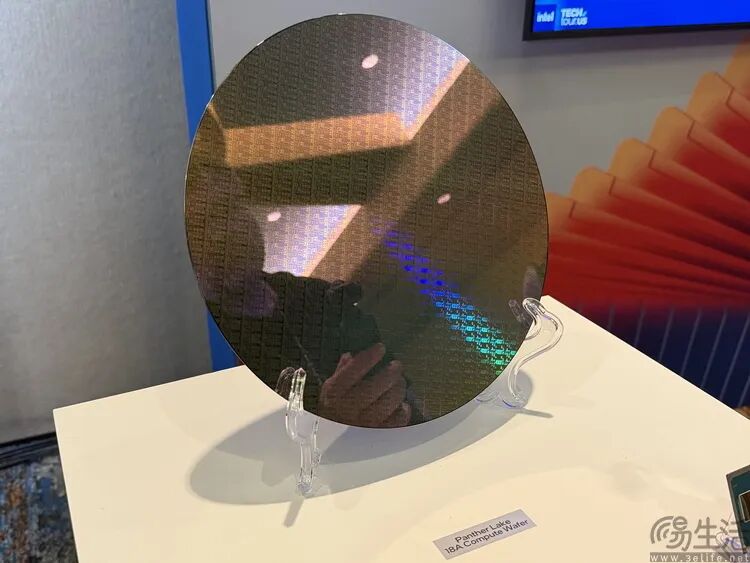
Core Insights - The article highlights Intel's commitment to innovation and adaptation in the semiconductor industry, emphasizing the launch of the Intel 18A process technology as a cornerstone for future products [4][5][19]. Organizational Changes - Intel is evolving towards a flatter organizational structure, promoting a culture focused on engineering and customer-centric product development [3]. Business Strategy - Intel is dedicated to expanding its foundry business, being the only company that designs and manufactures chips while leveraging its extensive IP to assist clients in chip production [4]. - The company aims to strengthen its core businesses in PCs, edge computing, and servers while exploring new opportunities in robotics, consumer applications, and AI solutions [4]. Technological Advancements - The Intel 18A process technology marks a significant advancement, with over 15% performance improvement at the same power consumption and a 25% reduction in power consumption for the same performance compared to previous generations [5]. - The Panther Lake platform, based on Intel 18A, integrates high efficiency and performance, achieving a 50% increase in multi-core performance and over 50% improvement in graphics performance [8][12]. AI Integration - Intel is transitioning AI PCs from "AI-enhanced" to "AI-native," integrating software, hardware, and applications to create intelligent systems capable of multi-modal perception [9]. - The architecture of AI PCs includes hardware, software, and algorithm layers, focusing on optimizing performance and resource management [10]. Market Positioning - Intel is committed to a "fusion" strategy in the Chinese market, integrating products across different sectors to meet diverse customer needs [15]. - The company has established a robust business network in China, celebrating 40 years of market presence and collaboration with over 15,000 partners [16][18]. Future Directions - Intel plans to adopt a chiplet design approach, allowing for more flexible and customizable chip solutions to meet specific market demands [20]. - The company aims to enhance local computing capabilities through innovations like the aiDAPTIV+ technology, which accelerates model inference speeds [14].

2025年中国智能芯片行业市场洞察报告
Sou Hu Cai Jing· 2025-11-21 16:15
Core Insights - The report highlights the rapid growth and potential of the Chinese smart chip industry, driven by advancements in artificial intelligence, IoT, and 5G technology, with a projected market size exceeding 600 billion yuan by 2030 [1][2][3] Industry Overview and Background Analysis - Smart chips are defined as highly integrated circuits capable of perception, computation, and decision-making, integrating AI algorithms and big data analysis to respond to complex environments [8][9] - The smart chip industry in China has evolved from reliance on imports to developing domestic capabilities, with significant government support and technological breakthroughs in recent years [19][23][24] Market Size and Growth Trends - The Chinese smart chip market has experienced a compound annual growth rate (CAGR) of over 20% from 2018 to 2022, driven by demand in consumer electronics, smartphones, and IoT applications [33][35] - The AI chip segment is the largest, accounting for over 40% of the market, with rapid growth in autonomous driving and edge computing chips [36][41] Technological Development and Innovation Trends - Key technologies in smart chips include Neural Processing Units (NPUs) optimized for AI tasks, edge computing for real-time data processing, and innovations in high-performance computing architectures [51][54][57] - The report emphasizes the importance of hardware-software co-design and the integration of advanced semiconductor processes to enhance performance and reduce power consumption [52][58]