Intel(INTC)

Search documents
5 American Companies Reshoring After Trump’s Tariffs (AAPl, GE, INTC, NVDA, WHR)
Yahoo Finance· 2025-11-02 18:52
Corporate Investment and Reshoring - The combination of President Trump's reciprocal tariffs, regulatory cuts, and tax incentives has led to over $15 trillion in US corporate investment and revitalization of US manufacturing [2] - Apple Inc. announced a $500 billion investment to reshore manufacturing of iPhones, iPads, and iMacs back to the US, projecting the creation of 2.9 million jobs maintained and 20,000 new hires across 24 facilities [7][6] - Nvidia Corp. committed $500 billion to manufacture AI chips and supercomputers in the US, ensuring the security of AI development and creating hundreds of thousands of new jobs [9][13] - Intel Corp. has pledged $100 billion to reshore semiconductor manufacturing in the US, with significant investments in Oregon, Arizona, Ohio, and New Mexico [18][15] - General Electric (GE) announced a $3 billion commitment to expand domestic manufacturing across its 11 factories, building on a previous $6.5 billion investment since 2016 [29] - Whirlpool Corp. plans to relocate production from Mexico and China back to the US, with a $490 million budget for a new washer/dryer assembly line in Kentucky, creating 800 new jobs [31][32] Industry Trends - The reshoring trend is particularly pronounced in the semiconductor sector, driven by national security concerns and the CHIPS Act, which aims to reduce dependence on foreign manufacturing [19][20] - The US semiconductor output is currently less than half that of Taiwan, highlighting the need for increased domestic production capabilities [20] - The overall trend of reshoring is seen as a response to previous decades of offshoring, with companies now focusing on bringing jobs and manufacturing back to the US [33]


Finally, Some Good News for Intel Stock Investors
Yahoo Finance· 2025-11-02 14:45
Core Insights - The U.S. government and Nvidia have made significant investments in Intel, which are aimed at bolstering its position in AI semiconductor manufacturing, leading to a notable increase in Intel's stock price [1][6]. Group 1: Company Developments - Intel has appointed a new CEO, Lip-Bu Tan, who is a veteran in semiconductor design, and has sold a stake in its subsidiary Altera for $4.46 billion to raise funds [2]. - The company has been burning cash since the end of 2022 to catch up in semiconductor design and invest in its own foundry, which is essential for competing with Taiwan Semiconductor Manufacturing [3]. - Intel has officially lost its position as the top manufacturer of advanced semiconductors, with AI spending exacerbating its challenges as data centers increasingly utilize chips from competitors like Nvidia [4]. Group 2: Financial Performance - Intel's market capitalization is currently $200 billion, significantly lower than Nvidia's approaching $5 trillion, raising questions about whether Intel stock is a buy [5]. - The company has seen its stock rise 100% this year, attributed to investments from Nvidia and the U.S. government, alongside a restructuring that includes the spin-off of Altera [6]. - Intel's legacy business generated $12.6 billion in revenue and $3.7 billion in operating income last quarter, but its foundry business only generated $4.2 billion in revenue and incurred a loss of $2.3 billion [9][10]. Group 3: Strategic Considerations - Analysts suggest that Intel may benefit from splitting its chip design and manufacturing businesses into two separate entities to alleviate conflicts of interest and improve profitability [12]. - The potential separation could allow the design business to support the foundry business financially, enabling it to scale up and attract more customers [12][13]. - Intel's stock trades at a price-to-earnings multiple of 15 when excluding the foundry business, which is considered reasonable if the company can catch up to competitors like Nvidia in the long term [14].
特斯拉董事长:若马斯克辞职,公司将任命新 CEO;文远知行CFO炮轰小马智行港股路演书造假丨Going Global
创业邦· 2025-11-02 10:36
Key Points - The article highlights significant events in the global expansion of companies, including new product launches, market share growth, and strategic investments [2][3]. Group 1: E-commerce Developments - AliExpress launched a new "Brand+" channel in the UK, offering price protection for consumers who find lower prices on competing platforms within seven days [5]. - TikTok Shop's market share in Vietnam surged to 41%, narrowing the gap with Shopee, which held 58% earlier this year [6]. Group 2: Corporate Actions and Investments - WeRide's CFO accused Pony.ai of providing false data in its Hong Kong roadshow materials, claiming that WeRide operates over 700 Robotaxi vehicles across multiple cities [8][11]. - Pop Mart opened its first 24-hour store in the Middle East at Hamad International Airport, aiming to enhance cultural exchange and attract global travelers [12]. - Sequoia China agreed to acquire Bayer's antibiotic Avelox business for between €160 million and €260 million, as the original drug's price in China has plummeted by over 95% [15]. - Ant Group invested in AI hardware developer Aide Future, expanding its footprint in the AI sector [16]. - Ant International invested in the Latin American embedded credit platform R2, targeting a $1 trillion financing gap for SMEs in the region [17][18]. - BYD partnered with Aeon in Japan to sell cars in approximately 30 commercial facilities, offering competitive pricing and promotional activities [19]. - Intel and BOE announced a collaboration to develop energy-saving display solutions for laptops, expected to be implemented in 2026 [22]. - Nvidia announced a $1 billion investment in Nokia, aiming to enhance AI-driven mobile network infrastructure [30][31].






英特尔正洽谈收购人工智能芯片初创公司SambaNova
Huan Qiu Wang Zi Xun· 2025-11-02 04:50
Core Insights - Intel is negotiating to acquire AI startup SambaNova for approximately $5 billion, aiming to rapidly build an end-to-end AI ecosystem and close the gap with leaders like Nvidia [1][5] - If the deal is finalized, it will be the largest and most strategically significant acquisition under the new CEO Pat Gelsinger [1] Company Overview - SambaNova was founded in 2017 and specializes in self-developed RDU (Reconfigurable Dataflow Unit) chips and accompanying software, which significantly enhance efficiency in AI inference scenarios compared to traditional GPU solutions [5] - The company offers an integrated AI platform that includes DataScale rack-level systems and the SambaFlow compiler, with applications in finance, healthcare, and government sectors [5] Strategic Implications - Intel believes that acquiring SambaNova will provide immediate access to a mature hardware and software stack, saving years of research and development time, and strengthening its competitive position in the AI inference market [5] - This acquisition aligns with Intel's recently announced "Crescent Island" GPU roadmap, which prioritizes AI inference as a key direction [5] - By integrating SambaNova's technology with its own manufacturing, channels, and customer resources, Intel plans to launch diverse AI solutions covering cloud, edge, and endpoint, thereby enhancing chip value and improving profit margins [5] Leadership Context - Current CEO Pat Gelsinger's investment firm, Walden International, was an early investor in SambaNova, indicating a long-standing relationship between the two companies [5] - Gelsinger has expressed intentions to accelerate AI transformation through acquisitions, and the resumption of negotiations suggests that internal obstacles may have been resolved [5]
芯片巨头,集体改命
半导体行业观察· 2025-11-02 02:08
Group 1: AI and Semiconductor Landscape - The AI wave continues to reshape the global semiconductor landscape, with computing power becoming the new oil of the era [2] - Nvidia dominates the AI training market with over 90% market share and a market capitalization exceeding $4.5 trillion, establishing itself as a leader in the semiconductor industry [2] - Competitors like AMD, Broadcom, and Intel are vying for market share, indicating a shift towards a multi-strong competitive landscape in the AI chip sector [2] Group 2: Intel's Strategic Shift - Intel has faced challenges in keeping up with competitors like TSMC in chip manufacturing and lacks competitive products in the AI market [3][4] - The establishment of the Central Engineering Group (CEG) aims to consolidate engineering talent and focus on custom chip business models, leveraging the ASIC trend [3][4] - Intel's strategy involves transforming from a pure chip manufacturer to a one-stop service provider for design, manufacturing, and packaging [4] Group 3: Intel's ASIC Business Potential - Intel's complete industry chain and IDM model provide a unique advantage in the ASIC market, allowing for a comprehensive service offering [4] - The ASIC business could position Intel as a significant service provider for large tech companies, tapping into various opportunities within the AI supply chain [4][5] Group 4: Competitive Challenges for Intel - Nvidia's recent $5 billion investment in Intel and the collaboration on custom data center products create both opportunities and competitive complexities for Intel [5] - Intel's future products may integrate Nvidia's GPU designs, raising questions about its own GPU development strategy [5][6] Group 5: Qualcomm's Aggressive Expansion - Qualcomm is aggressively entering the data center market with new AI accelerator chips, AI200 and AI250, challenging Nvidia and AMD in the AI inference space [8][10] - The AI200 system features significant memory capacity and power efficiency, positioning Qualcomm as a new competitor in the rapidly growing data center market [10][11] Group 6: Qualcomm's Strategic Focus - Qualcomm's chips are designed for inference rather than training, allowing it to avoid direct competition with Nvidia's strengths in training markets [10][12] - The company is also building a comprehensive software platform to support AI model deployment, enhancing its competitive edge in the data center space [12] Group 7: MediaTek's Entry into ASIC Market - MediaTek is emerging as a key player in the ASIC design services market, competing directly with leaders like Broadcom and securing orders from major tech companies [14][19] - The collaboration with Nvidia on the GB10 Grace Blackwell super chip highlights MediaTek's capabilities in high-performance chip design [15] Group 8: AMD's Strategic Developments - AMD is quietly developing an Arm-based APU, indicating a strategic shift towards mobile applications and the growing importance of the Arm architecture [21][22] - The company aims to explore new markets and avoid being locked out by Nvidia and the x86 ecosystem, reflecting a broader trend in the semiconductor industry [25][26] Group 9: Industry Trends and Future Outlook - The shift towards ASIC and Arm architectures is driven by the need for specialized computing power in AI applications, moving away from general-purpose GPUs [25][26] - Companies are redefining competition rules by focusing on capabilities rather than just products, indicating a decentralization of the AI chip industry [26]


自然语言简化查找专利流程,Perplexity推出新版AI检索工具;英特尔拟斥资50亿美元洽购SambaNova丨AIGC日报
创业邦· 2025-11-02 01:35
Group 1 - Hyundai Motor is collaborating with NVIDIA to build an AI factory, aiming to accelerate the development of the AI ecosystem in South Korea with an investment of approximately $3 billion [2] - Intel is reportedly in talks to acquire AI startup SambaNova for an estimated $5 billion, as part of its strategy to enhance its AI capabilities under the leadership of new CEO Lip-Bu Tan [2] - Perplexity has launched a new AI search tool that allows users to search for patents using natural language, simplifying the patent search process [3]

10家知名企业大规模裁员,涉及零售、科技行业
财富FORTUNE· 2025-11-01 13:10
Core Insights - The current job market is experiencing significant challenges, with many companies adopting a "hiring freeze" while also not laying off employees, leading to a stagnation in job creation [2] - Rising operational costs, including new tariffs and shifts in consumer spending, are cited as reasons for this trend, alongside broader corporate restructuring efforts [2] - The shift towards investment in artificial intelligence is seen as a factor that may lead to job losses, as companies prioritize infrastructure over hiring [2] Employment Market Dynamics - Federal employees face increased uncertainty due to job cuts and government shutdowns, impacting overall worker sentiment in the job market [3] - The government has paused official hiring data releases during the shutdown, but a survey indicated a surprising loss of 32,000 private sector jobs in September [4] Company-Specific Layoffs - Amazon announced a reduction of approximately 14,000 corporate positions, nearly 4% of its total workforce, as it shifts focus towards AI investments [5] - UPS has cut around 34,000 jobs as part of its business turnaround efforts, exceeding earlier predictions of 20,000 layoffs [6] - Target plans to eliminate about 1,800 corporate positions, representing 8% of its global corporate workforce, to streamline operations [7] - Nestlé is set to cut 16,000 jobs globally over the next two years as part of a cost-cutting initiative amid rising commodity costs [8] - Lufthansa Group plans to reduce 4,000 jobs by 2030, primarily in administrative roles, despite strong demand for air travel [9] - Novo Nordisk announced a layoff of 9,000 employees, about 11% of its workforce, as part of a broader restructuring effort [10] - ConocoPhillips plans to cut up to 25% of its workforce, affecting approximately 2,600 to 3,250 employees by the end of 2025 [11] - Intel is reducing thousands of jobs as it seeks to revitalize its business, with a target of reducing its core workforce to 75,000 by year-end [12][13] - Microsoft initiated layoffs affecting 15,000 employees, marking its largest job cuts in over two years, as it undergoes organizational changes [14][15] - Procter & Gamble plans to cut up to 7,000 jobs, about 6% of its global workforce, as part of a restructuring amid tariff pressures [16]



【财闻联播】这一药企巨头,裁员9000人!吉尔吉斯斯坦外交部已恢复签发电子签证
券商中国· 2025-11-01 12:46
Macro Dynamics - The Ministry of Finance and the State Administration of Taxation announced a tax policy regarding gold transactions, exempting value-added tax for members or clients trading standard gold through the Shanghai Gold Exchange and Shanghai Futures Exchange, effective from November 1, 2025, to December 31, 2027 [2] - A nationwide 1% population sampling survey has commenced, targeting approximately 5 million households and 14 million individuals to gather data on demographics, employment, migration, marriage, fertility, and housing conditions [3] Energy Sector - In September 2025, 7,218 new renewable energy projects were registered, including 32 wind power projects and 7,184 solar power projects, with a significant focus on distributed solar energy [6] - The completion of China's thorium-based molten salt experimental reactor in Gansu represents a significant advancement in nuclear energy technology, aiming to reduce reliance on imported uranium and enhance energy security [7] Financial Institutions - Zhejiang Wangshang Bank reported a total asset scale of 521.46 billion yuan as of the end of September 2025, marking a 10.7% increase from the beginning of the year, with a slight decrease in operating income but a 30.2% increase in net profit [9] Market Data - On October 31, U.S. stock indices collectively rose, with the Nasdaq up 0.61%, marking a 2.24% increase for the week and a 4.7% increase for October [11] - The Nasdaq China Golden Dragon Index rose by 0.53% on October 31, ending a five-month decline [12] Company Dynamics - Novo Nordisk's CEO announced that the company is nearing completion of its plan to lay off 9,000 employees as part of a global restructuring effort [14] - Meituan's flash sale reported significant sales growth on the first day of its Double 11 promotion, with nearly 800 brands seeing sales double compared to the previous year [15] - A land dispute involving Hainan Natural Rubber Industry Group's subsidiary has been reported, with local authorities intervening to maintain order following a conflict over land rights [16]



今年双11,聪明人都在偷偷换AI PC
量子位· 2025-11-01 03:59
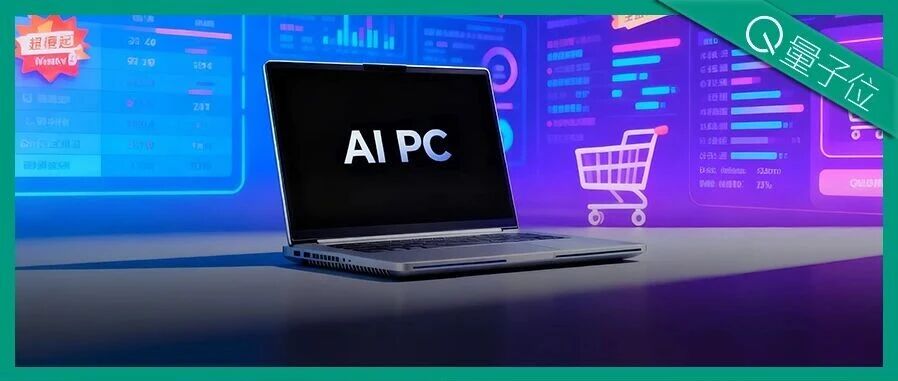
Core Insights - The article emphasizes the importance of upgrading to efficient productivity tools during the Double Eleven shopping festival, highlighting that these upgrades are investments that can save time and enhance work-life balance [1][2]. Group 1: AI PC Features - AI PCs equipped with Intel Core Ultra 200H processors offer significant performance improvements, including a 22% increase in integrated graphics performance, a 20% boost in multi-core performance, and a 21% enhancement in energy efficiency [3][28]. - These devices address common pain points for professionals, such as heavy laptops, battery life issues, and lack of internet connectivity during travel [6][9]. - The AI PC can perform various tasks offline, such as document editing and scheduling management, using AI assistants like Flowy [10][15]. Group 2: Applications and Use Cases - AI PCs are versatile, supporting not only office work but also gaming and creative tasks, allowing students to play games for over two hours on battery power while maintaining high performance [13][23]. - The integration of AI tools enhances productivity in applications like Word, Outlook, and Excel, enabling users to perform complex tasks with simple commands [16][19]. - The AI capabilities extend to video editing and knowledge management, with tools that can summarize content and convert local files into knowledge graphs [22][25]. Group 3: Market Trends and Recommendations - The article suggests that the current trend of upgrading to AI PCs aligns with the ongoing Double Eleven sales, making it an opportune time for consumers to invest in these devices [33][36]. - Recommended models include flagship lightweight laptops, all-around creative laptops, and business-oriented models, all priced around 5000-6000 yuan, catering to different user needs [34][35].
他们抛弃了HBM!
半导体行业观察· 2025-11-01 01:07
Group 1 - The core viewpoint of the article highlights the transformative impact of AI on the storage market, leading to a "super boom cycle" driven by increased demand for computing power, particularly for HBM (High Bandwidth Memory) as a key component in AI servers [2] - Major storage companies like Samsung, SK Hynix, and Micron are experiencing significant profit growth, with Samsung's Q3 net profit increasing by 21%, SK Hynix achieving its highest quarterly profit ever, and Micron's net profit tripling year-on-year [2] - The demand for traditional DRAM and NAND chips is also rising as data center giants like Amazon, Google, and Meta are ramping up purchases to enhance their AI inference and cloud service capabilities, leading to a tight supply across the storage market [2] Group 2 - Qualcomm's new AI200 and AI250 data center accelerators, set to launch in 2026 and 2027, are designed to compete with AMD and NVIDIA by offering higher efficiency and lower operational costs for large-scale generative AI workloads [4][5] - The AI200 system will feature 768 GB of LPDDR memory and utilize direct liquid cooling, with a power consumption of up to 160 kW per rack, marking a significant advancement in power efficiency for inference solutions [7] - Qualcomm's approach of using LPDDR memory, which is significantly cheaper than HBM, indicates a shift in AI storage technology, suggesting that LPDDR could become a viable alternative for inference workloads [8][13] Group 3 - The transition from HBM to LPDDR reflects a broader industry adjustment, as the number of inference workloads is expected to be 100 times greater than training workloads by 2030, highlighting the need for efficient data flow rather than just computational power [11] - LPDDR memory offers a cost advantage over HBM, with a reported 13 times better cost-performance ratio, allowing large language model inference workloads to run directly in memory, resulting in faster response times and lower energy consumption [13] - The introduction of LPDDR6, which promises higher bandwidth and lower power consumption, is expected to further enhance the capabilities of AI applications in mobile devices and edge computing [19][22] Group 4 - The increasing demand for LPDDR memory in data centers could lead to a supply crisis affecting the consumer electronics market, as major suppliers like Samsung, SK Hynix, and Micron may prioritize data center orders over smartphone production [16] - This shift could result in higher memory costs and longer delivery times for smartphone manufacturers, potentially forcing them to compromise on memory configurations or increase prices for mid-to-high-end devices [17] - The competition for LPDDR memory could create a scenario where data centers utilize mobile memory while consumers face shortages and price hikes, illustrating the paradox of technological advancement benefiting enterprise solutions at the expense of consumer interests [27][28]