Panasonic(PCRFY)

Search documents
详解松下经营变革:推动中国模式赋能全球业务,加大AI领域投资
2 1 Shi Ji Jing Ji Bao Dao· 2025-09-08 10:16
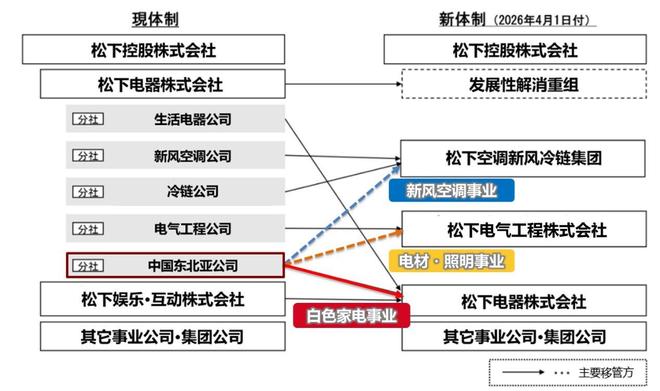
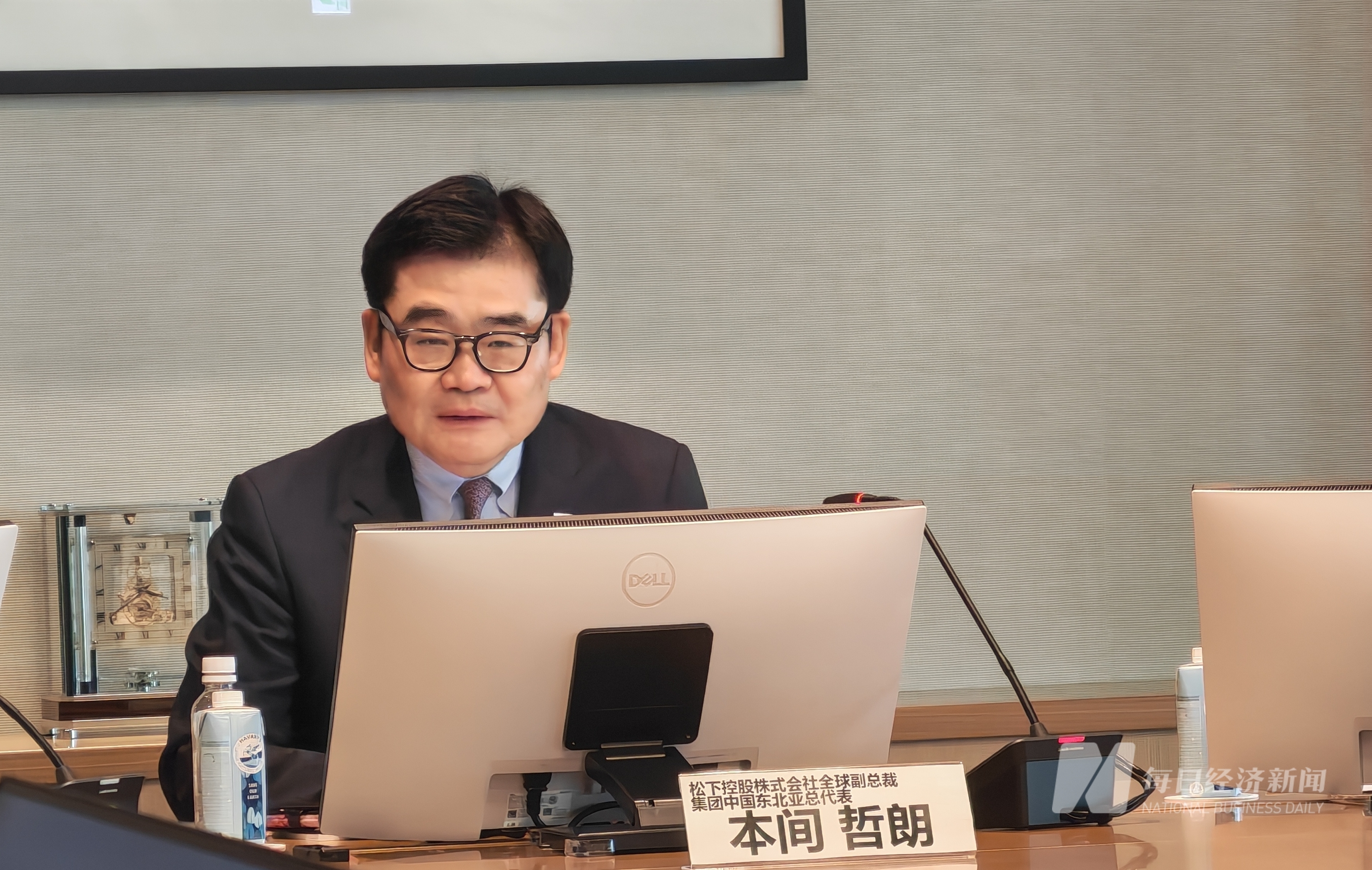
21世纪经济报道记者 吴立洋 百年日企松下,正经历一场备受市场瞩目的经营变革。 今年2月,松下控股株式会社全球CEO楠见雄规在集团经营改革说明会上发布声明,表示将启动全面组 织结构调整,松下电器将重组为松下空调新风冷链集团、松下电气工程株式会社以及新的松下电器株式 会社,三家子公司间相互独立。 如此大规模的组织调整,意味着公司的经营、生产、销售、物流等环节都面临重新整合。其中,松下为 提升在华业务效率,于2019年成立的首家本土外事业统括公司——中国东北亚公司,其组织结构和人事 管理变化也成为本次结构变革中市场关注的焦点。 近日,松下控股株式会社全球副总裁、集团中国东北亚总代表本间哲朗等松下高管在日本接受了包括21 世纪经济报道记者在内的中国媒体记者采访,介绍了松下进行经营改革的目标和进程,以及接下来在中 国市场的经营方向。 本间哲朗表示,中国不仅是制造大国、消费大国,还是创新大国、工程师大国,松下将持续扩大在中国 的投资,在中国激烈的市场竞争中锻炼自己的经营能力和产品,提升松下在全球业务中的竞争力。 (松下控股株式会社全球副总裁、集团中国东北亚总代表本间哲朗,图片来源:企业供图) 受产品升级、中国以旧换新政 ...

为求变“重仓”押注中国市场 松下控股全球副总裁本间哲朗:看好AI、能源领域,将强化现地化研发
Mei Ri Jing Ji Xin Wen· 2025-09-04 12:56
Core Viewpoint - Panasonic Group is committed to deepening its investment and operations in the Chinese market, with a focus on AI and energy sectors as key areas for future growth [1][4][8]. Financial Performance - In the fiscal year 2024, Panasonic Group achieved revenue of 84,582 billion yen (approximately 407.4 billion RMB) and a net profit of 3,662 billion yen (approximately 17.6 billion RMB), with revenue from China accounting for 24.4% of global revenue and profit from China representing 30% of the total [3]. Business Segments - The home appliances and residential equipment business accounts for about one-third of Panasonic's revenue in China, while electronic components, automation equipment, batteries, and automotive parts make up the remaining two-thirds [4]. Future Investment Directions - Panasonic plans to focus its investments on AI and energy sectors, including electric vehicle batteries, perovskite batteries, and hydrogen energy [8]. Market Expectations - Despite some Japanese companies reporting a decline in revenue in the first half of the year, over half of the surveyed companies expressed intentions to increase or maintain their investments in China [6]. Recent Developments - Panasonic is set to begin construction of a new factory in Shanghai's Fengxian District, aimed at supporting its AI, semiconductor, and electric vehicle battery teams [11]. Sales Growth - In the first quarter of fiscal year 2025, Panasonic's sales in China increased by 3% year-on-year, with operating profit rising by 26%, driven by strong demand in electronic components and production equipment [7]. Localization Strategy - Panasonic has emphasized localizing its R&D efforts in China, with a significant increase in the number of software developers from 1,000 to 2,000 over the past six years, and aims to double this number in the next five years [13].
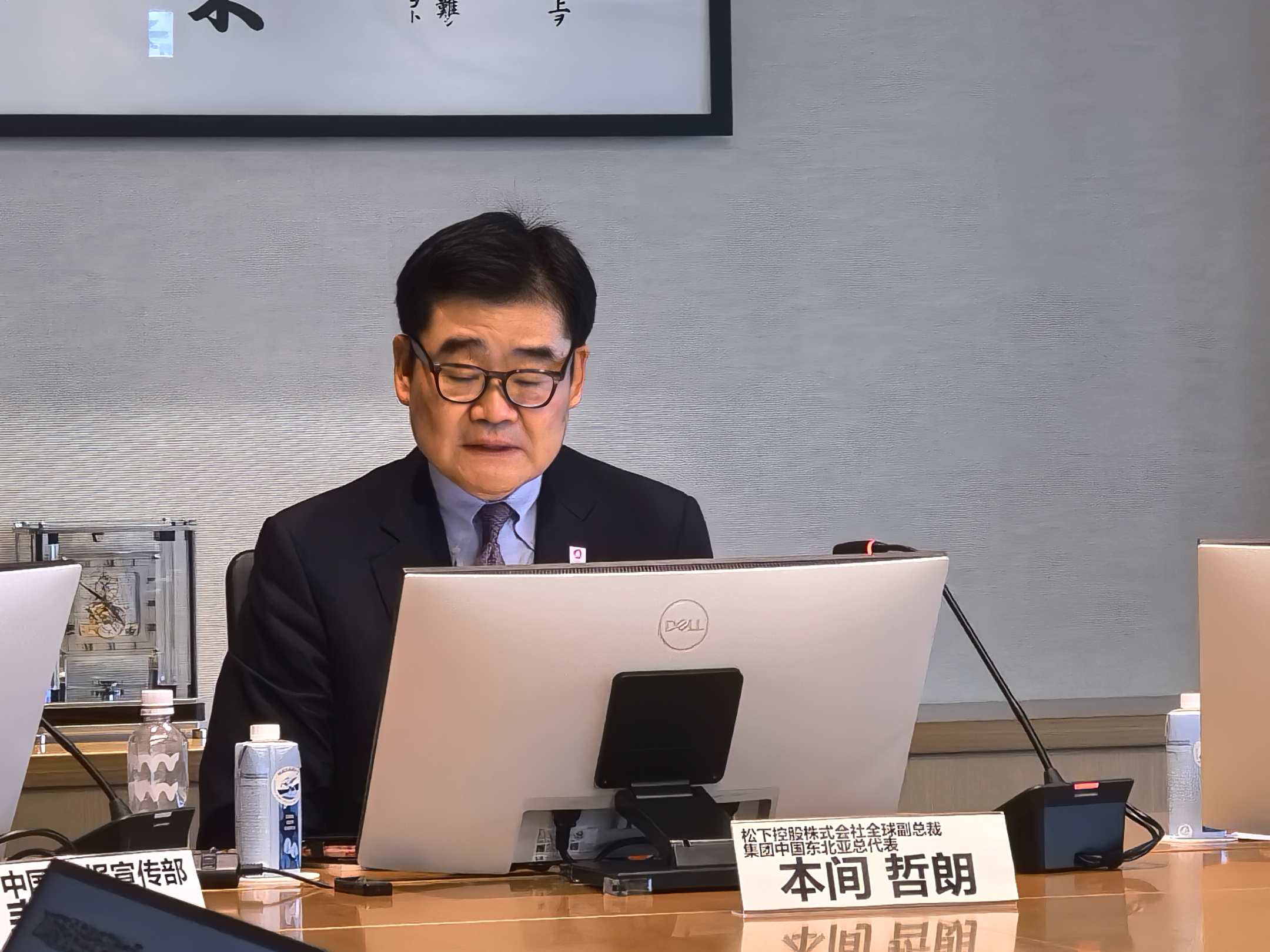
松下全球副总裁本间哲朗:以AI与能源驱动,从“本土创新”迈向“全球赋能”
Guo Ji Jin Rong Bao· 2025-09-04 08:14
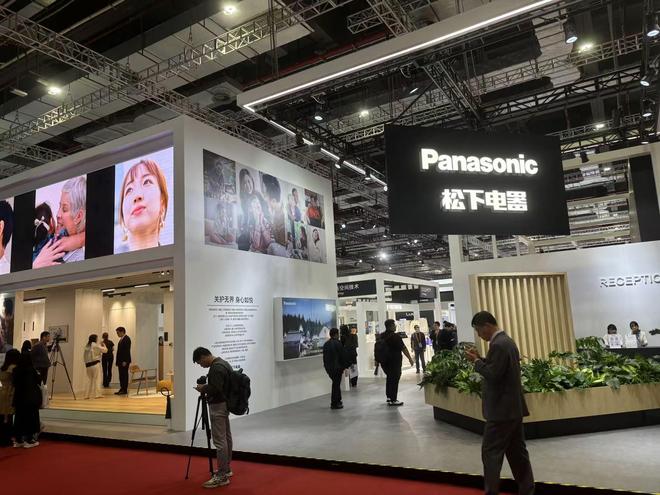
Group 1: Financial Performance - Panasonic's sales and operating profit in the Northeast Asia region for FY2024 are projected to grow to 103% and 110% of the previous year, respectively [1] - In Q1 FY2025 (April-June), sales reached 103% year-on-year, while operating profit increased by 126% [1] Group 2: AI and Business Growth - The investment boom in global generative AI servers has significantly boosted Panasonic's business in Northeast Asia, with capacitor sales doubling and electronic materials sales increasing by 133% [4] - Panasonic is accelerating capacity expansion to meet market demand, including new factories in Guangzhou and Shanghai for electronic materials [4] Group 3: Global Strategy - Panasonic is replicating its successful strategies from the Chinese market globally, transitioning from "Made in China for China" to "Made in China for the World" [6] - The company has over 6,000 suppliers in China and is leveraging local procurement to supply components globally [6] Group 4: Energy Sector Developments - Panasonic is advancing its operations in both the North American and Chinese markets, with a new factory in Kansas for electric vehicle batteries and a significant investment in Dalian for battery production [7] Group 5: Trade Shows and Strategic Partnerships - Panasonic has actively participated in the China International Import Expo (CIIE), using the platform to showcase products and establish strategic partnerships [8] - The company plans to highlight AI products at the upcoming CIIE, sharing experiences with other Japanese companies operating in China [9] Group 6: Market Positioning - Panasonic emphasizes the importance of unique value over price competition in the Chinese market, focusing on technology, design, and practicality [9] - The company has localized decision-making and development functions to better cater to Chinese consumer expectations [9]
松下加码投资中国AI相关产业,9月将在上海建新工厂
Di Yi Cai Jing Zi Xun· 2025-09-01 12:11
Group 1 - Panasonic is increasing investments in China's AI-related industries, with a new electronic materials factory set to open in Shanghai in September [2] - In the Northeast Asia region, Panasonic's sales revenue for the fiscal year 2024 is expected to grow by 3% year-on-year, with operating profit increasing by 10% [2] - The first quarter of fiscal year 2025 (April to June 2023) also saw revenue and profit growth, with sales up by 3% and operating profit up by 26% [2] Group 2 - Panasonic's investment in the electronic materials factory in Guangzhou, which began construction in June 2020, amounts to 790 million yuan and is set to produce multilayer substrates for AI servers [3] - A new factory in Suzhou, with an investment of 600 million yuan, is scheduled to start construction in October 2024 and will produce new materials for integrated circuits [3] - An additional factory in Shanghai, with an investment of 120 million yuan, is planned to begin construction in September 2025, focusing on electronic materials for AI servers [3] Group 3 - Panasonic's sales of capacitors and electronic materials for AI servers to Western markets increased by 133% year-on-year [3] - The company has signed contracts for cooling liquid circulation pumps for servers, with plans for production at its Hangzhou motor factory [3] Group 4 - Panasonic is enhancing internal AI applications by integrating large models like Chat GPT and DeepSeek into its systems [4] - The company is promoting AI technology through internal competitions and has developed its own small model for generative AI servers [4] - Panasonic plans to share its AI application practices with other Japanese companies operating in China [4]
Panasonic's New Bets Look Likely To Pay Off
Seeking Alpha· 2025-08-30 05:58
Core Insights - Panasonic Holdings Corporation is undergoing a significant transformation aimed at becoming a leaner, more profitable, and more valuable company [1] Group 1 - The current reorganization is a culmination of the company's transformation efforts over the past decade [1]

宗馥莉们的接班焦虑,日本几百年前就解决了
创业邦· 2025-08-29 10:33
Core Viewpoint - The article discusses the differences in succession practices between Japanese and Chinese family businesses, highlighting Japan's unique approach to inheritance and the cultural significance of family legacy in business continuity [6][29]. Group 1: Japanese Succession Practices - In Japan, succession is viewed as an obligation rather than a choice, with discussions focused on "who will succeed" rather than "whether to succeed" [6][14]. - The concept of "muko-iyashi" (婿养子) allows sons-in-law to inherit family businesses, integrating them into the family and ensuring continuity [16][22]. - Approximately 97% of Japanese small and medium-sized enterprises are family-owned, with about 66% being family-operated [13]. Group 2: Examples of Successful Succession - Toyota is a prime example of successful family succession, with multiple generations of the Toyota family and external leaders contributing to its growth [7][8]. - Nintendo's succession involved a son-in-law taking over, demonstrating the effectiveness of the muko-iyashi system in maintaining business stability [20]. - Companies like Uniqlo and Japan's largest courier service, Yamato Transport, have also seen successful transitions through family or external leadership [10][11]. Group 3: Cultural Factors Influencing Succession - Japanese culture places a strong emphasis on family legacy, with societal expectations for heirs to take over family businesses [28][29]. - The long-standing tradition of prioritizing family names and businesses contributes to a stable environment for succession [26][30]. - The average lifespan of Japanese companies is longer, making succession meaningful and culturally significant [29]. Group 4: Challenges and Considerations - While Japan has a robust succession framework, challenges such as internal conflicts and the need for modernization can arise [10][11]. - The article notes that Japan has fewer high-profile failures in succession compared to other countries, indicating a generally stable transition process [8][13]. - The high inheritance tax in Japan is mitigated by special provisions for business succession, encouraging continuity [29].



股债齐涨:流动性宽松下的市场共振现象
Sou Hu Cai Jing· 2025-08-25 02:49
Group 1 - The core phenomenon of simultaneous rise in stocks and bonds is a rare occurrence, typically indicating a "seesaw" effect between these asset classes, but current liquidity easing signals have led to this unusual market behavior [2][3] - The Federal Reserve's policy shift, particularly the dovish signals from Chairman Powell regarding potential interest rate cuts, has significantly influenced global market liquidity expectations, leading to increased capital flows into emerging markets [2][3] - Historical precedents show that abundant liquidity is a crucial prerequisite for simultaneous gains in both stocks and bonds, as seen during the period from January 2019 to March 2020 in China [3][4] Group 2 - Today's market performance indicates a preference for growth sectors such as computer and communication industries, reflecting a focus on policy-supported areas and technological growth [4] - The bond market benefits from expectations of declining interest rates, attracting funds in a liquidity-rich environment, similar to the stock and bond bull market from September 2014 to June 2015 [4][5] - The simultaneous rise in stocks and bonds is a collective interpretation of the policy environment, suggesting a re-evaluation of emerging market assets in light of global capital flow changes [4][5] Group 3 - Overall, the simultaneous rise in stocks and bonds is a direct response to global liquidity easing expectations, driven by external policy signals and internal funding allocation needs [5] - Understanding the liquidity-driven market characteristics is more crucial for investors than focusing on individual indicators, as liquidity often dictates asset price movements [5]

Evergy(EVRG) - 2025 Q2 - Earnings Call Transcript
2025-08-07 14:02
Financial Data and Key Metrics Changes - The company reported adjusted earnings of $0.82 per share for Q2 2025, exceeding internal budget and overcoming approximately $0.09 of unfavorable weather impacts [6][26] - Year-over-year adjusted earnings decreased from $0.90 per share in Q2 2024 to $0.82 per share in Q2 2025, attributed to a 26% decrease in cooling degree days [26][27] - The company is on track for the midpoint of full-year 2025 adjusted EPS guidance of $3.92 to $4.12 per share [6][32] Business Line Data and Key Metrics Changes - The company achieved a 1.4% increase in weather-normalized demand in Q2 2025, driven by growth in residential and commercial usage [30] - The exit from the Evergy Ventures business resulted in losses of approximately $0.08 million in Q2 2025, with the remaining book value of these investments at approximately $100 million [28][29] Market Data and Key Metrics Changes - The company anticipates a peak demand of 1.1 gigawatts with 500 megawatts online by 2029, supporting an estimated demand forecast of 2% to 3% through 2029 [14][16] - The economic development pipeline includes a robust backlog of over 15 gigawatts, with significant interest from large customers in Kansas and Missouri [11][12] Company Strategy and Development Direction - The company reaffirms a long-term growth target of 4% to 6% through 2029, based on the 2025 midpoint of $4.2 per share [8][32] - The strategy focuses on affordability, reliability, and sustainability, with an emphasis on grid modernization and new generation resources [10][24] Management's Comments on Operating Environment and Future Outlook - Management expressed confidence in achieving the midpoint of adjusted EPS guidance for 2025, citing strong operational execution and favorable economic conditions [32] - The company is well-positioned to attract new customers and investments, with ongoing discussions and settlements in regulatory proceedings [20][78] Other Important Information - The Kansas Corporation Commission approved settlement agreements for new natural gas plants and solar farms, reflecting a collaborative regulatory environment [7][19] - The company is committed to investing in infrastructure to support economic development and enhance service reliability for existing and new customers [21][24] Q&A Session Summary Question: Can you expand on the timing to derisk equity needs beyond 2025? - Management indicated no planned equity raise in 2025, with approximately $600 million per year needed in 2026 and 2027, and flexibility in accessing equity markets [41][42] Question: How would a lower ramp from Panasonic impact load growth? - Management stated that the current forecast includes only 2% to 3% load growth, with additional customers potentially increasing this to 4% to 5% [43][44] Question: How does the large load customer pipeline relate to tariff proceedings? - Management noted that while tariff proceedings are important, they are not gating items for customer projects, which are advancing in parallel [76][78] Question: Are the approved solar projects subject to additional federal permitting? - Management believes the approved solar projects will qualify under current rules, but will remain flexible to adapt to any new federal guidelines [85][87]


松下生产科技二期项目竣工
Xin Lang Cai Jing· 2025-08-07 09:44
Core Insights - The completion of the second phase project of Suzhou Panasonic Production Technology Co., Ltd. marks a significant step in the company's strategy to deepen its presence in the Chinese market [1] - The new phase will double the production capacity upon reaching full operational status [1] - The project incorporates the latest energy-saving designs and environmental concepts, emphasizing the application of automation and robotics technology [1] - The factory's smart level will be comprehensively enhanced through digital transformation [1]
每日速递|松下:固态电池只会成为“小众”产品
高工锂电· 2025-08-05 10:23
Group 1: Battery Industry Developments - Guosheng Energy signed a contract for a solid-state battery project with a total investment of 3 billion yuan, aiming to create a full industrial chain for high-performance solid-state battery materials and manufacturing [3] - Panasonic's CTO stated that solid-state batteries will remain a niche product, primarily suitable for drones and power tools, rather than electric vehicles, due to the ongoing advancements in lithium-ion battery technology [5][6] Group 2: Lithium Carbonate Market - Lithium carbonate futures contracts fell below 70,000 yuan, with the near-month contract LC2509 dropping 2.65% to 67,680 yuan, and the main contract LC2511 decreasing 2.39% to 67,840 yuan [8] Group 3: Strategic Collaborations - Greeenme and Shenglong New Energy signed a strategic cooperation agreement to focus on electric heavy truck energy stations and battery recycling, aiming for efficient integration of the new energy industry chain [9] Group 4: Equipment Procurement - Tianhong New Materials purchased two wet-process separator production lines from Oke Technology for 176 million yuan, which represents 40.51% of Oke's audited revenue from the previous year [11] Group 5: International Investments - BMW i Ventures invested 11 million USD in the American startup Estes Energy Solutions to support the development of a chemistry-agnostic battery pack platform, which aims to establish localized battery production capabilities in the U.S. [13][14] - NorcSi, a German silicon-based anode company, completed a financing round of 10.7 million euros to begin industrial production of pure silicon anode materials [15][16] Group 6: Charging Infrastructure Growth - The UK added 17,370 charging stations in the past year, marking a 27% year-on-year increase, supported by government subsidies for new electric vehicles and home charging facilities [17]