
Qualcomm(QCOM)

Search documents
刚刚,全线崩跌!发生了什么?
券商中国· 2025-08-19 23:33
Core Viewpoint - The article discusses the recent significant sell-off in the U.S. tech stock market, highlighting concerns among traders about a potential repeat of the severe sell-off experienced in April. It emphasizes the growing interest in purchasing "disaster puts" as a hedge against further declines in major tech stocks, which have seen substantial gains since April [1][2][4]. Group 1: Market Trends - Major tech stocks in the U.S. experienced a sharp decline, with companies like Micron Technology dropping over 6%, Oracle and AMD falling over 5%, and others like Nvidia and TSMC ADR decreasing over 3% [1]. - The Nasdaq Composite Index fell by 1.46%, while the S&P 500 Index decreased by 0.59% [1]. - Since April 8, the "Big Seven" tech stocks have surged nearly 50%, raising concerns about potential triggers for a downturn [4]. Group 2: Trader Sentiment - Wall Street traders are increasingly purchasing "disaster puts" for the Invesco QQQ Trust Series 1 ETF, indicating heightened anxiety about market declines [2][3]. - The cost of hedging against significant market drops is nearing a three-year high, reflecting traders' fears of a repeat of the April sell-off [2]. Group 3: Economic Indicators - Goldman Sachs economists warn that the slowdown in the U.S. job market is not over and may worsen, with employment growth estimates falling below the necessary levels to maintain full employment [6][7]. - The firm predicts three rate cuts by the Federal Reserve this year, with potential further cuts in 2026 if hiring remains weak [7]. Group 4: Political Context - Former President Trump criticized Goldman Sachs for its pessimistic economic forecasts, particularly regarding tariffs and their impact on consumers [8].






PTF: Technology Dashboard For August
Seeking Alpha· 2025-08-19 05:56
Analyst's Disclosure:I/we have a beneficial long position in the shares of QCOM either through stock ownership, options, or other derivatives. I wrote this article myself, and it expresses my own opinions. I am not receiving compensation for it (other than from Seeking Alpha). I have no business relationship with any company whose stock is mentioned in this article. Seeking Alpha's Disclosure: Past performance is no guarantee of future results. No recommendation or advice is being given as to whether any in ...

处理器芯片,大混战
半导体芯闻· 2025-08-18 10:48
Core Viewpoint - The article discusses the evolving landscape of artificial intelligence (AI) processing solutions, highlighting the need for companies to balance current performance with future adaptability in AI models and methods. Various processing units such as GPUs, ASICs, NPUs, and FPGAs are being utilized across different applications, from high-end smartphones to low-power edge devices [1][12]. Summary by Sections AI Processing Units - Companies are exploring a range of processing units for AI tasks, including GPUs, ASICs, NPUs, and DSPs, each with unique advantages and trade-offs in terms of power consumption, performance, flexibility, and cost [1][2]. - GPUs are favored in data centers for their scalability and flexibility, but their high power consumption limits their use in mobile devices [2]. - NPUs are optimized for AI tasks, offering low power and low latency, making them suitable for mobile and edge devices [2]. - ASICs provide the highest efficiency and performance for specific tasks but lack flexibility and have high development costs, making them ideal for large-scale, targeted deployments [3]. Custom Silicon - The trend towards custom silicon is growing, with major tech companies like NVIDIA, Microsoft, and Google investing in tailored chips to optimize performance for their specific software needs [4]. - Custom AI accelerators can provide significant advantages, but they require a robust ecosystem to support software development and deployment [4]. Flexibility and Adaptability - The rapid evolution of AI algorithms necessitates flexible hardware solutions that can adapt to new models and use cases, as traditional ASICs may struggle to keep pace with these changes [4][5]. - The need for adaptable architectures is emphasized, as AI capabilities may grow exponentially, putting pressure on decision-makers to choose the right processing solutions [4][5]. Role of DSPs and FPGAs - DSPs are increasingly being replaced or augmented by AI-specific processors, enhancing capabilities in areas like audio processing and motion detection [7]. - FPGAs are seen as a flexible alternative, allowing for algorithm updates without the need for complete hardware redesigns, thus combining the benefits of ASICs and general-purpose processors [8]. Edge Device Applications - Low-power edge devices are utilizing MCUs equipped with DSPs and NPUs to meet specific processing needs, differentiating them from high-performance mobile processors [10]. - The integration of AI capabilities into edge devices is becoming more prevalent, with companies developing specialized MCUs for machine learning and context-aware applications [10][11]. Conclusion - The edge computing landscape is characterized by a complex mix of specialized and general-purpose processors, with a trend towards customization and fine-tuning for specific workloads [12].




小摩邀三巨头共论AI硬件:超大规模企业资本支出料持续 定制ASIC领域持续增长
Zhi Tong Cai Jing· 2025-08-18 09:12
Group 1: Core Insights - Morgan Stanley hosted its fourth annual hardware and semiconductor management forum, focusing on the development dynamics and strategic layout of the hardware and semiconductor sectors driven by AI [1] - Arista highlighted the deployment of cloud and AI infrastructure, with major clients planning to deploy over 100,000 GPU clusters, indicating sustained growth in capital expenditure [1] - Qualcomm's automotive market is projected to generate nearly $4 billion in revenue by fiscal year 2025, achieving its original fiscal year 2026 target a year early, with a long-term goal of $8 billion by fiscal year 2029 [3] Group 2: Company Strategies - Arista's technology features a non-aggregated scheduling architecture (DSF) that combines fixed configuration devices with modular chassis, enhancing port capacity and reducing logistics challenges [1] - Supermicro aims to expand its customer base, targeting 2-4 large-scale clients by fiscal year 2026, focusing on neo-cloud and sovereign AI clients [2] - Qualcomm's data center business is leveraging ARM CPUs and low-power NPUs, with expected revenue generation by fiscal year 2028 [3] Group 3: Market Trends - Enterprise AI infrastructure spending is currently in a pilot phase and is expected to capture 20% of the market in the long term [4] - The custom ASIC sector and Amazon Trainium are experiencing growth, with potential competition emerging from Nvidia and AMD [4] - The hyperscale enterprise capital expenditure is deemed sustainable, driven by cloud revenue growth and the necessity for AI investments [3]


Wi-Fi 8 像个老司机
3 6 Ke· 2025-08-17 23:35
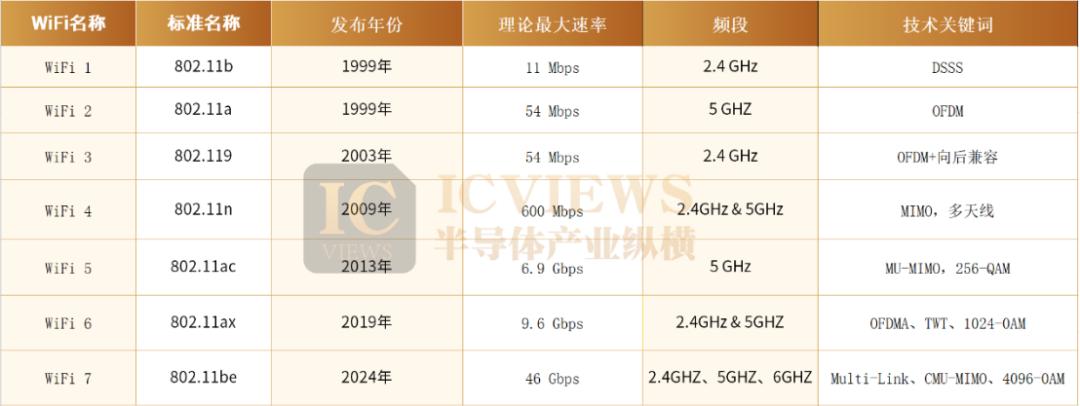
Core Viewpoint - Qualcomm China announced that the IEEE 802.11bn standard is expected to be completed by 2028, which will serve as the foundation for Wi-Fi 8, focusing on reliability and performance in complex environments [1][11]. Group 1: Wi-Fi Evolution - The transition from Wi-Fi 6 and Wi-Fi 7 focused on speed, bandwidth, and frequency, while Wi-Fi 8 aims to enhance stability and reliability [2][11]. - The Wi-Fi standards have evolved from Wi-Fi 1 to Wi-Fi 7, with each generation corresponding to an IEEE 802.11 protocol, showing significant improvements in speed, frequency, stability, and security [2][3]. Group 2: Wi-Fi 7 Market Situation - Wi-Fi 7's commercial progress is ongoing, with 23% of global telecom operators expected to offer Wi-Fi 7 products by Q1 2025 [7]. - Major companies like Qualcomm and Broadcom are providing Wi-Fi 7 chips that meet various bandwidth needs, supporting both consumer and enterprise applications [7][8]. - Wi-Fi 7 has been piloted in critical sectors such as healthcare and transportation, demonstrating its application in real-time data transmission and high-definition monitoring [8]. Group 3: Challenges Facing Wi-Fi 7 - Wi-Fi 7 faces limitations due to spectrum resource constraints, particularly the lack of allocation for the 6GHz band in China, which restricts its performance [9]. - The maturity of core technologies like MLO and 4096-QAM is still in question, affecting compatibility and performance [9][10]. - Deployment environments pose challenges, as outdated infrastructure can bottleneck Wi-Fi 7's high throughput capabilities [10]. Group 4: Wi-Fi 8 Innovations - Wi-Fi 8 aims to improve throughput by at least 25% in complex signal environments and reduce latency and packet loss during roaming [11][12]. - The introduction of multi-access point coordination technology allows multiple APs to work together, enhancing overall network performance [12]. - Wi-Fi 8 is expected to excel in industrial automation, XR applications, and high-density public spaces, providing reliable connectivity for critical tasks [12][13][14]. Group 5: Conclusion - Wi-Fi 8 emphasizes stability over sheer speed, addressing the shortcomings of Wi-Fi 7 and aiming to create new application scenarios in emerging technologies like AI and XR [14].
四维图新:上海车展中公司发布了基于高通SA8620/SA8650平台的两款中高阶新品
Zheng Quan Ri Bao Zhi Sheng· 2025-08-15 10:13
Core Viewpoint - The company, Siwei Tuxin, announced the launch of two mid-to-high-end products based on Qualcomm's SA8620/SA8650 platform, which can achieve urban NOA (Navigation on Autopilot) functionality during the Shanghai Auto Show [1] Group 1 - The new products enhance stability and safety in complex scenarios through continuous improvements in speed control, following distance control, lateral precision control, collision avoidance, and recognition of stationary obstacles and vulnerable road users (VRU) [1] - High-precision mapping is utilized to empower the products, further increasing their reliability [1]

全球芯片TOP 20,最新榜单
半导体行业观察· 2025-08-15 01:19
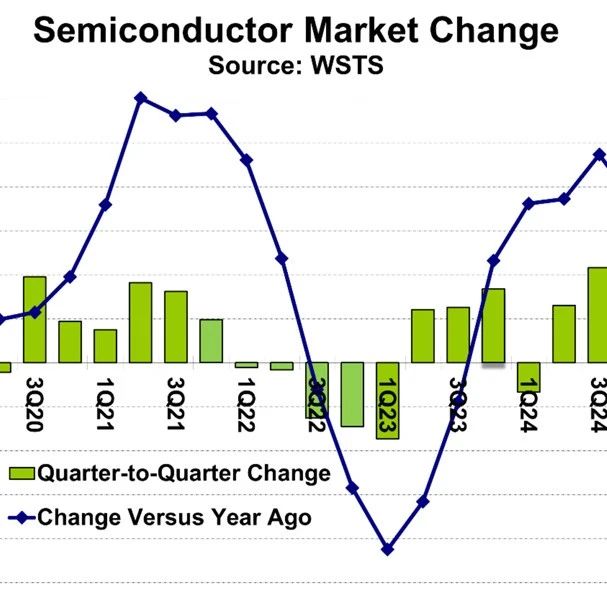
Core Viewpoint - The global semiconductor market is projected to reach $180 billion in Q2 2025, marking a 7.8% increase from Q1 2025 and a 19.6% increase year-over-year from Q2 2024, continuing a trend of over 18% growth for six consecutive quarters [2]. Group 1: Market Performance - The semiconductor market is expected to see robust growth, with a forecasted annual growth rate between 14% and 16% for 2025, adjusted from a previous estimate of 11.2% to 15.4% [8]. - The strong performance in the first half of 2025 has led to an upward revision of the growth forecast from 7% to 13% [8]. Group 2: Company Revenue Insights - Nvidia is projected to maintain its position as the largest semiconductor company with expected revenues of $45 billion in Q2 2025, followed by Samsung and SK Hynix with revenues of $19.9 billion and $15.9 billion respectively [5][6]. - Memory chip manufacturers reported the highest revenue growth, with SK Hynix at 26%, Micron at 16%, and Samsung at 11% [5][6]. - Non-memory companies also showed growth, with Microchip Technology at 11%, STMicroelectronics at 10%, and Texas Instruments at 9.3% [5][6]. Group 3: Future Projections - Companies expect healthy revenue growth in Q3 2025, with Micron forecasting a 20% increase and Kioxia expecting a 30% increase, driven by demand in artificial intelligence applications [7]. - AMD anticipates a 13% revenue growth, while STMicroelectronics expects a 15% increase across all markets except automotive [7]. Group 4: Trade and Tariff Impacts - The uncertainty surrounding tariffs and global trade continues to pose challenges, with potential tariffs on semiconductor imports being a significant concern [10]. - The U.S. government has recently provided export licenses to Nvidia and AMD for certain AI chips to China, although the legality of this agreement is questioned [10]. Group 5: Smartphone Market Trends - The U.S. smartphone import volume saw a dramatic decline of 58% in dollar terms and 47% in quantity in Q2 2025, with imports from China dropping by 85% [11]. - Despite the decline in U.S. smartphone imports, China's smartphone manufacturing remains strong, with a 5% increase in production in Q2 2025 compared to Q1 2025 [12].


桥水二季度“大换仓”:狂揽英伟达微软,清仓阿里京东引震荡!
Jin Rong Jie· 2025-08-14 01:02
Core Insights - Bridgewater Associates made significant adjustments to its investment portfolio in Q2, particularly increasing its holdings in major technology companies [1][2][3][6] Technology Sector - Nvidia was a key focus for Bridgewater, with an increase of nearly 4.39 million shares, bringing total holdings to 7.23 million shares, a growth of over 154% from Q1, making it the third-largest holding [1] - Microsoft also saw a substantial increase, with an addition of 905,600 shares to reach 1.72 million shares, a rise of approximately 111.9%, elevating its position to the sixth-largest holding [2] - Alphabet and Meta were also among the increased holdings, with Alphabet's shares rising by 2.56 million to 5.6 million shares (an 84.1% increase) and Meta's shares increasing by 381,000 to 807,000 shares (an increase of 89.6%) [2] Other Notable Holdings - Uber and Johnson & Johnson received significant increases, with Uber's shares rising by 3.14 million (531% increase) and Johnson & Johnson's shares increasing by over 1.99 million (667.8% increase) [3] - In contrast, Amazon and AMD saw reductions in holdings, with Amazon's shares decreasing by approximately 795,500 (6% decrease) and AMD's shares down by 408,900 (18.9% decrease) [3] Chinese Stocks - Bridgewater completely exited its positions in Chinese stocks, including Alibaba and Baidu, which had previously seen significant increases in Q1 [4] - This move has raised concerns about the future performance of Chinese stocks in the market [4] New Positions - The firm initiated new positions in several companies, including Arm (474,000 shares), Intuit (59,000 shares), EQT (787,000 shares), Lyft (247,900 shares), and Ulta Beauty (58,000 shares), although these positions represent a small percentage of the total portfolio [4] Core Holdings - The SPDR S&P 500 ETF (SPY) remains Bridgewater's largest holding, despite a reduction of 732,000 shares (21.9% decrease) [5] - The SPDR Gold ETF (GLD) maintained its position with approximately 1.11 million shares, while other significant holdings like iShares Core S&P 500 ETF (IVV) and Salesforce saw increases [5] Market Outlook - The adjustments in Bridgewater's portfolio reflect its optimistic outlook on the technology sector while indicating caution regarding Chinese stocks, influenced by geopolitical and market valuation factors [6]




QUALCOMM Incorporated (QCOM) JP Morgan Hardware & Semis Management Access Forum Conference (Transcript)
Seeking Alpha· 2025-08-13 23:47
Core Viewpoint - Qualcomm is on track to exceed its revenue targets for fiscal year 2026, with a strong pipeline in the automotive sector that is expected to drive significant growth through fiscal year 2029 [4]. Group 1: Financial Metrics - Qualcomm has set a revenue target of approximately $4 billion for fiscal year 2026 and is close to achieving this in fiscal year 2025 [4]. - The company aims for $8 billion in revenue by fiscal year 2029, representing a compound annual growth rate (CAGR) of around 20% from current levels [4]. - Over 80% of the cumulative revenue expected in the next four years is already secured through design wins, indicating a high level of predictability in revenue generation [4]. Group 2: Automotive Sector Insights - The automotive sector is a key focus area for Qualcomm, with discussions highlighting the importance of understanding the pipeline of opportunities and their potential revenue impact [3]. - The predictability of the automotive market is emphasized, as winning design contracts typically ensures revenue for an extended period [4].

Qualcomm (QCOM) Conference Transcript
2025-08-13 20:12
Qualcomm Conference Summary Industry Overview - **Industry**: Automotive and IoT (Internet of Things) - **Company**: Qualcomm (QCOM) Key Points on Automotive Segment 1. **Revenue Targets**: Qualcomm aims for approximately $4 billion in revenue for fiscal 2026, with expectations to exceed this target. A target of $8 billion is set for fiscal 2029, indicating a compound annual growth rate (CAGR) of around 20% from current levels [2][3][4] 2. **Design Wins**: Over 80% of the projected revenue for the next four years is secured through existing design wins, providing predictability in revenue streams [3][4] 3. **Market Participation**: Qualcomm focuses on segments like cloud connectivity, digital cockpit, and autonomous driving, which are expected to grow at 15% even in a flat automotive market [4] 4. **Content Per Vehicle**: The content opportunity per vehicle is significant, with some vehicles featuring over $2,000 to $3,000 in Qualcomm content, particularly in digital cockpit and ADAS (Advanced Driver Assistance Systems) [8][10] 5. **ADAS Development**: Qualcomm is seeing increased demand for ADAS features, with a trend of OEMs wanting to implement top-tier features across multiple vehicle tiers [10][12] 6. **Strategic Partnerships**: The collaboration with BMW on a jointly developed ADAS stack is crucial, allowing Qualcomm to verify its technology at scale and potentially sell it to other OEMs [14][18] 7. **Robotaxi Market**: Qualcomm views the robotaxi market as a driver for increased demand for autonomous driving features, although it may not significantly alter the overall automotive market in the short term [19][20] Competitive Positioning 1. **Differentiation from Competitors**: Qualcomm does not compete directly with NVIDIA and Mobileye in connectivity and cockpit technologies, focusing instead on ADAS. The Ride Flex SoC allows for scalability across different vehicle tiers, enhancing Qualcomm's competitive edge [23][24][25] 2. **Investment in Technology**: Qualcomm's significant investment across various automotive technologies positions it favorably against competitors [25] IoT Segment Insights 1. **Product Diversification**: Qualcomm's IoT segment includes XR glasses, personal devices, industrial AI, and networking, with a strong emphasis on personal devices as gateways for AI experiences [38][41] 2. **Industrial AI Growth**: The transition from microcontrollers to microprocessors in industrial AI presents a significant opportunity for Qualcomm, particularly in edge AI applications [44][46] 3. **PC Market Strategy**: Qualcomm aims to establish itself as a performance leader in the PC market, focusing on high-end devices while planning to address lower price points in the future [47][52] Data Center Opportunities 1. **CPU and NPU Focus**: Qualcomm is leveraging its custom CPU technology for data center applications, with a focus on AI inference rather than training, which is seen as a strength [54][58][75] 2. **Incremental Investment**: The strategy involves using existing technology to address specific problems in the data center market, with expectations for revenue growth starting in fiscal 2028 [60][67] Handset Market Dynamics 1. **Android Market Growth**: Qualcomm is experiencing growth in the Android market due to increased content in premium devices and a shift towards higher-priced models [78][79] 2. **Long-term Agreements**: Long-term agreements with OEMs like Xiaomi and Samsung are becoming standard practice, providing stability in share positions [81][82] Financial Outlook 1. **Sustainable Margins**: Qualcomm expects to maintain strong operating margins despite potential revenue declines from Apple, with growth opportunities in IoT and automotive segments [87][88] 2. **OpEx Considerations**: The acquisition of AlphaWave will introduce some incremental operating expenses, but Qualcomm's strategy focuses on reallocating investments to diversify and grow in new areas [89]