
Starbucks(SBUX)

Search documents
第三财季星巴克中国营收7.9亿美元、不足瑞幸一半;CEO回应出售中国区股权,20余家机构正被评估
Sou Hu Cai Jing· 2025-08-05 10:41
Core Viewpoint - Starbucks' Q3 FY2025 financial report reveals a contrasting performance with "global pressure and recovery in China," highlighting a significant drop in global net profit while showing growth in the Chinese market [3][11]. Financial Performance - Starbucks China reported revenue of $790 million, a year-on-year increase of 8%, while global net profit plummeted by 47.1% to $560 million [3][11]. - Same-store sales in China grew by 2%, marking the first increase in a year and a half, driven by a 6% increase in transaction volume, although the average ticket price decreased by 4% [4][7]. Strategic Adjustments - The growth in same-store sales is attributed to product innovation and marketing activities, including the launch of the "True Taste Sugar-Free" system [7][17]. - Starbucks has implemented price adjustments on non-coffee products, reducing prices by 2-6 yuan, to attract a broader customer base and enhance consumption during off-peak hours [16][17]. Market Competition - The competitive landscape in China's coffee market is intensifying, with local brands like Luckin Coffee and others gaining market share, leading to a decline in Starbucks' market share from 34% in 2019 to 14% in 2024 [12][13]. - Luckin Coffee reported a net revenue of 12.36 billion yuan, a year-on-year increase of 47.1%, and a total of 26,117 stores, significantly outpacing Starbucks [12]. Store Expansion - Starbucks China has expanded its store count to 7,828, with a net increase of 522 stores compared to Q3 FY2024, and opened 70 new stores during the reporting period [8][9]. - New stores have maintained high profitability levels, contributing above-average same-store sales growth [10]. Ownership and Investment Interest - Starbucks has acknowledged interest from over 20 parties regarding potential equity acquisition in its China operations, with a valuation of up to $10 billion [21][22]. - The company aims to retain a significant portion of its equity in China, with any transaction needing to align with its interests [22][23].



都在关注“绯闻对象”?我却好奇凭啥星巴克又又增长了
Hu Xiu· 2025-08-05 08:16
拒绝价格战,始终坚持以用户需求为创新主线,星巴克中国再度实现营业收入和利润率的连续增长。消 费重回黄金年代,到底是谁兑现了增长承诺?星巴克这个"敏捷创新三步法"有点东西。 ...
中国咖啡店全球第一,还造不好咖啡机?
3 6 Ke· 2025-08-05 06:53
Group 1 - The number of coffee shops in China reached 49,691 in 2023, surpassing the United States to become the largest globally [1][4][6] - Per capita coffee consumption in China increased to 22.24 cups in 2022, more than doubling from 9 cups in 2020, with some first-tier cities exceeding 300 cups [2][4] - The market for freshly brewed coffee in China has grown significantly, with its market share rising from 18.5% in 2020 to 40.2% in 2023, and is projected to exceed 220 billion yuan by 2025 [6][9] Group 2 - The commercial coffee machine market in China is expected to grow from 5 billion yuan in 2023 to over 8 billion yuan by 2025, with a compound annual growth rate (CAGR) of 15% [11][12] - The overall coffee machine market in China is projected to expand from 1.11 billion yuan in 2018 to 2.95 billion yuan by 2024, with a CAGR of 22.7%, significantly outpacing the global growth rate of 2.5% [11][12] - Imported coffee machines dominate the high-end market, with foreign brands holding over 80% market share in the ultra-high-end segment [13][15] Group 3 - Domestic coffee machine brands are focusing on affordability and portability, targeting household users with compact designs and competitive pricing [26][30] - The sales of household coffee machines in China reached 2.46 billion yuan in 2023, with a year-on-year growth of 12.7% [30] - China's coffee machine exports reached 17.46 billion yuan in 2024, with a surplus of 16.6 billion yuan, indicating a strong manufacturing base [30][32]
Starbucks Is Still Selling Hope, We're Not Buying
Seeking Alpha· 2025-08-05 00:56
Seeking Alpha's Disclosure: Past performance is no guarantee of future results. No recommendation or advice is being given as to whether any investment is suitable for a particular investor. Any views or opinions expressed above may not reflect those of Seeking Alpha as a whole. Seeking Alpha is not a licensed securities dealer, broker or US investment adviser or investment bank. Our analysts are third party authors that include both professional investors and individual investors who may not be licensed or ...
星巴克连续6个季度同店销售下滑!砸5亿美元救市能否挽回颓势
Jin Rong Jie· 2025-08-04 13:56
Core Insights - Starbucks has experienced a decline in global same-store sales for the sixth consecutive quarter, prompting the company to implement a "green apron service" model to boost sales [1] - The company plans to roll out this new service model to U.S. company-operated stores by mid-August, alongside store renovations, system upgrades, and new product launches, which will significantly increase costs [1] - Same-store sales have decreased by 2% globally and in North America, remained flat internationally, while China saw a 2% increase [1] - Overall sales increased by 4% to $9.5 billion, but adjusted earnings per share fell by 46% [1] - The company is seeking strategic partners for its China business while retaining some equity [1] - Some institutions, such as Stifel and JPMorgan, have maintained or raised their ratings and target prices for Starbucks, although the stock appears expensive based on valuation [1] - William Blair reiterated a "neutral" rating, while Citigroup lowered its target price and also assigned a "neutral" rating due to transformation costs, slow recovery, and associated risks, advising investors to be cautious [1]
业绩回暖后,星巴克对自己想要什么更清楚了
3 6 Ke· 2025-08-04 11:17
Core Insights - Starbucks China is experiencing a turnaround in performance, with revenue, net profit, and store transaction volume showing continuous improvement due to comprehensive strategic adjustments over the past year [1][5][6] - The company is in substantive negotiations regarding the sale of a portion of its equity in the Chinese market, aiming to bring in partners that can aid future development rather than seeking a complete exit [1][15][18] Group 1: Performance Recovery - In Q2 of FY2025, Starbucks China's revenue reached $739.7 million, a 5% year-over-year increase, marking a quarterly high for FY2024 [5] - Revenue continued to rise in Q3, reaching $790 million with an 8% growth rate [5] - Same-store sales increased by 2% in Q3, with transaction volume up by 6% and average ticket price down by 4% [5][6] Group 2: Strategic Adjustments - The company has implemented significant price reductions across three major non-coffee product categories and launched a breakfast combo priced at 9.9 yuan to stimulate consumption [7][9] - Product innovation has accelerated, with the introduction of the "True Flavor No Sugar" series and various co-branding marketing campaigns [9][11] - Starbucks is expanding its delivery services by partnering with additional platforms like JD and Taobao [11] Group 3: Market Expansion - The number of Starbucks stores in China has steadily increased, reaching 7,828 by the end of June, with a 9% year-over-year growth [12] - The company is entering new county-level markets and creating unique store concepts that blend local culture with the "third space" experience [13] Group 4: Equity Sale Strategy - Starbucks is evaluating over 20 interested institutions for potential equity sales, with plans to retain approximately 30% of the shares [17][19] - The goal of this partial sale is to ensure better future development for the Starbucks brand in China, rather than merely raising funds [18][21] - Potential buyers include major investment firms, indicating that Starbucks China remains a valuable asset despite competitive pressures [25][26] Group 5: Competitive Landscape - Starbucks faces significant competition from local brands like Luckin Coffee and Koolearn, which are rapidly expanding in the market [3][14] - The company must balance maintaining its premium positioning while accelerating local market penetration to fend off competition [29][31] - Key success factors include product innovation, localization, and efficient channel expansion, particularly in online sales [31][33]
估值超350亿,星巴克中国确认要卖了
东京烘焙职业人· 2025-08-04 08:33
Core Viewpoint - Starbucks is facing significant challenges in the Chinese market, where its market share has declined from a peak of approximately 42% in 2017 to around 14% in 2024, despite the overall growth of the coffee market in China [8][10][19]. Financial Performance - In Q3 FY2025, Starbucks reported revenue of $8.918 billion from its coffee shop business, slightly exceeding market expectations, driven by the opening of 1,151 new stores globally, contributing an additional $929 million [6]. - The North American market generated $6.927 billion in revenue, a year-on-year increase of 1.6%, accounting for about 73% of total coffee shop revenue [6]. - In China, revenue reached $790 million, marking an 8% year-on-year growth, attributed to the opening of 522 new stores and strategic pricing adjustments [6][9]. Market Dynamics - Luckin Coffee's revenue for the same period was approximately $1.2359 billion, showing a year-on-year growth of 47.1%, indicating that Luckin's revenue is now about 2.5 times that of Starbucks in China [9]. - The competitive landscape has shifted, with Luckin redefining coffee consumption in China from a luxury to a daily commodity, impacting Starbucks' traditional positioning as a premium brand [9][10]. Strategic Challenges - Starbucks is struggling to compete within the new market definitions established by competitors like Luckin, which focus on convenience and affordability rather than the "third space" concept that Starbucks has historically promoted [10][12]. - The company is exploring strategic partnerships and potential equity sales to leverage local expertise and improve its digital operations, which have lagged behind local competitors [17][19]. Brand Positioning - Starbucks is attempting to reinforce its brand identity as a "third space" through initiatives like the introduction of study rooms in select locations, aiming to attract students and freelancers [15][16]. - The brand's core asset remains its "third space" concept, but it faces challenges in maintaining this identity amid changing consumer preferences and increased competition [16][21]. Future Outlook - Starbucks is at a crossroads, needing to redefine its strategy in the Chinese market while maintaining its brand essence. The company must address how to adapt to the evolving consumer landscape without losing its core identity [21].
重塑服务、砸钱改店,星巴克(SBUX.US)还值得投资吗?
智通财经网· 2025-08-04 07:45
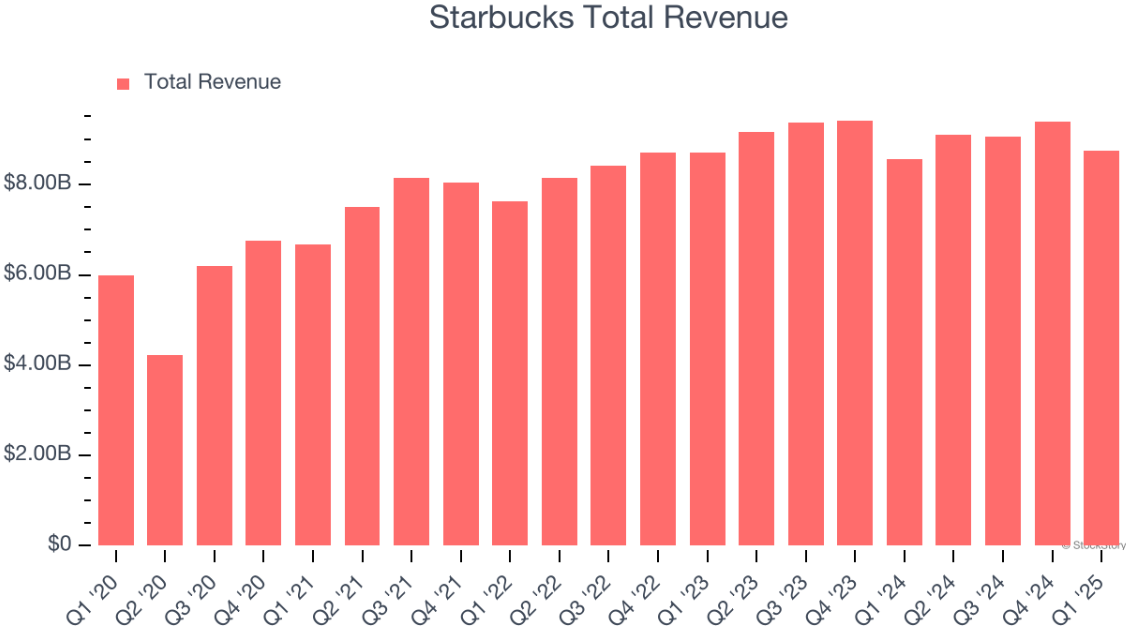
Core Insights - Starbucks reported a decline in global same-store sales for the sixth consecutive quarter, with a 2% decrease in same-store sales globally [1][3] - The company is implementing the "Green Apron Service" model to standardize transaction processes and improve sales and customer service times, with plans to roll it out to all U.S. company-operated stores by mid-August [1][2] - Despite a 4% increase in overall sales to $9.5 billion, adjusted earnings per share (EPS) fell by 46% to $0.50, missing analyst expectations [3][7] Financial Performance - Global same-store sales decreased by 2%, with North America also seeing a 2% decline in same-store sales and a 3% drop in customer traffic [3] - In China, same-store sales grew by 2%, with a 6% increase in customer traffic, although average spending per customer fell by 4% [3] - Adjusted operating margin dropped by 660 basis points to 10.1%, with store operating expenses rising by 13.5% to account for 45.9% of sales [2][3] Strategic Initiatives - Starbucks is investing approximately $150,000 per store for renovations and plans to increase labor costs by $500 million annually to enhance customer experience [2][6] - The company is also upgrading its mobile app and ordering systems, and introducing new products to attract more customers [1][2] Analyst Ratings and Price Targets - Stifel maintains a "Buy" rating with a target price of $105, highlighting progress in the "Return to Starbucks" revitalization plan [6][7] - JPMorgan and Wells Fargo have also raised their target prices to $105, maintaining "Overweight" ratings [7] - Analysts have mixed views on the stock's valuation, with some cautioning against its high price-to-earnings ratio of approximately 32 times projected earnings for fiscal year 2026 [7][8]
现制咖啡2025:规模化为王,低价不能停
3 6 Ke· 2025-08-04 07:40
Core Viewpoint - The Chinese ready-to-drink coffee market is experiencing significant changes, with local brands gaining dominance over Starbucks, which is struggling to adapt to the competitive landscape and price wars [1][8]. Group 1: Market Dynamics - The concentration of the ready-to-drink coffee market in China is notably higher than that of the ready-to-drink tea market, indicating a shift towards larger players dominating the sector [1][11]. - Starbucks reported a revenue of $790 million in Q3 FY2025, with an 8% year-on-year growth, but a 4% decline in average transaction value, primarily due to price reductions amid a competitive price war [1][8]. - The market has seen a surge in the number of coffee shops, with nearly 49,700 new coffee outlets established in the past year, reflecting a 58% increase [5][12]. Group 2: Competitive Landscape - Luckin Coffee has emerged as the largest coffee chain in China, surpassing Starbucks with a revenue of 24.903 billion yuan in 2023, marking an 87.3% year-on-year increase [5][8]. - The price of coffee has become a focal point in the market, with many brands adopting a 9.9 yuan pricing strategy, which has become a common price point for ready-to-drink coffee in China [6][9]. - The competitive environment has led to a significant decline in Starbucks' market share, dropping from 42% in 2017 to 14% in 2024 [3][8]. Group 3: Business Strategies - Companies are focusing on optimizing supply chains and product offerings to build core competitiveness in a fiercely competitive market [2][14]. - The trend of launching "coffee+" products, which combine elements of coffee, tea, and soda, is gaining traction among brands to attract younger consumers [16][17]. - Brands like Luckin Coffee are leveraging their supply chain efficiencies to maintain low prices while ensuring profitability, with a focus on high-quality ingredients at competitive prices [19][20]. Group 4: Future Outlook - The growth rate of the ready-to-drink coffee market is expected to slow, with projections of 1,930.4 billion yuan and 2,238.4 billion yuan for 2024 and 2025, respectively, indicating a decline from previous years' growth rates [14][20]. - The industry is entering a "淘汰赛" (elimination round), where only the most adaptable and strategically sound companies will survive, as the market becomes saturated and consumer demand stabilizes [20][21].
瑞幸登陆星巴克主场,中美咖啡巨头上演街头对决
Feng Huang Wang· 2025-08-04 03:57
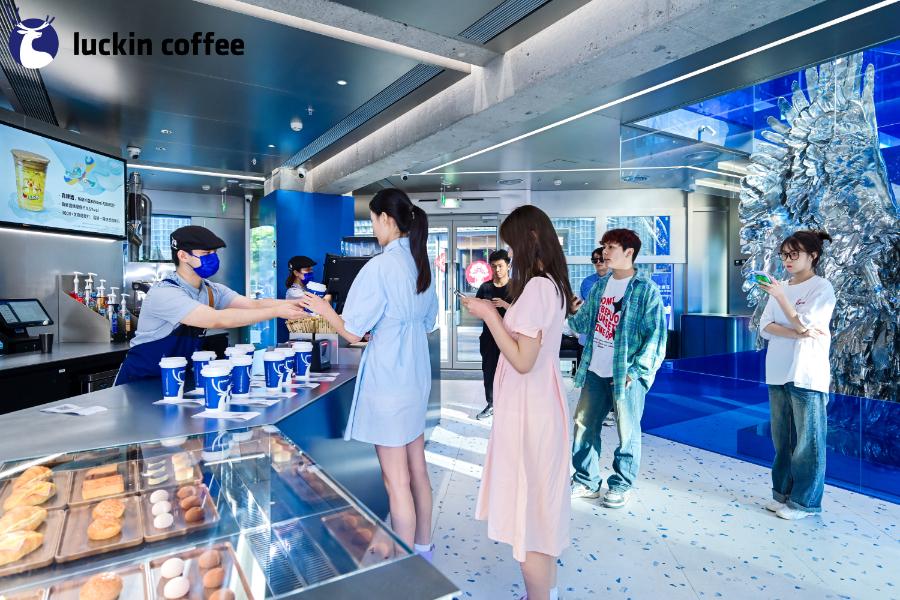
凤凰网科技讯 北京时间8月4日,据《金融时报》报道,星巴克正在以实际行动回应瑞幸咖啡在美国曼 哈顿开设门店,在街对面一家空置店铺的橱窗上张贴广告,凸显它对这家中国竞争对手所构成威胁的高 度重视。 这家空置店铺位于百老汇757号,正面和侧面都覆盖着星巴克的标志、模特和饮品的精美照片,以 及"Hello Summer"(享受夏日)的宣传语。在瑞幸咖啡门店外侧的砖墙旁,地铁出口上方的大屏幕上也不 断播放着星巴克广告。 星巴克的这场营销活动非常显眼,任何走进位于百老汇755号的瑞幸门店的顾客都会看到这些广告。这 家门店是瑞幸咖啡在今年6月进军美国市场时开设的两家曼哈顿门店之一。一位店员告诉《金融时 报》,瑞幸还将在8月开设更多门店。 两年前,瑞幸咖啡的门店数量和营收双双超过星巴克,成为中国最大的咖啡连锁品牌,这得益于消费者 转向更低价的咖啡选择。瑞幸拥有超过2.6万家门店,绝大多数在中国大陆。相比之下,星巴克全球门 店总数超过4.1万家,其中约有7800家位于中国。 瑞幸欲在美复制成功 现在,瑞幸咖啡正试图在星巴克的美国大本营复制成功,但采用的是截然不同的运营模式。瑞幸要求顾 客通过其手机应用下单,这不仅能够收集大量 ...