
Starbucks(SBUX)

Search documents
Starbucks CTO resigns amid layoffs and broader tech shakeup at Seattle coffee giant
GeekWire· 2025-09-29 15:18
Core Insights - Starbucks Chief Technology Officer Deb Hall Lefevre has resigned as the company faces layoffs and restructuring efforts [1] Company Developments - The resignation of the CTO comes at a time when Starbucks is navigating significant changes within its operational structure [1] - The company is currently undergoing layoffs, indicating a shift in strategy or response to market conditions [1]


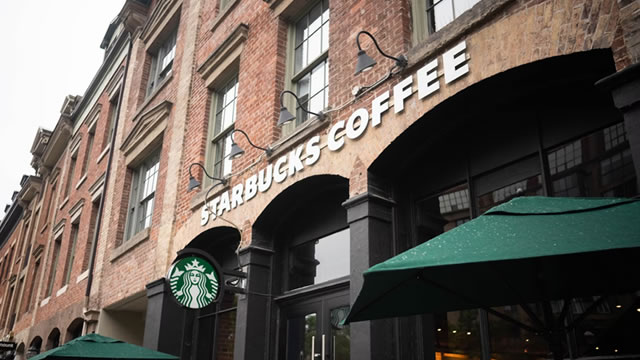
As Starbucks Cuts Jobs and Closes Stores, Should You Buy, Sell, or Hold SBUX Stock?
Yahoo Finance· 2025-09-29 15:08
Core Insights - Starbucks is the world's largest coffeehouse chain, known for its specialty coffee, inviting ambiance, and strong brand loyalty, having transformed coffee drinking into a lifestyle under Howard Schultz [1] - The company operates over 38,000 stores in more than 80 countries, combining a consistent brand approach with local adaptation [2] Financial Performance - Starbucks reported mixed fiscal Q3 2025 results, with earnings per share (EPS) at $0.50, significantly below analyst expectations of $0.65, marking a 45% year-over-year decline [5] - Revenue reached $9.5 billion, exceeding analyst estimates of $9.29–$9.3 billion, reflecting a 3–4% annual increase driven by expansion in company-operated stores and strength in key markets outside the U.S. [5] - Global comparable sales dropped 2%, and operating margin contracted to 10.1% from 16.6% a year prior, impacted by higher labor costs and ongoing investments [6] - Net income for the quarter was $558.3 million, down from $1.05 billion last year [6] Market Performance - SBUX stock has declined 0.2% over the last five days, 3.4% for the month, 13% over six months, and 6.5% year-to-date, with a 52-week drop of roughly 13% [3] - In contrast, the S&P 500 gained around 12% year-to-date and nearly 15% over the past year, highlighting Starbucks' underperformance against its benchmark [4] Strategic Outlook - The company withheld specific full-year guidance but indicated caution for Q4 due to challenging consumer conditions [7] - Management is focused on operational upgrades and innovation, aiming to return to pre-pandemic operating margin levels in the medium term, with potential upside from digital initiatives and new product offerings [7]
Starbucks: Margin Problems Brewing With Elevated Coffee Prices (NASDAQ:SBUX)
Seeking Alpha· 2025-09-29 14:05
Starbucks is currently dealing with coffee prices that have gained by up to 300% from their 2020 lows. This dynamic is not set to change soon, and margin declines are a worry.Analyst’s Disclosure:I/we have no stock, option or similar derivative position in any of the companies mentioned, and no plans to initiate any such positions within the next 72 hours. I wrote this article myself, and it expresses my own opinions. I am not receiving compensation for it (other than from Seeking Alpha). I have no business ...

Why picking the right CEO makes or breaks a restaurant turnaround
Yahoo Finance· 2025-09-29 11:28
Core Insights - The article discusses the challenges and strategies involved in CEO-led turnarounds within the restaurant industry, emphasizing the importance of industry knowledge and operational experience for successful transformations [2][4][8]. Group 1: CEO Experience and Industry Knowledge - Executives with little industry knowledge face steep learning curves that can undermine transformation strategies, making it crucial for boards to consider candidates with relevant experience [2][8]. - Successful CEOs in turnaround situations often come from outside the organization, as boards recognize internal challenges [11][36]. - The article highlights the case of Laxman Narasimhan, who lacked restaurant experience when he became CEO of Starbucks, leading to his replacement after a year and a half due to investor dissatisfaction [1][6]. Group 2: Traits of Successful Turnaround CEOs - Successful turnaround CEOs typically possess high emotional intelligence, good listening skills, and operational experience in the restaurant industry or related sectors [20][12]. - They must be willing to innovate and understand that past successes may not apply to current challenges [13][14]. - The ability to communicate effectively and understand consumer needs is essential for a CEO in the restaurant space [15][17]. Group 3: Strategies for Turnaround Success - A common approach in turnarounds is to refocus on customer needs and operational efficiency, as seen in Niccol's "Back to Starbucks" plan [26][28]. - Boards should allow new CEOs time to understand the organization before making significant changes, typically advising a period of three to six months for listening and learning [24][25]. - Successful turnarounds often involve restructuring management teams to foster agility and cross-functional collaboration [32][34]. Group 4: Challenges in Turnarounds - CEOs face the challenge of diagnosing brand problems and determining effective solutions, which can be complicated by consumer perceptions [21][22]. - The article notes that while some operational changes can be implemented quickly, a comprehensive overhaul requires time and clear communication of expectations [30][31]. - Turnaround strategies may include streamlining menus and improving service speed, which are critical for addressing declining sales and customer satisfaction [29][28].
国内首个新疆文旅动漫IP上线,沈白高铁正式开通运营
HUAXI Securities· 2025-09-28 15:22
Group 1 - The first domestic cultural tourism animation IP "Adventure in Nalati" was launched on September 22, 2025, utilizing a combination of CG technology and real-life shooting, bringing new vitality and perspective to the cultural tourism sector [1][10][11] - The Nalati scenic area has introduced over 100 IP-themed cultural and creative products, including figurines, plush toys, clothing, and accessories, allowing visitors to take home memories of Nalati [1][11] - The scenic area has partnered with major platforms like Baidu, Sina Weibo, and Douyin to launch a travel photography activity, attracting numerous KOLs with millions of followers, resulting in over ten million interactions [1][11] Group 2 - The Shenbai High-Speed Railway officially commenced operations on September 28, 2025, significantly reducing travel times to Long White Mountain Station, with the shortest travel times from Beijing Chaoyang Station and Shenyang North Station being 4 hours 33 minutes and 1 hour 53 minutes respectively [2][12] - This railway line is a crucial part of China's Northeast high-speed rail network, facilitating regional economic circulation and promoting tourism resource development along the route [2][12] Group 3 - The Ministry of Culture and Tourism predicts that over 12,000 cultural activities will be held nationwide during the National Day and Mid-Autumn Festival holidays, including more than 300 large-scale light shows and over 500 intangible cultural heritage exhibitions [3][13] - The holiday period is expected to extend from 12 to 16 days due to various holiday combinations, enhancing travel opportunities [3][13] Group 4 - There is a notable increase in long-distance outdoor consumption demand, with spending on domestic long-distance products rising over 20% year-on-year and bookings for domestic charter tours increasing by over 115% [5][16] - Hotel and scenic area package bookings have also seen a growth of over 20% year-on-year, indicating a trend towards integrated travel experiences [5][16] - The popularity of immersive consumption scenarios is on the rise, with cultural, historical, leisure, and entertainment activities driving new consumer demands [7][17] Group 5 - The report highlights a significant increase in outbound travel bookings, with a year-on-year growth of over 30% due to visa-free policies, and a nearly twofold increase in bookings for travel to Russia following the mutual visa exemption [7][17] - The top ten popular outbound travel destinations during the holiday period include Japan, Thailand, Hong Kong, Macau, Singapore, South Korea, Malaysia, the United States, Vietnam, and Indonesia [7][17]



Should Stock Market Investors Buy Starbucks Stock As It Lays Off Workers and Closes Stores?
The Motley Fool· 2025-09-28 11:23
Core Insights - Consumers are increasingly dissatisfied with premium-priced coffee, often citing poor customer service as a contributing factor [1] - Starbucks has announced layoffs and store closures as part of a strategy to revitalize the company under new leadership [1] Company Summary - The new CEO of Starbucks is implementing measures to address the company's struggles, which include workforce reductions and the closing of underperforming locations [1] - The stock price of Starbucks was noted to be down 0.47% as of the afternoon of September 24, 2025 [1] Industry Summary - The coffee industry is facing challenges as consumer preferences shift away from high-priced offerings, indicating a potential need for companies to reassess their pricing and service strategies [1]
这一杯“见”敦煌 星巴克与敦煌美术研究所联名系列上新
Zhong Guo Shi Pin Wang· 2025-09-28 10:49
Group 1 - Starbucks has launched a limited collaboration series inspired by Dunhuang murals, integrating ancient art aesthetics into modern life [1][3] - The collaboration includes a range of products such as mugs, thermos cups, tote bags, and a special membership gift set, all featuring designs inspired by Dunhuang's classic wall paintings [3][5] - The Dunhuang-themed store opened on September 23 at the Yiwang International Store, showcasing a blend of Dunhuang's cultural heritage and Starbucks' coffee experience [5][7] Group 2 - During the National Day holiday, the Dunhuang-themed store will offer a limited-time customized drink, enhancing the cultural experience with flavors reminiscent of Dunhuang's landscapes [7][8] - The store's design features modern interpretations of traditional Dunhuang elements, creating a unique space that reflects the harmony between ancient culture and contemporary lifestyle [5][6]

当星巴克的空间“自救”野心,碰上小红书的流量赌局
Hu Xiu· 2025-09-28 02:23
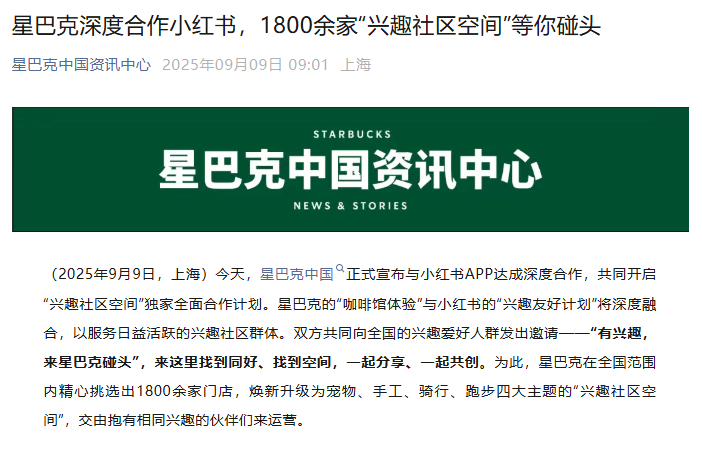
Core Insights - Starbucks China and Xiaohongshu have announced a deep collaboration to transform over 1,800 stores into themed "interest community spaces" focusing on pets, crafts, cycling, and running, indicating a strategic response to market competition pressures [1][4][19] Group 1: Collaboration Details - The partnership aims to create distinct offline social spaces catering to specific interest groups, with over 450 stores designated as pet-friendly, providing free "pawccino" treats and hosting events like pet parties [4][12] - More than 1,000 stores will offer craft-friendly spaces with experiences like unlocking craft blind boxes, while over 50 stores will provide running-friendly services such as free cup upgrades and hydration [4][12] - Cycling-friendly spaces will also be established in 50 stores, equipped with bike pumps and offering free water and limited-time cup upgrades [4][12] Group 2: Market Context - The collaboration comes as Starbucks faces declining market share in China, dropping from 42% in 2017 to 14% in 2024, largely due to competition from local brands like Luckin Coffee [19][23] - The shift in consumer behavior from a focus on the "third space" experience to a more functional, high-frequency consumption model has pressured Starbucks to redefine its market strategy [19][21] Group 3: Strategic Implications - The initiative reflects a broader trend where brands are increasingly leveraging community and interest-based marketing to build customer loyalty, as seen in other successful brands like Lululemon [25][26] - However, there are concerns that the collaboration may prioritize traffic generation over genuine community engagement, potentially leading to a perception of insincerity in the brand's efforts [38][44] - The effectiveness of this partnership will depend on Starbucks' ability to authentically connect with interest groups rather than merely using them as a marketing tool [44][52]
星巴克人事地震,传奇女CTO辞职,离职真相引猜测
3 6 Ke· 2025-09-28 02:04
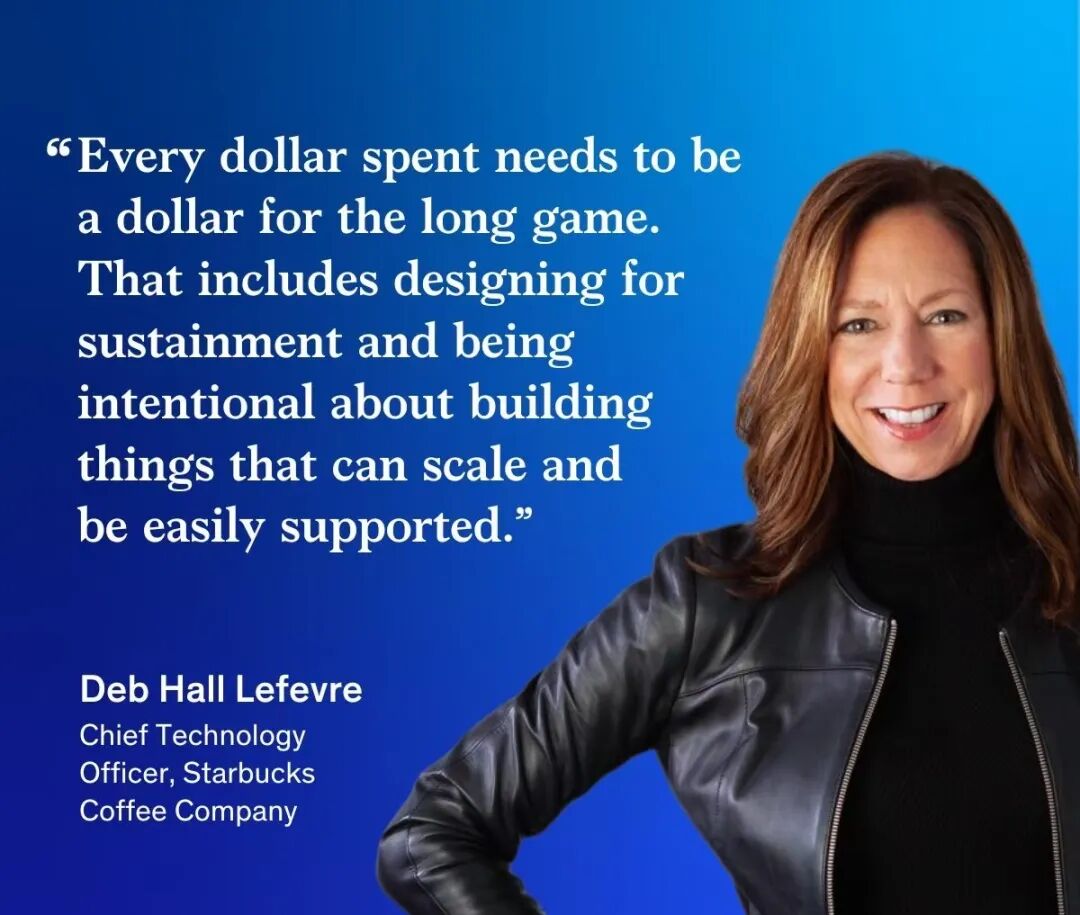
Core Insights - Deb Hall Lefevre, Starbucks' Chief Technology Officer, has resigned, and Ningyu Chen has been appointed as the interim CTO [1] - Lefevre's departure comes during a critical period for Starbucks as it implements its "Back to Starbucks" strategy, which focuses on enhancing store experience and operational efficiency through technology [6][10] Group 1: Leadership Changes - Deb Hall Lefevre has a rich background in technology management, having worked with major companies like Motorola and McDonald's, where she led significant digital transformations [2][3] - Lefevre joined Starbucks in May 2022, recruited by CEO Howard Schultz, and was instrumental in integrating technology with the company's mission [5] - Ningyu Chen, the new interim CTO, previously served as Senior Vice President of Global Experience Technology at Starbucks [1] Group 2: Strategic Context - The "Back to Starbucks" strategy aims to improve customer interaction and operational efficiency through technology, which will continue despite the leadership change [6][10] - Lefevre's resignation may be linked to organizational changes, including a shift in reporting structure that requires her to report to the new CFO, Cathy Smith [6][10] - The company is facing various challenges, including layoffs, cost-cutting measures, and declining performance, which may have contributed to the pressures on the CTO role [10][12] Group 3: Future Implications - Lefevre's exit leaves Starbucks with unfinished digital transformation goals, entering a phase of uncertainty regarding its technological direction [12] - There are suggestions that Starbucks may need a new technology leader to navigate emerging technologies and revitalize its strategy [11]
星巴克首席技术官辞职,公司强调科技重点不会改变
Ge Long Hui A P P· 2025-09-28 01:58
格隆汇9月28日|据路透,内部备忘录显示,星巴克首席技术官(CTO)Deb Hall Lefevre已辞职,暂时由 全球体验科技资深副总裁Ningyu Chen代理,尚未任命正式继任人选。该备忘录由星巴克首席财务官 (CFO)Cathy Smith发出,提到Lefevre计划退休,并强调公司的科技重点不会改变,仍聚焦于推动"重返 星巴克"(Back to Starbucks)转型计划所需的数位化工作。Lefevre过去曾任职麦当劳,2022年5月加入星巴 克,负责优化得来速、行动点餐等技术系统。 ...