So-Young(SY)

Search documents
今日A股市场重要快讯汇总|2025年12月30日
Xin Lang Cai Jing· 2025-12-30 00:25
Group 1: Market Overview and Related Assets - US stock indices closed lower, with the Dow down 0.51%, Nasdaq down 0.5%, and S&P down 0.35%. Notably, Tesla fell over 3% and Nvidia dropped over 1% [1][5] - The Nasdaq Golden Dragon China Index also declined by 0.67%, with significant drops in individual stocks such as 1药网 down 7.14% and 叮咚买菜 down 7.19% [1][5] - Precious metals experienced significant volatility, with spot gold falling 3.18% after dropping below $4390 per ounce, and spot silver down 9.24% after falling below $72 per ounce [1][5] Group 2: Macroeconomic and Market Analysis - The US November pending home sales index increased by 3.3% month-on-month, exceeding expectations of 1%, while year-on-year it decreased by 0.3%, which was below the expected 0.1% [3][7] - The EIA announced a delay in the weekly oil status report, with notifications to be provided at least one hour in advance. Additionally, natural gas inventories decreased by 1660 billion cubic feet, slightly above the expected decrease of 1680 billion cubic feet [3][8] Group 3: International Focus and Geopolitical Issues - The conflict between Russia and Ukraine escalated, with Russia claiming to have destroyed 91 drones aimed at President Putin's residence, while Ukraine's President Zelensky dismissed these claims as false [4][9] - US Congresswoman Marjorie Taylor Greene criticized both parties for contributing to nearly $40 trillion in national debt and ongoing overseas conflicts, suggesting this has led to disillusionment among younger Americans towards the two major parties [4][9]





万元童颜针跌至千元内 你的“美”只值这点钱?业内:低价是行业整合期必然 信任与技术将是核心壁垒
Mei Ri Jing Ji Xin Wen· 2025-12-19 14:28
Core Insights - The launch of a group-buy price for the "童颜针" product at 996 yuan by New Oxygen's youth clinic disrupts the pricing structure of the light medical beauty industry, which previously had an average price above 10,000 yuan [2] - Industry experts believe that the low-price strategy is a natural phenomenon during the industry's consolidation phase, but long-term survival will depend on medical integrity, compliance, and user trust [2] Pricing and Competition - The low-price strategy initiated by New Oxygen reflects intensified competition in the light medical beauty sector, with various innovative materials emerging, such as agarose and PDRN [3] - Experts warn that current price competition is unhealthy, particularly for smaller institutions reliant on capital, and that future competitiveness should focus on proprietary technology, market education, and brand building [3][7] - The market for hyaluronic acid fillers dominates, accounting for 70% to 80% of the global market share, with its safety and long-lasting effects ensuring its continued prominence [3] Consumer Trends and Preferences - A report by Allergan Aesthetics indicates that 95% of hyaluronic acid filler users are satisfied with their results, and 78% of consumers prefer more natural aesthetic outcomes [4] - The evolution of hyaluronic acid products has led to a diverse product matrix, allowing for personalized aesthetic solutions [5] Industry Dynamics and Regulatory Environment - The light medical beauty industry is transitioning from a phase of rapid expansion to one of consolidation, with approximately 50,000 institutions competing, leading to increased industry concentration [7] - The competition is shifting from price wars to value-based competition focused on compliance, technology, and service, driven by stricter regulatory policies [8][9] Strategic Paths for Institutions - Chain operations are becoming a core choice for scalable development, allowing for resource sharing and enhanced brand influence [11] - Boutique clinics are gaining traction by offering specialized and personalized services, appealing to both ordinary and high-end clients [12] - The entry of state-owned capital is reshaping the industry landscape, providing compliance and credibility while private institutions focus on consumer medical markets [13] Consumer Behavior and Market Segmentation - Consumers are increasingly making value-based decisions, with safety, doctor expertise, and product brand becoming more important than price [15] - The current pricing structure is categorized into three segments: economic products under 5,000 yuan, mainstream products between 5,000 and 10,000 yuan, and high-end products above 10,000 yuan [14]


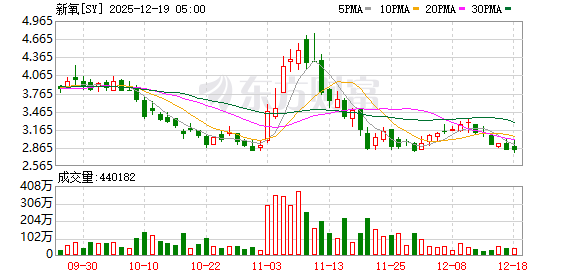
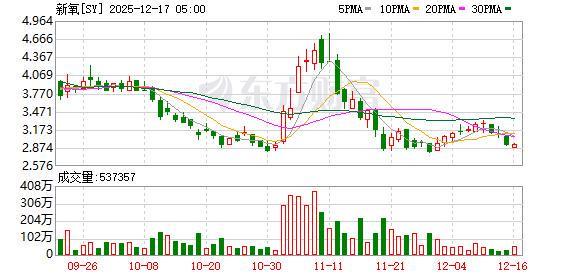
新氧上涨2.22%,报2.995美元/股,总市值2.98亿美元
Jin Rong Jie· 2025-12-17 15:47
Core Viewpoint - The company Xinyang (SY) has experienced a decline in revenue and net profit, indicating potential challenges in its financial performance moving forward [1]. Financial Performance - As of June 30, 2025, Xinyang's total revenue was 676 million RMB, representing a year-over-year decrease of 6.84% [1]. - The company's net profit attributable to shareholders was -69.177 million RMB, reflecting a significant year-over-year decline of 2909.0% [1]. Stock Performance - On December 17, Xinyang's stock price increased by 2.22%, reaching $2.995 per share, with a total trading volume of $278,300 and a market capitalization of $298 million [1]. Upcoming Events - Xinyang is scheduled to release its third-quarter financial report for the fiscal year 2025 on November 19, with the actual disclosure date subject to company announcements [1]. Company Overview - Xinyang International is focused on leveraging technology to assist women in enhancing their beauty and health, aiming to transform the opaque medical aesthetics market in China by providing transparent information and establishing a one-stop platform for quality services [1].
上万元的“童颜针”现在只卖900多元 背后原因揭秘
Zhong Guo Neng Yuan Wang· 2025-12-16 23:37
Core Viewpoint - The low-price strategy of the medical beauty company New Oxygen has intensified conflicts with upstream suppliers, leading to resistance from multiple vendors and a significant drop in its stock price [2][3]. Group 1: Supplier Conflicts - On December 11, the collagen filler manufacturer Faiman Biotech announced it had stopped supplying products to New Oxygen since October 1, claiming that continued sales would imply products were obtained from non-compliant channels or were counterfeit [2]. - Another manufacturer, Puliyan, listed over 40 New Oxygen clinics as "non-official cooperative medical institutions," while Saint Boma stated that New Oxygen's sales of its product "Aivilan" were through non-compliant channels [2][3]. - In response to supplier pushback, New Oxygen's clinic issued a statement accusing suppliers of maintaining a high-price system that undermines the pricing autonomy of medical institutions [2]. Group 2: Pricing Strategy - New Oxygen's pricing strategy has led to significant price reductions, with its own brand "Miracle Youth 3.0" priced at 999 yuan for the basic version and 2999 yuan for the upgraded version, while similar products from major brands are priced above 10,000 yuan [3][4]. - The company has been able to sell products at prices significantly lower than the original manufacturers by eliminating middlemen and utilizing lower-cost contract manufacturing [4]. - A recent promotion on New Oxygen's platform offered a product originally priced at 1999 yuan for as low as 949 yuan, resulting in over 22,000 units sold by December 15 [4]. Group 3: Market Dynamics - The medical beauty industry is experiencing a competitive landscape where New Oxygen's low-price model is seen as a survival strategy amid fierce competition [5]. - The products sold by New Oxygen are classified as approved Class III medical devices, but concerns remain regarding the quality control and long-term safety of newer domestic brands compared to established international ones [5]. - The ongoing conflict between New Oxygen and its suppliers is expected to have limited deep-seated impacts on the manufacturers, serving primarily to delineate boundaries publicly [5].
上万元的“童颜针”现在只卖900多元,背后原因是→
第一财经· 2025-12-16 11:42
Core Viewpoint - The article discusses the recent conflicts between medical beauty company New Oxygen and its upstream suppliers due to New Oxygen's low pricing strategy, which has led to a significant drop in its stock price and supplier resistance [3][6]. Summary by Sections Supplier Conflicts - New Oxygen's low pricing strategy has intensified conflicts with suppliers, leading to several suppliers, including Faiman Bio, ceasing to supply products to New Oxygen since October 1 [3][4]. - Suppliers claim that New Oxygen's pricing disrupts the market's pricing system, resulting in a "supply cut" from multiple manufacturers [5][6]. Pricing Strategy - New Oxygen offers its own brand of "童颜针" (youthful needle) products at significantly lower prices compared to the market, with prices as low as 999 yuan for the basic version and 2999 yuan for the upgraded version [5]. - The article highlights that while major brands price their products above 10,000 yuan, New Oxygen's pricing strategy allows it to sell similar products for much lower prices, attracting a large customer base [5][6]. Business Model - New Oxygen's business model is characterized by using low prices as a customer acquisition strategy, collaborating with upstream manufacturers to eliminate middlemen and reduce costs [6][7]. - The company reportedly utilizes lower-cost OEM production methods, allowing it to maintain high profit margins despite lower retail prices [6][7]. Market Impact - The ongoing conflict between New Oxygen and its suppliers is expected to have limited long-term effects on the overall market, with the public disputes serving to clarify positions among the involved parties [8].

万元童颜针卖2999元 新氧对峙上游供应商 自营转型陷亏损困局
Xi Niu Cai Jing· 2025-12-16 11:24
Core Viewpoint - The conflict between medical beauty platform Xinyang (SY.US) and upstream supplier of regenerative materials has escalated, with accusations regarding product sourcing and training practices [2][3] Pricing Strategy and Supply Chain Conflict - In April 2025, Xinyang launched "Miracle Youth 1.0," pricing the product at 4,999 yuan per unit, significantly lower than the supplier's guidance price of 16,800 yuan [3] - In June 2025, Xinyang's "Miracle Youth 2.0" used a product from Saint Boma, priced at 5,999 yuan, while the market average was approximately 18,800 yuan, leading to accusations of unauthorized procurement [3] Company Response and Compliance - Xinyang stated that all medical devices are sourced from legally qualified suppliers with complete traceable purchase documentation, and all clinics are legally established medical institutions [5] - The company emphasized that the era of market monopoly through registration certificate scarcity and excessive price control has ended, attributing low prices to value return through large-scale procurement and reduced marketing costs [5] Financial Performance and Transition Challenges - Xinyang, as the "first internet medical beauty stock," faces strong competition from platforms like Douyin, Xiaohongshu, and Meituan, resulting in a 19.3% year-on-year decline in information and appointment service revenue in 2024 [6] - In the first three quarters of 2025, Xinyang's revenue reached 1.063 billion yuan, a decrease of 3.36% year-on-year, with a net loss of 133 million yuan, marking a shift from profit to loss [6] - The company's offline beauty treatment services generated 427 million yuan, a 385.05% increase year-on-year, becoming the largest revenue source, surpassing traditional business for the first time [6] Industry Competition and Business Model Changes - Xinyang's aggressive pricing strategy has led to a significant reduction in profit margins, with offline service gross margins dropping to 24%, well below the industry average of over 50% [7] - In September 2025, Xinyang launched a customized version of "Plastic Beauty" (Miracle Youth 3.0) at a price of 2,999 yuan, with a core ingredient PLLA content of 75mg, only half of that in mainstream products [7] - The company's "low-price revolution" and aggressive transformation have fundamentally changed its business model, raising concerns about balancing price competitiveness with supply chain relationships and ensuring medical safety and service quality [7]
上万元“童颜针”为何能卖到千元以内?新氧低价模式激化医美商战
Di Yi Cai Jing· 2025-12-16 11:19
Core Viewpoint - The low-price strategy of the medical beauty company New Oxygen has intensified conflicts with upstream suppliers, leading to resistance from multiple vendors and a significant drop in its stock price [1][3]. Group 1: Pricing Strategy and Market Impact - New Oxygen's model involves attracting customers through low prices by collaborating with upstream manufacturers of "童颜针" (youthful needle) and eliminating intermediaries to significantly reduce product costs and achieve higher profits [1][4]. - The company's pricing for "童颜针" products is substantially lower than the market average, with some products priced at 4999 yuan and 5999 yuan, compared to official prices exceeding 10,000 yuan [3][4]. - New Oxygen's aggressive pricing strategy has disrupted the market's pricing system, prompting suppliers to cut off supplies [4]. Group 2: Supplier Relations and Compliance Issues - Suppliers, including斐缦生物 and 普丽妍, have publicly declared New Oxygen as a non-compliant partner, halting supplies and labeling its sales as potentially involving counterfeit products [1][3]. - Despite supplier claims, New Oxygen continues to sell certain products, asserting that they are traceable through official channels [3]. - The compliance of New Oxygen's products is under scrutiny, as newer domestic brands may lack the long-term safety data compared to established international brands [5]. Group 3: Business Model and Industry Context - New Oxygen's business model is seen as a survival strategy in a competitive medical beauty market, leveraging excess production capacity from smaller brands to offer low-priced products [5]. - The industry comparison to smartphone branding illustrates how lower-priced products can still maintain profitability despite significant price differences from premium brands [4][5]. - The ongoing conflict with suppliers is expected to have limited deep impacts on the overall market, serving primarily to clarify positions among the involved parties [5].
新氧再“撕”上游供应商:过度控价时代一去不复返
Bei Jing Shang Bao· 2025-12-13 03:16
Core Viewpoint - Beijing Xinyang Technology Co., Ltd. (referred to as "Xinyang") has issued a statement in response to recent public criticisms from upstream medical beauty manufacturers regarding its product procurement channels and service capabilities, asserting that these claims are misleading and damaging to its reputation [1][2] Group 1: Company Response - Xinyang emphasizes that all medical devices used are sourced from legally qualified suppliers and are traceable through proper documentation [2] - The company asserts that its chain of clinics operates as legally established medical institutions, with physicians practicing in accordance with the Medical Practitioners Law [2] - Xinyang criticizes upstream manufacturers for prioritizing internal rules over regulatory requirements and consumer rights, stating that these manufacturers have a legal obligation to provide support to compliant medical institutions [2] Group 2: Industry Context - The statement highlights a shift in the medical beauty industry from a market dominated by scarce registration certificates and price control to one characterized by price transparency and fair competition [2] - Xinyang argues that attempts by upstream companies to create a sense of consumer anxiety through terms like "official" and "certified" are detrimental to market dynamics and consumer interests [2]
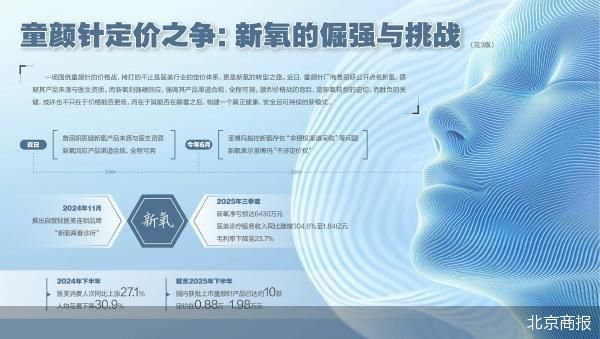
新氧与普丽妍对峙升级 谁的童颜针定价权?
Bei Jing Shang Bao· 2025-12-11 01:30
Core Viewpoint - The price war surrounding "童颜针" (youthful needle) is not only challenging the pricing system of the medical beauty industry but also testing the transformation path of the company, 新氧 (Xinyang) [1] Group 1: Price War and Market Dynamics - 新氧 has significantly reduced the price of "童颜针" from tens of thousands to 2999 yuan, aiming to gain pricing autonomy through its "奇迹童颜" series and the new "塑缇妍" product [1][8] - The conflict escalated as the manufacturer, 普丽妍, publicly named 新氧's clinics as "non-official partners," questioning their product sources and doctor qualifications [3][4] - The price reduction strategy has raised concerns about the sustainability of the medical beauty industry's profit distribution and the traditional agency model [4][5] Group 2: Transformation Challenges - 新氧's transition from a platform to a direct participant in the industry has led to conflicts with previously partnered medical institutions, resulting in a significant decline in its platform service revenue [11][12] - The company's aggressive expansion into self-operated clinics has resulted in increased costs and operational challenges, with a reported net loss of 64.3 million yuan in the third quarter [12][13] - Despite the challenges, the self-operated business is seen as a key driver for future growth, with a 304.6% year-on-year increase in medical treatment service revenue [12] Group 3: Pricing Strategy and Cost Structure - The drastic price reduction of 70% for "童颜针" is not solely based on cost but is a strategic market move to disrupt the high-price perception in the industry [5][6] - 新氧's lower pricing is attributed to its ability to bypass traditional distribution layers and its strategy of low-margin, high-volume sales [6][7] - The company claims that its pricing reflects a trend towards "value return" in medical beauty consumption, with a 27.1% increase in consumer visits but a 30.9% decrease in average spending [7] Group 4: Regulatory and Compliance Issues - 新氧 has faced multiple regulatory challenges, including fines for non-compliance with national standards and advertising laws [13][14] - The company acknowledges the importance of addressing consumer complaints and emphasizes that its low-cost model does not compromise regulatory compliance [14]

新氧对峙普丽妍 谁的童颜针定价权
Bei Jing Shang Bao· 2025-12-10 15:44
Core Viewpoint - The price war surrounding the "youthful needle" is not only challenging the pricing system of the medical beauty industry but also testing the transformation path of the company, New Oxygen [1] Group 1: Price War and Market Dynamics - New Oxygen has significantly reduced the price of the "youthful needle" from tens of thousands to 2999 yuan, aiming to gain pricing autonomy through differentiation and collaboration with West Hong Biological [1][7] - The conflict escalated when the manufacturer, Puli Yan, publicly named New Oxygen's clinics as "non-official partners," questioning the legitimacy of their product sources and medical qualifications [2] - The price war reflects a challenge to the long-standing profit distribution system in the medical beauty industry, as New Oxygen's pricing strategy disrupts traditional agency rules [3] Group 2: Transformation Challenges - New Oxygen is transitioning from a platform-based model to a direct participant in the industry, facing backlash from previously cooperative medical institutions that now view it as a competitor [10] - The company's core platform revenue has been declining, with a 19.3% year-on-year drop in information and appointment service revenue in 2024 [10] - Despite the challenges, New Oxygen's offline medical beauty service revenue surged by 304.6% year-on-year, becoming its largest income source [11] Group 3: Cost Structure and Profitability - New Oxygen's low pricing strategy is attributed to its scale advantages and a thin profit margin approach, with a reported gross margin of only 23.7% in the third quarter [5][11] - The company is focusing on cost optimization through various strategies, including supply chain integration and digital tools, to improve operational efficiency [11] - The medical beauty industry has high gross margins, often around 90%, indicating that New Oxygen's pricing strategy may be unsustainable in the long term [5] Group 4: Regulatory and Compliance Issues - New Oxygen has faced multiple regulatory challenges, including fines for non-compliance with national standards and advertising laws [12] - The company acknowledges the importance of addressing customer complaints and regulatory feedback as part of its service optimization strategy [12] - The sustainability of New Oxygen's low-price model hinges on building a robust framework based on medical safety and compliance trust [12]