
Toyota(TM)

Search documents
只有一家中国车企参展的世界级车展,有多魔幻?
3 6 Ke· 2025-10-29 23:33
Core Insights - The Tokyo Mobility Show, held in late October 2023, showcases the evolving landscape of the Japanese automotive market, emphasizing a shift towards mobility solutions beyond traditional vehicles [1][12] - Chinese automaker BYD made a significant impact by launching the first electric K-Car specifically designed for the Japanese market, marking a historic moment in the Tokyo auto show [9][10] Group 1: Overview of the Tokyo Mobility Show - The event is characterized as a "mobility show" rather than a traditional "auto show," highlighting a broader focus on various modes of transportation [1][3] - Japanese automakers prominently featured K-Cars, which hold nearly 40% market share in Japan, indicating their cultural significance [5][17] - The show had a lower international presence compared to previous years, with fewer European manufacturers participating [11][12] Group 2: Chinese Automaker BYD's Strategy - BYD's launch of the electric K-Car Racco represents a strategic entry into Japan's automotive market, targeting local consumers with a product that directly competes with established Japanese brands [15][19] - The Racco features advanced technology, including a blade battery, and aims to challenge the slow electric transition of Japanese competitors [17][19] - BYD's presence at the show signifies a shift in market dynamics, with Chinese brands increasingly challenging traditional Japanese dominance [13][15] Group 3: Japanese Automakers' Response - Japanese automakers, including Toyota, Honda, and Nissan, showcased a mix of innovative concepts and traditional models, indicating a dual approach of maintaining heritage while embracing new technologies [26][40] - Toyota introduced several groundbreaking models, including a new generation Corolla concept and the FJ Land Cruiser, reflecting a commitment to innovation [27][29] - Honda and Nissan also presented new electric models, emphasizing their strategies to enhance their electric vehicle lineups and adapt to market changes [40][49] Group 4: Future Mobility Trends - The show highlighted advancements in battery technology, with Toyota showcasing solid-state batteries that promise rapid charging and extended range [90][92] - Japanese automakers are exploring diverse mobility solutions, including air and sea transportation, indicating a broader vision for future mobility [94][97] - The overall sentiment at the show reflects Japan's cautious yet determined approach to transitioning towards electric and smart mobility solutions [98]




Trump says Toyota plans $10 billion U.S. investment—not exactly, Toyota says
Fastcompany· 2025-10-29 21:21
Core Viewpoint - Toyota quickly refuted President Donald Trump's claim regarding a supposed commitment to invest $10 billion in the U.S. [1] Group 1 - The claim made by President Trump suggested that Toyota had promised a significant investment in the U.S. [1] - Toyota's response indicates that there was no such commitment made to invest the stated amount [1]
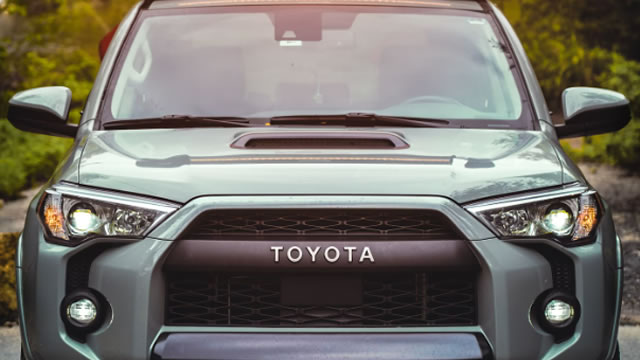
Toyota Will Run Out of Cars First
247Wallst· 2025-10-29 13:10
Group 1 - The terms "day to turn," "days on lot," and "supply of inventory" are commonly used among dealers and car manufacturers [1]
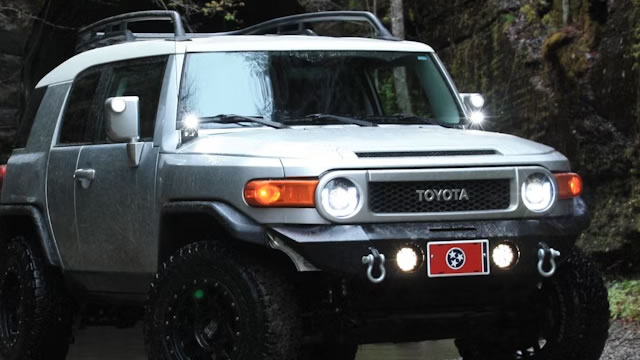
As Trump Says 'Buy A Toyota,' Japanese Automaker Denies Promising New $10 Billion Investment In US - Toyota Motor (NYSE:TM)
Benzinga· 2025-10-29 09:39
Group 1 - Toyota Motor Corp denied making a promise for a new $10 billion investment in the U.S. following a meeting between President Trump and Japanese Prime Minister Takaichi [1][2] - A Toyota executive clarified that the company "didn't specifically say" it would invest $10 billion in the U.S. over the next few years, referencing a similar figure discussed during Trump's first administration [2] - President Trump encouraged U.S. troops in Japan to "buy a Toyota," linking this to a potential $10 billion investment for establishing auto plants in the U.S. [2] Group 2 - Toyota reported a production growth of 11.1% in September, driven by strong demand for hybrid models in the U.S., marking the fourth consecutive month of production increase [3] - The company sold over 185,748 units in the U.S. during September, with U.S. sales growing 13.6% in August, indicating a trend of consistent growth [3] - Toyota's performance metrics indicate satisfactory momentum, scoring well across Value, Growth, and Quality metrics, with a favorable price trend in the short, medium, and long terms [4]
特朗普宣称百亿投资遭“打脸” 丰田(TM.US)高管澄清:从未明确承诺
智通财经网· 2025-10-29 06:40
Core Viewpoint - Toyota has not made a clear commitment to invest an additional $10 billion in the U.S., despite President Trump's mention of this potential investment during his visit to Japan [1] Group 1: Investment Clarification - A Toyota executive, Hiroyuki Ueda, stated that there was no explicit commitment regarding the $10 billion investment during discussions with the Japanese government and the U.S. embassy prior to Trump's visit [1] - Ueda emphasized that Toyota will continue to invest in the U.S. and create jobs, but did not confirm any specific investment amount for the coming years [1] - The $10 billion figure mentioned by Trump likely stems from Toyota's previous investment of approximately $10 billion in the U.S. during Trump's first term [1] Group 2: Communication with U.S. Officials - Ueda noted that during a brief conversation between Toyota's Chairman Akio Toyoda and Trump at a U.S. embassy event, no discussions regarding investment were held [1]
丰田卡罗拉将出纯电版
日经中文网· 2025-10-29 03:16
Group 1 - Toyota unveiled the concept car of the Corolla, indicating the brand's intention to launch its first pure electric vehicle (EV) [2][4] - The initial Corolla was launched in 1966 and is a representative model of Toyota [2][4] - In addition to the EV, Toyota confirmed plans to introduce plug-in hybrid vehicles (PHV), hybrid vehicles (HV), and gasoline cars under the Corolla brand, although specific launch dates have not been announced [4] Group 2 - Toyota showcased the "IMV Origin," part of its global strategy vehicle series aimed at emerging markets, particularly in Africa, where only the chassis will be exported for local assembly [4] - President Akio Toyoda emphasized the innovative approach of "incomplete assembly" in Africa, highlighting the company's commitment to new manufacturing methods [4]
Toyota says it did not explicitly promise Trump new $10 billion investment in US
Reuters· 2025-10-29 02:06
Core Points - Toyota Motor did not make a definitive commitment to a new $10 billion investment in the United States, as clarified by a senior executive [1] - This statement comes in the context of President Donald Trump's remarks regarding investment in the U.S. automotive sector [1] Company Summary - The clarification from Toyota indicates a cautious approach to investment announcements, reflecting the company's strategy in navigating political and economic pressures [1] - The lack of a concrete investment promise may impact market perceptions and investor confidence in Toyota's future plans in the U.S. [1]

汽车早餐 | 神龙汽车领导班子调整;长安汽车与京东联合开发新能源无人智能车;马斯克或离开特斯拉
Zhong Guo Qi Che Bao Wang· 2025-10-29 01:29
Group 1: National Policies and Industry Development - The "14th Five-Year Plan" emphasizes the construction of a manufacturing powerhouse, quality powerhouse, aerospace powerhouse, transportation powerhouse, and cyber powerhouse, while maintaining a reasonable proportion of manufacturing [2] - The plan aims to eliminate unreasonable restrictions on consumption in sectors like automobiles and housing, and to establish management methods that adapt to new consumption formats and scenarios [2] - Strategic emerging industries such as new energy, new materials, aerospace, and low-altitude economy will be accelerated [2] Group 2: Automotive Industry Developments - The 8th China International Import Expo will showcase 461 new products, technologies, and services, including new themes in automotive and cultural tourism, aimed at expanding consumption [3] - Over 1.1 million new energy vehicles have been insured through a platform designed to manage high compensation risks in the insurance industry, providing risk coverage exceeding 1.1 trillion yuan [4] - The State Administration for Market Regulation has approved the establishment of 10 measurement talent training centers, including one focused on new energy vehicles, to address technical bottlenecks in modern industry [5] Group 3: International Automotive News - Toyota plans to build multiple automotive factories in the U.S. with an investment exceeding 10 billion dollars [6] - In September, European car sales increased by 11% to 1.24 million units, with Tesla's new car registrations in the EU declining by 19%, while BYD's registrations surged by 272% [7] Group 4: Technological Innovations - Nissan's new solid-state battery has achieved an energy density of 400-500 Wh/kg, potentially increasing the driving range of electric vehicles to 800-1000 kilometers, with plans for mass production by the fiscal year 2028 [8] Group 5: Corporate News - Shenlong Automobile announced leadership changes, appointing new executives to key positions [11] - Changan Automobile is collaborating with JD Group to develop new energy unmanned intelligent vehicles and logistics solutions [12] - Hongmeng Zhixing has delivered its 1 millionth vehicle, achieving this milestone in 43 months with an average transaction price of 390,000 yuan [13] - XPeng Motors reported a 125% year-on-year increase in overseas sales in the first three quarters, with significant market presence in Southeast Asia [14] - Leap Motor established a smart control company in Zhejiang with a registered capital of 200 million yuan [15] - Guoxuan High-Tech founded a power technology company in Wuhu with a registered capital of 1 billion yuan, focusing on battery sales and manufacturing [16]



「隐形冠军」神话终破灭
36氪· 2025-10-29 00:16
Core Viewpoint - The article discusses the decline of "hidden champions" in Germany and Japan, highlighting the rise of Chinese companies as new leaders in the global industrial landscape. Group 1: Definition and Characteristics of Hidden Champions - The term "hidden champions" refers to small and medium-sized enterprises that dominate niche markets but remain largely unknown to the public. These companies typically have a global market share in the top two positions and annual sales below $10 billion, although the criteria have been relaxed to include those with sales under $50 billion [5][7]. - As of 2023, there are 3,406 hidden champions globally, with Germany accounting for 1,573, nearly half of the total [7][11]. Group 2: Current State of Hidden Champions - The article notes that the myth of hidden champions is fading as the high-end industrial supply chain in China undergoes comprehensive upgrades [6]. - Germany's manufacturing sector, particularly the automotive industry, is experiencing a systemic decline, with a reported 80% increase in bankruptcies since 2021 [22][25]. Group 3: Economic Challenges in Germany - Germany's GDP fell by 0.2% last year, marking its second consecutive year of decline, a rare occurrence since 1950 [21]. - Major automotive companies, including Bosch and Volkswagen, are planning significant layoffs, with Bosch alone cutting 13,000 jobs [22][24]. Group 4: Comparison with Chinese Companies - While hidden champions in Germany and Japan are declining, Chinese companies are rapidly emerging as new industrial leaders, particularly in advanced manufacturing and digital technology [41]. - China has cultivated over 14,000 specialized small and medium-sized enterprises, with the number of hidden champions increasing from about 100 to 300 in the past five years [41]. Group 5: Future Outlook - The article suggests that the traditional manufacturing models of Germany and Japan are becoming obsolete, as they struggle with digital transformation and innovation [33][35]. - In contrast, China's hidden champions are gaining strength and represent significant future growth potential, indicating a shift in the global industrial landscape [41][43].


重大项目曝光,特朗普发声
Zheng Quan Shi Bao· 2025-10-28 22:41
Group 1 - Japan has unveiled a potential project list for a $550 billion investment mechanism in the U.S., with participating companies including SoftBank, Westinghouse Electric, GE Vernova, and Hitachi, covering sectors such as energy, artificial intelligence, and critical minerals [1][3] - The project list includes 21 projects with a total investment scale exceeding $400 billion, with energy projects dominating the list, including Westinghouse's AP1000 nuclear reactor and small modular reactor projects, each estimated at nearly $100 billion [3][4] - SoftBank is interested in a $25 billion large-scale power infrastructure development project, while other companies like Carrier and Panasonic are also involved in energy-related initiatives [3][4] Group 2 - The investment plan aims to enhance economic and security interests between the U.S. and Japan, focusing on sectors such as semiconductors, pharmaceuticals, metals, critical minerals, shipbuilding, energy, artificial intelligence, and quantum computing [4] - Japan's automotive manufacturers have reported a decline in sales in the U.S. market, with a 22.7% drop in automotive exports contributing to a 10.2% decrease in total exports to the U.S. in the first half of the fiscal year [5] - The U.S. has reduced tariffs on Japanese automobiles from 27.5% to 15% as part of a trade agreement, which is a core component of the investment plan [4]

