TSMC(TSM)

Search documents
苹果等巨头需求旺盛,台积电这一先进封装产能预计将翻倍
Xuan Gu Bao· 2026-01-20 23:20
Group 1 - TSMC is increasing its WMCM (Wafer-Level Multi-Chip Module) packaging capacity to meet the demand for Apple's A20 series chips, with a projected monthly capacity of 60,000 wafers by the end of 2026 and a potential doubling to over 120,000 wafers by 2027 [1] - The shift towards WMCM packaging will directly impact the semiconductor supply chain, with TSMC and strategic partners handling the backend wafer-level testing (CP) and final testing (FT) [1] - Apple will be adopting WMCM packaging for the first time in its iPhone processors, allowing for direct integration of different components like SoC and DRAM at the wafer level, enhancing thermal and signal integrity [1] Group 2 - The advanced packaging sector is experiencing full capacity, with expectations of price increases due to strong overseas demand and domestic market growth, particularly in 2026 when domestic advanced processes are expected to release significant capacity [2] - Companies like Chipbond Technology are gaining recognition for their advanced packaging equipment, which is being utilized by leading domestic packaging firms, with equipment prices in the million-level range [2] - Huatian Technology has mastered various advanced packaging technologies and is actively expanding its advanced packaging business scale through ongoing R&D and production efforts [2]


美国股债汇三杀,纳指跌超2%,芯片股、中概股普跌,晶科能源跌超12%,黄金白银再创新高
2 1 Shi Ji Jing Ji Bao Dao· 2026-01-20 23:15
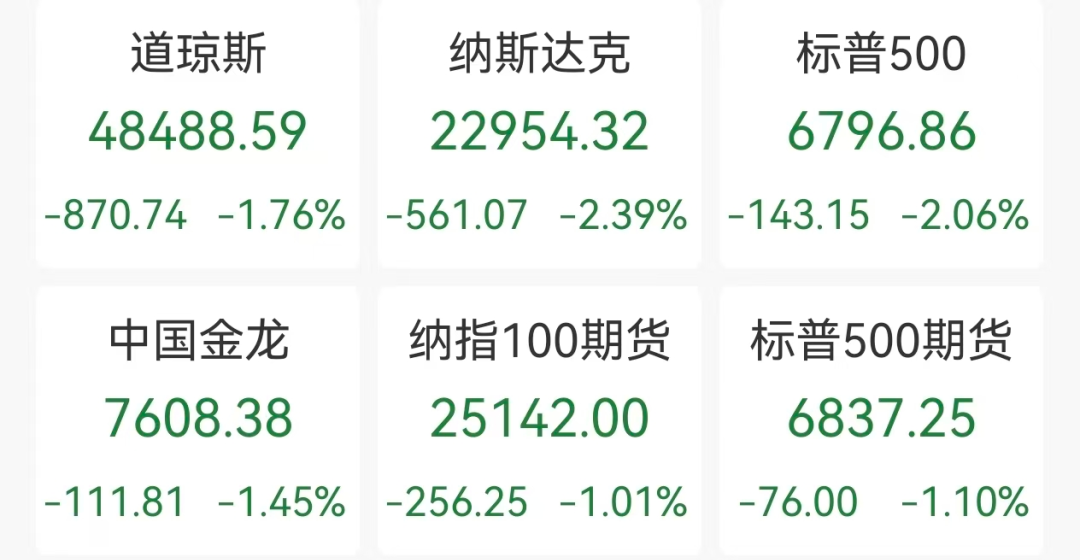
Market Overview - US stock indices experienced a significant decline, with the Dow Jones falling by 870 points (1.76%), the S&P 500 down by 143.15 points (2.06%), and the Nasdaq dropping by 561.07 points (2.39%) [1] - The Chicago Board Options Exchange Volatility Index (VIX), known as Wall Street's "fear index," surged above 20, reaching recent highs [1] Technology Sector - Major tech stocks saw substantial losses, with Nvidia and Tesla both dropping over 4%, while Apple and Amazon fell more than 3% [2][3] - Nvidia's stock price was reported at $178.07, down 4.38%, and Tesla at $419.25, down 4.17% [3] Streaming and Media - Netflix's post-market decline expanded to nearly 5% due to disappointing first-quarter earnings outlook and adjustments to its acquisition proposal for Warner Bros. assets to an all-cash offer totaling $82.7 billion [4] Semiconductor Industry - The semiconductor sector faced widespread declines, with Broadcom and Skyworks Solutions dropping over 5%, while TSMC fell more than 4% [4] Banking Sector - Bank stocks also fell across the board, with Citigroup down over 4% and JPMorgan and Morgan Stanley both declining more than 3% [4] Chinese Stocks - Chinese stocks mostly declined, with JinkoSolar down 12.5% and CenturyLink down over 10% [4][5] Bond Market - US Treasury yields rose to a four-month high, while the dollar index fell by 0.41%, marking its worst two-day performance in about a month [6] Precious Metals - Gold and silver prices reached new highs, with spot gold exceeding $4,763 per ounce and silver surpassing $94 per ounce [8][9] Cryptocurrency Market - The cryptocurrency market experienced a significant downturn, with Bitcoin dropping below $90,000 and Ethereum falling below $3,000, affecting approximately 163,000 traders [10][11]


2 Clear AI Winners Investors Should Buy for 2026
Yahoo Finance· 2026-01-20 20:35
Group 1: Taiwan Semiconductor Manufacturing - Taiwan Semiconductor is the world's leading provider of logic chips and generates the most revenue among chip foundries, partnering with major tech giants like Nvidia and Apple [4][5]. - The company is experiencing significant demand for AI-related chips, with an expected compound annual growth rate (CAGR) of mid- to high-50% from 2024 to 2029 [6]. - Despite its superior growth rates, Taiwan Semiconductor trades at a discount, with a forward earnings multiple of 23 compared to its peers at around 30, presenting a potential investment opportunity [7]. Group 2: Micron Technology - Micron specializes in memory chips, which are crucial for AI computing, and is currently facing unprecedented demand, particularly for high-bandwidth memory (HBM) [10]. - The capacity consumed by AI could lead to memory becoming a bottleneck, potentially driving up prices and benefiting Micron [10].

‘I’m Also Very Nervous’ TSMC CEO C.C. Wei says on AI Demand. Here’s the $56 Billion ‘Disaster’ Taiwan Semi Wants to Avoid in 2026.
Yahoo Finance· 2026-01-20 19:49
Shares of the Taiwanese chip manufacturer started the new year with a bang, climbing 8% year-to-date (YTD). The latest burst of positive momentum was driven by its upbeat Q4 results and guidance.Founded in 1987 by former Texas Instruments executive Morris Chang, along with Taiwan’s government and other partners, Taiwan Semiconductor Manufacturing Company has grown into the world’s leading manufacturer of high-performance chips, particularly those used in AI data centers, vehicles, and mobile devices. TSMC i ...
风水轮流转!欧洲科技股开年暴涨10%碾压美股,“芯片三巨头”贡献90%涨幅
Hua Er Jie Jian Wen· 2026-01-20 16:03
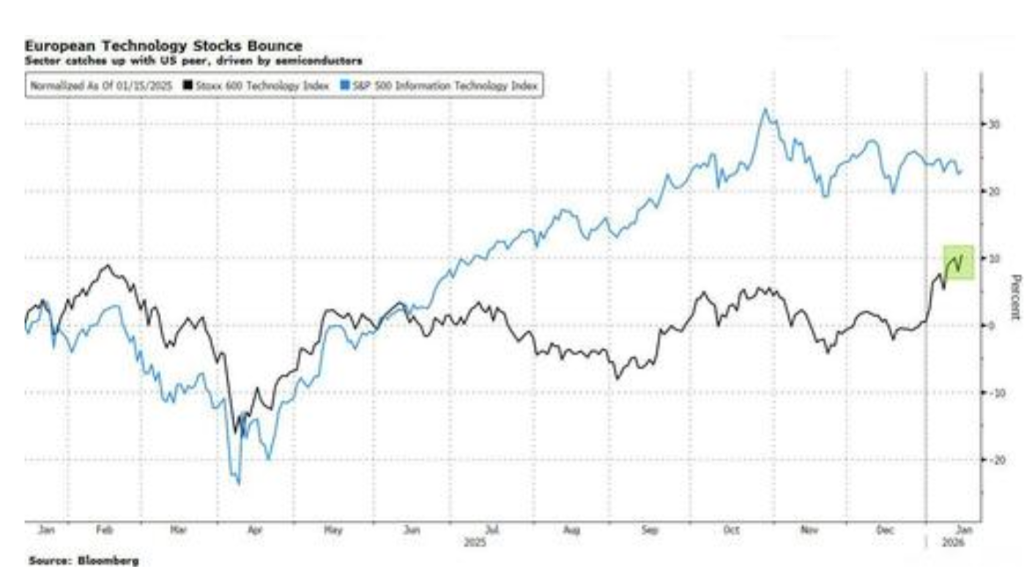
今年以来,欧洲科技股意外大幅跑赢美国同类板块。斯托克600科技指数单月上涨10%,成为该地区表现第二强的板块;而同期标普500信息技术 指数则几乎持平。 这一强劲表现主要受芯片设备板块推动,背后催化剂是台积电大幅提升资本支出展望。台积电预计2026年资本支出将增长约30%,并宣布未来三 年将"大幅"提高支出以加速在中国台湾和美国的产能扩张。这一超预期的资本开支计划直接利好其供应链合作伙伴。 以ASML、ASM International和BE Semiconductor(贝思半导体)为代表的欧洲"芯片三巨头",在斯托克600科技指数中的权重合计近40%,并 贡献了该板块今年以来约90%的涨幅。花旗分析师Andrew Gardiner指出,台积电的最新动态对欧洲芯片设备商构成"实质性利好"。摩根士丹利已 将ASML目标价上调至1400欧元,为华尔街机构中最高之一,理由是对其未来两至三个季度订单走强及2027年更稳健增长的预期。 此前,美光科技已在去年12月表示正"竭尽全力"提升短期产能,这已初步显示出产业需求向产能传导的信号。 传统芯片制造商迎来复苏 欧股科技股的反弹已不仅局限于设备制造商领域。近年来表现相对滞 ...

Taiwan Semiconductor Manufacturing Stock Jumps On Robust AI Chip Demand. Is It Time to Sell or Double Up on the Stock?
Yahoo Finance· 2026-01-20 15:50
Core Insights - Taiwan Semiconductor Manufacturing (TSMC) reported strong quarterly results and an optimistic outlook, with shares increasing approximately 70% over the past year [2] Financial Performance - TSMC's Q4 revenue increased nearly 26% to $33.7 billion, with earnings per American depositary receipt (ADR) rising 40% to $3.14 from $2.24 a year ago [6] - The company's gross margin expanded by 330 basis points to 62.3%, while operating margins rose by 500 basis points to 54%, exceeding prior forecasts [7] Demand and Growth Drivers - There is an insatiable demand for AI chips, leading TSMC to project capital expenditures (capex) for this year between $52 billion and $56 billion, significantly above analyst expectations of nearly $41 billion for 2026 [3] - High-performance computing (HPC) accounted for 55% of TSMC's revenue in the quarter and 58% for the full year, with HPC revenue climbing 48% in 2025 [5] Market Position - TSMC maintains a near-monopoly in the production of advanced process nodes, with nodes of 7 nanometers and under accounting for 77% of its revenue, up from 74% a year ago [4] - The company's newest 3-nm technology contributed 28% to total wafer revenue, increasing from 26% a year ago [4]
费城半导体指数跌近1%
Mei Ri Jing Ji Xin Wen· 2026-01-20 14:58
Group 1 - The Philadelphia Semiconductor Index declined by nearly 1% [1] - Among the constituent stocks, Qualcomm, NVIDIA, and Broadcom each fell by nearly 3% [1] - TSMC (Taiwan Semiconductor Manufacturing Company) experienced a drop of over 1% [1]


Beyond the Hype: Top ETFs to Buy as AI Shifts Into a Long-Term Growth Phase
ZACKS· 2026-01-20 14:51
Core Insights - Artificial intelligence (AI) has evolved from a speculative trend to a significant economic driver, with expectations of continued growth through 2026 [2][3] - The investment landscape is shifting towards AI-focused exchange-traded funds (ETFs), which provide a strategic avenue for investors to capitalize on the expanding capital expenditures and productivity improvements in the AI sector [4] Investment Trends - Goldman Sachs predicts that capital spending by AI-related companies will reach $527 billion in 2026, up from an earlier estimate of $465 billion, indicating a robust growth trajectory [5] - The current phase of AI investment is characterized by major players like Amazon, Microsoft, Alphabet, and Meta aggressively expanding their data center infrastructures, which includes a wide range of supporting technologies [5][9] - The focus is transitioning from infrastructure to AI-enabled revenue models, with software and services firms beginning to demonstrate tangible productivity gains for enterprise clients [6] Market Dynamics - The AI bull market is broadening, with growth extending beyond a few dominant companies to include sectors such as utilities, construction, and specialized semiconductor firms [7] - Predictions suggest that the global AI market will exceed one trillion dollars by 2030, driven by advancements in generative AI, cloud computing, and infrastructure [8] AI ETFs Performance - AI-focused ETFs are experiencing significant investor interest, with a survey indicating that 93% of AI investors plan to maintain or increase their investments [10] - Individual stock selection in the AI sector has become riskier due to market volatility, prompting a shift towards diversified AI ETFs as a safer investment strategy [11] Specific AI ETFs - **iShares A.I. Innovation and Tech Active ETF (BAI)**: Assets of $8.52 billion, exposure to 42 AI and tech equities, top holdings include Nvidia (8.19%), Broadcom (7.45%), and Alphabet (4.67%), with a 23.7% gain over the past year [12][13] - **Global X Artificial Intelligence & Technology ETF (AIQ)**: Net assets of $7.82 billion, exposure to 86 companies, top holdings include Alphabet (4.47%) and Micron Technology (3.77%), with a 30.9% gain over the past year [14][15] - **iShares Future AI & Tech ETF (ARTY)**: Net assets of $2.19 billion, exposure to 86 companies in AI innovation, top holdings include Micron Technology (6.38%) and Taiwan Semiconductor (4.99%), with a 30.1% gain over the past year [16] - **Roundhill Generative AI & Technology ETF (CHAT)**: Assets of $1.03 billion, exposure to 49 companies in AI and generative AI, top holdings include Alphabet (6.77%) and Nvidia (6.59%), with a 43% gain over the past year [17]






Short Squeeze Season: Is Super Micro Ready to Fly?
Yahoo Finance· 2026-01-20 14:45
Core Viewpoint - The recent earnings report from TSMC has positively impacted Super Micro's stock, highlighting the strong demand for AI hardware and creating a volatile trading environment due to high short interest in Super Micro's shares [1][4][16]. Group 1: TSMC's Impact on Super Micro - TSMC's significant capital expenditure increase for 2026, projected between $52 billion and $56 billion, is aimed at expanding AI processor production, which directly benefits Super Micro as they build the servers for these chips [3][4]. - The earnings report from TSMC has shifted market perceptions regarding the AI sector, countering fears of a slowdown in demand for AI hardware [4][16]. Group 2: Stock Performance and Trading Dynamics - Super Micro's stock experienced an 11% increase, closing at approximately $32.75, with trading volume exceeding 78 million shares, indicating a potential shift in market sentiment [5]. - Approximately 17% to 18% of Super Micro's shares are currently sold short, creating a volatile situation where positive news can lead to a short squeeze, driving the stock price higher [6][7]. Group 3: Technical Analysis and Price Levels - Traders are focusing on the $35 price level, which has acted as a resistance point; breaking above this level could trigger further buying activity [8][9]. - If Super Micro can maintain trading volume and break through the $35 resistance, it may lead to a significant price increase due to automated trading algorithms [9][18]. Group 4: Financial Fundamentals - Super Micro's revenue guidance for Q2 of fiscal year 2026 is projected between $10 billion and $11 billion, supported by the resumption of shipments using NVIDIA's Blackwell chips [11][12]. - The company has secured a $2 billion revolving credit facility, providing necessary liquidity to manage its operations and fulfill its backlog of orders [13]. Group 5: Profitability and Strategic Positioning - Despite rising revenues, Super Micro's gross margins have decreased to approximately 9.3%, down from historical highs of 15-17%, prompting concerns about profitability [14][15]. - The company is pursuing a "Land Grab" strategy, accepting lower profit margins to gain market share and secure long-term contracts, particularly for advanced liquid-cooled racks [15].

AI-Driven Demand Fuels TSM's Growth: Will It Meet 2026 Revenue Target?
ZACKS· 2026-01-20 14:20
Core Insights - Taiwan Semiconductor Manufacturing Company (TSMC) is experiencing significant growth due to the rising global demand for artificial intelligence (AI) chips, with revenues increasing by 35.9% year over year to $122.42 billion in 2025 and earnings per share (EPS) rising by 51.3% to $10.65 [1][10] Group 1: Revenue Growth and Forecast - The robust growth in TSMC's revenue is primarily attributed to increased orders for 3nm and 5nm chips, which are essential for AI servers and high-performance computing applications [2][10] - TSMC forecasts approximately 30% revenue growth in 2026, indicating a continuation of the upward trend in demand for AI-related chips [2] Group 2: Manufacturing Capabilities and Expansion - TSMC's advanced fabrication facilities position the company well to meet the rising demand for AI and advanced computing chips [3] - To address the growing demand, TSMC is investing $165 billion in the United States to build five new state-of-the-art fabrication facilities and two advanced packaging facilities in Arizona, while also expanding facilities in Germany, Japan, and Taiwan [4][5] Group 3: Competitive Landscape - Competitors such as Intel Corporation and GlobalFoundries Inc. are also expanding their presence in AI chip manufacturing, with Intel focusing on its 18A process for advanced chips and GlobalFoundries targeting mature nodes [6][7] Group 4: Stock Performance and Valuation - TSMC's shares have surged approximately 56.5% over the past year, outperforming the Zacks Computer and Technology sector's gain of 24.7% [8] - The company trades at a forward price-to-earnings ratio of 26.29, which is lower than the sector's average of 27.42 [11] Group 5: Earnings Estimates - The Zacks Consensus Estimate for TSMC's earnings implies a year-over-year increase of 20.8% and 23.3% for 2026 and 2027, respectively, although estimates have been revised downward in the past week [14]