
XIAOMI(XIACY)

Search documents
北水动向|北水成交净买入22.62亿 北水加仓建行(00939)等内银股 继续抛售小米集团(01810)
智通财经网· 2025-05-13 10:00
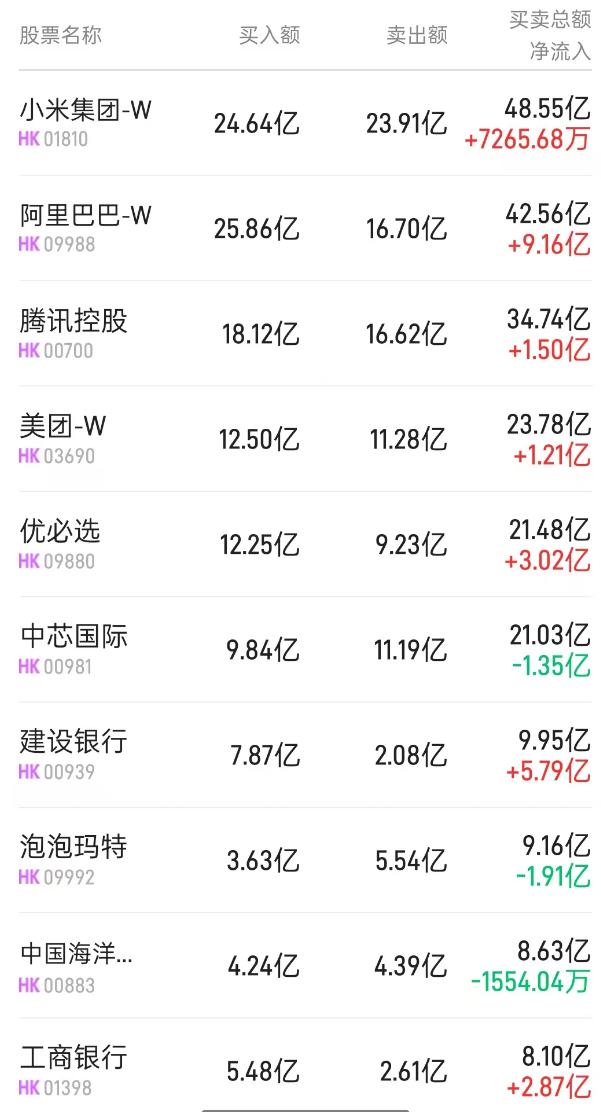
智通财经APP获悉,5月13日港股市场,北水成交净买入22.62亿港元,其中港股通(沪)成交净买入38.33 亿港元,港股通(深)成交净卖出15.72亿港元。 北水净买入最多的个股是建设银行(00939)、阿里巴巴-W(09988)、中海油(00883)。北水净卖出最多的个 股是腾讯(00700)、中芯国际(00981)、小米集团-W(01810)。 | 股票名称 | 买入额 | 卖出额 | 买卖总额 | | --- | --- | --- | --- | | | | | 净流入 | | 小米集团-W | 24.64 乙 | 23.91亿 | 48.55亿 | | HK 01810 | | | +7265.68万 | | 阿里巴巴-W | 25.86亿 | 16.70 亿 | 42.56亿 | | HK 09988 | | | +9.16 Z | | 腾讯控股 | 18.12 乙 | 16.62 乙 | 34.74亿 | | HK 00700 | | | +1.50 乙 | | 美团-W | 12.50 乙 | 11.28亿 | 23.78亿 | | HK 03890 | | | +1.21 乙 | | 优必 ...





小米集团,突然跳水!
Sou Hu Cai Jing· 2025-05-12 04:56
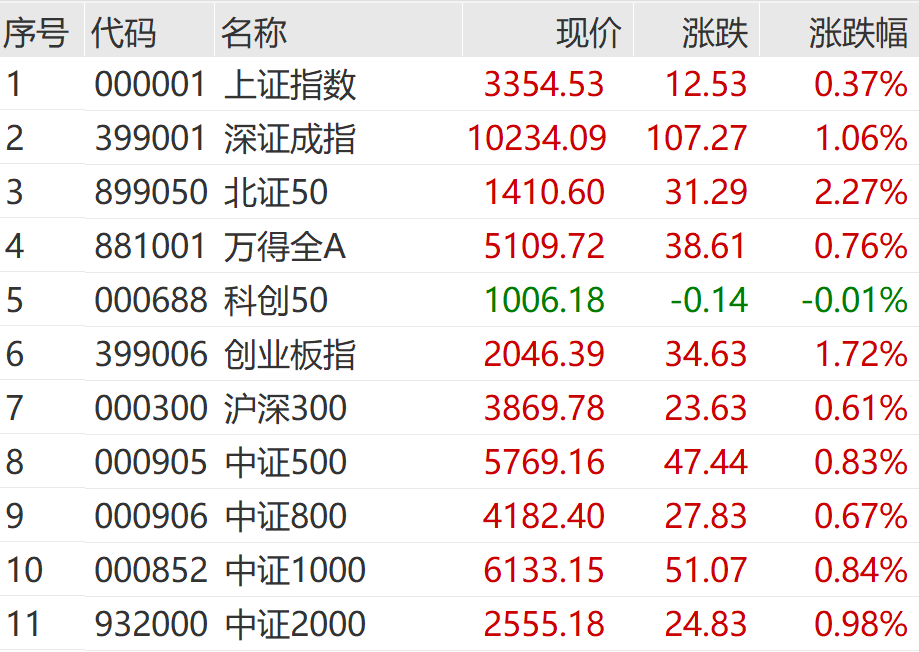
【导读】军工股持续走强,小米集团盘中跳水 中国基金报记者 晨曦 大家好!一起来关注上午的市场行情和最新资讯。 5月12日上午,A股市场盘中冲高,午前略有回落。截至午间收盘,上证指数涨0.37%,深证成指涨1.06%,创业板指涨1.72%。 | | 序号 代码 名称 | 现价 | | 涨跌幅 | | --- | --- | --- | --- | --- | | _ | 000001 上证指数 | 3354.53 12.53 | | 0.37% | | വ | 399001 深证成指 | 10234.09 107.27 | | 1.06% | | 3 | 899050 北证50 | 1410.60 31.29 | | 2.27% | | 4 | 881001 万得全A | 5109.72 | 38.61 | 0.76% | | 5 | 000688 科创50 -- | 1006.18 | -0.14 | -0.01% | | 6 | 399006 创业板指 | 2046.39 | 34.63 | 1.72% | | 7 | 000300 沪深300 | 3869.78 | 23.63 | 0.61% | | 8 ...
小米集团-W(01810):手机中国出货量重回第一,汽车业务迎来关键节点
Tianfeng Securities· 2025-05-11 14:16
Investment Rating - The report maintains a "Buy" rating for Xiaomi Group with a target price of 76.88 HKD, indicating an expected return of over 20% within the next six months [6][5]. Core Insights - Xiaomi's smartphone shipments in China have returned to the top position, with a total of 13.3 million units shipped in Q1 2025, representing a 40% year-on-year growth and capturing a 19% market share [1]. - The AIoT segment is expected to see a revenue increase of 52% year-on-year to 30.93 billion CNY in Q1 2025, with a gross margin projected to rise to 24.1% [2]. - The YU7 model is anticipated to launch between June and July 2025, with multiple range options, potentially replicating the sales success of the SU7 model [2]. - Xiaomi's automotive production capacity is set to expand, with the Beijing factory expected to start operations mid-year, contributing to a total capacity of 300,000 vehicles [3]. - The report projects Xiaomi's total revenue for 2025 and 2026 to be 471.8 billion CNY and 679.7 billion CNY respectively, with net profit estimates adjusted to 42.9 billion CNY and 85.5 billion CNY [4]. Summary by Sections Smartphone Business - Xiaomi's smartphone business is expected to grow by 8% year-on-year in Q1 2025, reaching 50.42 billion CNY with a gross margin of 12.5% [1]. AIoT Segment - The AIoT segment is projected to grow significantly, with a revenue forecast of 30.93 billion CNY in Q1 2025 and a gross margin increase to 24.1% [2]. Automotive Business - The SU7 model's delivery reached 76,000 units in Q1 2025, generating an estimated revenue of 18.8 billion CNY with a gross margin of 22.5% [3]. - The forecast for total automotive shipments in 2025 has been raised to 400,000 units [3]. Financial Projections - The report revises total revenue forecasts for 2025 and 2026 to 471.8 billion CNY and 679.7 billion CNY, respectively, with adjusted net profit estimates of 42.9 billion CNY and 85.5 billion CNY [4][5].

铜师傅文创报考港交所上市,顺为、小米集团等为其主要股东
Sou Hu Cai Jing· 2025-05-10 11:02
Core Viewpoint - Copper Master Cultural (Group) Co., Ltd. has submitted its prospectus for an IPO on the Hong Kong Stock Exchange, aiming to reconstruct and reinterpret Eastern aesthetics through its copper cultural products [1][3]. Company Overview - Copper Master focuses on copper cultural products, particularly copper ornaments, and has expanded its material range to include gold, silver, and plastic to attract a broader audience [3]. - The company was established in March 2013 and was previously known by several names before rebranding to "Copper Master" in December 2024 [3]. - As of now, the registered capital of Copper Master is 57 million yuan, with key shareholders including Yu Guang, Shunwei Capital, Xiaomi Group, and Guangxin Capital [3][4]. Market Position - According to a report by Frost & Sullivan, Copper Master holds the largest market share in China's copper cultural craft products market, with a revenue share of 35.0% in 2024 [3]. Financial Performance - The revenue figures for Copper Master in 2022, 2023, and 2024 were approximately 503 million yuan, 506 million yuan, and 571 million yuan, respectively, while net profits were 56.9 million yuan, 44.1 million yuan, and 78.0 million yuan [5][6]. - The revenue from copper cultural products accounted for 95.4%, 96.3%, and 96.6% of total revenue in the respective years [7]. Product Development - Copper Master regularly introduces new SKUs and product lines, with 2,137, 2,296, and 2,485 SKUs offered in 2022, 2023, and 2024, respectively [7]. - The company has created 300, 279, and 456 new original product IPs in the same years, with self-developed IP contributing to 94.1%, 88.3%, and 93.7% of total revenue [7].

一夜暴涨超70%!
Zhong Guo Ji Jin Bao· 2025-05-10 00:27
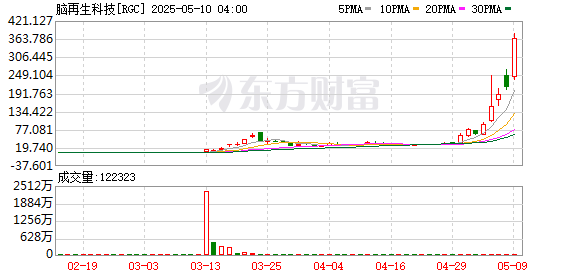
Group 1 - Tesla's stock price surged, reaching a peak increase of 7.80% and closing at $298.26, up 4.72% [19][18] - The Nasdaq China Golden Dragon Index fell by 0.45%, while the Wande China Technology Leaders Index dropped by 0.9% [15] - Brain Regeneration Technology (脑再生) saw a significant increase of over 70% in its stock price [15][3] Group 2 - The three major U.S. stock indices mostly closed lower, with the Dow Jones Industrial Average down 0.29% and the S&P 500 down 0.07% [4][3] - International oil prices rose, with West Texas Intermediate (WTI) crude oil closing at $61.06 per barrel, up 1.92%, and Brent crude oil at $63.91 per barrel, up 1.70% [26][29] - Goldman Sachs recommended a strategy of "going long on stocks and shorting bonds" due to anticipated economic conditions [25]



小米集团-W(01810):2025财年一季度预览:经营杠杆将成为关键亮点
Huajing Securities· 2025-05-09 10:15
Investment Rating - The report maintains a "Buy" rating for Xiaomi Group with a target price of HK$70.00, indicating a potential upside of approximately 40% from the current price of HK$50.10 [2][7][12]. Core Insights - The report highlights that operational leverage will be a key highlight for Xiaomi in the upcoming quarters, particularly driven by strong growth in the IoT segment and strategic adjustments in the smartphone market [3][4]. - The anticipated strong performance in Q1 2025 is attributed to national subsidies supporting large appliances and consumer electronics, with IoT revenue expected to grow by 51% year-on-year to RMB 30.7 billion [3]. - The report notes a significant decline in smartphone shipments in the Indian market, down 38% year-on-year, reflecting Xiaomi's strategic withdrawal from this market due to slowing structural growth [3][4]. Summary by Sections Financial Performance - For Q1 2025, Xiaomi's IoT business is projected to generate RMB 30.7 billion, while smartphone revenue is expected to reach RMB 50.2 billion, reflecting an 8% year-on-year increase [3][13]. - The report forecasts adjusted net profit for Q1 2025 to be around RMB 10.2 billion, with a gross margin of 20.8% for the electric vehicle segment [3][4]. Future Outlook - The report anticipates that the investor day in June and the launch of the YU7 electric vehicle in July will serve as important catalysts for Xiaomi's stock performance [4]. - It is expected that Xiaomi will continue to focus on increasing smartphone prices to navigate potential downturns in global markets, particularly in India and Latin America [4][15]. Earnings Forecast Adjustments - Revenue forecasts for 2025-2027 have been increased by 1%-3% due to rising electric vehicle shipments, with adjusted net profit for 2025 now estimated at RMB 40.1 billion, up from a previous estimate of RMB 34.9 billion [5][14]. - The report also revises the earnings per share (EPS) estimates for 2025 to RMB 1.57, reflecting a 15% increase from earlier projections [8][14]. Valuation - The target valuation multiple has been adjusted from 35.0x to 32.0x based on the 2026 adjusted net profit, reflecting the macroeconomic uncertainties impacting global trade [15][16]. - The report emphasizes that Xiaomi's high-end strategy and the growth of its electric vehicle business are expected to drive future profitability [15][16].
大摩:升小米集团-W(01810)目标价至62港元 维持“增持”评级
智通财经网· 2025-05-09 02:54
Group 1 - Morgan Stanley believes that Xiaomi Group's smartphone, AIoT, internet, and electric vehicle businesses will continue to expand market share, potentially leading to a stock price exceeding 100 HKD by 2030 [1] - The target price for Xiaomi Group has been raised by 38% from 45 HKD to 62 HKD, maintaining an "Overweight" rating [1] - The launch of the Xiaomi SU7 Ultra marks the beginning of its luxury car journey, with electric vehicles and smartphone + AIoT + internet sectors serving as dual growth engines [1] Group 2 - Morgan Stanley forecasts that Xiaomi's total revenue could exceed 100 billion RMB and net profit could surpass 100 billion RMB by 2030, potentially valuing the company at 2.5 trillion RMB [1] - The estimated enterprise value has been adjusted from 204 billion RMB to 497 billion RMB, indicating upward risks in product mix, average selling price, and profit margins [1] - The forecast for electric vehicle sales has been increased to 370,000 units in 2025 and 750,000 units in 2026, with gross margins rising to 20.7% and 22.2% respectively [2] - Cumulative gross profit from electric vehicles is projected to grow from 48.1 billion RMB to 67.6 billion RMB from 2024 to 2026 [2] - Revenue from three traditional business segments is expected to rise from 333 billion RMB in 2024 to 600 billion RMB by 2030, with profits increasing from 33.4 billion RMB to 70 billion RMB in the same period [2]
中证金砖国家(香港)60指数报1445.75点,前十大权重包含小米集团-W等
Jin Rong Jie· 2025-05-07 08:26
Core Points - The China Securities Index (Hong Kong) 60 Index has shown a monthly increase of 1.63%, a quarterly increase of 8.52%, and a year-to-date increase of 11.33% [1] - The index is composed of securities from BRICS countries (Brazil, Russia, India, South Africa, and China) that meet certain size and liquidity criteria [1] - The top ten holdings of the index include Tencent Holdings (13.08%), Alibaba-W (9.47%), HDFC Bank (5.7%), and Reliance Industries (4.42%) [1] Market Composition - The market composition of the index shows that the Hong Kong Stock Exchange accounts for 48.80%, the National Stock Exchange of India for 37.76%, and the Moscow Interbank Currency Exchange for 9.12% [2] - The industry breakdown indicates that financials make up 24.40%, consumer discretionary 20.76%, and communication services 19.67% [2] Index Adjustment Mechanism - The index samples are adjusted biannually, with adjustments occurring on the next trading day after the second Friday of June and December [3] - The adjustment process allows for a maximum sample change of 10%, with new samples prioritized based on their ranking [3]
【中金料小米首季营收或创新高】5月6日讯,中金发表报告,预计小米(01810.HK)首季营收或创新高,并对新车上市及装置方面的人工智能长期增长潜力感到乐观,维持跑赢行业评级。中金预期小米第一季营收按年增长44.85%至1093.7亿元人民币,经调整净利按年增长53.03%至99.3亿元人民币(包括汽车和创新业务3.4亿元人民币的亏损)。由于物联网和汽车业务表现强劲,中金上调小米2025年和2026年经调整纯利预测4.6%和3.8%,至402亿和547.4亿元人民币。
news flash· 2025-05-06 04:59
Core Viewpoint - CICC expects Xiaomi's Q1 revenue to reach a record high, driven by strong performance in IoT and automotive sectors, maintaining an outperform rating [1] Revenue and Profit Forecast - Xiaomi's Q1 revenue is projected to grow by 44.85% year-on-year to 109.37 billion RMB [1] - Adjusted net profit is anticipated to increase by 53.03% year-on-year to 9.93 billion RMB, which includes a loss of 340 million RMB from automotive and innovative businesses [1] Long-term Growth Potential - CICC expresses optimism regarding the long-term growth potential of Xiaomi's new vehicle launches and AI-related devices [1] - The firm has raised its adjusted net profit forecasts for Xiaomi for 2025 and 2026 by 4.6% and 3.8%, respectively, to 40.2 billion RMB and 54.74 billion RMB [1]