中国电力

Search documents
国投证券(香港)港股晨报-20260123
国投证券(香港)· 2026-01-23 07:06
港股晨报 2026 年 1 月 23 日 国投证券(香港)有限公司 • 研究部 1. 国投证券国际视点:科技股分化与消费韧性的博弈,金 价逻辑重构 昨日,港股三大指数涨跌互现,其中,恒生指数涨 0.17%,国企指数跌 0.09%, 恒生科技指数涨 0.28%。大市成交金额 2,348.60 亿元,主板总卖空金额 353.83 亿元,占可卖空股票总成交额比率为 17.01%。南向资金北水方面,港股通交易 净流入 139.30 亿港元。港股通 10 大成交活跃股中,北水净买入最多的是盈富 基金 2800.HK、恒生中国企业 2828.HK、阿里巴巴 9988.HK;净卖出最多的是中 国移动 941.HK、腾讯 700.HK、华虹半导体 1347.HK。 板块方面,建材水泥板块显著上扬,其中,中国建材 3323.HK 涨 6.83%,海螺 水泥 914.HK 涨 5.38%,华润建材科技 1313.HK 涨 4.97%,华新水泥 6655.HK 涨 4.18%。根据国家统计局数据,2025 年全国累计水泥产量 16.93 亿吨,同比下 降 6.9%,降幅与 1-11 月持平,较去年同期收窄 2.6 个百分点,产量为 ...
中国电力(中电国际)多个储能项目并网
Xin Lang Cai Jing· 2026-01-22 10:08
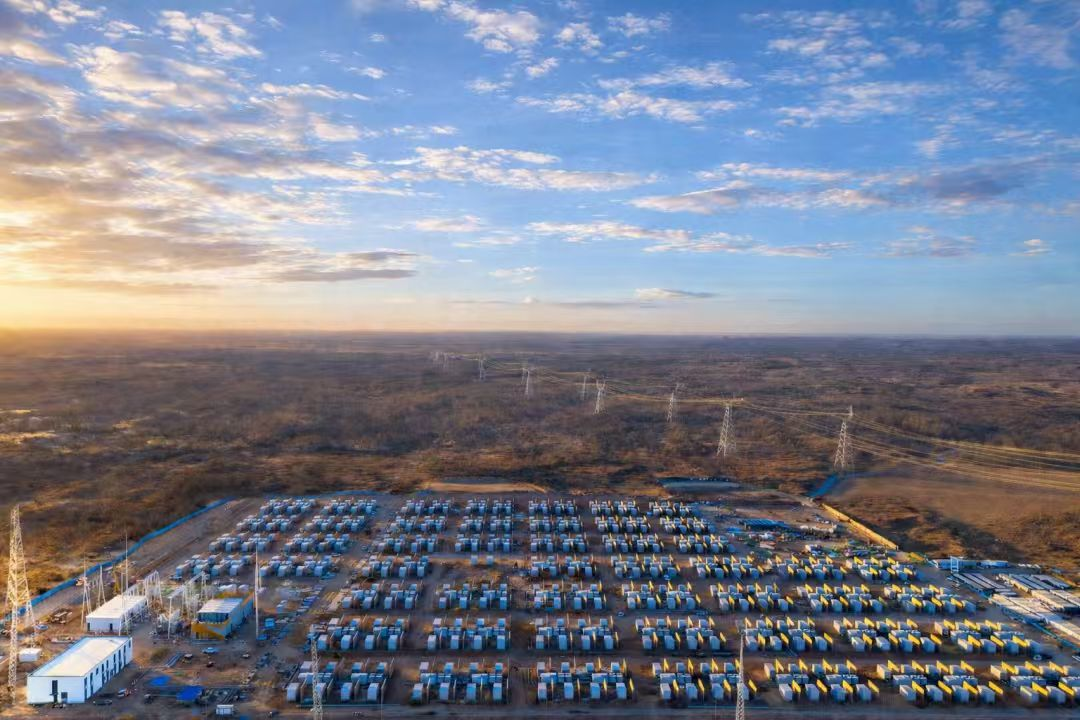
新源智储承建的青海共和200兆瓦/800兆瓦时配储项目一期地处青海海南州共和县塔拉滩。项目突破多项高寒地区储能系统集成与安装难题,投运后将有 效提升海南州电网的调峰调频能力,增强系统运行弹性,促进周边风电、光伏发电高效消纳,助力青海打造国家清洁能源示范高地。 风机机组各系统设备运行平稳,主要运行参数均符合技术规程规范要求。 转载自:国家电投官网 WETOWN ELECTRIC 近日,国家电投集团中国电力(中电国际)新源智储在内蒙古、甘肃、新疆、青海等地承建的多个储能项目相继并网投运,涵盖不同规模与应用场景,为 区域电网调峰调频、新能源消纳提供有力支撑,推动能源结构优化升级。 新源智储内蒙古通辽150兆瓦/600兆瓦时新能源配储项目位于通辽市奈曼旗金沙500千伏变电站周边。项目投产后,可为蒙东电网提供快速、灵活的功率支 撑与频率调节服务,大幅提升电网对风电、光伏等波动性电源的消纳能力,进一步增强区域供电可靠性与经济运行水平。 新源智储甘肃靖远10兆瓦/20兆瓦时储能项目位于甘肃白银市靖远县。项目团队在建设中注重防风固沙、低温施工等专项技术措施的落实,采用适应恶劣 环境的储能设备与安装工艺,顺利完成系统集成与调试 ...



2025年度全社会用电量数据发布
Guosen International· 2026-01-21 09:50
Investment Rating - The report suggests a focus on undervalued, high-dividend, and quality asset power operators such as China Power (2380.HK) and Beijing Energy Clean Power (579.HK) [5][6] Core Insights - In 2025, the total electricity consumption in China reached 10.3682 trillion kilowatt-hours, marking a year-on-year growth of 5.0%, the first time surpassing 10 trillion kilowatt-hours globally [2][5] - The growth in electricity consumption was primarily driven by the tertiary industry and urban-rural residential electricity usage, contributing nearly half of the total growth [3][5] - Emerging and high-tech industries significantly boosted electricity consumption, with sectors like electric vehicle manufacturing and wind power equipment seeing growth rates exceeding 20% and 30% respectively [3][5] Summary by Sections Total Electricity Consumption - The total electricity consumption in 2025 was 10.3682 trillion kilowatt-hours, with a year-on-year increase of 5.0% [2][5] - Breakdown by sectors: - Primary industry: 149.4 billion kilowatt-hours, up 9.9% - Secondary industry: 66,366 billion kilowatt-hours, up 3.7% - Tertiary industry: 19,942 billion kilowatt-hours, up 8.2% - Urban and rural residential consumption: 15,880 billion kilowatt-hours, up 6.3% [2][3] Industrial Power Generation - The industrial power generation in 2025 was 97,159 billion kilowatt-hours, with a year-on-year growth of 2.2% [4][5] - December 2025 saw a slight increase of 0.1% in industrial power generation compared to the previous year [4] Investment Opportunities - The report highlights that the overall valuation of the Hong Kong power operator sector is low, with several stocks offering dividend yields exceeding or nearing 6% [5] - The report emphasizes the potential for investment in quality power operators like China Power (2380.HK) and Beijing Energy Clean Power (579.HK) due to their strong performance and favorable market conditions [5][6]
中国电力何时见底系列i:中美电价剪刀差:大国的相同与不同
HTSC· 2026-01-21 07:25
Investment Rating - The report maintains an "Overweight" rating for the public utility sector and the power generation sector [2]. Core Viewpoints - The report argues that the core logic determining the valuation of power stocks has changed in the new energy era, with expectations of a rebound in electricity prices and stock valuations as coal prices stabilize [4][6]. - It highlights that the most challenging phase for electricity supply and demand in China has passed, with expectations of a recovery in demand starting in 2026 [4][7]. - The report emphasizes that the valuation gap between U.S. and Chinese power stocks has widened significantly, with U.S. power stocks trading at 2-4 times the price-to-book (PB) ratio of their Chinese counterparts [4][6][7]. Summary by Sections Investment Recommendations - The report recommends several undervalued power operators, including Huaneng International, Guodian Power, and China Power [3][8]. - It suggests that the capacity price increase in 2026 will benefit thermal power, while the stabilization of energy prices will favor nuclear, green, and hydropower [8]. Market Dynamics - The report notes that both China and the U.S. are experiencing similar electricity shortages due to a slowdown in the growth of base-load power sources, with structural demand exceeding expectations potentially leading to supply crises [5][26]. - It discusses the significant differences in electricity pricing structures between the two countries, with U.S. electricity prices being significantly higher due to various systemic costs [56][58]. Price Trends and Projections - The report predicts that by 2026, the industrial electricity prices in China will be significantly lower than those in the U.S., enhancing the competitiveness of Chinese manufacturing [6][11]. - It highlights that the electricity price gap between the two countries is expected to continue to widen, benefiting China's manufacturing sector [6][8]. Supply and Demand Outlook - The report indicates that the most severe supply-demand imbalance in China has passed, with expectations of a recovery in electricity demand driven by increased manufacturing investment [7][8]. - It also notes that the U.S. is facing a similar situation, with a projected decline in gas-fired electricity generation and a potential increase in coal-fired generation [5][30].





今年中国电力负荷三创冬季新高
Zhong Guo Xin Wen Wang· 2026-01-21 02:10
Core Insights - China's electricity load reached a record high in winter 2026, surpassing 1.4 billion kilowatts for the first time, peaking at 1.417 billion kilowatts, with daily electricity consumption exceeding 30 billion kilowatt-hours for the first time in winter [1] Group 1: Electricity Load Trends - The national maximum electricity load hit 1.351 billion kilowatts on January 4, setting a new winter historical high [1] - From January 18, due to a widespread cold wave, the national electricity load increased rapidly, rising by 150 million kilowatts in three days, equivalent to Japan's maximum annual electricity load [1] - On January 19 and 20, the electricity load reached new winter historical highs, with January 20 peaking at 1.417 billion kilowatts [1] Group 2: Regional Performance - The electricity load in North China, Northwest China, Northeast China, and 12 provincial-level power grids including Xinjiang and Tibet has set historical highs 75 times since the beginning of winter [1] Group 3: Electricity Consumption - Daily electricity consumption has remained high, with January 5 marking the first time daily consumption exceeded 30 billion kilowatt-hours in winter [1] - Daily electricity consumption also surpassed 30 billion kilowatt-hours on January 5-7 and January 19, indicating an improvement in China's winter energy security capabilities [1] Group 4: Future Actions - The National Energy Administration will guide and supervise local power companies to ensure winter heating and supply, monitoring electricity supply and demand changes daily to address potential risks and ensure stable electricity supply [1]
中国电力行业技能评价服务“走出去”实现突破
Zhong Guo Jing Ji Wang· 2026-01-20 06:06
2025年,中电联深入贯彻落实国家"一带一路"倡议,紧密对接电力央企海外项目人才培养需求,推动4 家海外评价基地纳入电力行业技能人才评价体系,并首次圆满完成在柬埔寨、缅甸、乌兹别克斯坦等国 的企业人才技能评价工作。这标志着中国电力行业技能评价服务"走出去"实现重大突破,为推进海外技 能人才评价、服务海外中资企业、促进技术技能国际交流开辟了新路径。 为推动海外培训评价工作常态化,中电联开展了海外评价基地征集建设工作,组织国内顶尖行业专家团 队,指导中广核非洲能源公司(塞内加尔)、华电柬埔寨西港发电厂(柬埔寨)、大唐布卡新能源开发有限 责任公司(乌兹别克斯坦)、恒华职业技术学院(卢旺达)4家单位,构建培训评价工作体系,编制工作流程 制度,培养管理和师资团队,升级场地和设备设施条件,使其达到了国内中等评价基地要求,具备开展 常态化培训评价的条件。 随着"一带一路"能源合作持续深化,中国大唐集团境外项目本土化率稳步提升,外籍员工已成为保障电 站安全运行的重要力量。针对"无标准可依、无认证可考"的现实困境,中电联人才工作办公室精准对接 企业需求,完成对柬埔寨、缅甸、乌兹别克斯坦三国18名外籍员工的系统性培训,并于202 ...
4万亿投资激活行业景气度,高盛看好中国电力设备企业:长期成长空间打开。
智通财经网· 2026-01-19 14:15
Core Insights - The electric power equipment sector has become a new market focus due to the State Grid's announcement of a 4 trillion yuan fixed asset investment plan, marking a 40% increase from the previous plan and setting a historical high [1] - Goldman Sachs predicts an average annual investment of at least 800 billion yuan, with a compound growth rate of at least 6%, potentially reaching 8% due to the demand from renewable energy consumption and AI data centers [1] Part 01: Transition from UHV to Smart Grid - The 4 trillion yuan investment is not evenly distributed but shows a clear phased structure, reflecting China's strategic shift from "backbone expansion" to "smart upgrades" [2] - By 2026, UHV is expected to be the fastest-growing segment with a year-on-year growth rate of 24%, transitioning to smart grid and distribution network construction thereafter [2] - UHV investment will experience a "short-term high growth, gradual slowdown" process, with a planned new construction of 5 UHV lines in 2026, decreasing to 4 lines annually from 2027 to 2030 [2] Part 02: Investment Trends and Market Dynamics - In 2025, the electric grid industry is expected to show a divergence with "investment growth below expectations but strong equipment bidding" [5] - From January to November 2025, the State Grid's fixed asset investment reached 560.4 billion yuan, a 6% year-on-year increase, with an expected annual growth rate of 11%, lower than Goldman Sachs' previous forecast of 13% [5] - The bidding market for equipment is robust, with a total bidding amount for transmission equipment increasing by 26% year-on-year [5] Part 03: Market Concentration and Competitive Landscape - The strong growth in the bidding market is leading to increased market concentration among leading companies, with the market share of core products like GIS and transformers improving [6] - In the circuit breaker sector, Siyi Electric's market share is projected to rise from 16% in 2023 to 49% in 2025, while TBEA remains the leader in power transformers with a 23% market share [6] - The concentration of market share is driven by technological barriers and capacity advantages, as companies with core technologies and scalable delivery capabilities continue to capture market share [6]


信用半月谈系列报告之三:如何看待熊猫债的投资价值?
Shenwan Hongyuan Securities· 2026-01-19 14:14
Group 1 - Panda bonds are RMB-denominated bonds issued by foreign entities in the Chinese market, which have evolved significantly since their inception in 2005, becoming an important part of China's bond market opening [2][6][12] - The regulatory framework for Panda bonds has transitioned from strict limitations to a more open system, with key milestones including the relaxation of fundraising restrictions in 2016 and the establishment of a classification registration system in 2018 [2][8][12] - The current Panda bond market features a diverse range of issuers, with a total outstanding bond balance of approximately 425.8 billion RMB, where over 80% of bonds have a remaining maturity of less than 3 years and a high proportion of issuers rated AA+ or above [2][18][23] Group 2 - The investor structure in the Panda bond market is becoming more diversified, with foreign institutions maintaining stable holdings and domestic securities firms, policy banks, and commercial banks increasing their participation significantly [2][28][30] - The liquidity in the secondary market for Panda bonds is relatively low, with monthly turnover rates generally between 7% and 14%, which is lower than that of ordinary credit bonds in the interbank market [2][28][31] - The pricing level of Panda bonds is generally consistent with domestic bonds of the same credit rating, with yields for different maturities as of January 14, 2026, showing no significant premium [2][38][39] Group 3 - The investment value of Panda bonds is expected to remain attractive in 2026, with the bond market likely to exhibit characteristics of "low interest rates and high volatility," making short to medium-term credit bonds appealing for yield and leverage strategies [2][41][42] - Specific strategies for investment include focusing on short to medium-term bonds with a remaining maturity of less than 3 years that have a yield spread of over 20 basis points compared to similar domestic bonds, and identifying structural arbitrage opportunities in high-quality state-owned enterprises issuing bonds abroad [2][42][44] - The report highlights that there are currently 23 eligible Panda bonds with a total balance of 17.55 billion RMB that meet the criteria for significant yield spreads, indicating potential investment opportunities [2][44]
4万亿投资激活行业景气度,高盛看好中国电力设备企业:长期成长空间打开
Zhi Tong Cai Jing· 2026-01-19 14:00
Core Insights - The power equipment sector has become a new market focus due to the State Grid's announcement of a 4 trillion yuan fixed asset investment plan, marking a 40% increase from the previous plan and setting a historical high [1] - Goldman Sachs predicts an average annual investment of at least 800 billion yuan, with a compound growth rate potentially reaching 8% due to the demand from renewable energy consumption and AI data centers [1] Investment Structure and Trends - The 4 trillion yuan investment is characterized by a clear phased structure, reflecting a strategic shift from "backbone expansion" to "smart upgrades" in China's power grid [2] - By 2026, ultra-high voltage (UHV) is expected to be the fastest-growing segment with a year-on-year growth rate of 24%, transitioning to smart grid and distribution network construction thereafter [2] - Investment in distribution networks and smart grids is projected to increase, with distribution network investment growth surpassing that of transmission from 2026 to 2030 [2][3] Market Dynamics and Equipment Demand - The increasing share of renewable energy and the construction of over 40 million charging infrastructures will significantly increase grid volatility, necessitating the adoption of digital technologies [3] - The demand for smart grids will be further intensified by the surge in AI and data center electricity consumption expected between 2028 and 2030 [4] Equipment Bidding and Market Concentration - In 2025, the investment growth rate is expected to be lower than anticipated, but the bidding market remains strong, indicating a divergence in industry dynamics [5] - The total bidding amount for transmission equipment in 2025 is projected to grow by 26%, with significant increases in both primary and secondary equipment categories [5] - Market concentration is increasing, with leading companies gaining market share in key product areas, driven by technological barriers and capacity advantages [6] Long-term Investment Opportunities - The 4 trillion yuan investment presents two main investment lines: short-term beneficiaries from UHV demand and long-term gains from smart grid upgrades, particularly for companies like NARI Technology and Sanyuan Electric [7] - The ongoing concentration of market share among leading firms is expected to enhance their competitive advantages in the evolving landscape of the power equipment sector [7]
马斯克再次预言!2026年AGI降临,中国电力领跑,AI算力竞争
Sou Hu Cai Jing· 2026-01-19 13:11
Group 1 - Elon Musk predicts that AGI will fully arrive by 2026, emphasizing that the true battleground for AI is not chips but electricity, with China poised to dominate this hidden arena [3][13] - Musk states that the future currency will essentially be watts, indicating that electricity will become the hard currency of the future, surpassing Bitcoin and gold [4][13] - The construction of xAI's Colossus2 data center in Tennessee took a year just to secure power access, highlighting the challenges in electricity infrastructure [6][11] Group 2 - China is expected to have three times the power generation capacity of the U.S. by 2026, giving it a significant advantage in the upcoming "power race" [13][44] - The U.S. electrical grid is largely outdated, with many systems dating back to the 1960s and 70s, making it difficult to keep pace with China's advancements [11][44] - The efficiency of AI in processing information poses a threat to white-collar jobs, as AI can perform tasks traditionally requiring human intelligence at a much lower cost and higher efficiency [15][17] Group 3 - Musk predicts that by 2040, the number of robots will reach 10 billion, leading to a significant reduction in production costs and a potential shift towards universal basic income [25][44] - The upcoming Grok5 AI model from xAI will have a parameter count of 60 trillion, indicating a significant leap in AI capabilities [27][29] - Neuralink plans to launch large-scale production of brain-machine interfaces by 2026, which could revolutionize human interaction with technology [31][44] Group 4 - The transition to a new technological era will require individuals to acquire hard skills related to AI collaboration and renewable energy, as traditional educational pathways may become obsolete [40][44] - Companies must focus on electricity, computing power, models, and applications to remain relevant in the face of rapid technological change [46][48] - The urgency of preparing for the impending changes is emphasized, as the countdown to AGI has already begun [48]