
中欧基金

Search documents
基金经理扩容!开年46人上岗 出于蓝如何胜于蓝?
Zhong Guo Jing Ji Wang· 2026-02-02 00:36
Group 1 - A total of 46 new fund managers have started their roles since the beginning of the year, primarily managing equity funds [1][2] - The new fund managers come from 35 different fund companies, including both large and small public funds, with a majority focusing on equity funds [2][3] - The educational background of the new fund managers is diverse, with all holding at least a master's degree, and many having experience as researchers or assistants before becoming fund managers [4][5] Group 2 - The trend of "sell-side to buy-side" career progression remains prevalent, with many new managers having transitioned from research roles [4][6] - New fund managers are generally younger, with many being born in the 1980s and 1990s, and they exhibit strong educational qualifications [4][7] - The average tenure from researcher to fund manager is around 6 to 8 years, with some achieving this in as little as 3 years [5][6] Group 3 - New fund managers often face challenges such as low initial attention and small management scales, requiring them to develop their investment frameworks [7][8] - Collaboration with experienced fund managers is common, allowing new managers to learn and grow in their roles [7][8] - Emphasis is placed on long-term performance and risk control, with a shift towards evaluating managers based on their ability to generate sustainable returns [8][9]
新基金频频提前结募 建仓脚步加快
Zhong Guo Zheng Quan Bao· 2026-02-01 20:53
Core Insights - The speed of new fund issuance and investment has significantly accelerated since 2026, with many funds announcing early closure of their fundraising periods [1][2] - A total of 18 new funds completed their fundraising in just one day from the beginning of 2026 to January 30, while 27 funds took between 2 to 5 days to issue [2] - New funds are also quickly starting their investment activities, with several funds already showing changes in net value shortly after their establishment [2][3] Fundraising and Closure - Several funds, including Rongtong Technology Selected Mixed Fund and Fuguo ETF, have announced early closure of their fundraising periods to better protect investor interests [1][2] - Other funds such as Caitong Asset Management and Bosera have also followed suit, indicating a trend of early fundraising closures across various fund types [2] Rapid Investment Activities - Newly established funds are accelerating their investment processes, with examples like Wanjia Qitai Stable Mixed Fund showing net value changes shortly after establishment [2][3] - Funds like Ruiyuan Research Balanced Fund have also demonstrated quick investment actions, with net value changes occurring within weeks of their launch [2][3] Market Outlook - Several companies express optimism about the market, suggesting that the macro environment remains favorable and liquidity is abundant, indicating potential for further market movements in the spring [3][4] - Jin Ying Fund notes that the market is expected to shift focus from short-term trading to emphasizing industry trends and profit certainty, suggesting structural opportunities will dominate [4] - Fuguo Fund highlights that current policies are positively guiding the market, with expectations for continued solid fundamentals and opportunities in technology growth and sectors with rising prosperity [4]
小微基金起死回生 背后“灵药”是什么
Zhong Guo Zheng Quan Bao· 2026-02-01 20:53
□本报记者 王鹤静 在2025年四季度的结构性行情下,广发碳中和主题、中欧周期优选、泰信发展主题等一批主动权益基 金,凭借对储能、资源品等热门板块机遇的把握,顺利实现从业绩到规模的转化,成功盘活"小微"产 品。此外,鹏华稳健增利、富国盛利增强等二级债基抓住了"固收+"发展风口,通过进一步明确特色化 资产配置策略,资金关注度明显提高,同样顺利走出"小微"困境。 "小微"产品历来是让各家基金公司颇为头疼的"包袱"。此类产品如何把握市场机遇,盘活产品资源,从 而保护持有人利益?业内分析人士认为,基金管理人可以实施差异化战略,找准市场空白或细分领域, 打造特色产品;同时,加强投资者教育,让投资者了解产品的投资理念与优势、增强信任。而盲目跟风 市场热点、过度依赖短期营销手段等方式则不可取。 成功摆脱"小微"困境 2025年四季度的结构性行情,给公募机构提供了抓热点、做业绩的窗口期。其中,广发碳中和主题、中 欧周期优选、泰信发展主题等一批主动权益基金抓住机会,顺利摆脱生存困境。 "固收+"重整获资金认可 过去一年,在利率下行及权益市场走强的背景下,"固收+"基金颇受资金欢迎。2025年四季度,多只"固 收+"产品抓住发展 ...
新旧交替!百亿基金经理大洗牌
券商中国· 2026-02-01 13:12
Core Viewpoint - The rise of AI technology has led to a new batch of active equity fund managers managing over 10 billion yuan, referred to as "new hundred billion" fund managers, who are now part of the latest lineup alongside established managers like Zhang Kun and Liu Yanchun, creating a "new and old" transition in the fund management landscape [1][7]. Group 1: New vs. Old Fund Managers - As of January 31, the number of active equity fund managers managing over 10 billion yuan remains above 100, continuing a trend of recovery since Q3 2025, returning to levels seen at the end of 2023 [2]. - "New hundred billion" fund managers typically have shorter management tenures and previously lower scales, but have rapidly grown their assets under management (AUM) in 2025, with examples like Zhang Lu from Yongying Fund, whose AUM increased from just over 2 billion yuan at the end of 2024 to over 30 billion yuan [2]. - Other notable "new hundred billion" managers include Lan Xiaokang from China Europe Fund and Zheng Xi from E Fund, both of whom saw significant AUM increases in the past year [3]. Group 2: Performance and Strategy Shifts - Established "old hundred billion" managers like Zhang Kun and Liu Yanchun still hold significant AUM but have seen declines from their peak levels, with Zhang Kun's AUM dropping from over 130 billion yuan in 2021 to around 48 billion yuan currently [3]. - The market dynamics have shifted, with "new hundred billion" managers benefiting from the AI and technology sectors, while "old hundred billion" managers have largely maintained positions in traditional blue-chip assets, leading to performance discrepancies [7][8]. - Some "old hundred billion" managers have begun to adjust their strategies, with examples like Xie Zhiyu, who has shifted from blue-chip stocks to technology-focused investments, achieving notable returns [8]. Group 3: Market Dynamics and Risks - The current market structure reflects a systematic reconstruction of active equity funds driven by style rotation and performance dynamics, with a notable shift towards technology growth sectors [7]. - There is a cautionary note regarding the potential risks associated with large fund sizes, as excessive concentration in specific sectors like AI could lead to significant volatility and redemption pressures [9][10]. - The regulatory environment is tightening, requiring fund managers to create sustainable performance metrics while managing the risks associated with large AUM and concentrated holdings [10].


“顶流”暗淡了星光,新秀“杀了个痛快”,罕见大洗牌来了
Xin Lang Cai Jing· 2026-02-01 13:12
Core Insights - The number of active equity fund managers managing over 10 billion yuan increased from 77 at the end of 2024 to 93 by the end of 2025, indicating a significant reshuffling in the "billion club" of fund managers [1][2][10] - Traditional top fund managers have seen a decline in their management scale, while new managers focusing on technology sectors have emerged rapidly, reflecting a shift in investor preferences towards strategies that align with market trends [1][2][3][5] Fund Manager Changes - As of Q4 2025, 93 active equity fund managers manage over 10 billion yuan, an increase of 16 from the previous year, with notable names like Zhang Kun and Xie Zhiyu still leading the pack [2][10] - Some star fund managers, particularly those heavily invested in consumer stocks, have experienced significant scale reductions, with losses exceeding 10 billion yuan for managers like Liu Yanchun and Zhang Kun [2][10] - New entrants in the technology sector, such as Ren Jie and Zhang Haixiao, have seen their management scales grow from under 1 billion yuan to over 10 billion yuan, showcasing the rapid rise of new talent [2][10] Market Structure and Style Changes - The changes in the billion club are attributed to a combination of short-term market style shifts and a long-term feedback mechanism between scale and performance [3][11] - The transition from a focus on large-scale fund managers to those offering sustainable performance indicates a maturation of investor behavior, moving away from merely chasing historical performance [3][11][12] Industry Trends - The public fund industry is currently undergoing a high-quality development phase, with regulatory actions promoting long-term assessments and fee reforms, pushing the industry to prioritize investor returns over sheer scale [4][12] - The trend of "de-starring" fund managers is gaining traction, as firms seek to reduce reliance on individual managers and focus on building robust research teams [5][12][13] Investment Strengths - Future success in the billion club will depend on fund managers' abilities to control drawdowns and adapt investment strategies, emphasizing the importance of "hard skills" in investment management [6][14] - The industry is expected to evolve towards two main types of funds: those providing stable excess returns and those with clear investment styles, while poorly defined products are likely to be phased out [6][14][15]
1个季度规模翻15倍!这些基金精准踩中热点
Zhong Guo Zheng Quan Bao· 2026-02-01 10:03
Core Viewpoint - The article highlights the successful transformation of several small-scale active equity funds into larger funds within a single quarter, driven by strategic investments in high-demand sectors such as energy storage and resource commodities during the structural market conditions of Q4 2025 [1][2]. Group 1: Fund Performance and Growth - Several active equity funds, including GF Carbon Neutral Theme, China Europe Cycle Selection, and Taixin Development Theme, managed to escape the "small fund" predicament by capitalizing on market opportunities in Q4 2025 [2][4]. - As of the end of Q3 2025, these funds were all categorized as "small funds" with sizes below 100 million yuan, with Taixin Development Theme maintaining a size below 10 million yuan since its inception in 2015 [2]. - Taixin Development Theme significantly increased its allocation to energy metals and industrial metals, achieving a return of over 35% in Q4 2025, which led to a surge in its fund size from approximately 5.16 million yuan to 1.547 billion yuan [3]. Group 2: Investment Strategies - The funds successfully adjusted their portfolios in Q4 2025, with GF Carbon Neutral Theme introducing nine new stocks, including major gainers like Tianhua New Energy and Dazhong Mining, while China Europe Cycle Selection updated seven stocks, focusing on resource sectors [3][4]. - The article emphasizes that successful fund managers utilized solid research capabilities to implement differentiated strategies, identifying market gaps and niche areas rather than merely following market trends [1][6]. Group 3: Market Trends and Investor Sentiment - The Q4 2025 market saw significant growth in high-demand sectors such as AI, lithium batteries, and non-ferrous metals, which contributed to the substantial increase in fund net values and investor recognition [5]. - The article notes that smaller fund companies often adopt differentiated competition strategies due to limited resources, focusing on specific niche markets to meet institutional investors' needs [6][7].


基金经理扩容!开年46人上岗,出于蓝如何胜于蓝?
券商中国· 2026-02-01 08:23
新年新气象,基金经理新人密集上岗。 | 周波昂 | 男 | 侧工 | 2026-01-23 | 甲庚星金 | | --- | --- | --- | --- | --- | | 潘科 | 男 | 硕士 | 2026-01-22 | 安信基金 | | 张子健 | 男 | 硕士 | 2026-01-21 | 鹏非基金 | | 于智伟 | 場 | 硕士 | 2026-01-21 | 九泰基金 | | 胡涛 | 男 | 硕士 | 2026-01-21 | 平安基金 | | रूर्य | 女 | 硕士 | 2026-01-20 | 长盛基金 | | 王梦恺 | 男 | 硕士 | 2026-01-20 | 南华基金 | | 陈祥 | 男 | 博士 | 2026-01-20 | 天弘基金 | | 李嘉琪 | 女 | 博士 | 2026-01-20 | 长江证券(上海)资管 | | 郭威 | 男 | 硕士 | 2026-01-20 | 国联基金 | | 丁仲元 | 男 | 硕士 | | 2026-01-20 国泰海通证券资管 | | 卓佳亮 | 男 | | 2026-01-19 | 天治基金 | | 刘裴 。 | E | ...

25Q4基金转债持仓分析:固收+继续扩张,增配科技化工
GOLDEN SUN SECURITIES· 2026-02-01 06:40
证券研究报告 | 固定收益 gszqdatemark 2026 01 31 年 月 日 固定收益点评 固收+继续扩张,增配科技化工——25Q4 基金转债持仓分析 2025Q4 公募基金持有转债规模占转债总市值的 57.74%,环比下降 4.08pcts,仓位小幅下降 0.05pcts。截止 2025Q4,转债市场存量余额 5338.90 亿元,环比 25Q3 增加 4.30%。权益势强背景下,固收+配置需 求仍在,转债存量规模略有增加,但机构持有转债比重略有下降。2025Q4 公募基金持有转债市值 3082.51 亿元,占转债总市值的 57.74%,较三季 度减少 4.08pcts;公募基金持有转债仓位为 0.76%,环比下降 0.05pcts。 二级债基、一级债基加仓转债。从结构上看,持有转债较多的基金类型为 债券型基金中的二级债基( 36.41%)、可转债基金 36.29%)和债券型基 金中的一级债基 21.90%)、偏债混合型基金( 3.30%)、灵活配置型基金 2.10%)。受基金产品定位与市场策略分化影响,环比 25Q3,二级债基 转债市值增加 39.63 亿元 3.72%,表示转债持有比重增加 3 ...
某基金公司违规营销,或改变基金营销格局
Xin Lang Cai Jing· 2026-02-01 02:28
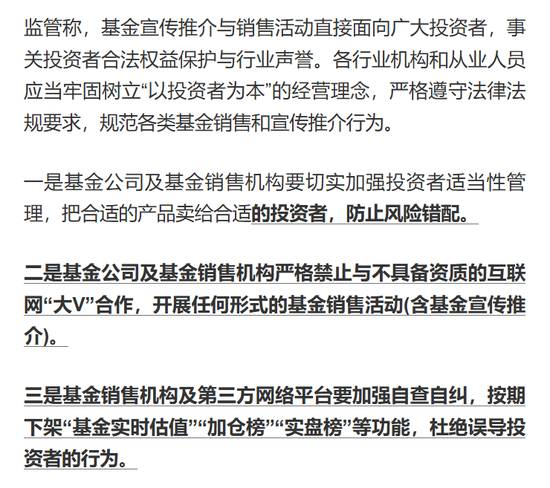
Core Viewpoint - The rise of internet marketing in the financial sector, particularly in fund sales, has led to both opportunities and challenges, including regulatory scrutiny due to improper marketing practices by some fund companies [1][35][36]. Group 1: Internet Marketing in Finance - The proliferation of 4G and 5G has facilitated the growth of internet marketing across various industries, including finance, where fund companies have leveraged these technologies for promotion and investor education [1][34]. - Fund products, like other consumer goods, can be marketed effectively online, but they are unique financial products that carry the risk of loss, making responsible marketing essential [1][35]. Group 2: Regulatory Concerns - Recent incidents of improper marketing by a fund company have prompted regulatory responses, highlighting the need for compliance in financial product promotion [1][35][36]. - The regulatory framework emphasizes the importance of selling suitable products to appropriate investors and prohibits unqualified influencers from participating in fund marketing [2][37]. Group 3: Role of Influencers and Advisors - Unqualified influencers, referred to as "Big Vs," are banned from engaging in fund marketing due to the potential for misleading investors [8][42]. - Fund companies are assessing whether influencers are qualified professionals, with some influencers considering obtaining advisory licenses to comply with regulations [44][47]. Group 4: Future Trends and Compliance - The industry anticipates that the implementation of new regulations will lead to a clearer separation between advisory roles and marketing activities, reducing conflicts of interest [19][66]. - There is a growing trend for influencers to focus on investor education, brand building, and team development rather than promoting specific fund products [58][69].
疯狂吸金!四季度这些主动权益基金赢麻了
市值风云· 2026-01-30 10:09
Core Viewpoint - The article highlights the significant capital inflow into high-elasticity sectors, particularly in the technology space, during the fourth quarter of 2025, showcasing a stark contrast in market performance between high-growth and value-oriented investments [1][18]. Group 1: Fund Performance and Capital Inflows - In the fourth quarter of 2025, 12 actively managed equity funds saw their shares increase by over 1 billion units, indicating strong investor interest despite market volatility [5]. - The top two funds with the largest share increases were both managed by Yongying Fund, focusing on hard technology sectors, with the Yongying Pioneer Semiconductor Fund (025208.OF) increasing by 6.67 billion units and reaching a total scale of 9.33 billion yuan [7][11]. - The Yongying High-end Equipment Fund (015789.OF) also performed well, with a share increase of 5.61 billion units and a total scale of 9.76 billion yuan, primarily investing in commercial aerospace [11][13]. Group 2: Investment Strategies and Manager Profiles - Fund managers like Zhang Haiqiao and Zhang Lu from Yongying Fund have successfully attracted significant capital by focusing on high-growth technology sectors, reflecting a trend where performance drives investor interest [9][11]. - Notable fund manager Fan Yan from Fuguo Fund also saw substantial inflows into her balanced investment fund, which increased by 1.18 billion units despite a net value decline, indicating investor confidence in her long-term strategy [20][21]. - Similarly, manager Nie Shilin from Anxin Fund experienced a share increase of 2.54 billion units in his fund, despite a near 5% loss, showcasing a preference for defensive strategies amid market fluctuations [22][23]. Group 3: Value and Defensive Strategies - The article notes a trend where funds like the Industrial Bank Value Selection Fund (019085.OF) saw share increases despite negative performance, indicating a strategy of accumulating value assets viewed as defensive positions [26]. - The fund manager You Hongye emphasized the potential recovery in the real estate sector, which is currently undervalued, suggesting a long-term investment perspective [26]. - Overall, the fourth quarter of 2025 saw a dual approach where investors chased high-growth technology while also seeking safety in value-oriented strategies, reflecting a complex market sentiment [30][33].
