加速进化

Search documents
100亿都不够烧!机器人公司CEO们给出新判断:具身智能不能再照搬LLM
Sou Hu Cai Jing· 2025-11-22 02:41
Core Insights - The event highlighted the latest advancements in embodied intelligence by the Zhiyuan Research Institute, focusing on the importance of world models and the development of a comprehensive embodied brain system [2][3] Group 1: Zhiyuan's Full-Stack Layout - Zhiyuan introduced the native multimodal world model Emu3.5, which expanded training data from 15 years of video to 790 years and increased parameter size from 8 billion to 34 billion, enhancing video and image generation speed [5] - The institute is constructing a cross-heterogeneous ontology embodied intelligence system, including RoboBrain, RoboOS, and RoboBrain-0, deployed across various robotic forms for tasks ranging from navigation to complex interactions [5] Group 2: Key Elements of Embodied Intelligence - The role of world models in embodied intelligence was debated, with experts emphasizing the need for models that predict the next state based on the robot's form and goals, rather than merely generating videos [7][10] - There is a consensus that embodied intelligence should not follow the current language-first paradigm but rather adopt a structure centered on action and perception [10][12] - The importance of real data was highlighted, with discussions on the necessity of combining real, simulated, and video data for effective learning in robots [15][17] Group 3: Investment Priorities - When asked how to allocate 10 billion, experts prioritized talent acquisition, computational power, and data engines as key investment areas [19][21] - There were differing views on the importance of infrastructure versus model development, with some advocating for a focus on creating a comprehensive data engine for continuous digitalization [21][22] Group 4: Human-like Robots and Hardware Limitations - The debate on whether human-like robots represent the ultimate form of embodied intelligence concluded that neither models nor hardware define each other; rather, the specific application scenarios dictate the requirements [22][24] - Experts suggested that a layered structure for embodied intelligence should be adopted, where higher-level models can be reused across different robotic forms, but lower-level models must be tailored to specific hardware [23][24] Conclusion - The discussions at the event signaled a proactive search for solutions to achieve a closed-loop system in embodied intelligence, emphasizing the need for models, hardware, and scaling to evolve together [24]


振臂一挥,大半个具身机器人圈都来了!智源研究院:别藏了,谁贡献数据多,谁的大脑就更好用
量子位· 2025-11-21 06:29
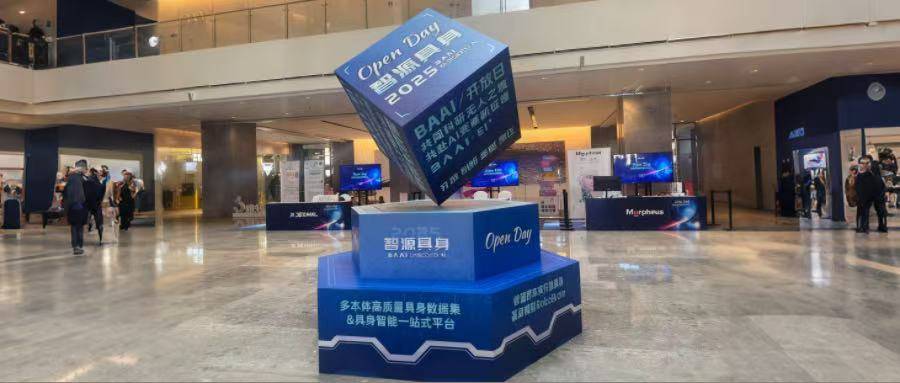
Core Insights - The article discusses the significant impact of the "Embodied Intelligence Martial Arts Conference" held by Zhiyuan Research Institute, which gathered major players in the robotics industry to address data sharing and collaboration challenges [2][4][6]. Group 1: Zhiyuan's Role and Strategy - Zhiyuan Research Institute aims to be the "Android" of the embodied intelligence era, focusing on creating a collaborative ecosystem rather than competing directly in the market [5][21]. - The institute leverages its non-profit status to break down data silos, encouraging companies to share valuable data through mutual agreements [6][10]. - By providing a neutral platform, Zhiyuan positions itself as a "wall breaker," facilitating cooperation between academic and industrial sectors [11][9]. Group 2: Addressing Industry Pain Points - The robotics industry faces significant challenges due to data silos, where data from one type of robot cannot be utilized by another, leading to inefficiencies [7][8]. - Zhiyuan has introduced open-source high-quality real-world data, addressing the industry's need for better data [15]. - The launch of the RoboXstudio development platform and CoRobot data framework streamlines the development process for startups, allowing them to focus on product innovation [16][17]. Group 3: Standardization and Evaluation - The lack of standardized evaluation metrics in the robotics field has led to discrepancies between demo performances and real-world applications [18][20]. - Zhiyuan has established the RoboChallenge committee to create quantifiable and traceable evaluation standards for robotic models [20]. - This initiative aims to ensure that all robotic models can be assessed fairly, promoting transparency and reliability in the industry [20]. Group 4: Future Vision and Ecosystem Development - Zhiyuan envisions a future where robot development is as simple as building with blocks, emphasizing the need for a robust foundational framework [24][25]. - The institute is focused on creating a comprehensive system for embodied intelligence, including advancements in RoboBrain and Emu models to enhance learning and understanding [23][26]. - By gathering industry data and establishing standards, Zhiyuan aims to become a fundamental resource for the embodied intelligence sector, akin to essential utilities [26][29].
前瞻全球产业早报:阿里千问App全面对标ChatGPT
Qian Zhan Wang· 2025-11-18 11:08
Group 1 - Alibaba officially launched the "Qianwen" project to enter the AI to C market, with the Qianwen App now in public beta, aiming to compete with ChatGPT [2] - Apple plans to change its iPhone release strategy starting in 2026, moving to two launches per year instead of one, with flagship models in September and entry-level models in spring [3] - Foton Motor announced that its jointly developed semi-solid-state batteries have been mass-produced and are performing well in the market [4] Group 2 - Xpeng Motors expects fourth-quarter deliveries to be between 125,000 and 132,000 units, representing an annual increase of approximately 36.6% to 44.3% [6] - Yum China aims for KFC's operating profit to exceed 10 billion RMB by 2028, with plans to increase the number of stores by about one-third to over 17,000 [6] - Zhiyuan Robotics plans to open-source its self-developed robot operating system "Lingqu OS" by the end of this year [7] Group 3 - Momenta and BMW announced the development of a new generation of intelligent driving assistance solutions for the Chinese market, set to be first implemented in the domestic BMW iX3 [8] - Huawei will hold a product launch event on November 25, where it will unveil the Mate 80 series and other new products [9] - Taobao reported significant growth in its Double 11 overseas sales, with dozens of brands achieving over 10 million in transactions [10] Group 4 - Google committed to investing $2.25 million to support the modernization of public data systems in Africa for AI readiness [11] - A McKinsey report indicated that nearly three-quarters of fashion industry executives expect to raise prices next year due to rising tariffs and costs, a significant increase from about half a year ago [12] - Indonesia plans to impose an export tax of 7.5% to 15% on gold products starting next year [13] Group 5 - LG Energy plans to start producing lithium iron phosphate (LFP) batteries in South Korea by 2027, with an initial production capacity of 1 GWh [14] - Samsung announced a total investment of 450 trillion KRW in South Korea over the next five years, focusing on R&D and semiconductor expansion [15] - Pobeda Airlines in Russia has become the first airline to deploy humanoid robots as cabin crew members, showcasing the potential for human-robot collaboration [16]

人形机器人卖出手机价
Zhong Guo Xin Wen Wang· 2025-11-18 00:36
Core Insights - The price of humanoid robots has significantly decreased, making them more accessible to consumers, comparable to the cost of a smartphone [2][4] - The rapid decline in prices is attributed to technological breakthroughs and the development of a robust high-quality supply chain in China [6][7] - The performance of humanoid robots is improving, with enhanced functionality and adaptability, moving towards consumer-grade products [5][11] Price Trends - New humanoid robots from various Chinese companies are being offered at lower prices, such as Booster K1 and Unitree R1 AIR at 29,900 yuan, and "Little Bumi" at 9,998 yuan [4] - The price evolution reflects a shift from being as expensive as a house to being comparable to a car and now a smartphone [4] Technological Advancements - Key components like precision reducers, servo systems, and intelligent controllers are seeing breakthroughs, leading to increased domestic production rates [8] - The integration of AI technologies is enhancing the capabilities of humanoid robots, allowing them to adapt to various scenarios and engage in intelligent interactions [11][12] Industry Growth - The production of industrial robots reached 595,000 units, while service robots exceeded 13.5 million units in the first three quarters of 2025, surpassing the total production for 2024 [8] - The industry is expected to continue evolving, with improved efficiency in component production and assembly, leading to further cost reductions [9] Ecosystem Development - Companies are focusing on building an "ecological moat" by encouraging more developers to enter the market through lower-priced humanoid robot platforms [10] - The proliferation of humanoid robots is anticipated to create a vast industry and application ecosystem, similar to the impact of electric vehicles [12]
俞敏洪在南极旅游发全员信引争议,有员工称无法共情;京东外卖独立App上线;阿里回应千问崩了;小米公关部总经理王化将换岗丨邦早报
创业邦· 2025-11-18 00:08
Group 1 - JD.com announced the official launch of its independent food delivery app, aiming to enhance user accessibility and convenience for its delivery services [3] - New Oriental's founder Yu Minhong sent a controversial letter to employees from Antarctica, reflecting on the company's journey and encouraging unity amidst challenges, which received mixed reactions from staff [5][7] - Alibaba's new AI application "Qianwen" faced service interruptions on its first day due to overwhelming user traffic, leading to a trending topic on social media [8] Group 2 - Former CEO of Hema, Hou Yi, is launching a new pet food brand "Chong Tian Tian" after the closure of his previous venture "Pai Te Xian Sheng" [10] - ByteDance's Seed AI team has seen significant turnover, with seven core members leaving this year, raising concerns about talent retention [11] - XPeng Motors plans to release seven new vehicles in 2026, focusing on "super range extender" configurations to address market needs [11] Group 3 - DJI confirmed its investment in a 3D printing company, reflecting confidence in the growth potential of the consumer 3D printing market, which is projected to reach $24.61 billion in 2024 [11] - Ubisoft is rumored to have been acquired, following a sudden halt in its stock trading and a delay in its Q2 financial report [13] - Meta's executives defended their aggressive AI investments, suggesting that current spending levels are not excessive compared to historical tech bubbles [13] Group 4 - Mercedes-Benz's CEO stated that the strict deadline for phasing out fuel vehicles in Europe by 2035 is no longer feasible, advocating for more flexibility in the transition to electric vehicles [13] - OceanBase launched a new AI domain, indicating a strong commitment to integrating AI into its database solutions [13] - L'Oréal Group made a minority investment in the Chinese skincare brand "LAN," marking its first investment in a local skincare company [14]



宇树上市引发财富效应,第二增长曲线发力,回购10亿
Sou Hu Cai Jing· 2025-11-15 17:16
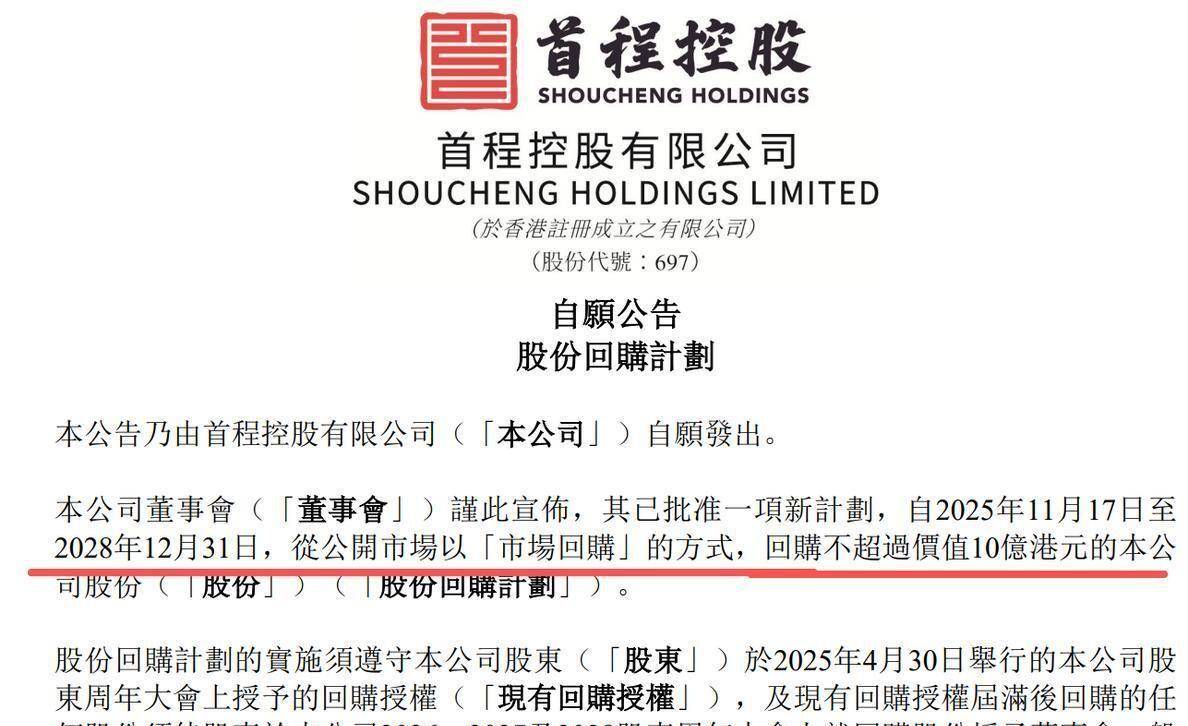
Core Viewpoint - The company, 首程控股, is being recognized for its substantial cash reserves and strategic investments in the robotics sector, particularly through its stake in 宇树科技, which is expected to significantly enhance its market valuation and growth potential [1][5][17]. Financial Performance - For the third quarter of 2025, the company reported a 30% year-on-year revenue growth and a 22% increase in net profit attributable to shareholders [3]. - The company has a total asset value of approximately 163.4 billion HKD, with over 85 billion HKD in cash, indicating a strong financial position [1][15]. - The company announced a share buyback plan worth up to 1 billion HKD over three years, reflecting confidence in its financial health [3]. Investment in Robotics - 宇树科技, a key investment of the company, holds a nearly 70% market share in the global quadruped robot market and has seen its revenue nearly double to over 1 billion RMB in 2024 [5]. - The company's investment in 宇树科技 has appreciated from an initial valuation of approximately 8 billion RMB to 12 billion RMB within eight months, representing a 50% increase in book value [5]. - The company has established a comprehensive robotics ecosystem, investing in various companies across the robotics supply chain, including advanced materials and humanoid robots [9][11]. Operational Strategy - The company operates a dual strategy of investment and operational involvement, acting as a primary agent for 宇树科技 and facilitating market expansion for its products [7]. - It has opened robot experience stores in major cities and plans to establish 20 more locations within a year, aiming to bridge technology and consumer markets [11]. - The company utilizes its existing infrastructure, such as parking lots and industrial parks, as testing grounds for robotics applications, enhancing product validation and market readiness [13]. Future Outlook - The company is positioned to benefit from the anticipated IPO of 宇树科技, which could lead to a market valuation exceeding 100 billion RMB, potentially increasing the company's equity value by over 4 billion HKD [5]. - The management emphasizes a collaborative model of "investment, operation, and industry chain," aiming for a synergistic growth approach in the robotics sector [14][17].
源码资本募资6亿美元 成立25年超长周期基金逆势布局AI与全球化
Xin Lang Zheng Quan· 2025-11-14 02:24
Core Insights - Source Code Capital has completed a new growth fund raising of $600 million, with a unique investment period of 5 years and an exit period of 20 years, resulting in a total lifespan of 25 years [1][2] - This fundraising reflects a strategic adjustment in response to the current challenging capital environment, indicating a shift from scale expansion to value depth [2][4] Fundraising Details - The $600 million fundraising is particularly notable given the current cold capital market, primarily supported by industrial investors and a few long-term financial investors [2] - Compared to the previous fundraising of 7 billion RMB in 2021, this fund size is smaller, but the emphasis on a long exit period remains consistent [2] - The 25-year lifespan is rare in the primary market, contrasting with the typical 8 to 12 years for traditional venture capital funds [2] Strategic Shift - The establishment of this new fund marks a significant evolution in Source Code Capital's strategic thinking, moving from aggressive scale expansion to a focus on value depth [3][4] - The firm has undergone a transformation in investment strategy, shifting from internet finance to industrial internet and now to hard technology, reflecting adaptability to market changes [3] Investment Focus - The new fund will concentrate on two main areas: "AI+" and "Global+" [5] - In the "AI+" sector, the focus will be on AI technology development and addressing critical issues within the computing power industry [5] - The "Global+" strategy will explore opportunities for China's comprehensive capabilities in global markets, particularly in smart hardware and software applications [5] Market Implications - The establishment of a 25-year fund may signify a shift in China's primary market, potentially leading to the emergence of "patient capital" that supports long-term growth without the pressure for quick exits [7] - The recent recovery of the Hong Kong IPO market, with a total financing amount of 182.9 billion HKD by September 2025, may provide a favorable environment for growth-stage investments [7] Industry Trends - Several top-tier General Partners (GPs) in China are seeking new rounds of fundraising, indicating a potential new iteration cycle in the primary market [8] - Source Code Capital's fundraising and strategic adjustments may signal the beginning of this new cycle, emphasizing discipline, focus, and patience in navigating uncertainties [8]
时隔四年,源码资本再次完成了募资
暗涌Waves· 2025-11-13 07:33
Core Viewpoint - Source Code Capital has successfully raised a new growth fund with a total scale of $600 million, focusing on "AI+" and "Global+" sectors, indicating a strategic shift towards long-term, focused investments rather than rapid expansion [2][3]. Part 01: Why Continue "Growth Stage Investment" - The new growth fund will primarily invest in AI-related sectors, including AI2C/2P and the computing power supply chain, addressing critical issues in AI technology development and commercialization [6]. - The decision to focus on growth stage investments comes amid a challenging environment for such investments in China's primary market, where exit channels have been limited, leading to valuation mismatches [7]. - A significant catalyst for this strategy is the recovery of the Hong Kong IPO market, which has seen a substantial increase in financing and market activity, providing a healthier exit environment for growth investments [7][8]. - The fund's 25-year lifespan allows for a shift away from short-term IPO pressures, enabling a focus on long-term value and industry competitiveness [8][9]. Part 02: "De-Expansion" as a New Narrative? - The new fund's $600 million size is smaller compared to previous fundraising efforts, reflecting a strategic choice to prioritize quality over scale amid a declining market environment [10][11]. - This shift indicates a maturation of investment strategies, moving away from the race for larger fund sizes towards a focus on sustainable, long-term investment capabilities [11][12]. - The changes in strategy are particularly relevant for cautious North American LPs, as they seek to engage with top-tier Chinese GPs in sectors like AI and robotics, which present significant structural opportunities [12][13]. - The completion of this growth fund may signal a new phase for investment institutions in China's primary market, emphasizing discipline, focus, and patience in identifying valuable opportunities [13].

人形机器人逼近产业化关口,谁在买?
3 6 Ke· 2025-11-05 12:11
Core Viewpoint - The humanoid robot industry is transitioning from showcasing demos to securing substantial orders, marking a significant step towards industrialization with several companies achieving orders of over a thousand units, indicating a shift in focus towards real-world applications and sales [2][3][4]. Group 1: Market Dynamics - In the past two months, multiple companies have entered the "thousand-unit club," with eight firms reporting significant orders, reflecting a growing demand in the humanoid robot sector [2][3]. - The price range for humanoid robots varies, with educational and performance models priced between 20,000 to 100,000 yuan, while industrial models start at 200,000 yuan, suggesting that large orders often correspond to contracts worth hundreds of millions [3][4]. - The recent surge in orders is attributed to increased public awareness following high-profile appearances and the emergence of actual demand in sectors like manufacturing and education [3][4]. Group 2: Industrialization and Challenges - The shift to thousand-unit orders signifies a pivotal moment for the humanoid robot industry, moving from experimental models to real-world deployment, akin to the early days of electric vehicles [4][5]. - Key questions arise regarding the buyers and their intended applications, as the industry transitions from a focus on demos to a competitive landscape centered on delivery capabilities [5][6]. - Major clients in manufacturing and education are driving demand, with manufacturing firms facing challenges such as labor shortages and rising costs, making humanoid robots a viable solution for automation [6][7]. Group 3: Product Development and Feedback - Manufacturers are increasingly acting as "invisible product managers," providing feedback that drives product iterations and adaptations to meet diverse operational needs [10][12]. - Companies like Star Dust Intelligent are adjusting their product offerings based on client feedback, leading to modular solutions that enhance flexibility and adaptability in various industrial scenarios [10][12]. Group 4: Sales and Market Strategy - The sales landscape is evolving, with companies focusing on building robust sales teams and distribution networks to effectively market humanoid robots across different sectors [24][25]. - Competitive pricing strategies are emerging, with companies like Songyan Power introducing models priced below 10,000 yuan to explore new market segments and drive adoption [25][26]. - The industry is witnessing a shift towards a more sustainable business model, emphasizing delivery capabilities and customer satisfaction over merely securing large orders [18][21]. Group 5: Future Outlook - The humanoid robot industry is expected to accelerate in 2026, driven by ongoing projects and increased focus on delivery and customer engagement [27][28]. - Companies are also looking to expand their international presence, with expectations of significant revenue contributions from overseas markets in the near future [27].

经观头条|人形机器人站在产业化门口
Jing Ji Guan Cha Wang· 2025-11-05 11:38
Core Insights - The humanoid robot industry is transitioning from showcasing demos to focusing on actual orders, with several companies entering the "thousand-unit club" in recent months [3][4] - The surge in orders is attributed to increased public awareness and real demand in sectors like manufacturing and education, creating viable deployment scenarios [4][5] - The shift to "thousand-unit orders" marks a significant milestone in the industrialization of humanoid robots, indicating their movement from experimental models to real-world applications [5][6] Industry Demand - Major clients for humanoid robots are primarily from the manufacturing and education sectors, with manufacturing showing a more rigid demand due to labor shortages and rising costs [7][8] - The flexibility of humanoid robots allows for easier adaptation to changing production needs compared to traditional automation solutions [7][8] - Educational institutions are adopting humanoid robots through small pilot programs, focusing on their integration into teaching and learning environments [14][15] Sales and Delivery Challenges - The industry is experiencing a shift from securing orders to ensuring successful delivery, with companies facing challenges in product design and supply chain management [18][19] - Companies are increasingly focusing on building robust sales teams and distribution channels to effectively market humanoid robots [23][24] - Pricing strategies are evolving, with some companies introducing lower-priced models to stimulate demand and explore new market segments [24][25] Future Outlook - The humanoid robot industry is expected to accelerate in 2026, driven by ongoing projects and increased attention from potential investors [25][27] - Companies are also looking to expand their presence in international markets, with expectations of significant revenue contributions from overseas operations [25][27]