
SK On

Search documents
全球EV电池产能将达需求的3倍
日经中文网· 2025-12-01 02:48
Core Insights - The global electric vehicle (EV) battery market is facing an oversupply situation, with production capacity expected to reach three times the actual demand by 2030, particularly in North America [2][12] - Major automakers like Ford and General Motors are adjusting their production plans due to declining EV demand and regulatory changes, leading to significant cuts in battery production capacity [5][7] Group 1: Market Overview - Chinese companies hold a 70% share of the global EV battery market, prompting the U.S. and Japan to push for domestic battery production to reduce reliance on China [2][10] - As of September, there are over 1,000 battery-related investment projects in the U.S., but some have been halted due to the unexpected slowdown in EV demand [6][10] Group 2: Company-Specific Developments - Ford's EV business has been struggling, with losses exceeding three years, leading to a 35% reduction in planned battery capacity and potential discontinuation of the F-150 Lightning model [5][9] - General Motors announced layoffs of 1,550 workers at its joint battery plants with LG Energy Solutions due to short-term EV demand decline [6][9] - Panasonic has postponed the full operational timeline for its Kansas battery factory, initially set for the end of 2026, due to reduced sales from major client Tesla [7][9] Group 3: Future Projections - The North American battery production capacity is projected to quadruple in the next five years, exacerbating the oversupply issue [2][12] - Analysts predict that the oversupply of EV batteries could lead to financial burdens for many manufacturers, especially those that have continued to invest under government support [12]


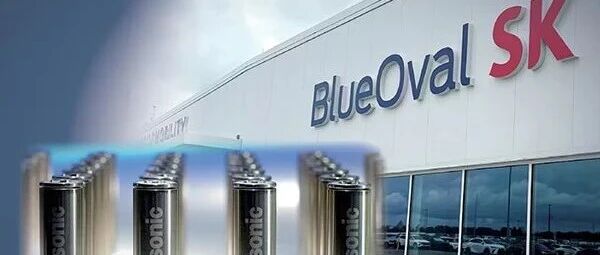
国轩10亿成立新公司;亿纬签10年订单;450亿磷酸铁锂大单落地;吉利落子成都;宁德时代300亿工厂开建;创明32140电池满产
起点锂电· 2025-11-30 10:01
Group 1 - The 2025 (10th) Starting Point Lithium Battery Industry Annual Conference and Lithium Battery Golden Ding Award Ceremony will be held on December 18-19, 2025, in Shenzhen, with an expected offline attendance of over 1200 and online viewership of 30,000 [2] - EVE Energy signed a 10-year supply framework agreement with Chengdu Bamo, expecting to supply approximately 127,800 tons of ultra-high nickel ternary cathode materials from 2026 to 2035 [4][5] - EVE Energy and SK On will conduct a share swap to adjust the structure of their joint battery companies in China, with the transaction expected to complete by February 28, 2026 [6] Group 2 - CATL's joint battery factory with Stellantis in Spain has officially commenced construction, with a total investment of €4.038 billion (approximately RMB 33.156 billion) and an annual capacity of 50GWh [7] - CATL signed two memorandums of understanding for energy storage projects in Japan, totaling 2.4GWh, and a supply agreement for a 1GWh energy storage system [8] - Guoxuan High-Tech established a new company with a registered capital of RMB 1 billion, focusing on battery manufacturing and sales [9] Group 3 - Chengdu Shanjun Battery Co., Ltd. was established by Geely with a registered capital of RMB 50 million, focusing on battery manufacturing and sales [10] - Chuangming New Energy's 32140 cylindrical battery production line is operating at full capacity, with an expected annual capacity of 20GWh [11][12] - LG Chem announced a breakthrough in solid-state battery technology, significantly improving performance through uniform control of solid electrolyte particle size [13] Group 4 - Longpan Technology signed a supplementary agreement to sell 1.3 million tons of lithium iron phosphate cathode materials from 2025 to 2030, with a total sales amount exceeding RMB 45 billion [15] - Fangda Carbon plans to participate in the restructuring of the Shanshan Group, leveraging its advantages in the negative electrode industry [16] - Lianyi Intelligent Manufacturing submitted a listing application to the Hong Kong Stock Exchange, with a revenue of approximately RMB 37.6 billion in the first three quarters of 2025 [17][18] Group 5 - Ganfeng Lithium's 80,000 tons lithium iron phosphate project is expected to be operational by 2026 [19] - Better Ray has completed a 7,500-ton silicon-based anode production line, with plans for further development in the silicon anode field [20] - Longpan Technology's 110,000 tons high-performance cathode material project is under construction in Shandong [21] Group 6 - Tianci Materials has broken ground on its first electrolyte factory in North America, with an investment of approximately $200 million and an annual production capacity of 200,000 tons [22] - Huazi Technology reported significant growth in lithium battery equipment orders this year [25] - Mannester noted a positive trend in the lithium battery supply chain, with a noticeable increase in new orders compared to last year [26] Group 7 - Huaguan Technology delivered a complete assembly line for large-capacity square aluminum shell cells to a national key project [27] - Delong Laser confirmed its status as a qualified supplier for CATL, providing various laser solutions for battery manufacturing [28] - A lithium battery recycling project in Jinan signed a contract for a project with an annual processing capacity of 10,000 tons [30][31] Group 8 - Xiaomi clarified rumors regarding a fire incident in its battery production line, stating it was a minor issue during equipment debugging [33] - Li Auto reported a revenue of RMB 27.4 billion for Q3 2025, with a gross margin decline to 16.3% [34] - NIO's CEO stated the company's goal for 2026 is to achieve profitability for the entire year [35]


亿纬锂能与SK On“解绑”,拟进行股权置换
鑫椤锂电· 2025-11-25 07:08
关注公众号,点击公众号主页右上角" ··· ",设置星标 "⭐" ,关注 鑫椤锂电 资讯~ 本文来源:企业公告 11月20日,韩国动力电池制造商SK On与中国亿纬锂能先后发布 公告 , 将通过股权置换方式调整双方在中国的两 家合资电池公司结构。 具体来看,亿纬将其通过子公司持有的SK新能源(江苏) (SKOJ) 30%股权,与SK On持有的惠州亿纬集能49%股 权进行互换。 双方将依据各自资产估值差额进行现金补偿。交易预计将于2026年2月28日完成交割。 -广告- 置换后,亿纬动力香港不再持有SK新能源的股权 , 同时亿纬动力持有的亿纬集能股权由51%增加到55.2%,亿纬 动力香港持有亿纬集能44.8%股权,公司间接持有亿纬集能100%的股权。 资料显示, 亿纬集能 成立于2018年6月,注册资本41.54亿元,法定代表人刘金成,经营范围包含汽车用锂离子软 包电池(固态锂电池及金属锂电池除外)及汽车用锂离子软包电池模组(固态锂电池及金属锂电池除外)的生产、 加工、销售、研发、售后服务和储能电池的生产、加工、销售、研发、售后服务,汽车用锂离子软包电池材料的加 工、销售、研发,国内贸易,货物或技术进出口, ...
锂电材料国内紧缺之际,龙头扎堆出海扩产
高工锂电· 2025-11-24 09:41
Core Viewpoint - The capital expenditure in the lithium battery sector is increasingly shifting towards overseas markets, particularly North America and Europe, as companies reassess domestic price trends and global demand dynamics [2][4][13]. Group 1: Price Trends and Market Dynamics - Since November, the prices of key electrolyte materials such as lithium hexafluorophosphate and VC have surged, leading to a rebound in the stock prices of related listed companies and a noticeable recovery in industry operating rates [3][5]. - The price of lithium hexafluorophosphate has nearly doubled from its low in July, with some electrolyte additives experiencing cumulative increases of around 70% since mid-year [5][6]. - The current price increases are viewed as a correction from previous excessive declines, with the industry still in a "tight balance" state, making it difficult to support a large-scale domestic capacity expansion cycle [7]. Group 2: Overseas Expansion Initiatives - Major companies are prioritizing overseas expansion, with Tinci Materials restarting its lithium electrolyte project in Texas, which has a total investment of approximately $103 million [8]. - Star源 Materials has launched its lithium battery separator manufacturing base in North Carolina, with a total investment of about HKD 632 million, aimed at serving the North American energy storage and electric vehicle markets [9]. - Guoxuan High-Tech is constructing a 20GWh battery factory in Slovakia, expected to begin trial production in 2026, which is seen as a significant investment in the European battery landscape [11]. Group 3: Strategic Adjustments and Collaborations - The recent equity swap between SK On and EVE United Energy is viewed as a strategic adjustment to enhance operational flexibility and align with global supply chain security concerns [12]. - The combination of rising domestic prices and overseas expansion reflects a strategic balance between local and international market dynamics, allowing companies to secure longer-term contracts and potentially achieve better pricing and valuation premiums [13][14].
全球动力电池过剩风险隐现,原因何在?
Zhong Guo Qi Che Bao Wang· 2025-11-21 07:31
Core Insights - The global electric vehicle battery production is expected to exceed demand significantly, with North America facing the most acute overcapacity risk [2][3][7] - By 2030, global battery production is projected to reach three times the demand, particularly in North America where capacity could quadruple [3][7] - The rapid expansion of battery production capacity is driven by government incentives and policies, but the actual market demand has not kept pace, leading to potential oversupply [6][7] Group 1: Industry Trends - The electric vehicle battery production capacity is growing at a rate of 43% from 2020 to 2025, outpacing the 32% growth in electric vehicle sales during the same period [6][7] - The Inflation Reduction Act in the U.S. has provided significant policy support for the electric vehicle industry, leading to aggressive capacity planning that may result in three times the actual market demand by 2025 [7][8] - The slowdown in electric vehicle sales growth in North America and Europe has led to a mismatch between supply and demand, exacerbating the risk of overcapacity [7][8] Group 2: Company Developments - A U.S. automaker is collaborating with South Korea's SK On to build a $5.8 billion battery plant in Kentucky, which has partially started production but lacks a confirmed full production date [3][4] - Ford is considering halting production of its flagship electric pickup, the F-150 Lightning, which could impact local employment and the economy [3][4] - Panasonic's battery plant in Kansas has faced delays in full production due to declining sales from its major customer, Tesla [4][6] Group 3: Market Adjustments - Some companies are beginning to adjust their production strategies in response to the changing market conditions, such as Panasonic's flexible capacity allocation for energy storage and power batteries [9][10] - The European Union's battery carbon footprint certification is pushing companies to enhance their environmental practices, which may lead to the exit of less competitive firms from the market [9][10] - The establishment of a €2 billion fund in Germany to support battery and hydrogen companies in creating zero-carbon industrial parks promotes cross-industry collaboration [10] Group 4: Future Outlook - The anticipated overcapacity in the battery market is viewed as a cyclical adjustment following a period of rapid expansion, with a focus on technological innovation and sustainable development as key to long-term success [11] - The industry is shifting towards a model that emphasizes resource recycling and environmental protection, moving away from traditional competition based solely on capacity expansion and cost control [11] - Companies that can adapt to these changes and maintain a commitment to innovation and sustainability are expected to thrive in the evolving market landscape [11]


固态电池设备深度汇报及产业进展更新
2025-11-16 15:36
Summary of Solid-State Battery Industry Conference Call Industry Overview - The solid-state battery industry is developing in a coordinated manner both domestically and internationally, with significant collaborations such as Samsung SDI partnering with BMW and Solid Power, and Solid Power working with SK On on pilot lines [1][2][6] - Domestic manufacturers like the Chinese Academy of Sciences, Seiko Power, and leading companies C and B have made progress, with some achieving 60-80 Ah products and pilot line capacities reaching gigawatt-hour levels [1][2][6] Key Developments - The Ministry of Industry and Information Technology (MIIT) is providing subsidies for solid-state battery R&D, with mid-term review results expected in November, indicating that leading companies have met core indicators [1][4] - The second batch of subsidies is anticipated to be released in the first half of next year, with amounts expected to be similar to the previous year [1][4] Technological Advancements - The shift to dry processing in solid-state battery manufacturing significantly impacts equipment companies, increasing demand for dry mixing and fiberization equipment, as well as rolling machines, which have seen price increases [1][5] - Isostatic pressing equipment is crucial for addressing interface contact and conductivity issues in solid-state batteries, with companies like Sweden's Quintus and China's Chuanxi Machinery leading in this area [1][5][7] Equipment and Manufacturing Processes - There are four main process routes for insulation glue frames: screen printing, pre-fabricated glue frame transfer, dispensing, and UV printing, with companies like Liyuanheng and DeLong Laser making advancements in these areas [1][9] - The demand for high-pressure forming and filling equipment has increased due to the need for extreme pressures (60-80 tons) in solid-state batteries, with companies like Hangke Technology being key players in this segment [1][10] Company Performance and Outlook - XianDao Intelligent secured over 400 million yuan in solid-state orders in the first half of the year, expecting to exceed 1 billion yuan for the full year, reflecting successful R&D investments [3][11] - Liyuanheng and Haimuxing are progressing well, with Haimuxing's new order growth doubling, although they expect losses this year but anticipate profitability starting next year [3][12] - Naknor's new rolling press equipment addresses material bonding issues and is participating in tenders from leading battery manufacturers [3][13] - Lianying Laser is positioned to benefit from increased precision requirements in solid-state welding, with potential for significant growth if breakthroughs are achieved [3][14] Market Trends - The lithium battery industry is recovering from previous downturns, with several catalysts for growth including policy reviews, subsidy follow-ups, and increasing demand for power and energy storage [1][15] - Most lithium battery companies have overcome their most challenging periods, with expectations for continuous improvement in financial reports [1][15]

刚刚,美韩重大宣布!关税从25%降到了15%
Sou Hu Cai Jing· 2025-11-14 11:05
Investment Overview - South Korea has agreed to invest $350 billion in the U.S. in exchange for a reduction in tariffs from 25% to 15% [1] - The investment is divided into two parts: $200 billion in cash and $150 billion for shipbuilding cooperation [1] - The cash investment will be phased in, with a maximum of $20 billion per year, to minimize impact on South Korea's foreign exchange market [1] Sector Focus - The primary focus of the investment is on semiconductors, with Samsung and SK Hynix planning to build chip factories in the U.S. [3] - Samsung is set to invest an additional $25 billion in its Texas facility [3] - The electric vehicle and battery sectors are also significant, with Hyundai Motor Group planning to invest $26 billion in the U.S. and collaborating with LG Energy Solution to build a battery factory with over $4.3 billion investment [3] - South Korea's three major battery companies—Samsung SDI, LG, and SK On—are planning to establish 15 battery factories in the U.S. [3] Economic Rationale - The investment strategy is aimed at countering U.S. tariff pressures, allowing South Korean products to compete on equal footing with Japanese products in the U.S. market [3] - In 2022, nearly half of South Korea's total automotive exports went to the U.S., with Hyundai and Kia incurring over 3 trillion won in tariffs in the third quarter alone [3] Corporate Plans - Specific corporate investment plans include Samsung's $17 billion factory in Texas, Hyundai's $11.4 billion electric vehicle plant in Georgia, and SK Group's planned $22 billion investment [3] Challenges and Risks - South Korea's economy is smaller than Japan's, with foreign exchange reserves of approximately $416 billion, posing liquidity and exchange rate pressures [4] - Recent tightening of U.S. worker visa policies and incidents involving the arrest of hundreds of South Korean workers at Hyundai's battery plant add uncertainty to the investment [4] - The $350 billion investment represents a strategic move to address U.S. tariff pressures and actively participate in global supply chain restructuring, but maintaining market access while preserving industrial autonomy poses significant challenges for South Korea [4]

Westwater Resources(WWR) - 2025 Q3 - Earnings Call Transcript
2025-11-13 15:00
Financial Data and Key Metrics Changes - The company raised approximately $55 million through an ATM program and a convertible note offering since June 30, with a cash balance of about $53 million as of November 5, providing a solid runway for operations [11][12][32] - The company has invested approximately $125 million in developing the Kellyton Phase One facility [5] Business Line Data and Key Metrics Changes - The qualification line has successfully delivered large sample quantities of battery-grade natural graphite, completing full production runs of over one metric ton of CSPG for customers [8][9] - Improvements to the qualification line have resulted in faster cycle times, higher yields, and better flow rates, enhancing production capabilities [8] Market Data and Key Metrics Changes - The company has not observed any deterioration in anode pricing and believes prices are holding with potential for increases due to tariffs and export restrictions [22] - Graphite is recognized as a critical mineral, making up about 50% of the weight of a lithium-ion battery, and is a focus area for government funding initiatives [14] Company Strategy and Development Direction - The company aims to optimize the ramp-up of Kellyton to align capacity with existing off-take commitments, which may reduce capital requirements for full commercial production [5][9] - The Coosa Graphite Deposit is a key part of the company's strategic growth plans, allowing for vertical integration by mining graphite at Coosa and processing it at Kellyton [10] Management's Comments on Operating Environment and Future Outlook - Management acknowledges the challenges in the U.S. battery materials market but expresses confidence in the company's ability to adapt and continue moving forward [16] - The company is committed to building a sustainable, profitable business and is focused on long-term growth and value creation for shareholders [16] Other Important Information - The unexpected termination of the off-take agreement with Fiat Chrysler Automotive has paused the debt syndication process, which was reliant on that agreement [4] - The company is exploring various government funding opportunities, including the Department of Energy's critical materials innovation initiative and the FAST-41 program for expedited permitting [12][14] Q&A Session Summary Question: What is the status of permitting at Coosa and any bottlenecks due to the government shutdown? - Management indicated that they are working to advance permitting and are in a good position to enter the FAST-41 program, although the government shutdown has caused some delays [20][21] Question: What is the outlook on pricing and long-term graphite demand? - Management noted that there has been no deterioration in pricing and that prices are holding steady with potential for increases [22] Question: Are there any interests from companies using graphite in SMR reactors? - Management stated they are not currently aware of any interest from these companies but will look into the potential market [25][28] Question: Clarification on the recent $75 million offering reported? - Management clarified that the $75 million was an ATM refresh and not a one-time offering, with the majority of the $55 million raised occurring before this refresh [32]
PPI年内首次转正!资金狂抢这类资产,普通人的机会藏在这三个信号里
Sou Hu Cai Jing· 2025-11-10 16:50
Group 1: Economic Indicators - The Consumer Price Index (CPI) rose by 0.2% year-on-year and month-on-month in October, indicating a slight increase in consumer prices [1] - The Producer Price Index (PPI) turned positive with a month-on-month increase of 0.1%, marking the first positive change this year, suggesting improved industrial production activity [1] - The core CPI increased by 1.2% year-on-year in October, the highest level since March 2024, indicating a recovery in domestic consumption demand [3] Group 2: Lithium Battery Industry - The price of lithium hexafluorophosphate, a key raw material for electrolytes, surged by 140% since July, reaching 120,000 yuan per ton, reflecting strong downstream demand [5] - Major companies in the lithium battery sector, such as Tianqi Lithium and Tianji Co., have reported large order announcements, indicating robust growth in demand [5] - Institutional investors have shown significant interest in the lithium battery sector, with net purchases reaching 438 million yuan for companies like Duoflu and Huasheng Lithium [5] Group 3: Energy and Storage Sector - The State Council's white paper emphasizes the importance of energy storage in building a new power system, with domestic installed capacity exceeding 100 million kilowatts, ranking first globally [7] - Major South Korean battery manufacturers are shifting focus to energy storage systems, planning to double their annual production capacity in the U.S. by 2026 [7] - The price of thermal coal has surpassed 800 yuan per ton, supported by increased winter heating demand [3] Group 4: Market Dynamics - The A-share market experienced a decline in trading volume, with a drop of over 50 billion yuan in turnover, indicating cautious sentiment among investors [9] - The Shanghai Composite Index showed signs of stagnation around the 4000-point mark, with key support levels identified at 3980 and 3960 points [9] - Market sentiment is improving, with quantitative models indicating potential upward movement, particularly in technology and cyclical sectors [11]


产能倍增,AI引爆“电荒”,韩国电池三巨头转向储能
3 6 Ke· 2025-11-10 09:33
Core Insights - South Korean battery manufacturers are shifting their focus towards energy storage systems, planning to double their annual production capacity in the U.S. by the end of 2026 from 300 GWh to 600 GWh [1][2] - The transition is driven by the increasing demand for energy storage, particularly due to the expansion of renewable energy, grid stabilization, and the growth of AI data centers [2][4] Group 1: Company Strategies - LG Energy Solution is converting its production lines to focus on energy storage systems, with plans to expand its Michigan plant's capacity from 16 GWh to 30 GWh by the end of 2025 [1][2] - Samsung SDI aims to transform its joint venture plant with Stellantis into a production base for energy storage systems, targeting an annual capacity of 30 GWh by the end of this year [2] - SK On has secured a 1 GWh supply contract for energy storage batteries and plans to retrofit its Georgia plant to fulfill this contract [2] Group 2: Market Trends - The global energy storage system market is projected to grow sixfold from 185 GWh in 2023 to 1,232 GWh by 2035 [3] - The U.S. is experiencing a power shortage exacerbated by the rising demand from AI data centers, which could lead to a cumulative power gap of 18-27 GW by the end of 2026 [4] - Analysts suggest that the energy storage sector is at a critical inflection point, similar to past rapid growth in solar energy and electric vehicles, driven by market dynamics [5][6]