
南京银行

Search documents
外资险企再添新军!法巴天星保险获批开业,“法巴中国”金融布局版图初现规模
Sou Hu Cai Jing· 2025-11-04 10:58
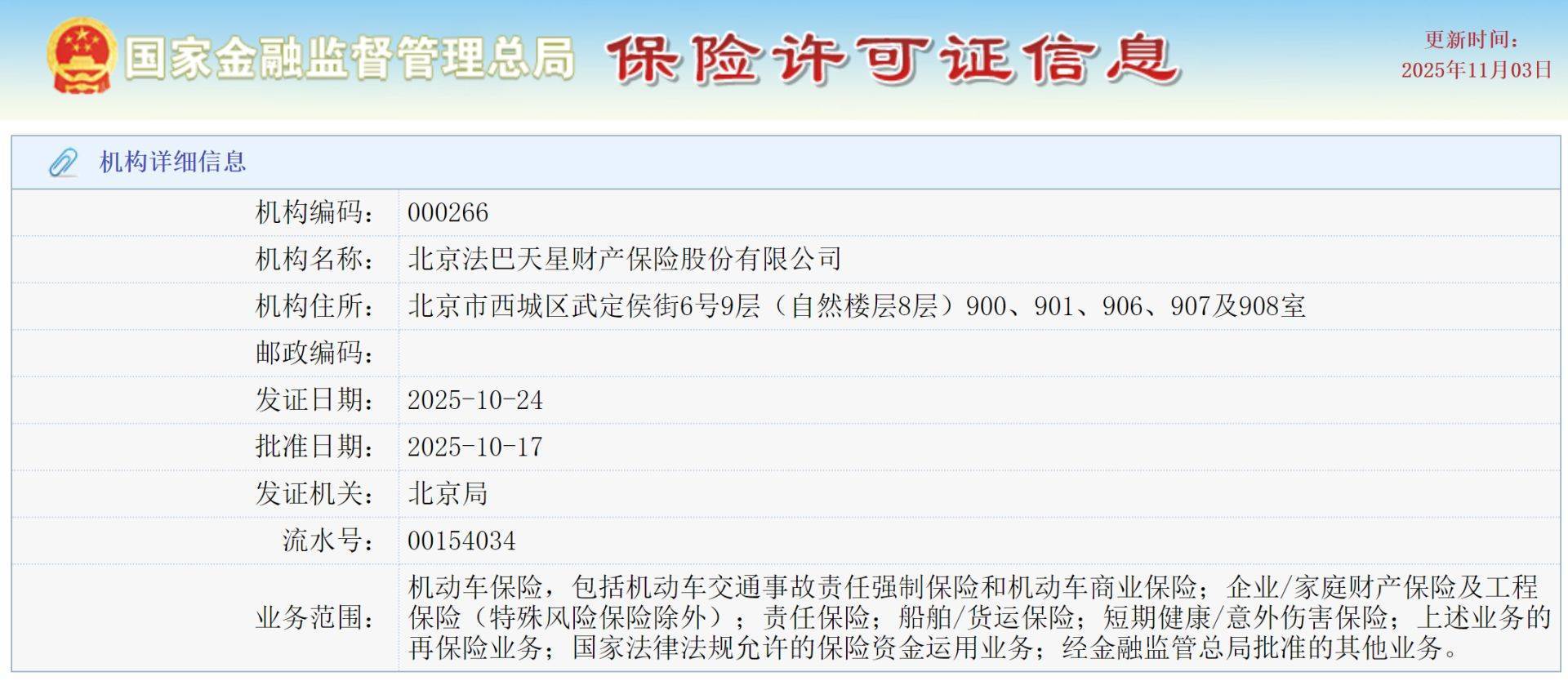
Core Points - Beijing Fabre Tianxing Property Insurance Co., Ltd. has received an insurance license from the Beijing Financial Regulatory Bureau, marking its entry into the Chinese market as a foreign-backed innovative property insurance institution [1][2] - The company aims to integrate international insurance experience with local market demands, focusing on compliance and differentiation in niche markets, particularly in auto insurance technology [2][6] Company Overview - The institution code for Fabre Tianxing Insurance is 000266, with the license issued on October 24, 2025, and approved on October 17, 2025 [1][2] - The company is located at 6 Wudinghou Street, Xicheng District, Beijing, and its business scope includes motor insurance, property insurance, liability insurance, marine and cargo insurance, short-term health and accident insurance, and reinsurance [4][5] Shareholder Structure - Fabre Tianxing Insurance has a unique shareholder structure, including international insurance giants, Chinese tech companies, and European automotive finance leaders [3][4] - The foreign shareholder, the French Paris Insurance Group, is a globally recognized insurance entity, while the German Volkswagen Financial Services and Chinese Xiaomi Group's subsidiary, Sichuan Yinmi Technology Co., Ltd., also hold stakes [3][4] Management and Recruitment - Huang Juexi is proposed to be the chairman, pending regulatory approval, and recruitment for various positions is ongoing [5][6] - The recruitment includes roles in auto insurance management, fund management, assessment, pricing, and reinsurance management [5][6] Industry Impact - The establishment of Fabre Tianxing Insurance is expected to promote the integration of foreign capital and digital insurance, reflecting regulatory encouragement for multinational insurance groups in the Chinese market [6][7] - The company may serve as a new model for "auto insurance + technology scene insurance," leveraging its shareholder advantages in connected car insurance and smart pricing [6][7] - The entry of Fabre Tianxing Insurance could lead to structural optimization in the industry, encouraging existing companies to innovate in product design and digital services [6][7] Broader Financial Landscape - The formation of Fabre Tianxing Insurance is significant for the broader financial landscape of the French Paris Bank in China, completing its layout in both life and property insurance sectors [7][8] - The bank has been actively expanding its financial licenses in China, including fund management, leasing, and securities, indicating a strong commitment to the Chinese market [9][10][11]


新进270家上市公司十大流通股名单,险资前三季度加大权益投资
Hua Xia Shi Bao· 2025-11-04 09:58
Core Viewpoint - The A-share market has shown a strong upward trend in Q3 2023, driven by favorable policies and capital inflows, with insurance funds playing a crucial role in market dynamics [2] Group 1: Insurance Fund Investment Strategies - Insurance funds have maintained a strong preference for traditional "anchor" bank stocks, demonstrating a commitment to stable returns and high dividend assets [2][4] - There has been a significant increase in the allocation towards technology growth sectors such as electronics and computers, indicating a strategic shift towards economic transformation and industrial upgrading [2][8] - The "cash flow and growth" strategy reflects the asset allocation wisdom of insurance funds in the current market environment, potentially revealing future capital flows and market style preferences [2] Group 2: Performance and Holdings of Insurance Companies - Major insurance companies like China Life, China Ping An, and China Pacific have reported an increase in total investment returns, ranging from 5.2% to 8.6% year-on-year [4] - By the end of Q3, insurance funds were among the top ten shareholders in 633 A-share listed companies, with a total holding value exceeding 650 billion yuan, marking a growth of over 6% from mid-2023 [4][5] - The overall number of shares held by insurance funds in bank stocks increased significantly by 8.36 billion shares, with a market value growth of over 6.4 billion yuan despite a decline in the bank sector index [5][6] Group 3: Specific Stock Movements - Postal Savings Bank emerged as a standout stock for insurance funds in Q3, with a notable increase of 2.189 billion shares held by Ping An Life, making it one of the top ten shareholders [5][6] - Other banks like Industrial and Commercial Bank of China and Nanjing Bank also saw increased holdings from insurance funds, reflecting a trend of deepening investment in the banking sector [5][6] - Insurance funds are not only increasing their stakes but also seeking deeper involvement in governance, as seen with Hongkang Life's nomination of a director candidate at Su Nong Bank [6] Group 4: Focus on Technology Growth Stocks - The electronics sector saw the largest increase in holdings by insurance funds, with a rise of nearly 11.8 billion yuan and an increase of 15.6 million shares [8] - The number of computer industry companies in which insurance funds are among the top ten shareholders rose from 17 to 23, with a market value increase of over 1.2 billion yuan [9] - The investment in technology stocks is seen as a response to the macroeconomic environment and a strategic move to capture future growth potential, particularly in the context of the AI wave [9][10] Group 5: Adjustments in Other Sectors - Insurance funds have significantly reduced their holdings in sectors such as public utilities, construction materials, and transportation, indicating a reassessment of traditional cyclical industries [10] - This reduction reflects insurance funds' judgment on the economic outlook and policy impacts on certain sectors, showcasing their role as long-term investors and value discoverers in the capital market [10]





Q3分红潮来临,A、H股两大红利ETF备受关注
Sou Hu Cai Jing· 2025-11-04 09:08
Core Viewpoint - After the third quarter, the dividend index sector, characterized by low valuations and high dividends, has begun to rise. The market's trading logic is shifting from profit improvement expectations to verification of profit improvements, indicating a potential style switch in the market. However, November is a policy and performance gap period, which may accelerate market rotation, raising questions about the attractiveness of dividends [1][2]. Summary by Sections Dividend Payout Increase - As of October 31, a total of 1,033 listed companies have announced cash dividend plans for the first, second, and third quarters, an increase of 141 companies compared to the same period last year. Among these, 38 companies have made multiple dividend distributions [1]. - The total cash dividend amount across the market is 734.9 billion yuan, with 89 companies distributing over 1 billion yuan within the year, indicating a significant increase in both the amount and frequency of dividends [1]. Strong Performance of Dividend Sectors - In a volatile market environment, high dividend assets are becoming a choice for funds seeking "risk aversion + yield," supported by stable cash flows and low valuations. Additionally, the increase in dividend repurchases by listed companies further enhances the attractiveness of dividend assets [2]. Low-Interest Rate Environment - In recent years, the central bank has frequently implemented interest rate cuts, leading to a decline in deposit rates. This has reduced the appeal of traditional savings. Currently, dividend indices have a dividend yield of over 4%, making high dividend assets attractive in the context of economic restructuring and high household savings-to-loan ratios [5]. - Institutional funds have begun to increase their holdings in bank shares, with a total increase of 8.36 billion shares in the third quarter, primarily in Postal Savings Bank, Nanjing Bank, and Changshu Bank [5]. Investment Strategies - For investors seeking stable returns and lower volatility, now is an appropriate time to maintain a dividend investment strategy. Investing in dividend ETFs provides a convenient way to access low valuation and high dividend assets [6]. - Notable A-share dividend ETFs include E Fund Dividend ETF (code: 515180), Low Volatility Dividend ETF (code: 563020), and Value Dividend ETF (code: 563700). For Hong Kong stocks, the Hang Seng Low Volatility Dividend ETF (code: 159545) is highlighted [6].
险资三季度“扫货”银行股!红利低波ETF(512890)流通规模近250亿,成资金“压舱石”
Xin Lang Ji Jin· 2025-11-04 09:05
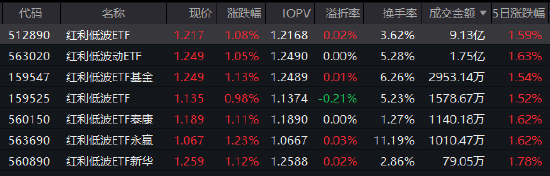
Market Overview - On November 4, the three major A-share indices collectively fell, with the ChiNext Index and Shenzhen Component Index both down nearly 2% [1] - In contrast, the Dividend Low Volatility ETF (512890) rose by 1.08%, closing at 1.217 yuan, with a turnover rate of 3.62% and a transaction volume of 9.13 billion yuan, leading among similar ETFs [1] Fund Performance - The Dividend Low Volatility ETF (512890) has seen significant net inflows, with 330 million yuan over the last 5 trading days, 410 million yuan over the last 10 days, and 3.51 billion yuan over the last 20 days, totaling 3 billion yuan over the last 60 days [2] - As of November 3, 2025, the ETF's circulating scale was 24.988 billion yuan [2] Holdings and Sector Trends - The top ten holdings of the Dividend Low Volatility ETF mostly saw price increases, including stocks like COFCO Sugar, Nanjing Bank, and Agricultural Bank, with a total market value of approximately 5.5 billion yuan [4] - Insurance capital has been increasing its holdings in bank stocks, with notable entries in major banks like Industrial and Agricultural Bank [4] Investment Insights - Analysts suggest that "insurance capital + industrial capital" may become a significant source of incremental funds for the banking sector, favoring stable, high-dividend bank stocks [5] - The banking sector is currently at a historical low in terms of holdings, indicating potential investment value, particularly in regional banks with high provisioning coverage [5] ETF Historical Performance - The Dividend Low Volatility ETF (512890) has achieved a cumulative return of 140.72% as of November 3, 2025, outperforming its benchmark and ranking 75th among 502 similar products [6] - The fund has consistently delivered positive returns for six consecutive years from 2019 to 2024, making it one of the few ETFs in the A-share market to achieve this feat [6]
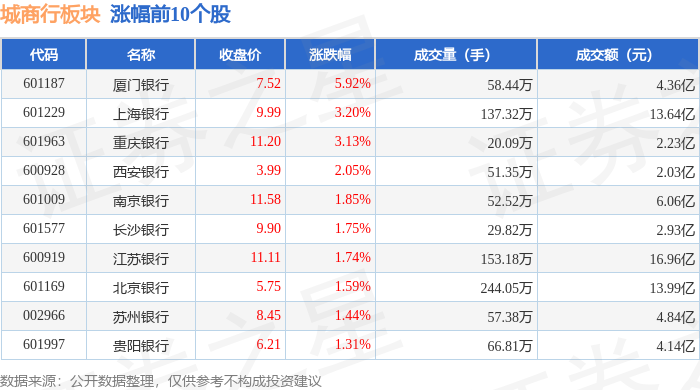
城商行板块11月4日涨1.62%,厦门银行领涨,主力资金净流入2.8亿元
Zheng Xing Xing Ye Ri Bao· 2025-11-04 08:48
Market Performance - The city commercial bank sector increased by 1.62% on November 4, with Xiamen Bank leading the gains [1] - The Shanghai Composite Index closed at 3960.19, down 0.41%, while the Shenzhen Component Index closed at 13175.22, down 1.71% [1] Individual Bank Performance - Xiamen Bank's closing price was 7.52, up 5.92% with a trading volume of 584,400 shares and a transaction value of 4.36 billion [1] - Shanghai Bank closed at 66.6, up 3.20%, with a trading volume of 1,373,200 shares and a transaction value of 1.364 billion [1] - Chongqing Bank closed at 11.20, up 3.13%, with a trading volume of 200,900 shares and a transaction value of 223 million [1] - Other notable banks include Xi'an Bank, Nanjing Bank, and Changsha Bank, with respective increases of 2.05%, 1.85%, and 1.75% [1] Fund Flow Analysis - The city commercial bank sector saw a net inflow of 280 million from main funds, while retail funds experienced a net outflow of 89.43 million [1] - Beijing Bank had a main fund net inflow of 1.47 billion, but retail funds saw a net outflow of 55.81 million [2] - Xiamen Bank recorded a main fund net inflow of 49.44 million, with retail funds experiencing a net outflow of 54.06 million [2]


投顾晨报:震荡整固,交易占优-20251104
Orient Securities· 2025-11-04 08:42
Core Insights - The report indicates that the A-share market is in a slow bull phase, currently experiencing a typical consolidation period, with the index expected to fluctuate around 3900 points within a range of 100 points [9] - There is a notable shift in capital flow from mid-risk technology growth stocks to high-dividend and micro-cap stocks, suggesting a return to a "barbell strategy" [9] - The macroeconomic backdrop shows a temporary truce in trade disputes, leading to a transitional and rebalancing phase in the market, where trading factors are gaining importance [9] Market Strategy - Emphasis is placed on trading factors and capturing the rhythm of market fluctuations, particularly in the context of the current consolidation phase [3] - The report suggests that cyclical and consumer sectors are expected to outperform in the short term, driven by supply-side optimization and cost reductions [9] Industry Strategy - The banking sector shows positive fundamental signals, with improvements in net interest margins and asset quality, indicating a favorable environment for investment [5] - The report highlights the resilience of state-owned banks and the potential of high-quality, high-elasticity small and medium-sized banks as investment targets [9] Thematic Strategy - The upcoming COP30 climate conference is expected to act as a catalyst for the clean energy sector, with significant opportunities in energy transition areas such as photovoltaics, energy storage, and carbon trading [6][9] - The report identifies specific investment opportunities in companies related to clean energy and environmental protection, anticipating that these sectors will benefit from the outcomes of the climate summit [9]


高股息资产继续走强,银行股全线飘红!险资“扫货”股来了
Zhong Guo Zheng Quan Bao· 2025-11-04 05:47
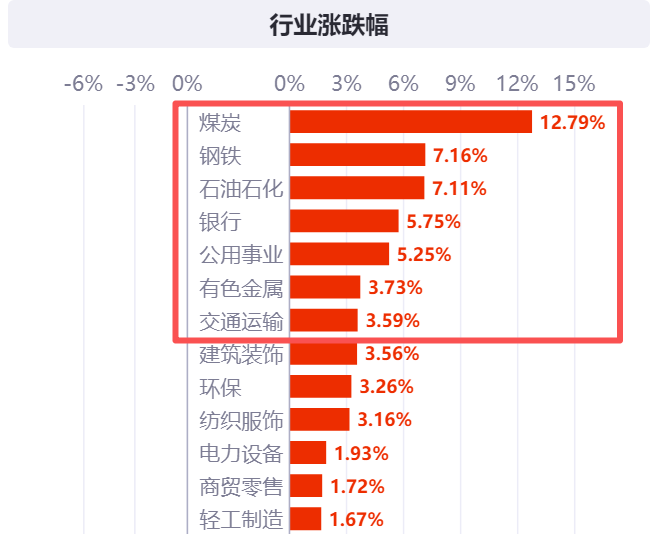
Core Viewpoint - October is historically a strong month for listed companies' performance, leading to market corrections or realizations after sufficient pricing based on fundamentals. November's market characteristics are focused on "forward speculation" [1] Group 1: Market Performance - High dividend assets continue to strengthen, with notable gains in the banking sector, including Xiamen Bank rising over 6% [1][2] - The banking sector leads the market, with significant increases in stocks such as Xiamen Bank, Industrial Bank, and Shanghai Bank [2] Group 2: Institutional Investment Trends - Insurance capital continues to heavily invest in bank stocks, with China Life Insurance becoming a top ten shareholder in Industrial Bank, holding 757 million shares (0.21% stake) by the end of September [2] - Agricultural Bank of China reported that Ping An Life Insurance entered its top ten shareholders, holding 4.913 billion shares (1.4% stake) by the end of September [2] - Other banks like Wuxi Bank, Nanjing Bank, and Changshu Bank also saw new insurance capital entering their top ten shareholders [2] Group 3: Future Investment Strategies - Insurance capital combined with industrial capital is expected to be a significant incremental allocation for the banking sector, with a focus on banks with stable earnings and high dividend returns [3] - Asset management companies (AMCs) are increasing their stakes in several national banks, often with substantial amounts and common board involvement [3] - Insurance capital has shown a strong preference for dividend assets, with 34 instances of stake increases this year, primarily in the banking sector [3]

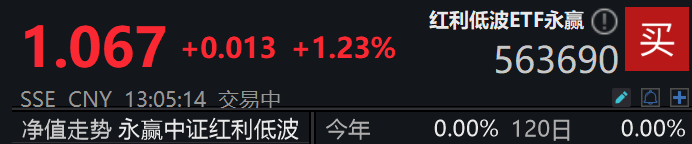
市场风格切换,红利低波ETF永赢(563690)涨幅超1.3%
Xin Lang Cai Jing· 2025-11-04 05:35
Core Viewpoint - High dividend assets continue to strengthen, with significant buying activity from insurance funds in the banking sector, indicating a shift towards stable dividend-paying stocks in a low-interest-rate environment [2] Group 1: Market Performance - As of November 4, 2025, the CSI Dividend Low Volatility Index (H30269) rose by 1.13%, with notable increases in constituent stocks such as Xiamen Bank (up 6.20%), Shanghai Bank (up 3.51%), and Jianfa Co. (up 2.86%) [1] - The Yongying Dividend Low Volatility ETF (563690) increased by 1.23%, with a cumulative rise of 0.38% over the past week as of November 3, 2025 [1] Group 2: Institutional Investment Trends - Insurance funds have been actively increasing their holdings in bank stocks, with China Life Insurance becoming a top ten shareholder in Industrial and Commercial Bank of China, holding 757 million shares (0.21% stake) as of September 30 [2] - Ping An Life Insurance entered the top ten shareholders of Agricultural Bank of China with 4.913 billion shares (1.4% stake) as of September 30 [2] - Other banks such as Wuxi Bank, Nanjing Bank, and Changshu Bank also saw new insurance capital entering their top ten shareholders during the third quarter [2] Group 3: Future Outlook - According to Zhongtai Securities, during Q3 2025, insurance funds focused on increasing their stakes in banking, telecommunications, and steel sectors, reflecting a strategy to enhance returns in a persistently low-interest-rate environment [2] - The fourth quarter of 2025 is anticipated to be a critical period for positioning in dividend stocks, as pessimistic expectations may have been fully priced in, highlighting the appeal of undervalued assets and the potential for increased capital allocation [2]
5分钟,300062直线20%封板!A股这一赛道,突现涨停潮
Zheng Quan Shi Bao· 2025-11-04 04:38
Group 1: A-Share Market Overview - The A-share market experienced slight fluctuations, with the ChiNext Index losing and regaining the 3200-point mark, while the Sci-Tech Innovation 50 Index fiercely contested around 1400 points [1] - The overall market showed more declining stocks than advancing ones, with trading volume continuing to shrink [1] Group 2: Electric Grid Equipment Sector - The electric grid equipment sector saw significant strength, with the sector index rising nearly 3%, reaching a 10-year high since June 2015 [2] - Companies like Zhongneng Electric and Sanbian Technology hit their upper limits within minutes of trading, indicating strong market interest [2] - The growth in AI data center construction and computing infrastructure upgrades is reshaping the power equipment and grid industry, with major investments from Alibaba and Tencent expected to drive order increases [2] - The China Electricity Council forecasts a 5% year-on-year growth in total electricity consumption, reaching 10.4 trillion kilowatt-hours in 2025 [2] - Fixed asset investments by the State Grid are projected to exceed 270 billion yuan in the first half of 2025, marking an 11.7% year-on-year increase [2] - Transformer exports from China saw a significant increase of 51.42% year-on-year from January to August 2025, totaling 29.711 billion yuan [2] Group 3: Banking Sector Performance - The banking sector index surged over 2%, reaching a historical high after a three-month adjustment period [4] - Institutional investors, including insurance and QFII, significantly increased their holdings in bank stocks during the third quarter, with a total increase of 8.36 billion shares [4] - Notable increases in holdings were observed in banks like Postal Savings Bank and Nanjing Bank, with QFII holding substantial market values in several banks [4] - Citigroup indicated that covered Chinese banks' third-quarter performance met expectations, with a positive outlook for the fourth quarter of 2025 and the first quarter of the following year [4] - Huatai Securities anticipates a stabilization of interest margins for listed banks by 2026, with a recovery in intermediate business income [4]




场内孤品,香港银行LOF(501025)强势涨超2%
Xin Lang Cai Jing· 2025-11-04 03:33
Group 1 - The current market sentiment is fluctuating, with undervalued assets performing well, as evidenced by the HK Bank Index rising by 1.2% as of November 3, 2025 [1] - Several banks, including Chongqing Bank, China Merchants Bank, and CITIC Bank, saw significant stock price increases, with Chongqing Bank rising over 2.74% and others rising over 2% [1] - The Penghua CSI Hong Kong Bank Index Fund has surged over 2%, reaching a nearly three-month high, with a year-to-date increase of 30.81% and a two-year annualized excess return of 2.84% [1] Group 2 - As of September 2023, at least two insurance companies appeared in the top ten shareholders of 12 listed banks, indicating increased institutional interest [1] - Notably, Zheshang Bank has four insurance shareholders, while several other banks have two or three [1] - The ongoing dividend distributions and the attractive yields of bank stocks are expected to support the banking sector, making a valuation recovery in Q4 likely [1] Group 3 - Dongguan Securities suggests that the migration of funds to the banking sector is driven by the pursuit of relative safety in a low-interest-rate environment, with continued demand for high-dividend, low-valuation bank stocks [2] - The logic of this migration is reinforced by policies that enhance dividends and attract long-term capital, contributing to the revaluation of bank stocks [2] - The HK Bank Index reflects the overall performance of bank stocks within the Hong Kong Stock Connect, with major stocks like HSBC and ICBC making up 84.38% of the top ten weightings [2] Group 4 - The Hong Kong Bank LOF provides a convenient way to invest in bank stocks within the Hong Kong Stock Connect, allowing investors to share in the growth of the banking sector [3]