比亚迪

Search documents
安培龙:温度-压力一体传感器已实现比亚迪及北美某知名新能源汽车客户大批量交付
2 1 Shi Ji Jing Ji Bao Dao· 2026-02-03 10:29
Core Viewpoint - The company has successfully achieved mass production of temperature-pressure integrated sensors for the electric vehicle sector, breaking foreign technological barriers with its core invention patents [1] Group 1: Company Developments - The company has commenced large-scale supply of its temperature-pressure integrated sensors to automotive clients, including BYD and a well-known North American electric vehicle customer [1]

【专访】科尔尼陈沛祎:从“持久战”到“闪电战”,中国品牌出海的速度革命靠什么?
科尔尼管理咨询· 2026-02-03 10:19
Core Insights - The report by Kearney highlights a significant shift in the timeline for Chinese brands to establish recognition overseas, reducing from 10 years to 3-5 years due to factors like cross-border e-commerce and social media [1][3]. Group 1: Brand Globalization Trends - Chinese brands are no longer just exporting products but are also effectively conveying cultural expressions and lifestyles, redefining the global consumer landscape [3]. - The success of brands like Pop Mart and Miniso reflects a transformation in the paradigm of Chinese consumer goods going global, driven by localized strategies and faster market penetration [3]. Group 2: Pathway Changes Amid Uncertainty - External uncertainties, such as geopolitical tensions and trade protectionism, have become the "new normal" for Chinese brands going global, altering their pathways and success logic [5]. - The shift from "product export" to "capacity export/local investment" indicates a need for companies to establish complete R&D, production, and marketing loops in target markets [5]. - Companies are optimizing global strategies by relocating production to regions like Mexico and Southeast Asia to mitigate trade restrictions and enhance local supply chains [5]. Group 3: Compliance and Quality Focus - Compliance has become a critical precondition for going global, with increased audit and compliance costs potentially slowing down the pace of globalization in the short term, but leading to more stable long-term growth [6]. Group 4: Emotional Consumption and Brand Value - The success of brands like Miniso and Pop Mart is attributed to their ability to tap into "emotional consumption," which resonates with the global "Z generation" and is facilitated by social media [7]. - Key barriers to sustainable success include a flexible supply chain, integration of content and retail, and the ability to resonate emotionally with local cultures [8]. Group 5: Comparison with American Brands - Similarities between Chinese and American brands include leveraging large domestic markets for global expansion and pursuing universal emotional values [9]. - Differences lie in the brand establishment cycle, with Chinese brands utilizing advanced infrastructure to shorten this cycle to 3-5 years, contrasting with the traditional 10-year approach of American brands [9][10]. - Chinese brands emphasize localized narratives and cultural integration, focusing on product value and cultural resonance, unlike the standardized lifestyle symbols often associated with American brands [9]. Group 6: Underestimated Risks - Internal risks such as "management inertia" can lead to conflicts when Chinese management practices clash with local cultural expectations [11]. - The "island effect" in talent organization poses challenges in integrating foreign executives into decision-making processes [11]. - Cultural narrative misalignment can result in brands being perceived as insincere, impacting their reputation in local markets [11].


央视呼吁全行业共治网络乱象、净化行业生态
Hua Xia Shi Bao· 2026-02-03 09:58
比亚迪集团品牌及公关处总经理李云飞在节目中表示:"黑公关、黑水军、黑自媒体都是表象,一切的源头是行业的一些同行、一些竞争对手"。对此,节 目强调,整治汽车行业网络乱象并非单一企业的事,需要监管部门、车企、媒体及消费者协同发力,同时表态监管部门将强化执法力度,严厉打击网络黑 产;同时,节目也呼吁车企,应坚守合规经营底线,主动拿起法律武器维护自身权益。 网络空间并非法外之地!1月29日央视《焦点访谈》推出汽车行业网络乱象专项报道,全方位起底当前汽车行业网络黑产毒瘤,深入剖析黑公关、黑水军 的危害,同时重点报道了比亚迪(002594)等新能源车企依法维权的实践事例,呼吁行业坚守公平底线、共治网络乱象,为汽车产业高质量发展保驾护 航,相关内容引发全网广泛关注与热议。 节目中明确指出,随着汽车产业尤其是新能源汽车行业的快速发展,网络乱象已成为制约行业健康发展的"顽疾"。从虚假测评、恶意抹黑、断章取义误导 消费者,到AI批量生成黑稿、水军集体刷屏造谣,再到部分自媒体为博取流量、收取利益,专门针对车企及车主进行恶意攻击,网络黑产已形成完整产 业链,不仅严重损害企业合法权益、扰乱市场竞争秩序,更侵害了消费者的知情权与选择权。 ...

车险市场持续“大撤退”,年内多家汽车服务商注销保险中介牌照
Xin Lang Cai Jing· 2026-02-03 09:55
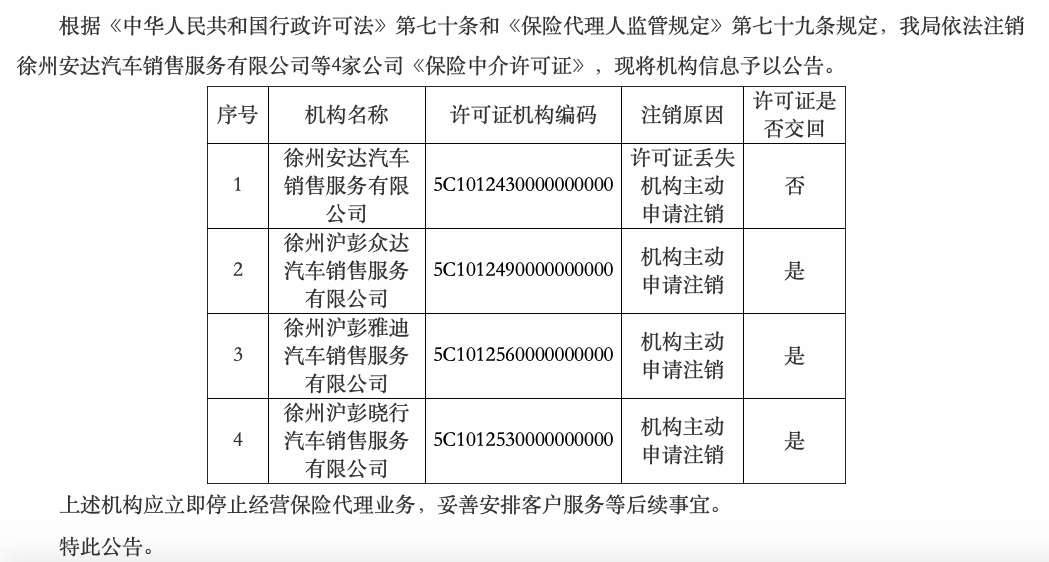
智通财经记者 | 曾令俊 开年以来,汽车销售服务行业的保险中介业务持续收缩。 据智通财经记者不完全统计,截止到2月2日,今年已有至少8家汽车销售服务公司正式注销保险中介牌照,退出保险代理与销售领域。比如,1月底江 苏金融监管局依法注销徐州安达汽车销售服务有限公司等4家公司《保险中介许可证》。 而这一趋势在2025年已显现爆发式增长。据不完全统计,去年全年共有80余家汽车服务商注销相关牌照,数量超过2023年、2024年两年的总和。曾经 依托线下场景优势、与车险销售深度绑定的汽车服务商,为何主动摘牌? 除了因为4S店闭店的原因之外,更重要的因素在于行业变革。"以前卖一张车险,能拿到20%甚至30%的手续费,再加上保险公司给的油卡、保养券 等隐性福利,这笔收入很可观。现在'报行合一"手续费被压到个位数,还不能有任何暗返,卖一张保单的利润连给续保专员开半天工资都不够。"广 州某汽车销售有限公司副总经理王浩对智通财经记者坦言。 高佣金时代落幕 汽车服务商作为车险销售的关键场景之一,一直是保险公司拓展车险业务的重要渠道;同样,汽车服务商在销售车险方面也天然具有优势。 但近两年来,越来越多汽车服务商选择退出车险销售业务。 ...
特斯拉在美推出Model Y全轮驱动版;极氪:部分极氪8X内容提前出现,打乱既定信息发布节奏丨汽车交通日报
创业邦· 2026-02-03 09:09
扫码可订阅产业日报 欢迎加入 睿兽分析会员 ,解锁 AI、汽车、智能制造 等相关 行业日报、图谱和报告 等。 1.【保时捷中国总裁及CEO潘励驰:保时捷的"过冬"手册,收缩、重仓与不妥协】2025年,保时捷 全球交付27.94万辆新车,同比下滑10%,创下自2009年以来的最大年度跌幅。而在中国市场的销 量滑坡更为惊人,2025全年仅售出4.19万辆,同比下滑26%,几乎跌回十年前水平。 "这样的结果 在我们的预期之内。"保时捷中国总裁及CEO潘励驰(Alexander Pollich)在接受媒体采访时表现得 十分理性:"我们不会舍本逐末,竭尽所能地追求销量、追求市场份额,我们要维持供需平衡,保持 品牌和产品的价值。"(21财经) 2. 【吉利银河M7官图发布,搭载1.5L插混系统,纯电续航225公里】吉利银河于近期正式发布全新 插混SUV车型—— 银河M7的官方图片,该车作为银河M系列首款电混SUV,定位介于银河星舰7与 银河M9之间,主打家用出行市场,新车搭载1.5L插混系统,拥有225km的纯电续航以及1730km的 综合续航,计划2026年上半年上市,上市后将对标比亚迪宋Pro DM-i、哈弗枭龙MA ...


Is Tesla Stock a Buy? Here's the Good News and the Bad News.
The Motley Fool· 2026-02-03 09:05
Core Viewpoint - Tesla is undergoing significant changes to adapt its business model for future growth, focusing on autonomous vehicles and humanoid robots despite recent declines in electric vehicle sales [1][2]. Sales Performance - Tesla sold 1.79 million passenger EVs in 2024, marking a 1% decrease from the previous year, which accelerated to a 9% decline in 2025 with only 1.63 million deliveries [3]. - EV sales account for 73% of Tesla's total revenue, making the decline a critical concern for investors [3]. Competitive Landscape - Increased competition from legacy automakers and budget-friendly options from companies like BYD has contributed to Tesla's struggles, with BYD's sales in Europe rising by 228% while Tesla's fell by 37% [4][5]. Strategic Shifts - CEO Elon Musk announced the discontinuation of the Model S and Model X to allocate manufacturing capacity for the development of the humanoid robot, Optimus [2][6]. - The Cybercab, Tesla's autonomous robotaxi, is expected to generate new revenue streams, operating 24/7 using Tesla's Full Self-Driving software [7]. Regulatory Challenges - The unsupervised version of Tesla's Full Self-Driving software has not yet received regulatory approval in the U.S., which is necessary for the Cybercab to launch [8]. Future Prospects - The elimination of certain EV models is intended to enhance production capacity for Optimus, which Musk believes could generate $10 trillion in revenue over time [9]. - Humanoid robots are expected to have diverse applications, potentially outnumbering humans by 2040 [10]. Valuation Concerns - Tesla's earnings fell by 47% to $1.08 per share in 2025, resulting in a price-to-earnings (P/E) ratio of 396, significantly higher than the Nasdaq-100 index average of 32.6 [12]. - Despite the high valuation, investors continue to pay a premium for Tesla, driven by confidence in Musk's long-term vision [13]. Investment Outlook - While Tesla's future may hold promise, the current high valuation poses risks, especially with declining EV sales and the need for new products to generate revenue soon [14][15].
乘用车板块2月3日涨1.12%,赛力斯领涨,主力资金净流出1.17亿元
Zheng Xing Xing Ye Ri Bao· 2026-02-03 09:03
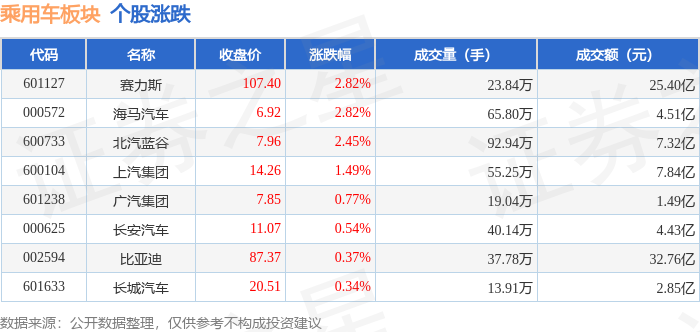
Group 1 - The passenger car sector increased by 1.12% on February 3, with Seres leading the gains [1] - The Shanghai Composite Index closed at 4067.74, up 1.29%, while the Shenzhen Component Index closed at 14127.1, up 2.19% [1] - Key stocks in the passenger car sector showed varied performance, with Seres and Haima Auto both rising by 2.82% [1] Group 2 - The net outflow of main funds in the passenger car sector was 117 million yuan, while retail investors saw a net inflow of 314 million yuan [1] - Detailed fund flow data indicated that Seres had a main fund net inflow of 172 million yuan, but retail investors had a net outflow of 85 million yuan [2] - BYD experienced a significant net outflow of 379 million yuan from main funds, despite a retail net inflow of 386 million yuan [2]






X @Bloomberg
Bloomberg· 2026-02-03 08:58
BYD Executive Vice President Stella Li tells @JoumannaTV the automaker is ready to comply with China's ban on concealed door handles for electric vehicles https://t.co/0b41hagu1d https://t.co/Ne4Qi8JB3G ...
比亚迪(002594):系列点评三十八:高端+出海向上,静待旺季来临
Guolian Minsheng Securities· 2026-02-03 08:56
Investment Rating - The report maintains a "Recommended" rating for BYD (002594.SZ) with a current price of 87.05 CNY per share [4]. Core Insights - The company is expected to see revenue growth driven by high-end product offerings and international expansion, with projected revenues of 777.1 billion CNY in 2024, increasing to 1,104.5 billion CNY by 2027, reflecting a compound annual growth rate (CAGR) of approximately 12.6% [3][20]. - Net profit attributable to shareholders is forecasted to grow from 40.3 billion CNY in 2024 to 58.6 billion CNY in 2027, with a notable increase of 34.0% in 2024, followed by a decrease of 7.5% in 2025, and then a recovery with growth rates of 27.4% and 23.4% in 2026 and 2027 respectively [3][20]. - The report highlights a significant decline in January's sales figures, with wholesale sales of new energy vehicles dropping by 30.1% year-on-year and 50.0% month-on-month, indicating a challenging market environment [8]. Financial Forecasts - Revenue projections for the years 2024 to 2027 are as follows: - 2024: 777.1 billion CNY - 2025: 866.5 billion CNY - 2026: 981.3 billion CNY - 2027: 1,104.5 billion CNY - The expected growth rates for these years are 29.0%, 11.5%, 13.3%, and 12.6% respectively [3][20]. - Net profit attributable to shareholders is forecasted as follows: - 2024: 40.3 billion CNY - 2025: 37.2 billion CNY - 2026: 47.5 billion CNY - 2027: 58.6 billion CNY - Earnings per share (EPS) is projected to increase from 4.42 CNY in 2024 to 6.43 CNY in 2027 [3][20]. Market Performance - The report notes that BYD's high-end brand, Fangchengbao, has seen significant sales growth, with the Ti 7 model alone achieving sales of 100,000 units, marking it as a key growth driver for the company's high-end strategy [8]. - International sales are also on the rise, with January exports of new energy vehicles reaching 100,000 units, a year-on-year increase of 51.5%, despite a month-on-month decline of 24.5% [8]. Strategic Developments - The company is focusing on enhancing its high-end brand positioning and expanding its international footprint, with new factories being established in Brazil and plans for further expansion in Uzbekistan, Hungary, Turkey, and Indonesia [8]. - The report emphasizes the importance of technological advancement and brand loyalty in solidifying BYD's position in the high-end market [8].
深圳坪山2025年GDP增长10.5% 五年总量翻番
Nan Fang Du Shi Bao· 2026-02-03 08:39
Core Viewpoint - Shenzhen's GDP is projected to reach 38,731.80 billion yuan in 2025, with a year-on-year growth of 5.5%. Meanwhile, Pingshan District is expected to achieve a GDP growth of 10.5% during the same period, aiming for a doubling of its GDP over the "14th Five-Year Plan" period with an average annual growth rate in double digits [1][3]. Economic Growth - Pingshan District's GDP is set to grow by 10.5%, with industrial added value increasing by 15.9% and retail sales of consumer goods rising by 10.2%. The total social R&D investment intensity is expected to reach 11.8%, with 98.39% of this investment coming from enterprises [3][5][8]. - The total foreign trade import and export volume is projected to grow by 13.7% [8]. Industrial Development - Strategic emerging industries account for nearly 90% of the total industrial output value, with industrial investment making up 54% of fixed asset investment. The district is focusing on building a modern industrial system characterized by "vehicle, medicine, chip, and intelligence" [5][9]. - Pingshan is home to over 1,300 biopharmaceutical companies, and a partnership worth 1.64 billion USD has been established in the CAR-T field, setting a record for external licensing transactions in China [5][9]. Innovation and R&D - The social R&D investment intensity is projected to reach 11.8%, with a high innovation index. The district is launching initiatives to enhance technological innovation and has established various platforms for industry-academia collaboration [9]. - Pingshan is developing the first public service platform for vehicle-grade chip standard verification and has built a comprehensive traffic testing base for intelligent connected vehicles [9]. Consumer Market - Retail sales of consumer goods are expected to grow by 10.2%, with overall commodity sales increasing by 28.5%. The district has implemented policies to stimulate consumption, including a "trade-in" subsidy program [11][12]. - The accommodation and catering sectors are also experiencing growth, with accommodation revenue increasing by 7.6% and catering revenue by 4.0% [14]. Service Industry Performance - The software and information technology service industry is showing strong growth, with revenues increasing by 39.4%. The cultural, sports, and entertainment sectors are also performing well, with a revenue increase of 19.0% [15].