
中国平安

Search documents
强势股追踪 主力资金连续5日净流入88股
Zheng Quan Shi Bao Wang· 2026-01-22 09:44
Core Viewpoint - The report highlights the significant inflow of main capital into various stocks, with specific companies showing remarkable performance in terms of net capital inflow and stock price changes [1][2]. Group 1: Main Capital Inflow - A total of 88 stocks have experienced a net inflow of main capital for five consecutive days or more, indicating strong investor interest [1]. - Hangzhou Bank leads with 16 consecutive days of net inflow, followed by Yunnan Baiyao with 14 days [1]. - Midea Group has the highest total net inflow amounting to 1.582 billion yuan over seven days, while Hangzhou Bank follows closely with 1.489 billion yuan over 16 days [1]. Group 2: Performance Metrics - The stock with the highest net inflow ratio relative to trading volume is Fenglong Co., which has surged by 359.76% over the past 16 days [1]. - Other notable stocks include Guotai Junan Securities with a net inflow of 1.109 billion yuan over 11 days and China Ping An with 1.074 billion yuan over six days, although their stock prices have seen declines of 2.46% and 3.28% respectively [1]. - The report includes a detailed table of stocks with their respective net inflow amounts, inflow ratios, and cumulative price changes, providing a comprehensive overview of market trends [1][2].





2026年1月托管月报:保险抢配、资管户配债力量偏弱-20260122
Ping An Securities· 2026-01-22 09:28
Group 1: Report's Industry Investment Rating - There is no information provided about the industry investment rating in the report. Group 2: Report's Core View - In December 2025, the bond supply scale was at a relatively low level, with the bond custody balance's year - on - year growth rate dropping by 1.8 percentage points compared to November, and the monthly new custody scale being 819.2 billion yuan, a low level in 2025. The supply of credit bonds increased while that of inter - bank certificates of deposit decreased. In terms of institutions, asset management accounts had insufficient bond - allocation power, while insurance institutions increased their holdings. Looking ahead, the government bond issuance in Q1 may be fast, and banks are expected to be the main force in absorbing government bond supply. Insurance institutions' bond - allocation scale may be supported by high yields and supply, while the non - bank bond - allocation power of asset management accounts may be weak [3]. Group 3: Summary by Relevant Catalogs 1. Bond Supply in December 2025 - The bond custody balance's year - on - year growth rate in December 2025 was 11.6%, 1.8 percentage points lower than in November. The new custody scale was 819.2 billion yuan, a low level in 2025 [3][4]. 2. Bond Supply by Type - Treasury bonds, local government bonds, and inter - bank certificates of deposit had less - than - seasonal increases of 42.4 billion yuan, 175.9 billion yuan, and 1.3 trillion yuan respectively. Credit bonds and ABS had more - than - seasonal increases of 596.8 billion yuan and 165.5 billion yuan respectively. In December 2025, the new supply of treasury bonds was 358.2 billion yuan, and that of local bonds was 431 billion yuan, both at relatively low levels. The net supply of inter - bank certificates of deposit was - 622.4 billion yuan, at a low level in 2025, while the net supply of corporate credit bonds was 377.1 billion yuan, rising against the season [3][8][11]. 3. Bond - Allocation by Institutions in December 2025 - **Banks**: After adjustment for repurchase, the actual bond - buying scale was 385.6 billion yuan, in line with the season. They mainly increased their holdings of policy - financial bonds and treasury bonds. The adjusted government - bond - buying scale was 432.5 billion yuan, accounting for 55% of the new government - bond custody scale, indicating a seasonal weakening of bond - allocation power [23]. - **Insurance institutions**: They increased their holdings by 304.7 billion yuan, 204.6 billion yuan more than the season, mainly increasing their holdings of credit bonds and local government bonds, possibly due to low bond - allocation in November and year - end bond - grabbing [26]. - **Asset management accounts**: They increased their holdings by 221.3 billion yuan, 358.5 billion yuan less than the season, mainly reducing their holdings of inter - bank certificates of deposit and increasing their holdings of credit bonds, possibly due to the stock - bond seesaw effect and low issuance of debt - biased funds [29]. - **Foreign investors**: They reduced their holdings by 115.5 billion yuan, 147.3 billion yuan less than the season, mainly reducing their holdings of inter - bank certificates of deposit, possibly due to the unsustainability of risk - free carry - trade and insufficient new supply of inter - bank certificates of deposit [35]. - **Securities firms**: They reduced their holdings by 504 million yuan, 178.5 billion yuan less than the season, mainly reducing their holdings of credit bonds, possibly for year - end profit - taking [35]. 4. Outlook - **Bond supply**: With the front - loaded fiscal policy, the government bond issuance in Q1 may be fast, and the supply of local government bonds is expected to be higher than last year [38]. - **Banks**: They are expected to be the main force in absorbing government bond supply. With stable deposit growth and slowing loan growth, banks still have large bond - allocation space, but attention should be paid to the structural restrictions on bond - allocation caused by deposit transfer and activation [41]. - **Insurance institutions**: High yields and supply may support their bond - allocation scale. In January, they continued to have strong bond - allocation power, possibly affected by the premium "good start" effect. The wide spread between ultra - long - term local government bonds and insurance's predetermined interest rate is still attractive [44]. - **Asset management accounts**: Under the pressure of stock - market diversion, the non - bank bond - allocation power is expected to be weak. The bond - allocation power of wealth management products and debt funds has not increased significantly, possibly due to funds flowing into bank deposits, the equity market, and insufficient issuance of inter - bank certificates of deposit [46].
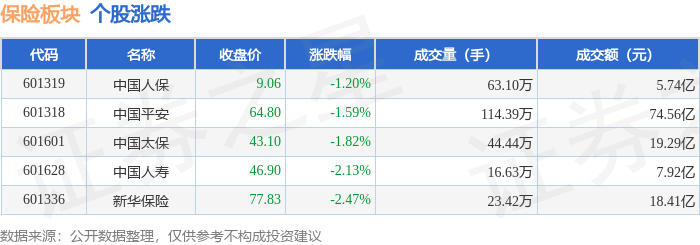
保险板块1月22日跌1.84%,新华保险领跌,主力资金净流出2.12亿元
Zheng Xing Xing Ye Ri Bao· 2026-01-22 09:01
证券之星消息,1月22日保险板块较上一交易日下跌1.84%,新华保险领跌。当日上证指数报收于 4122.58,上涨0.14%。深证成指报收于14327.05,上涨0.5%。保险板块个股涨跌见下表: | 代码 | 名称 | 收盘价 | 涨跌幅 | 成交量(手) | 成交额(元) | | | --- | --- | --- | --- | --- | --- | --- | | 616109 | 中国人保 | 9.06 | -1.20% | 63.10万 | | 5.74亿 | | 601318 | 中国平安 | 64.80 | -1.59% | 114.39万 | | 74.56 Z | | 601601 | 中国太保 | 43.10 | -1.82% | 44.44万 | | 19.29亿 | | 601628 | 中国人寿 | 46.90 | -2.13% | 16.63万 | | 7.92 Z | | 601336 | 新华保险 | 77.83 | -2.47% | 23.42万 | | 18.41亿 | 从资金流向上来看,当日保险板块主力资金净流出2.12亿元,游资资金净流出5.17亿元,散户资金净流入 ...






力推1万亿“险资入深” 深圳披露科技保险三个量化目标
2 1 Shi Ji Jing Ji Bao Dao· 2026-01-22 07:49
21世纪经济报道记者 黄子潇 深圳报道 1月22日,21世纪经济报道记者从深圳市地方金融管理局获悉,该局研究起草了《深圳市关于保险业助力科技创新和产业发展的行动方案 (2026-2028年)》(简称《行动方案》),于1月22日公开征求意见。 上述16条政策覆盖多个新兴科技领域,针对性地提出加快研发相适应的风险保障措施与产品。 《行动方案》提出,力争到2028年底完成三方面工作目标: 一是建立并完善与深圳经济社会发展水平相匹配的现代保险服务体系,推动保险业为"20+8"战略性新兴产业集群和未来产业发展、企业"走出 去"、深港金融合作提供坚实支撑,助力深圳建设具有全球重要影响力的产业科技创新中心、产业金融中心和全球海洋中心城市。 二是科技保险规模、质量与竞争力全面提升,科技保险保费收入年均增速超10%,每年为科技企业提供风险保障超5万亿元;低空经济、人工 智能等新兴产业保险服务实现突破,每年推出不少于30款保险创新产品。 三是保险业规模持续扩大,全市保险法人总资产规模超11万亿元,深圳地区三年保费收入超7000亿元。 这标志着,深圳保险业未来三年的重心或将落在"科技保险"领域。同时,深圳还最新提出推动"险资入深" ...
港股保险股持续走低,新华保险跌4.3%
Mei Ri Jing Ji Xin Wen· 2026-01-22 07:26
每经AI快讯,1月22日,港股保险股持续走低,新华保险(01336.HK)跌4.3%,中国太平(00966.HK)、中 国人寿(02628.HK)跌超3%,中国平安(02318.HK)、中国太保(02601.HK)跌2.6%。 ...


A股宽基持续放量谜团揭晓,中央汇金出手了!密集赎回各大宽基ETF,最新持仓曝光
Jin Rong Jie· 2026-01-22 07:16
Group 1 - The central theme of the news is the significant redemption of ETFs by Central Huijin, which has led to a decrease in the total shares of major ETFs like Huatai-PineBridge CSI 300 ETF and Huaxia CSI 50 ETF [1][3][6] - As of January 21, the total shares of Huatai-PineBridge CSI 300 ETF were reported at 719.78 billion, which is lower than the combined holdings of Central Huijin's two entities at the end of last year [2][3] - Central Huijin's total holdings in major ETFs, including Huatai-PineBridge and Huaxia, have decreased significantly, indicating a trend of large-scale redemptions in the ETF market [3][5] Group 2 - The A-share market has seen record outflows from ETFs, with net redemptions reaching 687 billion and 863 billion on January 15 and 16, respectively, marking the highest single-day outflows in history [6] - The trading volume of major ETFs has surged, with the Shanghai Stock Exchange 50 ETF reaching a transaction volume of 169 billion, the highest since July 2015 [7] - Regulatory measures have been implemented to cool down the market, including raising the minimum margin requirement for financing purchases from 80% to 100% [8]
迎接ESG大考,险企数据中心碳排高
2 1 Shi Ji Jing Ji Bao Dao· 2026-01-22 06:44
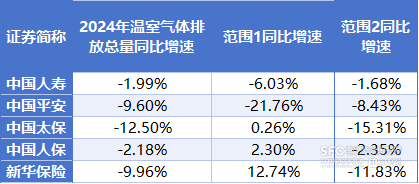
Core Viewpoint - The upcoming ESG evaluation for A-share listed insurance companies is drawing significant market attention, with a focus on their carbon emissions and customer service complaints as they prepare for mandatory disclosures by January 2026 [2][3]. Group 1: ESG Reporting and Carbon Emissions - All five major A-share listed insurance companies, including China Life, Ping An, China Pacific, PICC, and New China Life, are required to disclose their latest annual ESG reports within three months [2]. - The first national standard for financial ESG evaluation has been released, providing a clear scoring framework for the insurance industry [2]. - The total carbon emissions of these five companies show a downward trend, with the highest reduction reaching 12.5% [2][6]. - China Life has the highest total carbon emissions at 67.61 thousand tons, while PICC has the lowest at 1.76 thousand tons, indicating significant disparities in emissions across the industry [6]. Group 2: Green Investments - The total scale of green investments by the five insurance companies exceeds 1 trillion yuan, with China Life leading at nearly 535 billion yuan [11][12]. - Green insurance products are also being developed, with significant coverage amounts reported by various companies, such as China Life providing risk coverage exceeding 18 trillion yuan [11][12]. Group 3: Customer Complaints - New China Life has seen a dramatic increase in customer complaints, with a year-on-year rise of 71.52%, totaling 134,293 complaints [15][16]. - The complaint volume per billion yuan of premium for New China Life is 0.87, which is relatively high compared to other companies [15][16]. - The insurance industry is facing scrutiny regarding customer service quality, which is a critical aspect of the social dimension of ESG [15][17].
中国平安入选Brand Finance 2026全球品牌价值500强
Cai Jing Wang· 2026-01-22 06:30
1月21日,国际权威品牌评估机构Brand Finance发布《2026年全球品牌价值500强榜单》。中国平安以 488.39亿美元的品牌价值十度蝉联中国最具价值保险品牌,位列全球第32位,较2025年提升3位,排名 中国第10位,品牌价值同比增长13%。榜单方认为,中国平安在复杂多变的外部环境中,依然保持稳健 经营与持续增长,展现出突出的品牌韧性和长期价值。 ...
今日6只A股跌停 有色金属行业跌幅最大
Zheng Quan Shi Bao Wang· 2026-01-22 05:13
| 电子 | -0.62 | 3820.14 | 8.97 | 晶瑞电材 | -8.97 | | --- | --- | --- | --- | --- | --- | | 美容护理 | -0.68 | 28.44 | -17.30 | 延江股份 | -5.93 | | 银行 | -0.73 | 230.53 | 42.83 | 农业银行 | -2.16 | | 有色金属 | -0.97 | 1269.81 | 0.52 | 西部黄金 | -5.52 | (文章来源:证券时报网) 证券时报·数据宝统计,截至上午收盘,今日沪指跌0.15%,A股成交量1018.84亿股,成交金额17896.56 亿元,比上一个交易日增加8.77%。个股方面,3266只个股上涨,其中涨停60只,2047只个股下跌,其 中跌停6只。从申万行业来看,建筑材料、国防军工、石油石化等涨幅最大,涨幅分别为2.83%、 2.41%、1.95%;有色金属、银行、美容护理等跌幅最大,跌幅分别为0.97%、0.73%、0.68%。(数据 宝) 今日各行业表现(截至上午收盘) | 申万行业 | 行业涨跌(%) | 成交额(亿元) | 比上日(%) | ...
午评:沪指半日微跌0.15%,石油天然气板块集体走强
Xin Lang Cai Jing· 2026-01-22 04:12
Market Overview - The three major indices collectively adjusted in early trading, with the Shanghai Composite Index down 0.15%, the Shenzhen Component Index down 0.17%, and the ChiNext Index down 0.4% [1] - The North China 50 Index increased by 0.43% [1] - The half-day trading volume in the Shanghai and Shenzhen markets reached 1.7897 trillion yuan, an increase of 143.9 billion yuan compared to the previous day [1] - Over 3,200 stocks in the market experienced gains [1] Sector Performance - The natural gas, commercial aerospace, military equipment, photovoltaic equipment, steel, coal, cultivated diamonds, and chemical sectors showed significant gains [1] - The precious metals, photolithography machines, semiconductors, insurance, and battery sectors lagged behind [1] Notable Developments - U.S. natural gas futures prices surged over 50% in two days, leading to a collective surge in the oil and gas sector, with China National Offshore Oil Corporation (CNOOC) rising over 5% to reach a new high in over a year [1] - The storage chip sector exhibited divergence, with Puran Co. hitting a new high while companies like Blue Arrow Electronics saw declines [1] - The commercial aerospace sector rebounded, with companies like Jili Rigging achieving consecutive gains, and stocks such as Zhongchao Holdings and Tengda Technology hitting the daily limit [1] - Reports indicate that Elon Musk is actively advancing SpaceX's IPO plan [1] - The coal, photovoltaic, and state-owned enterprises also showed unusual movements [1] - Conversely, gold stocks followed the overnight decline in gold prices, with companies like Xiaocheng Technology and Western Gold falling over 5% [1] - The insurance sector also experienced a pullback, with China Ping An and China Pacific Insurance seeing slight declines [1]