
力拓

Search documents
从暴涨到暴跌,碳酸锂价格“过山车”背后发生了什么?
Sou Hu Cai Jing· 2025-08-01 05:01
Core Viewpoint - The recent decline in lithium carbonate futures prices follows a period of rapid increase, driven by market optimism and speculation, but this enthusiasm is now tempered by concerns over supply and demand dynamics [3][5][12]. Group 1: Price Fluctuations - Lithium carbonate futures experienced significant volatility, with prices rising from 58,400 yuan/ton to 80,500 yuan/ton between June 23 and July 25, marking a 36.71% increase [3][4]. - Following this surge, prices began to drop sharply, with a notable decline of 7.98% on July 28 and further drops leading to a closing price of 68,280 yuan/ton on July 31, reflecting a 4.66% decrease [3][4]. Group 2: Factors Driving Price Changes - Three main factors contributed to the recent price surge in lithium carbonate: 1. Government concerns over overcapacity and a push against price wars and excessive competition, leading to heightened market expectations for a price reversal [5]. 2. Continued growth in downstream demand, particularly from the electric vehicle sector, with projected sales of 5.674 million units in the first half of 2025, a 33% year-on-year increase [6]. 3. Supply-side constraints, including production halts and maintenance, which have reduced output and supported price increases [8][10]. Group 3: Long-term Supply and Demand Dynamics - Despite recent price increases, the long-term outlook remains cautious, with ongoing supply pressures expected to persist. In the first half of the year, lithium salt production in China reached 566,000 tons, a 14.5% year-on-year increase, indicating a high supply and inventory situation [13]. - The market is characterized by a "weak balance" where demand growth is insufficient to cover supply increases, leading to a potential stagnation in prices around cost lines until a new equilibrium is established [14].


全球铜市:关税冲击下的韧性与机遇
Qi Huo Ri Bao· 2025-08-01 00:53
Market Overview - In the first half of 2025, copper prices experienced significant fluctuations, with LME copper price reaching $9,878 per ton, marking a year-to-date increase of 12.49%, while Shanghai copper futures rose by 8.27% to 79,870 CNY per ton [1] - The U.S. tariff policies under President Trump have caused considerable market disruptions, leading to concerns about a global economic recession, which impacted stock and futures markets [2][3] - The International Monetary Fund (IMF) revised its global economic growth forecast for 2025 from 3.3% to 2.8%, with developed economies' growth expectations lowered from 1.9% to 1.4% [3] Supply Analysis - Global copper mine production from January to April 2025 totaled 7.5254 million metric tons, an increase of 2.64% year-on-year, but major copper producers reported a decline in output [8][9] - The anticipated global copper mine increment for 2025 is between 220,000 to 300,000 tons, with significant contributions expected from projects like Oyu Tolgoi and Kamoa-Kakula [11] - Domestic copper concentrate production in China for January to March 2025 reached 427,800 tons, a year-on-year increase of 5.26%, but still below levels from 2022 and 2023 [12] Demand Analysis - In the U.S., new housing starts have declined, while automotive sales remain stable, contributing limited growth to copper consumption [17] - In China, investment in power grid projects increased by 14.59% year-on-year, and the production of new energy vehicles surged by 48.35% [17] - Overall, domestic copper consumption is expected to show resilience, with strong growth in the power grid sector and stable performance in the automotive sector [17] Trade Flow Changes - The U.S. initiated a "232 investigation" into copper imports, leading to significant changes in global copper trade flows, with COMEX and LME markets experiencing increased arbitrage trading [18][19] - Chile's refined copper exports decreased by 11.1% year-on-year, while exports to the U.S. saw a significant increase of 116.11% [19] - As of June 30, 2025, global copper inventories decreased by 20.59% year-on-year, indicating tightening supply conditions [19] Outlook for the Second Half - The copper market is expected to maintain high prices due to the impact of U.S. tariff policies, supply constraints, and resilient demand [20] - If no major risk events occur, copper prices may continue to rise, potentially reaching new highs, although there is a risk of temporary price corrections following the implementation of U.S. tariffs [21]
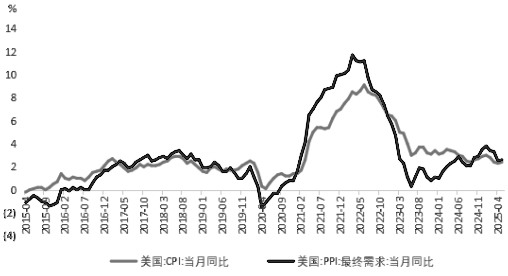
中央政治局保持了平稳基调,EIA商业原油库存上升
Dong Zheng Qi Huo· 2025-07-31 00:44
1. Report Industry Investment Ratings No relevant content provided. 2. Core Views of the Report - The Central Political Bureau meeting maintained a stable tone, emphasizing the optimization of existing policies and some structural increments. The stock market is expected to remain at a relatively high risk - preference level due to the demand for a long - bull market [1]. - The Fed kept interest rates unchanged in July, and Powell downplayed the expectation of a September rate cut, leading to a significant rise in the US dollar index [2]. - The July Political Bureau meeting announced limited incremental policies, and the policy risks faced by the bond market significantly decreased. There is a chance to start trying to go long [3]. - The oil market continued to rise, while the EIA commercial crude oil inventory increased [6]. - The steel price declined significantly. The Political Bureau meeting did not give further expectations on "anti - involution", causing a decline in market sentiment. The long - term impact of "anti - involution" is worthy of attention, but short - term trading is difficult, and market fluctuations remain large [5]. - The grease market continued to fluctuate. The poor rapeseed harvest in Ukraine led to an increase in the price of rapeseed oil [4]. 3. Summaries According to Relevant Catalogs 3.1 Financial News and Reviews 3.1.1 Macro Strategy (Gold) - The US second - quarter real GDP annualized quarterly rate was 3%, better than expected. The Fed kept interest rates unchanged in July, with internal differences. Gold prices fell significantly by more than 1%. Short - term gold lacks upward momentum, and attention should be paid to the risk of decline [12][13]. 3.1.2 Macro Strategy (Stock Index Futures) - This year, the preliminary budget for childcare subsidies is about 90 billion yuan, and the application will be fully open by August 31. The Political Bureau meeting emphasized policy continuity and stability, and the stock market is expected to remain at a high risk - preference level. It is recommended to allocate various stock indices evenly [15][16][18]. 3.1.3 Macro Strategy (Foreign Exchange Futures - US Dollar Index) - Trump announced a trade agreement with South Korea, and the Fed kept interest rates unchanged in July. Powell downplayed the September rate - cut expectation, and the US dollar index rose significantly. It is recommended that the US dollar index will rebound in the short term [20][22]. 3.1.4 Macro Strategy (US Stock Index Futures) - The Fed continued to hold off on rate changes, with two voting members supporting rate cuts. The US Q2 real GDP annualized quarterly rate was 3%, better than expected. Market risk preference declined slightly. Attention should be paid to the risk of correction due to economic data falling short of expectations [24][25][26]. 3.1.5 Macro Strategy (Treasury Bond Futures) - The July Political Bureau meeting highly evaluated the economic development in the first half of the year, and the incremental policies were limited. The policy risks faced by the bond market decreased. The long - end variety spread may rise moderately. It is recommended to start trying to go long [27][28][30]. 3.2 Commodity News and Reviews 3.2.1 Black Metals (Coking Coal/Coke) - The coking coal auction in Linfen mostly continued to rise. Coke started the third round of price increases. The short - term price may continue to adjust. Attention should be paid to position management [31][32][33]. 3.2.2 Agricultural Products (Soybean Meal) - The supply of imported soybeans in China is sufficient, and the soybean meal inventory is rising. The US soybean产区 has good weather, and the market is worried about US soybean exports. It is recommended to view the internal and external futures prices with a volatile mindset [34][35][36]. 3.2.3 Agricultural Products (Soybean Oil/Rapeseed Oil/Palm Oil) - Indonesia is expected to export more than 5 million tons of palm oil to India. The grease market continued to fluctuate. Rapeseed oil rose due to the poor rapeseed harvest in Ukraine. It is recommended to buy on dips [37][38][39]. 3.2.4 Black Metals (Rebar/Hot - Rolled Coil) - The Political Bureau meeting emphasized capacity governance. Steel prices declined, and market sentiment slipped. The short - term market may fluctuate greatly, and it is recommended to be cautious [40][41][42]. 3.2.5 Agricultural Products (Corn Starch) - The corn starch startup rate increased, and the inventory decreased. It is expected to remain in low - level volatility [43][44]. 3.2.6 Agricultural Products (Corn) - The northern port corn spot price remained stagnant. The 09 contract may weaken in advance. It is recommended to hold short positions in new crops [45]. 3.2.7 Black Metals (Steam Coal) - The northern port steam coal price remained stable. The short - term coal price is expected to continue to fluctuate due to factors such as rainfall and environmental inspections [46][47]. 3.2.8 Black Metals (Iron Ore) - Brazil's J&F Group plans to invest over $700 million in an iron ore project. The iron ore price continued to fluctuate. It is recommended to wait and see [48]. 3.2.9 Non - Ferrous Metals (Polysilicon) - The trading limits of some polysilicon futures contracts were adjusted. The spot transaction average price increased. The short - term polysilicon price is expected to run between 45,000 - 57,000 yuan/ton. Consider buying on dips [49][50][51]. 3.2.10 Non - Ferrous Metals (Industrial Silicon) - The price of silicon coal increased. The industrial silicon production may increase. The price is expected to run between 8,500 - 10,000 yuan/ton. Pay attention to range - trading opportunities [52][53][54]. 3.2.11 Non - Ferrous Metals (Nickel) - Vale Indonesia plans to develop a nickel project. The LME nickel inventory increased, and the SHFE nickel warrant decreased. The short - term raw material price is weakening, and it is recommended to pay attention to short - term band opportunities and medium - term short - selling opportunities [55][56][57]. 3.2.12 Non - Ferrous Metals (Lithium Carbonate) - Rio Tinto expanded its lithium business in Quebec. The trading volume of lithium carbonate futures decreased after position limits. It is not recommended to short too early, and long positions need to wait for safer points [58][59]. 3.2.13 Non - Ferrous Metals (Lead) - An energy storage project using lead - carbon batteries started. The Shanghai lead futures maintained a weak and volatile pattern. In the short term, pay attention to buying on dips and manage positions well [60][62][63]. 3.2.14 Non - Ferrous Metals (Zinc) - Grupo Mexico's second - quarter zinc concentrate production increased by 56% year - on - year. The Shanghai zinc futures fluctuated. It is recommended to wait and see in the short term and pay attention to medium - term positive spread arbitrage opportunities [64][66][67]. 3.2.15 Energy and Chemicals (Liquefied Petroleum Gas) - The FOB price of Middle East frozen LPG increased. The US C3 inventory increased. Pay attention to the release of the August CP [68][69]. 3.2.16 Energy and Chemicals (Crude Oil) - The EIA US commercial crude oil inventory increased. Oil prices continued to rise, supported by short - term geopolitical risks. The short - term trend is expected to be volatile and strong [70][71]. 3.2.17 Energy and Chemicals (Caustic Soda) - The price of caustic soda in Shandong increased locally. The short - term market is expected to fluctuate [72][73]. 3.2.18 Energy and Chemicals (Pulp) - The price of imported wood pulp varied. The futures price of pulp decreased. It is expected to follow the commodity market correction [74][75]. 3.2.19 Energy and Chemicals (PVC) - The PVC powder market price was range - bound. The futures price fluctuated. It is expected to follow the commodity market correction [76][77]. 3.2.20 Energy and Chemicals (Soda Ash) - The soda ash price of Jiangsu Jingshen Chemical remained stable. The futures price increase declined. The short - term market may fluctuate greatly, and it is recommended to operate cautiously [78]. 3.2.21 Energy and Chemicals (Float Glass) - The price of float glass in Hubei remained stable. The futures price increase declined. It is recommended to operate cautiously on a single - side basis and focus on arbitrage strategies [79]. 3.2.22 Shipping Index (Container Freight Rate) - The proportion of West African dry bulk freight volume soared. The container freight rate price inflection point was confirmed. It is recommended to pay attention to the decline slope of the freight rate [80][82][83].
金十图示:2025年07月30日(周三)美股热门股票行情一览(美股盘中)
news flash· 2025-07-30 16:36
Market Capitalization Summary - Oracle has a market capitalization of 726.95 billion, while Mastercard stands at 510.73 billion [2] - Netflix's market cap is 500.62 billion, and ExxonMobil's is 483.43 billion [2] - Johnson & Johnson has a market cap of 404.67 billion, and Home Depot's is 500.62 billion [2] Stock Performance - Oracle's stock increased by 2.33 (+0.78%), while Mastercard's decreased by 0.69 (-0.70%) [2] - Netflix's stock rose by 3.82 (+0.50%), whereas ExxonMobil's fell by 0.16 (-0.06%) [2] - Johnson & Johnson's stock increased by 8.08 (+0.69%) [2] Additional Company Insights - Companies like P&G, Coca-Cola, and T-Mobile have market caps of 374.22 billion, 2898.58 billion, and 2713.20 billion respectively [2] - Cisco and IBM have market caps of 2665.82 billion and 2375.35 billion respectively, with slight stock performance changes [2] - Companies such as Pfizer and Nike have market caps of 1571.28 billion and 1177.61 billion respectively, with varied stock performance [2] Sector Performance - The technology sector shows mixed performance with companies like Intel and Dell experiencing slight declines [5] - The financial sector, represented by firms like Goldman Sachs and Morgan Stanley, also shows varied stock performance [2][5] - The energy sector, including companies like ConocoPhillips and Valero Energy, reflects a mix of market caps and stock performance changes [5]

金十图示:2025年07月30日(周三)美股热门股票行情一览(美股盘初)
news flash· 2025-07-30 13:49
Market Capitalization Overview - The market capitalization of major companies shows varied performance, with Oracle at 732.396 billion and Mastercard at 821.803 billion [2] - Visa has a market cap of 879.86 billion, while Netflix stands at 497.610 billion [2] - ExxonMobil and Johnson & Johnson have market caps of 483.154 billion and 404.601 billion respectively [2] Stock Performance - Oracle's stock increased by 0.42%, while Mastercard's rose by 1.29% [2] - Visa's stock saw a slight increase of 0.62%, whereas Netflix's stock increased by 0.20% [2] - ExxonMobil's stock decreased by 0.07%, and Johnson & Johnson's stock fell by 0.68% [2] Additional Company Insights - Home Depot has a market cap of 375.396 billion, with a stock decrease of 0.01% [2] - Bank of America and Procter & Gamble have market caps of 365.680 billion and 358.336 billion respectively, with slight stock changes [2] - General Electric and AMD have market caps of 287.061 billion and 288.399 billion, with AMD's stock increasing by 0.24% [2] Sector Performance - The technology sector shows mixed results, with companies like IBM and Intel experiencing slight declines in stock prices [4] - The financial sector, represented by firms like Goldman Sachs and Morgan Stanley, also shows varied performance with slight stock fluctuations [4] - The energy sector, including companies like Chevron and ExxonMobil, reflects a similar trend with minor stock changes [2][4]

海通发展20250729
2025-07-30 02:32
Summary of Haitong Development Conference Call Company Overview - Haitong Development is the seventh largest shipping company in China, with the actual controller, Zeng Erbin, holding 58% of the shares. The company has rapidly expanded its capacity, achieving a compound annual growth rate (CAGR) of 30% from 2019 to 2024. International business accounts for 65% of revenue and 92.5% of gross profit [2][3]. Financial Performance - The company's net profit attributable to shareholders peaked at 670 million yuan in 2022 but declined in 2023. A rapid growth rate is expected in 2024, although profits are projected to significantly drop in the first half of 2025 due to a decrease in the Baltic Dry Index (BDI) and maintenance impacts [2][6]. Market Dynamics - The dry bulk shipping market is transitioning from a recession to a recovery phase. The current BDI is above the ten-year average but remains weaker than levels seen from 2000 to 2009. The supply side shows a low proportion of new ship orders, while the demand side is expected to grow due to global mining expansion [2][7][8]. Key Projects and Their Impact - The Simandou iron ore project is expected to significantly influence the global iron ore market, with production anticipated to exceed 100 million tons by 2026. If 70% of this is shipped to China, it will account for 6.8% of global iron ore shipping turnover, increasing shipping distances and demand [2][9]. Trade Growth - The growth in bauxite trade is expected to provide additional demand for Capesize vessels, with global bauxite shipping volumes projected to increase by 19% and 5% in 2025 and 2026, respectively [2][10]. Economic Influences - The anticipated interest rate cuts by the Federal Reserve and the reconstruction of Ukraine may positively impact dry bulk shipping demand, with historical data indicating that the BDI typically rebounds during rate cut cycles [2][11]. Future Outlook - Haitong Development aims to continue expanding its fleet and has set a target of 100 ships. The company is expected to benefit from the recovery of the dry bulk market, with projected net profits of 330 million, 600 million, and 750 million yuan for 2025, 2026, and 2027, respectively. The target price is set at 10.7 yuan, reflecting a potential 26% increase from current market value [2][12]. Risks - Potential risks include macroeconomic downturns, oversupply of shipping capacity, and significant fluctuations in oil prices, which could negatively impact the company's performance [2][13].

金十图示:2025年07月28日(周一)美股热门股票行情一览(美股盘中)
news flash· 2025-07-28 16:33
2 383.72亿申值 达美航空 易趣 (ebay) A Delta 366.98亿市值 361.21亿市值 152.71 55.32 79.61 +1.03(+0.68%) -1.82(-2.24%) +0.46(+0.84%) 组柯钢铁 Pinterest Inc-A O 沃达丰(US) 257.63亿市值 335.59亿市值 271.16亿市值 145.44 11.18 38.08 -0.26(-2.23%) -0.40(-0.27%) +0.17(+0.44%) s 爱立信 250.49亿市值 0 243.41亿市值 FOX 福克斯-A 255.90亿市值 25.91 56.91 7.43 +0.23(+0.92%) +0.24(+0.43%) -0.06(-0.80%) 诺基亚 西部数据 FOX 福克斯-B IND INDEST 240.82亿市值 240.36亿市值 235.60亿市值 4.30 68.89 52.40 +0.28(+0.54%) -0.03(-0.79%) +0.07(+0.11%) 华纳音乐 哈里伯顿 陶氏 (We 194.73亿市值 183.91亿市值 161.96亿市值 2 ...

纽约铜跌超6%,铜矿概念股普跌,智利预计能豁免于特朗普关税
news flash· 2025-07-28 14:35
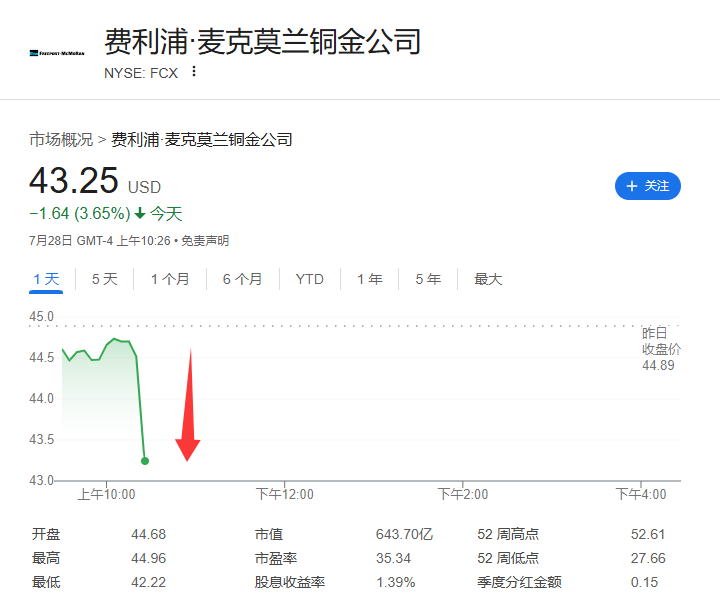
Group 1 - COMEX copper futures experienced a sharp decline, with an intraday drop of 6.2%, settling at $5.426 after reaching a historical high of $5.957 [1] - Copper mining stocks saw widespread declines, with McEwen down 6.1%, Freeport (FCX) dropping over 5%, and the U.S. Copper Index ETF falling by 3.4% [1] - Other notable declines included HBM down 3.3%, Ero Copper down 3%, copper mining ETFs down 2.2%, BHP ADR down 2.2%, Rio Tinto ADR down 1.8%, Lundin Mining ADR down 1.8%, Vale ADR down 1.8%, and Southern Copper down 0.3% [1]

金十图示:2025年07月28日(周一)美股热门股票行情一览(美股盘初)
news flash· 2025-07-28 13:55
Group 1 - The market capitalization of major companies shows varied performance, with Oracle at 8207.85 billion, while Mastercard and ExxonMobil follow closely [2] - Notable increases in market value include AMD with a rise of 5.82 (+3.50%) and ASML with an increase of 21.74 (+3.06%) [2] - Companies like Home Depot and Coca-Cola experienced slight declines in their market values, with Home Depot down by 1.49 (-0.40%) and Coca-Cola down by 0.30 (-0.43%) [2] Group 2 - Caterpillar's market capitalization is reported at 2176.77 billion, while Uber's market value is at 1982.09 billion, showing a decline for Uber by 1.31 (-0.91%) [3] - Pfizer's market capitalization stands at 1572.15 billion, with a minor decrease of 0.12 (-0.03%) [4] - Companies like Intel and Moody's have market values of 1001.21 billion and 930.99 billion respectively, with Intel experiencing a decline of 1.84 (-0.36%) [4] Group 3 - The market capitalization of Delta Airlines is reported at 367.00 billion, with a decrease of 0.21 (-0.14%) [5] - Companies such as Nokia and Warner Music have market values of 241.33 billion and 194.31 billion respectively, with Nokia experiencing a slight decline of 0.03 (-0.58%) [5] - Lyft Inc-A has a market capitalization of 60.38 billion, showing a minor increase of 0.06 (+0.38%) [5]

金十图示:2025年07月24日(周四)美股热门股票行情一览(美股收盘)
news flash· 2025-07-24 20:11
Market Overview - The market capitalization of major US stocks shows varied performance, with Oracle leading at 815.61 billion, followed by Mastercard at 771.15 billion and Visa at 762.21 billion [3][4]. - Notable stock movements include Oracle's increase of 0.99%, while ExxonMobil and Johnson & Johnson saw slight gains of 0.83% and 0.28% respectively [3][4]. Stock Performance - Oracle's stock price increased by 0.95 to 296.62, reflecting a 0.99% rise [3]. - Mastercard's stock decreased by 0.14 to 804.24, showing a slight decline of 0.05% [3]. - Visa's stock rose by 5.35 to 354.14, marking a 0.67% increase [3]. Additional Notable Stocks - Other significant companies include Bank of America with a market cap of 372.28 billion and a stock price increase of 0.32% [3]. - Cisco's stock price increased by 1.75% to 68.29, while General Electric saw a minor decline of 0.10% [3][4]. - Pfizer's stock price remained stable with a slight increase of 0.02% [5]. Sector Performance - The technology sector is represented by companies like AMD and Intel, with AMD's stock increasing by 2.18% [4][5]. - The financial sector includes major players like Goldman Sachs and Morgan Stanley, with Goldman Sachs experiencing a decline of 4.73% [4][5]. Summary of Market Capitalizations - The top three companies by market capitalization are Oracle (815.61 billion), Mastercard (771.15 billion), and Visa (762.21 billion) [3][4]. - Other notable companies include ExxonMobil (501.84 billion) and Johnson & Johnson (477.68 billion) [3][4].
