华硕

Search documents
厂商撑不住了,集体涨价!“两天涨了400多元”,有人干脆不买了,还有厂商取消新品上市
Mei Ri Jing Ji Xin Wen· 2026-01-12 09:47
Group 1 - The rapid development of AI has led to significant price increases in memory, hard drives, and graphics cards, with memory prices soaring to the extent that a box of 100 memory sticks was compared to the price of a house in Shanghai, valued at 4 million yuan [1] - Major PC manufacturers, including HP, Acer, and Asus, have announced price hikes for laptops and PCs due to the ongoing surge in memory costs, with Dell increasing commercial computer prices by 10% to 30% [2][3] - Lenovo has adjusted prices for several laptop models, with mid-to-high-end models seeing increases of 500 to 1500 yuan, reflecting a broader trend of rising consumer electronics prices [3] Group 2 - Smartphone manufacturers, including Xiaomi and iQOO, have also raised prices for new models, with some mid-range and flagship devices experiencing price increases of up to 20% due to rising memory costs [4] - IDC predicts that the average selling price of smartphones will reach $465 by 2026, with total market revenue expected to hit $578.9 billion, driven by the rising cost of memory semiconductors, which now account for over 20% of smartphone costs [6] - In contrast, the AI glasses segment has not seen widespread price increases, with some models even experiencing price reductions, as the storage requirements for these products are not as high as for smartphones [7]


多品牌集体涨价!“下午刚报价,晚上就调价”,“后面还要涨”,消费者傻眼:预算不够了
Xin Lang Cai Jing· 2026-01-12 03:34
Core Insights - The rapid development of AI has led to significant price increases in memory, hard drives, and graphics cards, impacting hardware prices across various brands [1] - Major PC manufacturers are responding to rising costs by increasing product prices, with some models seeing price hikes of 10%-30% [3] Price Increases in Hardware - Global PC manufacturers are experiencing price adjustments due to rising memory costs, with examples including Lenovo's Y7000 model increasing from 6980 CNY to 7400 CNY within days [2] - The price of a 16GB memory module has surged from around 800-900 CNY to over 2700 CNY on major e-commerce platforms, while solid-state drive prices have nearly doubled [2] Manufacturer Responses - HP, Acer, and Asus have all indicated that they will raise prices due to ongoing memory shortages and cost increases, with Dell raising commercial computer prices by 10%-30% [3] - Lenovo has adjusted prices for several mid-to-high-end models, increasing prices by 500 to 1500 CNY [3] Impact on Consumer Behavior - The price increases have led to a decline in consumer enthusiasm, with market research indicating a downward revision in global laptop and smartphone shipment forecasts for 2026 [4] - Consumers are postponing purchases due to higher prices, with many opting to wait for better deals despite government subsidies [4][5] Market Trends - The memory semiconductor's share of smartphone material costs has risen from 10%-15% to over 20%, becoming a key driver of smartphone price increases [3] - Some consumers are engaging in "downgrade" strategies, selling high-value memory components in the second-hand market and opting for lower-cost alternatives [5]

职场精英的移动工作站:五款高性价比本本推荐
Xin Lang Cai Jing· 2026-01-12 01:23
在快节奏的工作环境中,一台性能稳定、显示细腻的笔记本已成为专业工作者不可或缺的伙伴。无论是 处理复杂的数据报表、运行多任务办公软件,还是进行图像渲染与视频剪辑,全高清屏幕带来的清晰视 野与色彩还原能力,极大提升了工作效率与视觉舒适度。面对多样化的使用需求,市场中涌现出一批兼 具性能、便携性与性价比的优质机型,精准满足从日常办公到高强度创作的不同场景。 联想拯救者R7000P 2021到手价为8299元,搭载AMD锐龙7 5800H处理器,八核十六线程的强大性能确 保多任务处理游刃有余。配备RTX3060独立显卡,无论是运行大型设计软件还是轻度游戏都能轻松应 对。其高刷新率与高色域屏幕不仅带来流畅画面,更保障了色彩准确性,适合需要频繁进行视觉创作的 专业人士。支持WiFi6和独显直连技术,进一步优化了数据传输效率与图形输出表现,是性能与实用兼 顾的优选之作。 ThinkPad X13(20T2A002CD)售价6100元,专为商务移动办公打造。搭载R7-7840U处理器,配合 16GB LPDDR5x内存,系统响应迅速,日常办公极为流畅。13.3英寸16:10比例的IPS全高清屏,不仅提 升纵向浏览空间,也增强 ...
抢攻Wi-Fi 8
3 6 Ke· 2026-01-10 09:03
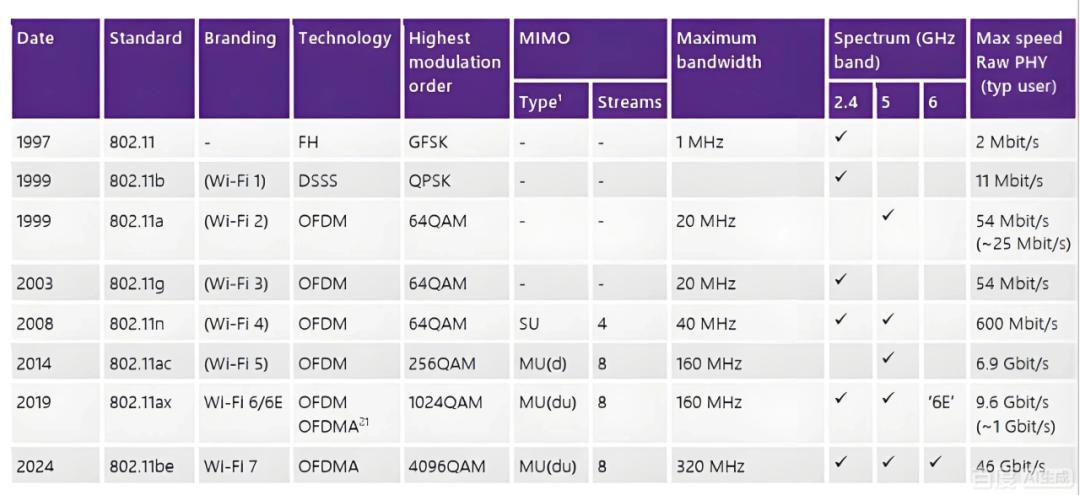
Group 1 - The CES 2026 showcased products labeled "Wi-Fi 8" from major industry players like MediaTek, Broadcom, and ASUS, indicating a strong interest in this emerging technology despite the standard not being finalized yet [1] - The Wi-Fi technology has evolved significantly since its inception in 1991, with various standards being introduced over the years, each improving speed and reliability [2][3][4] - The introduction of Wi-Fi 7 (802.11be) is expected to revolutionize wireless communication with features like 320MHz channels and a theoretical peak speed of 46Gbps, catering to high-bandwidth applications [5][10] Group 2 - Wi-Fi 8 is being developed to focus on "Ultra High Reliability" (UHR), addressing the need for stable connections in complex environments, which is crucial for applications like remote surgery and industrial automation [13][15] - Major companies are already preparing for Wi-Fi 8, with MediaTek launching its Filogic 8000 series solutions, which enhance signal coverage and reduce latency for various devices [23][25][26] - Broadcom is adopting a dual-track strategy by offering complete Wi-Fi 8 chip solutions and licensing its IP to accelerate the adoption of edge AI technologies [27][30] Group 3 - Qualcomm is leading the standardization efforts for Wi-Fi 8, focusing on enhancing reliability and low latency in complex environments, with plans to release a full suite of Wi-Fi 8 products by 2026 [32][33] - Intel is in the prototype validation stage for its Wi-Fi 8 chips, emphasizing AI integration to improve network performance in high-density scenarios [34] - The successful adoption of Wi-Fi 8 will depend on a robust ecosystem involving chip manufacturers, device makers, and standard organizations, with various companies already showcasing Wi-Fi 8 compatible products [35][36]


AI“抢芯”,手机、电脑、新能源车都要变贵?
3 6 Ke· 2026-01-10 06:19
Core Insights - The demand for AI servers is driving a significant cost change in the supply chain, affecting various manufacturing sectors beyond electronics [1] - The price increases in storage chips and precious metals are indicative of a broader inflationary trend in manufacturing costs [1] Group 1: Cost Transmission from Upstream - Samsung Electronics and SK Hynix plan to raise server DRAM prices by 60%-70% in Q1 2026 compared to Q4 2025, significantly higher than previous cycles [2] - AI servers are identified as the starting point for this cost transmission, with their increased GPU, memory, and bandwidth requirements creating a supply-demand gap [2] - Leading AI chip manufacturers like NVIDIA maintain high product prices, with high-end AI GPUs reaching tens of thousands of dollars, impacting the cost structure for server and cloud computing companies [2] Group 2: Pressure on End Consumer Products - Storage chips are the first to transmit cost increases to consumer products, with flagship smartphones seeing price hikes of 300-500 yuan and mid-range models by 200-300 yuan [3] - Memory costs account for approximately 15%-20% of the BOM cost in mid-range smartphones and 10%-15% in high-end models, indicating a significant impact from rising storage prices [3] - The automotive industry is also expected to face storage chip shortages, potentially leading to price increases in electric vehicles, as these chips are crucial for advanced features [3] Group 3: Market Dynamics and Predictions - The global memory market is experiencing an unprecedented structural shortage, with major manufacturers reallocating capacity to high-value products, limiting supply for traditional DRAM and NAND [4] - Citigroup predicts an 88% increase in average DRAM prices by 2026, while Nomura forecasts a 46% increase in DRAM and a 65% increase in NAND prices [4] - Price fluctuations in storage chips are influenced by market dynamics, with potential for short-term price corrections as new products are released [5] Group 4: Impact on Manufacturing and Cost Management - The rising costs are affecting various manufacturing sectors, with IDC predicting a contraction in the global smartphone market and price increases of 3%-8% depending on market conditions [5] - Major PC manufacturers are also expected to raise prices by 15%-20% due to increased component costs [5] - Industries with strong technological barriers and brand premium capabilities are better positioned to absorb these cost increases, while those in highly competitive, low-tech sectors may struggle [6]
抢攻 Wi-Fi 8
半导体行业观察· 2026-01-10 03:37
Core Viewpoint - The article highlights the evolution of Wi-Fi technology, focusing on the upcoming Wi-Fi 8 standard, which aims to enhance reliability and performance in wireless communication, addressing the growing demand for stable connections in various applications such as IoT, AR/VR, and industrial automation [11][14][40]. Group 1: Wi-Fi Technology Evolution - Wi-Fi technology originated in 1991 with the creation of "WaveLAN" by NCR, leading to the establishment of the 802.11 standard by IEEE in 1997, which initially offered a maximum speed of 2 Mbps [2]. - The introduction of 802.11b and 802.11g standards in the early 2000s increased speeds to 11 Mbps and 54 Mbps respectively, facilitating the initial adoption of Wi-Fi in home environments [2]. - The 802.11n standard (Wi-Fi 4) released in 2009 significantly improved speeds to 600 Mbps and introduced MIMO technology, paving the way for multi-device connectivity [3]. - The 802.11ac standard (Wi-Fi 5) launched in 2013 further enhanced speeds to 6.9 Gbps, catering to high-definition content needs [4]. - Wi-Fi 6 (802.11ax) introduced in 2019 improved network efficiency by supporting multiple devices simultaneously, achieving speeds of 9.6 Gbps [5]. Group 2: Wi-Fi 7 and Market Adoption - Wi-Fi 7 (802.11be) was officially commercialized in December 2023, supporting theoretical peak speeds of 46 Gbps and low latency for applications like cloud gaming and XR [5][8]. - The adoption of Wi-Fi 7 is expected to accelerate, with shipments projected to rise from 26.3 million units in 2024 to 66.5 million in 2025, and reaching 117.9 million by 2026 [8][9]. - By 2026, total shipments of Wi-Fi 7 devices are anticipated to reach 1.1 billion units, including significant contributions from IoT and healthcare devices [9]. Group 3: Wi-Fi 8 Development and Features - Wi-Fi 8, defined by the IEEE 802.11bn task group, aims to provide ultra-high reliability (UHR) and is expected to address the limitations of previous standards in complex environments [11][14]. - Key features of Wi-Fi 8 include enhanced coordination between access points, congestion avoidance mechanisms, and improved modulation schemes, which collectively aim to ensure stable connections even under high-density conditions [17][18]. - The standard is projected to be finalized by March 2028, with industry players already beginning to develop products based on its draft specifications [19][20]. Group 4: Industry Players and Strategies - MediaTek has launched its Filogic 8000 series for Wi-Fi 8, focusing on applications in gateways and various devices, with plans for mass production by the end of 2027 [21][25]. - Broadcom is employing a dual-track strategy by offering complete Wi-Fi 8 chip solutions while also licensing its IP to accelerate adoption across various sectors [26][31]. - Qualcomm is leading the standardization efforts and plans to unveil a comprehensive Wi-Fi 8 product lineup at the 2026 Mobile World Congress, emphasizing reliability and low latency [33][34]. - Intel is focusing on AI integration within Wi-Fi 8, enhancing network performance in high-density environments through intelligent resource management [35].
PC市场,迎来最艰难一年?
虎嗅APP· 2026-01-10 03:35
Core Viewpoint - The semiconductor industry is facing unprecedented price increases across all hardware components, driven primarily by the surge in AI demand, leading to a supply chain crisis that affects consumer electronics significantly [4][10][12]. Price Increases and Market Dynamics - The average price of PCs is expected to rise by 4% to 8%, with major manufacturers warning of potential price hikes between 15% and 20% due to ongoing memory shortages expected to last until 2027 [4][10]. - The price of storage chips, particularly DRAM and NAND Flash, has skyrocketed, with contract prices increasing by 80% to 100% by December 2025, largely due to AI data centers' demand for high-bandwidth memory (HBM) [6][12]. - Graphics cards are also seeing price increases, with AMD and NVIDIA planning to raise prices starting in January and February 2026, respectively, due to rising costs of GDDR memory [7][12]. Impact on Hardware Components - The motherboard market is experiencing a significant decline in sales, with offline channel sales dropping over 50% due to high installation costs, leading to a "one-time price increase" strategy for new laptops [8][12]. - The overall PC market is at a crossroads, with a mix of urgent upgrade needs due to the end of Windows 10 support and rising semiconductor costs creating a "perfect storm" for the industry [10][11]. AI's Influence on Semiconductor Allocation - AI's unprecedented demand is reshaping the semiconductor industry's resource allocation, with a shift from consumer electronics to high-value AI chips, resulting in reduced supply for standard consumer-grade components [12][13]. - The global HBM market is projected to grow by 300% by 2025, as major manufacturers redirect DRAM capacity to meet the needs of AI chip producers like NVIDIA and Google [13][14]. Industry Responses and Strategies - Companies like Lenovo are increasing memory inventory to navigate shortages, while larger PC brands leverage their supply chain power to mitigate impacts [18]. - Upstream storage giants are adopting varied strategies, with Samsung shifting some HBM capacity to general DRAM production, while Micron focuses on the data center market [18][19]. - Some manufacturers are implementing flexible product strategies, such as offering "quasi-systems" without memory modules to transfer cost risks to consumers [20]. Future Outlook - The PC industry is entering a prolonged adjustment period, with 2026 expected to be particularly challenging as the market adapts to high costs and low growth [20]. - The current trend of "reduced volume, increased prices" is likely to persist until the AI demand's impact on advanced capacity diminishes, making it a new normal for the industry [20].



2026年停更新品 华硕“失守”游戏手机业务
Xin Lang Cai Jing· 2026-01-09 19:44
Core Viewpoint - ASUS will suspend the launch of new smartphones, including ZenFone and ROG Phone, in 2026 due to regular business adjustments and rising component costs, particularly storage prices, which have become unsustainable for the company's mobile division [1][4][5]. Group 1: Business Strategy and Market Position - ASUS has focused on two main smartphone lines: the high-performance ROG gaming phones and the cost-effective ZenFone series, but has primarily sold ROG phones in mainland China for many years [1][2]. - The company has faced significant challenges in the smartphone market, with its mobile business revenue consistently declining from 18% in 2016 to just 1% in 2023 [3]. - The competitive landscape for gaming smartphones has intensified, leading to the exit of several brands from the market, including Razer and Lenovo's gaming phone line [3]. Group 2: Financial Performance - Despite the struggles in the smartphone sector, ASUS's overall performance has been strong, driven by AI servers and commercial PCs, with a revenue of 535.98 billion New Taiwan Dollars (NTD) in the first three quarters of 2025, a 24% year-on-year increase [5][6]. - The third quarter of 2025 saw a record revenue of 189.91 billion NTD, a 21% increase year-on-year, although gross profit declined by 9% due to rising costs [6]. - The company's server business is growing, accounting for nearly 20% of revenue, with plans for further expansion in the AI server market [6]. Group 3: Industry Trends and Challenges - The global memory chip market is experiencing significant price increases, with DRAM costs rising approximately 25% for low-end smartphones and 10% for high-end models, impacting overall production costs [4][5]. - The smartphone market is expected to face declining shipment forecasts due to weak demand, further pressuring manufacturers [5]. - ASUS plans to raise prices on some PC products starting January 5, 2026, in response to rising memory and storage costs [7].
品牌厂开始提前备货,1月TV面板价格有望迎来小幅上涨
Jianghai Securities· 2026-01-09 13:43
Investment Rating - The industry investment rating is "Overweight" (first time) [6] Core Insights - In January 2026, TV panel prices are expected to see a slight increase across the board due to the upcoming World Cup in June and the continuation of national subsidy policies [6] - In Q3 2025, global OLED display shipments increased by 65% year-on-year, with a total of approximately 644,000 units shipped [6] - Major panel manufacturers are maintaining full production capacity, while brand manufacturers are strategically increasing inventory ahead of demand [6] Summary by Sections Industry Performance - Over the past 12 months, the industry has shown a relative return of -4.82% compared to the CSI 300 index, with an absolute return of 20.21% [3] Market Trends - The demand for TV panels is expected to rise due to the World Cup and subsidy policies, leading to a potential price increase in January [6] - The supply side has seen tight conditions for certain production lines, which may lead to price adjustments for specific panel types [6] Company Insights - ASUS, Samsung, and MSI are the top three companies in OLED display shipments, with market shares of 21.9%, 18.0%, and 14.4% respectively [6] - Samsung is set to launch new Micro RGB TVs in 2026, featuring advanced LED technology [6] Investment Recommendations - Companies to watch include TCL Technology, JD.com A, OLED, Lite-On Technology, and Kangguang Technology due to the expected rise in TV panel prices and OLED shipment growth [6]




猛攻AI PC市场,第三代酷睿Ultra只用了「一半」实力
雷峰网· 2026-01-09 11:13
Core Viewpoint - The growth of AI PCs is expected, while edge computing inference is opening up a new market that is difficult to estimate [1] Group 1: Market Dynamics - The PC processor market has entered a competitive phase, reshaped by Apple's M-series processors and AMD's strengthened position, putting pressure on Intel [2] - Intel's third-generation Core Ultra processors (codenamed Panther Lake) are crucial for maintaining its leadership in the PC market, with mass production achieved ahead of expectations [4][6] - The third-generation Core Ultra platform targets both PC and industrial markets, reflecting Intel's strategy to capture the trillion-dollar AI inference market [4] Group 2: Technological Advancements - The Intel 18A process technology enables significant improvements in performance and energy efficiency, with a 60% performance increase and a 40% reduction in power consumption [6] - The third-generation Core Ultra processors can achieve battery life of up to 27 hours, thanks to low-power island design and AI technology optimizing power control [10][11] - The integrated Iris Xe GPU B390 offers a 77% performance increase over the previous generation and supports AI inference with 53% improvement [11][13] Group 3: Strategic Positioning - Intel's early investment in edge AI products is aimed at capturing the growing demand for privacy-sensitive applications and real-time response requirements [19][20] - The company has integrated its edge computing and PC business units to respond more effectively to market dynamics [23] - The third-generation Core Ultra is positioned to leverage AI capabilities across various applications, including gaming and industrial AI devices, with a broad product design range [19][21] Group 4: Future Outlook - 2026 is anticipated to be a pivotal year for both PC development and Intel, as the company aims to capitalize on its technological advancements and market positioning [29]