沐曦

Search documents
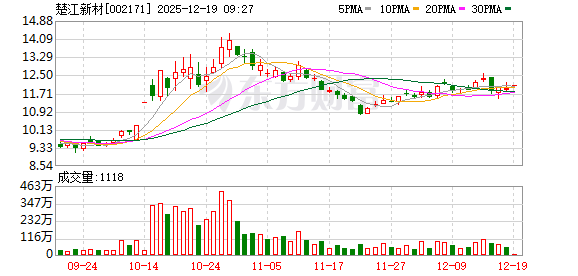
楚江新材:未参股沐曦股份

Mei Ri Jing Ji Xin Wen· 2025-12-19 01:26
Group 1 - The company clarified that it does not hold any shares in the mentioned company, which is rumored to be 0.23% ownership [2] - The inquiry was made by an investor on an interactive platform regarding the indirect stake in Muxi shares [2] - The response was provided on December 19, indicating the company's position on the matter [2]

人均800万!沐曦上市神话揭秘:AI让少数人暴富,普通人还有戏吗
Sou Hu Cai Jing· 2025-12-18 20:16
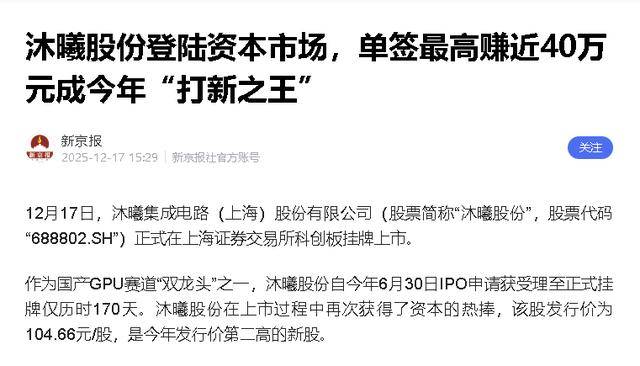
小毋今天想给大家好好聊一聊,2025年末的资本市场炸了个大新闻,名叫"沐曦"的公司上市首日,中一 签就能赚40万,比之前火极一时的摩尔上市收益还猛,当年摩尔中1000股才赚28万。 更让人吃惊的是,这家营收12亿、还在亏损的公司,市值直接冲到3300亿,募基更是一天涨了8倍。 这事儿看着是单个公司的狂欢,其实藏着一个大变化,我们的财富逻辑,正在从房地产往资本市场大转 移,一个全新的造富时代已经来了。 沐曦的狂欢:700人人均800万的造富密码 沐曦上市最让人羡慕的,不是股价暴涨,是公司内部的"造富神话"。 这背后是资本市场对新赛道的疯狂追捧,沐曦所处的赛道,正是现在最火的人工智能领域。 2025年全年,A股人工智能、机器人、算力相关的新上市公司超过40家,平均首日涨幅达到320%,远 超其他行业。 公司总共800多个员工,700多人都持有股份,合计持股将近60万股,算下来人均8000股。 按上市后的股价算,这700多人人均身家直接奔着800万去了,这种"全员暴富"的场面,放在以前的行业 里简直不敢想。 投资者用脚投票,把钱砸向了这些能代表未来的公司,哪怕它们还在亏损。 小毋翻了沐曦的招股书才发现,这种高估值不 ...
谷歌挑战英伟达,摩尔线程、沐曦内部人士怎么看?
第一财经· 2025-12-18 14:06
Core Viewpoint - The release of Google's next-generation AI model Gemini 3 series, showcasing the performance and cost advantages of its self-developed TPU, poses a strong challenge to NVIDIA's dominance in the GPU market, leading to a significant market reaction where NVIDIA's market value dropped by over $100 billion [3]. Group 1: Hardware Competition - The core debate centers around the division of labor between general-purpose GPUs and specialized chips like TPUs, rather than a simple replacement relationship [4]. - Google's ability to develop TPUs is attributed to its status as a full-stack integrated company, leveraging its strong infrastructure, foundational models, and cloud services to optimize costs [4]. - The continued advantage of GPUs is attributed to their flexibility, full functionality in a multi-modal era, and the established ecosystem, particularly NVIDIA's CUDA ecosystem, which has created a significant competitive barrier [5]. Group 2: Perspectives on Chip Architecture - The founder of Moex, Sun Guoliang, emphasizes that no chip architecture is inherently superior; the key lies in the application scenarios [6]. - Both GPUs and ASICs like TPUs are expected to coexist due to the diverse and rapidly evolving application scenarios in the industry [6]. - Despite acknowledging the value of general-purpose chips, there is recognition of the potential for specialized chips in specific scenarios, particularly for large cloud service companies once their algorithms stabilize [6]. Group 3: Infrastructure and Performance - In the current AI model competition, the peak computing power of a single card is not the sole determining factor; the ability to construct high-performance networks that connect thousands of cards and deeply integrate with software stacks is crucial [7]. - Moex has multiple production-grade thousand-card clusters operational, indicating a shift from experimental setups to real-world applications supporting training and inference [7]. - The primary challenge in AI infrastructure is to provide a reliable general computing power platform that supports large-scale model training and inference, rather than isolated cards or servers [8].



港股通用GPU第一股也冲刺了,哈佛博士带队,估值209亿
3 6 Ke· 2025-12-18 11:22
Group 1 - The core point of the article is the upcoming IPO of Wallran Technology, which is set to become the first domestic GPU company listed on the Hong Kong Stock Exchange, with a valuation of 20.9 billion yuan [1][25] - Wallran Technology specializes in developing general-purpose GPU chips and intelligent computing solutions, providing full-stack support for AI training and inference from cloud to edge [2][10] - The company has developed two key chips, the Bili 106 and Bili 110, designed for training and inference, with the Bili 106 supporting virtualization and hardware security, while the Bili 110 is optimized for edge inference [4][10] Group 2 - Wallran's revenue has grown significantly, from 500,000 yuan in 2022 to 337 million yuan in 2024, with a 50% year-on-year increase in the first half of this year, reaching 58.9 million yuan [12][16] - The company's gross profit has also increased, with gross profits of 500,000 yuan in 2022, 47.4 million yuan in 2023, and 179.2 million yuan in 2024, although the gross margin has fluctuated [14][16] - Wallran's operational model is a "fabless" approach, focusing on R&D and design while outsourcing chip production, which has positively impacted its financial metrics [11][12] Group 3 - The company has a strong leadership team, including founder Zhang Wen, who has a background in law and business, and other key members with extensive experience in the semiconductor industry [17][19] - Wallran has attracted significant investment, completing 10 rounds of financing since its establishment, with notable investors including Qiming Venture Partners and IDG Capital, leading to a valuation increase from 1.3 billion yuan shortly after founding to 20.9 billion yuan as of August this year [22][25] - The company aims to launch the second-generation architecture Bili 20X series by 2026 and the Bili 30X and 31X chips by 2028, indicating a strong pipeline for future product development [6][10]
谷歌挑战英伟达,摩尔线程、沐曦内部人士怎么看?
Di Yi Cai Jing· 2025-12-18 10:48
Core Insights - The release of Google's next-generation AI model Gemini 3 series, featuring its self-developed TPU, poses a significant challenge to NVIDIA's dominance in the GPU market, leading to a market reaction that saw NVIDIA's market value drop by over $100 billion [1] - This shift raises the question of whether the hardware paradigm in the AI era is transitioning from general-purpose GPUs to specialized chips like TPUs, indicating a potential structural change in the industry [1] Group 1: Perspectives on Hardware - Li Feng from Moore Threads emphasizes that the debate is about the division of labor between generalists and specialists rather than a simple replacement, noting that Google's ability to optimize costs with TPUs stems from its full-stack integration capabilities [1][2] - He identifies three reasons for the continued advantage of GPUs: flexibility as a "dessert," full functionality in a multi-modal era, and the ecological moat established by NVIDIA's CUDA ecosystem [2] - Sun Guoliang from Muxi argues that no chip architecture is inherently superior; the key lies in the application scenarios, suggesting that GPUs and ASICs like TPUs will coexist due to diverse customer needs [3] Group 2: Market Dynamics and Infrastructure - The competition in AI models indicates that peak computing power of a single card is no longer the sole determinant of success; the ability to connect thousands of cards into high-performance networks is crucial [4] - Moore Threads is currently operating multiple production-level thousand-card clusters, indicating a shift towards end-to-end solutions rather than focusing solely on individual card performance [4][5] - Muxi has deployed thousands of card-scale clusters nationwide, successfully completing training tasks across various model architectures, highlighting the need for a reliable general computing platform for large-scale model training and inference [5]
创业板跌超2%,沐曦下跌,中金、东兴、信达证券大涨,军工、存储芯片午后拉升,港股午后拉升回暖,焦煤 、焦炭期货涨超5%,钯金涨停
Hua Er Jie Jian Wen· 2025-12-18 09:29
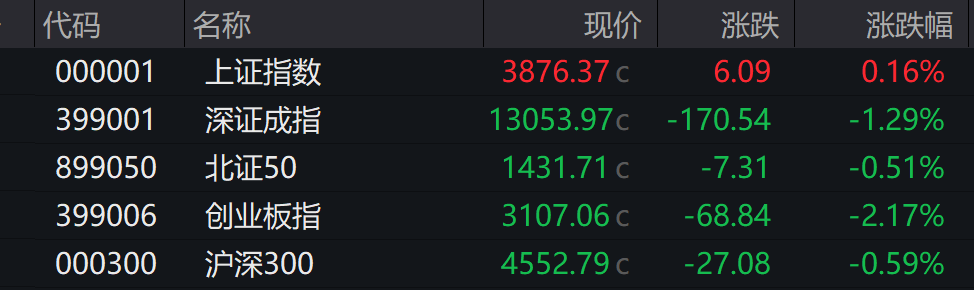
Market Overview - The A-share market experienced mixed fluctuations, with the ChiNext index falling over 2%. Sectors such as AI healthcare, commercial aerospace, retail, and IP economy saw significant gains, while battery, lithium mining, Hainan, and PCB sectors faced notable declines [1][4]. - As of the close, the Shanghai Composite Index rose by 0.16%, while the Shenzhen Component Index fell by 1.29%, and the ChiNext Index dropped by 2.17% [4][5]. Sector Performance - AI healthcare concepts surged, with companies like Huaren Health and Sairui Medical hitting the daily limit [5]. - The commercial aerospace sector saw a strong performance, with stocks like Shengyang Technology and Tianjian Technology also reaching the daily limit [11]. - Retail and IP economy stocks rallied, with Baida Group achieving six consecutive trading limit ups [5]. - Conversely, computing hardware stocks declined, with companies like Shengyi Technology and Jingwang Electronics dropping over 5% [5]. Policy and Economic Outlook - The Central Financial Office emphasized that expanding domestic demand will be a top priority for next year, focusing on structural changes in consumption to stimulate demand from both supply and demand sides [1]. - The National Development and Reform Commission, along with five other departments, issued guidelines for the clean and efficient utilization of coal, tightening standards compared to the 2022 version, which may increase demand for high-quality coal [2]. Hong Kong Market - The Hong Kong market saw the Hang Seng Index close up by 0.12%, while the Hang Seng Tech Index fell by 0.73%. The aviation and resource sectors led the gains, while technology manufacturing and consumer sectors generally adjusted downwards [7][8]. Commodity Market - The domestic commodity futures market closed mostly higher, with palladium hitting the daily limit and coking coal rising by 6.07%. However, the shipping index (European line) fell by 3.06%, and polysilicon dropped by 2.60% [2][10]. Bond Market - The bond futures market saw an increase across the board, with the 30-year main contract rising by 0.52%, the 10-year contract by 0.07%, and shorter-term contracts also showing gains [3][10]. AI Healthcare Development - Ant Group launched the AI health assistant application "Ant Ai Fu," which has rapidly gained popularity, exceeding 15 million monthly active users. This reflects the significant market potential of integrating generative AI with health management [16]. - The increase in flu activity since November has boosted demand for related medications, further supporting the AI healthcare sector [15][16]. Commercial Aerospace Support - The Shanghai Municipal Government is focusing on commercial aerospace as a key area in its upcoming "14th Five-Year Plan," with plans to establish development funds to support this emerging strategic industry [11][13].


商汤科技的选择:拥抱AI国产化,做那个「修塔」的人
36氪· 2025-12-18 09:26
Core Viewpoint - SenseTime is embarking on a long-term path characteristic of Chinese technology companies, focusing on the localization of AI capabilities and the development of a robust ecosystem for domestic chips and models [2][27]. Group 1: Investment and Market Confidence - On December 18, SenseTime announced a placement of new Class B shares on the Hong Kong Stock Exchange, with significant interest from at least six institutional investors, reflecting strong market confidence in the company's long-term value [3]. - The proceeds from this placement will primarily be used to expand the scale of AIDC "large devices" and increase the localization ratio [3]. Group 2: Technological Advancements - The recent adaptation of SenseTime's "Riri Xin" Seko series multimodal models by Cambrian signifies a critical leap in domestic computing power for high-bandwidth, high-concurrency multimodal scenarios [3][4]. - The adaptation of the Seko model series represents a significant advancement in the domestic AI industry, moving beyond mere parameter scaling to a focus on physical realities and system-level collaboration [4][5]. Group 3: Strategic Positioning - SenseTime is positioning itself as a "builder" in the era of "computing sovereignty," fully embracing localization and addressing the challenges posed by the unification of hardware architectures [6][7]. - The SenseCore large device serves as a training ground for domestic chips, enabling the optimization of their potential in real business scenarios [11][13]. Group 4: Ecosystem Development - SenseTime's collaboration with Cambrian is not limited to hardware procurement but extends into deep integration, creating a "stair-step product innovation system" that fosters true software-hardware synergy [14]. - The company is also working with emerging computing forces like Muxi and Jiyuan to validate the potential of new architecture chips in specific high-difficulty tasks, establishing comprehensive cooperation for industry expansion [14][15]. Group 5: Application and Commercialization - SenseTime's strategy encompasses a full-stack ecosystem from large devices to multimodal models and end-user applications, addressing the critical infrastructure challenges in AI localization [16][25]. - The AI office application "Little Raccoon" exemplifies the successful adaptation of domestic chips, breaking the stereotype that domestic computing power cannot be effectively utilized at the terminal level [26]. Group 6: Future Outlook - The company aims to transform the grand narrative of "computing localization" into tangible productivity tools accessible to everyone, emphasizing the importance of application-level delivery in building confidence in the domestic AI industry [27].

港股通用GPU第一股也冲刺了!哈佛博士带队,估值209亿
量子位· 2025-12-18 09:26
Core Viewpoint - The article highlights the emergence of domestic GPU companies in China, particularly focusing on Birran Technology, which is set to become the first domestic GPU company listed on the Hong Kong Stock Exchange with a valuation of 20.9 billion yuan [1][40]. Company Overview - Birran Technology, founded in 2019 by Zhang Wen, a Harvard Law PhD, specializes in developing general-purpose GPU chips and intelligent computing solutions for AI training and inference, providing full-stack support from cloud to edge [2][3]. - The company has attracted significant investment, completing over 10 funding rounds in six years, with notable investors including Qiming Venture Partners, IDG Capital, and Hillhouse Capital [2][39]. Product Offerings - Birran's core products include a hardware system based on its self-developed GPGPU architecture, designed specifically for AI workloads, and a software platform called BIRENSUPA for developing AI applications [3][10]. - The hardware system consists of various configurations, including PCIe boards and GPGPU servers, with key chips like the Birran 106 and 110 designed for training and edge inference, respectively [5][8]. Financial Performance - The company's revenue has shown significant growth, increasing from 500,000 yuan in 2022 to 337 million yuan in 2024, with a 50% year-on-year increase in the first half of 2023 [19][20]. - The main revenue source is the intelligent computing solutions, which started contributing to revenue in 2023, while the company also generates income from product sales and rental of intelligent computing clusters [20][21]. Profitability and Expenses - Despite revenue growth, Birran Technology remains unprofitable, with losses of 1.474 billion yuan in 2022 and 1.744 billion yuan in 2023, although adjusted net losses have decreased [27][28]. - Research and development expenses are a significant portion of the budget, amounting to 1.018 billion yuan in 2022 and 886 million yuan in 2023, with a notable increase in the first half of 2024 [29][30]. Market Position and Future Plans - Birran Technology aims to launch the second-generation Birran 20X series chips for cloud training and inference by 2026, with further developments planned for 2028 [8]. - The company has established a strong customer base, including major enterprises in high-computing industries, with nine Fortune China 500 companies among its clients [15].
“商业航天,不托关系连尽调资料都拿不到”
3 6 Ke· 2025-12-18 08:02
Core Viewpoint - The commercial aerospace sector is gaining significant traction in the capital market, driven by policy support and increasing investor interest, despite some companies still being in the technology validation phase [1][4][10]. Group 1: Market Performance - The commercial aerospace index rose from 1899.50 points to 2111.59 points between December 5 and December 15, with nearly 100 companies seeing stock increases of over 50% [1]. - The trading volume in the commercial aerospace sector exceeded 1 trillion yuan in just one week, marking a historical high [1]. Group 2: Policy Support - The National Space Administration released a plan to promote high-quality development in commercial aerospace, including the establishment of a national development fund [4]. - Local governments have also initiated substantial investment funds, such as a 10 billion yuan fund in Beijing and several hundred billion yuan in the Yangtze River Delta region [4]. Group 3: Investment Trends - The commercial aerospace sector has become a mandatory investment option for many institutions, with a notable increase in the number of investors entering the field [5][6]. - The demand for commercial aerospace is expected to grow significantly, with plans for satellite production ramping up to 100-300 units annually by 2028 [7]. Group 4: Market Dynamics - The investment landscape has shifted, with a focus on companies that have established a clear exit strategy, particularly with the upcoming IPOs of leading firms [6][10]. - The competition for funding has intensified, with many companies now controlling their financing options, leading to a seller's market [11]. Group 5: Future Outlook - The commercial aerospace sector is anticipated to continue its upward trajectory, especially with the expected IPO of SpaceX, which could further elevate market interest [5][10]. - New opportunities are emerging in niche areas such as space computing and satellite subsystems, indicating potential for future growth [17][18].
争相上市的国产GPU厂商市占率都未突破1%
第一财经· 2025-12-18 07:06
Core Viewpoint - The recent IPOs of GPU companies, including Moer Technology and Muxi, have attracted significant attention, with substantial initial stock price increases, but all three companies remain unprofitable and have low market shares in the domestic AI chip market [2][4][9]. Group 1: Company Overview - Moer Technology and Muxi were both established in 2020, while Birun Technology was founded in 2019. All three companies focus on the development, design, and sales of high-performance general-purpose GPU products [3]. - Moer Technology's core team includes several former NVIDIA executives, while Muxi's founding team has experience from AMD. Birun Technology's CEO previously held a leadership position at SenseTime [3]. Group 2: Financial Performance - All three companies have shown revenue growth over the past three years but have not achieved profitability. Moer Technology's revenues for 2022, 2023, and 2024 are projected to be 0.46 billion, 1.24 billion, and 4.38 billion CNY, with losses of 18.4 billion, 16.73 billion, and 14.92 billion CNY respectively, totaling a loss of 50.05 billion CNY over three years [4]. - Muxi's revenues are projected at 0.4264 million, 53.0212 million, and 743 million CNY for the same years, with cumulative losses exceeding 32 billion CNY [4]. - Birun Technology's revenues are expected to be 0.0499 million, 6.203 million, and 33.7 million CNY, with total losses of 47.5 billion CNY over three years [4]. Group 3: R&D Expenditure - High R&D expenses are a significant factor contributing to the losses of these GPU companies. Moer Technology has the highest R&D expenses over the past three years, totaling 38.1 billion, 22.47 billion, and 27.3 billion CNY for Muxi and Birun Technology respectively [5]. - The ratio of R&D expenses to annual revenue for Moer Technology and Muxi was 309.88% and 121.24% respectively, while Birun Technology's ratio was 245.5% [5]. Group 4: Profitability Projections - Moer Technology anticipates achieving profitability by 2027, including government subsidies, while Muxi expects to reach breakeven as early as 2026 [6]. Group 5: Market Share - The market share of domestic GPU companies remains low. In the domestic AI chip market, NVIDIA, Huawei HiSilicon, and AMD hold market shares of 54.4%, 21.4%, and 15.3% respectively, while the combined market share of Moer Technology, Muxi, and Birun Technology is less than 1% [9][10]. - Birun Technology indicates that the top two players in the Chinese smart computing chip market hold a combined market share of 94.4%, with the first player having a 76.2% share [10].