腾讯云

Search documents
亚马逊云科技“瘦身”进行时:解散上海AI研究院背后的成本控制与创新博弈
Mei Ri Jing Ji Xin Wen· 2025-07-23 10:05
Core Insights - Amazon Web Services (AWS) has officially dissolved its Shanghai AI Research Institute, marking the closure of its last overseas research facility [1][2] - The decision to downsize certain teams is part of a broader strategic realignment aimed at optimizing resources and continuing investment in innovation [1][2] Group 1: Background and Establishment - The Shanghai AI Research Institute was established in the fall of 2018, focusing on four main areas: open-source project development, foundational research in graph neural networks (GNNs), empowering clients with AI technology, and collaborating with academic institutions [2][3] - The institute achieved notable successes in the neural network field, with the DeepGraphLibrary (DGL) framework becoming a globally recognized open-source project [3] Group 2: Market Dynamics and Competition - The closure of the Shanghai AI Research Institute reflects a trend among foreign enterprises in China facing deep adjustments due to intensified local competition from domestic tech companies like Huawei, Alibaba, and Tencent [3][4] - The global economic landscape has prompted companies to reassess their investment strategies, focusing on core business areas and reallocating overseas research resources [4] Group 3: Strategic Intentions - AWS's decision to close its last overseas research institute indicates a strategic shift towards prioritizing investments in generative AI and other cutting-edge fields that promise more immediate commercial returns [5][7] - The competitive landscape in cloud computing and AI is becoming increasingly fierce, with AWS facing challenges from Microsoft Azure and Google Cloud, as well as local players [6][7] Group 4: Future Directions - AWS plans to invest up to $100 billion by 2025, primarily in AI-related projects, including data centers and AI hardware, to enhance its market position [6] - The company is focusing on balancing innovation with cost control while ensuring that core business capabilities remain unaffected amid team downsizing [7]

官方回应北京燃油车禁入网约车|新鲜早科技
2 1 Shi Ji Jing Ji Bao Dao· 2025-07-23 02:29
Group 1: Industry Developments - Beijing has announced a complete ban on fuel vehicles from ride-hailing platforms, but the Chinese Urban Public Transport Association has since deleted the announcement and issued an apology due to verification issues [2] - OpenAI has partnered with Oracle to develop an additional 4.5 GW capacity for the "Stargate" data center in the U.S., bringing the total capacity to over 5 GW [5] - The "Civil Aviation Official Direct Sales Platform" has been launched by the Hanglv Zongheng App, allowing users to compare and purchase tickets from multiple airlines without agent fees [6] Group 2: Company Initiatives - Meituan has launched the "Ten Thousand Brands" plan to support 10,000 well-known restaurant brands with traffic support and brand assistance, aiming for over 1 million merchants by July 2025 [7] - Tencent Cloud has initiated the internal testing of CodeBuddy IDE, an AI-integrated development platform that allows users to program using natural language [8] - xLight, a U.S. semiconductor startup, has completed a $40 million Series B funding round to further develop extreme ultraviolet (EUV) free electron lasers [13] Group 3: Technological Innovations - India's first domestically produced semiconductor chip is set to be announced by the end of 2025, with six semiconductor factories under construction [10] - Samsung is focusing on improving the yield of its 2nm GAA process technology, delaying the production of its 1.4nm process to 2029 [11] - iFlytek has released the X5, the world's first local large model smart office device, featuring offline AI capabilities and a lightweight design [16]

北京燃油车彻底禁入网约平台?官方已删文并致歉;星巴克中国回应推出自习室;微信聊天框新增语音转文字,喊两遍over自动发送丨邦早报
创业邦· 2025-07-23 00:05
Group 1 - Beijing's public transport association initially announced a ban on fuel vehicles for ride-hailing platforms, but later deleted the statement and issued an apology due to verification issues [2] - Zhengzhou's market regulation bureau held talks with major food delivery platforms, including Ele.me, Meituan, and JD, addressing compliance issues and emphasizing the need for fair competition [4] - Taobao Shanguo denied rumors about launching a "1 cent self-pickup" product and stated it has never set internal order targets [4] Group 2 - China Ruyi announced plans to acquire a 30% stake in Kuaiqian Financial for 240 million yuan [5] - JD plans to build 10,000 "Seven Fresh Kitchen" locations nationwide within three years, investing 10 billion yuan to recruit partners for signature dishes [5] - Meituan's "Pin Hao Fan" launched a "Ten Thousand Brands" initiative to support 10,000 well-known restaurant brands [7] Group 3 - Sanofi is set to acquire Vicebio for up to $1.6 billion, focusing on respiratory virus vaccine development [27] - Flexjet completed an $800 million equity financing round, led by L Catterton, to expand its private aviation services [27] - Turing Quantum raised a significant amount in a strategic round of financing to develop photonic chip products [27] Group 4 - Universal Music Group filed for a confidential IPO in the U.S., having previously listed in the Netherlands [25] - Amazon acquired AI wearable device maker Bee, which produces a $50 AI assistant wristband [25] - Tesla opened its first Supercharger diner in Los Angeles, featuring a futuristic design and robot staff [19]



通信行业周报:H20恢复对华销售,算力通信硬件全线业绩高增-20250721
Guoyuan Securities· 2025-07-21 09:47
Investment Rating - The report gives a "Recommended" rating for the telecommunications industry, considering the sustained high prosperity of the sector driven by AI, 5.5G, and satellite communications [2][5]. Core Insights - The overall market performance for the week (July 14-20, 2025) saw the Shanghai Composite Index rise by 0.69%, the Shenzhen Component Index by 2.04%, and the ChiNext Index by 3.17%. The telecommunications sector, represented by the Shenwan Communications Index, increased by 7.56% [2][10]. - Within the telecommunications sub-sectors, the highest increase was seen in communication network equipment and devices, which rose by 15.82%. Conversely, the communication engineering and services sector experienced a slight decline of -0.14% [12][13]. - Notable individual stock performances included Xinyi Technology with a rise of 39.01%, followed by Zhongji Xuchuang at 24.33% and Shijia Guangzi at 22.43% [14][15]. Summary by Sections Market Overview - The telecommunications sector is experiencing a high growth phase, with significant contributions from AI and advanced communication technologies [2][3]. - The report highlights the strong performance of the telecommunications index and individual stocks, indicating a positive market sentiment [10][12]. Sub-sector Performance - The communication network equipment and devices sub-sector showed the most significant growth, while communication engineering and services faced minor setbacks [12][13]. - The report emphasizes the importance of the computing power supply chain, particularly in hardware segments benefiting from domestic and international demand [3]. Company Announcements - Key announcements from companies in the telecommunications sector include significant earnings forecasts, with some companies like Xinyi Technology expecting a substantial increase in net profit by 327.68% to 385.47% [21][22]. - Other companies, such as Yiwai Communication, are forecasting a decline in earnings due to global economic slowdowns and trade tensions [21][22]. Future Outlook - The report suggests that the demand for computing power will continue to expand, driven by advancements in AI and related technologies, which will positively impact hardware sales and services [4][3]. - The anticipated recovery of H20 GPU sales in the Chinese market is expected to alleviate supply bottlenecks and accelerate data center construction [3][19].
国产大模型“标王”争夺战 AI生产力革命引爆
2 1 Shi Ji Jing Ji Bao Dao· 2025-07-17 12:38
Core Insights - The breakthrough in large model technology is driving the development of multimodal and agent technologies, enhancing industry efficiency and accelerating commercialization through policy compliance and capital resonance [1][2][4]. Market Dynamics - By 2025, China's large model technology is expected to experience explosive growth and structural optimization, transitioning from an auxiliary tool to a core productivity driver across various sectors including government, finance, manufacturing, and healthcare [2][4]. - In the first half of 2025, the bidding market for large models reached a record scale of 6.4 billion yuan with 1,810 projects, surpassing the total number of projects in 2024 [4][5]. - Baidu Smart Cloud emerged as the leading bidder with 48 projects and 510 million yuan in bid amounts, followed by iFLYTEK and Volcano Engine [4][5]. Technological Advancements - Significant breakthroughs in multimodal capabilities and agent technologies are fostering a positive cycle of technology, application, and business [7][8]. - The market is shifting focus from infrastructure to practical business applications, with over 50% of projects in the second quarter of 2025 being application-oriented [5][6]. - The integration of large models with industrial software is becoming a mainstream application mode, particularly in manufacturing [11][12]. Policy and Regulatory Framework - A comprehensive policy framework has been established at the national level, focusing on compliance, incentives, and infrastructure to guide the healthy development of the industry [14][15]. - As of June 30, 2025, 439 generative AI services have completed registration, indicating a move towards standardized development [14][15]. Regional Development - Different regions in China are adopting unique development paths for large models, with the Beijing-Tianjin-Hebei region focusing on technological breakthroughs, while the Yangtze River Delta emphasizes scene innovation and ecological cultivation [18][19][20]. Capital Market and Industry Collaboration - The surge in bidding orders for large model vendors is linked to internal innovation and policy support, with significant impacts on stock prices following major project wins [21][23]. - The integration of capital operations through mergers, strategic investments, and industry chain collaboration is accelerating the commercialization of large model technologies [25][26].


杭州还是太超前了,这些创投青年正在定义产业未来
创业邦· 2025-07-16 09:34
Group 1 - The event features a diverse lineup of industry leaders and founders from various technology and investment sectors [1][2][3] - Notable participants include CEOs and founders from companies like One Knowledge Intelligent, Daily Interaction, and Dingxiangyuan [1][3][9] - The event aims to foster discussions on innovation and investment opportunities within the technology landscape [1][2][3] Group 2 - Key figures from venture capital firms such as Peakview Capital and Meihua Venture Capital are also participating, indicating strong interest from the investment community [7][11] - The presence of experts from major tech companies like Tencent Cloud highlights the event's focus on artificial intelligence and technological advancements [2][3][8] - The event is expected to provide insights into emerging trends and potential investment strategies in the tech sector [1][2][3]

云服务器韧性取决于什么
2025-07-14 00:36
Summary of Key Points from the Conference Call Industry Overview - The document focuses on the cloud services industry, specifically analyzing the resilience of cloud services provided by major cloud providers in China, including Amazon Web Services (AWS), Huawei Cloud, Alibaba Cloud, Tencent Cloud, and Microsoft Azure [6][8]. Core Insights and Arguments 1. **Importance of Cloud Service Resilience** - Cloud service resilience is critical for business continuity, as service interruptions can lead to significant economic losses, with estimates ranging from thousands to over a hundred thousand yuan per minute of downtime, particularly in sectors like finance and e-commerce [5][9]. 2. **Current State of Cloud Adoption in China** - Over 90% of Chinese enterprises rely on public cloud for non-core workloads, primarily due to concerns about the resilience of cloud services. More than 80% of respondents believe on-premises data centers offer stronger service resilience for core workloads [9][16]. 3. **Research Methodology** - Frost & Sullivan conducted a survey of 150 companies across various industries in China to assess their digital business practices and cloud service resilience [6][12]. 4. **Cloud Providers' Infrastructure Analysis** - The study compares the cloud infrastructure designs and deployments of five major cloud providers in China, focusing on their resilience performance from January 2023 to March 2025 [8][62]. 5. **Resilience Metrics** - AWS demonstrated the highest resilience, achieving a service availability of 99.9909%, with an average service interruption duration of less than 1 hour. In contrast, other providers like Huawei Cloud, Alibaba Cloud, Tencent Cloud, and Microsoft Azure had significantly longer average interruption durations [63][70]. 6. **Infrastructure Design and Deployment** - Effective cloud service resilience relies on robust infrastructure design, including the deployment of multiple data centers and availability zones (AZs) within a region, ensuring physical isolation and redundancy [19][75]. 7. **Comparative Performance of Cloud Providers** - AWS leads in resilience, followed by Huawei Cloud, Alibaba Cloud, Tencent Cloud, and Microsoft Azure. AWS's infrastructure allows for effective fault isolation and redundancy, while other providers face challenges due to fewer AZs and less effective isolation strategies [71][73]. 8. **User Responsibilities** - Users are responsible for designing resilient applications that can withstand failures, while cloud providers must ensure their infrastructure is robust and capable of quick recovery from service interruptions [18][21]. Other Important but Potentially Overlooked Content 1. **Concerns About Cloud Migration** - Enterprises express concerns about data loss, business interruptions, and increased costs associated with cloud services, highlighting the need for a thorough understanding of different providers' resilience capabilities [15][16]. 2. **Historical Service Interruption Events** - The document references past service interruptions from major providers, emphasizing the necessity for physical isolation and redundancy in cloud infrastructure to mitigate the impact of such events [39][70]. 3. **Recommendations for Improvement** - The study suggests that cloud providers should adopt resource redundancy and effective isolation strategies to enhance service availability and minimize user losses during service interruptions [71][73]. 4. **Transparency in Incident Reporting** - The level of transparency in reporting service interruptions varies among providers, with AWS and Microsoft Azure demonstrating higher levels of detail and accountability in their incident disclosures [60][62]. 5. **Future Research Directions** - The document indicates the need for ongoing analysis of cloud service resilience, suggesting that future studies should continue to monitor the performance and infrastructure strategies of cloud providers [50][71].

Agent 落地实况:能用吗?怎么用?用到哪儿了?| 直播预告
AI前线· 2025-07-12 02:50
直播介绍 直播时间 7 月 15 日 20:00-21:30 直播主题 Agent 落地实况:能用吗?怎么用?用到哪儿了? 直播嘉宾 2025 年被称为"AI Agent 元年",Agent 真的能落地商业化了吗?拆解难点、协作挑战、企业落地 KPI……腾讯云、彩讯股份、商汤科技三位专家深度对话! 如何看直播? 王磊 腾讯云智能体平台产品中心总经理 邹盼湘 彩讯股份 AI 产研部总经理 王志宏 商汤科技 / 研发总监 2025,AI Agent 元年,能用了吗?实战场景深度揭秘。 任务拆解难、协作难,Agent 失败真因是什么?专家直击痛点。 落地指标怎么量?ROI、风险和 KPI 一针见血。 戳直播预约按钮,预约 AI 前线视频号直播。 如何向讲师提问? 文末留言写下问题,讲师会在直播中为你解答。 直播亮点 ...

古鳌科技20%涨停,金融科技ETF(516860)大涨3.50%,一季度中国云基础设施市场加速增长
Sou Hu Cai Jing· 2025-07-11 03:02
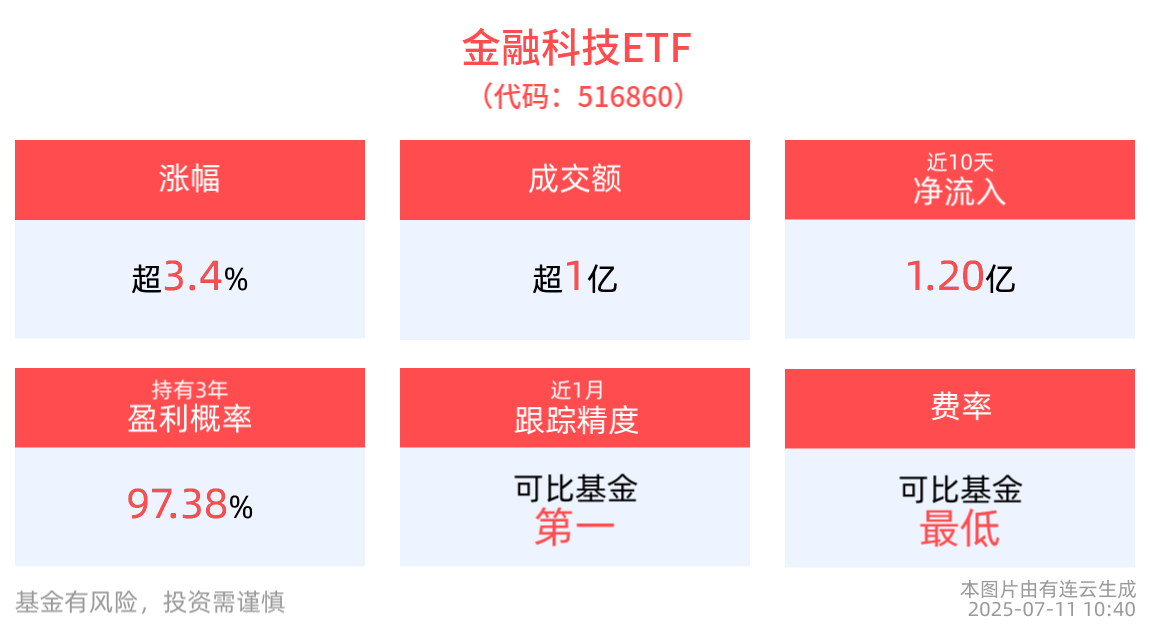
Group 1 - The core viewpoint of the news highlights the strong performance of the financial technology sector, with the China Securities Financial Technology Theme Index rising by 3.51% and key stocks like Guoao Technology and Anshuo Information seeing significant gains [3] - The Financial Technology ETF (516860) has shown a 4.08% increase over the past week, with a trading volume of 1.24 billion yuan and an active market turnover rate of 11.58% [3] - The State-owned Assets Supervision and Administration Commission (SASAC) emphasized the need to accelerate key core technology breakthroughs and promote innovation platform construction during a recent meeting [3] Group 2 - Canalys reported that spending on cloud infrastructure services in mainland China reached $11.6 billion in Q1 2025, marking a 16% year-on-year increase, with Alibaba Cloud holding a 33% market share [4] - The financial technology sector is increasingly integrating artificial intelligence, with domestic AI leaders focusing on core technology and industry application [4] - The latest scale of the Financial Technology ETF has reached 1.056 billion yuan [4] Group 3 - The Financial Technology ETF experienced a net outflow of 10.0653 million yuan recently, but has attracted a total of 120 million yuan over the past 10 trading days [5] - The ETF's net value has increased by 125.85% over the past year, ranking 3rd out of 2908 index stock funds [5] - The ETF has achieved a maximum single-month return of 55.92% since its inception, with an average monthly return of 10.60% [5] Group 4 - The Financial Technology ETF has a Sharpe ratio of 1.65 over the past year, indicating strong risk-adjusted returns [6] - The ETF has shown a relative drawdown of 0.44% compared to its benchmark this year, with the fastest recovery time among comparable funds [7] - The ETF's management fee is 0.50%, and its tracking error over the past month is 0.035%, the highest precision among comparable funds [7] Group 5 - The top ten weighted stocks in the China Securities Financial Technology Theme Index account for 51.2% of the index, with stocks like Dongfang Wealth and Tonghuashun leading the way [7]

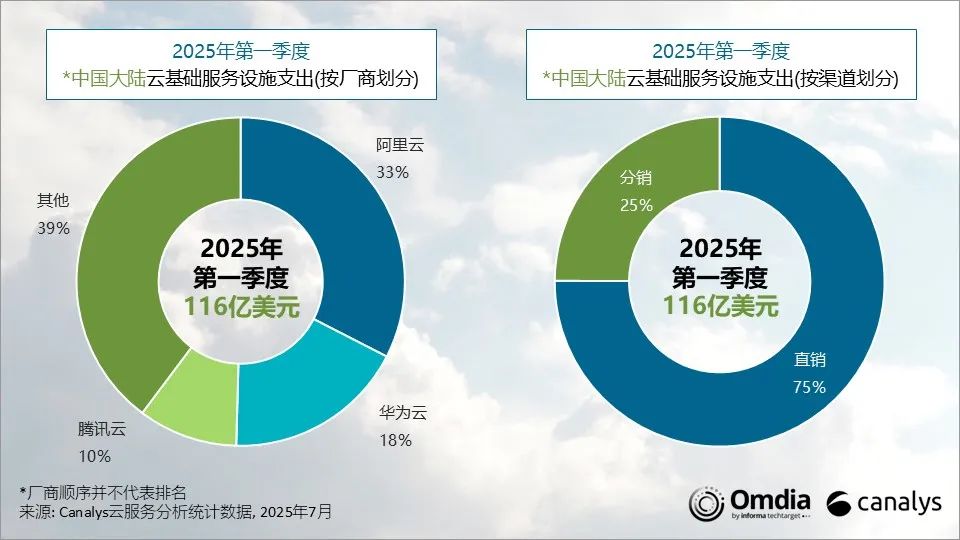
Canalys:一季度中国内地在云基础设施服务上的支出达到116亿美元 同比增长16%
智通财经网· 2025-07-11 02:24
Core Insights - The demand for AI is reshaping cloud computing applications, with organizations migrating AI workloads to the cloud and integrating AI capabilities into their data systems and business processes [2][3] - Major cloud vendors are exploring various strategic paths to bridge the gap between AI model capabilities and actual business needs, including open-sourcing AI models and developing AI agent platforms [2][3] Cloud Market Growth - In Q1 2025, spending on cloud infrastructure services in mainland China reached $11.6 billion, a year-on-year increase of 16%, driven primarily by AI-related demand [1] - The cloud services market is experiencing accelerated growth as enterprises expedite AI deployment, with a significant reliance on cloud-based GPU resources due to the high computational demands of large AI models [1] Market Share and Performance - Alibaba Cloud maintained its leading position in the mainland China cloud services market with a 33% market share, reflecting a 15% year-on-year growth, and its AI workloads have seen triple-digit growth for seven consecutive quarters [5] - Huawei Cloud, the second-largest cloud service provider, achieved an 18% revenue growth in Q1 2025, increasing its market share to 18% [6] - Tencent Cloud held a 10% market share in Q1 2025, facing short-term growth challenges due to internal resource prioritization affecting GPU supply [6][7] Strategic Developments - Alibaba Cloud has open-sourced its Qwen 3 model and launched a series of global expansion initiatives, including establishing an AI capability center in Singapore and new data centers in Malaysia and the Philippines [5] - Huawei Cloud introduced several AI technology updates, including the latest version of its foundational model suite "Pangu 5.5" and an enterprise-level AI agent development platform "ModelArts Versatile" [6] - Tencent Cloud upgraded its models and launched the "Tencent Cloud AI Agent Development Platform," enhancing its service capabilities in the Asia-Pacific market [7] Ecosystem and Collaboration - The importance of ecosystem partners is increasing as cloud vendors leverage open-source models and AI agent deployments to integrate AI capabilities with business value [3] - In Q1 2025, cloud service revenue driven by partnerships accounted for 25% of the overall market, with expectations for continued growth in this area [3]