金地集团

Search documents
金地集团(600383) - 2025 Q4 - 年度业绩预告
2026-01-23 10:40
证券代码:600383 证券简称:金地集团 公告编号:2026-006 金地(集团)股份有限公司 科 学 筑 家 金地(集团)股份有限公司 2025 年度业绩预告 本公司董事会及全体董事保证本公告内容不存在任何虚假记载、误导性陈述 或者重大遗漏,并对其内容的真实性、准确性和完整性承担法律责任。 重要内容提示: 业绩预告的具体适用情形:净利润为负值。 公司预计 2025 年度实现归属于母公司所有者的净利润-1,110,000 万元到 -1,350,000 万元,预计 2025 年度归属于母公司所有者的扣除非经常性损益后的净 利润为-1,000,000 万元到-1,240,000 万元。 一、本期业绩预告情况 (一)业绩预告期间 2025 年 1 月 1 日至 2025 年 12 月 31 日。 (二)业绩预告情况 经财务部门初步测算,预计 2025 年度实现归属于母公司所有者的净利润 -1,110,000 万元到-1,350,000 万元。 预计 2025 年度实现归属于母公司所有者的扣除非经常性损益后的净利润 -1,000,000 万元到-1,240,000 万元。 三、本期业绩预亏的主要原因 (一)公司近年 ...

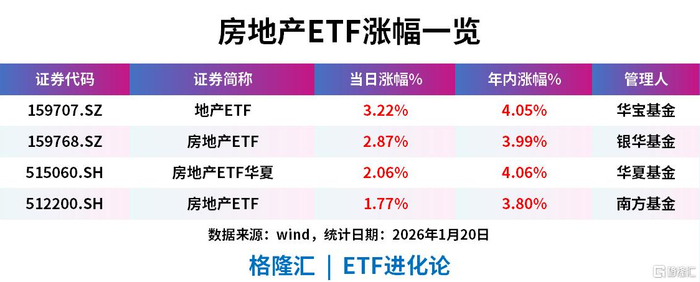
房地产板块活跃,地产ETF涨超3%,房地产ETF、房地产ETF华夏涨超2%
Ge Long Hui A P P· 2026-01-20 08:38
Group 1 - The real estate sector is experiencing significant activity, with stocks such as Dayue City, Chengdu Investment Holdings, and others reaching their daily limit up, while real estate ETFs have seen gains of over 3% [1] - The real estate ETFs tracking the CSI All Share Real Estate Index include major companies like China Merchants Shekou, Poly Developments, and Vanke A, indicating a concentration of top-tier firms in the investment direction [5] - The recent data from the National Bureau of Statistics shows a slight decline in new residential sales prices in first-tier cities, with a 0.3% decrease month-on-month, while second and third-tier cities also experienced price drops [5] Group 2 - According to Everbright Securities, the implementation of real estate policies is enhancing local government autonomy in market regulation, leading to further regional and city differentiation [6] - Huayuan Securities anticipates that the real estate adjustment cycle may be nearing its end, with historical data suggesting that the current price adjustments in China are relatively sufficient [7] - The trend towards "good housing" is emerging, with a shift in policy focus towards building safe, comfortable, and green homes, indicating potential growth in the high-quality residential market [7]





地产股预亏超600亿 27家预披露房企中仅一家盈利
Di Yi Cai Jing· 2026-01-20 07:53
Core Viewpoint - The real estate sector continues to face widespread losses, with most listed companies in the A-share market reporting varying degrees of deficit for 2025, except for the leading company, Poly Developments [2][3]. Group 1: Company Performance - Among the 27 listed real estate companies that have released performance forecasts, only Poly Developments reported a positive net profit of approximately 1.03 billion yuan, while the total losses of the other companies ranged from 47.546 billion to 62.464 billion yuan [3]. - Poly Developments experienced a revenue decline of 1.09% year-on-year, with a net profit drop of 79.49% due to decreased gross profit margins and anticipated asset impairment losses of about 6.9 billion yuan [3]. - Other companies, such as China Fortune Land Development, are projected to incur losses of 16 billion to 24 billion yuan for 2025, with net assets expected to decline by 10 billion to 15 billion yuan [4]. Group 2: Industry Challenges - The real estate sector has been struggling with significant losses since 2022, attributed to factors such as low-profit project settlements, increased impairment provisions, and rising interest expenses [6]. - The sales volume of commercial housing is expected to decline by 12.6% year-on-year in 2025, indicating ongoing market challenges [7]. - The real estate development prosperity index has been on a downward trend, reaching 91.45 by December 2025, reflecting a sluggish economic activity in the sector [7]. Group 3: Future Outlook - Analysts suggest that the adjustment cycle in the real estate market may be nearing its end by 2026, with potential growth in the high-quality residential market driven by policy support and demand structure upgrades [8]. - Companies facing significant losses must manage their market value and ensure compliance with financial reporting to avoid delisting risks, which could arise from continuous losses or failure to meet revenue thresholds [9].


住宅收益率跟踪研究(1月2026年):通胀好转,资产价格预期受益
GUOTAI HAITONG SECURITIES· 2026-01-20 05:30
Investment Rating - The report assigns an "Overweight" rating for the real estate sector [4]. Core Insights - The report highlights that the rental yield in major cities has shifted from a negative outlook to a neutral stance due to the CPI turning positive and the continuous decline in risk-free rates. This indicates potential stabilization in asset prices in key cities [2]. - The rental yield in first-tier cities has increased from 1.6% in 2020 to 1.9% in 2025, although it remains below the mortgage loan rates and slightly above the risk-free rates. The "rental yield + CPI" metric is expected to improve as the CPI in some first-tier cities turns positive [4]. - Second-tier cities are showing signs of price stabilization, with the "rental yield + CPI" metric improving from 2.3% in 2023 to 2.6% in 2024 and maintaining that level in 2025. Cities like Hefei and Xi'an are expected to see further improvements in their rental yields [4]. Summary by Sections Rental Yield Analysis - The historical rental yield was 1.5%, but when adjusted for CPI, it is not considered low. The report emphasizes the need to differentiate between actual and nominal yields [4]. - The nominal rental yield is adjusted to account for potential inflation, making it a more comparable metric. The report suggests that the high inflation period has made the first-tier cities' rental yield of 1.5% equivalent to an international nominal yield of 3.5% [4]. Market Trends - The report notes that the rental yield plus CPI in first-tier cities is around 2.5%, which is now higher than the risk-free rate. This indicates a potential shift in market dynamics [5]. - The report also points out that the proportion of declining listing prices has increased, indicating a weakening in the second-hand housing market, with about 19% of listings showing price declines [4][18]. Future Outlook - The report anticipates that as the CPI continues to rise and the risk-free rate declines, asset prices in key cities may transition from a negative outlook to a neutral one. This is particularly relevant for second-tier cities, which are expected to have a stronger rental yield plus CPI metric [4].

中国房地产-新房销售重回 2000 年代水平;库存创纪录下降;政策助力成交量-China Property-Dec NBS Back in the 2000s; Record Inv. Drop; Policies to Help Volume
2026-01-20 03:19
Summary of China Property Market Conference Call Industry Overview - **Industry**: China Property Market - **Key Data**: - Real Estate Investment (REI) recorded a significant decline of **-35.8% year-on-year** in December, marking the largest drop since December 2009 [1] - New home prices decreased by **-3.0% year-on-year** in December, while secondary home prices fell by **-6.1% year-on-year** [1] - The overall residential sales volume dropped by **-26% year-on-year** in December [1] Core Insights - **Investment Trends**: - REI for FY25 is projected at **Rmb8.3 trillion**, a **-17.2% year-on-year** decline, falling below residential sales of **Rmb8.4 trillion** [2] - New housing starts are at a **21-year low**, with **588 million sqm** started, down **-20% year-on-year** [2] - The area under construction decreased by **-10%**, reaching **6.6 billion sqm** [2] - **Market Conditions**: - The market is expected to face a structural decline into 2026 unless liquidity improves, with anticipated REI dropping by **-13% year-on-year** [3] - National sales are projected to decline by **-11% year-on-year**, with new home average selling prices expected to fall by **-3% year-on-year** [3] - **Policy Impacts**: - Recent government policies aim to stabilize the market, including a reduction in the down payment for commercial properties from **50% to 30%** and extending tax refunds for home sellers [4] - The easing measures are seen as risk control rather than a direct boost to the market [4] Additional Important Points - **Sales and Earnings Outlook**: - Weak sales and earnings downgrades are anticipated, with a potential short-lived rebound in share prices driven by policy expectations [5] - The luxury retail sector showed positive same-store sales growth in Q4, but December results were below expectations [5] - **Land Sales**: - Land sales in 300 cities decreased by **-9% in area** and **-23% in value**, reaching an 18-year low [2] - The government land revenue for the first 11 months of 2025 was down **-11%** [1] - **Macro Economic Indicators**: - China's GDP growth for FY25 is projected at **+5.0% year-on-year**, with a slight deceleration in retail sales growth to **+0.9% year-on-year** in December [1] This summary encapsulates the critical insights and data points from the conference call regarding the current state and future outlook of the China property market.
地产12月观察及数据点评:风雨之后,等待彩虹
GUOTAI HAITONG SECURITIES· 2026-01-20 03:10
Investment Rating - The report assigns an "Overweight" rating for the real estate industry [4]. Core Insights - The real estate sector is expected to experience a noticeable decline in 2025, aligning with earlier predictions that companies would maintain positive cash flow and that there would be no financial risks throughout the year. The focus will shift from finance to economic aspects in 2026 [2]. - The anticipated theme for 2026 is "high-quality development," with an emphasis on urban renewal. Recommended companies include Vanke A, Poly Developments, China Overseas Development, and Longfor Group among others [59]. - The total investment in real estate development is projected to be 8.3 trillion yuan, with sales amounting to 8.4 trillion yuan, achieving the goal of no financial risks for the year. The industry is expected to continue reducing investment, primarily in construction, which will further alleviate spending pressures [59][60]. Summary by Sections Investment Overview - In 2025, the cumulative real estate development investment is expected to decline by 17.2% compared to 2024, with residential investment decreasing by 16.3% [13][11]. - The total sales amount for commercial housing is projected to drop by 12.6% year-on-year [10][11]. Sales and Construction Data - The total sales area of commercial housing for 2025 is estimated at 881 million square meters, reflecting an 8.7% year-on-year decrease [25][10]. - The new construction area is expected to decline by 20.4% year-on-year, while the completion area is projected to decrease by 18.1% [18][9]. Funding Sources - The total funding for real estate development is anticipated to reach 9.31 trillion yuan, with a year-on-year decline of 13.4% [43][11]. - Domestic loans are expected to account for 15.14% of the funding sources, with a year-on-year decrease of 7.3% [47][49]. Market Dynamics - The unsold housing area at the end of 2025 is projected to be 766 million square meters, with a year-on-year increase of 1.6% [60][37]. - The report emphasizes the importance of understanding the real estate sector's impact on the economy, focusing on physical construction rather than virtual rental income [61].



A股指数走弱,创业板指跌逾1%,商业航天等方向领跌
Feng Huang Wang Cai Jing· 2026-01-20 02:17
Market Overview - On January 20, A-share indices weakened, with the ChiNext Index dropping over 1%, the Shanghai Composite Index down 0.27%, and the Shenzhen Component Index down 0.81%. Nearly 2,700 stocks in the Shanghai and Shenzhen markets declined [1] - The total trading volume in the Shanghai and Shenzhen markets exceeded 1 trillion, a decrease of over 40 billion compared to the previous day, with an expected total trading amount of over 2.7 trillion for the day [1] Index Performance - Shanghai Composite Index: 4,102.05, down 0.29%, with 1,179 gainers and 1,075 losers [2] - Shenzhen Component Index: 14,171.44, down 0.86%, with 1,348 gainers and 1,471 losers [2] - ChiNext Index: 3,303.22, down 1.03%, with 636 gainers and 728 losers [2] AI Sector - The AI4S concept showed signs of recovery, with stocks like Subote hitting the daily limit, and ZhiTe New Materials reaching a historical high. Other companies such as Qicai Chemical and Zhongcheng Technology also saw gains. Citic Securities noted that as model capabilities improve, especially in reasoning and long-window costs, the commercialization of AI downstream applications is accelerating [2] Solar Energy Sector - The photovoltaic concept continued to rebound, with Haiyou New Materials rising over 10%. Institutions pointed out that SpaceX has confirmed the P-type HJT battery technology route for large-scale economic production of space solar cells, marking a potential turning point for space photovoltaic energy as a strategic solution for commercial aerospace and high-end applications [3] Real Estate Sector - The real estate sector experienced a volatile rebound, with City Investment Holdings hitting the daily limit and other companies like Poly Development and China Merchants Shekou also rising. According to the National Bureau of Statistics, new residential sales prices in first-tier cities fell by 0.3% month-on-month in December 2025, with Shanghai seeing a slight increase of 0.2% [3]


房地产行业周度观点更新:股价与房价的三重关系-20260118
Changjiang Securities· 2026-01-18 13:42
Investment Rating - The investment rating for the real estate industry is "Positive" and maintained [13]. Core Insights - The relationship between stock prices and housing prices is characterized by three dimensions, with a long-term alignment but uncertain short-term dynamics. Stock prices may lead housing prices or show significant divergence. In the long term, stock prices reflect EPS growth while housing prices reflect income or rental growth, both being results of economic fundamentals. In the short term, factors such as development stage, policy direction, and risk appetite create uncertainty in the relationship between stock and housing prices. The key to whether stock prices can lead housing prices in the short term lies in the ability to quickly shift drivers from risk appetite to economic fundamentals [3][10]. Market Performance - The Yangtze River Real Estate Index decreased by 3.24% this week, with an excess return of -2.67% relative to the CSI 300, ranking 29th out of 32 industries. Year-to-date, the index has increased by 2.85%, with an excess return of 0.65% relative to the CSI 300, ranking 18th out of 32 [7][17]. Policy Updates - Policies supporting residential housing tax refunds for home purchases and lowering the minimum down payment for commercial properties to 30% are being implemented. The central government has announced tax refund incentives for taxpayers who sell their homes and purchase new ones within one year. Local governments are also promoting the use of special bonds to acquire existing properties for affordable housing and conducting promotional activities around major holidays [8][19]. Sales Data - There has been a marginal improvement in new and second-hand housing transactions in sample cities. The new housing transaction area in 37 cities decreased by 35.8% year-on-year, while the second-hand housing transaction area decreased by 16.2% year-on-year. Year-to-date, the cumulative transaction area for new housing is down 39.3%, and for second-hand housing, it is down 15.6% [9][20].
去年成交近11万套商品住宅,武汉激活返乡置业需求
Di Yi Cai Jing· 2026-01-16 07:26
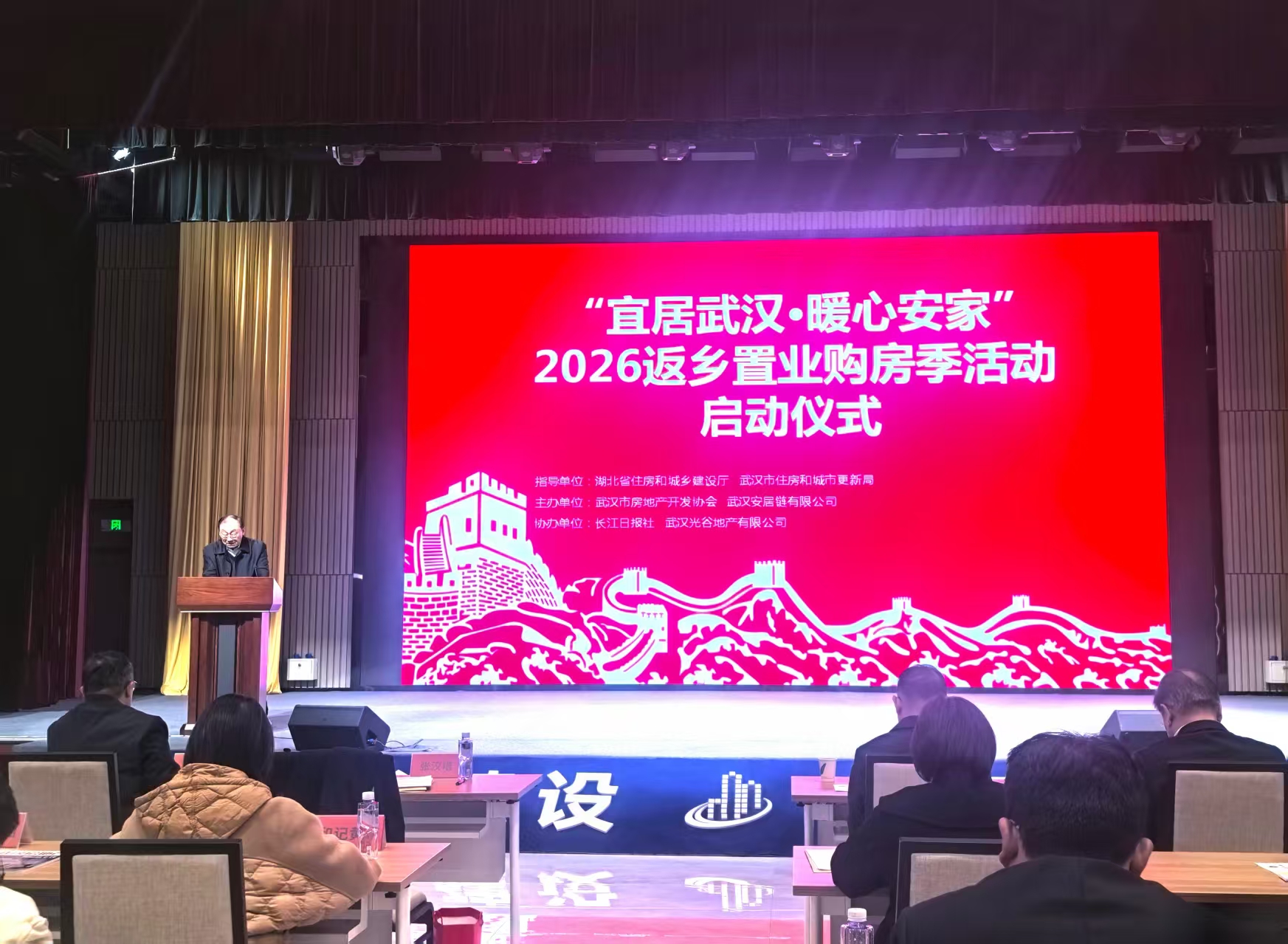
Core Viewpoint - The "good houses" have become a key factor in the stable development of the Wuhan real estate market, with various policies and initiatives aimed at boosting home purchases among returning youth and improving housing quality [1][4]. Group 1: Market Initiatives - The 2026 Wuhan home-buying season for returning residents was launched on January 15, attracting over 110 real estate companies and hundreds of projects, offering exclusive discounts [1]. - In 2025, Wuhan introduced two rounds of new policies to boost market confidence, including increasing the maximum personal housing provident fund loan limits and optimizing loan services for young people [3]. - The policies led to a growth in both transaction area and number of transactions, with a total transaction area of 15.8965 million square meters, up 2.75% year-on-year, and 136,738 transactions, up 1.18% year-on-year [3]. Group 2: Housing Market Dynamics - The city initiated a three-year urban renewal action plan in November, resulting in a significant increase in the sales of "good houses," with an average first-opening sales rate exceeding 70% for new projects [4]. - In 2025, the total land transaction area in Wuhan was 8.235 million square meters, a slight decrease of 0.5% year-on-year, while the average floor price rose by approximately 4.4% to 5,013.9 yuan per square meter [4]. - The average plot ratio for residential land has decreased from 2.89 in 2023 to 2.08 in 2025, indicating a shift towards higher-quality, lower-density housing products [4]. Group 3: Price and Inventory Trends - There is a significant regional price differentiation in the Wuhan real estate market, with central urban areas accounting for 43.5% of total transaction area and 50.9% of supply [5]. - Average transaction prices in Jianghan and Qiaokou districts increased by 2.6% and 0.2% respectively, while some districts experienced price declines exceeding 10% [5]. - As of November 2025, the overall clearing cycle for residential properties in Wuhan reached 27.9 months, indicating a high level of inventory, particularly in the outer districts [5]. Group 4: Strategic Shifts - The demand side of the real estate market is evolving, focusing on five key scenarios: returning residents, education, entrepreneurship, new citizens, and upgrades [5]. - The ongoing "Five Reforms and Four Goods" urban renewal initiative aims to innovate and improve service quality, transitioning the market from a focus on quantity to one on quality [5].
不打“价格战”!百强房企争相涌入代建市场!
Zheng Quan Shi Bao Wang· 2026-01-16 03:17
Core Insights - The real estate industry is rapidly exploring new development models, with top 100 real estate companies showing strong enthusiasm for the construction agency market, leading to further industry growth and a new competitive landscape [1] - The focus has shifted from a "scale competition" to a "value competition," with companies emphasizing the creation of "Four Good" residences, urban renewal, and revitalization of existing assets [1] Group 1: Market Trends - In 2025, the new scale of construction agency contracts reversed the slowdown seen in 2024, with the top 20 companies signing contracts for 22,007 million square meters, a year-on-year increase of 16%, and a growth rate improvement of 6 percentage points compared to 2024 [2] - The competitive structure of the construction agency market has fundamentally changed, showing an "olive-shaped" competition structure typical of a mature industry with high concentration [2] - Over 100 companies have entered the construction agency business, primarily from the top real estate sales companies, indicating a highly competitive environment [3] Group 2: Pricing and Competition - The management fee rates for construction agency projects have decreased from an early average of 3% to a range of 1% to 3%, with 81.7% of projects falling within this range [4] - Industry leaders are advocating for a shift from price competition to value competition, recognizing that value creation is the core logic of the construction agency business [5] - New entrants are also consciously maintaining price floors, with some companies stating they will not participate in price competition, focusing instead on quality service [5] Group 3: Differentiation and Value Creation - Companies are actively pursuing differentiation by enhancing their capabilities and creating value through various initiatives, such as urban renewal and revitalization of existing assets [7] - Successful examples include the Chengdu Xijingtai project, which achieved over 90% sales in a previously stalled project, demonstrating effective cost control and implementation efficiency [8] - The industry is encouraged to focus on service capability and management efficiency rather than merely pursuing scale growth, with recommendations for both large and small companies to develop competitive advantages in niche markets [9]