
零跑

Search documents
2025广州国际车展开幕,93台全球首发新车亮相
Nan Fang Du Shi Bao· 2025-11-21 14:29
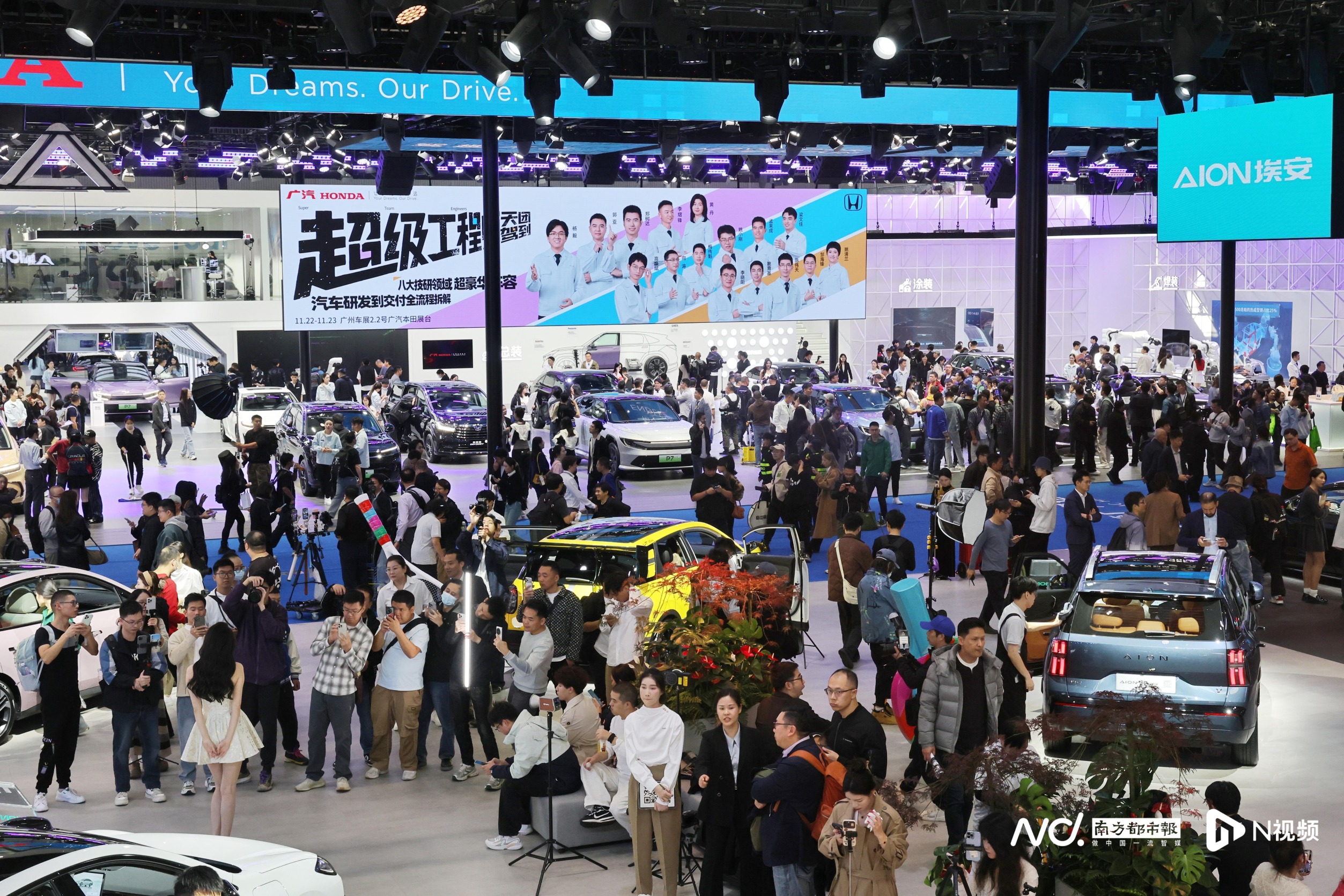
Core Insights - The 2025 Guangzhou International Auto Show opened on November 21, showcasing 1,085 vehicles, with 629 being new energy models, accounting for nearly 60% of the total [1] - The event highlighted the automotive industry's latest advancements in electrification, intelligence, and multi-power strategies, with 93 global debut vehicles [1] New Energy Vehicles - The retail penetration rate of new energy vehicles in China has reached 57.2%, indicating a phase of widespread adoption [8] - New energy vehicles were prominently featured at the auto show, with companies adopting multi-route strategies, particularly emphasizing range extension technology [8][9] Intelligent Technology - Intelligent technology was a major focus, with Huawei's technology integrated throughout the exhibition, despite the absence of an independent booth [4] - Several models featuring Huawei's cockpit system, such as the GAC A800 and Lantu FREE+, attracted significant attention, indicating a rapid adoption of smart cockpit and driving technologies [4] SUV Market Trends - The large six-seat SUV segment remains a key focus for automakers, with Lantu showcasing its flagship SUV, the Lantu Taishan, equipped with Huawei's latest systems [12] - Brands like Leap Motor and Geely are also offering both pure electric and range-extended versions of their models to target higher-end markets [12] Exhibition Dynamics - The scale of this year's auto show has been reduced compared to previous years, reflecting a more pronounced differentiation within the industry amid stock competition [18] - Some companies have chosen to withdraw or reduce their exhibition scale, while leading firms continue to maintain a high density of product and technology launches, indicating a concentration of industry resources [18]

绿动羊城、智领未来,2025广州车展今日开幕
Zhong Guo Jing Ji Wang· 2025-11-21 06:59
Core Insights - The 2025 Guangzhou International Auto Show emphasizes the theme "New Technology, New Life," showcasing the transformation of the automotive industry in China and its leadership in global automotive innovation [1][2] - In the first ten months of 2023, China's automobile production and sales reached 27.69 million units, marking year-on-year growth of 13.2% and 12.4% respectively, with new energy vehicles (NEVs) accounting for 51.6% of total sales in October [1][3] - The auto show features a total exhibition area of 220,000 square meters with 1,085 vehicles on display, including 629 NEVs and 93 global premieres [1] Industry Trends - The auto show reflects the shift of China's automotive industry from electrification to intelligent technology, highlighting the advancements in smart electric vehicles [2] - Domestic brands have achieved significant growth, with sales of 14.24 million units in the first ten months, representing 61.2% of total automobile sales [3] - Major domestic players like BYD and GAC Group are showcasing their latest models and technologies, reinforcing their positions in the "electric intelligence new ecosystem" [3][4] Joint Ventures and Innovations - Joint venture brands are adopting a dual fuel strategy, integrating both traditional and electric vehicles to meet local consumer demands [5][6] - Notable joint ventures like FAW Toyota and Ford are unveiling new models that emphasize hybrid technology and local adaptation [6][5] - Some joint venture brands have opted out of the show, indicating strategic shifts and resource allocation towards product development and market positioning [7] New Energy and Emerging Players - The new energy vehicle sector is highlighted by innovative models from emerging brands, with companies like NIO and Xiaomi showcasing their latest offerings [8] - The auto show serves as a platform for new entrants to demonstrate their technological advancements and market strategies, contributing to the dynamic landscape of the automotive industry [8][9] - The event will continue until November 30, featuring industry forums and discussions that will shape the future of the automotive market in China [9]
广州车展一年巨变:油电之争结局已分!新势力排位赛还在打
Nan Fang Du Shi Bao· 2025-11-21 02:20
Core Insights - The 2025 Guangzhou International Auto Show highlights significant changes in the Chinese automotive market, particularly in the areas of electric vehicles (EVs), competition among brands, and technological advancements [2] Group 1: Changes in Market Dynamics - The proportion of new energy vehicles (NEVs) at the auto show increased from 43.7% to 58%, indicating a shift towards electric vehicles as the majority [3] - In the first ten months of 2025, the domestic passenger car market saw a total sales volume of 19.256 million units, a year-on-year increase of 8.0%, with NEVs selling 10.15 million units, up 21.9% [6] - The penetration rate of NEVs reached 40.9% in 2024, with October 2025 marking the first month where the penetration rate exceeded 50% [6] Group 2: Absence of Foreign Brands - Over ten mainstream foreign brands were absent from the auto show, reflecting a decline in their market share and competitiveness in the face of rising domestic brands [7] - Import car sales dropped by 32% in the first nine months of 2025, with total imports expected to be only 700,000 units for the year, a 12% decrease [8] Group 3: Rise of Domestic Brands and New Players - Domestic brands and new entrants like BYD and Leap Motor are gaining significant market share, with Leap Motor's sales increasing by 105.3% year-on-year [9][13] - Huawei has established itself as a key player in the automotive sector, with over 100,000 units sold in collaboration with various car manufacturers [12] Group 4: Technological Advancements and Consumer Trends - The competition among new energy vehicles has intensified, with advanced driving technologies becoming more accessible to consumers, as seen in the pricing of high-end features [16] - Hybrid technology is gaining traction as a practical choice for many brands, reflecting a shift in consumer preferences towards cost-effective and advanced technology [16]



富特科技(301607) - 2025年11月20日投资者关系活动记录表
2025-11-20 12:18
Group 1: Market Position and Strategy - The company has established a diversified customer base, covering domestic traditional automotive brands, new car manufacturers, and major international car companies [1] - The domestic market partnerships include leading companies such as GAC, NIO, Great Wall, Xiaomi, Xpeng, and others, ensuring stable cooperation [1] - The company aims to leverage its strong customer foundation and brand influence to expand both domestic and international markets, enhancing its core competitiveness in the vehicle power supply business [1] Group 2: Product Development and Technology - The vehicle power supply industry is evolving towards 800V high-voltage architecture, deep integration of "multi-in-one" solutions, and diversification of functions, leading to increased technical complexity and unit value [1] - The application of new technologies, such as third-generation wide-bandgap GaN, is expected to bring significant performance and value breakthroughs [2] - The company plans to drive long-term steady growth in unit value through continuous technological upgrades and product innovations [2] Group 3: Market Expansion and Opportunities - The domestic vehicle power supply sector is primarily supported by third-party independent suppliers, with a stable competitive landscape [3] - The overseas market for new energy vehicles has a low penetration rate, presenting significant growth potential, which is a key focus for the company's future expansion [3] - The company intends to deepen cooperation with established international mainstream car manufacturers to enhance market share [3] Group 4: Production Capacity and Infrastructure - The main production base is located in Huzhou Anji, with the first factory operating at full capacity since its launch in 2021, designed for an annual output of 1.2 million units [4] - The second factory began production in the first half of this year, with increased automation and efficiency through smart logistics and integrated design [4] - An overseas factory is under construction, with the building completed in 2024, and production lines will be developed based on customer demand [4] Group 5: Revenue Growth and Client Relationships - Continued deepening of partnerships with strategic domestic clients supports order growth and stabilizes the domestic business [5] - The launch of overseas client projects and further market expansion is expected to contribute incremental revenue to the overall business [5]
理想反思出海战略滞后,将加速布局中东中亚欧洲市场
Xin Lang Ke Ji· 2025-11-19 15:35
Group 1 - The core viewpoint of the article is that Li Auto acknowledges its mistake of delaying its international expansion strategy, which it now aims to accelerate [1][2] - Li Auto held a strategic meeting in mid-October to reflect on various issues including declining sales, R&D, and product strategies, leading to a decision to enhance its overseas market presence and increase AI investments [1] - Previously, Li Auto had relied on parallel exports to markets like Russia and Central Asia, achieving a peak monthly export volume of 4,000 vehicles, but this has significantly decreased due to new restrictions [1][2] Group 2 - The Chinese government has imposed strict controls on new car exports under the guise of used cars, which will effectively cut off Li Auto's parallel export line starting January 1, 2026 [2] - Other competitors like Xpeng, Leapmotor, and NIO have prioritized international expansion during the two years that Li Auto hesitated, while Li Auto's own overseas strategy remained unclear [2] - Li Auto has recently clarified its intention to focus on expanding into the Middle East, Central Asia, and Europe, establishing R&D centers in Germany and the U.S., and retail centers in Uzbekistan and Kazakhstan [2]
富特科技(301607):小三电业务高速增长 海外及AIDC为第二增长曲线
Xin Lang Cai Jing· 2025-11-19 00:39
Group 1 - The company has a strong customer structure and robust growth momentum, focusing on the research and development of the new energy vehicle sector, with notable clients including Renault, Stellantis, Great Wall, GAC, NIO, and BYD [1] - From 2021 to Q3 2025, the company's revenue has shown continuous growth, transitioning from traditional automotive clients to new energy vehicle manufacturers, with significant revenue increases expected from clients like NIO and Xiaomi [1] - In the first three quarters of 2025, the company's revenue reached 2.559 billion, representing a year-on-year increase of 116.31%, with a net profit of 137 million, up 65.94% year-on-year [1] Group 2 - The integration trend of small three-electric systems in the new energy vehicle market is evident, with significant growth potential, as the Chinese new energy vehicle sales are expected to grow at rates of 5% from 2026 to 2028 [2] - The market for small three-electric systems in China is projected to grow from 25.3 billion to 39 billion from 2024 to 2028, while the global market is expected to increase from 33.6 billion to 57.3 billion [2] - The company has established strong binding relationships with quality new energy vehicle manufacturers, achieving over 8% market share in the first half of 2025, although long-term gross margin improvement is limited [2] Group 3 - The company is expanding its overseas operations, with significant revenue growth from international markets, achieving 262 million in overseas revenue in the first half of 2025, accounting for 17.77% of total revenue [3] - The AIDC market presents a new growth opportunity, with increasing power demands projected to rise from 74 TWh in 2022 to 500 TWh by 2027, prompting the company to explore advanced semiconductor technologies [3] - The company is actively researching the application of third-generation wide bandgap semiconductor devices to tap into the emerging AIDC charging module market [3] Group 4 - As a leading domestic supplier of vehicle power sources, the company has shifted its customer base from traditional automotive manufacturers to rapidly growing new energy vehicle companies, with an accelerated overseas layout and high-margin revenue potential [4] - The company is projected to achieve net profits of 200 million, 369 million, and 535 million from 2025 to 2027, with corresponding PE ratios of 32, 17, and 12 [3][4] - A target PE of 29 is set for 2026, corresponding to a market value of 10.55 billion, indicating a potential upside of 66% from the current valuation [4]
富特科技(301607) - 2025年11月18日投资者关系活动记录表
2025-11-18 11:24
Group 1: Customer Position and Market Strategy - The company has established stable partnerships with leading domestic automakers such as GAC, NIO, Great Wall, Xiaomi, Xpeng, and others, positioning itself as a core supplier in their supply chains [1] - The company has not received specific annual reduction requests from clients for the upcoming year but is preparing for potential reductions by optimizing production processes and enhancing bargaining power [1][2] Group 2: Overseas Business Development - In 2024, the company began bulk supply of overseas projects, achieving approximately 6.8% revenue from exports in the first year [3] - By the first half of 2025, the revenue share from overseas projects exceeded 17%, marking a significant step in international expansion [3] - The company faces competition from global suppliers like Bosch, Valeo, and Continental but believes its domestic market experience and rapid response capabilities provide a competitive edge [4] Group 3: Production Capacity and Efficiency - The core production bases are the Anji Plant 1 and Plant 2, with Plant 1 having a designed capacity of 1.2 million units and currently operating at full capacity [5] - Plant 2 was successfully launched earlier this year, with ongoing efforts to enhance production capacity through technological upgrades and process optimization [5] - The company emphasizes asset efficiency to avoid resource idleness while integrating smart logistics and warehousing into its long-term development plans [5] Group 4: Future Outlook and Innovations - The company is optimistic about the growth of its overseas market share, expecting a steady increase based on current project developments [6] - Progress has been made in the overseas V2G (Vehicle-to-Grid) business, with products under development that support bidirectional charging, which is seen as crucial for stabilizing and optimizing overseas power grids [7]
零跑官宣:2026年冲击100万辆!
Zhong Guo Ji Jin Bao· 2025-11-15 10:29
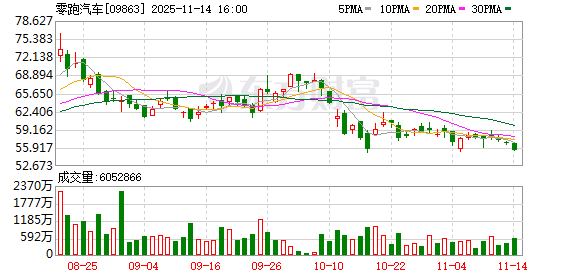
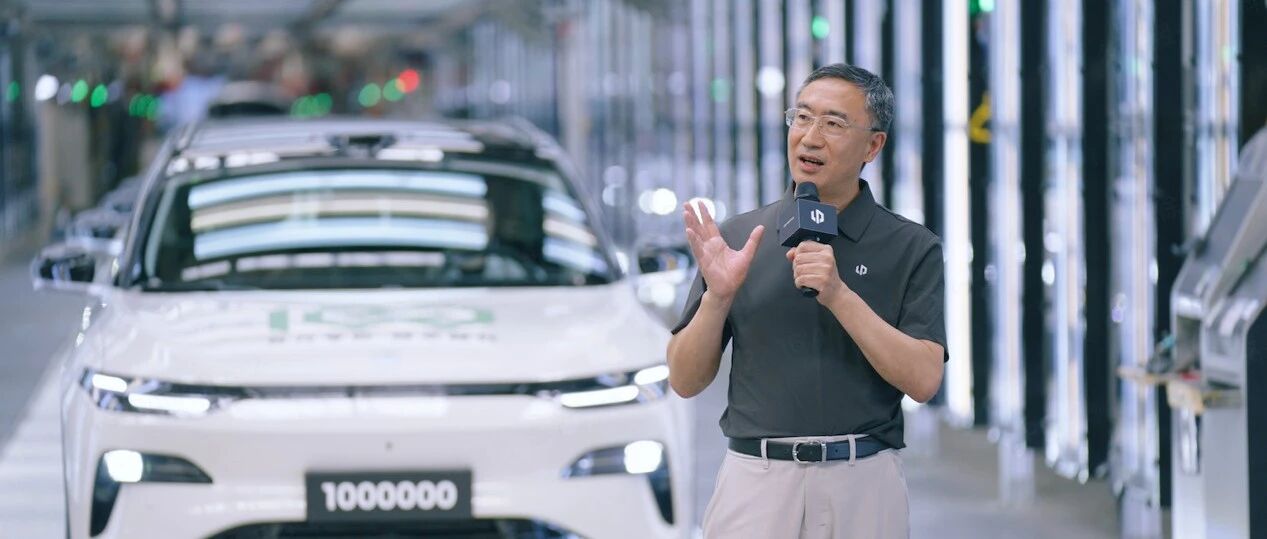
Core Insights - Leap Motor has announced a sales target of 1 million units for 2026, having completed its 2025 target of 500,000 units 45 days ahead of schedule [2][5] - The company has become the first new car manufacturer to achieve its 2025 sales target and is positioned to be the leader in the new car manufacturing sector for that year [5] - Leap Motor has consistently been the monthly sales leader among new car manufacturers since March 2025, with record monthly deliveries exceeding 60,000 units in September and 70,000 units in October 2025 [5] Sales Performance - Leap Motor's early achievement of the 2025 sales target was anticipated, with CEO Zhu Jiangming expressing optimism about the fourth quarter of 2025 and confirming that orders were meeting expectations [5][7] - The company aims to launch 2 to 3 new models from the D series and 2 models from the A series in 2026, indicating a strong product pipeline [7] Historical Context - Leap Motor was founded in 2015 and reached its 1 millionth vehicle production milestone on September 25, 2025, becoming the second new car manufacturer to join the "million club" after Li Auto [7] - The company took five years to produce its first 500,000 vehicles but achieved the next 500,000 in less than a year, showcasing rapid growth [7] Strategic Focus - Leap Motor's strategy for achieving its next 1 million vehicle production target is centered on "upgrading and sincerity," emphasizing the importance of superior products and positive user feedback [7]
零跑官宣:2026年冲击100万辆!
中国基金报· 2025-11-15 10:20
Core Insights - Leap Motor announced a sales target of 1 million vehicles for 2026, having completed its 2025 target of 500,000 vehicles 45 days ahead of schedule [2][8] - The company has been the top performer among new car manufacturers for eight consecutive months since March 2025, setting monthly delivery records [6] - Leap Motor's CEO expressed optimism about achieving the 2025 target, indicating strong order levels and expectations [6][9] Group 1 - Leap Motor achieved its 2025 sales target of 500,000 vehicles ahead of schedule, with September and October 2025 deliveries exceeding 60,000 and 70,000 vehicles respectively [6] - The company plans to launch 2 to 3 new models from the D series and 2 models from the A series in 2026, marking it as a significant product year [9] - Leap Motor became the second new car manufacturer to reach the milestone of 1 million vehicles produced, following Li Auto [9][11] Group 2 - The CEO highlighted that it took Leap Motor five years to produce its first 500,000 vehicles, but less than a year to reach the next 500,000 [11] - The key to achieving the next 1 million vehicles is believed to be "upgrading and sincerity," focusing on superior products and improved customer reputation [11]
长城汽车欧拉5预售 新能源汽车智能化竞赛提速
Zheng Quan Ri Bao Wang· 2025-11-13 02:33
Core Insights - The introduction of two new electric vehicles equipped with LiDAR technology marks a significant reduction in the price barrier for high-end intelligent driving features, with models like Great Wall Motors' Ora 5 priced between 109,800 to 142,800 yuan [1] - The penetration of LiDAR into mainstream price segments is driven by declining supply chain costs and intensified market competition, with the technology previously only available in vehicles priced above 250,000 yuan [1] - The competitive landscape of the electric vehicle market is shifting from "electrification replacement" to "intelligent upgrade," with high-end features becoming core competitive points in the 150,000 yuan segment [2] Industry Developments - Great Wall Motors' Ora 5 will be publicly showcased at the Guangzhou Auto Show and is expected to officially launch in Q4 2023, featuring a maximum power output of 150 kW and two battery options with ranges of 480 km and 580 km [2] - The introduction of high-end configurations like LiDAR is reshaping the competitive dynamics of the electric vehicle market, with companies like Chery and Huawei pushing for "technology equality" to meet increasing consumer demands for cost-effectiveness [2] - The electric vehicle industry is approaching a critical policy adjustment in 2025, with current tax exemptions set to change in 2026, creating a time-sensitive environment for automakers [2] Market Trends - The uncertainty in the policy environment necessitates that automakers enhance their adaptability in product planning, capacity layout, and marketing strategies [3] - The gradual withdrawal of subsidies will compel companies to strengthen their core competitiveness and reduce reliance on government support [3] - The price reduction of high-end features like LiDAR reflects both the industry's competitive "involution" and the inevitable outcomes of technological advancement and market maturation [3]
