
Rokid

Search documents
AI眼镜取代不了手机,它想“干掉”传统眼镜
3 6 Ke· 2025-12-08 00:50
Core Insights - The current trend in AI glasses is not to replace smartphones but to replace traditional glasses with smart features. The focus is on creating high-quality eyewear that integrates AI technology [7][4]. Market Overview - In the past two months, 20 AI glasses have been launched in the Chinese market, including products from major companies like Baidu, Lenovo, and Alibaba, as well as startups like Rokid and Yingmu Technology [1]. - There are approximately 5 billion smartphone users globally, while the number of people who wear glasses is around 2 billion, indicating a significant market opportunity for AI glasses [2]. - The decision-making process for purchasing AI glasses is simplified for nearsighted individuals, as many are already spending hundreds to thousands of yuan on traditional glasses [3]. Competitive Landscape - The AI glasses market is becoming increasingly competitive, with five main categories of participants: smartphone manufacturers, internet giants, established AR glasses companies, new automotive players, and traditional eyewear brands collaborating with tech companies [4]. - IDC predicts that global shipments of smart glasses will reach 12.8 million units by 2025, with a 26% year-on-year growth, and the Chinese market alone is expected to exceed 2.75 million units, growing by 107% [4]. Product Development - The current AI glasses lack a "killer application" that makes them indispensable, which is a challenge for widespread adoption [6]. - A good pair of glasses must meet basic requirements of comfort and style, and partnerships between tech companies and traditional eyewear brands are a direct approach to achieving this [8][9]. - The weight of AI glasses is a critical factor; for instance, Ray-Ban Meta weighs 49 grams, significantly lighter than previous AR devices, while traditional prescription glasses weigh between 20-30 grams [13]. User Experience - AI glasses currently offer limited functionality, primarily focused on navigation and translation, and there is a gap between user expectations and the current capabilities of these devices [17]. - The most clear and irreplaceable function of AI glasses is hands-free recording, which is particularly useful in scenarios where users need to capture video without using their hands [19][21]. - Battery life remains a concern, with mainstream products offering 7-18 hours of usage, but improvements are being made, such as charging cases and replaceable components [17]. Future Outlook - The future of AI glasses is seen as a combination of AI and AR, aiming for a seamless integration of virtual and real-world experiences [28]. - The potential for AI glasses to become a primary interface for AI interaction is significant, with the possibility of them replacing smartphones in the long term [30]. - The market for specialized AI glasses, such as those designed for visually impaired users, represents an untapped opportunity that could address specific needs without requiring major technological breakthroughs [29].





消费级AR眼镜系列报告(一):破局与展望——全球AR市场增长逻辑与投资机
Sou Hu Cai Jing· 2025-12-05 04:26
Core Insights - The consumer-grade AR glasses industry is at a critical development turning point, with a "gradual iteration" paradigm breaking the previous stagnation in industry growth [1][7][8] - The global market for AI smart glasses is projected to reach 1.52 million units in 2024, significantly surpassing traditional AR glasses at 500,000 units [1][7][58] - The market potential is primarily driven by the replacement of traditional eyewear, with global sales of traditional glasses exceeding 1.5 billion pairs annually [1][8] Industry Growth Logic - The gradual iteration path involves three stages: audio glasses to cultivate user habits, AI glasses with smart cores to enhance stickiness, and finally, AI+AR glasses as the target form [1][7][8] - If the penetration rate increases from 0.01% in 2023 to 4.44% by 2030, and the average selling price drops to 1,500 RMB, the global AR smart glasses market could grow from 735 million RMB in 2023 to 118.7 billion RMB by 2030, with a CAGR of 106.7% [1][8] Competitive Landscape - The global competitive landscape is evolving towards ecological differentiation, with Meta leading with an "AI+AR" technology route and Google adopting an open ecosystem model [2][9] - Domestic players like Thunder and Rokid focus on rapid hardware iteration, while giants like Huawei and Xiaomi leverage their mobile ecosystems to build cross-device collaboration capabilities [2][9] - The competition is shifting from short-term hardware specifications to long-term ecological barriers, with cross-device collaboration and personalized services becoming core competitive strengths [2][9] Industry Chain Analysis - In the AR glasses BOM cost structure, optical display units account for 43%, while computing units centered around chips account for 31% [2][10] - The industry chain includes upstream hardware and software suppliers, midstream brand owners and content producers, and downstream sales and distribution channels, all collaborating to drive the industry from technological exploration to large-scale implementation [2][10] Future Outlook - The consumer-grade AR glasses industry is expected to gradually replace traditional eyewear, becoming the next generation of personal information centers covering various scenarios in life, work, and travel [3][26] - The rapid growth of AI glasses validates the feasibility of the gradual iteration path, with AI glasses expected to reach 3.5 million units in 2025, while traditional AR glasses are projected at 650,000 units [1][58]

全球AR市场增长逻辑与投资机遇:消费级AR眼镜系列报告(一):破局与展望
Minmetals Securities· 2025-12-04 03:11
Investment Rating - The report does not explicitly state an investment rating for the industry, but it emphasizes the potential growth and investment opportunities in the AR glasses market. Core Insights - The development of consumer-grade AR glasses has been relatively slow due to the challenge of achieving both lightweight design and affordability. The current trend is towards a "gradual iteration" paradigm, starting with audio glasses, moving to AI glasses, and eventually to AI+AR glasses [2][3]. - The global market for AI smart glasses is projected to reach 1.52 million units in 2024, while traditional AR glasses are expected to sell 500,000 units. The acceptance of "AI+social" product positioning is reflected in the sales growth of Meta's upgraded Ray-Ban Meta glasses, which are expected to reach nearly 3 million units by Q2 2025 [2][3]. - The traditional eyewear market, with annual sales exceeding 1.5 billion units, provides a substantial replacement market for smart glasses. If the AI+AR solution matures, the penetration rate could rise from 0.01% in 2023 to 4.44% by 2030, with the global AR smart glasses market projected to grow from 735 million RMB in 2023 to 118.7 billion RMB by 2030, reflecting a CAGR of 106.7% [3][4]. Summary by Sections Industry Turning Point - The XR industry is diversifying, with AR emerging as a new growth engine. The report outlines the historical challenges and commercialization phases of AR technology, highlighting the shift from initial excitement to a recovery growth phase driven by technological advancements [12][16][24]. Competitive Landscape - The competition is evolving from a focus on hardware products to building ecological barriers. Major players like Meta and Google are adopting different strategies, with Meta focusing on AI+AR technology and Google moving towards an open ecosystem model. Domestic companies are categorized into those focusing on rapid hardware iteration and those leveraging their mobile ecosystems for cross-device collaboration [4][5][6]. Industry Chain Analysis - The report emphasizes the importance of focusing on core segments of the industry chain that hold significant value. The cost structure of AR glasses is detailed, with optical display units accounting for 43% of the BOM cost, followed by chip-based computing units at 31% [5][6]. Market Outlook - The report predicts a significant growth trajectory for AR glasses, with a gradual increase in sales expected as the technology matures. The AI glasses market is expected to see substantial growth, with sales projected to reach 3.5 million units by 2025, while traditional AR glasses are forecasted to sell only 650,000 units [49][52]. Conclusion - The report concludes that the gradual iteration path taken by AI glasses is more aligned with market demands, providing a foundation for the future development of AR glasses. This approach is expected to facilitate the overcoming of initial technological bottlenecks and accelerate market penetration [34][41][42].


佰维存储:ePOP系列产品目前已应用于阿里夸克AI眼镜中
Zheng Quan Ri Bao· 2025-12-03 11:13
Core Viewpoint - The company Bawei Storage has successfully integrated its ePOP series products into various AI and AR devices, indicating strong market adoption and partnerships with major tech firms [2] Group 1: Product Applications - The ePOP series products are currently utilized in Alibaba's Quark AI glasses [2] - The products have also been adopted by well-known companies such as Meta, Google, Xiaomi, Xiaotiancai, Rokid, and Thunder Innovation for their AI/AR glasses and smartwatches [2]

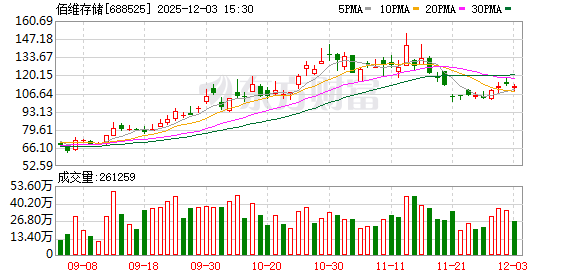
佰维存储(688525.SH):ePOP系列产品目前已应用于阿里夸克AI眼镜中
Ge Long Hui· 2025-12-03 07:57
Core Viewpoint - The company Bawei Storage (688525.SH) has successfully integrated its ePOP series products into the AI glasses developed by Alibaba Quark, indicating a strong presence in the AI/AR wearable device market [1] Group 1: Product Applications - The ePOP series products are currently utilized by well-known companies such as Meta, Google, Xiaomi, Xiaotiancai, Rokid, and Thunderbird Innovation in their AI/AR glasses and smartwatches [1]
江西省南昌市红谷滩区 VR+AI赋能数智转型 借势筑强数字经济产业高地
Jing Ji Ri Bao· 2025-12-02 22:09
Core Insights - Nanchang's Honggutan District is leveraging opportunities in the digital economy, focusing on the virtual reality (VR) industry as a key driver for high-quality development [1][4] - The district has established itself as a core area for VR in Jiangxi Province, attracting top companies and fostering innovation across various sectors [1][2] Group 1: Industry Development - The VR industry in Honggutan has seen significant growth, with the number of digital economy core enterprises increasing from 4,002 in 2021 to 6,198 in 2024, marking a substantial rise [2] - The district has gathered 7 of the national top 50 VR companies, creating a comprehensive innovation ecosystem that covers technology research, application, and results transformation [1][2][4] Group 2: Investment and Projects - During the 2025 World VR Industry Conference, 13 projects were signed with a total investment of 2.32 billion yuan, focusing on key areas such as VR optical display and AI algorithms [2] - Major projects like the Jiangxi Artificial Intelligence Computing Center and the National Virtual Reality Innovation Center are enhancing the region's innovation capabilities and industry chain [6][9] Group 3: Policy and Environment - Honggutan District has implemented supportive policies, including a 19.5% increase in digital economy policy funding to 23.9 million yuan for 2025, aimed at fostering enterprise innovation and expansion [3] - The district emphasizes a high-quality business environment as essential for industry development, establishing a service system that integrates online and offline support for enterprises [3][4] Group 4: Talent and Education - The National Vocational Education Virtual Simulation Demonstration Training Base has trained 3,000 individuals and hosted 7,000 visitors, contributing to the development of skilled talent for the industry [7] - Local companies are thriving under supportive policies, with firms like Lingxing Information and Xiaohutao Technology making significant strides in VR education and gaming [4][6] Group 5: Future Outlook - The Future Science City is being developed to integrate industry and urban growth, attracting major digital economy enterprises and enhancing the region's competitive edge [8][9] - Honggutan aims to become a global VR industry hub, supported by a 3 billion yuan VR industry fund and high-standard infrastructure for AI and smart manufacturing [9][10]
网龙(00777):AI赋能游戏教育,多元投资增厚业绩
Soochow Securities· 2025-12-02 11:16
Investment Rating - The report assigns a "Buy" rating for the company, marking its first coverage [4]. Core Insights - The company leverages its long-standing IPs in gaming and embraces AI to enhance efficiency and reduce costs, particularly in the MMORPG sector [2][36]. - The education segment, led by Mynd.ai, is transitioning towards a SaaS model, which is expected to improve profitability as the market for educational hardware enters a replacement cycle [3][55]. - Strategic investments in AI, AR, and the broader entertainment sector are aimed at building a long-term growth ecosystem [4][69]. Summary by Sections 1. Gaming and Application Services - The company has a strong foundation in MMORPGs, with flagship IPs like "Magic Domain," "Conquest," and "Spirit of Heroes" contributing to stable cash flow [36]. - AI integration has led to a 26.7% reduction in R&D costs in the gaming segment, enhancing profitability [51]. - The gaming segment is expected to generate revenues of 2,594 million, 3,160 million, and 3,318 million yuan from 2025 to 2027, with respective year-on-year growth rates of -25%, +7%, and +5% [76]. 2. Education Segment - Mynd.ai, a leader in educational interactive display devices, has a market share of nearly 16% in the global stock of interactive devices as of 2024 [3][56]. - The transition to a SaaS model is underway, with a 8% quarter-on-quarter growth in SaaS subscriptions, particularly for the flagship application "Explain Everything" [63]. - Revenue from the education segment is projected to be 1,685 million, 1,769 million, and 1,946 million yuan from 2025 to 2027, with year-on-year growth rates of -20%, +5%, and +10% [76]. 3. Strategic Investments - The company has made strategic investments in AI, AR, and the entertainment sector to create synergies with its core gaming and education businesses [4][69]. - Investments in companies like Rokid and Shuaiku Network are expected to enhance market competitiveness and provide new channels for user engagement [72][75]. - The collaboration with Zhongke Wenge aims to develop AI applications for various sectors, positioning the company as a leader in AI technology deployment [70].

AI眼镜,大厂还是新兴科技公司的机会?
创业邦· 2025-12-02 03:14
Core Viewpoint - The AI glasses market is experiencing rapid growth, with major companies entering the space and a significant number of new products being launched. The competition is intensifying, and while large companies are leveraging their resources, startups have opportunities in niche markets and specialized applications [2][3][25]. Group 1: Market Dynamics - Alibaba launched the Quark AI glasses series, achieving over 7,000 sales within two days of release, indicating strong market demand [2]. - Over 40 AI glasses have been released this year by various players, including startups and major companies like Baidu, Xiaomi, and Alibaba, with a focus on different technological approaches [3][9]. - The global AI glasses market is projected to grow from approximately $1.93 billion in 2024 to $8.26 billion by 2030, with Meta holding a dominant market share of about 73% in the first half of 2025 [25]. Group 2: Product Features and Technology - Major companies are focusing on lightweight voice-interactive AI glasses, avoiding the complexities of AR/VR technology, which often involves heavier devices and higher costs [5][12]. - The AI glasses typically weigh between 39g and 50g and include features like cameras, microphones, and speakers, but generally lack display screens [12]. - Most new AI glasses utilize Qualcomm's AR1 chip for AI processing, with some companies also incorporating domestic chips for enhanced functionality [12][14]. Group 3: Competitive Landscape - Major companies are still in the exploratory phase of AI glasses development, while startups are encouraged to focus on niche markets to build competitive advantages [5][24]. - The competition may mirror the smart speaker and smartwatch markets, where large companies dominate, leaving little room for startups unless they offer differentiated products [28]. - Startups like Rokid and others are exploring unique applications for AI glasses, targeting specific user groups and scenarios, which may provide them with a foothold in a market dominated by larger players [32][33]. Group 4: Future Opportunities - The future of AI glasses may resemble that of smartwatches, where niche brands can thrive despite the presence of larger competitors [33]. - Startups have the flexibility to collaborate with various AI models and focus on specific product offerings, which may allow them to capture market segments that larger companies overlook [31][34]. - There is potential for startups to explore international markets, leveraging their agility to establish a presence before larger companies can mobilize their resources [34].
做AI入口,阿里想清楚了
2 1 Shi Ji Jing Ji Bao Dao· 2025-12-01 13:41
Core Insights - The market sentiment around AI glasses is polarized, with some viewing them as the next computing platform and others dismissing them as niche gadgets. The release of Quark AI glasses marks Alibaba's entry into the physical realm of AI technology [1][2] - Alibaba believes that AI glasses represent the next major shift in human-computer interaction and could potentially challenge smartphones as the primary device for digital interaction [1][2] Product Overview - Alibaba launched two series of AI glasses, S1 and G1, featuring six models equipped with the latest Qianwen AI assistant, integrating with Alibaba's ecosystem [2] - The glasses are designed to assist users through AI voice Q&A and visual multimodal interaction, moving beyond being mere toys [2][3] Technological Innovation - The Quark AI glasses utilize a "full-stack" resource investment, connecting to the Qianwen model and Alibaba's ecosystem applications, enhancing user interaction [3] - The glasses are designed to function as an "Agent" for users, eliminating the need for app downloads and enabling service completion through simple voice commands [3] Supply Chain and Manufacturing Challenges - Alibaba faces challenges in hardware manufacturing, likening it to a "street battle" due to the complexities of precision hardware production [4] - The company has innovatively adopted the industry's smallest two-dimensional waveguide to improve aesthetics and display quality while addressing issues like reflection and light leakage [5] Performance and Dependency - The current AI glasses still rely on smartphones for processing power, with a strategy to optimize response times from 7 seconds to 3 seconds by leveraging cloud capabilities [6] - The dual-chip design includes a high-performance chip specifically tailored for the glasses, which is said to be a generation ahead of competitors [5][6] Competitive Landscape - Alibaba's competitive edge lies in its comprehensive capabilities, including model development, ecosystem integration, and self-research across hardware, operating systems, and cloud computing [7][8] - The company views the competition as multifaceted, requiring not just hardware but also robust ecosystem capabilities to succeed [7][8] Future Outlook - Alibaba aims to solidify the AI glasses as a significant entry point for AI technology, with plans to explore additional mediums in the future [8] - The Quark AI glasses are expected to be available for purchase by winter 2025, representing a strategic bet on the future of digital interaction [8]

京东科技购物智能体JoyGlance亮相亦庄,携手Rokid诠释“所见即所购”
Zhong Jin Zai Xian· 2025-12-01 06:51
Core Insights - The 11th China Virtual Reality Industry-Academia-Research Conference and XR Smart Terminal Industry Ecosystem Conference was held in Beijing, showcasing the launch of JoyGlance, the industry's first shopping intelligent agent by JD Technology [1][2] - JD's data indicates that 70% of XR devices sold online come from JD, highlighting the platform's dominance in the market during promotional periods [1] - JoyGlance integrates JD's comprehensive digital supply chain and multimodal large model technology, enabling a seamless shopping experience that allows users to complete purchases in just 5 seconds [1] Group 1 - The JoyGlance application demonstrates unique value in scenarios where users' hands are occupied, such as exercising or doing household chores, allowing for natural interaction without relying on traditional mobile operations [1] - The application provides financial-grade security, transforming the concept of "seeing is buying" into a practical application [1] Group 2 - JD Technology aims to enhance the usability of smart glasses, transitioning them from being merely functional to user-friendly [2] - Future plans include extending the capabilities of JoyGlance to smart cars, watches, and home robots, indicating a vision for limitless smart shopping experiences [2]