科大讯飞

Search documents
十年深耕,机器人大讲堂邀您共赴机器人产业高质量发展之路
机器人大讲堂· 2025-12-30 02:00
Core Viewpoint - The article reflects on the ten-year journey of the robotics industry in China, highlighting the evolution from initial exploration to significant growth, emphasizing the importance of practical service and collaboration in driving industry development [1][3]. Group 1: Foundation Period (2016-2017) - The robotics industry in China was in its infancy around 2016, with a clear need for bridging technology research and industrial application, leading to the establishment of a platform focused on resource aggregation and industry empowerment [4]. - The first sharing event was held in early 2016 at Tsinghua University, featuring prominent scholars and aimed at discussing trends and opportunities in robotics, which laid the groundwork for industry communication [6]. - A "Hundred Schools Tour" was initiated to connect universities with industry needs, addressing the disconnect between academia and application, and providing a channel for talent and technology transfer [6][10]. - The establishment of the Lide Robotics Expert Think Tank in 2017, with over 500 experts, aimed to support the industry's development through specialized knowledge [8]. Group 2: Growth Period (2018-2022) - The period saw steady growth in the robotics industry, with an expanding market and emerging leading companies, while also facing challenges such as industry upgrades and the impact of the pandemic [11]. - The focus shifted to serving leading enterprises, supporting local industries, and aiding state-owned enterprises in their robotics strategies, enhancing service capabilities [11][12]. - The introduction of the Angel Investment Conference in collaboration with Yarei Capital aimed to connect high-level research outcomes with capital markets, facilitating project realization [11]. - The organization of large-scale events and forums became a key service area, providing platforms for technology display and resource matching [12][14]. - The pandemic prompted a rapid shift to online services, maintaining brand visibility and market engagement for clients through digital channels [16][17]. Group 3: Leap Forward Period (2023-2025) - The robotics industry is expected to experience rapid growth, particularly in humanoid robots and embodied intelligence, with the platform enhancing its service depth and breadth [18]. - By the end of 2025, the platform aims to produce 3,500 original articles, grow its WeChat followers to nearly 500,000, and serve 300 enterprises annually, achieving a 60% year-on-year revenue growth [18][20]. - A multi-platform media matrix has been established to provide comprehensive brand promotion services, moving beyond simple information dissemination [20]. - The platform has transitioned from participating in events to leading the organization of significant industry conferences, enhancing its role in facilitating high-level exchanges [20][22]. - The establishment of the Leaderobot Awards aims to recognize innovation and market performance objectively, fostering healthy competition within the industry [22]. Group 4: Ecological Path - The platform has evolved into a comprehensive ecosystem integrating consulting, media, events, qualification guidance, and industry incubation, providing a full lifecycle service [28]. - The expert think tank serves as a core support, offering strategic planning and industry analysis across the robotics value chain [28][30]. - Media services are positioned as a brand engine, leveraging a large audience to enhance client visibility and market conversion [30]. - Events and competitions serve as vital links, facilitating connections among enterprises, experts, governments, and investors [30]. - Qualification guidance helps enterprises navigate policy support, enhancing their competitive edge [30]. Group 5: Future Path - The next five years are seen as a critical period for high-quality development in the robotics industry, with a focus on humanoid robots and embodied intelligence [40]. - Plans include enhancing media capabilities, expanding event brands, and providing tailored services for different enterprise needs [40][41]. - The strategy involves deepening regional collaborations and establishing a data and consulting platform based on advanced technologies to support market analysis and decision-making [41].


讯飞医疗科技早盘涨超6% 科大讯飞等共八名股东宣布自愿延长禁售期
Xin Lang Cai Jing· 2025-12-30 01:57
Core Viewpoint - Xunfei Medical Technology's stock price increased by 6.04% to HKD 76.40, with a trading volume of HKD 13.89 million, indicating positive market sentiment towards the company [1][5]. Group 1: Shareholder Commitment - Eight shareholders, including Keda Xunfei and Kexun Venture Capital, have committed not to reduce their holdings of H-shares or unlisted shares from the end of the original lock-up period until December 29, 2026 [1][5]. - These shareholders collectively hold 55.7584 million H-shares, representing 68.25% of the total H-share capital, and 88.0682 million shares, accounting for 72.86% of the total share capital [1][5]. Group 2: Company Outlook - The company interprets the extension of the lock-up period as a sign of confidence from the shareholders regarding its future prospects [1][5]. - Shareholders will continue to review the company's performance and may consider further extending the lock-up period based on business development [1][5].

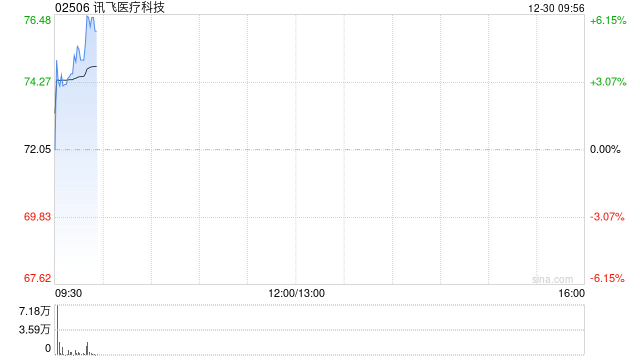
港股异动 | 讯飞医疗科技(02506)早盘涨超4% 科大讯飞等共八名股东宣布自愿延长禁售期
智通财经网· 2025-12-30 01:52
Core Viewpoint - iFlytek Medical Technology (02506) experienced a rise of over 4% in early trading, reflecting positive market sentiment following the announcement of a lock-up period extension for major shareholders [1] Group 1: Shareholder Commitment - Eight shareholders, including iFlytek and Kexin Venture Capital, have committed not to reduce their holdings of H-shares or unlisted shares until December 29, 2026 [1] - These shareholders collectively hold 55.7584 million H-shares, representing 68.25% of the total H-share capital, and 88.0682 million shares, accounting for 72.86% of the total share capital [1] - The company interprets the extension of the lock-up period as a sign of confidence in its future prospects from these shareholders [1] Group 2: Future Considerations - The shareholders will continue to review the company's performance and may consider further extending the lock-up period based on the company's business development [1]
讯飞医疗科技早盘涨超4% 科大讯飞等共八名股东宣布自愿延长禁售期
Zhi Tong Cai Jing· 2025-12-30 01:50
Core Viewpoint - iFlytek Medical Technology (02506) experienced a rise of over 4% in early trading, reflecting positive market sentiment following the announcement of a lock-up period extension for major shareholders [1] Group 1: Shareholder Commitment - Eight shareholders, including iFlytek (002230) and Kexin Venture Capital, have committed not to reduce their holdings of H-shares or unlisted shares until December 29, 2026 [1] - These shareholders collectively hold 55.7584 million H-shares, representing 68.25% of the total H-share capital, and 88.0682 million shares, accounting for 72.86% of the total share capital [1] - The company interprets the extension of the lock-up period as a sign of confidence in its future prospects from these shareholders [1] Group 2: Performance Review - The shareholders will continue to review the company's performance and may consider further extending the lock-up period based on the company's business development [1]
金融界财经早餐:市场监管总局部署明年工作!明年起我国调整部分商品关税;贵金属遭遇“黑色星期一”;12连板牛股停牌;港交所再现六锣齐鸣(12月30日)
Sou Hu Cai Jing· 2025-12-30 00:45
Capital Market Highlights - The total scale of public funds in China reached 37.02 trillion yuan by the end of November 2025, marking the eighth historical high this year, with significant growth in money market funds contributing over 130 billion yuan [4] - International silver prices experienced a sharp decline, dropping over 6% to a low of 74 USD per ounce, raising concerns about speculative risks in the market [4] - Six new stocks are set to be listed on the Hong Kong Stock Exchange, covering various fields including AI pharmaceuticals and digital twins, with significant price movements observed in the pre-market [5] Company Developments - TianShu Intelligent Chip and ZhiPu HuaZhang have initiated their IPOs in Hong Kong, with TianShu planning to issue 25.43 million shares at a price of 144.6 HKD [5] - Ganfeng Lithium announced it received a notice of prosecution from the Yichun Public Security Bureau for insider trading, but its operations remain normal [9] - Kweichow Moutai's controlling shareholder completed a stock buyback plan, acquiring 2.0714 million shares for a total of 3 billion yuan, increasing its stake to 56.63% [9] - Unigroup Guowei is planning to acquire stakes in several semiconductor investment centers, leading to a suspension of its stock trading [10] - Semiconductor manufacturer SMIC intends to issue shares to acquire a 49% stake in SMIC North, with a transaction value of 40.6 billion yuan [10] - Leap Motor announced plans to issue domestic shares to raise 3.74 billion yuan, representing 20.47% of its expanded share capital [10] - Huawei's wholly-owned Dongguan Jimu Machine Co., Ltd. increased its registered capital by approximately 20.54% to 4.6891 billion yuan, focusing on humanoid robotics [11] - SoftBank Group announced a cash acquisition of DigitalBridge at $16 per share, a 15% premium over the previous closing price, aimed at enhancing its digital infrastructure for AI [12] - Intel sold 214.8 million shares of common stock to NVIDIA for a total of $5 billion, further consolidating resources in the semiconductor industry [12]
2025年中国车载语音行业概览:AI+车载语音重塑人车交互新体验(精华版)
Tou Bao Yan Jiu Yuan· 2025-12-29 12:02
Investment Rating - The report indicates a positive outlook for the in-vehicle voice industry in China, with a projected compound annual growth rate (CAGR) of 26.9% from 2025 to 2030, suggesting strong investment potential [5][28]. Core Insights - The Chinese in-vehicle voice industry is currently undergoing a significant transformation driven by AI large models, with major companies like iFlytek, Baidu, and Huawei leading the development of lightweight models for automotive applications [2]. - The penetration rate of voice control in passenger vehicles is steadily increasing, expected to rise from 73.4% in 2022 to 83.6% in 2024, indicating a shift from high-end to standard configurations across all price segments [3][24]. - The competitive landscape of the in-vehicle voice industry is highly concentrated, with the top five companies holding a market share of 86.7%, highlighting the dominance of key players [5]. Summary by Sections Industry Overview - The in-vehicle voice system integrates voice as the primary interaction method, allowing drivers and passengers to control vehicle functions and access information without manual operation, enhancing driving safety and cabin intelligence [7]. Current Trends - The in-vehicle voice systems are evolving from basic command execution to cognitive interaction, with a focus on personalized and emotional services [2][11]. - The hybrid voice system has become the mainstream solution, balancing the advantages of embedded and cloud-based systems, thus improving response speed and recognition accuracy [8]. Market Dynamics - The market size for in-vehicle voice systems in China is projected to grow from CNY 3.946 billion in 2025 to CNY 12.994 billion in 2030, driven by the ongoing electrification and intelligence of vehicles [28]. - The rapid growth of the passenger vehicle market, alongside increasing consumer demand for intelligent interaction experiences, is propelling the expansion of voice control systems [31][32]. Competitive Landscape - Major suppliers are actively developing AI large models, with different focuses: smart voice technology companies are optimizing model functions, internet tech firms are integrating voice with content services, and automakers are creating proprietary models linked to vehicle control systems [4][26]. Consumer Preferences - There is a notable increase in consumer preference for voice interaction features, which significantly influences purchasing decisions, prompting manufacturers to standardize and upgrade voice systems [35][40]. - The demand for seamless, intelligent, and personalized interaction experiences is driving the evolution of in-vehicle voice systems, with a focus on enhancing dialogue naturalness and functionality [41].
向“质”而行、回报加码!深市核心公司让“双提升”理念落地生根丨深市“质量回报双提升”系列报道
Zheng Quan Shi Bao· 2025-12-29 11:24
Group 1 - The core idea of the "Quality and Return Dual Improvement" initiative is to guide listed companies to focus on their core businesses and enhance operational performance, thereby solidifying the foundation for capital market development [2] - As of November 2025, 471 companies in the Shenzhen market have actively responded to the initiative, proposing practical measures to enhance core business awareness, innovation capabilities, and investor return levels [1][2] - In the first three quarters of 2025, the 471 "Dual Improvement" companies achieved a total operating revenue of 7.5 trillion yuan, a year-on-year increase of 6.9%, and a net profit of 651.3 billion yuan, up 10.8% year-on-year [2] Group 2 - The companies involved in the initiative have significantly increased their R&D investments, with a total of 430.93 billion yuan in R&D spending in the first half of 2025, representing a year-on-year growth of 6.3% [3] - The proportion of R&D investment relative to operating revenue increased to 4.3%, up 0.1 percentage points year-on-year, indicating a stronger focus on innovation [3] - Notable companies like Mindray Medical and Inovance Technology have made substantial advancements in their respective fields, showcasing the innovation capabilities of Shenzhen enterprises [3] Group 3 - The "Dual Improvement" initiative emphasizes investor returns, with companies implementing a combination of dividends, buybacks, and shareholdings to enhance investor confidence [4] - From 2022 to 2024, the annual dividend amount for the 471 companies grew at a compound annual growth rate of 10.0%, with 433 companies distributing a total of 324.47 billion yuan in cash dividends in 2024 [4] - A total of 378 companies have achieved continuous dividends for three consecutive years, enhancing the predictability and sustainability of shareholder returns [4] Group 4 - The market has shown strong recognition of the "Dual Improvement" initiative, with an average stock price increase of 77.2% for the participating companies from February 2024 to November 2025, significantly outperforming the Shenzhen Composite Index [6] - This initiative has created a virtuous cycle of quality improvement, optimized returns, and market recognition, contributing to the high-quality development of the capital market [7] - The ongoing deepening of the initiative is expected to encourage more listed companies to focus on their core businesses, strengthen innovation, and optimize returns, fostering a sustainable capital market ecosystem [7]
向“质”而行、回报加码!深市核心公司让“双提升”理念落地生根丨深市“质量回报双提升”系列报道
证券时报· 2025-12-29 11:19
深市核心公司让"双提升"理念落地生根。 为推动上市公司持续优化经营、规范治理和回报投资者,助力信心提振、资本市场稳定和经济高质量发展,2024年2月1日,深交所启动"质 量回报双提升(简称'双提升')"专项行动。 数据显示,截至2025年11月底,471家深市白马股、权重股、龙头股公司踊跃响应,发布"双提升"行动方案,围绕增强主业意识、提高创新 发展能力、提升投资者回报水平等方面提出务实举措,同时拿出实招、硬招,用实际行动积极践行"双提升"理念,展现了"重质量、重回 报"鲜明特征,为资本市场稳定发展注入强劲动力,也让高质量发展理念在市场中落地生根。 聚焦主业强创新 筑牢发展"压舱石" 据统计,2022年至2024年,471家公司年度分红金额复合增长率达10.0%,分红水平稳步迈上新台阶。2024年度,433家公司实施现金分 红,合计分红金额3244.7亿元,占当年净利润比例高达43.6%。响应新"国九条""一年多次分红"的号召,2024年、2025年分别有141家、 163家公司实施中期分红,378家企业实现连续三年分红,让股东回报更具持续性与可预期性。 回购与增持同步发力,向市场传递积极信号。中伟股份堪称回 ...

事关机器人!技术委员会成立,机器人ETF基金(159213)喜提四连阳,全天吸金超2500万元!瑞松智能20cm涨停,中标3.3 亿大单!
Sou Hu Cai Jing· 2025-12-29 10:04
Core Viewpoint - The A-share market experienced fluctuations, with the Shanghai Composite Index achieving a nine-day winning streak, while the Robot ETF Fund (159213) surged, indicating strong capital inflow into the robotics sector [1][3]. Group 1: Market Performance - The Robot ETF Fund (159213) saw a significant inflow of over 25 million yuan in a single day and a total of over 44 million yuan in the last two days [1]. - The index components of the Robot ETF Fund showed mixed performance, with stocks like Ruishun Technology and Boke Co. hitting the daily limit, while others like Dahua Technology and Dazhong Laser experienced declines [3]. Group 2: Key Developments - Ruishun Intelligent successfully won a project worth 330.8 million yuan for producing core components for cotton-picking machines [4]. - The establishment of the Human Robot and Embodied Intelligence Standardization Technical Committee by the Ministry of Industry and Information Technology on December 26 aims to develop industry standards for humanoid robots and related technologies [5]. Group 3: Industry Trends - The robotics sector has seen significant growth this year, with companies focusing on high-utility hardware components like linear/rotary actuators and sensors, indicating a strong beta in the market [6]. - The valuation of robotics is shifting from conceptual narratives to substantial investments, with a focus on supply-demand dynamics and production scaling [6]. Group 4: Future Outlook - The humanoid robot industry is expected to enter a mass production phase by 2026, with major companies like Tesla and Xiaopeng Motors planning to ramp up production significantly [8]. - The global landscape for humanoid robots is becoming increasingly competitive, with both international giants and local innovators accelerating their industrialization efforts [8].


营销费占营收55%,AI教育是救命稻草还是烧钱游戏?
Xi Niu Cai Jing· 2025-12-29 09:29
Core Viewpoint - The education industry is undergoing a transformation driven by AI technology, with major players like TAL Education, Fenbi, and Zuoyebang investing heavily in "AI + Education" to find new growth opportunities. However, this transformation is accompanied by high costs and compliance issues, raising questions about whether AI is a genuine solution or merely a temporary capital story [2][9]. Group 1: AI Transformation Challenges - Many education companies are experiencing a paradox of "increased revenue without increased profit," primarily due to high marketing expenses rather than significant investments in AI research and development [2][9]. - For instance, TAL Education's marketing expenses surged by 50.5% to $177.7 million in Q1 of FY2026, accounting for 30.9% of its revenue, indicating a heavy reliance on customer acquisition costs [2]. - Fenbi's financial performance is even more concerning, with a revenue decline of 8.5% to 1.492 billion yuan and a net profit drop of 18.34% to 227 million yuan, despite claims of reallocating IPO funds towards AI development [3][9]. Group 2: Market Dynamics and Growth - The AI learning machine market is experiencing significant growth, with its size projected to increase from 12.917 billion yuan in 2021 to 27.072 billion yuan by 2024, reflecting a compound annual growth rate of 27.97% [4]. - Leading companies in this market, such as Zuoyebang and iFLYTEK, hold a combined market share of 82.3%, with Zuoyebang leading at 28.5% [5]. Group 3: Ethical and Quality Concerns - Issues such as false advertising and product defects are prevalent, with consumers reporting misleading claims about features and services, undermining trust in these educational products [5][7]. - The focus on using AI learning machines as tools for monetization rather than as vehicles for educational value raises ethical concerns, potentially leading to a decline in content quality and user experience [7][9]. Group 4: Long-term Outlook - The integration of AI in education has inherent potential for personalized learning and reducing barriers to quality education, but current practices reveal significant strategic, technical, and ethical shortcomings [8][10]. - The future challenge for education companies lies not in storytelling about AI but in rebuilding the fundamental value of education across technical, content, and ethical dimensions [10].