
中国财险

Search documents
多家险企开启精简高效治理模式
Jin Rong Shi Bao· 2025-08-11 11:00
Core Viewpoint - The implementation of the new Company Law in China has led insurance companies to abolish their supervisory boards, transitioning towards a more streamlined and efficient governance model [1][3][4] Group 1: Changes in Governance Structure - China People's Property Insurance Company announced the abolition of its supervisory board following the approval of its revised articles of association [1] - Other insurance companies, including China Pacific Insurance and Taikang Insurance, have also announced the removal of their supervisory boards, with their supervisory functions being transferred to the audit committee of the board [2][4] - The new Company Law allows state-owned companies to establish an audit committee composed of directors to exercise the powers of the supervisory board, eliminating the need for a supervisory board [3] Group 2: Role of the Audit Committee - The audit committee, typically composed of independent directors, is responsible for reviewing financial information, overseeing internal and external audits, and evaluating internal controls [4] - The shift from a supervisory board to an audit committee is expected to enhance decision-making efficiency and reduce internal coordination complexities [4] - However, potential challenges include information asymmetry and time constraints faced by independent directors in fulfilling their supervisory roles [4] Group 3: Implications for Corporate Governance - The removal of the supervisory board raises questions about maintaining effective oversight and balancing decision-making efficiency with power checks [4] - As more insurance companies adjust their governance structures in line with the new Company Law, the industry will gain insights into creating a more scientific and efficient corporate governance system [4]
不再设立监事会 多家险企开启精简高效治理模式
Jin Rong Shi Bao· 2025-08-11 08:08
随着新公司法的落地,保险公司纷纷宣布不再设立监事会,传统的"三会一层"架构正向更为精简高效的 治理模式过渡。 《金融时报》记者注意到,今年已有多家保险机构发布撤销监事会的公告,包括上市保险公司、外资财 险公司等。7月30日,中国太平洋保险(集团)股份有限公司发布第十届董事会第十五次会议公告,宣 布审议并通过了不再设立监事会相关事项的议案,由董事会审计与关联交易控制委员会行使监事会职 权。7月2日,大家保险集团发布公告称,不再设立监事会,监事会各监事已辞任。6月23日,泰康保险 发布公告宣布,公司不再设立监事会,第三届监事会各监事自动离任。早在今年4月16日,日本财险 (中国)最先发布公告称,撤销公司监事职位,并明确由董事会下的审计与风险管理委员会行使监事会 职责。 据了解,监事会成员主要包括股东代表和适当比例的公司职工代表,可行使检查公司财务;对董事、高 级管理人员执行职务的行为进行监督,对违反法律、行政法规、公司章程或者股东会决议的董事、高级 管理人员提出解任的建议;向股东会提出提案等权力。 2024年7月1日,新修订的《中华人民共和国公司法》正式实施。新公司法指出,国有独资公司在董事会 中设置由董事组成的 ...


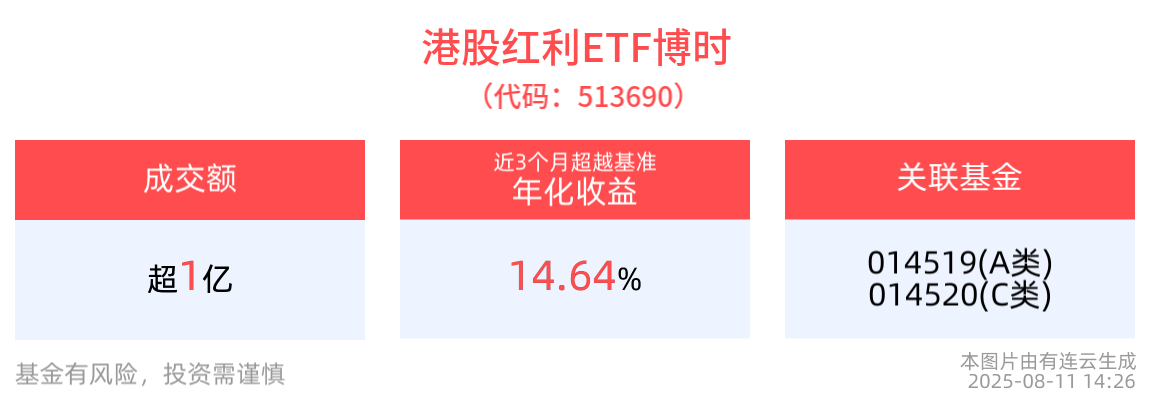
险资配置转向红利资产,港股红利ETF博时(513690)一键布局港股优质高股息资产
Xin Lang Cai Jing· 2025-08-11 06:43
Core Viewpoint - The Hang Seng High Dividend Yield Index (HSSCHKY) has experienced a slight decline of 0.11% as of August 11, 2025, with mixed performance among constituent stocks [3] Group 1: Market Performance - China Telecom (00728) led the gains with an increase of 2.31%, while China Hongqiao (01378) saw the largest decline at 2.29% [3] - The Bosera Hang Seng High Dividend ETF (513690) decreased by 0.28%, with a latest price of 1.09 yuan, but has risen by 2.64% over the past week [3] - The trading volume for the Bosera Hang Seng High Dividend ETF was 3.42%, with a turnover of 163 million yuan [3] Group 2: Institutional Insights - Recent changes in tax policy regarding interest income from newly issued government bonds may lead insurance funds to increase their allocation to high dividend equity assets [3] - The latest size of the Bosera Hang Seng High Dividend ETF reached 4.742 billion yuan [4] Group 3: Fund Performance Metrics - The Bosera Hang Seng High Dividend ETF has achieved a net value increase of 45.06% over the past three years, ranking 125 out of 1836 in its category [4] - The fund's highest monthly return since inception was 24.18%, with an average monthly return of 4.95% [4] - As of August 8, 2025, the fund's Sharpe ratio for the past year was 2.01, indicating strong risk-adjusted returns [4] Group 4: Fund Characteristics - The management fee for the Bosera Hang Seng High Dividend ETF is 0.50%, and the custody fee is 0.10% [5] - The fund closely tracks the Hang Seng High Dividend Yield Index, which reflects the performance of high dividend securities available through the Hong Kong Stock Connect [5] - The top ten weighted stocks in the index account for 29.47% of the total index weight, with notable companies including Yanzhou Coal Mining (01171) and China Petroleum (00857) [5]

每日投资策略-20250811
Zhao Yin Guo Ji· 2025-08-11 03:32
Macro Economic Overview - China's CPI in July remained flat year-on-year, while PPI showed a narrowing decline month-on-month, indicating ongoing deflationary pressures [4] - The report anticipates that PPI will continue to be subdued in Q3 due to trade tensions and weak final demand, but a potential recovery in Q4 is expected due to ongoing policy support [4] Industry Insights - The Chinese construction machinery industry showed strong performance in July, with excavator sales increasing by 32% year-on-year for exports and 17% for domestic sales, indicating a positive outlook driven by replacement cycles and emerging markets [4] - The report maintains a positive view on companies such as Sany Heavy Industry, Hengli Hydraulic, and Zoomlion [4] Company Analysis: Hutchison China MediTech - Hutchison China MediTech's H1 performance fell short of expectations, with a 15% year-on-year decline in oncology revenue to $144 million, attributed to competitive pressures in the Chinese market [5] - The company has revised its full-year oncology revenue guidance down from $350-450 million to $270-350 million due to ongoing challenges [5][6] - Despite challenges, management remains optimistic about H2 2025, citing new product approvals and a sales team restructuring as potential growth drivers [5][6] Financial Position - Hutchison China MediTech reported a strong cash position of $1.37 billion as of H1 2025, providing flexibility for future strategic opportunities [6] - The company achieved a net profit of $455 million, primarily due to a $416 million gain from the sale of a stake in Shanghai Hutchison [6] Product Development and Pipeline - The report highlights the potential of Savolitinib as a second global commercialized product, with positive trial results for MET+ NSCLC patients [7] - The company plans to submit a New Drug Application (NDA) for Savolitinib in gastric cancer by the end of the year and has ongoing trials for other indications [7][8] Innovation and Future Prospects - Hutchison China MediTech is focusing on its Antibody-Drug Conjugate (ATTC) platform as a core innovation direction, with plans to initiate clinical trials for its first candidate in late 2025 [8] - The company sees potential for external licensing opportunities with its ATTC platform [8]
保险行业净资产恢复快速增长!全市场孤品港股通非银ETF(513750)规模首次突破130亿元大关,年内规模已翻16倍!
Xin Lang Cai Jing· 2025-08-11 01:43
Core Insights - The Hong Kong Stock Connect Non-Bank ETF has reached a record size of 13.044 billion yuan as of August 8, 2025, marking a year-to-date growth of 1553.23% [1] - The ETF has seen a net inflow of 348 million yuan over the last three days, with a single-day peak inflow of 215 million yuan [1] - The ETF's net asset value has increased by 90.54% over the past year, ranking 38 out of 2954 index stock funds, placing it in the top 1.29% [2] Fund Performance - The Hong Kong Stock Connect Non-Bank ETF has achieved a maximum monthly return of 31.47% since its inception, with the longest consecutive monthly gain being 4 months and a total increase of 38.25% [2] - The ETF has outperformed its benchmark with an annualized return of 7.17% over the last six months [2] - The ETF has a turnover rate of 7.55% and an average daily trading volume of 1.536 billion yuan over the past month [1] Index Composition - The top ten weighted stocks in the CSI Hong Kong Stock Connect Non-Bank Financial Theme Index account for 78.19% of the index, with major holdings including China Ping An, AIA, and Hong Kong Exchanges and Clearing [3] - The insurance sector's net assets reached 3.75 trillion yuan in the first half of 2025, reflecting a year-on-year growth of 23.4% [3] Market Trends - The Hong Kong insurance industry reported a new single premium of 93.4 billion HKD in Q1 2025, representing a year-on-year increase of 43.4% and a quarter-on-quarter increase of 86.2% [4] - The demand for savings remains strong in the market, and regulatory changes are expected to ease liability costs for insurance companies [4] - The insurance sector is entering a new cycle of healthy growth, supported by regulatory measures and economic recovery [4] ETF Characteristics - The Hong Kong Stock Connect Non-Bank ETF is the first and only ETF tracking the Hong Kong non-bank index, with over 60% of its holdings in the insurance sector [5] - The ETF is designed to reflect the overall performance of up to 50 listed companies in the non-bank financial theme within the Hong Kong Stock Connect range [5]
非银金融行业周报:两融重回2万亿,重申看好券商板块投资价值-20250810
Shenwan Hongyuan Securities· 2025-08-10 14:41
Investment Rating - The report maintains a positive outlook on the brokerage sector, reiterating its investment value [2][4]. Core Insights - The margin trading balance has surpassed 2 trillion yuan, indicating potential for further growth. As of August 7, the margin trading balance reached 2.0 trillion yuan, accounting for 2.3% of the A-share market capitalization, with trading volume representing 10.12% of total A-share transactions. In comparison, during the previous peak in 2015, the margin trading balance constituted over 4.5% of the A-share market capitalization [4][17]. - The insurance sector has seen a resurgence in the bank insurance channel, which has likely surpassed individual insurance as the leading channel for life insurance. In the first half of 2025, China Pacific Insurance's bank insurance channel premium income increased by 74.6% year-on-year to 37.053 billion yuan, representing 22.05% of total premium income [4][14]. - The report suggests focusing on the strategic positioning and growth potential of the bank insurance channel, as it is expected to become a core avenue for acquiring new customers in the insurance industry [4][18]. Summary by Sections Market Review - The Shanghai Composite Index closed at 4,104.97, with a weekly change of +1.23%. The non-bank index closed at 1,952.79, with a weekly change of +0.59%. The brokerage, insurance, and diversified financial sectors reported changes of +0.80%, +0.25%, and +0.11%, respectively [7][9]. Non-Bank Industry Key Data - As of August 8, 2025, the 10-year government bond yield was 1.69%, with a weekly change of -1.92 basis points. The margin trading balance was reported at 20,131.30 billion yuan, reflecting an 8.0% increase from the end of 2024 [14][17]. Investment Analysis Recommendations - For the brokerage sector, the report recommends three investment lines: 1. Strong comprehensive institutions benefiting from an optimized competitive landscape, including Guangfa Securities, Guotai Junan, and CITIC Securities. 2. Brokerages with significant earnings elasticity, such as Dongfang Securities and Orient Securities. 3. Firms with strong international business competitiveness, including China Galaxy and CICC [4][29]. - In the insurance sector, the report anticipates performance differentiation in the first half of 2025 but believes that growth rates will have limited impact on valuations, emphasizing the revaluation of undervalued stocks [4][30].





业绩集中披露在即,重点关注绩优个股
Changjiang Securities· 2025-08-10 08:45
Investment Rating - The report maintains a "Positive" investment rating for the investment banking and brokerage industry [9] Core Insights - The brokerage sector is experiencing high trading activity, with several firms reporting strong interim results, indicating continued high growth in mid-year performance and an overall increase in valuation [2][6] - In the insurance sector, the expected increase in value rates is driving significant growth in new business value, supported by a rising equity market and favorable investment returns [6] - The report recommends companies with stable profit growth and dividend rates, including Jiangsu Jinzu, China Ping An, and China Pacific Insurance, as well as others like New China Life, China Life, Hong Kong Stock Exchange, CITIC Securities, Dongfang Wealth, Tonghuashun, and Jiufang Zhitu Holdings based on performance elasticity and valuation levels [2][6] Summary by Sections Market Performance - The non-bank financial index increased by 0.6% this week, with a year-to-date increase of 4.6%, although it ranks lower compared to the broader market [7] - The average daily trading volume in the market decreased by 6.26% to 16,964.10 billion yuan, with a daily turnover rate of 1.94% [7] Brokerage Sector - The brokerage sector shows a rebound in trading activity, with the average daily trading volume exceeding the 2024 average, indicating a gradual recovery in profitability [37][41] - Margin financing balances increased by 1.43% to 2.01 trillion yuan, suggesting a positive trend in credit business [43] Investment Business - The equity market is recovering, with the CSI 300 index rising by 1.23% and the ChiNext index by 0.49% [41] - The report highlights the importance of monitoring the performance of equity and bond markets for brokerage self-operated income [41] Insurance Sector - The insurance industry reported a cumulative premium income of 37,350 billion yuan in June 2025, reflecting a year-on-year growth of 5.31% [21][25] - The total assets of the insurance sector reached 39.22 trillion yuan, with a quarter-on-quarter increase of 2.08% [25] Company Announcements - Guosen Securities announced a major asset restructuring plan to acquire 96.08% of Wanhe Securities, which has been approved by the Shenzhen Stock Exchange [8] - China Ping An announced a cash dividend distribution of 0.37 yuan per share, totaling 33.40 billion yuan [8]

策略周专题(2025年8月第1期):内外利好因素累积,国内市场或将延续强势表现
EBSCN· 2025-08-10 08:07
Group 1 - The A-share market has shown strong performance this week, with major indices such as the Shanghai Composite Index and the Wind All A Index recording significant gains, while the ChiNext Index and the Sci-Tech 50 Index lagged behind [1][14][16] - The market style this week favored small-cap growth and small-cap value stocks, while large-cap growth and mid-cap growth stocks underperformed [1][16] - Most sectors in the Shenwan first-level industry classification saw gains, with defense, non-ferrous metals, and machinery equipment leading the way, while pharmaceuticals, computers, and retail sectors experienced declines [1][16] Group 2 - The overall domestic market is performing well, supported by accumulating internal and external favorable factors, with expectations for continued strong performance in the future [2][22] - The weak U.S. labor market, highlighted by July's non-farm payrolls adding only 73,000 jobs and an increase in the unemployment rate to 4.2%, has raised concerns about the U.S. economy and increased expectations for a Federal Reserve rate cut in September [2][22][23] - Domestic policies are actively supporting the market, with July exports growing by 7.2% year-on-year, indicating resilience in foreign trade despite a complex international environment [4][48] Group 3 - The market is expected to reach new highs in the second half of the year, driven by short-term expectations and liquidity improvements, with a shift from policy-driven to fundamentals and liquidity-driven market dynamics [5][62] - Short-term focus should be on previously lagging sectors and those likely to benefit from improved overseas liquidity, while long-term attention should be on consumption, technological self-reliance, and dividend stocks [5][63][67][68][69] - Specific sectors to watch include machinery equipment and power equipment for short-term gains, and pharmaceuticals, home appliances, and food and beverage sectors for long-term benefits from overseas liquidity improvements [5][63][68]
港险将推报行合一;平安、国寿等五大上市险分红近千亿;泰康、友邦等接盘160亿购物中心|13精周报
13个精算师· 2025-08-09 02:07
Regulatory Dynamics - Seven departments are promoting long-term funds from government investment funds and insurance companies to focus on future manufacturing, information, materials, and other sectors under controllable risks [5][9] - Two departments announced the resumption of value-added tax on interest income from newly issued government bonds and financial bonds starting August 8 [6] - The China Insurance Asset Management Association may be renamed to include banking insurance asset management [8] - Hainan encourages increasing the proportion of loans to the manufacturing sector and developing multi-level capital markets and industrial insurance [9] - Shanghai's seven departments issued measures to promote the joint development of medical insurance and commercial insurance, supporting innovative drugs and medical devices [10][11] Company Dynamics - Hongkang Life increased its stake in Zhengzhou Bank to 14.03% by acquiring 675,000 shares [17] - Hongkang Life also increased its stake in Honghua Wisdom Energy by acquiring 458,000 shares [18] - Ping An Insurance increased its stake in Postal Savings Bank by acquiring 9.357 million shares [19] - Sunshine Life reduced its stake in Victory Shares to 4.72% by selling 0.5% of its shares [20] - Taiping Life's investment in China Power Construction has turned profitable after two years, with a 3.5 billion yuan investment [22] - China Life, along with other partners, established a 5 billion yuan equity investment fund in Hebei [23] - TaiKang Life is leading a consortium to acquire three shopping centers for 16 billion yuan [24] - Zhongyou Life reported insurance business revenue of 118 billion yuan in the first half of the year, with two listed companies targeted for investment [25][26] Industry Dynamics - 58 non-listed life insurance companies reported a combined net profit of 28.6 billion yuan in the first half of the year, a year-on-year increase of 242% [44] - 76 property insurance companies achieved a net profit of over 9.2 billion yuan in the first half of the year, with significant growth attributed to improved underwriting and investment returns [45] - The five major listed insurance companies announced a total dividend of 907.89 billion yuan for 2024, a year-on-year increase of 20.21% [46] - 143 insurance companies disclosed their solvency reports, with five companies failing to meet standards [47][48] - Four problematic insurance companies faced severe penalties, including license revocation and operational bans [49] - *ST Tianmao is likely to voluntarily delist, marking the third such case this year [50] - Citigroup reported that policies promoting the high-quality development of commercial health insurance in Shanghai will benefit companies like Heng Rui Pharmaceutical [51] Product and Service Innovations - Sunshine Life launched the "Beautiful Life" silver-haired product system, enhancing coverage for the elderly [59] - The first "loan + insurance" climate loan product was launched in Chengdu, integrating banking and insurance services [60]


“监事会”渐次消失 保险公司治理生变
Jin Rong Shi Bao· 2025-08-08 08:53
Core Viewpoint - The implementation of the new Company Law in China has led insurance companies to abolish their supervisory boards, transitioning towards a more streamlined and efficient governance model [1][4]. Group 1: Changes in Governance Structure - China People's Property Insurance Company announced it will not establish a supervisory board, with the relevant powers transferred to the audit committee of the board of directors [1]. - Several insurance institutions, including listed companies and foreign insurance firms, have announced the dissolution of their supervisory boards this year [1]. - On July 30, China Pacific Insurance Group also confirmed it will no longer have a supervisory board, delegating those responsibilities to the audit and related party transaction control committee [1]. Group 2: Legal Framework and Implications - The revised Company Law, effective from July 1, 2024, allows state-owned companies to set up an audit committee within the board to exercise the powers of a supervisory board, eliminating the need for a supervisory board [3]. - The Financial Regulatory Bureau issued a notice in December 2024, clarifying that financial institutions can establish an audit committee within the board to perform the supervisory functions as per the new Company Law [4]. Group 3: Professional Oversight and Challenges - The audit committee, typically composed of independent directors, is expected to enhance financial oversight and compliance compared to traditional supervisory boards [4]. - However, independent directors may face challenges such as information asymmetry and insufficient time to fulfill their supervisory roles effectively [4]. - The cancellation of supervisory boards raises questions about maintaining oversight functions and balancing decision-making efficiency with power checks, which will need to be explored in practice [5].