vivo

Search documents
QuestMobile2025年三季度AI应用行业报告:移动端AI应用规模突破7亿大关,模型升级加速,MCP助推产业开放
3 6 Ke· 2025-10-28 03:26
Core Insights - The AI application market is experiencing significant growth, with mobile and PC active user counts reaching 729 million and 200 million respectively by September 2025, driven by a shift towards ecosystem collaboration and model optimization [1][6][14]. Market Overview - As of September 2025, the mobile AI application market includes 287 million users for native apps, 706 million for In-App AI, and 535 million for smartphone manufacturer AI assistants, with respective growth rates of 3.4%, 9.3%, and 1.2% [1][14]. - The overall scale of mobile AI applications has surpassed 700 million, indicating a maturation and commercialization of the industry [6][14]. User Engagement - In-App AI applications dominate the user engagement landscape, with 31 out of the top 50 AI applications being plugins, led by Baidu AI Search, Douyin AI Search, and WeChat AI Search [2][31]. - The average number of In-App AI applications per app in the top 20 has increased to 2.5, while PC web applications and smartphone AI assistants lag behind [2][31]. Competitive Landscape - The competition has shifted from a focus on parameter comparisons to ecosystem collaboration, with major players like Baidu, Alibaba, Tencent, and Douyin updating their models frequently [1][6][14]. - The user engagement time for native AI applications remains the highest at 117.7 minutes, compared to 31 minutes for AI plugins and 5.3 minutes for smartphone AI assistants [2][16]. Trends in AI Applications - The industry is moving towards a "value-driven" model, with pricing strategies becoming more refined and user stickiness increasing, particularly for In-App AI plugins [2][12][18]. - The average single-use token consumption has decreased, indicating improved efficiency and cost control in AI applications [18][20]. Ecosystem Development - The MCP (Model Cloud Platform) services have reached 9,384 by October 20, 2025, facilitating a shift from model development to a service-oriented ecosystem [1][20]. - The integration of AI assistants into smartphones has become standard, with a collective growth of 65 million users across six major manufacturers, reflecting a 13.9% year-on-year increase [40][61]. PC Application Dynamics - The PC application market is undergoing contraction, with over 75% of web applications facing growth challenges, while the client applications are also struggling with 75% showing negative growth [50][57]. - Successful PC applications are primarily in productivity sectors, with notable growth in applications like Xiaoyi and WPS Lingxi, indicating a need for professional value to sustain growth [54][57]. Strategic Focus - Internet companies are focusing on integrating AI with business scenarios to enhance their core offerings, while smartphone manufacturers are building open ecosystems around AI assistants [61][70]. - The evolution of AI applications is characterized by a shift from single-point technology competition to an ecosystem-based collaboration model, with payment capabilities marking a significant milestone in commercialization [74][78].

新旗舰扎堆双11:米OV荣围剿iPhone17,四大趋势已明
3 6 Ke· 2025-10-28 03:15
Core Insights - The upcoming Double Eleven shopping festival has prompted a wave of flagship smartphone releases, with major brands like Vivo, OPPO, Honor, and OnePlus launching their new models around the same time, indicating a competitive landscape in the high-end market [1][3][19] - The release timing aligns with the introduction of new chipsets, such as Snapdragon 8 Elite Gen 5 and Dimensity 9500, marking the start of a new flagship cycle [3][4] - Consumers face a complex decision-making process due to the multitude of new flagship options, each emphasizing different features like battery life, imaging capabilities, AI integration, and design [3][19] Group 1: Key Upgrades - Upgrade 1: Battery capacity has significantly increased, with most new flagship models featuring batteries of at least 6000 mAh, and some reaching up to 8000 mAh, effectively addressing battery anxiety [4][7] - Upgrade 2: High refresh rates have returned as a key focus, with models like OnePlus 15 achieving 165 Hz, enhancing gaming experiences [8][10] - Upgrade 3: There is a collective shift towards long-focus capabilities, with many brands adopting 200-megapixel periscope lenses, indicating intensified competition in imaging technology [11][13] - Upgrade 4: Enhanced AI capabilities are being integrated into smartphones, with new chipsets providing the necessary computational power for advanced AI functionalities [14][18] Group 2: Differentiation Strategies - Companies are seeking differentiation through unique features and experiences rather than just hardware specifications, with brands like Xiaomi innovating with a back screen for interactive functionalities [19][21] - OPPO focuses on optimizing system performance through foundational architecture improvements, while Honor emphasizes AI in imaging [21][24] - Apple's strategy involves offering lightweight designs alongside professional-grade imaging capabilities, maintaining a competitive edge in the premium segment [24][28] Group 3: Market Trends - The smartphone industry appears to be entering a new phase, with manufacturers prioritizing user experience, system intelligence, and innovative interactions over mere performance metrics [29] - The ongoing competition in the lead-up to Double Eleven highlights the importance of consumer experience, suggesting that lasting impressions will stem from usability rather than discounts [29]


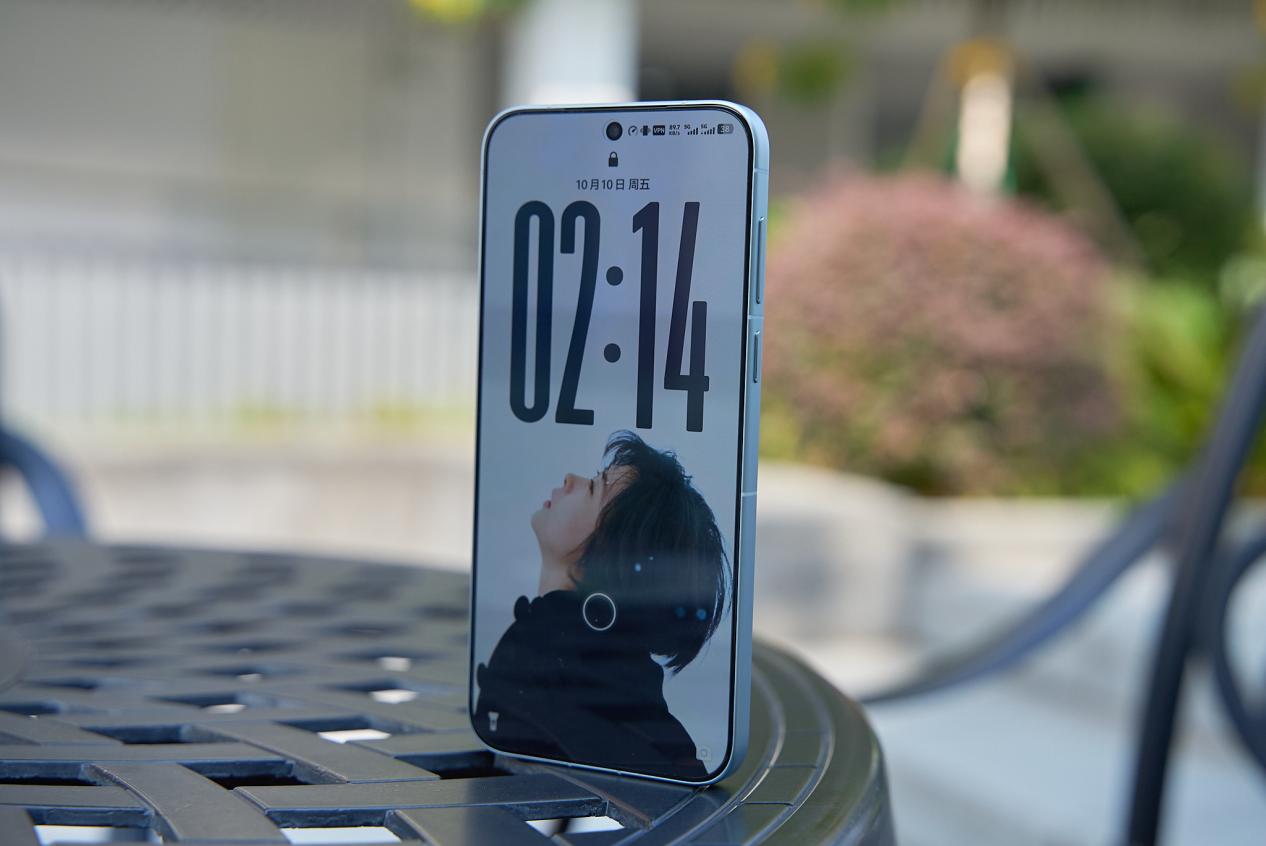
QuestMobile2025年三季度AI应用行业报告:移动端AI应用规模突破7亿大关,模型升级加速,MCP助推产业开放
QuestMobile· 2025-10-28 02:01
Core Insights - The AI application market is experiencing rapid growth, with mobile and PC active user counts reaching 729 million and 200 million respectively by September 2025 [3][4][20] - Major companies are shifting focus from parameter competition to ecosystem collaboration, optimizing models to meet customer needs and expand application scenarios [4][9] - The In-App AI plugin model has become the leading growth driver, with 31 out of the top 50 AI applications being plugins [4][5][24] Market Overview - By September 2025, the mobile AI application market has surpassed 700 million users, with native apps, In-App AI, and mobile manufacturer AI assistants reaching 287 million, 706 million, and 535 million users respectively [20][9] - The growth of mobile applications is supported by a stable head of native apps, while the PC web applications face challenges, with over 75% experiencing growth difficulties [5][60] User Engagement - The average usage time for native AI applications is 117.7 minutes, significantly higher than In-App AI plugins at 31 minutes and mobile manufacturer AI assistants at 5.3 minutes [6][24] - The top AI applications show a stable user base, with notable growth in vertical applications like AQ and Doubao, which have seen substantial increases in active users [6][38] Competitive Landscape - The competitive landscape is solidifying, with nearly 60% of native apps experiencing negative growth, indicating a narrowing window for new entrants [31][34] - Vertical applications are thriving, with AQ, Doubao, and Jimeng AI showing impressive growth rates of 83.4%, 15.7%, and 12.1% respectively [38][40] Ecosystem Development - The MCP services have reached 9,384, facilitating ecosystem collaboration and marking a new phase of commercialization in the AI industry [4][9][80] - Companies are focusing on integrating AI into business scenarios, enhancing user experience through seamless service delivery [70][72] Future Trends - The AI market is transitioning from a focus on broad capabilities to specialized, efficient solutions, with a significant increase in model updates and iterations [16][18] - The integration of payment capabilities is seen as a key milestone for the commercialization of AI applications, paving the way for an "AI as a service" economy [85][87]

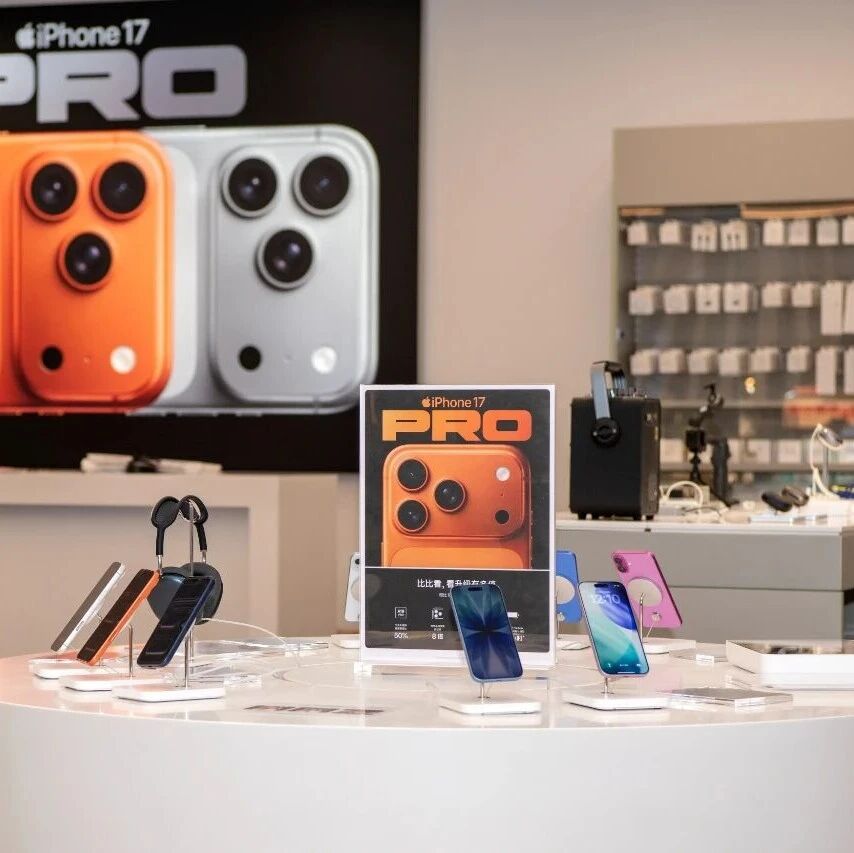
双十一最大「受害者」:买了iPhone 17的人
36氪· 2025-10-28 00:10
Core Viewpoint - The article discusses the significant price drops of Apple's products, particularly the iPhone 17 series, and how this reflects a shift in consumer behavior and market dynamics, with Apple moving towards a more competitive pricing strategy while Android brands are also increasing their market presence [4][44][46]. Group 1: Price Trends and Consumer Behavior - The iPhone 17 series is experiencing substantial price reductions, with predictions that it could be available for as low as 4999 yuan during the Double Eleven shopping festival [7][20]. - The actual prices for the iPhone 17 series have already seen drops, with the standard version potentially costing around 5499 yuan after subsidies [23][25]. - Consumers are increasingly hesitant to purchase Apple products at current prices, opting to wait for further discounts as the Double Eleven approaches [25][29]. Group 2: Market Dynamics - Apple's market share in China is declining, with a reported 17% year-on-year drop in shipments, while domestic brands like Vivo and Huawei are gaining ground [74][75]. - The competitive landscape is shifting, with Android brands adopting strategies to attract Apple users by offering similar features at lower prices [76][86]. - The price gap between iPhones and high-end Android devices is narrowing, making the market more competitive [78]. Group 3: Product Comparisons and Features - The iPhone 17 series is being marketed as a value proposition, with improved specifications at similar price points compared to previous models [63][64]. - Android manufacturers are increasingly mimicking Apple's design and features, indicating a convergence in product offerings [79][80]. - The introduction of features that enhance compatibility with Apple's ecosystem is becoming a selling point for Android devices [87][93].
半个月三场大会,AI战火蔓延手机圈
3 6 Ke· 2025-10-27 23:26
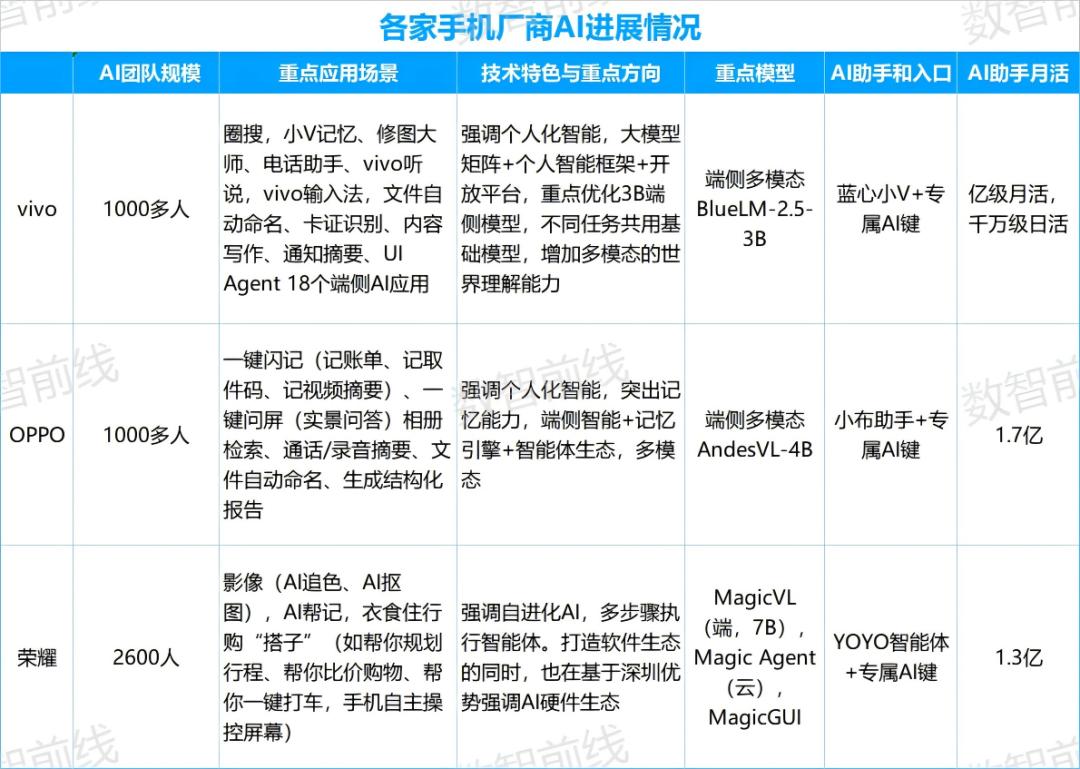
Core Insights - Mobile manufacturers are shifting focus from large parameter models to edge-based multimodal models, reflecting a significant change in AI strategy [1][8][11] - AI has become a central topic at recent developer conferences held by vivo, OPPO, and Honor, showcasing their new understanding of AI strategies and model applications [1][2] AI Development Trends - The application of AI in mobile devices has evolved from text processing to include image and voice processing, with a notable increase in edge-side multimodal models [1][3] - vivo has introduced 18 edge-side AI applications, enhancing user interaction through complex task management and intent recognition [1][4] - OPPO's features like "one-click screen inquiry" and "one-click flash note" demonstrate real-time understanding and automation of user tasks [2][4] - Honor claims over 3,000 automated scenarios, streamlining user interactions across various applications [2][4] Model Evolution - Mobile manufacturers have progressed through three stages of model development, moving from large language models to multimodal models with a focus on edge deployment [3][5] - Recent releases include Honor's 7B multimodal model MagicGUI and vivo's 3B model BlueLM-2.5-3B, integrating language, vision, and logical reasoning capabilities [5][6] Challenges in Edge Model Deployment - Current AI assistants often rely on multiple models for different tasks, leading to complexities in integrating external cloud models [8][11] - The performance of edge models is constrained by chip capabilities, with current models achieving 2B-5B parameters, equivalent to 32-70B cloud models [8][10] - The need for higher performance chips and storage for edge models poses challenges, especially in balancing cost and user experience [11][12] Ecosystem Development - The development of AI agents is still in its early stages, with current automation tasks limited to manufacturer-specific applications [13][15] - Manufacturers are building AI ecosystems to enhance cross-application functionality, with vivo, OPPO, and Honor leading efforts in creating reusable capabilities for partners [15][16] - Collaboration with internet companies is crucial for expanding the AI ecosystem, as user data and application value are significant concerns for app developers [16][17]
中国手机市场排名再洗牌
2 1 Shi Ji Jing Ji Bao Dao· 2025-10-27 15:25
Core Insights - The global smartphone market experienced a 3% year-on-year growth in Q3 2025, driven by strong replacement demand and preemptive stocking by manufacturers ahead of a busy Q4 [2][4] - Samsung and Apple remain the top two players in the global market, with Apple’s iPhone 17 series performing well, although the new iPhone Air has seen lower-than-expected demand [2][5] - The Chinese smartphone market saw a 3% decline year-on-year in Q3, but the competitive landscape is shifting, with vivo regaining the top position and Huawei moving up to second place [2][8] Global Market Dynamics - The growth in the global smartphone market is attributed to two main factors: the release of pent-up replacement demand and innovations in hardware and AI experiences that have rekindled consumer interest [4] - Samsung holds a 19% market share, benefiting from the popularity of its Galaxy A series and the upgrade of its foldable devices [4] - Apple’s iPhone shipments increased by 4% year-on-year, marking the highest Q3 shipments in history, with the iPhone 17 series significantly contributing to this growth [5] Chinese Market Trends - The Chinese smartphone market is undergoing a structural adjustment, with a narrowing gap among leading manufacturers. Vivo led with 11.8 million units shipped, followed by Huawei and Apple [8] - Despite a decline, the reduced drop indicates a stabilization in the market, with a healthy inventory level set for the upcoming flagship releases and the Double Eleven shopping festival [8] - AI features are becoming increasingly important to consumers, with over 80% indicating that AI capabilities are a significant consideration for their next smartphone purchase [9][11] Future Outlook - The global smartphone market is expected to grow by 54 million units from 2025 to 2029, with nearly 70% of this growth coming from emerging markets [2] - Chinese brands are expanding their global influence, with their overseas market share surpassing 50% in the first half of 2025, up from 11% in 2013 [6] - The competition is shifting towards high-end, intelligent, and diversified revenue models, with AI becoming a core capability rather than just a marketing gimmick [7][11]
芯原股份20251027
2025-10-27 15:22
Summary of Conference Call Notes Company Overview - **Company**: 新元股份 (Xinyuan Co., Ltd.) - **Industry**: Semiconductor and AI Chip Design Key Financial Performance - **Q3 2025 Revenue**: 12.81 billion CNY, a historical high, with a quarter-on-quarter increase of 119.26% and a year-on-year increase of 78.38% [2][5] - **Total Revenue for First Three Quarters**: 22.55 billion CNY, indicating strong growth momentum [2] - **New Orders**: 15.93 billion CNY in Q3 2025, a year-on-year increase of 145.8%, with AI computing-related orders accounting for approximately 65% [4] Order Backlog and Business Model - **Order Backlog**: 32.86 billion CNY at the end of Q3, maintaining high levels for eight consecutive quarters [2][4] - **Business Model**: Focus on semiconductor IP licensing and custom chip design services, helping clients reduce R&D and operational costs [6] - **Revenue Composition**: One-stop chip customization services account for nearly 90% of the backlog, with system manufacturers contributing 83.52% of orders [4][6] Profitability and Margins - **Gross Margins**: - IP licensing service gross margin: 90% - One-stop chip customization service gross margin: approximately 20% - Overall gross margin: 34% [2][11] - **R&D Investment**: Despite a decrease in R&D investment ratio by 9.41 percentage points, the company maintains high profitability due to the high gross margin of its IP business [11] Technological Advancements - **Core Processor IP**: Six categories of core processors, with GPU, NPU, and VPU contributing 70% of revenue [8] - **Process Node Contribution**: - 28nm and below contribute 94% of revenue - 14nm and below contribute 81% of revenue [8] - **Data Processing Revenue**: Increased to 33.14% of total revenue, with a year-on-year growth of 10.36 percentage points [9] Market Trends and Future Outlook - **AI Chip Market**: Expected to see over 70% of chips related to AI by 2035, with significant growth in edge computing [3][17] - **Product Development**: 112 self-developed projects have achieved mass production, with 47 projects in the NRE stage, indicating ongoing revenue growth potential [9] Global Presence and Workforce - **Employee Composition**: Over 2000 employees globally, with 89% in R&D and 88% holding master's degrees or higher [7] - **Sales Distribution**: 32% of sales from overseas markets, 68% from domestic markets [7] Competitive Landscape - **AI NPU Performance**: The new Xiaomi 3nm chip features a GAA architecture with AI NPU performance reaching 40 TOPS, surpassing Microsoft's AI PC standards [12] Additional Insights - **R&D Focus**: Continuous high investment in R&D to build competitive barriers and ensure long-term growth [10] - **Employee Development**: Emphasis on comprehensive talent recruitment and training, with a focus on skills relevant to AI and new technologies [32]

中国手机市场排名再洗牌
21世纪经济报道· 2025-10-27 15:21
Core Insights - The global smartphone market experienced a 3% year-on-year growth in Q3 2025, driven by strong replacement demand and preemptive stocking by manufacturers ahead of a busy Q4 [1][3] - Samsung and Apple maintained the top two positions in global market share, with Apple’s iPhone 17 series performing well, although the new iPhone Air faced lower-than-expected demand [1][5] - The Chinese smartphone market saw a 3% decline year-on-year in Q3 2025, but the competitive landscape is shifting, with Vivo regaining the top position and Huawei moving to second place [1][8] Global Market Dynamics - The growth in the global smartphone market is attributed to two main factors: the release of pent-up replacement demand and innovations in hardware and AI experiences that have rekindled consumer interest [3][5] - Samsung held a 19% market share, benefiting from the popularity of its Galaxy A series and upgrades to its foldable devices [3] - Apple’s iPhone shipments grew by 4% year-on-year, achieving the highest Q3 shipment record, with the iPhone 17 series significantly contributing to this growth [5] Chinese Market Trends - The Chinese smartphone market is in an adjustment phase, with a 3% year-on-year decline in Q3 2025, but the rate of decline has slowed, indicating market stabilization [8][9] - Vivo led the market with 11.8 million units shipped, capturing an 18% market share, followed by Huawei and Apple [8][9] - The competition among top manufacturers is intensifying, with a focus on product differentiation through design, battery life, camera capabilities, and AI features [9][10] Future Outlook - The global smartphone market is expected to grow by 54 million units from 2025 to 2029, with nearly 70% of this growth coming from emerging markets [1] - AI and innovative designs are becoming key growth drivers, with manufacturers increasingly focusing on enhancing user experience through AI capabilities [6][10] - Chinese brands are expanding their global influence, with their overseas market share exceeding 50% in the first half of 2025, up from 11% in 2013 [5][6]
华为等多个巨头参与,中国快充方案成为全球标准
Xuan Gu Bao· 2025-10-27 14:49
Group 1 - The ITU has officially released the global standard L.1004 for fast charging solutions for mobile terminals, marking the first international standard for fast charging [1] - The standard was developed collaboratively by major domestic manufacturers including Huawei, vivo, and OPPO, integrating various fast charging technologies to ensure compatibility across brands and devices [1] - The implementation of L.1004 is expected to break down protocol barriers in the mobile terminal industry, providing consumers with a safer and more convenient charging experience while supporting green and low-carbon transitions [1] Group 2 - Daotong Technology is experiencing a surge in its high-end fast charging and liquid-cooled charging pile business, entering the high-end market with standardized international products [2] - Ugreen Technology holds a leading market share in fast charging accessories such as power banks, mobile power supplies, and chargers, and is actively promoting a new generation of high-end fast charging products [2]

晚报 | 10月28日主题前瞻
Xuan Gu Bao· 2025-10-27 14:29
Group 1: Physical AI and Robotics - NVIDIA is hosting the Global Technology Conference (GTC 2025) from October 27-29, focusing on "Physical AI and Robotics" [1] - Research institutions believe Physical AI is transforming the foundational logic of robot training from "empiricism" based on real data to "rationalism" based on physical laws [1] - NVIDIA's comprehensive technology solution is facilitating the transition of Physical AI from laboratories to industrial, medical, and household applications, with a vast market potential [1][2] Group 2: Autonomous Driving - Tesla announced the "World Simulator," a neural network system that generates realistic virtual driving scenarios, allowing AI to learn the equivalent of 500 years of human driving experience in one day [1] - The World Simulator is a key tool for Tesla's advancements in autonomous driving and robotics, significantly reducing reliance on real-world testing [1][2] - The emergence of world models indicates AI's attempt to understand the world, which could redefine human-machine interaction boundaries [2] Group 3: Deep Sea Technology - China's first ice-capable manned submersible mother ship, "Exploration No. 3," successfully completed 43 missions in the Arctic, marking a significant achievement in deep-sea technology [3] - Deep-sea technology has been recognized as a national strategic core area, with government support aimed at accelerating research and industrialization [3] - The complete industrial chain for deep-sea technology in China is expected to lead to efficient and collaborative development, positioning it as a potential growth driver in the marine economy [3] Group 4: Robotics - Shouxing Technology has undergone a business change, with Ant Group's subsidiary becoming a shareholder, focusing on high-end humanoid robot development [4] - The company aims to reshape human-machine interaction through advanced bionic design and brain-like intelligent decision-making [4] Group 5: Commercial Aerospace - Tianbing Technology successfully conducted a separation test for its Tianlong-3 rocket, achieving a record of 36 satellites separating simultaneously, enhancing China's capabilities in commercial space launches [5] - The test is expected to support the development of low-cost launch services for low-orbit satellite constellations, contributing to the acceleration of China's space infrastructure [5] Group 6: Fast Charging Standards - The International Telecommunication Union has officially published the global standard L.1004 for mobile terminal fast charging, developed by a consortium including Huawei and OPPO [6] - This standard aims to enhance compatibility across different brands and devices, promoting a more efficient and user-friendly charging experience [6]