通富微电

Search documents
通富微电:公司有相关封测技术可用于eSIM卡
Mei Ri Jing Ji Xin Wen· 2025-08-20 06:16
Core Viewpoint - The company has relevant packaging and testing technology that can be applied to the eSIM card market, which is experiencing rapid growth due to increasing demands in identity authentication, key distribution, encryption storage, and remote management [2]. Group 1 - The eSIM card market is entering a phase of rapid development, driven by technological requirements in key areas [2]. - There is a growing demand for advanced packaging processes in the eSIM card sector [2]. - The company, as a leader in advanced packaging, sees significant market potential in eSIM cards [2].


路维光电二季度净利润增长近四成 半导体掩膜版制程工艺已布局至14nm
Zheng Quan Shi Bao Wang· 2025-08-19 13:21
Core Viewpoint - The report highlights the strong financial performance of Luwei Optoelectronics, driven by increased demand for photomasks in the semiconductor and flat panel display sectors, positioning the company as a key player in domestic substitution efforts [1][3][8]. Financial Performance - In the first half of 2025, the company achieved revenue of 544 million yuan, a year-on-year increase of 37.48%, and a net profit attributable to shareholders of 106 million yuan, up 29.13% year-on-year [1]. - In Q2 2025, the company reported a revenue of 284 million yuan, reflecting a 29.71% year-on-year growth, and a net profit of approximately 57.28 million yuan, which is a 38.53% increase year-on-year [1]. Market Demand and Trends - The demand for photomasks has surged due to the rapid expansion of production lines by leading manufacturers in the flat panel display and semiconductor sectors, with orders extending into Q3 [1][3]. - The global market for photomasks used in flat panel displays is projected to exceed 100 billion yen in 2025, with the domestic market accounting for 60% of this figure [3]. Competitive Positioning - Luwei Optoelectronics is the only domestic manufacturer capable of covering the entire generation range from G2.5 to G11, providing a wide array of photomask products including traditional TFT-LCD and advanced AMOLED technologies [3][8]. - The company has established itself as a primary supplier for major clients such as BOE and is set to deliver its first G8.6 AMOLED photomask in Q3 2025, indicating a strong market position [4]. Strategic Initiatives - The company completed a convertible bond issuance in June 2025 to fund the expansion of two new high-generation production lines, aimed at increasing capacity for G8.6 and below photomasks [4][8]. - Luwei Optoelectronics is actively investing in advanced manufacturing capabilities, including the introduction of a 40nm electron beam lithography machine, to enhance its production of semiconductor photomasks [8]. Industry Outlook - The global semiconductor photomask market is expected to reach approximately $8.94 billion by 2025, with the domestic market projected to be around 18.7 billion yuan [7]. - The ongoing advancements in packaging technologies are driving increased demand for photomasks, with the company positioned to meet these evolving requirements through its established partnerships with leading packaging firms [7][8].

日月光成最大赢家
半导体芯闻· 2025-08-19 10:30
Group 1 - The core viewpoint of the article highlights the strong demand for advanced packaging in the semiconductor industry, driven by AI and high-performance computing needs, as well as the ongoing effects of the "packaging and testing whitelist" that benefits leading companies like ASE Technology [1][2] - ASE Technology announced on August 11 that it will spend NT$6.5 billion to acquire a facility from Wistron in the Kaohsiung area, indicating its intent to expand its advanced packaging capacity [1][2] - The company has already raised its capital expenditure three times this year, projecting a total of US$5.5 billion, the highest in its history, with US$3 billion allocated for equipment purchases and NT$2.5 billion for facility construction [2] Group 2 - The semiconductor packaging industry in China is growing, with notable companies like Changjiang Electronics Technology and Tongfu Microelectronics, but ASE's reputation for quality and competitive pricing keeps Chinese customers returning to its facilities [1] - The overall market for consumer and automotive electronics is recovering, which further supports ASE's optimistic outlook for the second half of the year [2] - ASE's recent acquisition of a facility totaling 21,800 square meters will be dedicated to advanced packaging, reflecting the company's commitment to meeting increasing demand despite uncertain market conditions [2]
华为海思概念股概念涨1.87%,主力资金净流入20股
Zheng Quan Shi Bao Wang· 2025-08-19 08:37
Core Viewpoint - The Huawei HiSilicon concept stocks experienced a rise of 1.87% as of the market close on August 19, with significant contributions from several stocks within the sector [1]. Group 1: Stock Performance - Among the Huawei HiSilicon concept stocks, 29 stocks increased in value, with Chengmai Technology reaching a 20% limit up, Sichuan Changhong also hitting the limit up, and other notable gainers including Saiwei Electronics, Qiangrui Technology, and Jing Sheng Co., which rose by 11.69%, 9.73%, and 8.74% respectively [1]. - The concept sector's performance was varied, with the top gainers including the reducer concept at 2.62% and animal vaccine at 2.47%, while the military equipment restructuring concept saw a decline of 1.86% [1]. Group 2: Capital Flow - The Huawei HiSilicon concept sector saw a net inflow of 727 million yuan from main funds, with 20 stocks receiving net inflows, and 7 stocks exceeding 100 million yuan in net inflows [1]. - Sichuan Changhong led the net inflow with 1.506 billion yuan, followed by Chengmai Technology, Runhe Software, and Yihua Co., which received net inflows of 398 million yuan, 273 million yuan, and 238 million yuan respectively [1][2]. - The net inflow ratios for Sichuan Changhong, Chengmai Technology, and Yihua Co. were 25.98%, 21.65%, and 15.91% respectively, indicating strong investor interest in these stocks [2].





十年新高,有人跑步进场,A股将迎来1万点还是昙花一现?
3 6 Ke· 2025-08-19 04:59
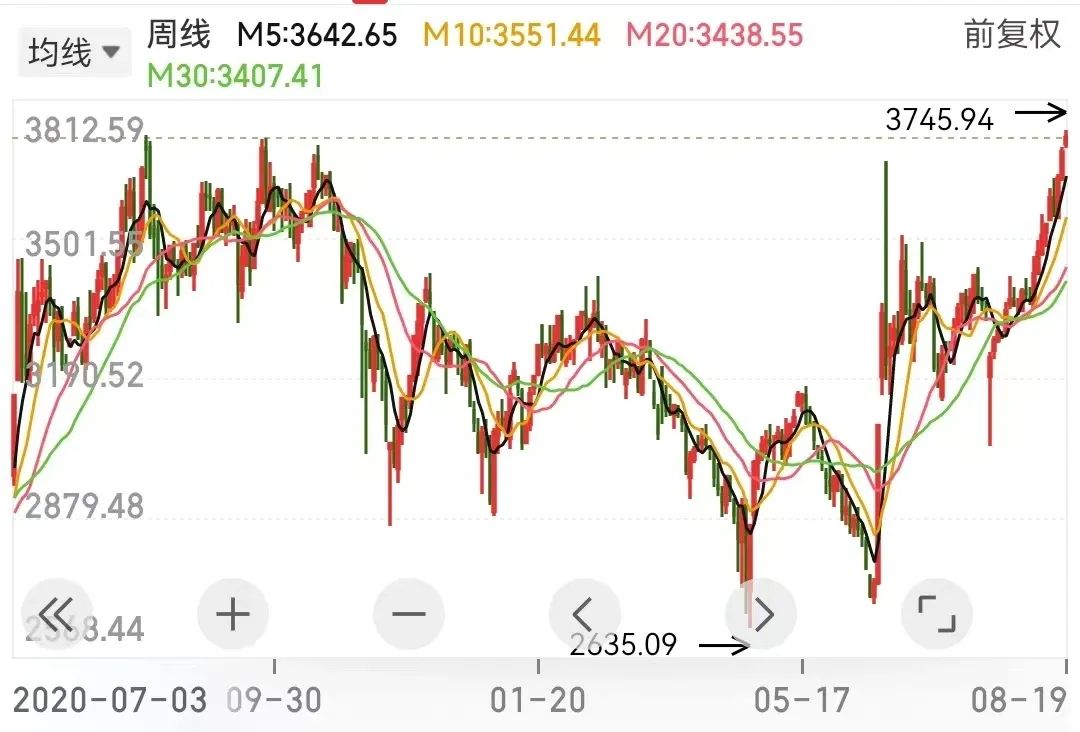
Market Overview - The Shanghai Composite Index reached a ten-year high of 3741.29 points, marking a significant milestone as the A-share market surpassed a market capitalization of 100 trillion yuan [1] - Since the low point in April, the index has increased by 22.6%, with 4625 stocks rising and 104 hitting the daily limit [1] Bull Market Indicators - A bull market is characterized by a sustained index increase of over 20%, stable trends, and broad participation from both blue-chip and small-cap stocks [3] - Daily trading volume has stabilized at 1-2 trillion yuan, indicating active market participation across various sectors [3] - In July, 1.9636 million new A-share accounts were opened, a 31.72% increase from June, contributing to a total of 14.5613 million new accounts in 2023, a 36.88% year-on-year increase [3] Economic Implications - There are mixed views on whether a rising stock market will lead to improved economic conditions, as the relationship between stock performance and consumer behavior is complex [4] - The transition from a bull market to economic growth requires more than just stock price increases; it necessitates effective capital allocation and investment in production [4] Market Dynamics - The current bull market could either be a "slow bull" or a "fast bull," with the former being characterized by steady growth and the latter by rapid price increases followed by sharp corrections [5][7] - Historical fast bull markets (2005-2007, 2014-2015) saw significant index increases but were followed by severe downturns, highlighting the risks associated with rapid price appreciation [5] Capital Flow Trends - This bull market has seen a shift in capital allocation, with 66% of financing directed towards information technology, industrials, and materials, particularly in hard tech sectors like semiconductors and renewable energy [11] - The increase in M1 growth (5.6%) compared to M2 growth (8.8%) suggests a shift towards more liquid assets, indicating improved economic activity and consumer confidence [8] Long-term Outlook - The potential for a prolonged bull market similar to the U.S. is uncertain, as it relies on high corporate profits and effective capital management strategies [12] - Domestic companies are beginning to show profitability in international markets, particularly in sectors like electric vehicles and pharmaceuticals, indicating a shift towards global competitiveness [13] Investment Strategies - Investors are advised to focus on quality stocks and sectors with strong growth potential, as the current market sentiment is characterized by high volatility and speculative behavior [22] - The importance of disciplined investment strategies is emphasized, as many investors tend to buy high and sell low, leading to losses [17][21]
十年新高,有人跑步进场,A股将迎来1万点还是昙花一现?
首席商业评论· 2025-08-19 03:38
Core Viewpoint - The article discusses the emergence of a bull market in the A-share market, highlighting the significant rise in the Shanghai Composite Index and the influx of new retail investors, while also cautioning that not all investors may benefit from this market trend [4][8]. Market Performance - On August 18, the Shanghai Composite Index reached a ten-year high of 3741.29 points, marking a 22.6% increase from the low in April [4]. - The A-share market's total market capitalization surpassed 100 trillion yuan for the first time, with 4625 stocks rising and 104 hitting the daily limit [4]. Bull Market Indicators - Key indicators for determining a bull market include a sustained index increase of over 20%, broad participation from various stocks, stable trading volumes averaging 1-2 trillion yuan, and a significant rise in new retail investors [6]. - In July, 196.36 million new A-share accounts were opened, a 31.72% increase from June, contributing to a total of 1456.13 million new accounts in 2023, a 36.88% year-on-year increase [6]. Market Sentiment and Economic Implications - While the current market sentiment suggests a bull market, the transition from a rising stock market to improved economic conditions is complex and uncertain [8]. - Historical examples of "fast bull" markets show that rapid increases can lead to severe corrections, as seen in 2007 and 2015, where declines reached 70% and over 50%, respectively [9]. Slow Bull vs. Fast Bull - A slow bull market, characterized by gradual increases and lower volatility, allows for better investment strategies and risk management compared to a fast bull market, which is often driven by speculation [11]. - The current market shows signs of a slow bull, with a shift in financing towards technology and industrial sectors, reducing the risk of capital idling seen in previous bull markets [14]. Monetary Policy and Economic Activity - Recent improvements in monetary indicators, such as M2 growth at 8.8% and M1 growth at 5.6%, suggest increased liquidity and economic activity, with M1 growth indicating a shift towards more active capital [12]. - The current financing landscape shows 66% of funds directed towards technology, industrial, and material sectors, with over 45% focused on hard technology areas like semiconductors and renewable energy [14]. Long-term Market Outlook - The potential for a prolonged bull market similar to the U.S. market is uncertain, as domestic companies still face challenges in achieving high profitability and consistent dividends [15]. - The article emphasizes the importance of a comprehensive approach to capital management, including buybacks and dividends, to sustain investor confidence and market stability [16]. Investment Strategies - Investors are advised to focus on industry leaders and niche market players, emphasizing the importance of risk management and the potential for future recovery even in a slow bull market [27]. - The article highlights the need for investors to maintain a disciplined approach, avoiding emotional trading behaviors that can lead to losses [21][26].

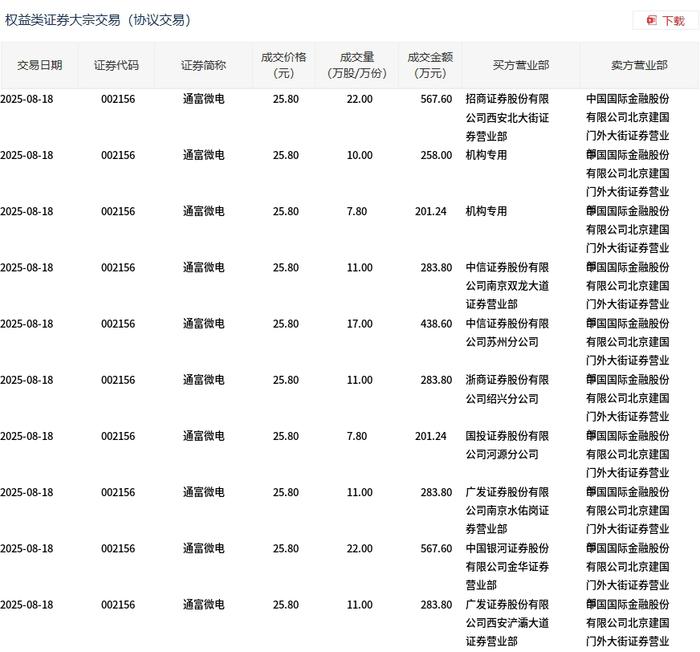
通富微电今日大宗交易折价成交130.6万股,成交额3369.48万元
Xin Lang Cai Jing· 2025-08-18 08:59
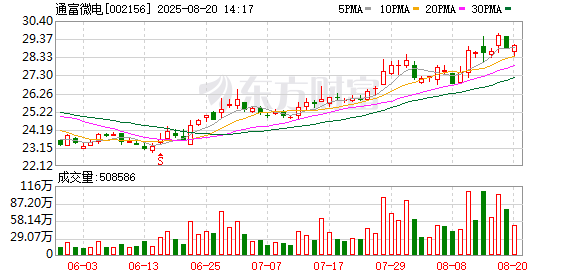
| 交易日期 | 证券代码 | 证券简称 | 成交价格 | 成交量 | 成交全额 买方营业部 | 卖方营业部 | | --- | --- | --- | --- | --- | --- | --- | | | | | (元) | (万股/万份) | (万元) | | | 2025-08-18 | 002156 | 通富微电 | 25.80 | 22.00 | 567.60 招商证券股份有限 | 中国国际金融股份 | | | | | | | 公司西安北大街证 | 有限公司北京建国 | | | | | | | 券营业部 | 门外大街证券营业 | | 2025-08-18 | 002156 | 通富微电 | 25.80 | 10.00 | 258.00 机构专用 | 哪国国际金融股份 | | | | | | | | 有限公司北京建国 | | | | | | | | 门外大街证券营业 | | 2025-08-18 | 002156 | 通富微电 | 25.80 | 7.80 | 201.24 机构专用 | 即国国际金融股份 | | | | | | | | 有限公司北京建国 | | | | | | | | 门外大街证券 ...
华为海思概念股概念涨4.93%,主力资金净流入这些股
Zheng Quan Shi Bao Wang· 2025-08-18 08:41
Group 1 - Huawei HiSilicon concept stocks rose by 4.93%, ranking second in the concept sector, with 47 stocks increasing in value [1] - Notable gainers include Jing Sai Technology with a 30% limit up, and Qiang Rui Technology with a 20% limit up, while De Long Laser and Hui Bo Yun Tong were among the biggest losers, down 6.91% and 2.36% respectively [1][4] - The liquid cooling server concept led the day's gains with a 6.31% increase, while the gold concept saw a slight decline of 0.24% [1] Group 2 - The Huawei HiSilicon concept sector attracted a net inflow of 1.721 billion yuan, with 31 stocks receiving net inflows, and 7 stocks exceeding 100 million yuan in net inflows [1] - Shenzhen Huaqiang topped the net inflow list with 499.7 million yuan, followed by Hao Shang Hao and Runhe Software with 415.25 million yuan and 355 million yuan respectively [1][2] - The net inflow ratios for leading stocks include Shenzhen Huaqiang at 44.92% and Hao Shang Hao at 39.45% [2]


大基金“进退有序”:减持回笼资金,聚焦半导体核心环节助力产业升级
Huan Qiu Wang· 2025-08-17 02:55
Group 1 - The National Integrated Circuit Industry Investment Fund (referred to as "Big Fund") has accelerated its investment recovery pace since August, with multiple semiconductor companies announcing reduction plans [1][3] - In 2023, the Big Fund has planned or implemented reductions in 8 semiconductor listed companies, with only Baiwei Storage involving the second phase of reduction, while others are from the first phase [1][3] - The reduction scale has expanded this year, with companies like Tongfu Microelectronics and others entering the reduction period, and the amount reduced from Tongfu Microelectronics exceeding 700 million yuan, with over 70% of the reduction completed [3] Group 2 - The Big Fund's operational logic shows a clear stratification, with the first phase fund accelerating exits from mature fields to support subsequent investments, while the second and third phases focus on strategic core areas [3] - The Big Fund's "orderly entry and exit" reflects its dual goals of market-oriented operations and strategic support, aiming for a virtuous cycle through capital exit while continuously investing in key technologies [3] - The third phase of the Big Fund has a registered capital of 344 billion yuan, with future investments expected to strengthen the domestic semiconductor ecosystem in areas like AI chips and advanced packaging [3]

通富微电上市18周年:归母净利润增长795.67%,市值较峰值蒸发24.18%
Sou Hu Cai Jing· 2025-08-16 15:46
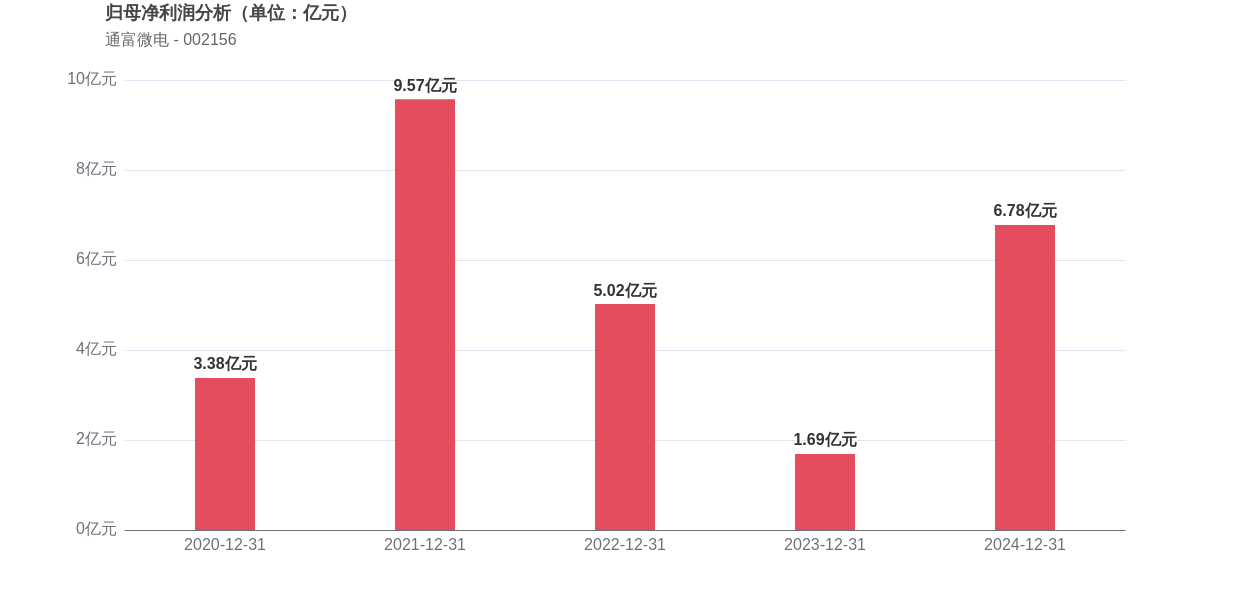
Group 1 - The core business of Tongfu Microelectronics includes integrated circuit packaging and testing, with integrated circuit packaging and testing accounting for 95.97% of revenue, while other businesses account for 4.03% [2] - Since its listing in 2007, the company has achieved a cumulative net profit growth of 795.67%, reaching a net profit of 678 million yuan in the latest complete fiscal year of 2024 [2] - The company has not reported a loss in any year over the past 18 years, with net profit growth occurring in 10 years, representing 55.56% of the time [2] Group 2 - From a revenue perspective, Tongfu Microelectronics achieved revenue of 10.769 billion yuan in 2020, which increased to 23.882 billion yuan in 2024, resulting in a compound annual growth rate of 22.13% over five years [3] - In terms of profit, the net profit attributable to shareholders was 338 million yuan in 2020 and reached 678 million yuan in 2024, indicating a doubling of net profit over five years, albeit with significant fluctuations during this period [3] Group 3 - Since its listing, the market value of Tongfu Microelectronics has increased by 4.19 times, demonstrating strong growth potential [5] - On November 12, 2024, the company's market value peaked at 57.365 billion yuan, with the stock price rising to 37.8 yuan [5] - As of August 15, the stock price was 28.66 yuan, and the market value was 43.494 billion yuan, reflecting a decrease of 1.3871 billion yuan in market value, or a 24.18% drop from its peak [5]