乐聚机器人

Search documents
东方精工:公司目前直接持有嘉腾机器人19.8366%的股权
Mei Ri Jing Ji Xin Wen· 2025-12-05 05:12
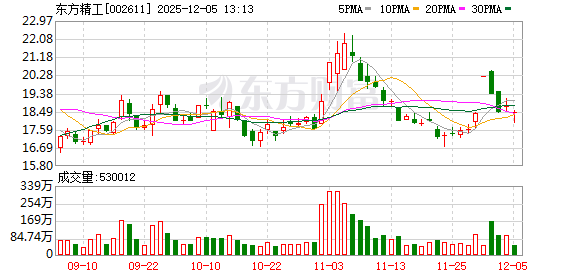
东方精工(002611.SZ)12月5日在投资者互动平台表示,东方精工目前直接持有嘉腾机器人19.8366%的 股权。参股公司嘉腾机器人专注于移动机器人(AGV)本体的研发和制造,是全球领先的AGV机器人 与智能物流仓储系统提供商、中国工业机器人十大品牌商之一,在过去的二十多年发展历程中,积累了 大量的行业Know-How。公司一以贯之的"1+N"的发展战略,在聚焦核心主业的同时,紧跟国家发展新 质生产力的战略方向号召,战略聚焦"人工智能+机器人"领域,打造重点方向的产业链投资布局。东方 精工在"人工智能+机器人"领域已有嘉腾机器人、若愚科技、乐聚机器人三个股权投资项目,形成"集群 化战略投资"局面。公司对"人工智能+机器人"领域的战略投资,旨在打造"战略投资+产业协作"的模 式,推动自身装备制造能力与标的企业领先技术融合,实现在生产制造、场景应用及市场开拓方面的协 同。 (文章来源:每日经济新闻) 每经AI快讯,有投资者在投资者互动平台提问:公司持有嘉腾机器人近百分之二十的股份,有没有近 一步控股的考虑? ...


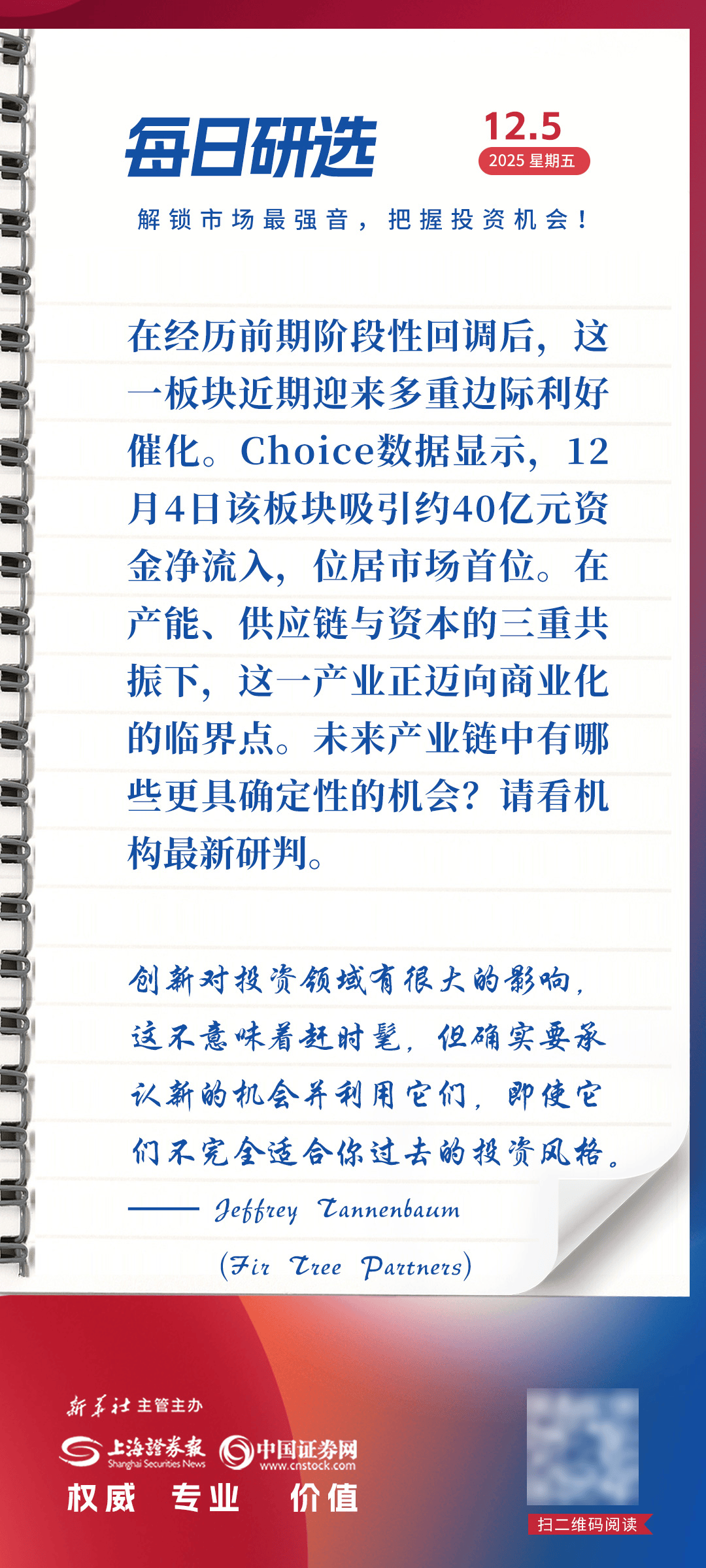
量产前夕,机构提示产业链布局窗口已打开丨每日研选
Shang Hai Zheng Quan Bao· 2025-12-05 00:37
Core Insights - The robotics sector is experiencing a rebound after a significant pullback, driven by multiple marginal benefits and increased confidence from major tech companies like Google and Tesla accelerating their investments in the industry [1][2] - A complete industrial ecosystem is forming, encompassing manufacturing, core component supply, and application scenarios as the supply chain matures [1] Industry Developments - Tesla plans to establish a dedicated facility in Texas with an annual production capacity of 10 million units by 2027 [1] - Yushun Intelligent's emergency robot industrial park project has completed registration, aiming for a monthly production capacity of 500 units [1] - UBTECH has begun mass deliveries of the Walker S2 robot, targeting an annual production capacity of 5,000 units by 2026 and 10,000 units by 2027 [1] - Domestic companies like Zhiyuan Robotics, Galaxy General, and Xiaopeng Robotics are also expanding their production capabilities [1] Supply Chain Progress - Tesla's supply chain (T-chain) is entering a critical verification phase, with expected orders to suppliers in December and guidance for next year's supply [1] - Domestic supply chain companies are rapidly emerging, achieving technological breakthroughs in products like frameless torque motors and precision gears, and have begun small batch deliveries to leading clients [1] Application Scenarios - Application scenarios such as logistics, home services, and data collection are gradually being implemented, with UBTECH winning multiple projects for humanoid robot data collection and training centers [2] - Changan Automobile plans to launch its first vehicle-mounted robot component in Q1 next year, promoting diversified applications [2] Investment Trends - Global capital interest in humanoid robotics is at an all-time high, with increasing financing scales and participant numbers [2] - Domestic companies like Leju Robotics have completed nearly 1.5 billion yuan in Pre-IPO financing, while international firms like Apptronik secured $331 million in strategic financing [2] - Recent ETF initiatives by institutions like Huaxia Fund and E Fund aim to introduce long-term capital support to the sector [2] Focus Areas for Investment - Emphasis on sectors with confirmed industrial certainty, particularly high-probability suppliers in Tesla's supply chain, such as Sanhua Intelligent Controls and Top Group [2][4] - Attention to incremental segments related to technological upgrades, particularly in dexterous hands, with high growth potential for companies like Mingzhi Electric and Dechang Electric [3] - Identifying undervalued companies with substantial progress in robotics, such as Obit Optical and Dongmu Co., which may have a discrepancy in market perception [4]

12月5日每日研选 | 量产前夕,机构提示产业链布局窗口已打开
Sou Hu Cai Jing· 2025-12-05 00:29
Core Viewpoint - The robotics sector is experiencing a rebound after a significant pullback, driven by multiple marginal benefits and accelerated investments from tech giants like Google and Tesla, which boosts industry confidence [2] Industry Developments - Major companies are ramping up production capabilities, with Tesla planning to build a dedicated facility in Texas with an annual capacity of 10 million units by 2027 [2] - Yushun Intelligent's emergency robot industrial park project aims for a monthly production capacity of 500 units [2] - UBTECH has begun mass deliveries of the Walker S2 robot, targeting an annual production capacity of 5,000 units by 2026 and 10,000 units by 2027 [2] - Domestic companies like Zhiyuan Robotics, Galaxy General, and Xiaopeng Robotics are also expanding their production capacities [2] Supply Chain Insights - Tesla's supply chain (T-chain) is entering a critical validation phase, with expected orders to suppliers in December and guidance for next year's supply [2] - Domestic supply chain companies are rapidly emerging, achieving technological breakthroughs in products like frameless torque motors and precision gears, and have begun small batch deliveries to major clients [2] Application Scenarios - Applications in logistics, home services, and data collection are becoming more prevalent, with UBTECH winning multiple projects for humanoid robot data collection and training centers [3] - Changan Automobile plans to launch its first vehicle-mounted robot component in Q1 next year, promoting diversified applications [3] Investment Trends - Global capital interest in humanoid robotics is at an all-time high, with increasing financing scales and participant numbers [3] - Domestic companies like Leju Robotics have completed nearly 1.5 billion yuan in Pre-IPO financing, while international firms like Apptronik secured $331 million in strategic financing [3] - Recent ETF filings by institutions like Huaxia Fund and E Fund aim to introduce long-term capital support to the sector [3] Focus Areas for Investment - Emphasis on companies with verified capabilities and batch supply potential, particularly those in Tesla's supply chain, such as Sanhua Intelligent Controls and Top Group [4] - Attention to incremental segments related to technological upgrades, particularly in dexterous hands, with high growth potential for companies like Mingzhi Electric and Dechang Electric [4] - Consideration of undervalued companies with substantial progress in robotics, such as Obit Light and Dongmu Co., which may have a perception gap in the market [4]

今年9家盈利最高的人形机器人公司......
具身智能之心· 2025-12-03 03:47
Core Insights - The article provides an overview of the order amounts and shipment volumes of leading robotics companies projected for 2025, highlighting the top nine companies in terms of revenue and their core clients [1]. Group 1: Company Orders and Shipments - Zhongqing Robotics: Order amount of 200 million yuan over three years, with a shipment volume of 2,000 units, collaborating with major firms like Multi-Tech and Amazon [2]. - Songyan Power: Order amount exceeding 100 million yuan, with annual shipments surpassing 2,500 units, focusing on education, research, and commercial performances [2]. - Stardust Intelligence: Approximately 500 million yuan in orders, with plans to deploy over 1,000 AI robots in industrial manufacturing and logistics over the next two years [2]. - Zhifang Technology: Order amount of 500 million yuan, with over 1,000 units to be delivered in three years, primarily for industrial applications [2]. - Leju Robotics: Order amount around 500 million yuan, with nearly 2,000 units shipped annually [2]. - Zhiyuan Robotics: Order amount approximately 700 million yuan, with thousands of units shipped, serving various industrial applications [2]. Group 2: Major Players and Their Orders - UBTECH Technology: Order amount exceeding 800 million yuan, with around 2,700 units shipped, primarily serving automotive manufacturers and data collection needs [3]. - Yuejiang Robotics: Order amount around 1.1 billion yuan, with annual shipments of about 20,000 units, projecting 80,000 units in 2024 and 100,000 units in 2025 [3]. - Yushu Technology: Order amount close to 1.2 billion yuan, with over 10,000 units shipped, collaborating with various educational institutions and companies for research and development [3].

最被低估的东北985,冲出一支机器人天团
创业邦· 2025-12-02 10:11
Core Viewpoint - The article highlights the emergence of humanoid robots in China, particularly focusing on the contributions of young entrepreneurs from Harbin Institute of Technology (HIT) in the robotics industry, marking 2023 as a pivotal year for humanoid robot mass production [6][7]. Group 1: Humanoid Robots and Industry Growth - The recent National Games featured a humanoid robot named "Kua Fu" as the torchbearer, indicating the integration of robots into real-life scenarios [6]. - 2023 is referred to as the "year of mass production for humanoid robots," leading to increased investment and interest in the robotics sector [7]. - Companies like Leju Robotics, founded by a young HIT alumnus, completed a Pre-IPO round financing of nearly 1.5 billion yuan, showcasing the financial backing for robotics startups [12]. Group 2: Young Entrepreneurs from HIT - HIT has produced numerous young entrepreneurs in the robotics field, with many founders being notably young [10]. - Cold Xiaokun, born in 1992, founded Leju Robotics and has been a pioneer in humanoid robot development, reducing production costs significantly from over 3 million yuan to tens of thousands [14]. - Huang Yi, at just 21 years old, became the youngest CEO in the industry with his company RoboParty, which recently secured seed funding of several million dollars [16]. Group 3: HIT's Role in Robotics Education and Innovation - HIT is recognized as a leading institution in robotics, having established a robotics research institute as early as 1986 and developing a comprehensive robotics technology system [31]. - The university's strong academic background is reflected in its high performance in robotics competitions, with HIT teams winning multiple awards [32]. - HIT's focus on interdisciplinary studies in robotics, combining mechanical, electronic, and AI disciplines, positions it as a powerhouse for innovation in the field [33]. Group 4: Notable Companies and Contributions - Several successful robotics companies have emerged from HIT alumni, including DJI and various startups in surgical and industrial robotics [26][50]. - The article lists multiple companies founded by HIT graduates, highlighting their contributions to the robotics landscape in China [22]. - HIT's alumni have played significant roles in advancing technologies in various sectors, including defense and aerospace, further emphasizing the university's impact on national technological development [49].

东方精工7.74亿欧元剥离核心资产 推进转型押注水上动力与具身智能
Chang Jiang Shang Bao· 2025-12-02 00:06
Core Viewpoint - Dongfang Precision Engineering plans to divest its corrugated cardboard production line business for €774 million, marking a strategic shift towards waterborne power equipment and embodied intelligent robotics [1][2]. Group 1: Asset Sale Details - The company will sell 100% equity of three companies, including Italy's Fosber Group, for €774 million, which represents a significant asset appreciation of over 7 times compared to the initial acquisition cost of approximately €74 million [2]. - The divested assets account for 39.66% of the company's total assets, 30.23% of net assets, and 67.2% of operating revenue for 2024, indicating a major asset restructuring [2]. Group 2: Strategic Shift - The divestiture is aimed at optimizing resource allocation and enhancing operational efficiency, allowing the company to focus on emerging business areas [2]. - The company retains its printing and packaging production lines, industrial internet solutions, and digital printing equipment, ensuring stable revenue and profit to support its strategic transformation [3]. Group 3: New Growth Path - Dongfang Precision Engineering is focusing on two main areas: waterborne power equipment and embodied intelligent robotics, aiming to capture opportunities in strategic emerging industries [4]. - The subsidiary, Baisheng Power, has become a leader in the outboard motor industry, with a projected annual compound growth rate of 22% in revenue and net profit from 2020 to 2024 [4]. - The company plans to enhance its product matrix in the outboard motor sector, including gasoline, diesel, and new energy options [4]. Group 4: Robotics Ecosystem - The company is building a complete ecosystem for embodied intelligent robotics through investments and self-operation, including partnerships with various robotics firms [5]. - A new subsidiary, Dongfang Yuanqi, will serve as the core platform for robot manufacturing, further solidifying the company's position in the robotics market [5]. Group 5: Financial Performance - The company's transformation efforts are showing positive results, with total revenue of 3.389 billion yuan and a net profit of 510 million yuan for the first three quarters of 2025, reflecting a year-on-year growth of 2.52% and 54.64%, respectively [6].
东方精工:公司和乐聚机器人已共同设立东方元启智能机器人(广东)有限公司
Zheng Quan Ri Bao Wang· 2025-12-01 12:12
证券日报网讯12月1日,东方精工(002611)在互动平台回答投资者提问时表示,公司和乐聚机器人于 2025年9月份已共同设立东方元启智能机器人(广东)有限公司,注册资本为1亿元,东方精工持股80%。 东方元启的成立是双方前期签订战略合作协议的重要落地。 ...
大摩:人形机器人“短期过热、长期低估”,商业化落地成关键胜负手
美股IPO· 2025-12-01 10:38
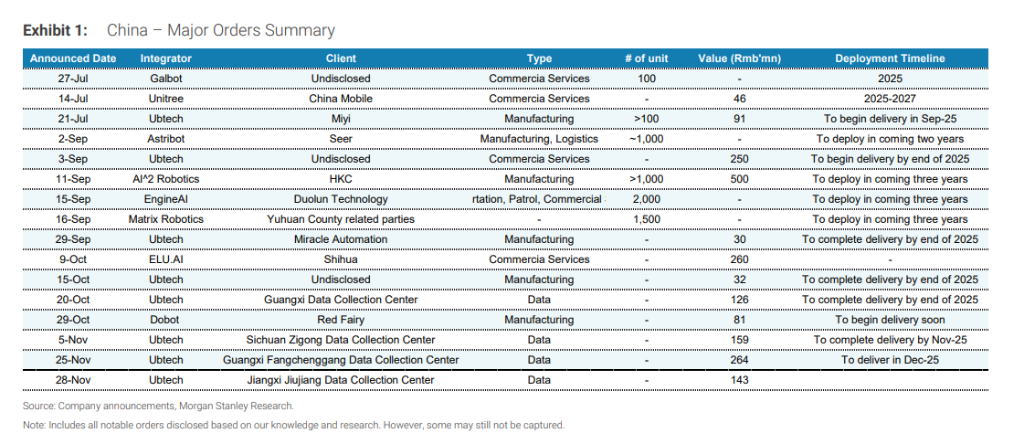
Core Insights - Morgan Stanley highlights the humanoid robot market as "overheated in the short term but undervalued in the long term," indicating a significant disparity between current market excitement and future potential [4][21] - The report predicts that by 2050, the global market size for humanoid robots could reach $5 trillion, far exceeding the current automotive industry [8][21] Short-term Overheating - The Chinese market is expected to show remarkable growth, with announced orders exceeding 2 billion RMB (approximately $300 million) by the second half of 2025, primarily from industrial, commercial services, and data center sectors [6][21] - However, many of these orders may not be fulfilled, as they include "framework orders" with low execution certainty, leading to a cautious outlook on recent growth [6][21] - Companies are setting aggressive shipment targets, with some expecting to deliver 100,000 units by 2026, but Morgan Stanley maintains a conservative estimate based on "limited working capacity" [6][21] Long-term Undervaluation - The long-term market potential for humanoid robots is significantly underestimated, with a projected global stock of 1 billion units by 2050 and a revenue market size nearing $5 trillion [8][12] - This potential is compared to the total revenue of the top 20 global automotive manufacturers, which is about $2.5 trillion in 2024, suggesting that the humanoid robot market could be twice that size [8][12] - The report anticipates that by 2050, commercial applications will dominate the market with approximately 935 million units, while household applications will account for around 84 million units [11][12] Commercialization as a Key Factor - The success of the humanoid robot industry hinges on effective commercialization, with a consensus emerging that return on investment (ROI) will be the critical metric for evaluating success [5][13] - Current industry players are moving away from merely showcasing technological advancements to demonstrating real value creation in practical scenarios [13] - Positive commercialization examples include Figure AI's robot contributing to the production of 30,000 cars at BMW's Spartanburg plant and Booster Robotics delivering over 700 humanoid robots to more than 200 clients globally [14][15] Policy and Capital Support in China - The development of the humanoid robot market in China is strongly supported by policies and capital, with approximately 187 billion RMB allocated to various funds aimed at industry development [18][20] - The Chinese government has introduced numerous supportive policies since 2023, including the establishment of a standardization committee for humanoid robots [18][19] - This "policy + capital" dual-drive model provides China with a unique advantage in the global humanoid robot competition, signaling a shift from technological exploration to commercial promotion [19][21]

大摩:人形机器人“短期过热、长期低估”,商业化落地成关键胜负手
Hua Er Jie Jian Wen· 2025-12-01 06:47
Core Insights - The humanoid robot industry is at a crossroads, characterized by short-term hype and long-term potential being underestimated [1] - Morgan Stanley's report highlights that while order data appears strong, delivery uncertainties pose risks, and the true value of the industry will be tested through commercialization [1][2] Short-term Overheating: Reality Check Amid Order Surge - The Chinese market is expected to show remarkable growth by the second half of 2025, with announced orders exceeding 2 billion RMB (approximately 300 million USD) primarily from industrial, commercial services, and data center sectors [2] - However, many of these orders may not be fulfilled this year, with some being "framework orders" that have low execution certainty [2] Long-term Underestimation: A Grand Narrative of a $5 Trillion Market - Morgan Stanley predicts that by 2050, the global humanoid robot market could reach a staggering 5 trillion USD, significantly surpassing the current automotive industry [4] - The report estimates that by 2050, the global humanoid robot stock will reach 1 billion units, with a cumulative deployment of approximately 237 million units by 2036 and 1.34 billion units by 2040 [5] Price Dynamics and Market Penetration - The initial price of humanoid robots in high-income countries is projected to be 200,000 USD, decreasing to around 50,000 USD by 2040, while prices in other markets are expected to drop from 50,000 USD to approximately 1,500 USD by 2050 [7] - The report emphasizes that as technology matures and costs decline, humanoid robots will first gain traction in commercial applications before entering households [7] Commercialization: From "Showcasing Technology" to "Calculating ROI" - The key to the industry's success lies in commercialization, with a shift from merely demonstrating advanced technology to proving value in real-world applications through ROI [8] - Software is identified as a critical differentiator, while the hardware supply chain has achieved over 90% domestic production, laying a foundation for commercialization [8] China's Ambition in Humanoid Robotics - The development of the humanoid robot market in China is strongly supported by policies and capital, with various funds totaling approximately 187 billion RMB established to support the industry [9][11] - The dual drive of "policy + capital" provides China with a unique advantage in the global humanoid robot competition, indicating a shift from technological exploration to commercialization [9] Notable Developments and Companies - Figure AI's Figure 02 robot has participated in the production of 30,000 cars at BMW's Spartanburg plant, installing over 90,000 components [10] - Booster Robotics has delivered over 700 humanoid robots to more than 200 clients across 20 countries since its establishment in August 2023 [10] - Ubtech anticipates its industrial humanoid robot production capacity will reach 5,000 units by 2026 [10]

发改委给人形机器人产业“泼冷水”,“宇树”们将何去何从?| 马上评
Tai Mei Ti A P P· 2025-12-01 04:10
Core Insights - The human-shaped robot industry is experiencing a significant surge in interest and investment, with a projected market size reaching hundreds of billions by 2030, despite recent regulatory warnings about potential over-saturation and risks associated with similar products flooding the market [1][3][12] - The National Development and Reform Commission (NDRC) has expressed concerns about the maturity of technology, commercialization models, and application scenarios in the human-shaped robot sector, indicating a need for caution against excessive competition and resource wastage [4][5][6] - The industry is characterized by a rapid increase in the number of companies, with over 150 registered firms, many of which are startups or companies entering from other sectors, leading to a high degree of product homogeneity [3][10] Industry Dynamics - The human-shaped robot sector is currently witnessing unprecedented growth, with a 183.78% year-on-year increase in registered companies, surpassing the total number from the previous year [3] - Major players like Yushutech have recently completed their listing preparations, reflecting the industry's capital enthusiasm, while other companies are also pursuing similar paths [3][4] - The NDRC's warnings highlight the need for a balance between speed and potential market bubbles, emphasizing the importance of sustainable development in the face of rapid industry expansion [5][6] Technological Challenges - The industry is fragmented with various technological paths, including traditional mechanical designs and AI-driven systems, but lacks a unified consensus on core technologies, leading to inefficient resource allocation [7][8] - Key technological bottlenecks remain, such as high-precision servo motors and lightweight materials, which hinder the industry's progress [7][8] Commercial Viability - Despite optimistic forecasts for market growth, the current commercialization landscape is challenging, with high production costs (ranging from 500,000 to 1,000,000 yuan) and low market acceptance (generally below 200,000 yuan) creating a "cost inversion" scenario [9] - Many companies are still in the "burning cash for R&D" phase, lacking clear paths to profitability, which raises concerns about their long-term sustainability [9][10] Market Competition - The influx of new entrants has led to a saturation of similar products, resulting in significant resource waste and a lack of innovative high-end products [10][12] - The NDRC's emphasis on avoiding redundant product launches aims to mitigate risks associated with over-competition and to encourage a focus on quality over quantity in the industry [5][10] Strategic Recommendations - Companies are advised to focus on building technological differentiation and avoiding direct competition with established players like Tesla, instead targeting niche markets where they can establish a competitive edge [16][17] - Emphasizing specialized solutions rather than generic products can help firms navigate the current market challenges and align with regulatory expectations [17][18] - The shift in policy from broad encouragement to targeted support indicates that companies with strong technological foundations and clear business models will be favored, while those lacking differentiation may face market exit [19][20]