
华润啤酒

Search documents
智通港股沽空统计|1月23日
智通财经网· 2026-01-23 00:22
Short Selling Ratios - China Resources Beer (80291) and JD Group (89618) have the highest short selling ratios at 100.00% each, followed by Lenovo Group (80992) at 95.62% [1] - The top ten short selling ratios include Li Ning (82331) at 93.21% and Anta Sports (82020) at 88.46% [1] Short Selling Amounts - Alibaba (09988) leads in short selling amount with 1.173 billion, followed by Baidu (09888) at 1.111 billion and Pop Mart (09992) at 1.049 billion [1] - Other notable companies in the top ten include Meituan (03690) at 814 million and China Life (02628) at 806 million [1] Deviation Values - JD Group (89618) has the highest deviation value at 37.56%, followed by China Ping An (82318) at 33.98% and China Huaneng (03788) at 33.27% [1] - Other companies with significant deviation values include SenseTime (80020) at 32.05% and Li Ning (82331) at 31.52% [1]




百威亚太遭多家大行下调预期
Guo Ji Jin Rong Bao· 2026-01-22 14:36
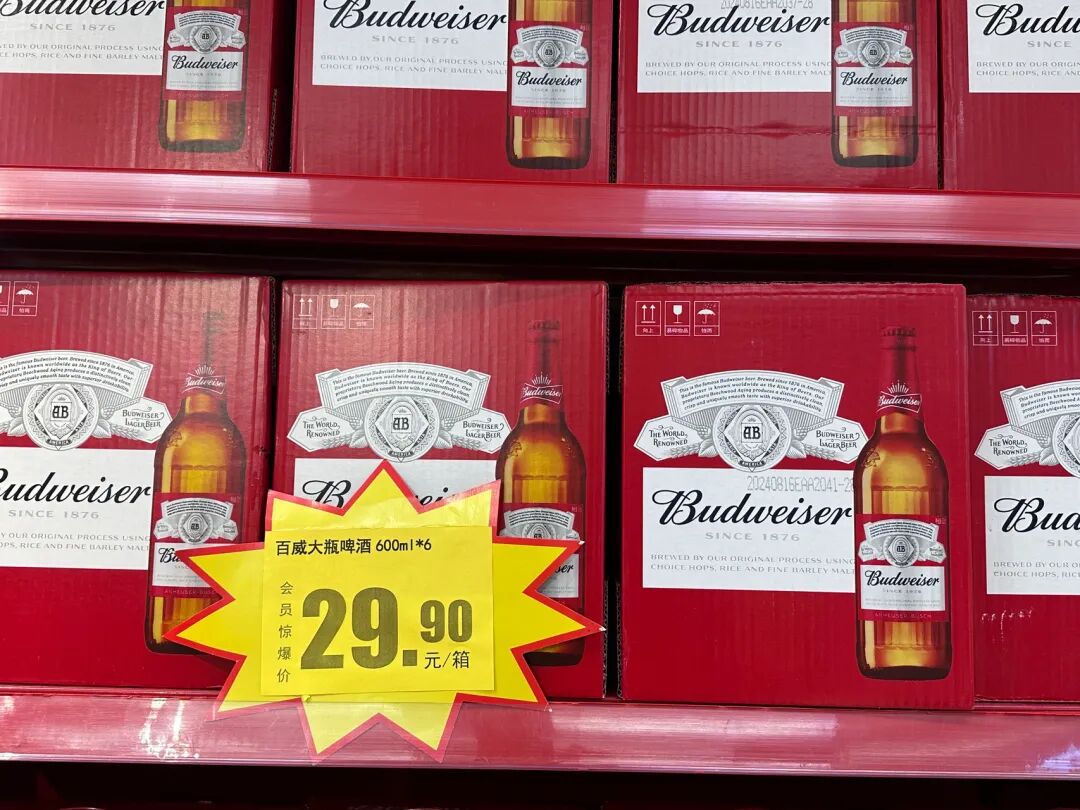
Core Viewpoint - Major banks, including Citigroup and JPMorgan, have released reports predicting that Budweiser APAC's (01876.HK) 2025 full-year performance will fall short of expectations, primarily due to weak demand in the Chinese market [1] Group 1: Financial Forecasts - Citigroup forecasts a 3% and 10% downward adjustment in Budweiser APAC's sales and core net profit for 2025, respectively, with sales impacted by the later timing of the Lunar New Year [1] - JPMorgan has lowered Budweiser APAC's target price from HKD 8.5 to HKD 7.9, predicting a 6.4% decline in natural sales in 2025 [1] Group 2: Market Performance - In the first half of 2025, Budweiser APAC's beer sales in China decreased by 8.2%, with net income dropping by 9.5% and revenue per hectoliter declining by 1.4%, indicating a "volume and price drop" situation [3] - Budweiser APAC's market share in China's premium beer segment has shrunk from nearly 50% in 2015 to around 40% [3] Group 3: Management Changes and Strategic Initiatives - Budweiser APAC appointed its first Chinese CEO, Cheng Yanjun, in February 2025, with a focus on reversing the downturn in the Chinese market [3] - Under the new leadership, the company is increasing investment in its core brands, Budweiser and Harbin Beer, while abandoning some non-core niche brands and accelerating penetration into offline channels like supermarkets and convenience stores [3]

智通港股沽空统计|1月22日
智通财经网· 2026-01-22 00:24
Group 1 - The top short-selling stocks include Sun Hung Kai Properties (80016), China Resources Beer (80291), and AIA Group (81299), all with a short-selling ratio of 100.00% [1][2] - The highest short-selling amounts are recorded for Xiaomi Group (01810) at 1.128 billion, Baidu Group (09888) at 1.106 billion, and Alibaba Group (09988) at 995 million [1][2] - The highest deviation values are for Ping An Insurance (82318) at 58.81%, JD Group (89618) at 38.75%, and Sun Hung Kai Properties (80016) at 35.83% [1][2] Group 2 - The top short-selling ratio rankings show Sun Hung Kai Properties (80016) with a short-selling amount of 196,700 and a ratio of 100.00%, followed by China Resources Beer (80291) with 11,500 and 100.00% [2] - The top short-selling amounts list Xiaomi Group (01810) with 1.128 billion, Baidu Group (09888) with 1.106 billion, and Alibaba Group (09988) with 995 million [2] - The top deviation values list Ping An Insurance (82318) with a short-selling amount of 3.2371 million and a ratio of 92.98%, followed by JD Group (89618) with 320,900 and 98.46% [2]




金星啤酒港股IPO闯关,中式精酿神话下的多重拷问
Sou Hu Cai Jing· 2026-01-21 15:14
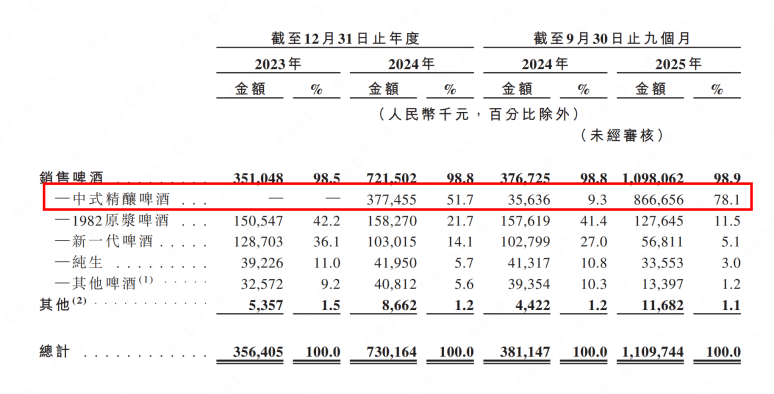
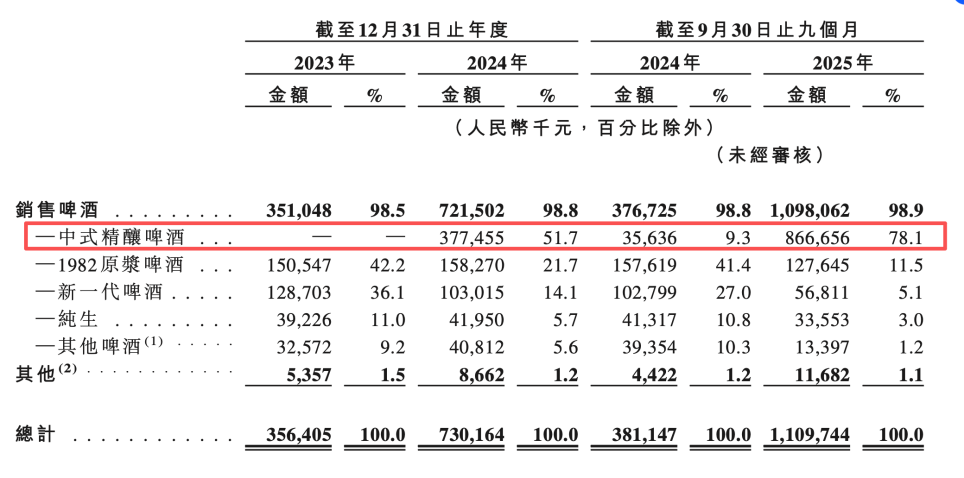
Core Viewpoint - Henan Jinxing Beer Co., Ltd. has submitted its IPO application to the Hong Kong Stock Exchange, showcasing impressive growth figures but facing significant concerns regarding sustainability and governance issues [1][12]. Financial Performance - Revenue is projected to increase from 356 million RMB in 2023 to 1.11 billion RMB by 2025, while net profit is expected to surge from 12.2 million RMB to 30.5 million RMB, marking a 24-fold increase in two years [1][3]. - The gross profit margin is anticipated to rise from 27.3% to 47% during the same period [1]. Product Innovation - The launch of "Jinxing Maojian" tea beer in August 2024 marked a pivotal shift for the company, contributing significantly to sales with 10 million cans sold within 10 months [2]. - By 2025, the Chinese craft beer segment accounted for 78.1% of Jinxing's revenue, establishing it as a leading player in the flavored craft beer market with a 14.6% market share [2][4]. Market Challenges - The company faces challenges from increased competition as major players like China Resources and Budweiser enter the craft beer market with similar products [6]. - Jinxing's reliance on a single product category raises concerns about sustainability, as traditional products are declining in revenue [4][6]. Governance and Compliance Issues - The company has distributed dividends totaling 329 million RMB, exceeding its profits for the first three quarters of 2025, raising questions about financial management [8][10]. - Governance concerns are highlighted by the family's absolute control over 93.45% of the shares, which may signal a lack of confidence in reinvesting in the company [10][12]. - There are significant issues regarding unpaid social security and housing fund contributions, totaling over 21.9 million RMB, which could lead to legal repercussions [11][12]. Asset Ownership Concerns - Approximately 25.7% of Jinxing's owned properties lack proper ownership certificates, which could expose the company to administrative penalties [12]. - The company acknowledges potential risks associated with these ownership issues, which could adversely affect its business and financial status [12]. Market Outlook - The craft beer market in China is projected to grow from 12.5 billion RMB in 2019 to 63.2 billion RMB by 2024, with a compound annual growth rate of 38.4% [6]. - The success of Jinxing's IPO will depend on its ability to manage risks and demonstrate sustainable growth potential in a competitive landscape [13].
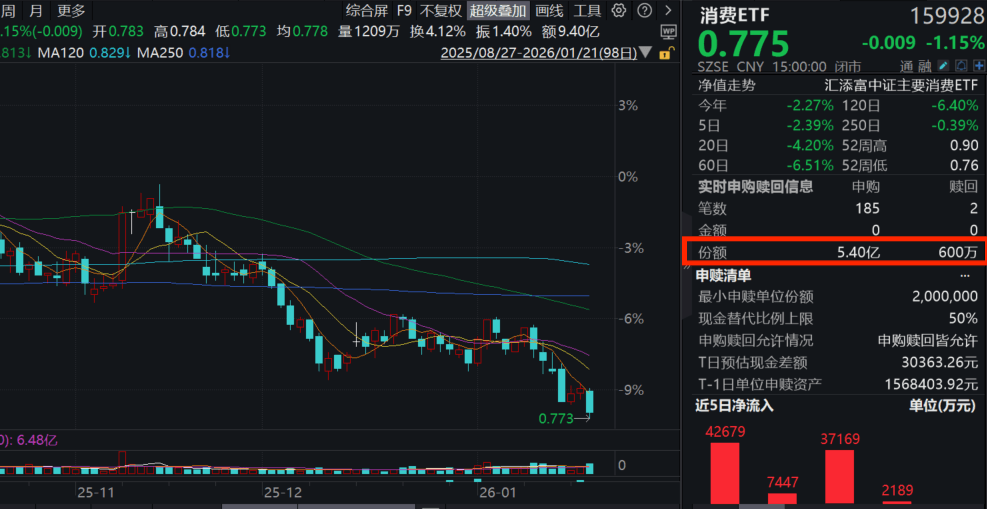
财政金融协同促内需一揽子政策出炉!消费ETF(159928)收跌超1%,资金逢跌狂涌,全天获资金超5.3亿份大举净申购!
Sou Hu Cai Jing· 2026-01-21 08:55
Core Viewpoint - The consumer sector is experiencing a pullback, with significant capital inflow and a focus on policy measures to stimulate domestic demand, particularly for small and micro enterprises [1][3][5]. Group 1: Market Performance - The consumer ETF (159928) fell over 1% today, reaching a new low during the session, with a trading volume exceeding 9.4 billion yuan [1]. - Despite the pullback, the consumer ETF has seen a net inflow of over 5.3 billion shares today and a cumulative net inflow of over 22.8 billion yuan in the past 10 days, bringing its latest scale to over 229 billion yuan, leading its peers significantly [1][3]. - The Hong Kong consumer sector also saw a decline after a previous surge, with the Hong Kong Stock Connect Consumer 50 ETF (159268) dropping over 1% [3]. Group 2: Policy Measures - A comprehensive policy package aimed at promoting domestic demand has been introduced, including a 500 billion yuan special guarantee plan for private investment and interest subsidies for loans to small and micro enterprises [3][7]. - The new policies target 14 key industrial chains, including new energy vehicles and production service industries, and aim to optimize loan interest subsidies for various sectors [3][8]. - The central bank's structural monetary policy measures are closely coordinated with fiscal policies to enhance the effectiveness of these initiatives [7]. Group 3: Consumer Trends - The consumer sector's valuation remains attractive, with the consumer ETF's underlying index P/E ratio at 18.92, which is cheaper than 99% of the time over the past decade [5]. - Recent data shows a slight year-on-year increase in retail sales, with a 0.9% rise in December, influenced by high base effects from durable goods like automobiles and home appliances [9][10]. - The upcoming Spring Festival is expected to further stimulate domestic demand, with recommendations to focus on high-growth sectors such as domestic brands, technology consumption, and emotional spending [9][10].
国证国际港股晨报-20260121
国投证券国际· 2026-01-21 07:08
港股晨报 2026 年 1 月 21 日 国投证券(香港)有限公司 • 研究部 1. 国投证券国际视点:特朗普关税威胁升级,美欧关系进 入敏感期,黄金白银价格创新高 昨日,港股三大指数持续下探。截至收盘,恒生指数跌 0.29%,国企指数跌 0.43%, 恒生科技指数跌 1.16%。大市成交金额 2,377.66 亿元,主板总卖空金额 329.52 亿元,占可卖空股票总成交额比率为 15.68%。南向资金北水方面,港股通交易 净流入 36.63 亿港元。港股通 10 大成交活跃股中,北水净买入最多的是腾讯 700.HK、美团 3690.HK、小米集团 1810.HK;净卖出最多的是中芯国际 981.HK、 中国移动 941.HK、中海油 883.HK。 板块方面,大消费板块飘红。其中,沪上阿姨 2589.HK 涨 9.87%,中烟香港 6055.HK 涨 6.04%,中国波顿 3318.HK 涨 4.71%,蜜雪集团 2097.HK 涨 3.64%, 中国南方航空 1055.HK 涨 4.57%,中国国航 753.HK 涨 3.91%,中国东方航空 670.HK 涨 3.68%,华润啤酒 291.HK 涨 3. ...
华润雪花推黄果树瀑布啤酒新品,主打640ML大容量
Cai Jing Wang· 2026-01-21 06:05
近日,华润雪花啤酒贵州官方公众号发布黄果树瀑布啤酒新品上市的消息。当中介绍,新品主打640ML 大容量,大瓶价更值。原麦汁浓度为8.0P,酒精度≥2.5%vol。 ...
黄酒从“江浙特产”到“全国潮饮”的进阶之路
Zheng Zhou Ri Bao· 2026-01-20 23:37
Core Insights - The yellow wine industry in China is experiencing a significant revival, with a notable increase in popularity among younger consumers and innovative product offerings [1][3][5] Industry Overview - The yellow wine sector is projected to achieve impressive results by 2025, with companies like Kuaijishan seeing a stock price increase of 90.15% in one year, making it a leader among liquor companies [1] - In 2024, there are nearly 800 yellow wine production enterprises in China, generating revenues of 20 billion yuan, a year-on-year growth of 5.26%, with a production volume of approximately 4 million tons, up 3.5% [2] Cultural and Consumer Trends - The resurgence of yellow wine is attributed to three key trends: the return of cultural value, the evolution of consumer demographics, and the explosion of the new beverage market [3][4] - The primary consumer base for yellow wine has shifted to younger generations, particularly those aged 25-30 and above, with a growing interest from the 18-24 age group [3] Product Innovation - Innovative products such as "one day one smoked sparkling yellow wine" and collaborations like "Yue Xiao Pi" between Guyue Longshan and China Resources Beer are redefining the market [5] - The introduction of low-alcohol, lightly sweet, and easy-to-drink products is aimed at attracting a broader audience, including younger consumers [5][6] Strategic Recommendations - To appeal to younger consumers, the industry must focus on brand expression, product form, and channel accessibility, utilizing modern marketing strategies and platforms [6][7] - The goal is to shift the perception of yellow wine from an "elderly drink" to a trendy beverage for all ages [6] Regional Development - The revival of yellow wine is not limited to traditional regions like Jiangsu and Zhejiang; new production hubs are emerging in Shanxi and Hubei, supported by local government policies [7] - In Shanxi, the establishment of a "yellow wine professional town" has led to a significant increase in production capacity and enterprise growth [7] Market Valuation and Future Outlook - The yellow wine industry is undergoing a value reassessment, with companies like Kuaijishan and Guyue Longshan trading at price-to-earnings ratios exceeding 35 times expected profits for 2026 [8] - The industry is expected to maintain sustainable growth if companies continue to invest in branding and focus on high-end and youthful market segments [8]


爆款续命后,金星啤酒火速IPO:家族套现超3亿,欠缴员工公积金
Feng Huang Wang Cai Jing· 2026-01-20 12:49
Core Viewpoint - Jinxing Beer has submitted its prospectus to the Hong Kong Stock Exchange, experiencing a significant turnaround driven by its popular product "Maojian Tea Beer," which has led to rapid revenue growth and a strong push for an IPO [1][2]. Financial Performance - Revenue for Jinxing Beer in 2023, 2024, and the first nine months of 2025 was 356 million, 730 million, and 1.1 billion RMB respectively, with net profits soaring from 12.2 million to 305 million RMB, marking a 924% increase in 2024 [1][3]. - Gross margins improved significantly, with figures of 27.3%, 37.8%, and 47% for the respective years, while net margins rose from 3.4% to 27.5% [1][6]. - Operating cash flow transitioned from a negative 60 million RMB in 2023 to a positive 360 million RMB in 2024 [1]. Product Dependency - The "Maojian Tea Beer" product line has become a major revenue contributor, accounting for 51.7% of total revenue in its launch year and increasing to 78.1% by the first nine months of 2025 [2][3]. - This heavy reliance on a single product raises concerns about revenue volatility in the face of market competition and changing consumer preferences [2]. Market Competition - The success of Jinxing Beer in the craft beer segment has attracted major competitors, including traditional beer giants and cross-industry players, leading to an increasingly competitive market landscape [2]. Corporate Governance - Jinxing Beer is a family-controlled business, with the Zhang family holding approximately 99.99% of the shares, indicating a high concentration of control [3]. - The company has faced scrutiny over its governance practices, including significant cash dividends distributed to major shareholders, raising concerns about the protection of minority shareholders' interests [4]. Financial Management Issues - The company has reported overdue social insurance and housing fund payments totaling 21.9 million RMB from 2023 to the first three quarters of 2025, although it claims to have rectified the social insurance issues [5]. - There have been irregularities in financial controls, such as allowing distributors to make payments through third-party accounts, which constituted a significant portion of cash receipts in previous years [5]. Debt Levels - Jinxing Beer had an extremely high debt-to-asset ratio of 2250% in 2023, which improved to 98.7% in 2024 and further decreased to 11.1% by the first nine months of 2025, indicating a significant reduction in financial leverage [5][6].
食品饮料行业2026年投资策略:白酒有望调整结束,大众品优选个股
Southwest Securities· 2026-01-20 09:16
Core Insights - The report indicates that the adjustment period for high-end liquor is expected to end, highlighting the long-term investment value in this sector. The price of mainstream liquor has decreased from approximately 2200 yuan around the Spring Festival in 2025 to about 1560 yuan currently, with a notable decline since June [4][30][32] - The beer industry is anticipated to benefit from a low base effect in 2026, with emerging retail channels and government consumption stimulus policies expected to drive recovery [5][42] - The dairy industry is currently in a transitional phase, with low milk prices expected to rebound as demand improves and supply stabilizes. The long-term growth potential remains strong due to ongoing consumption upgrades [5][60][63] - The condiment sector is projected to benefit from a gradual recovery in restaurant consumption, with both B2B and B2C channels expected to see improved sales as consumer spending recovers [5][79] Liquor Industry - High-end liquor is expected to stabilize after a period of adjustment, with long-term investment value becoming more apparent. The market share of premium liquor brands continues to rise, and the consumption upgrade trend remains intact despite short-term impacts [4][30][34] - The competition in the mid-range liquor segment has intensified, with brands experiencing varying levels of performance due to market pressures. The demand for mid-range products has been notably affected by weak business consumption [36][39] - Inventory management is crucial, with manufacturers actively controlling supply to maintain price stability. The introduction of information systems has improved inventory management capabilities [40][39] Beer Industry - The beer market is expected to recover due to a low base effect from 2025, with national leaders likely to benefit significantly. The rise of instant retail channels is also anticipated to drive growth in non-on-premise beer sales [42][43] - The industry is entering a mature phase, with a focus on premiumization and product structure upgrades. The market share of high-end products is increasing, reflecting a shift in consumer preferences [47][50] - Cost stability is expected in 2026, with barley prices remaining low and contributing to profit margins. The overall cost structure is anticipated to support profitability in the beer sector [51][53] Dairy Industry - The dairy sector is currently experiencing a down cycle in milk prices, but a rebound is expected as demand improves and supply stabilizes. The long-term growth potential remains strong due to increasing consumer preferences for high-quality dairy products [60][63] - The population base in China supports the demand for dairy products, with significant growth potential in rural areas where consumption is currently lower compared to urban areas [66][70] - The industry is witnessing a shift towards high-quality growth, with leading companies focusing on improving profitability through better cost management and efficiency [60][77] Condiment Industry - The condiment sector is expected to benefit from a gradual recovery in restaurant consumption, with B2B channels likely to see significant improvements as consumer spending increases [79][84] - The industry has shown resilience, with a stable growth rate over the past five years. The market size for condiments has surpassed 650 billion yuan, driven by rising consumer demand and changing eating habits [83][84] - Cost advantages are anticipated in 2026, with raw material prices remaining low, which will help maintain stable growth in the condiment sector [79][80]




