
百威亚太

Search documents
大行评级|花旗:下调百威亚太目标价至11.4港元,维持“买入”评级
Ge Long Hui· 2026-01-20 08:00
Core Viewpoint - Citigroup has lowered Budweiser APAC's sales forecasts for 2025 to 2027 by 3%, 4%, and 4% respectively, reflecting a weaker-than-expected outlook for the second half of 2025 in China [1] - The sales in the fourth quarter of last year will also be negatively impacted due to the later timing of the Lunar New Year in 2026 [1] - Due to weakened operating leverage, Citigroup has reduced Budweiser APAC's core net profit forecasts for 2025 to 2027 by 10%, 10%, and 9% respectively [1] - The target price for Budweiser APAC has been adjusted from HKD 12.4 to HKD 11.4, while maintaining a "Buy" rating [1] - Citigroup's preference order for the domestic beer industry remains unchanged, ranking China Resources Beer, Budweiser APAC, and Tsingtao Brewery [1]
大行评级丨花旗:降百威亚太目标价至11.4港元 下调销售及利润预测
Ge Long Hui· 2026-01-20 07:19
花旗发表报告表示,将百威亚太(1876.HK)2025至2027年销售预测分别下调3%、4%及4%,以反映2025 年下半年中国业务前景较预期逊色。该行认为,去年第四季销售亦会因2026年农历新年时间较迟而受到 更大负面影响。由于经营杠杆转弱,该行将百威亚太2025至2027年核心净利润预测分别下调10%、10% 及9%,目标价由12.4港元下调至11.4港元,维持"买入"评级。花旗对中国啤酒行业的偏好次序保持不 变,依次为华润啤酒(0291.HK)、百威亚太及青岛啤酒(0168.HK)。 ...
啤酒行业2025年12月跟踪:淡季蓄力,复苏将至
Xiangcai Securities· 2026-01-20 07:05
Investment Rating - The industry investment rating is maintained as "Buy" [2] Core Insights - The macroeconomic and consumption environment shows signs of marginal improvement despite ongoing pressure in the consumer market. The restaurant sector continues to outperform overall retail sales, indicating structural growth opportunities for the beer industry [4][14] - The beer industry is experiencing a seasonal production decline due to the off-peak season, but overall production levels remain stable compared to previous years. The industry is expected to recover, with a focus on high-end and super high-end beer segments [5][36] - Cost pressures in the beer industry are manageable, with stable raw material costs and a neutral overall cost environment. Price stability in the terminal market supports profitability [6][50] Summary by Sections 1. Macroeconomic and Consumption Environment - In December 2025, the retail sales growth rate fell to 0.9% year-on-year, while the restaurant sector showed a 2.2% increase, indicating resilience in selected consumption categories. CPI rose to 0.8%, and PPI showed a narrowing decline at -1.9% [4][14] - Consumer confidence and income indicators are gradually improving, which is expected to enhance consumption potential in 2026 [15][16] 2. Overall Operation of the Beer Industry - December 2025 saw a seasonal decline in beer production, with a total production of 331.81 million hectoliters by the end of November. The industry is expected to maintain production levels close to historical highs despite short-term fluctuations [5][33] - The import and export dynamics show a weak import performance but stable export growth, with expectations for marginal improvement in imports in early 2026 [34][35] 3. Prices and Costs - Raw material costs remain stable, with domestic barley prices at 2205 CNY/ton and imported barley prices at 255 USD/ton. Packaging material costs are in a neutral state due to price fluctuations [6][49] - The terminal prices for canned and bottled beer have shown minimal fluctuations, maintaining a stable pricing structure [50][51] 4. Tracking of Listed Companies - The stock prices of key beer companies in the A-share and Hong Kong markets have shown slight declines, with most companies experiencing negative growth. Market sentiment appears cautious [58][61] 5. Investment Recommendations - Despite ongoing declines in retail sales data, the beer sector is positioned for potential valuation recovery due to low historical valuation levels. The expected improvement in consumer confidence and manageable cost pressures supports a positive outlook for the beer industry in 2026 [9][67]
海量财经丨利润两年增长24倍,上市前突击分红:金星啤酒IPO是“逆袭”还是“虚火”?
Sou Hu Cai Jing· 2026-01-20 05:52
Core Viewpoint - The rapid growth of Jin Xing Beer, driven by its innovative product "Jin Xing Mao Jian" tea beer, has led to significant financial improvements, but the company's aggressive dividend policy and family-controlled ownership structure raise concerns about sustainability and governance risks [1][3][6]. Financial Performance - Jin Xing Beer reported a net profit increase from 12.2 million yuan in 2023 to 125 million yuan in 2024, representing a growth of approximately 925%. By the first nine months of 2025, net profit surged to 305 million yuan, marking a 24-fold increase compared to the entire year of 2023 [1]. - Revenue skyrocketed from 356 million yuan in 2023 to 1.11 billion yuan in the first three quarters of 2025, reflecting a growth rate of 191.34%. The gross margin improved from 27.3% to 47.0%, and net margin increased from 3.4% to 27.5% [3][10]. Product Innovation - The core driver of Jin Xing Beer's growth is the launch of its tea beer product "Jin Xing Mao Jian" in August 2024, which combines Xinyang Maojian tea with beer brewing techniques. The product achieved sales of 6 tons on its first day and surpassed 100 million cans within 10 months, contributing nearly 80% of the company's revenue [3][10]. - In the first three quarters of 2025, this product generated 867 million yuan in revenue, accounting for 78.1% of total sales, significantly altering the company's revenue structure [3]. Market Context - Jin Xing Beer's growth is notable against the backdrop of a declining traditional beer market in China, where major players like China Resources and Qingdao are experiencing sales drops. The overall beer industry saw a 5.7% revenue decline [10]. - The craft beer market in China has grown significantly, with a market size exceeding 80 billion yuan in 2024 and a year-on-year growth rate of over 30%. Products incorporating Chinese elements, such as tea beer, have seen a substantial increase in market share [11]. Governance and Risks - The ownership structure of Jin Xing Beer is characterized by a "family fortress," with the Zhang family controlling 100% of the company. This raises concerns about governance and potential conflicts of interest [6][8]. - The company has engaged in aggressive dividend payouts, distributing 2.29 billion yuan before its IPO, which is 182.6% of the projected net profit for 2024. Such practices are rare and may indicate a focus on maximizing family interests [7][8]. - There are compliance issues regarding social insurance and housing fund contributions, with significant amounts owed in these areas, which could lead to legal risks [8]. Competitive Landscape - Despite its current leading position in the niche market of Chinese craft beer, Jin Xing Beer faces increasing competition from established brands like Qingdao and Budweiser, which are also entering the tea beer segment [11]. - The company holds only a 0.3% market share in the overall beer market, while its market share in the craft beer segment is 14.6%, highlighting a disparity in its competitive positioning [11].

港股评级汇总:招商证券(香港)维持药明合联买入评级
Xin Lang Cai Jing· 2026-01-19 07:21
Group 1 - The core viewpoint of the reports is that various companies are expected to show significant growth in revenue and profitability, with specific targets set by different securities firms [1][2][3][4][5][6][7][8][9] Group 2 - WuXi AppTec (药明合联) is projected to achieve a 45% revenue growth and a 38% net profit growth by 2025, with a record of 70 new integrated projects and a 125% increase in contracts at the PPQ stage [1] - Alibaba (阿里巴巴-SW) is enhancing its ecosystem with the integration of the Q&A app into various platforms, aiming to capture AI-driven traffic and commercial opportunities [1] - Budweiser APAC (百威亚太) is expected to face pressure in China but maintain competitive advantages in Korea and strong sales in high-end products in India, with a mild recovery anticipated in 2026 [2] - Gu Ming (古茗) plans to expand into northern regions and is optimistic about same-store sales, with successful product launches in coffee and breakfast items [3] - Haidilao (海底捞) is focusing on operational efficiency and service quality improvements through new brand incubations and innovative business models [4] - China Resources Beverage (华润饮料) is expected to recover by 2026 after a period of channel reform, with a stable market share in packaged water [5] - J&T Express (极兔速递-W) is enhancing its logistics capabilities through a partnership with SF Express, which will improve cross-border delivery and local fulfillment [6] - Li Ning (李宁) is seeing a narrowing decline in revenue and is expected to improve brand strength through increased marketing investments in the Olympic year [7] - 361 Degrees (361度) is achieving a 10% year-on-year growth in offline sales and exceeding its store opening targets, with a focus on enhancing brand image [8] - Luk Fook Holdings (六福集团) reported a 26% year-on-year increase in retail value, with a 15% increase in same-store sales, benefiting from product structure optimization and favorable tax policies [9]
「港股IPO观察」净利率从3%飙至27%!金星啤酒IPO亮出“暴利底牌”:中式精酿高定价能否抵御巨头围剿
Hua Xia Shi Bao· 2026-01-16 11:49
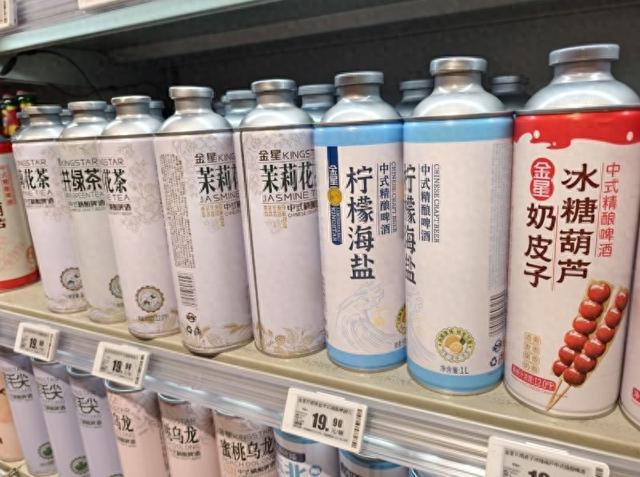
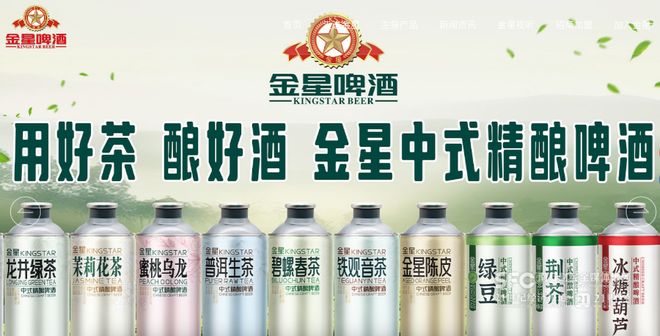
Core Viewpoint - Henan Jinxing Beer Co., Ltd. is embarking on an IPO journey in Hong Kong, aiming to enhance corporate governance, transparency, and secure capital for long-term product development and channel expansion [2][5]. Company Overview - Founded in 1982, Jinxing Beer has evolved from traditional beer to a focus on "Chinese craft beer," launching its first craft beer, Jinxing Maojian, in August 2024, which significantly boosted its performance [3][4]. - In 2023, the company reported revenues of 356 million yuan and a net profit of 12.2 million yuan, but by 2024, revenues surged to 730 million yuan, a 104.9% increase, with net profit reaching 125 million yuan, a 928% increase [3][4]. Financial Performance - For the first three quarters of 2025, Jinxing Beer achieved revenues of 1.11 billion yuan, a 191.2% increase year-on-year, and a net profit of 305 million yuan, a 1095.8% increase [3][4]. - The company has become the eighth largest in China's beer industry and the fifth largest domestic beer company, with a retail sales compound annual growth rate (CAGR) of 23.7% from 2022 to 2024 [4]. Product Pricing and Profitability - Jinxing Beer’s craft beer is priced significantly higher than traditional beers, with craft beer retail prices around 20 yuan per can (1L), compared to traditional beers priced between 2.5 yuan per can (330ml) and 6 yuan per bottle (500ml) [4]. - The gross margin has improved, with figures of 27.3%, 37.8%, and 47% for 2023, 2024, and the first three quarters of 2025, respectively, while net margins reached 3.4%, 17.2%, and 27.5% [4]. Market Position and Competition - Jinxing Beer faces increasing competition from major players like China Resources Beer and Yanjing Beer, which are expanding their craft beer offerings [6][9]. - The company relies heavily on distributors for sales, with 94.8% of its revenue coming from this channel, and has a network covering 29 provinces in China [7]. Strategic Outlook - The IPO is seen as a strategic move to strengthen Jinxing Beer’s market position amid intensifying competition, allowing for enhanced funding for innovation and brand development [5][9]. - The company aims to maintain its focus on Chinese craft beer while navigating the challenges posed by larger competitors and evolving market dynamics [8][9].
家族绝对控股、社保历史欠缴…金星啤酒赴港上市的风险清单
Sou Hu Cai Jing· 2026-01-16 08:45
Core Viewpoint - The company has shown significant revenue growth and improved profit margins, but faces serious internal control issues and dependency on a single product line, which raises concerns about sustainability and compliance risks [2][5][10]. Financial Performance - Revenue increased from 356 million RMB in 2022 to 1.11 billion RMB in the first nine months of 2025, with a net profit margin rising from 3.4% in 2023 to 27.5% in 2025 [2]. - Gross margin is projected to rise from 27.3% in 2023 to 37.8% in 2024, while net profit margin is expected to increase from 3.4% to 17.2% in the same period [5]. Internal Control Issues - The company has reported significant shortfalls in social insurance and housing fund contributions, with unpaid amounts of 7.5 million RMB, 7.9 million RMB, and 6.5 million RMB for 2023, 2024, and the first nine months of 2025, respectively [6]. - There are serious financial control vulnerabilities, with 40.5% of dealer payments in 2024 flowing through third-party accounts, raising legal risks related to money laundering [7]. - Approximately 25.7% of the company's building area lacks ownership certificates, and a construction site in Xi'an lacks necessary permits, posing regulatory and operational risks [8]. Product Dependency - The company heavily relies on its "Chinese Craft Beer" category, particularly the tea beer series launched in August 2024, which accounted for 78.1% of revenue in the first nine months of 2025 [10]. - The sustainability of growth is questioned as consumer acceptance of the "tea + beer" combination may not last, and any decline in popularity could severely impact revenue [10]. Market Competition - The company claims to be a leader in the "flavor craft beer" segment, but the Chinese beer market is dominated by the top five companies, which hold over 80% of the market share [16]. - Despite significant price increases and improved margins, the overall interest in the beer sector remains low, with current market valuations limiting growth potential [17]. Ownership Structure - The company's ownership is highly concentrated, with the Zhang family controlling 100% of the equity through direct and indirect means [17]. Conclusion - While the company presents a compelling growth narrative, the underlying compliance issues, product dependency, and competitive landscape necessitate a cautious evaluation of its long-term sustainability and market position [18].
中国消费板块 2026 展望:消费信心复苏是否已开启?-China Consumer Sector_ 2026 Outlook_ are we at the beginning of consumer confidence recovery_
2026-01-15 06:33
Summary of the Conference Call Transcript Industry Overview - **Industry**: China Consumer Sector - **Outlook**: The sector is believed to be in the early stage of a multi-year recovery cycle that began in Q3 2024, with expectations for gradual improvement in consumer sentiment and spending through 2026E [2][11][12] Key Insights - **Valuation**: MSCI China Consumer Discretionary and Staples are trading at 17x and 15x 12-month forward PE, approximately one standard deviation below the 10-year averages, indicating that current valuations do not reflect a potential consumption recovery [2][9] - **Consumer Confidence**: The China Consumer Confidence Index has been trending upwards since September 2024, suggesting a gradual restoration of consumer confidence despite ongoing challenges in the property market [12][19] - **K-shaped Recovery**: The recovery is characterized by a K-shaped trend, where mid- to high-income consumers in tier-1 cities are expected to lead spending, while lower-tier city consumers remain focused on value for money [3][48] Consumer Behavior Trends - **Shifting Preferences**: A UBS Evidence Lab survey indicates a divergence in consumer behavior, with over 50% of mid- to high-income consumers reporting investment gains and showing strong spending intentions, particularly in premium and experiential categories [3][37] - **Spending Intentions**: The strongest spending intentions are noted in beauty and skincare (41%) and tourism (37%), reflecting a shift towards experiential and premium spending [51] - **Investment Gains**: 64-74% of mid- to high-income consumers reported increased investment returns, with many planning to reinvest or spend on travel, health services, and consumer electronics [40][41] Stock Implications - **Company Ratings**: - Upgrades to Neutral for Fenjiu due to expected benefits from non-business baijiu consumption - Buy ratings maintained for companies like MIXUE, Guming, China Foods, CR Beer, and YUM China, among others [4] - **Dividend Payouts**: Premium baijiu companies are noted for their >75% dividend payout, which is expected to protect share prices from downside risks [4] Structural Growth Opportunities - **Emerging Themes**: Key investment themes for 2026E include changing consumer preferences, corporate restructuring, and industry consolidation, particularly in sectors like home appliances and mass-market consumption [14][50] - **Corporate Restructuring**: Companies are expected to adapt their business models to align with changing consumer behaviors, which may lead to sustainable long-term earnings growth [4][50] Risks and Challenges - **Property Market Downturn**: The ongoing downturn in the property market is anticipated to weigh on household balance sheets, potentially impacting consumer spending [13][48] - **Policy Support**: The pace of recovery is contingent on stabilizing the property market and effective policy implementation to boost consumption [13][48] Conclusion - The China consumer sector is poised for a recovery, driven by improving consumer confidence and shifting spending patterns. However, the recovery will be uneven across different income groups and city tiers, necessitating a nuanced investment approach to capture emerging opportunities while being mindful of potential risks associated with the property market downturn.




金星啤酒闯关港股,中式精酿黑马面临估值之问
2 1 Shi Ji Jing Ji Bao Dao· 2026-01-14 09:29
Core Viewpoint - Henan Jinxing Beer Co., Ltd. has submitted its listing application to the Hong Kong Stock Exchange, marking its official entry into the public market, with a focus on its innovative "Chinese craft beer" products that have driven significant revenue growth [1][2]. Company Overview - Founded in 1982, Jinxing Beer has evolved from a regional brand to the eighth largest beer company in China, and the fifth largest domestic beer producer [1][2]. - The company has experienced a transformation in the past two years, particularly with the launch of its innovative products like "Jinxiang Maojian," which has contributed to its rapid growth [5][7]. Financial Performance - Jinxing Beer reported revenues of 356.4 million yuan in 2023, projected to reach 730.2 million yuan in 2024, and 1.109 billion yuan for the first nine months of 2025, with net profits increasing from 12.2 million yuan in 2023 to 305.3 million yuan in 2025 [2][7]. - The revenue contribution from "Chinese craft beer" has surged to 78.1% by the first three quarters of 2025, compared to 0% in 2023 [7][10]. Market Position - Despite its growth, Jinxing Beer still lags behind major competitors, with the sixth largest competitor, Zhujiang Beer, generating over 5 billion yuan in revenue, significantly more than Jinxing Beer [8][9]. - The company aims to maintain a growth rate above the industry average to close the gap with leading brands [8]. Product Innovation - Jinxing Beer has successfully created a new category of "Chinese craft beer," with over 50 SKUs, including unique flavors like ice sugar hawthorn and sugar orange [5][10]. - The pricing strategy for "Chinese craft beer" is significantly higher, with products priced around 20 yuan per can, compared to traditional products priced between 3 to 6 yuan [10][11]. Market Sentiment and Valuation - The capital market's interest in alcoholic beverage stocks is currently low, which may affect Jinxing Beer's valuation despite its growth potential [15][16]. - Comparatively, Jinxing Beer is expected to achieve a higher valuation than its peers in the Hong Kong market due to its growth trajectory and innovative product offerings [14]. Distribution and Sales Channels - Jinxing Beer relies heavily on traditional distribution channels, with over 90% of its revenue coming from offline sales, indicating a need for further development in e-commerce and direct sales [17]. - The company has expanded its distribution network to 29 provinces, but still faces competition from established brands in the market [18]. Ownership Structure - The largest shareholder of Jinxing Beer is Jinxing Holding Group, which holds 74.56% of the company, with key figures Zhang Tieshan and Zhang Feng holding significant stakes [19].
大行评级|招商证券国际:维持百威亚太“中性”评级 需求拐点尚待确认

Ge Long Hui· 2026-01-14 06:28
Group 1 - The core viewpoint of the report indicates that Budweiser APAC's profitability in the fourth quarter of last year was pressured by concentrated cost recognition and high base effects, but most negative impacts have been absorbed, and a demand turning point is yet to be confirmed [1] - The report states that the EBITDA forecasts for Budweiser APAC for 2025 and 2026 have been lowered by approximately 5% [1] - The rating for Budweiser APAC is maintained at "Neutral," with a target price set at HKD 7.5 [1]