中国联通

Search documents
中国联通(00762) - 截至2025年10月31日止之股份发行人的证券变动月报表
2025-11-04 00:46
股份發行人及根據《上市規則》第十九B章上市的香港預託證券發行人的證券變動月報表 截至月份: 2025年10月31日 狀態: 新提交 致:香港交易及結算所有限公司 公司名稱: 中國聯合網絡通信 (香港) 股份有限公司 呈交日期: 2025年11月4日 I. 法定/註冊股本變動 不適用 FF301 第 1 頁 共 10 頁 v 1.1.1 (A). 股份期權(根據發行人的股份期權計劃) 不適用 第 3 頁 共 10 頁 v 1.1.1 FF301 II. 已發行股份及/或庫存股份變動 | 1. 股份分類 | 普通股 | 股份類別 | 不適用 | | 於香港聯交所上市 (註1) | 是 | | | --- | --- | --- | --- | --- | --- | --- | --- | | 證券代號 (如上市) | 00762 | 說明 | | | | | | | | | 已發行股份(不包括庫存股份)數目 | | 庫存股份數目 | | 已發行股份總數 | | | 上月底結存 | | | 30,598,124,345 | | 0 | | 30,598,124,345 | | 增加 / 減少 (-) | | | ...

港股通央企红利ETF天弘(159281)涨0.88%,成交额4945.57万元
Xin Lang Cai Jing· 2025-11-03 17:55
Core Points - The Tianhong CSI Hong Kong Stock Connect Central State-Owned Enterprises Dividend ETF (159281) closed up 0.88% on November 3, with a trading volume of 49.4557 million yuan [1] - The fund was established on August 20, 2025, with an annual management fee of 0.50% and a custody fee of 0.10% [1] - As of October 31, the fund had 225 million shares outstanding and a total size of 228 million yuan [1] - Over the last 20 trading days, the fund's cumulative trading amount reached 1.129 billion yuan, with an average daily trading amount of 56.4648 million yuan [1] - The current fund manager is He Yuxuan, who has managed the fund since its inception, achieving a return of 1.18% during the tenure [1] Holdings Summary - The top holdings of the Tianhong CSI Hong Kong Stock Connect Central State-Owned Enterprises Dividend ETF include: - COSCO Shipping Holdings (0.85% holding, 218,000 shares, market value of 2.9175 million yuan) [2] - Orient Overseas International (0.40% holding, 10,500 shares, market value of 1.3717 million yuan) [2] - China Foreign Transport (0.33% holding, 270,000 shares, market value of 1.1396 million yuan) [2] - China National Petroleum (0.32% holding, 162,000 shares, market value of 1.0973 million yuan) [2] - CITIC Bank (0.32% holding, 175,000 shares, market value of 1.1136 million yuan) [2] - CNOOC (0.29% holding, 58,000 shares, market value of 1.0041 million yuan) [2] - China Shenhua Energy (0.29% holding, 30,500 shares, market value of 982,600 yuan) [2] - China Pacific Insurance (0.29% holding, 164,000 shares, market value of 1.0107 million yuan) [2] - China Unicom (0.28% holding, 104,000 shares, market value of 952,800 yuan) [2] - Agricultural Bank of China (0.27% holding, 189,000 shares, market value of 933,900 yuan) [2]


国金证券期货宏观日报-20251103
SINOLINK SECURITIES· 2025-11-03 15:37
Investment Rating - The report provides a positive investment rating for the communication sector, indicating potential growth opportunities in the industry [33]. Core Insights - The communication sector has shown resilience and growth, with significant increases in revenue and market demand projected for the coming years [10][12]. - Key players in the sector, such as China Mobile and ZTE, are expected to maintain strong performance due to their strategic investments in technology and infrastructure [66]. - The report highlights the increasing importance of cloud services and AI technologies, which are anticipated to drive future growth in the communication industry [36][56]. Summary by Sections Market Performance - The communication sector has experienced a cumulative increase in stock prices, outperforming the broader market indices [3][4]. - The sector's performance is supported by robust demand for telecommunications services and advancements in technology [10]. Financial Metrics - Revenue growth for major companies in the sector is projected to continue, with significant year-on-year increases expected [41][48]. - Profit margins are also anticipated to improve, reflecting operational efficiencies and cost management strategies [49][50]. Company Analysis - China Mobile is highlighted as a leading player with a strong market position and consistent revenue growth, projected to reach significant earnings per share in the coming years [66]. - Other notable companies such as ZTE and Xin Yi Sheng are also expected to show strong financial performance, driven by their innovative product offerings and market expansion strategies [9][66].






国内14+液冷数据中心项目盘点
DT新材料· 2025-11-03 14:17
Core Insights - The article emphasizes the growing importance of liquid cooling technology in data centers due to the increasing demands for computing power and energy efficiency in the digital economy [3][4][5]. Background - Traditional air cooling methods face limitations such as inefficiency, high energy consumption, and large space requirements, leading to a shift towards liquid cooling solutions [3]. - Liquid cooling technology is becoming a key driver for the green upgrade and efficient iteration of global digital infrastructure [3]. Domestic Liquid Cooling Projects - **China Mobile Intelligent Computing Center (Qingdao)**: Launched on March 29, 2024, with a total investment of 3.14 billion yuan, deploying 16,000 cabinets with a power density of 25 kW and achieving a PUE of 1.23 [3]. - **Gansu Qingyang "East Data West Calculation" Big Data Park**: Total investment of approximately 5.5 billion yuan, covering 110 acres, with a total power of 60,000 kW [4]. - **Guangxi Laibin New Energy Data Center**: Started construction on March 29, 2024, with a total investment of 1.45 billion yuan, deploying 500 intelligent computing cabinets [5]. - **China Telecom Lingang Intelligent Computing Center (Shanghai)**: Features a new generation of intelligent liquid cooling technology, achieving a unit computing energy consumption of below 1.5 kW/P and a PUE below 1.15 [6]. - **Hong Kong University of Science and Technology (Guangzhou)**: Officially opened on April 18, 2024, utilizing a 40 kW spray liquid cooling system, achieving a PUE as low as 1.08 [7]. - **China Telecom Guangdong-Hong Kong-Macao Greater Bay Area Integrated Data Center**: Launched on May 22, 2024, with a total computing power of 15,000 P and a PUE controlled below 1.25 [8]. - **Lubei Big Data Center**: Scheduled for a lighting ceremony on December 27, 2024, with an average PUE below 1.1 [9]. - **Alashan Green Low-Carbon Intelligent Computing Center (Xinjiang)**: Total investment of 2.5 billion yuan, aiming for a PUE below 1.2 [9]. - **China Mobile Yangtze River Delta (Wuhu) Data Center Project**: Total investment of approximately 6 billion yuan, with a planned building area of 91,470 square meters [10]. - **Alibaba Zhejiang Cloud Computing Data Center**: Planned to support an annual capacity of 100,000 servers [11]. - **China Unicom Guangdong-Hong Kong-Macao Greater Bay Area Hub (Shaoguan) Data Center**: Total investment of 4.8 billion yuan, with a PUE target of less than 1.25 [12]. - **Sinopec Artificial Intelligence Infrastructure Project**: Expected to complete by May 2025, utilizing advanced cooling technology to achieve a PUE of 1.15 [13]. - **China Mobile (Xining) Green Energy Intelligent Computing Integration Demonstration Base**: Total investment exceeding 700 million yuan, aiming for a PUE below 1.2 [14]. - **Guangzhou Next-Generation Liquid Cooling High-Performance R&D Computing Center**: First phase supports 256 units with approximately 4,000 P computing power [15]. Events and Conferences - The 6th Thermal Management Industry Conference and Exposition is set to take place, focusing on innovations in thermal management and liquid cooling technologies [16].



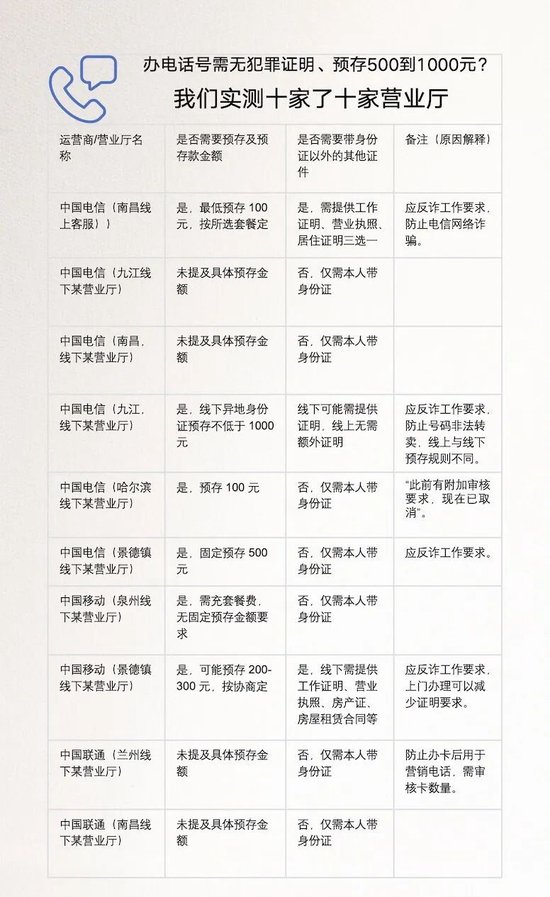
离谱!多地办电话卡要工作证明、无犯罪证明、银行流水
Xin Lang Cai Jing· 2025-11-03 14:12
Core Viewpoint - The article discusses the discrepancies in requirements for obtaining a phone card across different regions in China, particularly focusing on the additional documentation and prepayment requirements imposed by telecom operators in Jiangxi province, which are not uniformly mandated by national regulations [1][6][9]. Group 1: Requirements for Obtaining Phone Cards - Telecom operators in Jiangxi have implemented stricter requirements for obtaining phone cards, including the need for documents such as a "no criminal record" certificate, work proof, or property documents, along with a prepayment of 500 to 1000 yuan [1][4][6]. - In contrast, regions like Fujian, Gansu, and Heilongjiang have more lenient requirements, often only requiring an ID and no additional documentation or prepayment [5][6][9]. - The inconsistency in requirements has led to confusion among consumers, with some operators providing conflicting information regarding what is necessary to obtain a phone card [6][8]. Group 2: Justification and Legality of Requirements - Operators justify the additional requirements as measures to combat telecom fraud, but the specific regulations backing these requirements are unclear and not uniformly enforced [1][6][9]. - Experts have pointed out that there is currently no national regulation that explicitly authorizes telecom operators to impose such additional conditions for obtaining phone cards, raising questions about the legality of these practices [1][7][9]. - The lack of a unified standard for phone card applications across different regions has been criticized, with suggestions for regulatory bodies to establish basic standards to streamline the process and reduce unnecessary burdens on consumers [9].
强化技术创新与合规建设,推动不良资产处置行业高质量发展
Huan Qiu Wang· 2025-11-03 10:54
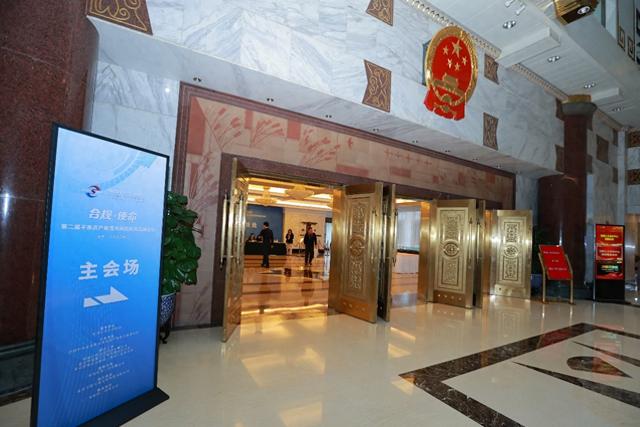
Core Insights - The second summit on non-performing asset disposal and risk prevention was successfully held in Beijing, focusing on compliance and mission to explore new paths and strategies for the industry [1][2]. Group 1: Industry Overview - The summit emphasized the importance of non-performing asset disposal in maintaining national financial stability and its direct relation to the safety of the financial system and economic stability [5]. - Current economic challenges include external pressures from the U.S., necessitating a focus on technological advancement and domestic market development to enhance core competitiveness and resilience in supply chains [5]. - The rise in non-performing loans and rates indicates a need for solid economic foundations and attention to risks in certain sectors, highlighting the importance of effective asset disposal and risk prevention measures [6]. Group 2: Technological Innovation and Compliance - The summit discussed the role of intelligent economy in reshaping the asset disposal landscape, with a focus on innovation and compliance to optimize resource allocation and mitigate risks [6]. - Financial technology, including AI and blockchain, is seen as crucial for enhancing efficiency in asset disposal processes, addressing challenges such as pricing, recovery efficiency, and transparency [8]. - The integration of technology is expected to drive the industry towards greater intelligence, transparency, and compliance, creating new opportunities for asset management [8]. Group 3: Collaborative Efforts and Future Directions - The event served as a platform for over 300 participants from various sectors, including banking, asset management companies, and technology firms, to discuss collaborative strategies for the industry [14]. - The launch of the "Non-Performing Asset Disposal Industry White Paper" signifies a commitment to industry standards and best practices [9][11]. - Participants expressed a collective vision for enhancing industry self-regulation, deepening compliance awareness, and exploring innovative models for sustainable development in the non-performing asset sector [14].
资金动向 | 北水连续4日扫货小米,抛售中芯国际13.81亿港元
Ge Long Hui· 2025-11-03 10:10
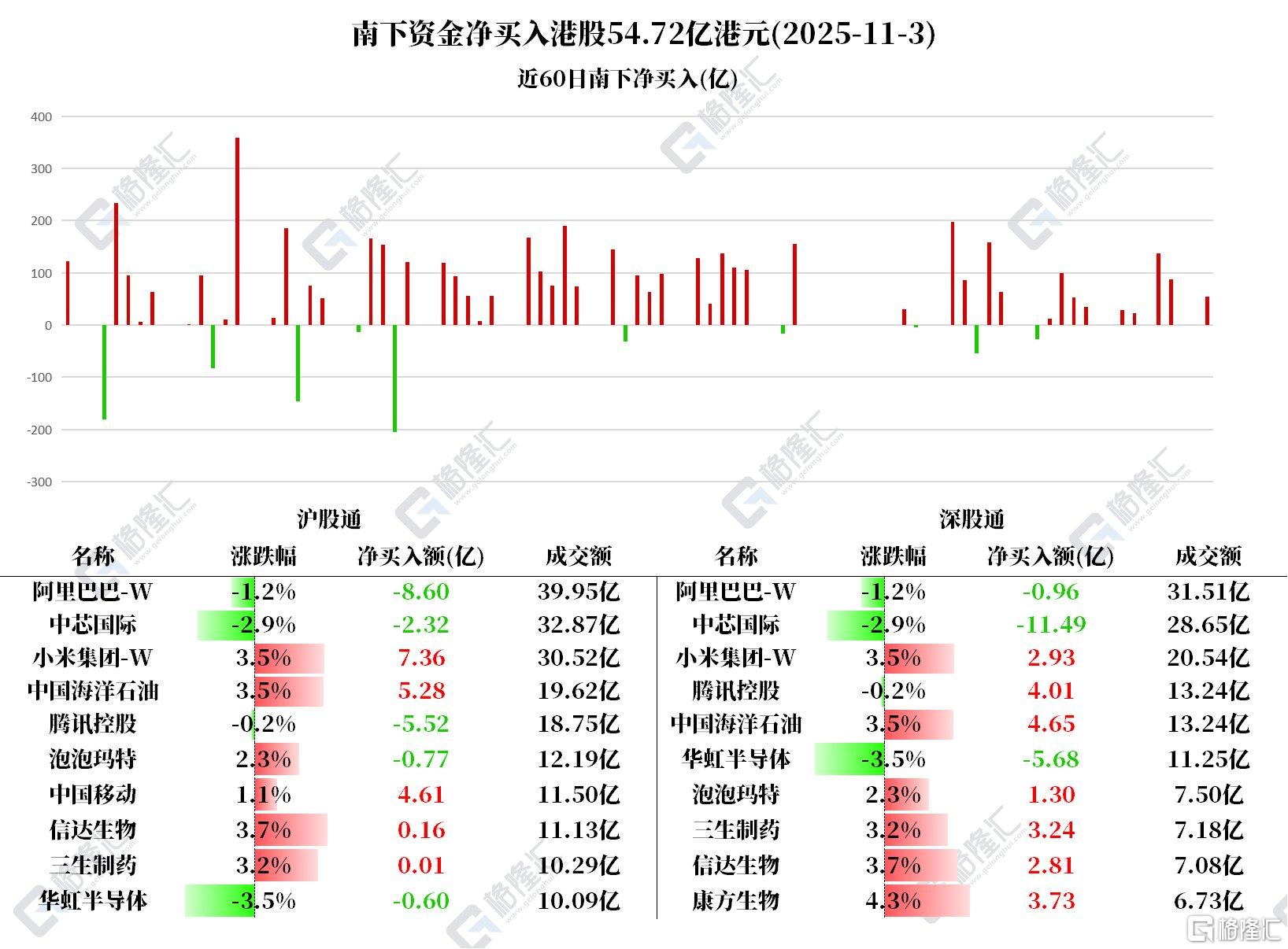
Group 1 - Xiaomi Group has seen a net buy of HKD 1.029 billion, with a total of HKD 19.1269 billion net bought over four consecutive days [1] - CNOOC reported a net buy of HKD 0.993 billion, totaling HKD 16.0304 billion net bought over three consecutive days [1] - Tencent Holdings experienced a net sell of HKD 1.51 billion, with a total of HKD 19.9056 billion net sold over four consecutive days [1] Group 2 - Xiaomi's automotive division announced that it will deliver over 40,000 vehicles by October 2025, with a significant reduction in delivery times due to increased production capacity [3] - CNOOC's Q3 revenue reached CNY 104.895 billion, a year-on-year increase of 5.7%, while net profit decreased by 12.2% [3] - China Mobile, along with China Unicom and China Telecom, has received approval to conduct commercial trials for eSIM mobile services, which are expected to enhance user communication needs and provide opportunities for domestic software and systems [4]



通信服务板块11月3日涨1%,蜂助手领涨,主力资金净流入5117.02万元
Zheng Xing Xing Ye Ri Bao· 2025-11-03 08:43
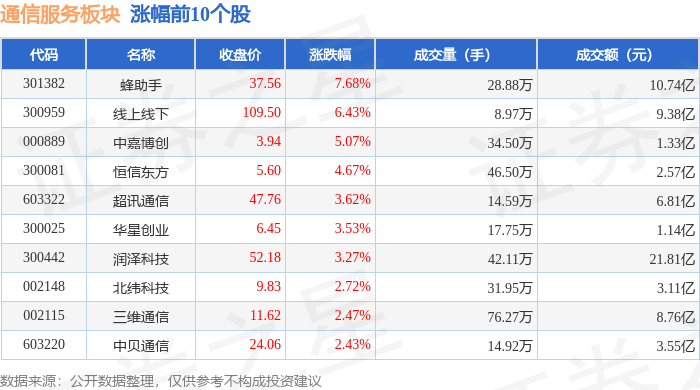
Market Overview - On November 3, the communication services sector rose by 1.0%, with Fengzhushou leading the gains [1] - The Shanghai Composite Index closed at 3976.52, up 0.55%, while the Shenzhen Component Index closed at 13404.06, up 0.19% [1] Stock Performance - Fengzhushou (301382) closed at 37.56, up 7.68% with a trading volume of 288,800 shares and a turnover of 1.074 billion yuan [1] - Online and Offline (300959) closed at 109.50, up 6.43% with a trading volume of 89,700 shares [1] - Zhongjia Bochuan (000889) closed at 3.94, up 5.07% with a trading volume of 345,000 shares [1] - Hengxin Dongfang (300081) closed at 5.60, up 4.67% with a trading volume of 465,000 shares [1] - Chaoxun Communication (603322) closed at 47.76, up 3.62% with a trading volume of 145,900 shares [1] Capital Flow - The communication services sector saw a net inflow of 51.17 million yuan from institutional investors, while retail investors experienced a net outflow of 19.84 million yuan [2][3] - Major stocks with significant net inflows include Runze Technology (300442) with 90.79 million yuan and China Unicom (600050) with 44.42 million yuan [3] - Stocks like ST Xintong (600289) and Guangmai Technology (920924) experienced declines of 2.43% and 0.99% respectively [2]
李乐成《党建》刊发署名文章:加快推进人工智能赋能新型工业化
Bei Jing Ri Bao Ke Hu Duan· 2025-11-03 03:54
Core Insights - Artificial intelligence (AI) is recognized as a crucial driver of the new technological revolution and industrial transformation, with a strong emphasis on self-reliance and application-oriented development [1][2][3] Group 1: Importance of AI in Industrialization - AI is identified as a strategic technology leading the current technological revolution and industrial transformation, with significant implications for global technological competition and industrial optimization [2] - The integration of AI with the real economy, particularly manufacturing, is deemed essential for success [2] Group 2: Key Tasks for AI Empowerment - Continuous strengthening of foundational research and focusing on core technologies such as high-end chips and basic software is emphasized [3] - The establishment of a collaborative innovation system involving enterprises, academia, and research institutions is crucial for upgrading traditional industries and developing new strategic industries [3] Group 3: Pathways for AI Empowerment - Deep integration of AI technology and industrial innovation is necessary, with a focus on market-driven technological development [4] - A robust governance mechanism for AI is essential to ensure safety and security while promoting industrial strength [4] Group 4: Progress in AI Industry - China's AI industry is projected to exceed 900 billion yuan by 2024, with over 5,000 AI companies and more than 400 national-level specialized "little giant" enterprises [5][6] - Significant advancements in computing power and data resources have been made, with over 35,000 high-quality datasets established [6] Group 5: Optimizing the AI Ecosystem - The establishment of a comprehensive standardization system for AI is underway, with nearly 200 standards expected to be developed by 2025 [7] - A national AI industry investment fund of 60 billion yuan has been launched to support the sector [7] Group 6: Fostering AI Advantageous Enterprises - Support for leading enterprises in AI innovation and the development of small and medium-sized enterprises is crucial for creating a robust ecosystem [11][12] - The focus is on enhancing the development environment for AI, including standardization and funding support [12] Group 7: Strengthening Safety and Governance - The importance of balancing development and safety in AI is highlighted, with a focus on enhancing technical safeguards and ethical governance [12][13] - The establishment of a monitoring system for AI safety risks is essential for ensuring responsible development [12]
电信运营商增长逻辑已变!
Zhong Guo Jing Ying Bao· 2025-11-03 03:53
Core Insights - The financial performance of China's three major telecom operators shows a mixed outlook, with revenue growth slowing down while profit growth remains positive [2][3][4] Revenue Performance - For the first three quarters of 2025, China Mobile, China Telecom, and China Unicom reported revenues of 794.7 billion, 394.3 billion, and 293 billion yuan respectively, with growth rates declining from 2.0%, 2.9%, and 3.0% in 2024 to 0.4%, 0.6%, and 1.0% [2] - Only China Mobile achieved a 2.5% year-on-year revenue growth in Q3 2025, while China Unicom's revenue remained flat and China Telecom's revenue decreased by 0.91% [2] Profitability - Net profits for the three operators reached 115.4 billion, 30.8 billion, and 20 billion yuan respectively, with growth rates of 4.0%, 5.0%, and 5.1%, although these rates have slowed compared to the previous year's figures [2][3] - The telecom industry as a whole saw a 0.9% year-on-year increase in telecom business revenue, totaling 1,327 billion yuan for the first three quarters of 2025 [2] Traditional Business Challenges - The decline in revenue growth is attributed to the weakness in traditional business segments, which have seen their revenue share drop from 92% in 2020 to 78% in Q3 2025 [3][4] - China Mobile has 1.009 billion mobile users, but its average revenue per user (ARPU) fell to 48 yuan, a 3% decrease from 49.5 yuan in 2024 [3] Emerging Business Growth - AI-related emerging businesses have become a significant profit driver, with China Unicom's AI-related revenue contributing over 60% to its "smart network" business, and its cloud revenue reaching 52.9 billion yuan, a 20.6% increase [6][7] - China Telecom's smart revenue surged by 62.3%, significantly outpacing its overall revenue growth of 0.59% [7] Investment in AI and R&D - The three operators have shifted their focus from traditional "pipeline thinking" to "computing power and service thinking," with R&D expenditures exceeding 22 billion yuan in the first three quarters of 2025, of which over 40% is allocated to AI-related investments [10][11] - The operators are expected to see long-term returns from these investments, despite short-term pressures on cash flow and profitability [10] Industry Transformation - The growth logic of the telecom industry is changing, with AI and computing power becoming central to future growth strategies [10][11] - The operators are forming a sustainable payment loop around "bandwidth + computing power + data + models," indicating a significant shift in the industry's revenue generation model [11]