
软银集团

Search documents
刚刚!特朗普,签了!
券商中国· 2025-11-24 23:34
凌晨,特朗普签令! 据央视新闻,当地时间11月24日,美国白宫发布声明表示,总统特朗普签署了一项行政命令,启动一项旨在利 用人工智能(AI)变革科学研究方式、加速科学发现的全新国家计划"创世纪计划"。 声明表示,该命令指示能源部创建一个人工智能实验平台,整合美国超级计算机和独特数据资产,以生成科学 基础模型并为机器人实验室提供支持。该命令指示总统科学与技术事务助理(APST)协调这项国家计划,并 整合联邦政府各部门的数据和基础设施。能源部长、总统科学与技术事务助理以及人工智能与加密技术特别顾 问将与学术界和私营部门的创新者合作,支持并加强"创世纪计划"。 特朗普在7月公布了一项全面的人工智能政策蓝图,旨在使人工智能公司更容易在美国发展,并使美国盟友更 容易获得关键的硬件和软件。该蓝图鼓励美国能源部和其他机构与私营部门和国家实验室合作,投资于"一系 列科学领域的自动化云实验室,包括工程、材料科学、化学、生物学和神经科学"。它还指示政府扩大实验室 的人工智能研究和培训。 隔夜美股,三大指数集体收涨,道琼斯指数涨0.44%,标普500指数涨1.55%,纳斯达克综合指数涨2.69%。大 型科技股集体上涨,特斯拉、谷歌 ...




签了!特朗普启动“创世纪计划”
Zheng Quan Shi Bao· 2025-11-24 23:16
Group 1 - The core point of the news is the launch of the "Genesis Project," an initiative by the Trump administration aimed at transforming scientific research through artificial intelligence (AI) [1] - The project involves the Department of Energy creating an AI experimental platform that integrates U.S. supercomputers and unique data assets to generate scientific foundational models and support robotic laboratories [1] - The initiative will be coordinated by the Assistant to the President for Science and Technology (APST) and will involve collaboration with academia and private sector innovators [1] Group 2 - In January 2023, Trump announced a joint investment of $500 billion by OpenAI, SoftBank, and Oracle to enhance AI infrastructure in the U.S. [1] - The "Stargate" project aims to build the physical and virtual infrastructure necessary for next-generation AI, including data centers across the U.S. [1] - On September 23, the three companies announced the construction of five new AI data centers, with two located in Ohio and Texas, capable of expanding to 1.5 gigawatts in the next 18 months [2] Group 3 - OpenAI and Oracle have agreed to invest over $300 billion over the next five years to develop three data centers with a total capacity of 4.5 gigawatts in Texas, New Mexico, and the Midwest [2] - The total planned capacity for the "Stargate" project, including the new data centers and existing facilities, is nearly 7 gigawatts, with investments exceeding $400 billion over the next three years [2]


签了!特朗普启动“创世纪计划”
证券时报· 2025-11-24 23:15
Core Points - The article discusses President Trump's signing of an executive order to launch a new national initiative called the "Genesis Project," aimed at transforming scientific research through artificial intelligence (AI) [2] - The initiative involves the Department of Energy creating an AI experimental platform that integrates U.S. supercomputers and unique data assets to generate scientific foundational models and support robotic laboratories [2] - The project is a collaboration between the federal government, academia, and private sector innovators, with a significant investment of $500 billion from OpenAI, SoftBank, and Oracle to enhance AI infrastructure in the U.S. [2] - The "Stargate" project, part of this initiative, will establish five new AI data centers across the U.S., with a total planned capacity of nearly 7 gigawatts and an investment exceeding $400 billion over the next three years [3] Summary by Sections Genesis Project - The "Genesis Project" aims to leverage AI to accelerate scientific discoveries and transform research methodologies [2] - The initiative will be coordinated by the Assistant to the President for Science and Technology and will integrate data and infrastructure across federal departments [2] Stargate Project - The "Stargate" project involves the construction of five new AI data centers, with two located in Ohio and Texas, capable of expanding to 1.5 gigawatts in the next 18 months [3] - A partnership between OpenAI and Oracle will lead to the development of three additional data centers with a total capacity of 4.5 gigawatts, with over $300 billion invested over five years [3] - The combined efforts will result in a total capacity of nearly 7 gigawatts for the "Stargate" project, with investments projected to exceed $400 billion in the next three years [3]

Amazon's $50 Billion U.S. Infrastructure Pledge Makes 2025's Top AI Deals (Full List, Ranked)
Forbes· 2025-11-24 20:45
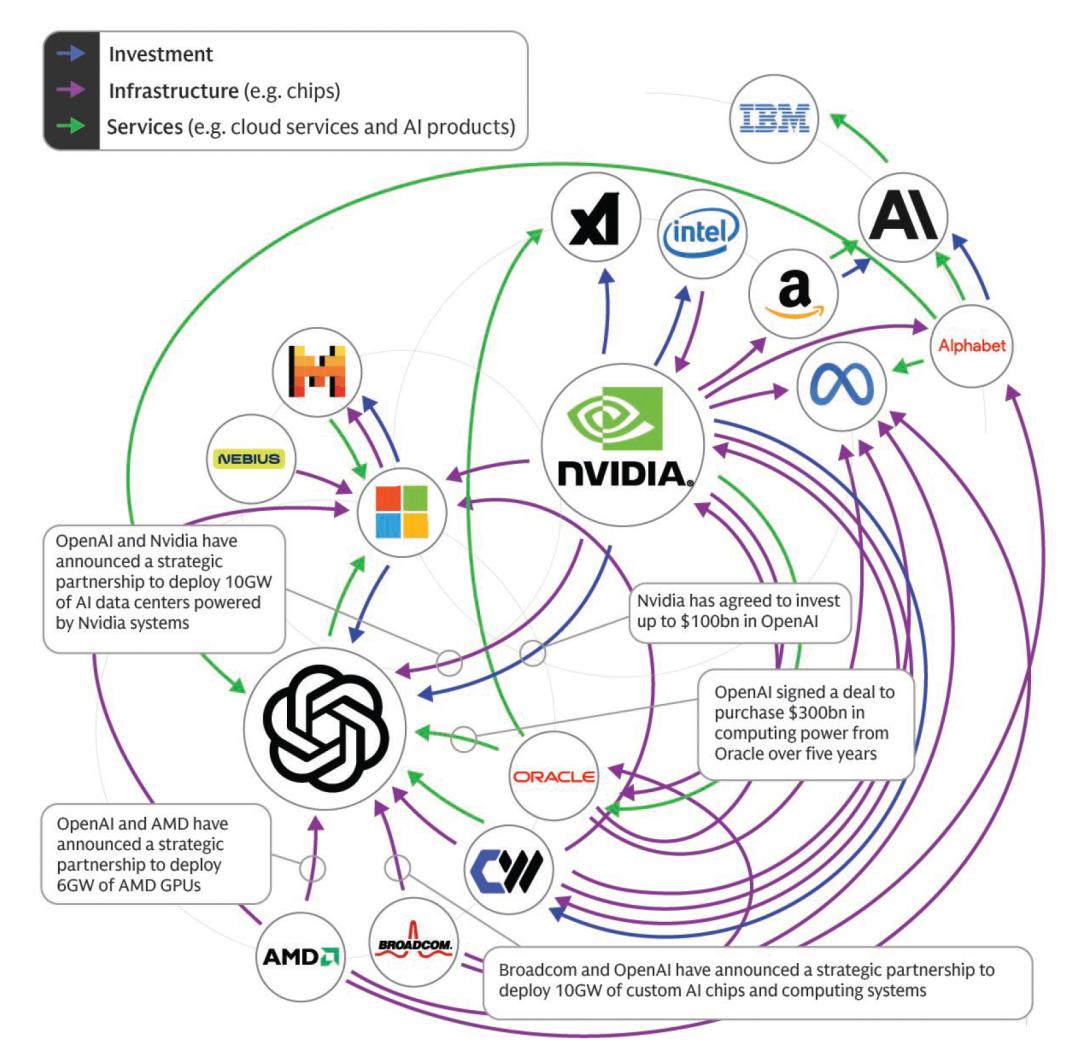
Core Insights - Amazon announced an investment of up to $50 billion to enhance AI and supercomputing capabilities for U.S. government clients, marking it as the fourth-largest AI deal of the year [1][5] - Global AI spending is projected to reach $375 billion by the end of 2023 and exceed $3 trillion annually by 2030, driven by increasing investments in AI infrastructure and energy resources [1] Investment Landscape - The largest AI infrastructure project announced is a $500 billion initiative involving OpenAI, SoftBank, and Oracle, aimed at creating 100,000 jobs [3] - OpenAI has signed a contract with Oracle for $300 billion in computing power over five years, with Oracle providing approximately 4.5 gigawatts of power capacity [4] - A partnership between OpenAI and Nvidia includes a $100 billion investment from Nvidia to support AI model training infrastructure [4] Additional Major Deals - Anthropic plans to invest $50 billion in AI infrastructure, starting with data centers in Texas and New York, which is expected to create 800 permanent jobs and over 2,000 construction roles [6] - Oracle is set to purchase $40 billion worth of Nvidia's AI chips for OpenAI's data center in Texas, part of the Stargate project [6] - OpenAI and Amazon have a partnership valued at $38 billion, where Amazon will provide cloud computing services and Nvidia processors for AI model operations [7] Other Notable Investments - Microsoft will provide $30 billion in cloud computing capacity to Anthropic, with Nvidia and Microsoft investing up to $10 billion and $5 billion, respectively [8] - Google plans to invest $25 billion in data centers and AI infrastructure over the next two years to enhance energy capacity and innovation [9] - The Energy Department has partnered with AMD to develop two AI-powered supercomputers in a $1 billion initiative, with the first expected to be operational within six months [12]



Amazon to spend up to $50 billion on AI infrastructure for U.S. government
CNBC· 2025-11-24 17:50
Core Insights - Amazon plans to invest up to $50 billion to enhance its artificial intelligence and high-performance computing capabilities for U.S. government customers, with the project expected to commence in 2026 [1][3] - The investment will add nearly 1.3 gigawatts of capacity through new data centers specifically designed for federal agencies [1] - AWS aims to provide agencies with access to advanced AI tools, including Anthropic's Claude models and Nvidia chips, as well as Amazon's custom Trainium AI chips [2] Investment and Capacity Expansion - The project is part of a broader trend where tech companies are investing heavily in AI infrastructure, with Oracle, OpenAI, and SoftBank planning to invest up to $500 billion in the U.S. over the next four years [2] - AWS serves over 11,000 government agencies, indicating a significant market for its AI solutions [3] - Amazon has increased its capital expenditure forecast for 2025 to $125 billion, up from $118 billion, reflecting its commitment to expanding AI capabilities [4] Strategic Implications - AWS CEO Matt Garman stated that this investment will eliminate technological barriers for government agencies and position the U.S. to lead in the AI era [3] - The expansion of AI data centers is part of a competitive landscape where multiple tech companies are racing to build sufficient capacity for AI services [4]
港股AI,中国科技突围的“新大陆”!
券商中国· 2025-11-24 12:54
Core Viewpoint - The article highlights the dominance of global tech giants, particularly in the AI sector, which is driving significant market performance and reshaping investment landscapes across various regions [2][4][9]. Group 1: Global Tech Market Performance - Nvidia reached a market capitalization of $5 trillion on October 29, while Microsoft briefly surpassed $4 trillion, showcasing the strength of U.S. tech giants [2]. - The AI industry is transitioning from concept to reality, with rapid monetization in areas like large model training, cloud services, and computing power [2][4]. - The S&P 500 index is experiencing unprecedented shifts in sector weightings, with technology and communication services reaching record highs [4][5]. Group 2: Asian Market Dynamics - The MSCI Asia-Pacific index has risen by 26% this year, indicating strong performance driven by regional economic recovery and tech stock momentum [5]. - In Hong Kong, southbound capital has shown strong buying interest, with nearly HKD 400 billion purchased in the last three months, and a net inflow of HKD 1.26 trillion for the year [2][9]. - The Hong Kong market is seen as a key observation window for China's tech industry, reflecting both the rise and challenges of the AI sector [9][11]. Group 3: AI Investment Trends - Bloomberg Economics predicts that by 2030, tech giants will invest up to $4 trillion in AI infrastructure, likening it to the 19th-century railway investment boom [5]. - The capital flow is being re-evaluated based on new metrics such as computing power scale and data barriers, as traditional valuation models struggle to quantify AI's disruptive potential [6][12]. - Major Chinese tech firms are increasingly investing in AI, with significant capital expenditures narrowing the gap with U.S. counterparts [9][10]. Group 4: Hong Kong Internet Sector - The Hong Kong internet sector is undergoing a transformation, with companies like Alibaba, Tencent, and Meituan actively investing in AI infrastructure and adjusting their business models [14][15]. - The performance of Hong Kong internet companies has led to a rapid reassessment of their valuations, transitioning from e-commerce to tech-centric narratives [14][15]. - The Hong Kong Stock Connect Internet ETF (159792) has seen significant growth, reaching a size of HKD 885.03 billion, reflecting strong investor interest in AI-related opportunities [15][16].





Alphabet联合创始人拉里·佩奇个人资产首次升至全球第二!
Xin Lang Cai Jing· 2025-11-24 11:52
Core Insights - Oracle's stock price surged in September due to the AI boom, briefly making founder Larry Ellison the world's richest person, but has since plummeted, resulting in a $130 billion drop in his net worth [3] - As of November 24, Larry Page of Alphabet surpassed Ellison to become the second richest person, with a net worth of $256.9 billion, while Ellison's net worth fell to $253.3 billion [3] Group 1: Oracle's AI Investments - Oracle is one of the largest investors in AI in the U.S., participating in the "Star Gate" initiative to invest $500 billion in AI infrastructure [4] - A consortium of about 20 banks is providing approximately $18 billion in project financing for data center construction in New Mexico, with Oracle as a tenant [4] - Oracle plans to issue $38 billion in bonds to fund AI data center construction, with adjusted net debt nearing $100 billion, marking a historical high in debt pressure [4] Group 2: Market Sentiment and Credit Risk - Oracle's AI revenue expectations heavily rely on OpenAI, with market skepticism regarding the viability of Oracle's projected "hundreds of billions in revenue" from OpenAI [4] - Oracle has become a benchmark for AI risk in the credit market, with traders increasingly buying credit default swap (CDS) contracts to hedge against potential defaults [4] - The cost of protecting against Oracle's debt default over the next five years has doubled in recent months, reflecting rising market concerns [4] Group 3: Stock Performance Comparison - Since its peak in September, Oracle's stock has fallen for six consecutive weeks, with a cumulative decline of 39%, closing at $198.76 on November 21 [5] - In contrast, Alphabet's stock has risen 58% year-to-date, driven by positive reception of its AI model Gemini, which has been praised for its advanced reasoning capabilities [5] - Larry Page's net worth has increased by $88.6 billion since 2025, reflecting the strong performance of Alphabet [5]
6100亿美元AI骗局,假的?
创业邦· 2025-11-24 10:13
Core Viewpoint - The article discusses the contrasting perspectives on the AI sector, particularly focusing on Nvidia's recent Q3 earnings report, which shows strong financial performance despite market concerns about potential bubbles in AI investments [5][21]. Financial Performance - Nvidia reported a record total revenue of $57.006 billion for Q3, a year-on-year increase of 62%, significantly surpassing market expectations of $54.92 billion [5]. - Net profit reached $31.91 billion, up 65% year-on-year, translating to a daily profit of $350 million [5]. - The Q4 revenue forecast is projected to be $65 billion, exceeding analyst expectations of $61.66 billion [5]. Business Segments - The data center business, contributing 89.5% of total revenue, is the core segment, with $43 billion in revenue, primarily driven by the Blackwell series chips [14]. - The gaming and AI PC segment generated $4.3 billion, showing a 30% year-on-year growth, with the RTX 50 series graphics cards dominating the high-end market [15][16]. - Professional visualization revenue reached $410 million, driven by demand in design tools and medical imaging [18]. - The automotive and robotics segment, while only 1% of total revenue, showed significant growth potential, with the DRIVE AGX Orin chip shipments increasing by 55% [19]. Market Dynamics - Nvidia's CEO reassured investors about the strong demand for GPUs, stating that every GPU is being utilized, indicating a robust growth cycle for AI [8]. - Despite the positive earnings report, Nvidia's stock experienced volatility due to external market factors, including changes in interest rate expectations and critical articles questioning the integrity of its financial data [9][10]. Future Outlook - Nvidia has committed to a revenue target of $500 billion, with clear visibility into data center revenues for 2025-2026, indicating strong future demand [22]. - Key growth drivers include the anticipated shift from training to inference demand, the rise of embodied AI, and the expansion of sovereign AI projects globally [22][24]. - The upcoming launch of the Rubin chip platform in 2026 is seen as a critical factor for sustaining growth and meeting future demand [25].

美国AI算力新基建是“泡沫”吗?
3 6 Ke· 2025-11-24 09:19
Core Insights - The current investment in AI infrastructure in the U.S. is seen as a proactive measure in anticipation of the advancements in general artificial intelligence, although there are signs of a potential bubble in the market [1][3][27] - Major data center projects in the U.S. have surpassed a total installed capacity of 45 GW, with an expected investment exceeding $2.5 trillion, raising concerns about a possible systemic downturn if these investments do not yield expected returns [2][4][5] - Companies like OpenAI and Anthropic are experiencing significant revenue growth, with OpenAI projected to exceed $20 billion in annual revenue by the end of the year, a fivefold increase from the previous year [3][8][10] Investment Trends - In Q3, cloud computing revenues for Amazon, Microsoft, and Google reached $33 billion, $30.9 billion, and $15.2 billion respectively, driven by AI, with year-on-year growth rates of 20%, 28%, and 34% [4][11] - OpenAI plans to invest approximately $1.4 trillion in building its computing infrastructure over the next eight years, indicating a strong demand for computational power [8][18] - The total cash and equivalents of major tech companies involved in AI infrastructure exceed $200 billion, providing a solid financial foundation for these investments [19] Market Dynamics - The demand for AI capabilities is expected to grow, with the number of global AI users reaching around 1 billion, indicating significant potential for further expansion [7] - The AI sector is facing scrutiny regarding the sustainability of its growth and the sources of its funding, with concerns about reliance on debt financing [5][20][21] - Historical comparisons suggest that while there are signs of a bubble, the current valuations are still within a reasonable range supported by strong performance metrics [23][25] Future Outlook - The AI investment wave may experience short-term valuation corrections, but the long-term direction is deemed valid, as technological advancements often come with cycles of overheating and correction [27] - The construction of data centers is aligned with the U.S. reindustrialization strategy, which aims to bolster domestic manufacturing and infrastructure [17] - Analysts predict that the total spending on AI data centers and chips could reach $2.9 trillion by 2028, with a significant portion expected to be financed through debt [20]

聚酯周报:PX供给持续紧张,聚酯震荡偏强-20251124
Guo Mao Qi Huo· 2025-11-24 09:05
1. Report Industry Investment Rating - The investment view of the polyester industry is "oscillating", and it is expected to be mainly on the strong side with no obvious driving force [4]. 2. Core View of the Report - The tight supply of PX is expected to continue until 2026, which is beneficial to the PTA market. The PTA supply is slightly tightened, the polyester industry maintains a high operating rate, and the export prospects of polyester products are optimistic. Overall, the polyester market is expected to be strong [4][67]. 3. Summary by Relevant Catalogs PART ONE: Main Views and Strategy Overview - **Supply**: The tight supply of PX raw materials is intensified as refineries prioritize using reformate for gasoline blending. The tight PX supply - demand pattern is expected to last until 2026, benefiting the PTA market [4]. - **Demand**: PTA supply is slightly tightened, the polyester industry operating rate remains stable above 90%. The export inquiry of polyester products has increased, and the export prospects are optimistic [4]. - **Inventory**: PTA port inventory has increased this week, and the market is in a continuous inventory - building state [4]. - **Basis**: The PTA basis has continued to strengthen, and the PTA profit remains at a low level [4]. - **Profit**: The spread between PX and naphtha is $260, and the PTA processing fee remains at a low level of around $200 [4]. - **Valuation**: The PTA price is at a neutral - low level. With the decline of reformer unit profit, the absolute PTA price rebounds under the tight PX situation [4]. - **Macro Policy**: According to the UK's Daily Telegraph, if Trump's Ukraine peace plan is implemented, Russia may be lifted from Western sanctions [4]. - **Investment View**: It is expected to be mainly on the strong side with no obvious driving force [4]. - **Trading Strategy**: For unilateral trading, it is recommended to wait and see, and pay attention to geopolitical risks [4]. PART TWO: Oil Product Fundamentals Overview - **Crude Oil**: Rumors of a Russia - Ukraine agreement have led to weak crude oil prices. On November 21, Ukrainian President Zelensky agreed to work on a peace plan drafted by the US and Russia [6][10]. - **Gasoline**: US gasoline inventory has been continuously decreasing. The low inventory of US gasoline supports the aromatics market. The cracking profit of gasoline has reached a two - year high, and more reformate is used for internal gasoline blending [11][29]. PART THREE: Aromatics Fundamentals Overview - **Aromatics**: The supply of PX has shrunk, and the futures price is leading the spot price. The cross - regional arbitrage space for aromatics has opened, and there are rumors of physical goods circulation. The profit of selective disproportionation has declined, and the maintenance of reformer units has increased [32][42][48]. - **PX**: It is the core of polyester industry price fluctuations. The pricing is closely linked to futures after the listing of PX futures. The supply in November reached a high for the year, but the strong gasoline blending profit restricts the production increase willingness of overseas producers. The demand is healthy overall, but there are potential pressures on the 2026 contract negotiation [51][60]. PART FOUR: Polyester Fundamentals Overview - **Ethylene Glycol**: The inventory at East China ethylene glycol ports has increased significantly compared with last week. With the continuous decline of coal prices, the ethylene glycol price lacks effective support. The new device production increases the supply pressure, but the increase in polyester export inquiries is expected to support the demand [81]. - **Polyester**: The polyester industry maintains a high load, and the weaving load is optimistic. The export demand is expected to boost the market [91][93].