
中国人民银行

Search documents
人民银行:三季度末普惠小微贷款余额36.09万亿元,同比增长12.2%
Bei Jing Shang Bao· 2025-10-24 09:59
Core Insights - The People's Bank of China reported that by the end of Q3 2025, the balance of RMB inclusive micro and small loans reached 36.09 trillion yuan, marking a year-on-year growth of 12.2%, which is 5.6 percentage points higher than the growth rate of all loans [1] - The balance of green loans in both domestic and foreign currencies reached 43.51 trillion yuan, reflecting a growth of 17.5% since the beginning of the year, with an increase of 6.47 trillion yuan in the first three quarters [1] - The balance of agricultural loans reached 53.4 trillion yuan, with a year-on-year growth of 6.8%, which is 0.3 percentage points higher than the overall loan growth rate [1][2] Group 1: Micro and Small Loans - By the end of Q3 2025, the balance of micro and small loans was 36.09 trillion yuan, with a year-on-year increase of 12.2% [1] - The increase in micro and small loans for the first three quarters was 3.15 trillion yuan [1] Group 2: Green Loans - The balance of green loans reached 43.51 trillion yuan by the end of Q3 2025, with a growth of 17.5% since the beginning of the year [1] - Specific categories of green loans include infrastructure upgrades (19.29 trillion yuan), energy transition (8.32 trillion yuan), and ecological protection (5.01 trillion yuan) [1] Group 3: Agricultural Loans - The balance of agricultural loans was 53.4 trillion yuan, with a year-on-year growth of 6.8% [1] - The balance of rural loans reached 39.14 trillion yuan, with a year-on-year increase of 7% [2] - The balance of agricultural loans specifically was 6.96 trillion yuan, reflecting a year-on-year growth of 8.3% [2]
人民银行:前三季度人民币贷款增加14.75万亿元
Bei Jing Shang Bao· 2025-10-24 09:59
Core Insights - The People's Bank of China released the loan allocation statistics report for financial institutions for the third quarter of 2025, indicating a significant growth in the loan balance [1] Group 1 - As of the end of the third quarter of 2025, the total balance of RMB loans from financial institutions reached 270.39 trillion yuan, reflecting a year-on-year growth of 6.6% [1] - In the first three quarters of 2025, the increase in RMB loans amounted to 14.75 trillion yuan [1]
人民银行:三季度末不含个人住房贷款的消费性贷款余额21.29万亿元,同比增长4.2%
Bei Jing Shang Bao· 2025-10-24 09:59
Core Viewpoint - The People's Bank of China released the loan allocation statistics report for financial institutions for the third quarter of 2025, indicating a steady growth in household loans and business loans [1] Loan Balances - As of the end of the third quarter of 2025, the balance of household loans in both domestic and foreign currencies reached 83.94 trillion yuan, reflecting a year-on-year growth of 2.3% and an increase of 1.1 trillion yuan in the first three quarters [1] - The balance of operating loans stood at 25.21 trillion yuan, showing a year-on-year increase of 4.8% and an addition of 1.04 trillion yuan in the first three quarters [1] - The balance of consumer loans, excluding personal housing loans, was 21.29 trillion yuan, with a year-on-year growth of 4.2% and an increase of 306.2 billion yuan in the first three quarters [1]
【金融街发布】人民银行:三季度末金融机构人民币各项贷款余额270.39万亿元 同比增长6.6%
Xin Hua Cai Jing· 2025-10-24 09:26
Core Insights - The People's Bank of China reported that by the end of Q3 2025, the total balance of RMB loans from financial institutions reached 270.39 trillion yuan, marking a year-on-year growth of 6.6% with an increase of 14.75 trillion yuan in the first three quarters [1] Group 1: Corporate Loans - The balance of corporate loans in both RMB and foreign currencies reached 184.3 trillion yuan by the end of Q3 2025, reflecting a year-on-year increase of 8.2% with an addition of 13.33 trillion yuan in the first three quarters [2] - Short-term loans and bill financing amounted to 62.77 trillion yuan, growing by 9.3% year-on-year, with an increase of 4.99 trillion yuan in the first three quarters [2] - Medium to long-term loans reached 117.89 trillion yuan, with a year-on-year growth of 7.8%, adding 8.18 trillion yuan in the first three quarters [2] Group 2: Industrial Loans - The balance of medium to long-term industrial loans was 26.59 trillion yuan, with a year-on-year growth of 9.7%, which is 3.2 percentage points higher than the overall loan growth rate [3] - Heavy industry loans amounted to 22.6 trillion yuan, growing by 9.3%, while light industry loans reached 3.99 trillion yuan, with a growth of 12.3% [3] - Medium to long-term service industry loans totaled 72.36 trillion yuan, reflecting a year-on-year increase of 6.8% [3] Group 3: Inclusive and Green Loans - The balance of inclusive micro loans reached 36.09 trillion yuan, with a year-on-year growth of 12.2%, which is 5.6 percentage points higher than the overall loan growth [4] - Green loans amounted to 43.51 trillion yuan, increasing by 17.5% since the beginning of the year, with significant contributions from infrastructure and energy sectors [5] Group 4: Agricultural Loans - The balance of agricultural loans was 53.4 trillion yuan, showing a year-on-year growth of 6.8% [6] - Rural loans reached 39.14 trillion yuan, with a growth of 7% year-on-year [6] Group 5: Real Estate Loans - The balance of real estate loans was 52.83 trillion yuan, showing a slight year-on-year decline of 0.1% [8] - Real estate development loans totaled 13.61 trillion yuan, down by 1.3% year-on-year [8] Group 6: Loans to Technology Enterprises - Loans to technology-based SMEs reached 3.56 trillion yuan, with a year-on-year growth of 22.3%, significantly higher than the overall loan growth [9] - High-tech enterprise loans amounted to 18.84 trillion yuan, growing by 6.9% year-on-year [9] Group 7: Household Loans - The balance of household loans was 83.94 trillion yuan, reflecting a year-on-year growth of 2.3% [10] - Consumption loans, excluding personal housing loans, reached 21.29 trillion yuan, with a growth of 4.2% [10]

全球第五大活跃货币 如何看SWIFT人民币排名新变化?
Sou Hu Cai Jing· 2025-10-24 09:12
10月23日,环球银行金融电信协会(SWIFT)发布的人民币追踪(RMB Tracker)月度报告和数据统计 显示,2025年9月,在基于金额统计的全球支付货币排名中,人民币为全球第五大活跃货币,占比 3.17%。与8月相比,排名上升一位,人民币支付金额总体增加了15.53%。 SWIFT公布的是月度报告,更新频率高,因此全球货币的榜单排名时常起起伏伏。今年以来,SWIFT统 计的人民币在全球支付货币中的份额排名就在第四位到第六位之间波动,占比从去年7月4.74%的高点 降至今年9月的3.17%。SWIFT统计口径下人民币排名波动有何原因?SWIFT公布的人民币排名又能在 多大程度上反映人民币国际化进展?这些问题一直受到市场关注。 受访人士表示,衡量货币的国际化程度是多维度的,SWIFT排名只是从货币的支付功能角度呈现。人民 币国际化必然是一个长期过程,不会一蹴而就。 值得注意的是,报文内容只是金融活动的"语言",负责信息传递,并不直接处理资金划转。换言之, SWIFT基于支付报文金额所统计的全球支付货币指标,并不等同于实际支付金额,且统计范围仅限于 SWIFT成员间。 其次,有的经济体除跨境支付业务外,其境 ...
央行:三季度末人民币房地产贷款余额52.83万亿元 同比下降0.1%
Mei Ri Jing Ji Xin Wen· 2025-10-24 08:41
Core Insights - As of the end of Q3 2025, the balance of RMB loans from financial institutions reached 270.39 trillion yuan, reflecting a year-on-year growth of 6.6% with an increase of 14.75 trillion yuan in the first three quarters [1] Loan Categories - The balance of RMB real estate loans stood at 52.83 trillion yuan by the end of Q3 2025, showing a slight year-on-year decline of 0.1%, but the growth rate improved by 0.1 percentage points compared to the end of the previous year, with a reduction of 840 million yuan in the first three quarters [1] - Real estate development loans amounted to 13.61 trillion yuan at the end of Q3 2025, down 1.3% year-on-year, although there was an increase of 925 million yuan in the first three quarters [1] - The balance of personal housing loans was 37.44 trillion yuan, reflecting a year-on-year decrease of 0.3%, yet the growth rate was 1 percentage point higher than at the end of the previous year, with a reduction of 2.411 billion yuan in the first three quarters [1]
人民币国际使用遭低估?权威业内人士解析如何看待SWIFT人民币排名波动
Di Yi Cai Jing· 2025-10-24 07:24
Core Insights - As of September 2025, the RMB has risen to the fifth position in global payment currencies, accounting for 3.17% of the total, with a 15.53% increase in payment amounts compared to August 2025, while total payment amounts for all currencies increased by 6.74% [1] Group 1 - SWIFT's statistics on RMB payments only include offshore payment messages and some cross-border payment messages, indicating that a significant amount of RMB cross-border transactions are not captured in SWIFT's data [1] - The People's Bank of China (PBOC) considers data from the Cross-Border Interbank Payment System (CIPS) and commercial bank internal systems for a more comprehensive assessment of cross-border payments, which aligns better with the definition of international currency usage [1] - Based on a full-caliber assessment, the RMB has been recognized as the third-largest payment currency globally, reflecting its true status in international payments [1]
持续深化金融法治建设 助力金融高质量发展 《金融时报》记者专访中国人民银行条法司负责人
Jin Rong Shi Bao· 2025-10-24 02:18
Core Viewpoint - The People's Bank of China (PBOC) has made significant progress in building a financial legal system during the "14th Five-Year Plan" period, focusing on enhancing financial law and regulations to support the development of a financial powerhouse [1][2]. Group 1: Legislative Achievements - The PBOC has promoted the enactment and revision of several financial laws, including the Anti-Money Laundering Law and regulations for non-bank payment institutions, to strengthen legal frameworks and supervision [2]. - Over 200 regulatory documents have been formulated, amended, or abolished since the beginning of the "14th Five-Year Plan," contributing to a more comprehensive legal and regulatory system [2]. Group 2: Financial Stability and Governance - The PBOC is actively working on key financial legislation, including the revision of the People's Bank Law and the Financial Stability Law, to solidify the legal foundation for central banking and enhance risk prevention mechanisms [3]. - The PBOC is aligning its governance with international standards to improve the business environment, focusing on market-oriented, law-based, and international practices [3][4]. Group 3: Service Optimization and Efficiency - The PBOC has implemented a unified registration system for movable property and rights, significantly improving the efficiency of public services, with over 53.28 million registrations and 290 million queries recorded by August 2025 [4]. - Efforts to enhance financial services for small and micro enterprises include streamlining loan approval processes and improving access to banking services for various demographics [5]. Group 4: Administrative Law and Enforcement - The PBOC is enhancing its administrative law framework to ensure compliance with new regulations, including the Administrative Penalty Law, and is focused on improving the standardization of administrative enforcement [6]. - The PBOC is committed to fair and transparent enforcement practices, emphasizing a risk-based approach to supervision and increasing the professionalism of enforcement personnel [6].
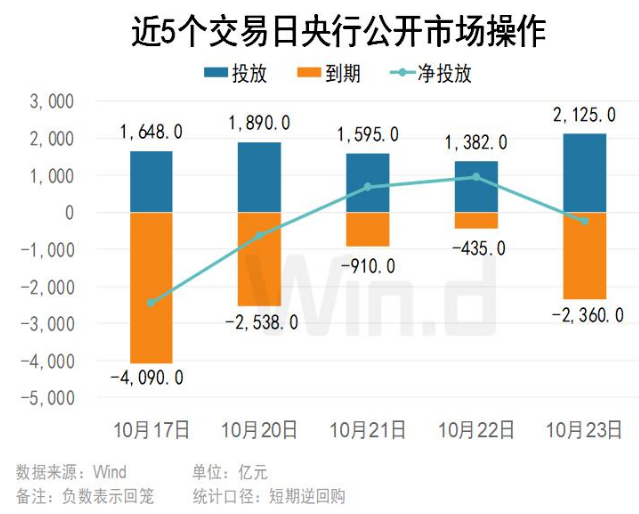
利率“锚”定1.40%!央行2125亿逆回购释放稳健信号
Huan Qiu Wang· 2025-10-23 03:45
Core Viewpoint - China's macroeconomic policy is entering a critical period for stable growth in the fourth quarter, with coordinated monetary and fiscal measures aimed at creating a favorable financial environment for economic recovery [1]. Group 1: Monetary Policy - The People's Bank of China (PBOC) announced a 7-day reverse repurchase operation of 212.5 billion yuan, maintaining the operation rate at 1.40%, while net draining 23.5 billion yuan on the same day due to 236 billion yuan of reverse repos maturing [1]. - Despite a slight tightening in market liquidity due to tax periods and month-end factors, the overall liquidity remains stable under the PBOC's management, with expectations for the upcoming 700 billion yuan Medium-term Lending Facility (MLF) to be rolled over or slightly increased to stabilize market expectations [1]. Group 2: Credit Expansion Measures - The three major policy banks have disclosed that nearly 300 billion yuan of a new 500 billion yuan policy financial tool has been deployed, which is expected to drive total project investments exceeding 4 trillion yuan, with full deployment anticipated by the end of the year [3]. - Compared to 2022, the current round of tools has a broader scope, including sectors like service consumption, digital economy, artificial intelligence, and technological innovation, aiming to leverage project capital to support economic structural transformation [3]. Group 3: Fiscal and Banking Coordination - The Ministry of Finance and the PBOC conducted a 120 billion yuan one-month treasury cash deposit auction, enhancing the coordination between fiscal and monetary policies [4]. - Regional small and medium-sized banks have initiated a new round of deposit rate cuts to alleviate pressure on net interest margins, creating conditions to support the real economy [4]. Group 4: Future Outlook - Professionals generally anticipate that monetary policy will continue to strengthen in the fourth quarter, with the PBOC expected to utilize various tools and potentially implement reserve requirement ratio (RRR) cuts and interest rate reductions to enhance support for the real economy [5]. - The synergistic effect of monetary and fiscal policies is expected to provide strong support for achieving the annual economic and social development goals [5].

发挥绿色金融作用助力经济社会发展全面绿色转型 《金融时报》记者专访中国人民银行研究局负责人
Jin Rong Shi Bao· 2025-10-23 03:41
Core Viewpoint - The People's Bank of China has implemented a series of practical measures during the 14th Five-Year Plan period to promote the high-quality development of green finance, establishing a comprehensive framework for standards, tools, cooperation, and tangible results [1]. Group 1: Green Finance Standards - A multi-field standard system is gradually being established, with 1 national standard, 9 industry standards, and over 30 green finance standards under research. The first national green finance standard, "Green Finance Terminology," is set to be published by 2025 [2]. - The green finance support project directory has expanded the scope of green finance to include trade and consumption, achieving full-chain coverage from production to consumption [2]. Group 2: Transition Finance Standards - Transition finance standards have made significant breakthroughs, with pilot programs in over 20 provinces for industries like steel, coal power, construction materials, and agriculture. By the end of August 2025, approximately 67 billion yuan in transition loans were issued [3]. - The second batch of transition finance standards for metallurgy, petrochemicals, and other industries is being developed, with local standards and enterprise transition planning manuals being introduced in key regions [3]. Group 3: Biodiversity and Blue Finance Standards - A financial standard system for biodiversity and blue finance is being established, with over 20 provinces initiating pilot programs for biodiversity finance directories [4]. - Blue finance standards are under development, with plans for pilot testing in coastal areas [4]. Group 4: Green Finance Tools - The demand for green finance has increased, leading to the development of a diverse range of financial products, including green loans, bonds, insurance, and funds. As of the second quarter of 2025, the balance of green loans was approximately 42.39 trillion yuan, and green bonds exceeded 2.2 trillion yuan [6]. - The carbon reduction support tool has guided financial institutions to issue over 1.38 trillion yuan in carbon reduction loans since its inception in 2021 [5]. Group 5: Risk Management - The People's Bank of China is conducting climate risk stress tests to enhance financial institutions' risk management capabilities, ensuring the stability of the green finance market [7]. Group 6: International Cooperation - China has taken a leading role in the G20 sustainable finance working group, producing key documents like the G20 Sustainable Finance Roadmap and the G20 Transition Finance Framework [8]. - The establishment of the International Platform for Sustainable Finance (IPSF) with the European Commission aims to align green finance standards internationally, facilitating cross-border capital flow into green sectors [8]. - China is actively participating in multilateral and bilateral green finance cooperation, including initiatives under the Belt and Road Initiative to promote green investment [9].