
中国人民银行

Search documents
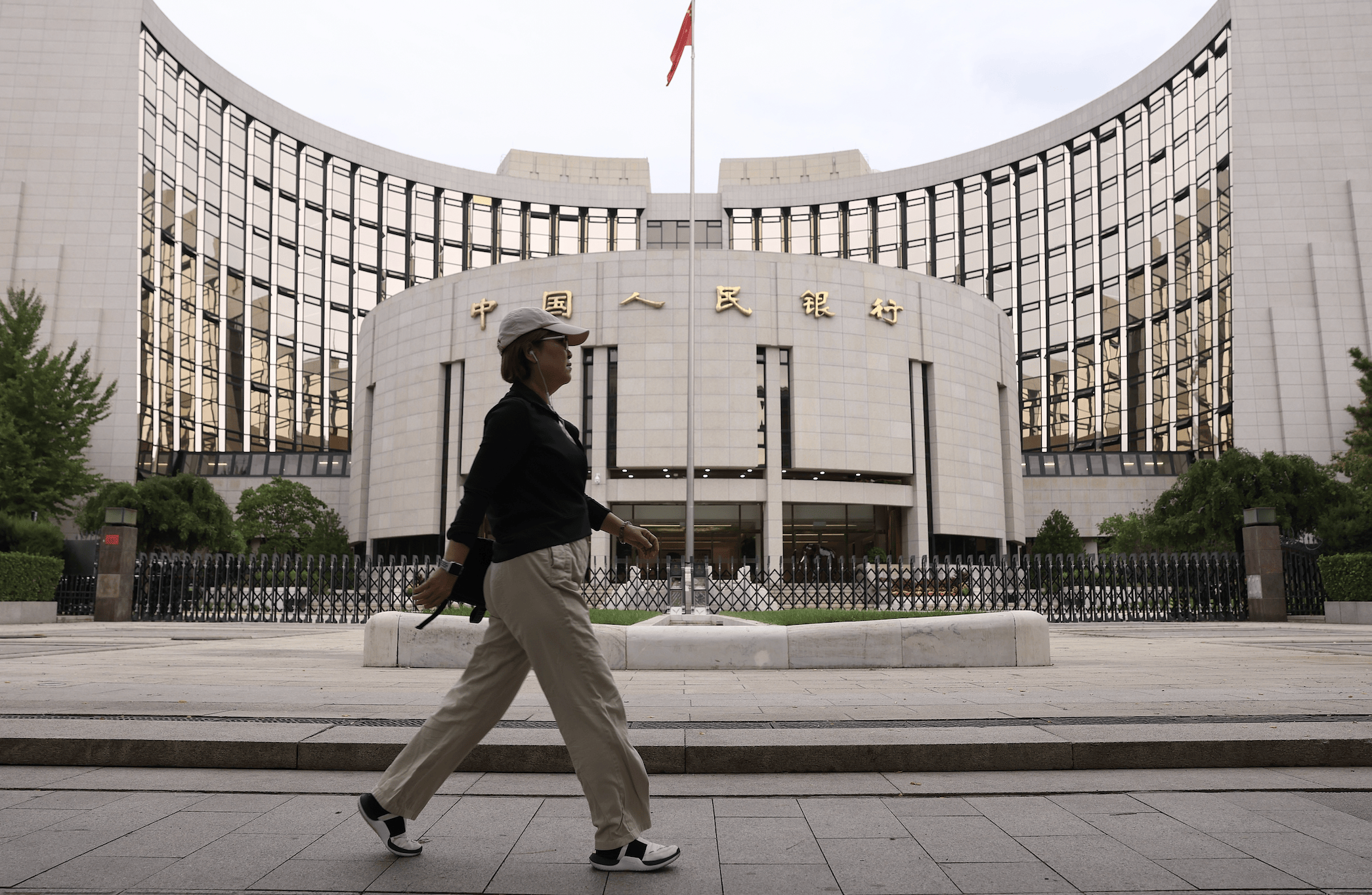
央行宣布,10月一年期、五年期LPR均维持不变
Sou Hu Cai Jing· 2025-10-20 01:48
东方金诚预计,年底前央行有可能实施新一轮降息降准,并带动两个期限品种的LPR报价跟进下调。这 将引导企业和居民贷款利率更大幅度下行,激发内生性融资需求,是四季度促消费扩投资、有效对冲外 需放缓的一个重要发力点。现阶段物价水平偏低,货币政策在包括降息在内的适度宽松方向上有充足空 间。 对此,国有控股信用评级机构东方金诚解读称,10月两个期限品种的LPR报价保持不变,符合市场预 期。首先,10月以来政策利率(央行7天期逆回购利率)保持稳定,意味着当月LPR报价的定价基础没 有发生变化,已在很大程度上预示10月LPR报价会保持不动。另外,受反内卷牵动市场预期等影响,近 期包括1年期银行同业存单到期收益率(AAA级)在内主要中长端市场利率有所上行,商业银行在货币 市场的融资成本略有上升。在商业银行净息差处于历史最低点的背景下,当前报价行主动下调LPR报价 加点的动力不足。由此,10月两个期限品种的LPR报价不动符合市场普遍预期。 另外,接下来稳楼市政策需要进一步加力。预计四季度监管层有可能通过单独引导5年期以上LPR报价 下行等方式,推动居民房贷利率更大幅度下调。这是现阶段缓解实际居民房贷利率偏高问题,激发市场 购房 ...

10月LPR报价出炉:1年期和5年期利率均维持不变
Yang Shi Xin Wen Ke Hu Duan· 2025-10-20 01:41
Core Points - The People's Bank of China has announced the Loan Prime Rate (LPR) for October 20, 2025, with the 1-year LPR set at 3.0% and the 5-year LPR at 3.5% [1] Summary by Category - **Interest Rates** - The 1-year LPR is established at 3.0% [1] - The 5-year LPR is set at 3.5% [1] - These rates will remain effective until the next LPR announcement [1]
LPR连续五个月按兵不动,后续仍存调整空间
Sou Hu Cai Jing· 2025-10-20 01:38
记者 辛圆 中国人民银行授权全国银行间同业拆借中心公布,2025年10月20日,贷款市场报价利率(LPR)为:1年期LPR为3.00%,5年期以上LPR为3.50%,均较上月 保持不变。 LPR自今年5月下调之后,已有五个月按兵不动。 东方金诚首席宏观分析师王青对智通财经表示,10月两个期限品种的LPR报价保持不变,符合市场预期。首先,10月以来政策利率保持稳定,意味着当月 LPR报价的定价基础没有发生变化,已在很大程度上预示10月LPR报价会保持不动。 广开首席产业研究院首席金融研究员王运金也对智通财经表示,11-12月有较大的政策利率和LPR的下调需求与下调空间,有望下调10-30个基点,五年期 LPR下调幅度可能会更大。 王运金解释称,下调LPR仍是激发融资需求、稳定楼市预期的重要政策工具。另外,10月美联储降息概率较大,中美利差会相对缓解,人民币贬值压力减 轻,LPR下调空间扩大。 不过王青指出,受贸易转移效应持续发酵、上年同期基数变化等影响,出口增速加快,再加上年初财政政策已经加力,5月央行实施降息降准,三季度以来 货币政策总体上处于观察期。这是近期LPR报价保持稳定的根本原因。 分析师表示,近期外 ...
10月LPR报价出炉:1年期LPR为3.0% 5年期以上LPR为3.5%
Zhong Guo Xin Wen Wang· 2025-10-20 01:35
Core Points - The People's Bank of China has announced the Loan Prime Rate (LPR) for October 20, 2025, with a 1-year LPR set at 3.0% and a 5-year LPR at 3.5% [1] Summary by Category - **Interest Rates** - The 1-year LPR is established at 3.0% [1] - The 5-year LPR is set at 3.5% [1] - These rates will remain effective until the next LPR announcement [1]
央行今日开展1890亿元7天期逆回购操作
Zheng Quan Shi Bao Wang· 2025-10-20 01:28
Core Viewpoint - The People's Bank of China conducted a 7-day reverse repurchase operation amounting to 189 billion yuan at a fixed interest rate of 1.40%, maintaining the previous rate [1] Group 1 - The operation was carried out on October 20, 2025, indicating ongoing liquidity management by the central bank [1] - The total amount of the reverse repurchase operation was 1890 billion yuan, reflecting the central bank's strategy to inject liquidity into the financial system [1] - The interest rate for this operation remained unchanged at 1.40%, suggesting stability in monetary policy [1]
10月LPR报价最新出炉
第一财经· 2025-10-20 01:17
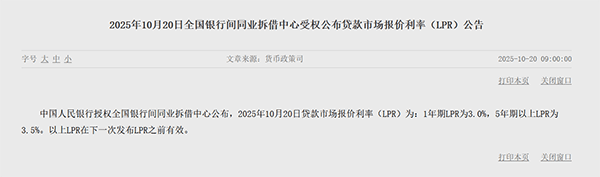
10月20日,据央行官网, 中国人民银行授权全国银行间同业拆借中心公布,2025年10月20日贷款市场报价利率(LPR)为:1年期LPR为3.0%,5年 期以上LPR为3.5%;两者均维持不变。 编辑|钉钉 ...

降温措施频出,黄金“现象级行情”还能走多远?
Sou Hu Cai Jing· 2025-10-19 09:53
Core Viewpoint - The Shanghai Futures Exchange has implemented measures to cool down the surging gold and silver futures market, adjusting the price limit and margin requirements, which has led to a significant drop in gold prices after reaching record highs [2][8]. Group 1: Market Dynamics - Gold prices have experienced a phenomenal rise, increasing by nearly $1,000 per ounce in less than two months, reaching a peak of $4,392 per ounce on October 17 [2]. - The price surge followed a period of consolidation from April to August, with a notable upward trend beginning in September [3][4]. Group 2: Influencing Factors - The primary driver of the recent gold price increase is the expectation of interest rate cuts by the Federal Reserve, which has weakened the dollar and lowered real interest rates, enhancing gold's appeal as a non-yielding asset [4][15]. - Geopolitical uncertainties, including trade tensions and conflicts, have further supported gold prices, as investors seek safe-haven assets amid rising global risks [5][14]. - Continuous inflows from official reserves and institutional investors have solidified demand for gold, with significant purchases by central banks, including China's ongoing accumulation of gold for eleven consecutive months [6][9]. Group 3: Regulatory Response - In response to the volatile market conditions, the Shanghai Futures Exchange issued risk warnings and adjusted trading limits and margin requirements, which had an immediate impact on gold prices, causing a sharp decline after reaching record highs [8][9]. Group 4: Future Outlook - Analysts suggest that while regulatory measures may adjust the pace of gold price movements, they are unlikely to alter the overall upward trend driven by strong demand and macroeconomic factors [12][15]. - The financial and safe-haven attributes of gold are expected to remain significant in determining its price trajectory, particularly in light of ongoing geopolitical uncertainties and monetary policy shifts [13][15].

人民币,大消息!变得越来越“好用”,CIPS作用日益凸显!
Zheng Quan Shi Bao· 2025-10-19 04:22
Core Insights - The People's Bank of China (PBOC) is enhancing the cross-border payment system to facilitate international trade and investment, ensuring a robust payment infrastructure and strict regulation in the payment industry [1][4][7] Group 1: Cross-Border Payment System Development - The PBOC has established a multi-channel, widely covered, secure, and efficient cross-border payment clearing network, with the Cross-Border Interbank Payment System (CIPS) processing RMB 175 trillion in 2024, a 43% year-on-year increase [2][3] - As of September 2025, CIPS has connected over 1,700 domestic and foreign participants, reaching more than 5,000 legal banking institutions across 189 countries and regions [2][3][8] Group 2: Internationalization of the Renminbi - The Renminbi has become the largest settlement currency for China's external payments, the second-largest trade financing currency globally, and the third-largest payment currency, with a weight of 12.28% in the Special Drawing Rights (SDR) basket [7][9] - In the first half of 2025, the total cross-border RMB payment amount reached 35 trillion yuan, a 14% increase year-on-year, with RMB payments in goods trade accounting for 28% of total cross-border payments [7][9] Group 3: Bilateral Currency Swap Agreements - The PBOC has renewed bilateral currency swap agreements with multiple countries, including a 35 billion yuan agreement with Iceland and a 350 billion yuan agreement with the European Central Bank, aimed at enhancing bilateral financial cooperation [5][6][9] - The agreements facilitate liquidity and financial stability, allowing central banks to exchange currencies to support trade and investment [6][9]

央行:将继续完善人民币跨境支付体系
Sou Hu Cai Jing· 2025-10-19 02:15
Core Insights - The payment system is a crucial financial infrastructure that supports consumer spending and economic stability in China. The system has seen significant advancements in recent years, providing secure, efficient, and convenient payment services that bolster the real economy [1] Group 1: Development Achievements - During the 14th Five-Year Plan period, the People's Bank of China has made substantial progress in building a modern payment system that ranks among the world's best. The payment system's business volume has grown at an average annual rate of 12.52%, with a total business volume expected to exceed 12 trillion yuan in 2024. Mobile payment transactions are projected to reach 1.71 times the volume of 2020 [2] - The average payment service fee is below 0.6%, significantly lower than that in Europe and the United States [2] Group 2: Market Structure - The payment market has evolved into a diverse and collaborative ecosystem, with the People's Bank of China optimizing the roles of clearing institutions, commercial banks, payment institutions, and industry associations to provide a wide range of payment services [3] - The China Payment and Clearing Association plays a self-regulatory role, ensuring fair competition and promoting high-quality development in the payment clearing industry [3] Group 3: Regulatory Framework - The payment industry is entering a new phase characterized by compliance and sustainable development. A comprehensive regulatory framework has been established, including the introduction of the first specialized regulation for non-bank payment institutions, marking a new stage in the industry's development [4] - The People's Bank of China has adopted a "zero tolerance" approach to illegal activities in the payment sector, focusing on risk prevention across the entire payment process [4] Group 4: Service Accessibility - The payment services have become more secure, convenient, and inclusive, with a diverse range of payment methods available to meet the public's needs. Since the beginning of the 14th Five-Year Plan, non-cash payment transactions have reached 23 trillion, representing a 2.34-fold increase in volume compared to the previous five years [5] - The rapid adoption of mobile payment services has transformed various transaction scenarios, bridging the digital divide for the elderly and enhancing payment services in rural areas [5] Group 5: Cross-Border Payment Progress - The People's Bank of China is actively promoting the construction of a self-controlled cross-border payment system, with the Cross-Border Interbank Payment System (CIPS) processing 175 trillion yuan in cross-border RMB transactions in 2024, a 43% increase year-on-year [6][7] - The establishment of a cross-border payment platform for digital currencies has been initiated in collaboration with central banks from Hong Kong, Thailand, and the UAE [7] Group 6: Enhancing Foreign Payment Services - The People's Bank of China has implemented measures to improve payment services for foreign nationals in China, including allowing the use of foreign mobile numbers to register for domestic payment apps and enhancing payment guides at key locations [8] - As a result, the number of active mobile payment users among inbound travelers exceeded 10 million in the first half of 2025, with transaction volumes and amounts increasing by 162% and 149%, respectively [8]
中国央行:探索拓展中央银行宏观审慎与金融稳定功能,丰富维护金融稳定的政策工具箱
Jing Ji Guan Cha Wang· 2025-10-18 01:32
Core Viewpoint - During the "14th Five-Year Plan" period, China's financial risks are generally controllable, with financial institutions operating steadily and financial markets functioning smoothly, providing strong support for high-quality economic development [1] Group 1 - The financial stability bureau of the People's Bank of China emphasizes the importance of recognizing existing risks and challenges in the current economic operation [1] - There is a need to maintain a balance between promoting growth and preventing risks, highlighting the necessity of a bottom-line thinking approach [1]