中国中免

Search documents
三维度发力让国货扎根免税赛道
Zheng Quan Ri Bao· 2025-12-07 15:41
Core Viewpoint - Recent policies have significantly enhanced the presence of domestic products in duty-free stores, transforming them into platforms for showcasing Chinese brands and cultural heritage [1][2]. Policy Developments - On October 17, the Ministry of Finance announced adjustments to the duty-free shopping policy for travelers in Hainan, allowing certain domestic products to be sold in duty-free stores [1]. - On October 30, a notification was released to support consumption by mandating that at least 25% of the sales area in duty-free stores be allocated for domestic products [1]. - On November 26, a plan was issued to promote the entry of high-quality domestic products and cultural heritage items into duty-free stores, along with optimizing the tax refund process for travelers [1]. Challenges for Domestic Products - Domestic products face three main challenges in establishing a foothold in the duty-free market: 1. Insufficient product adaptability to international consumer preferences and travel shopping scenarios [2]. 2. Weak bargaining power in distribution channels, with international brands dominating prime shelf space [2]. 3. Low brand recognition, as many domestic products lack a compelling international narrative, making it difficult to compete with established global brands [2]. Strategic Recommendations - Product positioning should focus on understanding international consumer preferences and optimizing designs to meet travel shopping needs, such as creating portable versions of cultural products [3]. - Deepening channel operations is crucial, including partnerships with leading duty-free operators and utilizing online booking combined with offline pickup to enhance consumer experience [3]. - Brand value should be communicated through immersive experiences in duty-free stores and leveraging international platforms to promote the cultural and innovative aspects of domestic products [3]. Conclusion - Duty-free channels provide a low-risk environment for domestic brands to test and showcase their products internationally, supported by favorable policies [4]. The success of domestic products in this space will depend on their product quality, channel management, and brand strength, marking a significant step in the evolution of Chinese brands and the economy [4].
冰雪游贯穿雪假元旦,宝兰、琳朝均获亿元融资
GOLDEN SUN SECURITIES· 2025-12-07 14:41
Investment Rating - The report suggests a focus on the Hainan sector and sub-sectors with performance elasticity during the Spring Festival, while mid-term outlook favors new consumption growth, transformation recovery, overseas expansion, and policy benefits [5]. Core Insights - The snow holiday initiative has significantly boosted the ice and snow economy, with regions like Xinjiang and Jilin implementing snow holidays that have led to increased tourist numbers and spending [1][2]. - High-end jewelry brands such as Baolan and Linchao are expanding, with Baolan securing over 100 million yuan in Series A financing and Linchao planning to open a new store in East China [3][4]. - The report highlights a growing trend in both ice and snow tourism and winter escape travel during the New Year holiday, with significant increases in flight bookings to popular destinations [2]. Summary by Sections Industry Dynamics - The report notes that the ice and snow tourism sector is gaining traction, with flight bookings to destinations like Harbin and Changchun seeing a rise, while southern regions are catching up in popularity [2]. - The introduction of snow holidays has led to a notable increase in visitor numbers and spending in regions like Xinjiang and Jilin, showcasing a positive consumer response [1]. Company Developments - Baolan Jewelry has completed a Series A financing round exceeding 100 million yuan, with plans for further expansion in high-end retail locations [3]. - Linchao Jewelry has also secured significant funding and is set to open its second store in East China, indicating strong growth potential in the luxury jewelry market [4]. Investment Recommendations - The report recommends focusing on sectors that are expected to perform well during the upcoming Spring Festival, particularly those benefiting from tax-free policies and improved fundamentals [5]. - It also suggests monitoring cyclical sectors such as duty-free, hotels, and restaurants for signs of recovery and growth [8].
董事会突然召开,著名外资品牌日上免税被曝:投标资格或被大股东剥夺
Mei Ri Jing Ji Xin Wen· 2025-12-07 11:01
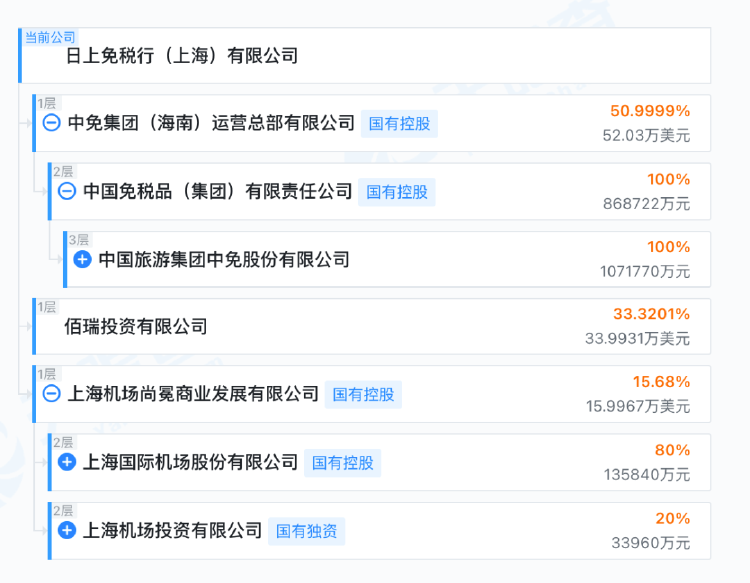
Core Viewpoint - The board meeting of RiShang Duty Free (Shanghai) Co., Ltd. was convened unexpectedly to vote on whether to participate in the Shanghai airport duty-free project bidding, with the majority of directors opposing the bid, potentially leading to the company's exclusion from the bidding process [1][2]. Group 1: Company Background - RiShang Shanghai was established in June 1999 and is the first foreign company to operate airport duty-free shops in China [2]. - In 2018, China Duty Free Group acquired a 51% stake in RiShang Shanghai for 1.505 billion yuan, becoming the controlling shareholder [2]. - The acquisition aimed to secure duty-free operating rights at Shanghai airports and enhance procurement scale and economic efficiency [2]. Group 2: Current Situation - The bidding for duty-free shops at Shanghai Pudong and Hongqiao International Airports started on November 17 and will close on December 9 [1]. - The internal conflict among shareholders raises doubts about RiShang Shanghai's ability to participate in the bidding [1]. Group 3: Market Context - Investors speculate that the current situation reflects a changing landscape in the airport duty-free channel, with China Duty Free Group potentially opting to bid directly rather than through its subsidiary [5]. - China Duty Free Group has faced declining performance, with a reported revenue of 39.862 billion yuan for Q3 2025, down 7.34% year-on-year, and a net profit of 3.052 billion yuan, down 22.13% [5]. - The company's performance has been weak, with a revenue drop of 16.38% to 56.474 billion yuan in 2024 and a net profit decline of 36.44% [6].


著名外资品牌“日上免税”被曝:投标资格或被大股东剥夺
Mei Ri Jing Ji Xin Wen· 2025-12-07 10:41
Core Viewpoint - The board of directors of RiShang Duty Free (Shanghai) Co., Ltd. is in conflict over whether to participate in the Shanghai airport duty-free project bidding, with the majority of directors opposing the bid, potentially leading to the company's exit from the bidding process [1] Group 1: Company Background - RiShang Shanghai was established in June 1999 and is the first foreign enterprise to operate airport duty-free shops in China [2] - In 2018, China National Duty Free Group (CNDG) acquired a 51% stake in RiShang Shanghai for 1.505 billion yuan, becoming the controlling shareholder [2] - The acquisition was aimed at obtaining duty-free operating rights at Shanghai airports and enhancing CNDG's procurement scale and economic efficiency [2] Group 2: Current Business Operations - RiShang Duty Free's main operations are located at Beijing Capital International Airport and Shanghai Pudong and Hongqiao International Airports [4] - The bidding for duty-free shops at Beijing Capital International Airport has also commenced, which is related to RiShang China [4] Group 3: Market Dynamics and Financial Performance - Investors are discussing the implications of the current bidding situation, suggesting that CNDG may prefer to bid directly rather than through its subsidiary, given the competitive landscape [6] - CNDG has reported declining financial performance, with a revenue of 39.862 billion yuan for Q3 2025, down 7.34% year-on-year, and a net profit of 3.052 billion yuan, down 22.13% [6] - In 2024, CNDG's revenue was 56.474 billion yuan, a decrease of 16.38%, and net profit fell by 36.44% [7] - The company's stock price has significantly declined, closing at 81.02 yuan on December 5, with a market capitalization of 167.6 billion yuan, down over 70% from its peak [7]
董事会突然召开,著名外资品牌“日上免税”被曝:投标资格或被大股东剥夺!其已在上海机场经营免税店26年
Mei Ri Jing Ji Xin Wen· 2025-12-07 08:30
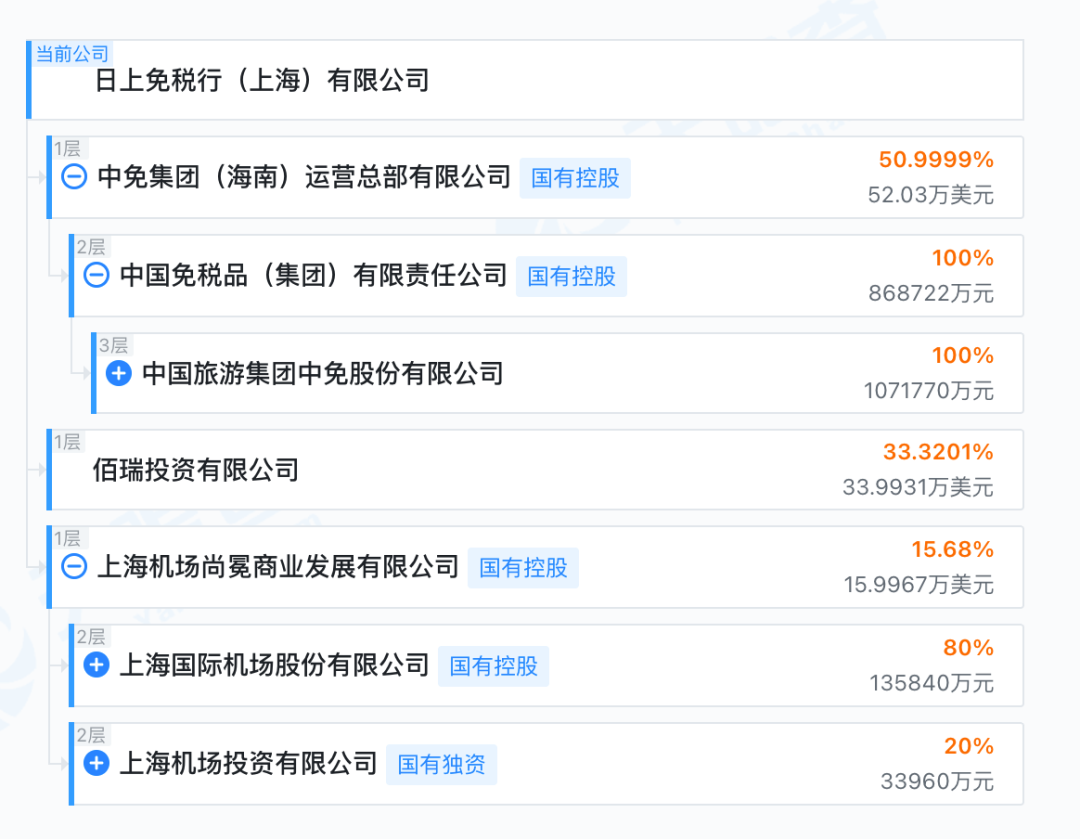
Core Viewpoint - The board of directors of RiShang Duty Free (Shanghai) Co., Ltd. is in a dispute regarding participation in the Shanghai airport duty-free project bidding, with the majority of directors opposing the bid, potentially leading to the company's exit from the bidding process [1][3]. Group 1: Company Background - RiShang Shanghai was established in June 1999 and is the first foreign enterprise to operate airport duty-free shops in China [3]. - In 2018, China National Duty Free Group (CNDG) acquired a 51% stake in RiShang Shanghai for 1.505 billion yuan, becoming the controlling shareholder [3]. - The acquisition aimed to enhance CNDG's presence in the Shanghai airport duty-free market and improve procurement scale and economic efficiency [3]. Group 2: Current Situation - The bidding for duty-free operations at Shanghai Pudong and Hongqiao International Airports started on November 17 and will close on December 9 [1]. - CNDG currently holds a controlling stake in RiShang Duty Free (China) Co., Ltd., and the agreement stipulates that all duty-free operations in Shanghai and Beijing airports will be conducted through RiShang [3]. Group 3: Market Implications - Investors speculate that the current situation reflects a shift in the competitive landscape of airport duty-free channels in China, with CNDG potentially opting to bid directly rather than through its subsidiary [5]. - The bidding process is divided into three segments, and if RiShang is excluded, CNDG could secure a bid for one of the segments [5]. Group 4: Financial Performance - CNDG reported a revenue of 39.862 billion yuan for Q3 2025, a decrease of 7.34% year-on-year, and a net profit of 3.052 billion yuan, down 22.13% [6]. - The company’s performance has been declining, with a revenue drop of 9.96% in the first half of the year and a significant decline in net profit [6]. - CNDG's stock price has fallen over 70% from its peak market value of 740 billion yuan in 2021, closing at 81.02 yuan per share on December 5 [6].


经营上海机场免税店26年的“日上”或被剥夺投标资格
Guo Ji Jin Rong Bao· 2025-12-06 15:04
Core Viewpoint - The potential exclusion of RiShang Duty Free from the Shanghai airport duty-free bidding process raises concerns about the future of the company and the implications for foreign investment in China [1][2]. Group 1: Company Background - RiShang Duty Free (Shanghai) Co., Ltd. was established in June 1999 and is recognized as the first foreign enterprise operating airport duty-free shops in China [1]. - The company has been a prominent player in the Chinese airport duty-free market, ranking among the top 10 global travel retailers in 2015 and 2016 according to the Moodie Davitt Report [1]. Group 2: Recent Developments - On December 6, 2023, a board meeting was held where the chairman, appointed by the major shareholder China Duty Free Group (CDFG), opposed RiShang Shanghai's participation in the bidding for the Shanghai airport duty-free project [1]. - The bidding process for the Shanghai Pudong and Hongqiao International Airport duty-free shops commenced on November 17, 2023, and is set to close on December 9, 2023 [1]. Group 3: Legal and Regulatory Context - Following the implementation of the Foreign Investment Law in China, RiShang Shanghai is legally qualified to participate in the bidding process, as foreign investment restrictions no longer apply to duty-free operations [2]. - The bidding documents for Shanghai airport reaffirm that capable foreign-invested enterprises can participate, aligning with national laws and agreements with major shareholders [2]. Group 4: Potential Consequences - If RiShang Shanghai is unable to participate in the current bidding, it may lead to the loss of its main business, risking dissolution and affecting thousands of employees and related businesses [3]. - The situation is seen as a significant indicator of the foreign investment environment and the level of institutional openness in China [2].
一周文商旅速报(12.01—12.05)
Cai Jing Wang· 2025-12-06 14:05
Group 1 - Shoulv Hotel announced the resignation of Deputy General Manager Zhang Shujuan due to personal reasons, effective November 30, 2025 [1] - China State Construction Engineering Corporation issued the first commercial office complex real estate asset-backed securities (ABS) in the country, with a scale of 1.246 billion yuan, backed by the Shanghai Zhongjian Plaza project [1] - Fosun Tourism Group launched its HiSphere brand for urban cultural tourism malls, with the first project "Hi·Chongqing" signed, expected to open in the second half of 2026 [1] Group 2 - Joy City Holdings' subsidiary Wuhan Diyue filed a lawsuit against the Natural Resources and Urban-Rural Development Bureau of Wuhan's Caidian District over an administrative agreement dispute [2] - The lawsuit seeks to terminate the land use rights transfer contract signed on December 31, 2019, and demands the return of 360 million yuan in land transfer fees and compensation totaling 713 million yuan for losses incurred [3] Group 3 - The "Wai Li" international commercial entertainment complex is set to officially open on December 26, featuring major components like Wangfujing WellTown and Nuo Lan Hotel, with over 500 brands expected to be introduced [4] - In Q3 2025, 51 listed cultural tourism companies reported a combined revenue of approximately 83.993 billion yuan, with 33 companies profitable and 18 at a loss, indicating a predominance of profitability in the sector [5][6]


消费者服务行业双周报(2025/11/21-2025/12/4):文旅部将从供需两端发力,着力上新-20251205
Dongguan Securities· 2025-12-05 09:12
Investment Rating - The industry is rated as "Overweight" indicating an expectation that the industry index will outperform the market index by more than 10% over the next six months [31]. Core Insights - The recent favorable developments in the cultural and tourism sector include the acquisition of Junting Hotel by Hubei state-owned assets and strategic cooperation between Hunan Broadcasting and Zhangjiajie City, indicating increased state investment in the sector [31]. - The National Development and Reform Commission and other departments have issued a plan to enhance the adaptability of supply and demand for consumer goods, aiming to optimize the supply structure by 2027 and promote high-quality consumer products [19][21]. - The report suggests a gradual recovery in supply and demand in the cultural and tourism industry in the long term, while short-term focus should be on themes like ice and snow tourism and duty-free shopping [31]. Summary by Sections Market Review - From November 21 to December 4, 2025, the CITIC Consumer Services Industry Index experienced a slight decline of 0.73%, underperforming the CSI 300 Index by approximately 0.33 percentage points [7]. - The performance of sub-sectors varied, with comprehensive services and tourism leisure declining by 2.72% and 1.76%, respectively, while the hotel and catering sector increased by 2.52% [8]. - Among listed companies, 20 achieved positive returns, with the top five performers being China High-Tech, Tongqinglou, Junting Hotel, Fangzhi Technology, and Kede Education, showing increases of 33.10%, 11.65%, 10.69%, 6.74%, and 5.47% respectively [11]. - The overall PE (TTM) for the CITIC Consumer Services Industry was approximately 37.5160 times, remaining stable compared to the previous period [14]. Industry News - The report highlights significant news, including the issuance of a plan by the National Development and Reform Commission to enhance consumer goods supply and demand adaptability [19]. - Tuniu's winter tourism trend forecast indicates a peak in winter travel around New Year's, winter vacation, and Spring Festival, suggesting a release of consumer potential through staggered travel [23]. - Hunan Broadcasting and Zhangjiajie City have signed a strategic cooperation agreement, with plans for the Duyong Ancient City to open in July 2026 [24]. Company Announcements - Junting Hotel announced a share acquisition by Hubei Cultural Tourism at a price of 25.71 yuan per share, which will result in Hubei Cultural Tourism controlling 36.00% of the company post-transaction [26]. - Xiangyuan Cultural Tourism's subsidiary plans to acquire 100% of Jinxiu Lianhua Mountain Scenic Area Development Co., Ltd. for approximately 344.56 million yuan [27]. - Emei Mountain A announced a shareholder reward activity offering discounts and free services to shareholders holding 500 shares or more [29].
内免税店多地开业 新政“满月”免税行业有了新变化
Zhong Guo Chan Ye Jing Ji Xin Xi Wang· 2025-12-05 00:00
Core Insights - The recent policy changes by the Ministry of Finance, Ministry of Commerce, and other departments aim to enhance the duty-free shopping experience and stimulate consumer spending starting from November 1, 2025 [1] Group 1: Policy Changes and Market Impact - The new duty-free store policy allows for more flexible approval processes, enabling greater autonomy in the establishment and scaling of duty-free shops [2] - The policy simplifies the approval processes for setting up and operating duty-free stores, which is expected to improve efficiency and adapt to local market conditions [2][4] Group 2: Consumer Experience and Product Offerings - Newly opened duty-free stores are incorporating local cultural elements and offering a range of domestic products, including traditional Chinese brands and cultural items [3] - The introduction of a "national trend" section in duty-free stores aims to promote Chinese products and enhance their international competitiveness [4] - The new policy encourages duty-free stores to allocate at least 25% of their sales area to domestic products, further supporting the "going global" strategy for Chinese goods [4] Group 3: Shopping Experience Enhancements - The new regulations include online reservation services for duty-free products, allowing travelers to pre-order items based on their travel itineraries [4] - This initiative aims to improve the shopping experience by ensuring that products are ready for pickup at designated locations, catering to the needs of travelers [4]
创年度新高!突破16亿元!
Sou Hu Cai Jing· 2025-12-04 06:13
Core Insights - The new Hainan duty-free shopping policy, effective from November 1, 2025, has significantly boosted the Sanya duty-free market, with sales reaching 1.63 billion yuan in the first month, a 24.3% year-on-year increase, marking the highest monthly growth rate of the year [2][3][6] - The policy includes the addition of two new product categories: pet supplies and portable musical instruments, which aligns with the growing trend of personalized and quality consumption [3][6] - The collaboration between government and businesses has been crucial in implementing the new policy, enhancing consumer attraction through training, promotional activities, and improved product offerings [7][8] Sales Performance - In the first month of the new policy, sales at Sanya's four duty-free stores increased by 28% for China Duty Free Group's Sanya stores, 21% for Sanya Phoenix Airport Duty Free, and 66.3% for Guoyao Zhongfu Duty Free Sanya, indicating a strong overall performance [8] - The introduction of new product categories has led to a notable change in consumer demographics, with local residents purchasing 4,880 items worth 2.64 million yuan, significantly outpacing departing travelers [6][8] Consumer Engagement - The combination of duty-free shopping and cultural tourism events has created a vibrant consumer environment, with various activities attracting large crowds and enhancing the shopping experience [9][12] - The "shopping + entertainment" model is becoming a new norm in Sanya's duty-free consumption, with events like parades and performances drawing families and younger visitors [12][13] Future Outlook - Upcoming cultural and sports events, such as the Hainan International Film Festival and various concerts, are expected to further stimulate duty-free consumption [13] - The Sanya government plans to continue promoting duty-free shopping through various initiatives, including the distribution of consumption vouchers and extensive marketing campaigns [13]