康方生物

Search documents
创新药价值重估进行时!普通人的上车机会藏在哪?
券商中国· 2025-08-20 23:31
Core Viewpoint - The article emphasizes that diversifying risks and aligning with trends is essential for navigating the complexities of the market, particularly in the innovative drug sector, which presents significant long-term investment opportunities through index-based investments [1]. Group 1: Industry Overview - The innovative drug industry is transitioning from reliance on generic drugs to breakthroughs in self-developed drugs, driven by advancements in technology and increased research efficiency [2]. - The Chinese innovative drug sector has seen a surge in overseas licensing fees, reaching a scale of billions of dollars, indicating a robust growth trajectory [2]. - The innovative drug sector has rebounded strongly in 2023, supported by valuation recovery, policy backing, and the expiration of patents for multinational pharmaceutical companies [2][3]. Group 2: Investment Opportunities - The article suggests that ordinary investors can mitigate risks by investing in index funds related to innovative drugs, similar to historical trends seen in the railway and internet sectors [3]. - The Hang Seng Hong Kong Stock Connect Innovative Drug Index and the CSI Innovative Drug Industry Index are highlighted as key indices for investment, with the former focusing on companies in the Hong Kong market [4][5]. Group 3: Index Characteristics - The Hang Seng Hong Kong Stock Connect Innovative Drug Index excludes CXO companies to focus solely on innovative drug firms, ensuring a more accurate reflection of the industry's development [5][6]. - The revised index has shown superior performance, with an annualized return exceeding 47% since its launch, indicating strong investment value [6]. Group 4: Policy and Market Dynamics - The Chinese government has established a comprehensive support system for the innovative drug industry, enhancing approval efficiency and market access [8]. - The market for licensing transactions has evolved, with a significant increase in the number and value of deals, indicating a shift towards more stable revenue models for innovative drug companies [9]. Group 5: Technological Advancements - China's innovative drug research capabilities have advanced significantly, with domestic companies covering 40% of global research targets and leading in several therapeutic areas [10]. - The efficiency of clinical trials in China is notably higher than in Western countries, contributing to a competitive edge in drug development [10]. Group 6: Long-term Investment Potential - The demand for innovative drugs is expected to grow due to an aging population and increasing prevalence of chronic diseases, while the supply remains limited due to high barriers to entry [11]. - The current market penetration of innovative drugs in China is below that of other G20 countries, suggesting substantial growth potential [11]. Group 7: Hong Kong Market Insights - The innovative drug sector in Hong Kong has a higher market capitalization share compared to A-shares, benefiting from a more favorable IPO environment for biotech companies [13]. - The average R&D expenditure of innovative drug companies in Hong Kong is significantly higher than that of their A-share counterparts, indicating a stronger commitment to innovation [13]. Group 8: Future Outlook - The article predicts that 2025 may mark a pivotal year for Chinese innovative drugs, with the potential for blockbuster products and record licensing deals [15]. - The Hang Seng Hong Kong Stock Connect Innovative Drug Index includes many companies not listed in A-shares, providing unique investment opportunities in leading biotech firms [15].


医药生物行业2025年8月投资策略:关注创新药产业链以及估值合理的器械标的
Guoxin Securities· 2025-08-20 15:26
Core Insights - The report emphasizes the focus on the innovative drug industry chain and reasonably valued medical device targets for investment strategies in the pharmaceutical and biotechnology sector [1][4]. Investment Strategy - The investment strategy suggests paying attention to the innovative drug industry chain and reasonably valued medical device targets. The proposed investment portfolio for August 2025 includes A-shares such as Mindray Medical, WuXi AppTec, Aier Eye Hospital, New Industry, Huatai Medical, Kaili Medical, Aohua Endoscopy, Adebiotech, Aibo Medical, and KingMed Diagnostics, as well as H-shares like Kangfang Biologics, Kelun-Botai Biologics-B, Hutchison China MediTech, Kangnuo-B, Sanofi, WuXi AppTec, Aikang Medical, and Gushengtang [4][5]. Market Trends - The National Healthcare Security Administration (NHSA) has released a list of drugs that passed the initial review for innovative drugs, indicating potential growth from commercial insurance. In 2025, the NHSA received 718 submissions for the basic medical insurance directory, with 534 passing the initial review, and 141 submissions for the commercial insurance innovative drug directory, with 121 passing the initial review [4][9]. Clinical Data and Conferences - The report highlights the upcoming World Lung Cancer Conference (WCLC) and European Society for Medical Oncology (ESMO) meetings, where several domestic innovative drugs will present their research results, showcasing the increasing competitiveness of domestic innovative drugs in global markets [4][9]. Policy Changes - The report notes a shift in the centralized procurement policy, moving away from a simple lowest price reference to a more balanced approach that considers clinical stability, quality assurance, and cost justification. This change is expected to improve the profitability of the medical device industry in the coming years [4][9]. Industry Performance - The pharmaceutical industry showed a 13.93% increase in July, outperforming the CSI 300 index by 10.38%. Sub-sectors such as medical services, chemical pharmaceuticals, and biological products experienced significant growth, with increases of 23.10%, 17.92%, and 12.54% respectively [10][12]. Valuation Insights - The overall valuation level of the pharmaceutical and biotechnology sector is currently at a historical percentile of 80.69%, with a price-to-earnings (PE) ratio of 39.11. The sector's premium relative to the CSI 300 and the entire A-share market is at its five-year average [21][22].



8月20日中银创新医疗混合A净值下跌2.30%,近1个月累计上涨2.96%
Sou Hu Cai Jing· 2025-08-20 13:01
Core Viewpoint - The Zhongyin Innovation Medical Mixed A Fund (007718) has shown significant performance in recent months, with a notable year-to-date return of 86.41%, ranking 31 out of 3882 in its category [1]. Fund Performance - The latest net value of the fund is 2.2431 yuan, reflecting a decrease of 2.30% [1]. - Over the past month, the fund achieved a return of 2.96%, ranking 3737 out of 4049 [1]. - In the last six months, the fund's return was 77.59%, ranking 28 out of 3916 [1]. - Year-to-date, the fund's return stands at 86.41%, ranking 31 out of 3882 [1]. Fund Holdings - The top ten stock holdings of the fund account for a total of 62.83%, with the following key positions: - Innovent Biologics: 8.33% - Kelun-Biotech: 8.15% - Hansoh Pharmaceutical: 8.08% - CanSino Biologics: 8.07% - New Horizon Health: 6.13% - Baillie Gifford: 5.99% - BeiGene: 5.97% - Hengrui Medicine: 4.15% - Rongchang Biologics: 4.05% - ConvaTec: 3.91% [1]. Fund Manager Background - Zheng Ning, the fund manager, has a strong background in the investment field, having previously worked as a stock research manager at Taikang Asset Management and as a senior researcher at Zhonggeng Fund Management [2]. - Zheng joined Zhongyin Fund Management in 2022 and has been managing the Zhongyin Innovation Medical Mixed Fund since July 1, 2022 [2].

抱紧牛市主线!港股通创新药ETF联接基金(025220/025221)今日首发
Zheng Quan Shi Bao Wang· 2025-08-20 02:11
Core Viewpoint - The recent surge in the A-share market, particularly in the technology, AI, innovative pharmaceuticals, and rare earth sectors, has been highlighted, with the Hang Seng Hong Kong Stock Connect Innovative Pharmaceutical Select Index (HSSCPB) leading the market with a year-to-date increase of 112.33% as of August 18, 2025 [1][4]. Group 1: Market Performance - The HSSCPB index has significantly outperformed other indices, with the Hang Seng Composite Index rising only 29.51% during the same period [4]. - The innovative pharmaceutical sector is recognized as a key driver of market sentiment, reflecting strong investor confidence in its future growth potential [4]. Group 2: Fund Launch and Investment Opportunities - The launch of the Hong Kong Stock Connect Innovative Pharmaceutical ETF (A Class 025220; C Class 025221) is set to provide investors with access to the innovative pharmaceutical sector, following the successful establishment of the ETF in June 2025 [1][2]. - The ETF is the first to track the HSSCPB index, which focuses on high-quality innovative pharmaceutical companies, offering a concentrated investment opportunity [7]. Group 3: Industry Trends and Future Outlook - The innovative pharmaceutical sector is characterized by its "essential + technology" attributes, making it a leading growth area within the pharmaceutical industry [3]. - The global pharmaceutical market is projected to reach $1.64 trillion in 2024, with innovative drugs accounting for $1.13 trillion, representing 68.9% of the market [4]. - China's innovative pharmaceutical companies are transitioning from contract manufacturing to global research and development, enhancing their competitiveness and global influence [5]. Group 4: Fund Management and Expertise - Huabao Fund, a pioneer in the ETF space, has a strong track record in the pharmaceutical and healthcare sectors, having launched several successful thematic funds [2][9]. - The firm has been recognized for its capabilities in index and ETF investment, with its equity ETF scale exceeding 100 billion yuan as of July 2025 [9].
害怕“踏空”A股!海外资金加速入场,吸金130亿
Zhong Guo Ji Jin Bao· 2025-08-20 00:06
Group 1: Market Trends - The Chinese market is gaining traction, with overseas Chinese ETFs experiencing significant inflows, particularly from South Korean investors [1][4] - In August, South Korean investors accelerated their purchases of Chinese stocks, with net buying amounts reaching $7.29 million in July and $6.63 million from August 1 to August 18 [5][8] Group 2: ETF Inflows - The top three ETFs collectively attracted net inflows of approximately 13.03 billion yuan ($1.81 billion) over the past month, with KWEB, MCHI, and FXI leading the way [2][3] - KWEB saw inflows of $1.34 million on August 15, totaling $1.16 billion since July, while MCHI and FXI also reported substantial inflows [2][3] Group 3: Investor Behavior - Hedge funds are reportedly buying Chinese ETFs at the fastest pace in seven weeks, driven by both long positions and short covering, with a ratio of 1.9:1 [4] - There is a noticeable difference in sentiment between domestic and overseas investors, with Asian clients inquiring about the A-share bull market, while U.S. clients remain hesitant [4]

8月19日中欧医疗创新股票C净值下跌1.73%,近1个月累计上涨7.28%
Sou Hu Cai Jing· 2025-08-19 13:29
Group 1 - The core point of the news is the performance and holdings of the China Europe Medical Innovation Stock C fund, which has shown significant returns over various time frames [1] - As of August 19, 2025, the latest net value of the fund is 1.6905 yuan, reflecting a decrease of 1.73% [1] - The fund's one-month return is 7.28%, ranking 503 out of 1016 in its category; the six-month return is 60.19%, ranking 28 out of 977; and the year-to-date return is 70.36%, ranking 28 out of 967 [1] Group 2 - The top ten holdings of the China Europe Medical Innovation Stock C fund account for a total of 64.06%, with significant positions in companies such as Sanofi (8.99%), Kelun-Biotech (8.52%), and Kangfang Biotech (8.20%) [1] - The fund was established on February 28, 2019, and as of June 30, 2025, it has a total scale of 3.24 billion yuan [1] - The fund manager is Ms. Ge Lan, who has extensive experience in the investment management field, having joined China Europe Fund Management in October 2014 [2]
2025年餐饮有多难?
虎嗅APP· 2025-08-19 10:00
Core Viewpoint - The restaurant industry has entered a phase of stock competition, where opening new restaurants is seen as a secondary business in an oversupplied market. The focus should shift to the existing market rather than expanding supply [4][37]. Group 1: Industry Challenges - The restaurant industry is experiencing a significant decline in consumer traffic, particularly during the peak summer months, leading to a drastic reduction in foot traffic and online engagement [6][7]. - Major brands are facing structural issues, with investment return rates dropping significantly, leading to a slowdown in expansion and a general sense of stagnation across the industry [8][9][10]. - The second-hand equipment market, which thrived during the restaurant closure wave, is now facing challenges due to a surplus of equipment and a lack of buyers, resulting in decreased liquidity [11][12][14][16]. Group 2: Investment and Brand Dynamics - The investment return period for major brands has extended beyond acceptable limits, causing anxiety among stakeholders and a reluctance to invest further [9][10]. - The concept of "fast recruitment" has been prevalent, but many brands are now struggling to maintain growth, with only a few successful examples remaining [17][18]. - The overall investment structure in the restaurant industry is becoming more rational, with a focus on sustainable growth rather than excessive spending on marketing and brand promotion [32][33]. Group 3: Market Adjustments - The restaurant market is gradually becoming more rational, with a focus on core revenue from food sales rather than ancillary income streams [31][33]. - Cost structures are being reevaluated, leading to a reduction in marketing expenses and a more careful approach to operational costs [34][35]. - Profitability expectations are adjusting, with many operators now focusing on realistic return timelines and daily financial management [36][37]. Group 4: Training and Consulting - The training and consulting sectors within the restaurant industry are facing difficulties as businesses prioritize practical execution over theoretical strategies [22][23][24]. - Many training companies are struggling to retain clients as the demand for actionable insights increases, highlighting the need for effective implementation strategies [20][21].

员工要分12亿
3 6 Ke· 2025-08-19 09:36
Core Viewpoint - The wealth distribution among employees of innovative pharmaceutical company Ailis is highlighted through a significant share reduction plan amounting to 1.2 billion yuan, involving around 100 employees who will benefit from this financial opportunity [1][2][3]. Group 1: Employee Shareholding and Wealth Creation - Ailis's employee shareholding platforms, Shanghai Aixiang and Nantong Aiyun, plan to reduce their holdings by up to 13.5 million shares, potentially realizing over 1.2 billion yuan based on the stock price of 94.51 yuan per share [2]. - The employee shareholding platforms were established between 2019 and 2020, with employees initially purchasing shares at prices between 9.82 yuan and 9.92 yuan, leading to a tenfold increase in value [2][3]. - Approximately 102 employees are expected to share the 1.2 billion yuan reduction returns, with an average payout of around 10 million yuan per person [3]. Group 2: Market Trends in Innovative Pharmaceuticals - The innovative pharmaceutical sector is experiencing a bullish trend, with a significant increase in the number of approved innovative drugs in China, indicating a potential commercial explosion in 2025 and 2026 [4][5]. - The A-share innovative drug index has seen substantial growth, with notable companies achieving remarkable stock price increases, such as a nearly 20-fold rise for Gilead Sciences [5][6]. - The IPO market for innovative pharmaceuticals is active, with several companies announcing IPO plans and significant subscription rates, reflecting strong investor interest [5][6].

员工要分12亿
投资界· 2025-08-19 09:19
Core Viewpoint - The article highlights the wealth creation opportunities arising from the recent stock reduction plans by employee shareholding platforms of the innovative pharmaceutical company, Elysium, amidst a booming market for innovative drugs in China [2][4]. Summary by Sections Employee Stock Reduction - Elysium's two employee shareholding platforms plan to reduce their holdings by up to 135 million shares, potentially generating over 1.2 billion yuan based on the stock price at the time of the announcement [4]. - The employee shareholding platforms were established between 2019 and 2020, with employees purchasing shares at prices between 9.82 yuan and 9.92 yuan per share, resulting in a tenfold increase in value compared to current prices [4][5]. Employee Participation - Approximately 102 employees from four shareholding platforms will share the 1.2 billion yuan reduction returns, with an average payout of around 10 million yuan per person [5]. - Some employees have missed out on this wealth creation opportunity due to leaving the company or transferring their shares [5]. Innovative Drug Market Dynamics - The innovative drug sector is characterized by high investment, long development cycles, and significant risks, yet many companies continue to focus on discovering and commercializing innovative drugs to meet unmet clinical needs [7]. - In 2023, China approved 40 new innovative drugs, with projections indicating a surge in commercialization in 2025 and 2026 [7][8]. Market Performance - The A-share innovative drug index has seen significant growth, reaching new highs in August, while the Hong Kong market has also experienced substantial increases, with some companies seeing stock price increases of nearly 20 times [8]. - The IPO market for innovative drugs is becoming increasingly active, with several companies successfully listing and experiencing significant stock price surges on their debut [8].

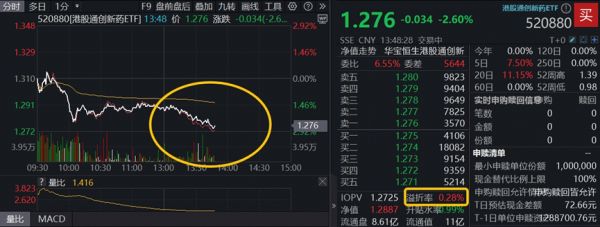
创新药意外跳水,中国生物制药领跌7%!行情到哪了?
Xin Lang Cai Jing· 2025-08-19 06:45
Core Viewpoint - The Hong Kong stock market for innovative drugs experienced a notable pullback, with the Hong Kong Innovative Drug ETF (520880) declining by 2.6% on August 19, despite a positive sentiment indicated by a real-time premium rate of 0.28% [1][3]. Group 1: Company Performance - China National Pharmaceutical Group reported a revenue of 17.57 billion yuan and a net profit of 3.39 billion yuan for the first half of the year, reflecting year-on-year growth of 10.7% and 140.2% respectively, marking three consecutive reporting periods of double-digit stable growth [3]. - The strong performance of China National Pharmaceutical Group was attributed to better-than-expected revenue growth from innovative products and dividend income [3]. Group 2: Market Trends - As of August 18, the Hong Kong Innovative Drug ETF (520880) tracked the Hang Seng Hong Kong Innovative Drug Selected Index, which has seen a year-to-date increase of 112.33%, significantly outperforming the Hang Seng Index (23.50%) and the Hang Seng Technology Index (22.05%) by 86.82 and 87.46 percentage points respectively [3]. - The adjustment in the market is viewed as a technical correction following a rapid increase, with long-term support expected from domestic policy and overseas value recognition for Chinese innovative drugs [3][6]. Group 3: Industry Outlook - The innovative drug industry is anticipated to undergo a value reassessment, supported by national policy and a clear trend of industry development and upgrading [5][6]. - The innovative drug sector is entering a 2.0 era, with domestic products gradually transitioning from following to leading innovation, benefiting from a favorable environment including engineer advantages, rich clinical resources, and supportive policies [6]. - The Hong Kong Innovative Drug ETF (520880) is the first ETF to passively track the Hang Seng Hong Kong Innovative Drug Selected Index, focusing on the innovative drug industry chain with a high concentration of leading stocks [6].