
三星电子

Search documents
重启!刚刚,马斯克重大宣布!
券商中国· 2026-01-19 07:50
Core Viewpoint - Tesla is set to restart the development of its supercomputer project Dojo 3 following the completion of the AI5 chip design, which is crucial for enhancing its Full Self-Driving (FSD) capabilities and reducing reliance on external suppliers [2][4]. Group 1: AI5 Chip Development - The AI5 chip is designed to support more complex FSD algorithms, with performance expected to reach 2000-2500 TOPS, approximately five times that of the current HW4 chip [8][9]. - The production timeline for the AI5 chip includes sample and small-scale deployment in 2026, with mass production anticipated in 2027 [9]. - The AI5 chip's development is critical for Tesla's robot business and the overall advancement of its autonomous driving technology [2][9]. Group 2: Dojo Project - The Dojo project aims to provide robust computational support for Tesla's autonomous driving systems and AI models, thereby minimizing dependence on external suppliers [6]. - Morgan Stanley estimates that full deployment of the Dojo project could lead to a potential valuation increase of several billion dollars for Tesla [6]. - The project was initially paused in 2025 but is now being revived as resources are refocused on the AI5 and subsequent chips [5][6]. Group 3: Strategic Shift in FSD - Tesla will transition its FSD offering from a one-time purchase model to a monthly subscription service starting February 14, aiming to lower usage barriers and increase penetration [10][12]. - The previous one-time purchase price for FSD was $8,000 in the U.S. and approximately 64,000 RMB in China [10]. - This strategic shift indicates a significant change in Tesla's approach to autonomous driving, focusing on creating a continuous revenue stream [12].



内存面临“史无前例”大缺货!美光科技(MU.US)警告芯片荒将延至2027年
Zhi Tong Cai Jing· 2026-01-19 06:45
Core Viewpoint - Micron Technology has reported an unprecedented shortage of memory chips, exacerbated by the surge in demand for high-end semiconductors required for artificial intelligence infrastructure, which is expected to persist beyond this year [1] Group 1: Supply Chain and Market Impact - The ongoing memory chip shortage is significantly impacting traditional industries such as smartphones and PCs, with manufacturers like Xiaomi and Oppo reducing their shipment targets for 2026 due to rising memory costs [1] - Counterpoint Research estimates a potential 2.1% decline in global smartphone shipments this year due to the memory chip shortage, which is also affecting PC manufacturers like Dell [2] - The demand for high-bandwidth memory (HBM) for AI accelerators is consuming a large portion of the industry's available capacity, leading to supply shortages for traditional sectors [1][2] Group 2: Company Strategies and Investments - Micron has announced plans to invest $1.8 billion in a site in Taiwan, which is crucial for its production, significantly shortening the time to bring new factories online [6] - The company is committed to transitioning 40% of its DRAM manufacturing to the U.S., supported by $6.2 billion in funding from the CHIPS Act and increased tax credits [6] - Micron is prioritizing supply to strategic enterprise customers, including Nvidia, by terminating its consumer-grade memory business [5] Group 3: Future Production Plans - Micron's $100 billion project in Syracuse, New York, aims to build four DRAM wafer fabs, with the first wafers expected to roll out by 2030 [6] - The company is also expanding its existing facilities in Boise, Idaho, and modernizing its manufacturing site in Virginia to increase production capacity [6]

2025手机大战:华为赢销量,苹果守利润,米OV被夹击
首席商业评论· 2026-01-19 05:09
Core Viewpoint - The smartphone market in 2025 is characterized by intense competition and differentiation, with Apple and Samsung maintaining their dominance while other brands like Huawei, Xiaomi, vivo, and OPPO face significant challenges [5][9]. Global Market Summary - The global smartphone market saw a 1.9% growth in 2025, with total shipments reaching 1.26 billion units. Apple and Samsung accounted for nearly 40% of the market share, with shipments of 247.8 million (up 6.3%) and 241.2 million (up 7.9%) respectively [6][7]. - Xiaomi, vivo, and OPPO experienced mixed results, with Xiaomi's shipments declining by 1.9% to 165.3 million, while vivo and OPPO saw slight increases and decreases in their market positions [6][7]. Chinese Market Summary - In China, the smartphone market saw a slight decline of 0.6% in 2025, with total shipments of 28.46 million units. Huawei reclaimed the top position with 46.7 million units (16.4% market share), narrowly surpassing Apple at 46.2 million units (16.2% market share) [8][10]. - The competition among the top five brands in China is fierce, with Huawei, Apple, and vivo closely contesting for market share, while Xiaomi and OPPO lag behind [8][10]. Competitive Dynamics - Huawei's success is attributed to its self-developed Kirin chips and the growing maturity of its HarmonyOS ecosystem, which enhances user experience across devices [15][19]. - Apple, despite losing the annual championship, demonstrated strong brand loyalty and market presence, particularly in the high-end segment, achieving a 21.1% market share in Q4 2025 [12][17]. - The competition among Xiaomi, vivo, and OPPO is marked by varying strategies, with Xiaomi focusing on global expansion and automotive ventures, while vivo maintains a stable domestic presence and OPPO struggles with market share [21][24]. Future Outlook - The smartphone market is expected to face challenges in 2026, with predictions of a 3-4% decline in overall shipments. However, the high-end market is projected to grow, leading to increased competition and differentiation based on cost and technology [26][28]. - Key trends for 2026 include the rise of foldable phones and AI integration, with companies like Apple and Huawei preparing to enhance their product offerings in these areas [29][32]. - The market will likely see a consolidation of power among leading brands, with those possessing strong brand equity and technological capabilities gaining a competitive edge [33].


马斯克公布AI芯片路线图,并重启Dojo 3!
Sou Hu Cai Jing· 2026-01-19 04:36
Group 1 - Tesla's CEO Elon Musk announced an ambitious AI chip roadmap, planning to release new AI processors every nine months, surpassing competitors Nvidia and AMD's annual release schedule [2][3] - The strategy aims to enable Tesla to produce the world's highest volume AI chips and accelerate innovation in autonomous driving and robotics [3] - The new AI5 chip design is nearing completion, promising up to 50 times the performance of the current AI4 chip, with a tenfold improvement in performance per dollar and three times better power efficiency, specifically designed for Full Self-Driving (FSD), Robotaxi, and Optimus robots [3] Group 2 - Tesla has signed a $16.5 billion agreement with Samsung to support the development and mass production of the AI6 chip, which aims for approximately double the performance of AI5 and is expected to enter mass production by 2028 [3] - Future AI7, AI8, and AI9 chips will follow the nine-month design cycle to rapidly iterate AI technology and gain competitive advantages [3] - The vertical integration strategy is expected to optimize chip design and potentially make Tesla's chips the highest volume products globally, addressing current hardware limitations in running complex FSD models [3] Group 3 - Tesla plans to restart the development of its third-generation supercomputer Dojo (Dojo 3) as the AI5 chip design reaches a mature state, indicating a revival of the Dojo project [5] - The previous Dojo team was disbanded, and the strategy shifted towards relying on external computing resources, primarily using Nvidia's AI chips for training [5] - Dojo 3 is likely to be built around the AI5 and AI6 chips, serving as a backend computing support for Tesla's Autopilot, FSD, and Optimus machine learning models [5]

特斯拉(TSLA.US)自研芯片加速推进!AI5芯片设计近完成,AI6研发亦已启动
智通财经网· 2026-01-19 03:28
Core Viewpoint - Tesla is making significant progress in its autonomous driving AI chip development, nearing completion of its fifth-generation AI chip design and initiating the sixth-generation chip research, aiming for a nine-month iteration cycle [1] Group 1: AI Chip Development - The design of Tesla's AI5 chip is nearly complete, and the development of AI6 has entered its early stages [1] - Tesla aims to achieve a nine-month design cycle for its AI chips, with future plans for AI7, AI8, and AI9 [1] - The AI5 chip, manufactured by TSMC, is expected to enter mass production in 2027, intended to gradually replace the current AI4 chip in Tesla vehicles [1] Group 2: Strategic Partnerships and Recruitment - Tesla signed a $16.5 billion agreement with Samsung Electronics last July to produce its A16 chip domestically in the U.S. [1] - The latest statements from Tesla's CEO indicate successful progress in reducing reliance on Nvidia for AI chips [1] - The company is actively recruiting talent to support its vision of creating what it believes will be the largest-scale AI chip production globally [1]
SK海力士、三星加速HBF商业化进程,存储材料设备板块或受益于国内存储大厂融资扩产
Mei Ri Jing Ji Xin Wen· 2026-01-19 02:54
Group 1 - The Shanghai Stock Exchange Sci-Tech Innovation Board semiconductor materials and equipment theme index (950125) decreased by 0.80% as of January 19, 2026, with mixed performance among constituent stocks [1] - The semiconductor equipment ETF Huaxia (562590) fell by 0.77%, with a latest price of 2.05 yuan and a trading volume of 2.06 billion yuan [1] - The semiconductor materials and equipment sector is seen as a key area for domestic substitution, benefiting from low domestic replacement rates and high ceilings for domestic alternatives, driven by the AI revolution and technological advancements [3] Group 2 - SK Hynix is collaborating with SanDisk to establish the HBF standard, with plans to launch HBF1 samples as early as this year, utilizing 16-layer NAND flash memory stacking [2] - The HBF technology is expected to be applied in products from Nvidia, AMD, and Google by late 2027 or early 2028, with predictions that the HBF market will surpass the HBM market by around 2038 [2] - Huafu Securities anticipates that the performance release in the storage sector will occur in three stages, benefiting from price increases in module manufacturers and subsequent orders for equipment manufacturers [2]
不追热点不造概念,三星押注“隐形AI”
Huan Qiu Wang Zi Xun· 2026-01-19 02:28
来源:环球网 【环球网科技综合报道】在AI市场充斥噱头与炒作的当下,三星正在选择另辟蹊径。1月19日,据外媒 BUSINESS INSIDER报道,三星电子欧洲区CEO西蒙·宋近日在接受采访时表示,公司AI战略核心是"真 正实用且不打扰的技术",聚焦日常价值而非新奇概念,旨在打造适配真实生活的全场景智能生态。 与OpenAI将ChatGPT作为独立产品推出不同,三星虽自研了Gauss大语言模型,却未单独面向消费者发 布,而是将其与谷歌等伙伴技术融合,植入Galaxy AI助手,集成于智能手机中,可实现实时翻译、语 音转写等实用功能。 BUSINESS INSIDER方面指出,三星AI布局已覆盖全产品线,本月初拉斯维加斯消费电子展上,其展示 的电视、厨电、洗衣机等均搭载传感器与语音识别技术,实现跨设备智能协同。"我们要让技术摆脱零 散设备属性,形成连贯响应的智能环境。"西蒙·宋强调。 硬件优势为三星AI战略提供支撑,作为内存芯片巨头,公司预计2025年四季度利润将因AI模型驱动的 内存需求激增而增至三倍。内部层面,三星通过跨部门培训与信息共享,让AI能力贯穿产品、设计、 工程等团队,构建全域AI思维。(旺旺) ...
晶圆巨头,“放弃”八英寸
半导体行业观察· 2026-01-19 01:54
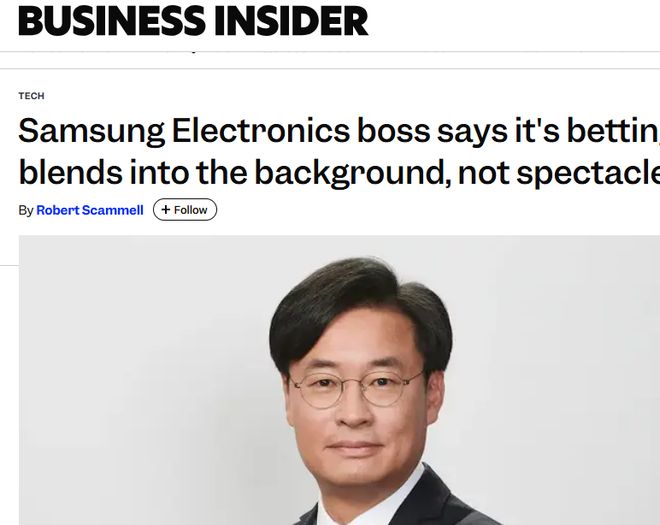
Core Viewpoint - The global foundry market is witnessing a shift as leading companies like TSMC and Samsung Electronics reduce traditional processes such as 8-inch wafer production, focusing instead on advanced nodes. This presents an opportunity for Chinese foundries like SMIC and Hua Hong Semiconductor to capture market share, especially with the rising demand for power semiconductors driven by the AI industry [1][2]. Group 1: Market Dynamics - TSMC has announced plans to close its 6-inch and 8-inch wafer production lines next year, while Samsung is also expected to cut some of its 8-inch wafer capacity. TrendForce predicts a 2.4% decline in global 8-inch wafer production this year due to these reductions [1]. - Despite lower single-chip output from 8-inch processes compared to the mainstream 12-inch processes, 8-inch production is favored for small-batch, multi-variety manufacturing, making it a key focus for smaller foundries [1]. - The demand for power semiconductors, primarily produced on 8-inch lines for home appliances, automotive, and data centers, is increasing due to the growth of AI, leading to a projected price increase of 5% to 20% for older process nodes this year [1]. Group 2: Chinese Foundries' Position - Chinese foundries are emerging as alternatives for 8-inch chip production, with companies like SMIC, Hua Hong Semiconductor, and Huazhong Microelectronics providing these services. Due to surging demand, Chinese foundries have raised 8-inch chip prices by approximately 10% [2]. - Hua Hong Semiconductor's 8-inch production lines are nearing full utilization, largely due to orders from leading automotive chip manufacturers like Infineon and ON Semiconductor [2]. - Analysts note that as the U.S. imposes restrictions on advanced semiconductors in China, Chinese firms are strengthening their capabilities in older nodes, solidifying their position in the 8-inch wafer foundry market [2]. Group 3: Industry Outlook - TSMC plans to invest between $52 billion to $56 billion in capital expenditures this year to meet AI market demands, exceeding market expectations by over 20%. The company has also raised its revenue growth target for 2029 from an annual average of 20% to 25% [2]. - Samsung is accelerating the production of 3nm and below process technologies to cater to the orders from major global tech clients [2]. - Ongoing semiconductor industry conflicts between the U.S. and China may pose risks, as global automakers are hesitant to rely on Chinese foundries for semiconductor production to mitigate dependency on Chinese components [2].


芯片巨头确认,发巨额奖金
半导体行业观察· 2026-01-19 01:54
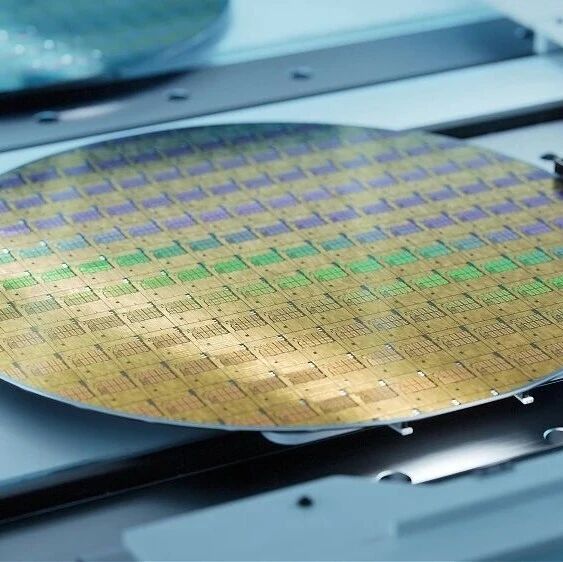
Core Insights - The global storage chip supercycle driven by the AI boom has led to record profits, prompting Samsung Electronics and SK Hynix to issue their highest performance bonuses in years [1][2] Group 1: Samsung Electronics - Samsung's semiconductor division confirmed that eligible employees will receive a bonus equivalent to 47% of their base annual salary, marking a significant recovery from a 0% bonus rate in 2023 due to a sluggish chip market [1] - The bonus distribution reflects the division's strong recovery, with the performance incentive mechanism named "Excess Performance Incentive" calculated based on 20% of the previous year's economic value added [1] - Samsung's mobile division (MX) has set its OPI dividend ratio at a full 50%, while other divisions like consumer electronics and networks have a much lower ratio of about 12%, depending on their performance in 2025 [1] - Samsung's preliminary Q4 financial report indicated an operating profit of 20 trillion KRW (approximately 13.6 billion USD), with the DS division contributing around 16 to 17 trillion KRW, primarily due to soaring prices of advanced and general storage chips [1] Group 2: SK Hynix - SK Hynix is preparing to distribute larger bonuses by removing the previous internal cap of 10 months' salary, allocating 10% of this year's total operating profit for a profit-sharing plan [2] - The company's estimated annual operating profit is 45 trillion KRW, with an average bonus exceeding 140 million KRW per employee, marking a historical high [2] - 80% of the bonus will be paid in a lump sum, while the remaining 20% will be distributed over two years [2] - SK Hynix is also restarting its employee stock ownership plan, allowing employees to convert up to half of their bonuses into company stock, with a 15% cash premium for holding the stock for a year [2] - Since the end of 2024, both Samsung and SK Hynix have shifted much of their chip production capacity to high-bandwidth memory (HBM), which has led to a supply crunch for general memory products like DDR5, driving up prices across all memory products [2] - SK Hynix, as a market leader in HBM, has seen these profits translate into record profitability, while Samsung benefits from its broader production scale and remains a global sales leader in general storage [2] Group 3: Upcoming Reports - Both companies are expected to release detailed annual performance reports later this month [3]

存储器:如何应对新的AI瓶颈
Morgan Stanley· 2026-01-19 01:50
Investment Rating - The report indicates a positive investment outlook for the memory sector, particularly in DRAM and NAND markets, driven by AI demand and expected price increases [1][2]. Core Insights - The memory industry is experiencing a capacity-constrained cycle, with order visibility extending significantly due to AI-driven demand. The risk lies more in execution and transformation rather than demand itself [1]. - A steeper price increase trend is anticipated, with DRAM, HBM, and NAND prices expected to rise rapidly. Innovations and architectural redesigns are enhancing memory efficiency, thereby lowering economic barriers for adoption and expanding the total addressable market for AI [2]. - The bottleneck in memory is becoming a critical challenge, with AI inference demanding significantly more memory capacity and performance than previous models. This shift is expected to drive substantial growth in DRAM and NAND demand [1][27]. Summary by Sections Memory Pricing and Demand - The report forecasts a steep upward cycle in memory pricing, with DRAM and NAND prices expected to increase significantly due to strong AI infrastructure demand. The analysis suggests that pure text AI inference could account for 35% of global DRAM supply and 92% of NAND supply by 2026 [2][39]. - Current supply chain dynamics indicate a tightening of inventory levels, necessitating accelerated capital expenditures, particularly in DRAM, with expectations of substantial greenfield expansions starting in 2027 [2][43]. Investment Opportunities - The report highlights specific companies as favorable investment targets, including Samsung, SK Hynix, Micron in the DRAM space, and traditional memory manufacturers like Winbond. It also points to semiconductor equipment firms benefiting from increased capital expenditures [3][11]. - The focus is on companies that are positioned to benefit from the memory bottleneck, particularly those with strong pricing power in DRAM and NAND markets [3][8]. AI and Memory Demand - The transition from generative AI to agentic AI is expected to significantly increase memory requirements, as these systems demand higher memory capacity for context processing and continuous learning. This shift is anticipated to create a larger market for memory products [26][27]. - The report emphasizes that memory is becoming a critical bottleneck in AI development, with the need for high-bandwidth memory increasing as AI models scale up in complexity and capability [22][26]. Future Market Dynamics - The report suggests that the memory market is entering a phase of significant price inflation, driven by major suppliers reallocating capacity to high-margin server DRAM and HBM to meet AI demand. This has led to a seller's market characterized by high prices and limited supply [43][44]. - The anticipated price increases for DRAM and NAND are projected to be substantial, with quarterly increases expected to range from 50% to 85% depending on the product segment and customer agreements [44][45].
