中信银行

Search documents
中国金融服务 - 回应 3 季度投资者日会议的九大核心问题-China Financial Services_ Addressing nine top of mind questions from our 3Q NDR meetings
2025-12-03 02:16
Summary of Key Points from the Conference Call Industry Overview - The conference call involved 21 China financial companies, including banks, brokers, and fintech firms, discussing the financial services industry in China, particularly focusing on the third quarter results and outlook for the future [1][2]. Key Insights on Banks 1. **Net Interest Margins (NIMs) Outlook**: - Commercial bank NIM was flat quarter-on-quarter in 3Q25, indicating signs of stabilization. Banks expect NIMs to stabilize in 1H26, driven by slower declines in loan yields and ongoing repricing of time deposits [4][6]. - NIMs may face downward pressure due to concentrated loan repricing in 1Q26, but banks generally believe the decline will continue to narrow [4][6]. 2. **Credit Demand**: - Year-to-date, bank loan growth has been primarily driven by corporate loans, contributing 92% of new loans. Credit demand remains weak, particularly in retail loans, with expectations of further slowdown in 4Q25 [12][18]. - Mortgage demand is weak due to a sluggish property market, and while non-mortgage retail loans are growing slightly faster, banks remain cautious in lending [13][14]. 3. **Asset Quality Risks**: - Banks report a year-on-year decrease in new non-performing loan (NPL) formation for corporate loans, but property loans remain a significant source of new corporate NPLs. Banks have made sufficient provisions for property loans, providing a buffer against NPL ratios [19][20]. - Retail loan NPL formation has increased year-on-year, but risks are considered manageable due to low proportions of non-mortgage consumer loans and low loan-to-value ratios [25][27]. 4. **Non-Interest Income Growth**: - Fee income showed strong performance in 3Q25, driven by capital market activities and corporate loan growth. Banks expect continued positive trends in fee income despite potential impacts from fee cuts in mutual funds [32][35]. 5. **Capital Adequacy and Shareholder Returns**: - Some banks experienced a decline in CET-1 ratios due to rising bond market rates and new loans with higher risk weightings. However, capital adequacy is improving overall, supporting asset growth and risk absorption [40][41]. - Banks are gradually increasing dividend payout ratios, attracting long-term investors despite a decline in dividend yields from previous highs [41][43]. Regulatory Impacts 1. **Loan Facilitation Platforms**: - New regulations require clear disclosure of loan costs, impacting pricing and risk. Loan volumes are expected to contract in 4Q25 and 1Q26, with a potential recovery in 2Q26 if risks stabilize [46][47]. - Consumer finance companies are required to lower average loan interest rates, but the impact is expected to be manageable for top-tier platforms [48][51]. 2. **Consumer Finance**: - Banks are shrinking their internet loan portfolios and focusing on self-operated loans due to rising retail risks. This shift may suppress retail credit growth in the short term [50][51]. Capital Markets Insights 1. **Broker Performance**: - Brokers experienced higher trading volumes in 3Q25, with expectations of sustained performance due to ongoing bank deposit migration and strong investor sentiment [53][54]. - CICC is focusing on institutional business but sees rising wealth management income due to strong demand in IPO subscriptions [53][54]. 2. **Financial Software Companies**: - Financial software companies may benefit from capital market recovery, but outcomes vary. Brokers are increasing IT budgets due to trading activity, while fund companies are cautious due to declining AUM and fee rates [59][61]. Conclusion - The financial services industry in China is navigating a complex landscape with stabilizing NIMs, weak credit demand, manageable asset quality risks, and evolving regulatory impacts. The outlook for banks and brokers remains cautiously optimistic, with potential growth in non-interest income and capital markets activity.
利率下行凸显红利策略价值,国企红利ETF(159515)盘中涨0.26%
Sou Hu Cai Jing· 2025-12-03 02:12
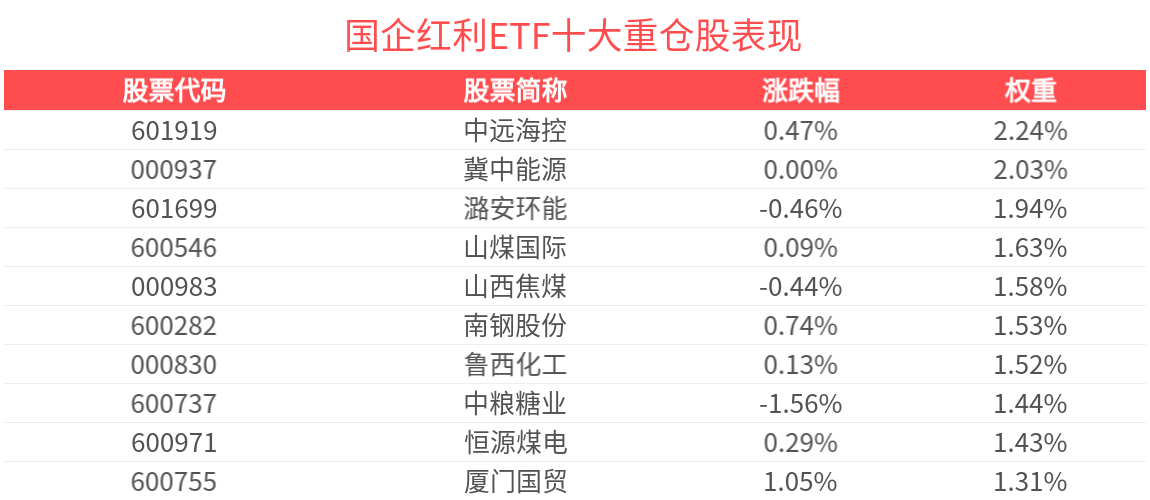
截至2025年12月3日 09:47,中证国有企业红利指数上涨0.21%,成分股神火股份上涨2.57%,华菱钢铁上涨2.52%,厦门象屿上涨1.55%,中信特钢上涨 1.21%,中信银行上涨1.16%。国企红利ETF(159515)上涨0.26%。(文中所列示股票为指数成份股,仅做示意不作为个股推荐。过往持仓情况不代表基金未 来的投资方向,也不代表具体的投资建议,投资方向、基金具体持仓可能发生变化) 消息面上,近期A股市场波动加大,上证指数微幅震荡,市场板块表现分化明显。在此背景下,以高股息、低估值为主要特征的红利策略再度受到市场关 注。市场分析认为,在当前经济温和复苏、市场利率下行的环境下,红利资产具备较强的配置价值。央行最新货币政策报告显示,10月新发放企业贷款加权 平均利率为3.82%,较上年同期下降0.18个百分点,低利率环境凸显高股息资产的稀缺性。此外,证监会近期出台分红新规,要求上市公司进一步提高现金 分红水平,为红利投资策略提供政策支持。 东莞证券指出,低估值与盈利稳定双轮驱动的红利高股息资产迎来估值重塑。当前政策不断引导上市公司加大增持回购分红力度,强化投资者回报。此外, 低利率环境放大了其" ...

证券代码:601998 证券简称:中信银行 公告编号:临2025-081
Zhong Guo Zheng Quan Bao - Zhong Zheng Wang· 2025-12-03 01:45
Core Points - The National Financial Regulatory Administration has approved Mr. Wei Qiang's appointment as a non-executive director of CITIC Bank, effective from November 24, 2025 [1] - Mr. Wei Qiang will not receive any director's remuneration during his tenure as a non-executive director, in accordance with the bank's remuneration policy [1] - Mr. Wei Qiang will also serve as a member of the Strategic and Sustainable Development Committee of the seventh board of directors starting from the same date [2] - The board of directors welcomes Mr. Wei Qiang's addition to the team [3] - This announcement was made by CITIC Bank's board of directors on December 2, 2025 [5]

招行最年轻副行长挂帅150亿招银投资,首位“高配”AIC董事长
Xin Lang Cai Jing· 2025-12-03 00:51
来源:财经众议院 招商银行旗下的金融资产投资公司也开业了! 12月2日,招银金融资产投资有限公司(简称"招银投资")开业仪式在深圳举行,这是股份行中的第二 家AIC。 虽然是行业"老二",但招银投资却至少创造了两个第一:注册资本150亿元,是目前获批的三家股份行 AIC中的注册资本老大;"高配"董事长,由招商银行最年轻的副行长雷财华挂帅,这也是包括国有大行 在内首位由副行长兼任的AIC董事长。 与之可以对比的是兴业银行旗下的兴银投资。11月16日,首家股份行AIC兴银投资开业,注册资本为 100亿元,董事长为陈伟,此前他担任兴业银行厦门分行党委书记、行长;总裁为郑榕斌,此前担任兴 业银行普惠金融部/乡村振兴部副总经理。 而招商银行的AIC高管却是"高配":不仅董事长由总行副行长兼任,总经理也是招商银行部门总经理。 在开业仪式上,招银投资总经理郑新盈首次亮相,此前为招商银行投行部总经理。 财经众议院注意到,此前开业的五大国有银行的AIC,董事长也均为部门总经理,尚没有副行长兼任的 情形,招商银行是首家由副行长兼任董事长的AIC。 雷财华今年两获重任,5月正式出任副行长,半年后又掌舵招银投资。 出生于1974年9 ...


2025年第47周:跨境出海周度市场观察
艾瑞咨询· 2025-12-03 00:03
Group 1: Industry Environment - Chinese companies face challenges in compliance, capital flow, and localization when going abroad, with experts suggesting diversified transaction designs and flexible capital reserves as solutions [3][4] - The trend of going abroad will focus on compliance, collaboration, and localization, with RMB settlement and precise layout becoming key priorities [4] - The micro-short drama industry has seen significant growth due to domestic competition and market gaps, emphasizing the importance of localization to avoid cultural misunderstandings [5] - By 2025, China's industrial internet is expected to enter a phase of large-scale harvest, becoming a core engine for enterprise growth through various outbound models [6] - Cultural understanding is crucial for Chinese companies entering the Latin American market, highlighting the need to respect local customs and community awareness [7] Group 2: Market Trends - Chinese AI companies are rapidly entering the Middle East market, driven by domestic financing cuts and increasing AI demand, with significant contributions expected to local GDPs [9] - New tea beverage brands are successfully penetrating Southeast Asia by modernizing traditional tea concepts and appealing to local youth, with significant growth in store openings and sales [10] - The commercial vehicle industry in China is recovering, with a notable increase in exports and a shift towards new energy vehicles, which now account for 24.6% of the market [11] - The semiconductor industry is seeing A-share companies expand globally, with a focus on technology breakthroughs and capacity layout to enhance competitiveness [12] - The Chinese robotics industry is expanding globally, with a complete supply chain and significant growth in service and industrial robots [14] Group 3: Brand Dynamics - Cloud technology is accelerating its global strategy by collaborating with Saudi companies to enhance hotel automation, despite facing financial pressures [22] - Ecovacs has transformed from product export to comprehensive brand and technology output, achieving significant international revenue [23] - Didi's autonomous driving technology is making strides in the Middle East, marking a significant step in the commercialization of autonomous vehicles [26] - Dazhong Dianping is expanding its overseas presence with local dining recommendations, aiming to become a global information platform [27] - E-point Tianxia is partnering with Alibaba Cloud to enhance AI content production and marketing for overseas markets [29] Group 4: Strategic Insights - Longcheng Automobile is showcasing its hydrogen energy technology at COP30, emphasizing its commitment to clean energy and international collaboration [30] - Ningji's overseas strategy involves respecting local market differences and adapting to cultural nuances to succeed in diverse regions [31]

银期合作共筑服务实体经济新范式(上)——以产融基地为抓手 打造共生共享生态圈
Qi Huo Ri Bao Wang· 2025-12-02 22:14
Core Insights - Dalian Commodity Exchange (DCE) has cultivated 12 bank-based industrial integration bases, enhancing the collaboration between finance and the real economy [1] - CITIC Bank, approved as a DCE industrial integration base in 2024, aims to leverage its decade-long experience in the futures market to empower the real economy [1][2] - The bank is transitioning from a single service model to a comprehensive financial service system that integrates exchanges, futures companies, and industrial enterprises [1][2] Group 1: Financial Services and Collaboration - CITIC Bank's competitive edge lies in its group synergy, allowing it to provide lifecycle services covering production, operation, and risk management [2] - The bank has established collaborative branches across various regions to enhance resource integration and has successfully matched financial services with industry needs [2] - The bank's approach aims to shift from "single-point support" to "ecological empowerment" in financial services [1][2] Group 2: Innovative Financial Products - CITIC Bank is implementing an "insurance + futures + banking" model, exemplified by its support for agricultural cooperatives, marking a significant case in rural revitalization [3] - The bank is also innovating products around futures in chemicals, energy, agricultural products, and non-ferrous metals, allowing for tailored large commodity forward swap transactions [4] - The introduction of these products aims to combine bank credit support with futures risk management, enhancing the financial landscape for various industries [4][5] Group 3: Future Directions and Market Impact - The bank's initiatives reflect a broader trend in deepening cooperation between banks and futures markets, evolving from basic margin deposit services to comprehensive financial solutions [5] - Future efforts will focus on further innovation and collaboration, aiming to create a recognized "professional brand" in the futures and industrial client sectors [5] - The ongoing development of innovative products and collaborative models is expected to significantly contribute to the high-quality development of the real economy [5]
人民币出海新引擎 中信银行创新驱动跨境金融新生态
Jing Ji Ri Bao· 2025-12-02 22:09
在全球经济深度融合的当下,中国作为世界第二大经济体,正以坚定不移的决心和前所未有的力度,稳 慎有序、步步坚实地推进人民币国际化进程,构建全方位高水平开放新格局的核心战略支撑。 中信银行作为中国涉足国内外金融市场融资的商业银行的"先行者",凭借其深厚的外汇业务底蕴,以全 球视野重塑跨境综合金融服务体系,深度渗透至企业进出口贸易、国际结算、资金交易、跨境投融资、 全球财资管理等核心领域,积极引导企业扩大人民币跨境使用规模,提升人民币在国际市场的接受度和 影响力。 截至2024年末,中信银行跨境人民币收付汇量高达15399.8亿元,较上年同比增长24.1%,增速超出全国 跨境人民币平均水平1.6个百分点,彰显出强劲的增长势头。其中,经常项下整体收付汇量达到4898.9亿 元,资本项下整体收付汇量更是突破万亿大关,达到10500.9亿元;服务跨境人民币对公客户数量超过1 万户,构建起庞大的跨境人民币服务网络。 在跨境人民币贸易结算领域,中信银行同样表现出色,收付金额达4374.1亿元,同比增速11.1%,持续 保持稳健增长。同时,跨境人民币贷款余额达到385.4亿元,同比增长194%,为上百户企业提供了全方 位的跨境 ...
中信银行创新驱动跨境金融新生态
Jing Ji Ri Bao· 2025-12-02 22:03
Core Viewpoint - China is advancing the internationalization of the Renminbi with strong determination and unprecedented efforts, positioning itself as a key player in the global economy [1] Cross-Border RMB Services - CITIC Bank has achieved a cross-border RMB payment and receipt volume of 1,539.98 billion yuan by the end of 2024, a year-on-year increase of 24.1%, surpassing the national average growth rate by 1.6 percentage points [1] - The bank's cross-border RMB trade settlement amount reached 437.41 billion yuan, with a steady growth rate of 11.1% [2] - The balance of cross-border RMB loans increased by 194% to 38.54 billion yuan, supporting over a hundred enterprises in their international financing needs [2] Product Innovation - CITIC Bank launched the "Capital Treasure+" comprehensive solution to address diverse cross-border financing needs, integrating various financial services [3] - The bank assisted a renewable energy company in issuing 500 million yuan in offshore RMB bonds, enhancing the influence of the RMB in the international bond market [3] - The bank's cross-border dual-currency pool service manages an average daily position of 1 billion yuan, improving fund management efficiency for multinational corporations [3] Technological Advancements - CITIC Bank has achieved a milestone by directly connecting to the CIPS (Cross-Border Interbank Payment System), significantly reducing transaction costs for enterprises [5] - The bank plans to optimize its CIPS-related services and expand its network of participating banks, focusing on countries along the "Belt and Road" initiative [6] Market Expansion - CITIC Bank is actively developing cross-border RMB financial services tailored for the e-commerce sector, enhancing payment efficiency and risk management [7] - The bank's cross-border e-commerce RMB payment business reached a transaction scale of 18.1 billion yuan in 2024, a 65% year-on-year increase [8] Collaborative Ecosystem - The internationalization of the RMB requires collaboration among financial institutions, enterprises, and government bodies, and CITIC Bank is committed to building a cooperative cross-border financial ecosystem [9] - The bank aims to continue innovating its cross-border financial service models to contribute to the global application of the RMB [9]
多家银行陆续调整代销基金风险等级
Zheng Quan Ri Bao Zhi Sheng· 2025-12-02 16:12
Core Viewpoint - Several banks, including China Construction Bank, have raised the risk levels of their distributed public funds, driven by stricter regulations and changing market conditions [1][2]. Group 1: Risk Level Adjustments - China Construction Bank announced an increase in risk levels for 87 public fund products, with 32 products moving from R2 (low to medium risk) to R3 (medium risk) and 55 products from R3 to R4 (medium to high risk) [2]. - Other banks, such as Minsheng Bank, have also adjusted risk levels for their distributed funds multiple times this year, indicating a broader trend across the banking sector [2][3]. Group 2: Market Environment Impact - The increase in risk levels is linked to rising volatility in the bond market, which affects the stability of bond fund net values, and the upward movement in equity markets, which increases the volatility of mixed funds [3]. Group 3: Implications for Wealth Management - More accurate risk ratings help banks fulfill their suitability management obligations, reduce future complaints and litigation risks, and enhance their brand reputation [4]. - However, the short-term challenge includes potential mismatches between the new risk levels and existing customer risk tolerances, which may lead to increased redemption rates and pressure on sales commissions [4]. Group 4: Investor Considerations - The adjustment in risk levels directly impacts ordinary investors, who may face decisions regarding redemption or reallocation of their investments due to mismatches in risk tolerance [4]. - Long-term, these adjustments are seen as a protective measure for investor rights, promoting transparency in risk disclosure and helping investors set realistic expectations [4]. Group 5: Recommendations for Investors - Investors are advised to reassess their risk tolerance, review their current holdings against new risk levels, and diversify their portfolios to mitigate risks [5]. - It is also recommended that investors focus on understanding product details beyond just risk ratings and maintain patience with quality products aligned with long-term goals [5].


注册资本150亿元!“零售之王”大动作!
证券时报· 2025-12-02 15:35
Core Viewpoint - The establishment of China Merchants Bank's wholly-owned subsidiary, China Merchants Financial Asset Investment Co., Ltd. (referred to as "China Merchants Investment"), marks a significant development in the financial asset investment sector, with a registered capital of 15 billion yuan, the highest initial capital among joint-stock bank AICs at inception [1][3][10]. Group 1: Company Overview - China Merchants Investment was officially launched on December 2, 2023, in Shenzhen, following its approval for establishment in July and operational approval in late November [1][3]. - The company aims to leverage opportunities from national policies, technological innovation, and capital market development, positioning itself as a leader in the financial asset investment industry [3][10]. Group 2: Strategic Goals - The company intends to enhance its mission by focusing on technological self-reliance and innovation, targeting emerging and future industries [3][10]. - It aims to become a top-tier investment institution by improving its research, investment management, risk management, technological, and innovative capabilities [3][10]. - China Merchants Investment will adhere to value investing principles, promoting long-term capital and creating a new ecosystem of investment and lending [3][10]. - The company plans to strengthen collaboration with its parent bank and the China Merchants Group to maximize synergies [3][10]. - It seeks to expand its investment network, attracting more long-term and quality capital into the technology innovation sector [3][10]. Group 3: Business Focus - China Merchants Investment will concentrate on market-oriented debt-to-equity swap operations and participate in pilot equity investment projects under regulatory guidance, aiming to empower technological innovation [3][10]. - The company is committed to providing comprehensive financial support throughout the lifecycle of its clients, reducing corporate leverage, and facilitating enterprise transformation and upgrading [3][10]. Group 4: Industry Context - The expansion of AICs is seen as beneficial for supplementing long-term and patient capital, particularly for supporting technology-driven enterprises [6][10]. - The regulatory environment is evolving, with recent policies expanding the scope of AIC equity investment trials to more cities, indicating a growing trend in the financial sector [10]. - Analysts suggest that AICs could become crucial for banks to engage in technology finance and equity markets, especially as traditional lending margins shrink [10].