华熙生物

Search documents
可复美疑似造假罗生门:成分营销成双刃剑,资本游戏谁是输家
Nan Fang Du Shi Bao· 2025-06-07 10:13
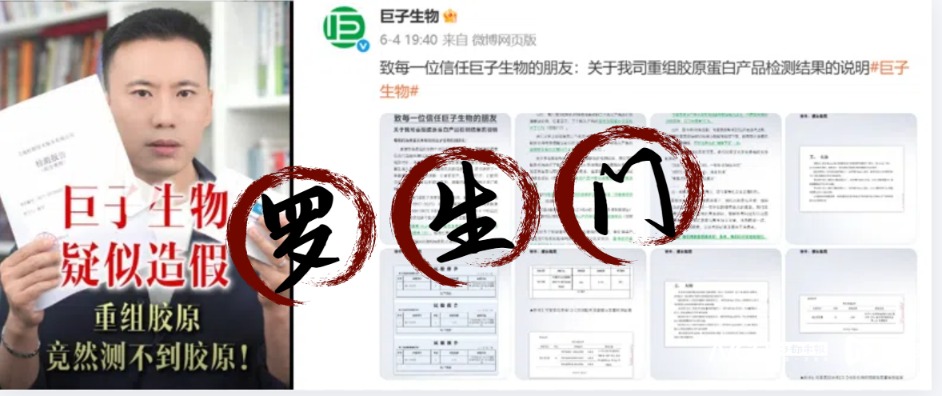
Core Viewpoint - The controversy surrounding the product "Kefumei" from Juzhi Biotechnology has escalated into a significant public debate over the authenticity of its key ingredient, recombinant collagen, leading to a broader discussion about ingredient marketing in the domestic beauty industry [1][3][4]. Group 1: Incident Overview - The dispute began on May 24 when beauty blogger "Dr. Big Mouth" Hao Yu accused Juzhi Biotechnology of falsely advertising the collagen content in its "Kefumei" product, claiming the actual amount was only 0.0177%, while it should be above 0.1% to comply with regulations [3][4]. - Juzhi Biotechnology responded with its own testing results, asserting compliance, but the blogger continued to question the validity of these results, leading to a back-and-forth that has lasted 12 days [3][4]. - The incident has resulted in a significant market impact, with Juzhi Biotechnology's market value dropping by over 20%, amounting to nearly 20 billion HKD [4]. Group 2: Industry Context - The beauty industry in China has increasingly relied on ingredient marketing, with companies like Huaxi Biotechnology leveraging popular ingredients like hyaluronic acid to drive sales [5][6]. - Juzhi Biotechnology's revenue for 2024 is projected to reach 5.54 billion RMB, a 57.2% increase year-on-year, with the "Kefumei" brand contributing over 80% of this revenue [4][6]. - The reliance on e-commerce channels is evident, with direct-to-consumer (DTC) sales accounting for 71.6% of Juzhi's total revenue, up from 65.2% the previous year [6]. Group 3: Market Dynamics - The ongoing debate highlights a "arms race" in ingredient marketing within the domestic beauty sector, where companies must continuously innovate and promote new ingredients to attract consumer interest and investment [1][5]. - The lack of industry standards for new ingredients like recombinant collagen complicates the situation, as companies can interpret and market these ingredients in ways that may not align with consumer expectations [10][11]. - The competitive landscape is further complicated by the contrasting fortunes of companies like Juzhi Biotechnology, which has seen its valuation rise, versus Huaxi Biotechnology, which has experienced declining revenues and profits [8][9].

透明质酸应用前景广阔 中国企业全球领跑
Zheng Quan Ri Bao· 2025-06-06 16:42
Group 1 - The latest research published in the journal "Cell" identifies the decline of extracellular matrix (ECM) as the 13th hallmark of aging, highlighting hyaluronic acid (HA) as a key regulator of ECM dynamics [1] - High molecular weight hyaluronic acid can regulate fibroblast activity and drive collagen regeneration through CD44 receptor signaling pathways, restoring the viscoelasticity of ECM [1] - The perception of hyaluronic acid is shifting from a mere "filler material" to a "systemic anti-aging agent," potentially transforming its market valuation logic [1] Group 2 - Chinese companies hold a leading position in the global hyaluronic acid industry, accounting for 82% of the global raw material market sales as of 2021 [2] - Huaxi Biological achieved a breakthrough in enzymatic cutting technology in 2011, allowing for precise control over the molecular weight and end groups of hyaluronic acid, which has advanced research in various fields [2] - The Chinese hyaluronic acid raw material market was valued at approximately 4.71 billion yuan in 2023, with a year-on-year growth of 9.0%, and is expected to reach hundreds of billions by 2025 with a compound annual growth rate exceeding 20% [2] Group 3 - Future innovations in the hyaluronic acid industry are expected to be driven by a combination of technology, application scenarios, and policies, positioning Chinese companies to lead globally [3]

巨子华熙鏖战:美妆行业自我造神的反噬
2 1 Shi Ji Jing Ji Bao Dao· 2025-06-06 10:43
Core Viewpoint - The ongoing controversy surrounding the collagen content claims by Juzhi Biotechnology highlights a deeper crisis of trust within the skincare industry, exacerbated by a lack of transparency and regulatory standards [1][2][3]. Group 1: Industry Trust Issues - The dispute over ingredient authenticity has revealed significant gaps in consumer trust and industry standards, with companies often engaging in "black box" practices that obscure the true efficacy of their products [3][4]. - The skincare sector is facing a crisis where consumers are increasingly skeptical of scientific claims, demanding transparency and accountability from brands [3][10]. Group 2: Regulatory and Market Dynamics - Recent events, including a fine imposed on CSS for false advertising, illustrate the consequences of misleading marketing practices, with penalties disproportionately affecting downstream partners rather than brands [6][9]. - The market for soluble collagen and other active ingredients is experiencing explosive growth, with a reported 106.93% increase in soluble collagen registrations, indicating a shift in consumer preferences towards these components [6][9]. Group 3: Ingredient Efficacy and Marketing Practices - The industry is grappling with two main issues: the imbalance in quantifying ingredient efficacy and the use of "shadow ingredients" to mislead consumers about product value [7][8]. - Companies are often reducing the actual amounts of active ingredients to cut costs, leading to a significant disparity between product claims and actual performance, which undermines consumer trust [7][8]. Group 4: Future Opportunities and Challenges - The lack of standardized testing methods and regulatory frameworks is creating a fragmented market where companies can exploit loopholes, leading to a potential collapse of consumer confidence [10][11]. - The need for an open and transparent verification platform is critical for establishing trust and setting future industry standards, as current practices are failing to meet consumer expectations [10][11].
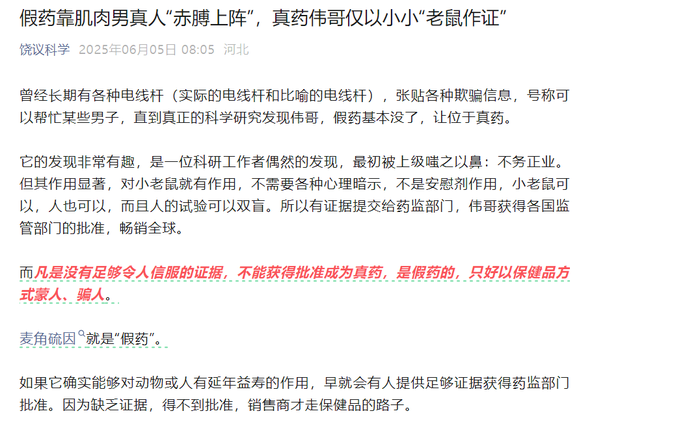
麦角硫因陷多重争议,究竟是有效产品还是营销噱头?
2 1 Shi Ji Jing Ji Bao Dao· 2025-06-06 08:37
Core Viewpoint - The controversy surrounding ergothioneine, a compound linked to anti-aging, has intensified following accusations of it being a "fake drug" due to lack of sufficient evidence for its approval as a medicine. Companies like Kelun Pharmaceutical and its subsidiary have defended ergothioneine's classification as a health management tool rather than a drug, citing international studies that support its potential benefits [1][2][4]. Industry Overview - The global market for ergothioneine is projected to exceed $810.4 million by 2027, with a compound annual growth rate (CAGR) of 36.17% from 2021 to 2027. The raw material market for ergothioneine is also expected to grow from $6.3 million in 2024 to $16.1 million by 2031 [1]. - Companies such as Huaxi Biological and Chuaning Biological are accelerating their production capabilities through synthetic biology to meet the rising demand for high-purity ergothioneine [2][8]. Product Positioning and Pricing - Ergothioneine is marketed as a dietary supplement rather than a drug, with Kelun's product priced at 1499 yuan for 60 capsules, while competitors like Jinsan Biological offer similar products at 539 yuan. Kelun justifies its pricing based on Japanese market standards and production costs [4][5]. - The compound is recognized as a fifth-generation antioxidant and is used in both topical and oral applications, often combined with other ingredients like hyaluronic acid and collagen peptides [3][6]. Scientific Research and Development - Despite claims of ergothioneine's anti-aging effects, there are gaps in scientific understanding regarding its mechanisms and clinical validation. Research indicates that while ergothioneine shows promise, further studies are needed to explore its effects and applications in medicine [2][8]. - Companies are investing in research to better understand ergothioneine's potential, with Huaxi Biological planning to invest 1.35 million yuan in related projects [7]. Production and Supply Chain - The production of ergothioneine has historically faced challenges due to low yields from natural sources, but advancements in synthetic biology are enabling domestic companies to increase production capacity. For instance, Chuaning Biological plans to establish a facility capable of producing 0.5 tons of ergothioneine annually [6][8]. - The majority of ergothioneine is produced through microbial fermentation or enzyme catalysis, with domestic firms achieving over 99% purity in their products [8].

排队IPO的潮玩公司,神话和泡沫共存丨南财号联播
2 1 Shi Ji Jing Ji Bao Dao· 2025-06-06 08:37
Group 1 - The "National Subsidy" for home appliances in Chongqing has been suspended, with the first round of subsidy funds fully utilized, leading to a halt in qualification code applications [1] - The ongoing dispute between Huaxi Biological and Juzhi Biological regarding the content of collagen products continues, with both parties refusing to back down, resulting in a persistent trust crisis [1] - A public feud between Elon Musk and Donald Trump has led to a significant drop in Tesla's market value, evaporating over $150 billion (approximately 1.09 trillion RMB) in a single night [1] - Procter & Gamble announced plans to cut 7,000 non-manufacturing jobs over the next two years, representing about 15% of such positions, with expected pre-tax costs of $1 billion to $1.6 billion [1] Group 2 - The toy company market is experiencing a mix of myth and bubble, with concerns about the commercial viability and competitive advantages of companies like TOPTOY and 52TOYS as they prepare for IPOs [2] - White Elephant instant noodles, previously celebrated as a symbol of domestic products, faces backlash due to trademark issues, which may undermine its brand image and consumer trust [3] - The 2025 Guangdong-Hong Kong-Macao Greater Bay Area Auto Show has seen record attendance, with over 180,000 visitors on the first day and an expected total of 450,000 attendees, marking a 27.84% increase from the previous year [3] - The "618" shopping festival is generating mixed reactions from consumers, with some expressing resistance to purchasing despite the ongoing promotions on major e-commerce platforms [3]



商战双方最新回应,华熙生物:反对成分“名称游戏”
news flash· 2025-06-06 05:26
Core Viewpoint - The ongoing dispute regarding the ingredient content of collagen protein products between companies is highlighted, with Huaxi Biological opposing the notion of "name games" in the industry [1] Group 1: Company Responses - Juzhi Biological disclosed testing results from four different institutions, all indicating ingredient content greater than 0.1%, while denying any allegations of "false advertising" [1] - Huaxi Biological emphasized the need for collaboration among testing institutions, professionals, and media to ensure industry safety and prosperity, criticizing the manipulation of standards by certain companies and scholars [1] Group 2: Industry Concerns - The statement from Huaxi Biological pointed out that the safety of the industry is compromised when individual companies and biased scholars manipulate discussions to create standards that benefit a few at the expense of overall industry development [1] - The company warned against using "standard disputes" and "business wars" to obscure fundamental product safety and value commitments [1]
2025中国护肤品发展趋势研究:需求重塑新生态,洞察个性化与绿色美妆未来走向
Tou Bao Yan Jiu Yuan· 2025-06-05 11:49
Investment Rating - The report does not explicitly provide an investment rating for the skincare industry Core Insights - The skincare industry in China is undergoing a transformation driven by consumer demand for personalized and sustainable products, with a focus on ingredient innovation and technological integration User Profiles - The male skincare market is evolving towards personalized skincare solutions, moving from basic care to more specialized needs such as oil control and acne treatment, with the market expected to reach 15.6 billion yuan by 2024 [19][20] - The Z generation views skincare as a form of self-expression and emotional engagement, with a strong emphasis on cultural identity and social belonging [14][18] - The infant skincare market is rapidly growing, driven by the new parenting philosophies of the "90s" and "Z generation," focusing on safety and scientific formulations [22][25] Ingredient Trends - The plant-based skincare market is entering a phase of innovation characterized by ingredient upgrades and sustainable practices, with a focus on herbal extracts and advanced extraction technologies [26][27] - The top plant extracts in demand for 2024 include Centella Asiatica, licorice root, and purslane, indicating a shift towards natural and effective ingredients [27][28] Technological Innovations - AI technology is transforming the skincare industry from a traditional model to a data-driven ecosystem, enhancing efficiency and enabling personalized skincare solutions [38][40] - The integration of AI in product development is reshaping the research and development processes, allowing for more tailored consumer experiences [39][40] Consumer Concepts - Emotional skincare is emerging as a new concept, combining psychological and sensory elements to enhance the skincare experience [44][46] - The philosophy of minimalist skincare is gaining traction, emphasizing precision and efficiency over excessive product use [53][55] - Sustainable packaging is becoming a priority for consumers, with a significant portion willing to pay a premium for eco-friendly packaging solutions [58][59]
饶毅发文“打假”麦角硫因,“科伦系”股价应声下跌
Xin Lang Cai Jing· 2025-06-05 11:22
Core Viewpoint - The article discusses the controversy surrounding Kelun Pharmaceutical's new product, Ergothioneine capsules, which has been labeled as a "fake drug" by a prominent biologist, leading to a significant drop in the stock prices of both Kelun Pharmaceutical and its subsidiary, Chuaning Biological. Company Summary - Kelun Pharmaceutical's chairman, Liu Gexin, promoted Ergothioneine capsules, resulting in a stock price increase of 16.75% for Kelun and 12.22% for Chuaning Biological over the past month [1][3] - Following the criticism from biologist Rao Yi, both companies experienced a stock price decline of 4.96% and 1.98%, respectively, closing at 37.75 CNY per share and 12.87 CNY per share, with market capitalizations of 603.27 billion CNY and 287.01 billion CNY [5] - Ergothioneine is a natural antioxidant derived from microorganisms, particularly edible mushrooms, and has been associated with various health benefits [5][6] Industry Summary - The product Ergothioneine has not yet been approved as a health supplement in China, and there are no registered products containing Ergothioneine found in the National Medical Products Administration's database [6][9] - The product is currently being sold in China through cross-border e-commerce after being exported to Japan for production, as it has not received domestic approval [6] - Ergothioneine's potential for oral consumption remains uncertain, as it is primarily used as a bioactive ingredient in cosmetic formulations [6]
三个医美女首富争霸,日子都不好过
创业家· 2025-06-05 10:06
Core Viewpoint - The article discusses the escalating conflict between two major companies in the medical beauty industry, Huaxi Biological and Juzhi Biological, highlighting the competitive dynamics and market implications of their rivalry, particularly in the context of collagen products and consumer trust [3][4][19]. Group 1: Company Conflict - The conflict between Huaxi Biological and Juzhi Biological has intensified, with accusations of potential fraud being exchanged publicly [3][4]. - Huaxi Biological's sales and stock prices have declined since 2021, while Juzhi Biological's collagen products have seen significant market success [4][19]. - The public dispute has drawn attention to the market dynamics, with another company, Jinbo Biological, benefiting from the situation by avoiding direct confrontation and achieving substantial stock price increases [4][19]. Group 2: Market Dynamics - The market for recombinant collagen products is projected to grow significantly, with a compound annual growth rate of 44.93%, reaching 585.7 billion yuan by 2025 and 2.1938 trillion yuan by 2030 [28]. - Jinbo Biological reported a revenue of 1.443 billion yuan in 2024, a year-on-year increase of 84.92%, with a gross profit margin of 92.02% [28]. - The competitive landscape is shifting, with new materials and products emerging, potentially threatening the current market positions of Huaxi and Juzhi Biological [36][37]. Group 3: Key Individuals - Yang Xia, the owner of Jinbo Biological, has seen her wealth increase significantly due to the company's stock performance, solidifying her status as a prominent figure in the industry [30][29]. - The article notes the historical context of Huaxi Biological's rise and subsequent decline, contrasting it with the current successes of Juzhi and Jinbo Biological [34][35].

三个医美女首富争霸,日子都不好过
创业家· 2025-06-05 10:06
Core Viewpoint - The article discusses the escalating conflict between two major companies in the medical beauty industry, Huaxi Biological and Juzhi Biological, highlighting the competitive dynamics and market implications of their rivalry [3][4]. Group 1: Company Conflict - The conflict between Huaxi Biological and Juzhi Biological has intensified, with accusations of potential fraud being exchanged publicly [3][4]. - Huaxi Biological's sales and stock price have declined since 2021, while Juzhi Biological's "recombinant collagen" products have seen significant growth [4][20]. - The public dispute has led to increased attention on the medical beauty sector, with Juzhi Biological's stock price rising significantly amid the controversy [20][28]. Group 2: Market Dynamics - The market for recombinant collagen products is projected to grow rapidly, with a compound annual growth rate of 44.93%, reaching 585.7 billion yuan by 2025 [28]. - Jinzhi Biological, another key player in the recombinant collagen market, reported a revenue of 1.443 billion yuan in 2024, a year-on-year increase of 84.92% [28]. - The gross profit margin for Jinzhi Biological reached 92.02% in 2024, indicating strong profitability compared to other sectors, including Moutai [28]. Group 3: Industry Competition - The article notes that the medical beauty industry is witnessing a "three-women billionaire" competition, with significant figures like Yang Xia from Jinzhi Biological and Zhao Yan from Huaxi Biological [30][34]. - The emergence of new materials in the medical beauty sector poses a potential threat to the current leaders, as consumer preferences may shift [38]. - The lack of standardized testing methods for recombinant collagen products raises concerns about quality and consumer trust, which could impact market dynamics [37].