荣耀

Search documents
隆利科技(300752.SZ):OPPO和荣耀是公司的重要客户
Ge Long Hui· 2025-10-21 10:13
Core Viewpoint - Longli Technology (300752.SZ) has established friendly cooperative relationships with key clients OPPO and Honor, indicating a strong position in the market and a commitment to deepening collaborations with these customers [1] Group 1 - Longli Technology identifies OPPO and Honor as important clients, highlighting their significance in the company's business strategy [1] - The company expresses intentions to maintain and actively expand the depth of cooperation with these clients, suggesting potential for future growth and partnership opportunities [1]

被曝支持与苹果互传,鸿蒙6将有哪些升级?
Guan Cha Zhe Wang· 2025-10-21 09:38
Core Insights - Huawei is set to officially launch HarmonyOS 6 on October 22, marking a return to conventional naming after previous versions like "HarmonyOS NEXT" [1] - The new operating system aims to enhance cross-device collaboration, intelligence, security, and performance [1][3] Group 1: HarmonyOS 6 Features - HarmonyOS 6 will enable data transfer between Huawei devices and Apple devices during device switching, differing from other manufacturers' proposals for ecosystem compatibility [1] - The upgrade focuses on cross-device collaboration, with features like "tap to share" allowing users to easily transfer content between devices [1][3] - The introduction of the HarmonyOS Intelligent Agent Framework (HMAF) will enhance the capabilities of smart agents, enabling them to assist users in complex tasks [3] Group 2: Performance and User Experience - Performance improvements are expected through optimizations in the Ark Engine and HarmonyOS kernel, leading to faster application launch and loading times [4] - The user interface will see changes, including a vertical volume and brightness adjustment bar for better usability [4] - Developers will gain access to new foundational capabilities, reducing the barriers for app development [4] Group 3: Ecosystem Development - Despite over 30,000 applications and services developed for HarmonyOS, the ecosystem still falls short of the 100,000 applications benchmark for maturity [6] - Huawei plans to invest 150 billion RMB annually over the next five years to support ecosystem development, alongside significant resources for open-source community support [6] - The upcoming Mate80 series smartphones are expected to feature the new HarmonyOS 6 and will include various models targeting different user preferences [6] Group 4: Market Context - In Q3, the smartphone market in mainland China saw a 3% year-on-year decline, with Huawei ranking second in shipments at 10.5 million units, a 3% decrease [7] - Vivo led the market with 11.8 million units shipped, while Apple was the only brand among the top five to see growth [7] - The success of HarmonyOS 6 and the Mate80 series will be crucial for Huawei in building a robust ecosystem amidst intense competition [7]


iPhone 17系列卖爆了!苹果公司股价创下历史新高,市值飙升到3.85万亿美元【附智能手机行业市场分析】
Qian Zhan Wang· 2025-10-21 04:23
Core Insights - Apple's stock price reached an all-time high of $262.24, with a market capitalization of $3.89 trillion, surpassing Microsoft to become the second-largest company in the U.S. [2] - The surge in stock price is primarily driven by strong sales of the iPhone 17 series, which saw a 14% increase in sales compared to the iPhone 16 series during the first 10 days post-launch in China and the U.S. [2] - The iPhone 17 standard model has been particularly appealing to consumers due to its enhanced hardware features while maintaining the same price as the previous model, effectively addressing consumer demand for value [2][10] Sales and Pricing Strategy - Apple announced a price reduction for the iPhone 17 Pro series as part of the Tmall "Double 11" promotion, with the iPhone 17 Pro and Pro Max both seeing a price drop of 300 yuan [3] - The standard version of the iPhone 17 will not participate in this price reduction, indicating Apple's strategy to maintain its pricing power while promoting the Pro series [3] - Additional incentives such as trade-in subsidies are available, further lowering the cost for consumers and aiming to boost sales of the iPhone 17 series [3] Market Position and Competition - In the global smartphone market, Apple holds a leading market share of 18.7% as of 2024, ranking first [4] - The Chinese smartphone market is stable, with Vivo leading at 17.2% market share, followed by Huawei and Apple, which has seen a resurgence in market presence [6] - The competitive landscape is tightening, with major players like Vivo and Huawei showing strong performance, while Apple continues to grow its market share [8] Industry Trends - The average global smartphone price is projected to rise from $357 in 2024 to $370 in 2025, driven by a trend towards higher-end devices and consumer preferences for advanced features [9] - Domestic smartphone manufacturers are urged to invest in original innovation to enhance competitiveness, as the previous strategy of rapid imitation is becoming less effective [9][10] - The success of the iPhone 17 highlights a shift in consumer expectations, where high-end does not necessarily mean high price, emphasizing the importance of delivering superior features and experiences [10]


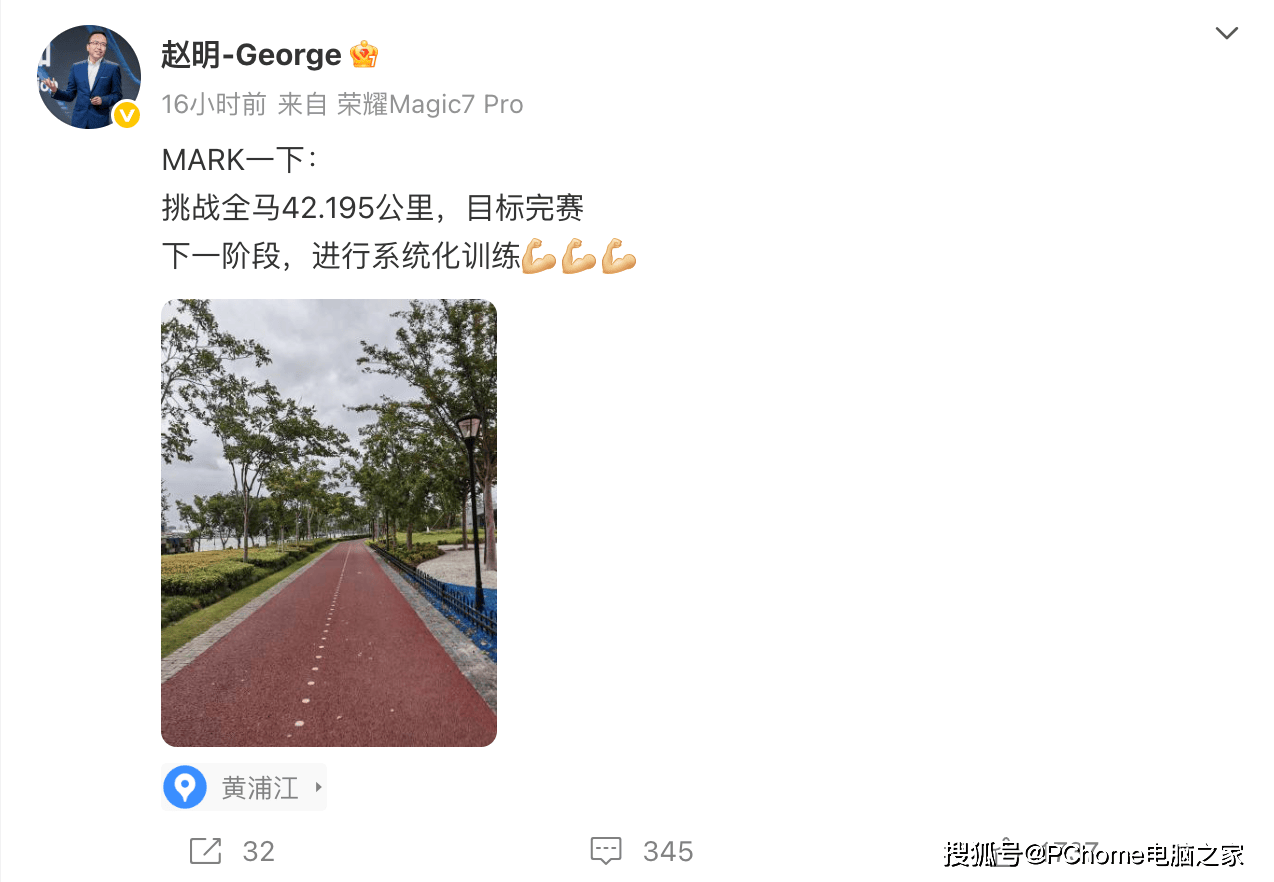
前荣耀CEO赵明发微博:挑战全马,小尾巴为Magic7 Pro
Sou Hu Cai Jing· 2025-10-21 02:55
Core Insights - Zhao Ming, the former CEO of Honor, did not showcase the latest flagship smartphone, Honor Magic 8 series, but instead referenced the Honor Magic 7 Pro, which was the last flagship smartphone launched during his tenure [3] - After leaving Honor in January 2025 due to health reasons, Zhao Ming made his first public appearance at the "Leader Change Forum" at Fudan University in September, where he discussed the competitive relationship between Honor and Xiaomi, the independent development strategy, and insights on competition in the AI era, denying rumors about his new career direction [5] Group 1 - Zhao Ming's absence from the launch of the Honor Magic 8 series indicates a significant transition for the company post his departure [3] - The reference to the Honor Magic 7 Pro highlights the legacy of Zhao Ming's leadership and the products associated with his tenure [3] Group 2 - The discussion at the "Leader Change Forum" reflects the ongoing competitive dynamics in the smartphone industry, particularly between Honor and Xiaomi [5] - Zhao Ming's insights on AI competition suggest a strategic focus for companies in adapting to technological advancements in the industry [5]

台积电三季度营收超预期,Q3全球智能手机市场持续复苏 | 投研报告
Zhong Guo Neng Yuan Wang· 2025-10-21 01:05
Core Viewpoint - TSMC's Q3 2025 revenue reached $33.1 billion, exceeding guidance, with a year-on-year growth of 40.8% and a net profit increase of 39.1% [1][2][3] Industry Summary - The electronic sector is experiencing a moderate recovery, with a focus on structural opportunities in AI computing, AIOT, semiconductor equipment, key components, and rising storage prices [2][6] - Global smartphone shipments in Q3 2025 reached 323 million units, a 2.6% year-on-year increase, driven by high-end models, while China's smartphone shipments declined to 68 million units, down 0.6% year-on-year [1][4][5] Company Performance - TSMC's Q3 2025 revenue was $33.1 billion, with a year-on-year increase of 40.8% and a quarter-on-quarter increase of 10.1%. The net profit was 452.3 billion NTD, up 39.1% year-on-year [3] - The revenue growth was primarily driven by AI and high-performance computing (HPC) demand, contributing 57% to total revenue, while smartphone, IoT, automotive electronics, and consumer electronics accounted for 30%, 5%, 5%, and 1% respectively [3] - TSMC's revenue guidance for Q4 2025 is between $32.2 billion and $33.4 billion, with a gross margin expected between 59% and 61% [3] Market Dynamics - The global smartphone market is recovering moderately, with high-end innovations and emerging regions driving growth, while the Chinese market faces challenges of weak demand and structural transformation [5][6] - Domestic brands like Xiaomi, Transsion, and Vivo have shown growth in the global smartphone market, while Chinese brands are experiencing varying degrees of decline due to seasonal factors and limited new products [4][5] Investment Recommendations - The industry is advised to focus on companies benefiting from strong domestic and international demand in the AIOT sector, as well as those involved in AI innovation and upstream supply chain domestic substitution [6]

国内首款eSIM手机即将发售!多家公司早有布局相关业务
Zheng Quan Shi Bao· 2025-10-21 00:48
Core Insights - Apple CEO Tim Cook announced the official launch of the iPhone Air in China on October 22, which is the first smartphone in the country to utilize eSIM technology, eliminating the physical SIM card slot [1] - Major Chinese telecom operators, including China Unicom, China Mobile, and China Telecom, have received approval to commence eSIM services, marking a significant shift towards a "cardless era" in mobile technology [1][2] - The global eSIM market is projected to grow significantly, with an estimated 1 billion eSIM-enabled smartphones by the end of 2025 and 6.9 billion by 2030, representing 76% of total smartphone connections [2] Industry Developments - The eSIM technology integrates SIM card functions into the phone's internal chip, allowing for a more compact design and improved features such as water and dust resistance [2] - Domestic brands are quickly adapting to the eSIM trend, with OPPO announcing an eSIM version of its Find X9 series set to launch in November [1] - The eSIM industry involves a complex ecosystem, including chip design, platform management, operator services, device integration, and end-user applications, with expectations for collaborative growth and maturity [3] Company Activities - Several companies have been actively involved in the eSIM space, including Unisoc, which has launched multiple eSIM products compliant with GSMA standards [4] - Eastcompeace has developed an embedded operating system and eSIM management platform that has received GSMA security certification [5] - Megmeet has established a mature eSIM solution with large-scale production capabilities across 4G and 5G platforms [5] Market Performance - eSIM concept stocks have seen an average increase of 42.42% this year, significantly outperforming the Shanghai Composite Index [7] - Six stocks have recorded gains exceeding 50%, including Hengbao Co., Eastcompeace, and Chutianlong [7] - Despite the overall positive trend, some stocks have experienced significant pullbacks, with several dropping over 30% from their year-to-date highs [7]
国内首款eSIM手机即将发售 多家公司早有布局相关业务
Zheng Quan Shi Bao· 2025-10-20 17:10
Core Insights - Apple CEO Tim Cook announced the launch of the iPhone Air in China on October 22, which is the first smartphone in the country to use eSIM technology, eliminating the physical SIM card slot [1] - The launch follows the approval of eSIM services by major Chinese telecom operators, marking the official entry of eSIM technology into the mobile phone market in China [1][2] - The global eSIM market is projected to grow significantly, with an estimated 1 billion eSIM smartphone connections by the end of 2025 and 6.9 billion by 2030, representing 76% of total smartphone connections [2] Industry Developments - The eSIM ecosystem involves a complex supply chain including chip design, platform management, operator services, device integration, and end-user applications, with expectations for collaborative development and maturation of the industry [3] - Several companies in the A-share market have been actively developing eSIM capabilities, including Unisoc, which has launched multiple eSIM products compliant with GSMA standards [4] - Eastcompeace has successfully developed an embedded operating system and eSIM IoT management platform that received GSMA security certification [5] - Megmeet has established mature eSIM solutions with large-scale production on 4G/5G chip platforms [6] - Chutianlong's eSIM products have been approved by China Unicom, and Wanma Technology has been a long-term provider of eSIM solutions across various standards [7] Market Performance - eSIM concept stocks have seen an average increase of 42.42% year-to-date, significantly outperforming the Shanghai Composite Index, with six stocks rising over 50% [8] - Some eSIM concept stocks have experienced significant pullbacks from their year-to-date highs, with declines exceeding 30% for several companies [9] - A total of 14 eSIM concept stocks have received "positive" ratings from brokerage firms, with eight stocks rated by more than ten institutions, including ZTE, Guanghetong, China Telecom, China Mobile, and Megmeet [9]



电子行业周报:台积电三季度营收超预期,Q3全球智能手机市场持续复苏-20251020
Donghai Securities· 2025-10-20 15:39
Investment Rating - The report indicates a cautious investment outlook for the electronics sector, suggesting a gradual recovery in industry demand and advising against chasing high prices while recommending slow accumulation during dips [5]. Core Insights - TSMC's Q3 2025 revenue reached $33.1 billion, exceeding guidance and reflecting a 40.8% year-on-year growth, with net profit increasing by 39.1%. The revenue from 7nm and below process nodes accounted for 74% of total revenue [4][10]. - Global smartphone shipments in Q3 2025 reached 323 million units, a 2.6% year-on-year increase, driven by high-end models, although shipments in China declined by 0.6% [4][10]. - The electronics industry is experiencing a mild recovery, with structural opportunities in AI computing, AIOT, semiconductor equipment, key components, and rising storage prices [4][5]. Summary by Sections Industry Overview - TSMC's Q3 2025 revenue was $33.1 billion, a 40.8% increase year-on-year, with a net profit of NT$452.3 billion, up 39.1% year-on-year. The company expects Q4 revenue between $32.2 billion and $33.4 billion [4]. - The global smartphone market is recovering, with high-end models driving demand, while the Chinese market faces challenges with a 0.6% decline in shipments [4][10]. Market Performance - The electronics sector underperformed the market, with the Shanghai-Shenzhen 300 index down 2.22% and the Shenwan Electronics Index down 7.14% [19][21]. - As of October 17, 2025, the semiconductor sub-sector saw a decline of 6.53%, while consumer electronics dropped by 9.10% [21][22]. Investment Recommendations - Focus on companies benefiting from strong domestic and international demand in the AIOT sector, such as Lexin Technology and Rockchip Technology [5]. - Monitor AI innovation-driven sectors, particularly computing chips and optical devices, with companies like Cambricon and Source Photonics highlighted [5]. - Consider leading stocks in the storage sector, such as Zhaoyi Innovation and Jiangbo Technology, as prices are expected to recover [5].
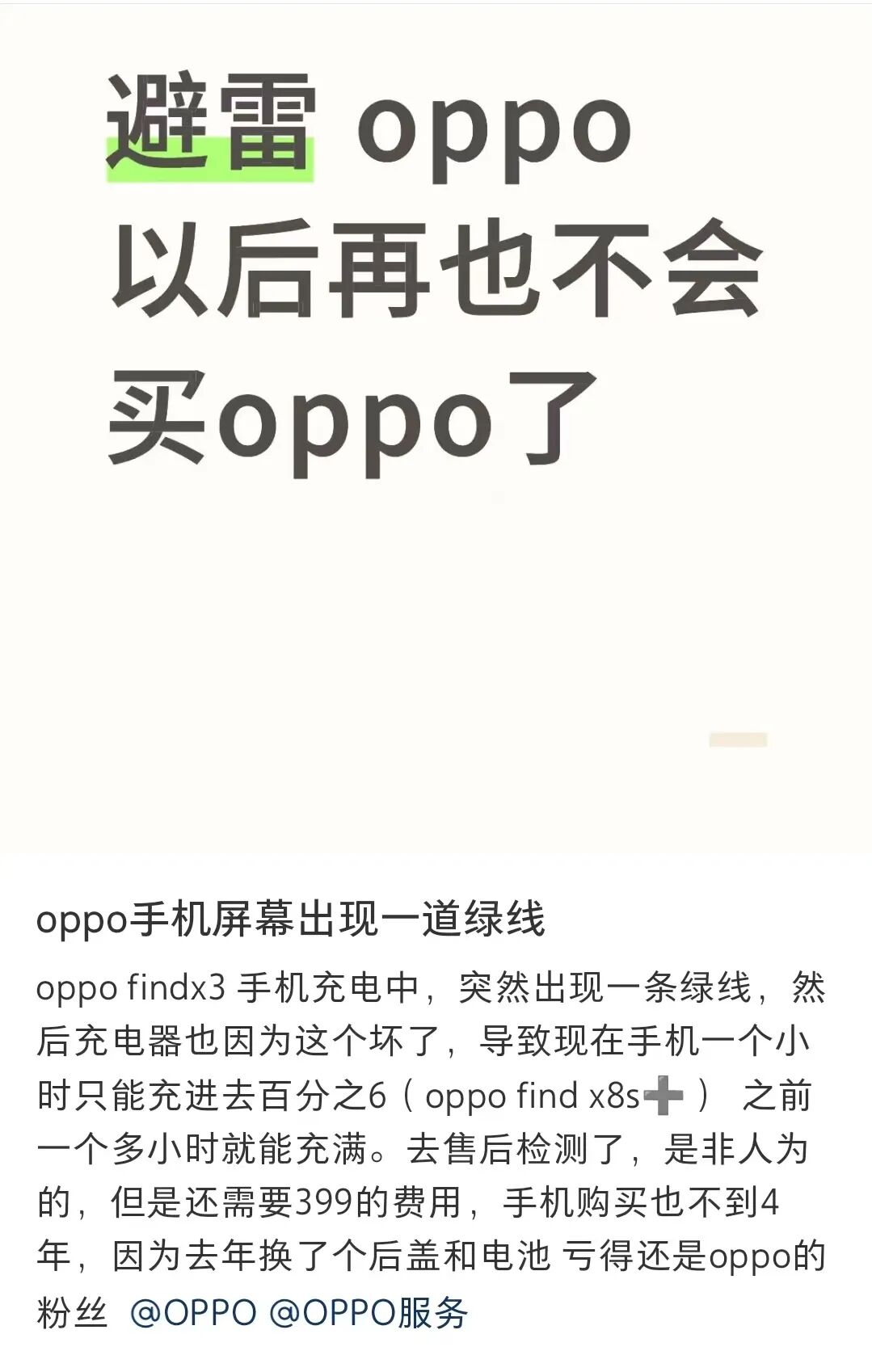
一条绿线,引发OPPO的中年危机
Feng Huang Wang Cai Jing· 2025-10-20 14:01
Core Insights - 2025 is a significant year for OPPO as it marks the company's 30th anniversary and its ongoing transformation towards a high-end brand, amidst discussions of its declining market position [1][2] - OPPO has faced a sudden trust crisis due to reports of a "green line" issue on screens, which coincides with the critical launch period of its Find X9 series, intended to drive its high-end ambitions [2][22] Product Issues - Users have reported a persistent "green line" appearing on screens of OPPO and OnePlus devices, particularly after approximately four years of use, affecting various models including the Find X and Reno series [3][6][9] - OPPO has offered free screen replacements for devices activated within four years, but many users face challenges in claiming this service due to missing purchase receipts and other requirements [12][15][19] - The trust in OPPO's product durability is being questioned, as the company has historically marketed itself as a reliable brand [22] Market Performance - OPPO's domestic market share has declined, with Q3 2025 figures showing a drop to 14.5%, ranking fifth behind competitors like vivo, Apple, Huawei, and Xiaomi [23][24] - In the global market, OPPO's share has also weakened, falling out of the top five smartphone manufacturers by Q3 2025, indicating a significant decline in its competitive position [25][27] Competitive Landscape - OPPO's struggles in the high-end market are evident, as it lags behind competitors like Apple and Huawei, which have successfully launched popular high-end models [27] - The company faces internal competition within its product lines, particularly between the Reno and OnePlus series, which overlap in pricing and features [28] - A lack of core technological innovation has been identified as a primary reason for OPPO's decline, with previous advantages in fast charging technology and self-developed chips failing to maintain a competitive edge [28]
手机动辄2亿像素,照片会撑爆内存吗?
36氪· 2025-10-20 13:35
Core Viewpoint - The article discusses the impact of ultra-high pixel cameras, specifically 200 million pixels, on user experience and the smartphone industry, highlighting recent flagship releases from brands like vivo, Honor, and OPPO [5][6]. Group 1: Product Launches and Features - vivo launched the X300 Pro featuring an "85mm Zeiss 200MP APO Super Telephoto" lens, claiming full HD coverage from 24mm to 135mm [8]. - Honor's Magic8 Pro, released shortly after, includes a "200MP Super Night Telephoto" lens with 3.7x optical zoom and up to 100x digital zoom [9]. - OPPO introduced the Find X9 Pro, marketed as a "travel photography tool," with a "true 200MP telephoto lens" developed in collaboration with Hasselblad, boasting a 140% increase in light intake [9][10]. Group 2: Technical Implications of High Pixels - The transition to 200MP sensors allows for greater detail and dynamic range in photography, with the ability to achieve better image quality through ISZ zoom technology [11]. - High pixel counts significantly increase photo file sizes, with 200MP images averaging between 20MB to 60MB, raising concerns about storage capacity for users [13][15]. - Despite the increased file sizes, smartphone manufacturers are enhancing storage options, with configurations starting from 256GB and going up to 2TB [15]. Group 3: Performance and User Experience - The latest flagship chips have improved processing power, allowing users to experience minimal delays in shutter response and photo saving times, even at 200MP [16]. - The industry has shifted from focusing solely on pixel count to a more holistic approach, integrating AI capabilities to enhance image quality and user experience [19][21]. - Future smartphone designs may prioritize a balance between imaging capabilities and other features, moving away from the previous "all-rounder" concept [21].