
亚马逊

Search documents
美股收盘:标普、纳指再创新高,甲骨文市值暴增1.73万亿
Feng Huang Wang· 2025-09-10 22:49
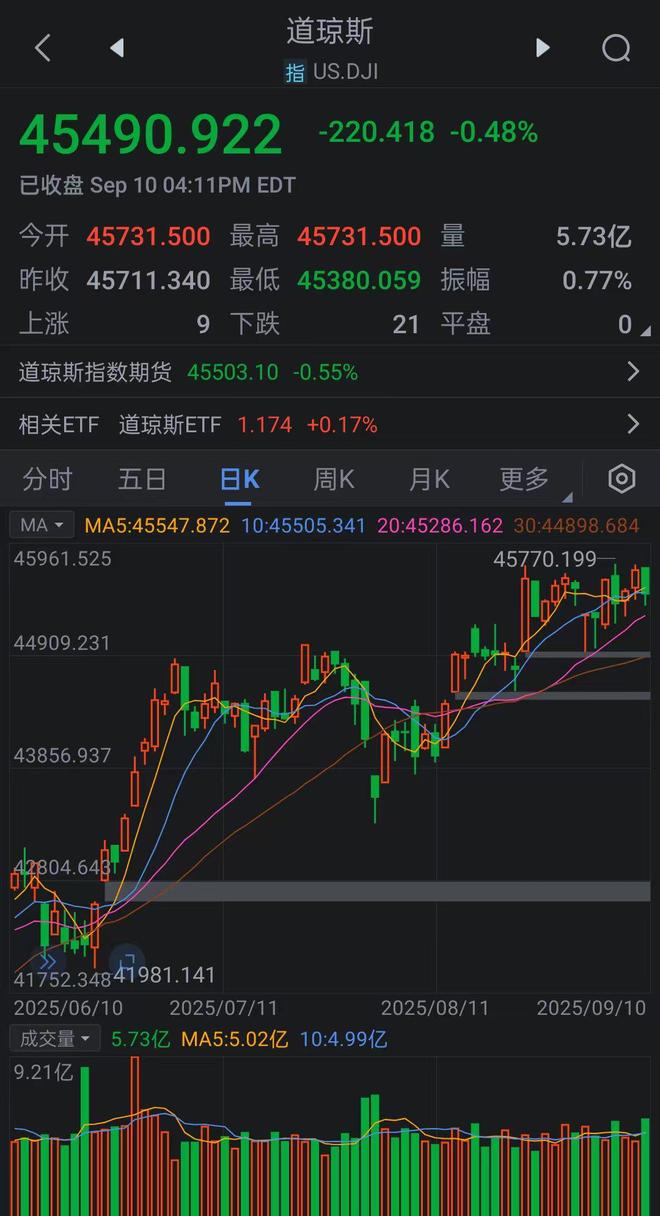
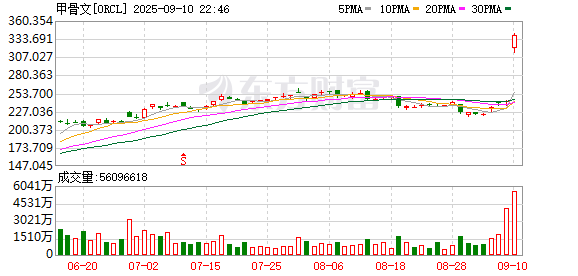
Market Performance - The S&P 500 index rose by 0.3% to close at 6532.04 points, while the Nasdaq Composite increased by 0.03% to 21886.06 points. The Dow Jones Industrial Average fell by 0.48% to 45490.92 points [1] - Nvidia saw a significant increase of 3.85%, while Apple experienced a decline of 3.23%. Oracle's stock surged by 35.95%, resulting in a market capitalization increase of $243.8 billion (approximately 1.73 trillion RMB) [4][6] Economic Indicators - The U.S. PPI data for August showed unexpected cooling, influencing market performance. The upcoming CPI data is considered more critical, as it will impact the Federal Reserve's interest rate decision [3] - BMO Capital's U.S. interest rate strategy team indicated that investors are contemplating the implications of August's employment numbers and PPI on discussions regarding a potential 50 basis point rate cut, with a preference for a 25 basis point cut [3] Oracle's Performance - Oracle's founder, Larry Ellison, saw his net worth increase by $89 billion in one day, briefly surpassing Elon Musk as the world's richest person [6] - Oracle's reported unconfirmed performance obligations (RPO) surged from $138 billion to $455 billion, with a significant portion attributed to a $300 billion contract with OpenAI [7] Other Company Developments - Amazon is reportedly developing two AR glasses, with one model aimed at delivery personnel and expected to launch in Q2 2026 [8] - Robinhood plans to launch a social media platform called "Robinhood Social" in early 2024, showcasing verified trading activities of certified traders and investors [9] - Klarna's IPO on the NYSE saw a first-day increase of 14.55%, bringing its market valuation to $32.9 billion, although it remains below its peak valuation of $45.6 billion in 2021 [10]

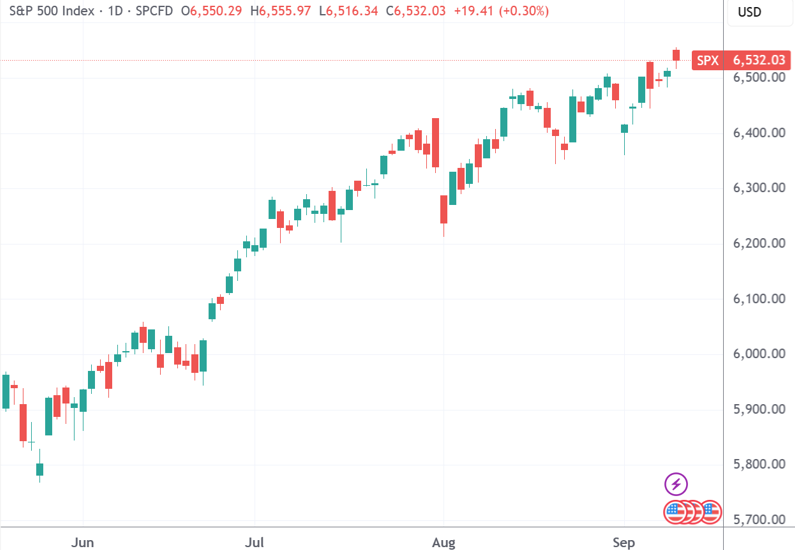
周三美股三大股指涨跌不一 甲骨文股价收涨36%
Xin Lang Cai Jing· 2025-09-10 20:24
Market Performance - The three major U.S. stock indices showed mixed results, with the Dow Jones Industrial Average down by 0.47%, the Nasdaq up by 0.03%, and the S&P 500 increasing by 0.3% [1] Economic Indicators - The Producer Price Index (PPI) in the U.S. unexpectedly decreased by 0.1% in August [1] Company Highlights - Oracle's stock surged by 36%, with co-founder Larry Ellison's net worth exceeding $400 billion [1] - Nvidia's stock rose by over 3%, while Apple and Amazon both fell by more than 3% [1] - Broadcom's stock increased by over 9%, and Microsoft, Google, and Tesla experienced slight gains [1]
市值暴涨近1.9万亿元!刚刚,巨头飙升
Zheng Quan Shi Bao· 2025-09-10 14:46
消息面上,甲骨文9日表示,随着人工智能需求的增长,2026财年云基础设施销售额将跃升77%,达到180亿美元,超出市场预期。该公司首席执行官Safra Catz表示,在随后的四年,云基础设施业务的年度营收目标将分别达到320亿美元、730亿美元、1140亿美元和1440亿美元。 甲骨文深夜大涨。 当地时间9月10日,美股三大股指早盘涨跌不一,截至发稿,道指微跌0.04%,标普500指数涨0.54%,纳指涨0.31%。 | 道琼斯指数 | 45692.89 | -0.04% | | --- | --- | --- | | .DJI | | | | 标普500指数 | 6547.71 | +0.54% | | .SPX | | | | 纳斯达克综合指数 | 21947.21 | +0.31% | | .IXIC | | | | 纳斯达克中国金龙指数 | 8185.23 | -0.55% | | .HXC | | | 经济数据方面,根据美国劳工统计局周三(10日)发布的报告,美国8月生产者价格指数(PPI)环比下降0.1%,而7月的数据被下修。同比来看,PPI上涨 2.6%。 美国8月PPI环比意外下降,进一步增强 ...
市值暴涨近1.9万亿元!刚刚,巨头飙升
证券时报· 2025-09-10 14:41
甲骨文深夜大涨。 当地时间9月10日,美股三大股指早盘涨跌不一,截至发稿,道指微跌0.04%,标普500指数涨0.54%,纳指涨0.31%。 | 道琼斯指数 | 45692.89 | -0.04% | | --- | --- | --- | | .DJI | | | | 标普500指数 | 6547.71 | +0.54% | | .SPX | | | | 纳斯达克综合指数 | 21947.21 | +0.31% | | .IXIC | | | | 纳斯达克中国金龙指数 | 8185.23 | -0.55% | | .HXC | | | 经济数据方面,根据美国劳工统计局周三(10日)发布的报告,美国8月生产者价格指数(PPI)环比下降0.1%,而7月的数据被下修。同比来看,PPI上涨 2.6%。 美国8月PPI环比意外下降,进一步增强了美联储降息预期。 据央视新闻,当地时间9月10日,美国总统特朗普在其社交平台"真实社交"上发文再次批评美联储主席鲍威尔,并敦促立即大幅降息。特朗普写道,美国"没 有通胀",美联储"必须立刻大幅降息",并称鲍威尔是"一场彻底的灾难",还表示鲍威尔"毫无头绪"。 特朗普已多次要求鲍 ...

豪掷170亿美元收购频谱!SpaceX的天基通信野心与战略棋局
智通财经网· 2025-09-10 06:57
Core Viewpoint - SpaceX has made a significant move in the spectrum resource competition by agreeing to acquire a large amount of wireless spectrum from EchoStar for $17 billion, signaling its intent to dominate the satellite-to-mobile communication market [1] Group 1: Acquisition Details - The acquisition involves a payment structure of $8.5 billion in cash and $8.5 billion in SpaceX stock, focusing on the scarce resource of spectrum [1] - The Federal Communications Commission (FCC) oversees the allocation of spectrum, which is limited and requires coordination to avoid signal interference [1] Group 2: Regulatory Framework - In 2024, the FCC approved a new regulatory framework called "Supplemental Coverage from Space" (SCS), allowing satellite operators to collaborate with terrestrial operators to use existing mobile communication spectrum as a secondary service [2] - This framework facilitates SpaceX's acquisition by providing a compliant pathway for satellite operators to access terrestrial communication networks [2] Group 3: Market Positioning - SpaceX's core business is rocket and satellite manufacturing, and to reach millions of consumers, it will rely on partnerships with mobile hardware manufacturers and communication operators [3] - CEO Elon Musk has plans to develop a smartphone through another company, X, which may increase SpaceX's leverage in negotiations with companies like Apple [3] Group 4: Competitive Landscape - SpaceX has previously demonstrated its strength in spectrum acquisition, including a long-term negotiation with EchoStar's subsidiary Dish to secure the 12 GHz band for Starlink [4] - The company has also raised objections regarding underutilized frequency bands and has been a key player in pushing the FCC to reassess satellite spectrum sharing rules [4]
美国8月非农大幅不及预期,泡泡玛特正式晋升恒生指数成分股
Mei Ri Jing Ji Xin Wen· 2025-09-08 01:25
Market Overview - On September 5, Hong Kong's three major indices rose collectively, with the Hang Seng Index up 1.43% to 25,417.98 points, the Hang Seng Tech Index up 1.95% to 5,687.45 points, and the National Enterprises Index up 1.34% to 9,057.22 points [1] - The weekly performance showed the Hang Seng Index increased by 1.36%, the Hang Seng Tech Index by 0.23%, and the National Enterprises Index by 1.22% [1] - Notable stocks included Kuaishou rising over 4%, Tencent Holdings up over 2%, and Alibaba and Meituan both up over 1.5% [1] - The Hang Seng Tech Index ETF (513180) closed up 2.39% [1] Southbound Capital - On September 5, southbound capital recorded a net inflow of HKD 56.23 billion, with a cumulative net inflow of HKD 10,120.58 billion year-to-date, significantly exceeding last year's total [2] U.S. Market Performance - Overnight, U.S. stock indices experienced slight declines, with the Dow Jones down 0.48%, S&P 500 down 0.32%, and Nasdaq down 0.03% [3] - Notable declines included JPMorgan down over 3% and Nvidia down over 2% [3] - Chinese concept stocks mostly rose, with Canadian Solar up over 15% and SOTY Biotech up over 11% [3] Key Economic Data - The U.S. Labor Department reported that non-farm employment grew by only 22,000 in August, significantly below the market expectation of 75,000 [4] - The unemployment rate rose to 4.3%, the highest since 2021, leading to increased expectations for interest rate cuts [4] Company Developments - Alibaba's subsidiary Tongyi Qianwen launched Qwen3-Max-Preview, its largest model to date with over 1 trillion parameters, enhancing capabilities in Chinese and English understanding and instruction compliance [4] - On September 8, adjustments to the Hang Seng Index constituents will take effect, increasing the number from 85 to 88, with additions including China Telecom, JD Logistics, and Pop Mart [4] Short Selling Data - On September 5, 637 Hong Kong stocks were short-sold, with a total short-selling amount of HKD 33.389 billion [5] - The top three stocks by short-selling amount were Alibaba at HKD 35.72 billion, Pop Mart at HKD 19.34 billion, and Horizon Robotics at HKD 19.31 billion [5] Institutional Insights - Haitong International noted that most Hong Kong companies have reported earnings, with short-term performance affected by disruptions, particularly in retail and automotive sectors, while hardware, materials, finance, and pharmaceuticals showed high growth [6] - EPS growth expectations for Hong Kong stocks in 2025 have been notably revised down due to consumer discretionary pressures, while materials, pharmaceuticals, technology, and finance are seeing upward revisions [6] - The implementation of anti-involution policies may shift the narrative for Hong Kong internet stocks towards AI empowerment, potentially boosting earnings expectations and attracting incremental capital inflows [6] Hong Kong ETFs - The Hong Kong Consumption ETF (513230) focuses on e-commerce and new consumption sectors, which are relatively scarce compared to A-shares [7] - The Hang Seng Technology Index ETF (513180) includes core AI assets and leading technology firms, also relatively scarce compared to A-shares [8]

成都中专生,干出3500亿
36氪· 2025-09-08 00:08
Core Viewpoint - The article highlights the significant growth and investment potential of New Yisong, a leader in AI-era computing infrastructure, particularly in the optical module business, which has seen a remarkable increase in revenue and stock price due to the rising demand for AI technologies [5][8][9]. Group 1: Company Performance - New Yisong achieved a revenue of 10.437 billion yuan in the past six months, representing a year-on-year growth of 282.64%, with net profit soaring by 355.68% to 3.942 billion yuan [9]. - The operating cash flow net amount increased fourfold to 953 million yuan, indicating strong cash generation capabilities [9]. - The company is expected to see its performance triple in 2024, with optical module production volumes reaching 9.79 million and 8.73 million units [13]. Group 2: Market Position and Products - New Yisong specializes in optical modules, which are essential for data transmission infrastructure, serving major clients like Nvidia, Microsoft, and Amazon [11]. - The company has been at the forefront of innovation, launching the industry's first low-power 400G optical module in 2018 and subsequently introducing 800G and 1.6T products [13]. - The demand for optical modules is driven by the explosive growth of AI technologies, leading to a competitive landscape where New Yisong is well-positioned to capitalize on the increasing need for high-bandwidth data transmission [13][23]. Group 3: Leadership and Background - The founder, Gao Guangrong, started his career in the optical communication industry at a young age and founded New Yisong in 2008 after nearly 20 years of experience [16][18]. - Under his leadership, New Yisong has transformed from a domestic-focused company to a significant player in the global supply chain for cloud giants [18]. Group 4: Investment Landscape - The stock structure of New Yisong is relatively dispersed, with the top two shareholders holding 14.53% of the shares, while several funds occupy half of the top ten shareholder positions [21]. - Institutional investors are optimistic about New Yisong, contributing to its soaring valuation and substantial returns for those who invested early [22][25]. - The article notes the emergence of other companies in the AI computing space, such as Cambrian and Industrial Fulian, which have also seen significant stock price increases, indicating a broader trend in the hard technology sector [24].

“大厂”财报透露液冷赛道起势玄机 基金经理按图索骥优选一类股
Zheng Quan Shi Bao· 2025-09-07 18:27
Core Insights - The recent financial reports from major internet companies have highlighted the lucrative potential of the liquid cooling sector, attracting increasing institutional investment [1][2] - Fund managers have identified liquid cooling as a high-performance investment avenue, with several stocks in this sector outperforming others in the market [2][3] Investment Opportunities - Liquid cooling technology is gaining traction due to its critical role in AI infrastructure, with significant capital expenditure increases reported by major companies like Alibaba and Tencent [2][3] - The capital expenditure of Alibaba reached 38.68 billion yuan, up 219.8% year-on-year, while Tencent's capital expenditure grew by 119% to 19.107 billion yuan [3] - Major North American tech companies collectively reported capital expenditures of $87.4 billion, a 69% increase year-on-year, indicating strong industry demand [3] Technological Advancements - The shift from traditional air cooling to liquid cooling is driven by the increasing power density of chips, necessitating more efficient cooling solutions [4][5] - Liquid cooling is becoming a technical necessity as AI-generated content drives rapid increases in power density, surpassing traditional cooling limits [4][6] - The industry is expected to see a significant increase in liquid cooling penetration, projected to reach 30%-50% in AI servers by 2026 [9][10] Market Trends - The liquid cooling sector is anticipated to experience a sustained market trend similar to that of optical modules and PCBs, with potential for price and volume increases [7][8] - Fund managers believe that the liquid cooling market is transitioning from speculative trading to being driven by fundamental changes in the industry [8][10] - The demand for liquid cooling solutions is expected to grow significantly, with the market for NVIDIA GPUs and ASIC chips projected to reach approximately 100 billion yuan by 2026 [9][10] Stock Selection Criteria - Fund managers emphasize the importance of selecting companies with established overseas client relationships, particularly those in the NVIDIA supply chain, as they tend to have higher profit margins [9][11] - Companies that can demonstrate technical capabilities and have a strong position in the supply chain are viewed as having significant growth potential [10][11] - The ability to secure large clients, especially in the overseas AI sector, is considered a critical factor in stock selection within the liquid cooling space [10][11]


开源证券晨会纪要-20250907
KAIYUAN SECURITIES· 2025-09-07 14:43
Group 1: Macro Economic Insights - The central bank may restart government bond trading, indicating a potential shift in monetary policy [4][5] - The government aims to enhance service consumption and has announced measures to optimize service supply capabilities [5] - Recent employment data from the US shows a significant decline in non-farm employment, indicating a cooling labor market [9][10] Group 2: Coal Industry - The coal market is experiencing a transition between thermal and non-thermal coal, with expectations for coal prices to rise [31] - The current operating rate of coal mines is low, and port inventories are decreasing, which supports a potential price rebound [31][32] - Investment recommendations include focusing on companies benefiting from both cyclical and dividend strategies within the coal sector [34] Group 3: Real Estate and Construction - New housing transaction volumes have decreased both year-on-year and month-on-month, while policies in Shenzhen have been relaxed to stimulate the market [41][42] - The REITs market is showing strong performance, with significant growth in transaction volumes and a favorable environment for high-dividend assets [35][36] - The construction materials index has underperformed compared to the broader market, but the sector is expected to benefit from ongoing policy support [27][41] Group 4: Thermal Management Materials - The thermal management materials industry is projected to grow significantly, driven by the demand for high-performance electronic devices [20][21] - The market for heat pipes and temperature equalization plates is expected to expand, with local procurement trends emerging due to supply chain considerations [23] - Companies like Suzhou Tianmai are positioned to benefit from this growth due to their early investments in advanced thermal management technologies [23]
光通信:穿越波动,长坡厚雪
GOLDEN SUN SECURITIES· 2025-09-07 08:20
Investment Rating - The report maintains an "Overweight" rating for the optical communication sector [4]. Core Insights - The optical communication sector has experienced significant volatility recently, but strong demand and large orders in the overseas AI computing field indicate that the fundamentals of the optical module industry remain solid. The AI-driven computing expansion cycle is far from over, and the recent market adjustments provide a better investment opportunity for long-term investors [1][26]. - The core logic driving long-term growth in the optical module industry remains unchanged, with exponential growth in AI computing demand necessitating faster and more efficient data transmission capabilities. Major overseas cloud service providers have significantly increased their capital expenditures, reflecting high industry prosperity [3][28]. Summary by Sections Investment Strategy - The report emphasizes the importance of focusing on the optical communication sector, particularly recommending leading companies in the optical module industry such as Zhongji Xuchuang and NewEase, as well as other related firms [10][11][18]. Market Review - The communication sector has seen a decline, with the optical communication segment performing relatively well compared to other sub-sectors. The report notes that the optical communication index increased by 0.1%, while other indices experienced declines [22][25][23]. AI Computing Infrastructure - Major global AI companies are accelerating their computing infrastructure development through large-scale collaborations and self-developed chip deployments. Companies like Google and Meta have significantly raised their capital expenditure forecasts for AI infrastructure [2][8][30]. Demand for Optical Modules - The demand logic for optical modules remains intact, driven by the ongoing need for enhanced data transmission capabilities due to the exponential growth in AI computing requirements. This is evidenced by substantial increases in capital expenditures from major cloud service providers [3][30]. Short-term Market Adjustments - Recent adjustments in the A-share optical communication sector are attributed more to market sentiment and fund flow changes rather than fundamental shifts in the industry. The report suggests that these adjustments do not hinder the long-term demand logic driven by AI [9][31]. Key Recommendations - The report recommends focusing on the optical communication sector and related companies, highlighting specific firms such as Zhongji Xuchuang, NewEase, and Tianfu Communication, among others. It also suggests monitoring domestic computing supply chains, particularly in liquid cooling segments [10][11][18].

