一汽集团

Search documents
雷军将出席2025世界智能网联汽车大会并发表演讲
Zhong Guo Jing Ji Wang· 2025-10-14 11:40
小米汽车董事长雷军也将出席10月16日下午2:00—5:30的全体会议并发表演讲,这将是小米汽车成都 交通事故后,雷军的一次公开露面,不知是否会对刚刚发生的交通事故中,车辆起火和车门无法打开做 出回应。 10月13日凌晨,一辆小米SU7在成都天府大道发生致死交通事故,救援时车门无法打开。13日下午,成 都公安微博发布警情通报,事故造成司机邓某某死亡,经检测涉嫌酒后驾驶机动车,而小米方面目前为 止未对此事件做任何公开回应。 2025世界智能网联汽车大会10月16日—10月18日在北京召开,该会议由中华人民共和国工业和信息化 部、交通运输部、北京市人民政府联合主办。大会以"汇智聚能 网联无限"为主题,将邀请多国政府部 门、国际组织、知名企业的高级别代表参会,携手推动全球汽车产业高质量发展。据悉,世界智能网联 汽车大会已连续举办六届,是全球汽车产业引领技术创新、促进国际交流、凝聚成果共识的重要平台。 大会邀请了众多重磅嘉宾出席,东风集团董事长杨青、一汽集团总经理刘亦功、中国长安汽车集团董事 长朱华荣、北汽集团董事长张建勇、广汽集团董事长冯兴亚、吉利控股集团董事长李书福、蔚来汽车创 始人李斌 、赛力斯(601127) ...
2030年汽车市场格局,玩家还有多少?
数说新能源· 2025-10-13 08:12
Core Viewpoint - The article discusses the future landscape of the Chinese automotive market by 2030, emphasizing the potential consolidation of players and the critical role of electric vehicles (EVs) in shaping the market dynamics [1][12]. Group 1: Central Enterprises - The three central enterprises are accelerating their transition to new energy, but only Changan is showing significant change, with a likelihood of mergers or further integration among them, potentially leaving only one major player [1]. - The assessment of the fuel vehicle business dependency for the three central enterprises indicates high risks, particularly for FAW and Dongfeng, due to their reliance on joint ventures and slow transition to EVs [2]. - Changan is noted for its faster transition and lower dependency on fuel vehicles compared to its peers, positioning it better for the future [2]. Group 2: Local State-Owned Enterprises - Local state-owned enterprises like BAIC may become less relevant due to the rise of new players like Xiaomi and Li Auto, while SAIC remains a significant player but faces profitability challenges [2]. - The article suggests that without strong governmental push for restructuring, only one local state-owned enterprise may survive in the competitive landscape [2]. Group 3: Private Enterprises - BYD is identified as the dominant player among private enterprises, with Geely also expected to remain competitive, while Great Wall and Chery have a chance to stay relevant [3]. - The emergence of new forces like Huawei and Xiaomi is highlighted as a significant factor that could reshape the competitive landscape [3]. Group 4: Market Dynamics and Sales Projections - The "survival line" for mainstream automakers in the EV market is projected at an annual sales volume of 1 million units, with 2 million units needed to maintain pricing power and invest in next-generation technologies [4]. - The penetration rate of new energy vehicles in China is expected to exceed 50% by 2024, with projections suggesting it could reach between 70% and 85% by 2030 [5]. - The total retail sales of passenger vehicles in China are projected to grow slightly from 23 million in 2024 to 25 million by 2030, with a significant portion of this market transitioning to EVs [5]. Group 5: Replacement Market Analysis - The article outlines a replacement market for fuel vehicles, estimating that 8 to 10 million buyers will switch to EVs by 2030, creating a substantial market opportunity for new energy vehicles [6]. - The analysis of various price segments indicates that the economic segment (under 80,000 RMB) will predominantly be occupied by EVs, while the mainstream market (80,000-150,000 RMB) is largely controlled by BYD and Geely [7][8]. Group 6: Competitive Landscape and Future Outlook - The competitive landscape in the mid-to-high-end market (150,000-250,000 RMB) is expected to be challenging, with brands like NIO and Li Auto facing stiff competition from Huawei and Tesla [9][10]. - The high-end market (above 400,000 RMB) is anticipated to be dominated by Huawei, with significant challenges for other brands to maintain market share [10]. - Factors such as export markets, demographic changes, and pricing strategies will play crucial roles in shaping the future of the automotive industry in China [11][12].



股价一度破百元!营收净利双增长!这家上市照企,最近颇受关注…
Sou Hu Cai Jing· 2025-10-12 00:18
Core Viewpoint - Despite market challenges, the company Kobot achieved significant revenue and profit growth in the first half of 2025, with revenue reaching approximately 3.047 billion yuan, a year-on-year increase of 11.10%, and net profit of about 451 million yuan, up 21.34% [1][3] Group 1: Financial Performance - Kobot's revenue for the first half of 2025 was approximately 3.047 billion yuan, reflecting a year-on-year growth of 11.10% [1] - The net profit attributable to shareholders was around 451 million yuan, representing a year-on-year increase of 21.34% [1] Group 2: Global Business Strategy - Kobot emphasized that globalization is a key strategic focus, having acquired 100% of the Czech company IMI to enhance local operations in Europe [3] - The company aims to build a more resilient global production and service system, improving its ability to secure global customer orders and solidifying its position in overseas markets [3] Group 3: Customer Structure - In the first half of 2025, Kobot's top five end customers accounted for 63.95% of total revenue, including major clients such as Volkswagen, FAW Group, Li Auto, SAIC Volkswagen, and Cummins [3] Group 4: New Projects and Acquisitions - Kobot expects new projects to generate over 7 billion yuan in lifecycle sales, with significant implications for global business expansion and product structure upgrades [5] - The company announced plans to acquire 60% of Shanghai Kobot Intelligent Technology, which is expected to impact its annual performance based on disclosed financial reports [5] Group 5: Financial Support and Future Plans - Kobot plans to provide financial support to Shanghai Kobot Intelligent Technology, including a credit line of up to 500 million yuan and a loan of up to 500 million yuan for operational needs [7] - The company aims to support the business development of its subsidiary, ensuring sufficient capital for daily operations [7] Group 6: Stock Performance - As of October 10, Kobot's stock closed at 96.55 yuan per share, with a total market capitalization of 38.99 billion yuan, having previously reached a peak of 100.79 yuan per share [7]

一年卖十几万辆,国产新能源车杀出黑马
2 1 Shi Ji Jing Ji Bao Dao· 2025-10-06 13:35
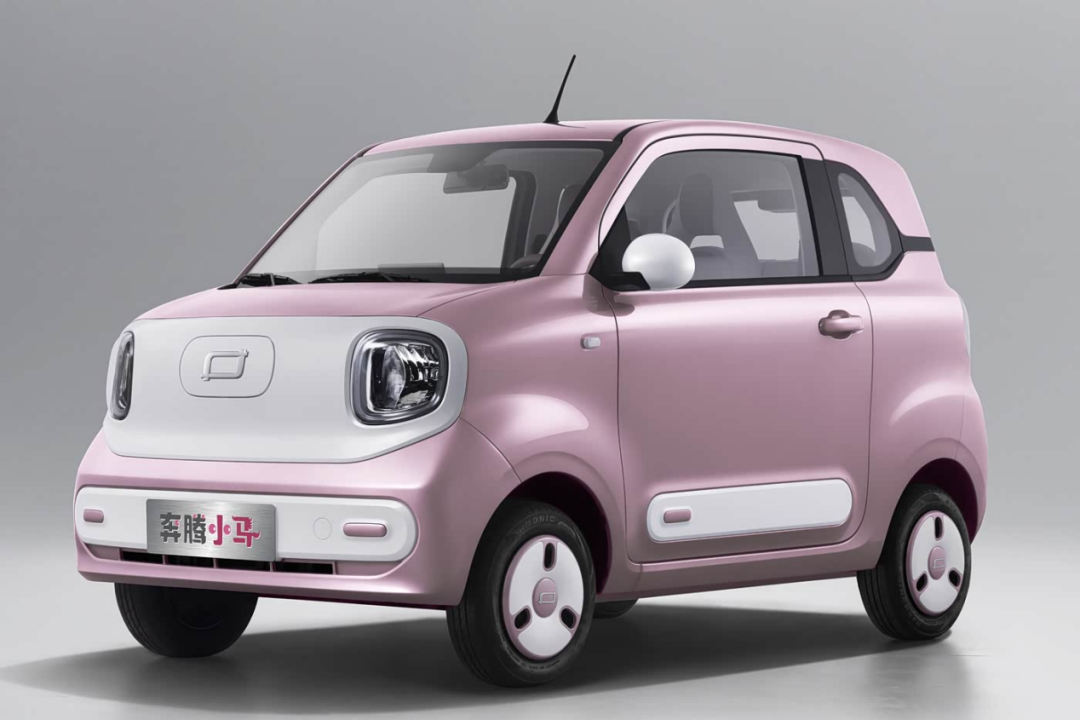
Core Insights - The sales of the FAW Bestune brand reached 137,217 units from January to September this year, representing a year-on-year increase of 39.3%, with new energy vehicle sales soaring by 164.5% to 117,203 units [1][2] - The company has implemented a three-pronged strategy for transformation, focusing on reform, technology, and positioning to enhance its competitiveness in the increasingly fierce Chinese automotive market [2][3] Group 1: Sales Performance - In September, Bestune achieved a record monthly sales of 18,880 units, with new energy vehicle sales hitting 16,217 units, marking the highest monthly sales in nearly a decade [1] - The total sales for 2023 are projected to exceed 120,000 units, reflecting a 59.4% year-on-year growth, with expectations to surpass 150,000 units in 2024, achieving the best performance in ten years [2][3] Group 2: Strategic Initiatives - The company has undergone significant reforms, including a capital increase of 5 billion yuan, which has improved operational efficiency and resource allocation, while also moving towards a "de-administrative" decision-making process [2][6] - Bestune has invested over 10 billion yuan in the past three years to develop a comprehensive technology framework covering platforms, powertrains, cabins, and intelligent driving, collaborating with leading partners like Huawei and CATL [2][3] Group 3: Product Development - The launch of the Bestune Xiaoma, an A00-class pure electric vehicle, has been successful, with monthly sales consistently exceeding those of the new Bestune Yuyi series [6][9] - The Yuyi series, including the Yuyi 03 and Yuyi 07, has faced challenges in sales performance, with the Yuyi 03 showing some initial success but still struggling to reach significant market penetration [6][9] Group 4: Financial Overview - Over the past five years, Bestune has incurred losses totaling approximately 18 billion yuan, with net profits for 2022, 2023, and 2024 projected at -2.097 billion, -2.958 billion, and -4.347 billion yuan respectively [9][10] - A recent capital increase of 8.55 billion yuan from various investors, including major companies like China Telecom, aims to support the company's ongoing transformation and product development efforts [9][10]
博泰车联港股上市,200亿市值是低估还是泡沫?
Sou Hu Cai Jing· 2025-09-30 15:52
Core Viewpoint - The successful IPO of Botai Che Lian marks a significant milestone, raising approximately HKD 919 million and achieving a market capitalization exceeding HKD 200 billion on its first trading day, despite concerns over its profitability and reliance on key clients [3][4][9]. Group 1: IPO Details - Botai Che Lian issued 10.4369 million shares at a price of HKD 102.23 per share, raising a net amount of approximately HKD 919 million [3]. - The company has attracted over 20 investors, including major players like Xiaomi Group and Dongfeng Group, with cornerstone investors subscribing for about HKD 466 million, representing 43.67% of the global offering [3]. - The public offering saw a subscription rate of 529.79 times, indicating strong market interest [3]. Group 2: Financial Performance - Botai Che Lian has reported cumulative net losses exceeding RMB 1.2 billion over the past three years, raising concerns about its long-term profitability [4][5]. - Revenue has grown significantly from RMB 1.218 billion in 2022 to RMB 2.557 billion in 2024, with a further RMB 754 million recorded in the first five months of 2025 [5]. - Despite revenue growth, the company has not achieved annual profitability since its inception, with losses of RMB 452 million, RMB 284 million, and RMB 541 million in the last three years [5]. Group 3: Market Position and Strategy - Botai Che Lian's revenue is heavily reliant on smart cockpit solutions, which accounted for 95.5% of its revenue in 2024, with domain controllers contributing RMB 1.96 billion [4]. - The company ranks third in the Chinese smart cockpit domain controller market with a market share of 7.3% [4]. - The partnership with Porsche and collaboration with Qualcomm enhance its market position and product offerings, potentially increasing its valuation in the secondary market [7][8]. Group 4: Future Outlook - The funds raised from the IPO will be used to expand product offerings, enhance technology, and strengthen the company's capabilities in software, hardware, and cloud-based vehicle networking [9]. - The company aims to accelerate its global market presence and continue investing in cutting-edge technology to transition vehicles from mere transportation tools to intelligent mobile spaces [9]. - The success of the IPO is seen as a starting point, with the company's ability to convert resources into sustainable profitability and a strong market position being crucial for its future [9].

博泰车联港股上市,200亿市值是低估还是泡沫? | 巴伦精选
Tai Mei Ti A P P· 2025-09-30 15:43
Core Viewpoint - The company, Botai Che Lian, successfully listed on the Hong Kong Stock Exchange, raising approximately HKD 919 million through the issuance of 10.4369 million shares at HKD 102.23 per share, with strong market demand reflected in a subscription multiple of 529.79 times for the public offering [2][3]. Group 1: Financial Performance - Botai Che Lian has accumulated a net loss of over CNY 1.2 billion in the past three years, raising concerns about its long-term profitability despite a revenue increase from CNY 1.218 billion in 2022 to CNY 2.557 billion in 2024 [3][4]. - The company's gross margin improved slightly from 11.8% in 2024 to 13.1% in the first five months of 2025, but remains low, leading to skepticism about sustaining a market valuation above HKD 20 billion [3][4]. Group 2: Market Position and Growth - The company is heavily reliant on smart cockpit solutions, with revenue from this segment accounting for 95.5% of total income in 2024, indicating a concentrated business model [3][4]. - Botai Che Lian's shipment volume for domain controllers is projected to grow from 488,000 units in 2022 to 915,000 units in 2024, reflecting a compound annual growth rate of 36.9% [4]. Group 3: Strategic Partnerships and Future Outlook - The company has established significant partnerships, including a collaboration with Porsche to develop a new in-car infotainment system, which is expected to enhance its market presence and attract investor interest [5][6]. - The IPO proceeds will be used to expand product offerings, enhance technology capabilities, and strengthen the company's global market presence, indicating a strategic focus on innovation and market expansion [7].

寻求第二增长曲线 小鹏、长安等瞄准万亿市场加速飞行汽车布局
Xin Jing Bao· 2025-09-30 14:14
Core Insights - Chinese automotive companies are accelerating their investments in the flying car sector, with significant announcements from major players like Changan Automobile and XPeng Motors regarding their plans for production and delivery timelines [2][5][6] Company Developments - Changan Automobile announced the establishment of a joint venture for flying cars and aims to launch a flying car by 2030 [2] - XPeng Motors plans to mass-produce the world's first "car + airplane" combination flying car by 2026, having developed seven prototype models and invested billions [5] - GAC has also introduced its multi-rotor flying car, the GAC High Domain AirCab, with a planned price of no more than 1.68 million yuan, set to begin operations in the Guangdong-Hong Kong-Macao Greater Bay Area [5] - Other companies like Geely and FAW are still in the research and testing phases, with FAW's flying car project based in Shenzhen aiming for its first flight this year [6] Market Potential - Morgan Stanley predicts that the flying car industry could reach a market size of $300 billion by 2030 and $9 trillion by 2050, with China potentially becoming the largest urban low-altitude transportation market [3] - The low-altitude economy is expected to create multiple trillion-dollar segments, including low-altitude vehicle manufacturing, infrastructure, and operational services [7] Industry Trends - The flying car sector is seen as a response to the saturation of the smart automotive market, with companies seeking new growth avenues [7] - The integration of electric vertical takeoff and landing (eVTOL) vehicles and drones is being pursued through various development strategies, including self-research and partnerships [5] Challenges - Despite the promising outlook, flying cars face challenges related to costs and regulatory frameworks that must be addressed for widespread adoption [4][9] - High costs are attributed to the current stage of smart terminal development and the lack of a mature supply chain, which could hinder the industry's growth [10]



寻求第二增长曲线,小鹏、长安等瞄准万亿市场加速飞行汽车布局
Bei Ke Cai Jing· 2025-09-30 14:12
Core Viewpoint - Chinese automotive companies are accelerating their investments in the flying car sector, with several firms announcing plans for production and development timelines for flying vehicles by 2026 and beyond [1][2][4]. Group 1: Company Developments - Changan Automobile announced the establishment of a joint venture for flying cars and plans to launch a flight-capable vehicle by 2030 [1]. - Xiaopeng Motors aims to mass-produce the world's first "car + airplane" combination flying car by 2026, having developed seven prototype models with significant investment [2][4]. - GAC has also made strides in the flying car market, with plans to deliver its GOVY AirCab by the end of 2026, priced under 1.68 million yuan [4]. - Other companies like Geely and FAW are still in the research and testing phases, with FAW's flying car expected to make its first flight this year [5]. Group 2: Market Potential - Morgan Stanley predicts that the flying car industry could reach a market size of $300 billion by 2030 and $9 trillion by 2050, with China potentially becoming the largest urban low-altitude transportation market [2]. - The low-altitude economy is expected to create three trillion-dollar segments: low-altitude vehicle manufacturing, infrastructure, and operational services [8]. Group 3: Industry Trends - The flying car sector is seen as a response to the saturation of the smart automotive market, with companies seeking new growth avenues [7]. - The Chinese government has recognized the low-altitude economy as a strategic emerging industry, providing a favorable policy environment for its development [7]. Group 4: Challenges - Despite the promising outlook, flying cars face challenges such as high costs and regulatory hurdles that must be addressed for widespread adoption [3][10]. - The current high costs are attributed to the immature supply chain and the need for technological advancements in core components [10][11].
刚刚,利好来袭!重大突破!
天天基金网· 2025-09-28 01:27
Core Viewpoint - The article discusses significant advancements in solid-state lithium batteries, highlighting breakthroughs by Chinese researchers that could lead to safer and higher energy density batteries, essential for the electric vehicle industry [3][5][10]. Group 1: Research Breakthroughs - A team led by Professor Zhang Qiang from Tsinghua University has developed a new fluorinated polyether electrolyte, enhancing the physical contact and ionic conductivity at solid-solid interfaces, achieving an energy density of 604 Wh/kg in polymer batteries [5][6]. - The research published in Nature indicates that the new electrolyte addresses challenges in solid-state batteries, such as interface contact issues and compatibility with high-voltage cathodes and strong reducing anodes [5][6]. - Another team from Wuhan University has created a novel cation-anionic polymer electrolyte, improving lithium ion migration and conductivity, which has successfully powered drones, indicating its potential for safe, high-energy density solid-state batteries [7][8]. Group 2: Industry Implications - The solid-state battery industry is entering a critical commercialization phase, with projections indicating that global shipments could reach 614.1 GWh by 2030, corresponding to a market size exceeding 100 billion yuan [10][12]. - Major automotive companies, including BYD and FAW, have announced plans for mass production of solid-state batteries by 2027, marking a pivotal year for the industry [11][12]. - Recent reports suggest that the solid-state battery supply chain has developed faster than expected, with several companies already producing automotive-grade cells [11][12]. Group 3: Market Potential - By 2025, global demand for solid-state batteries is expected to reach 16.4 GWh, with a market space of 14.4 billion yuan, and by 2030, demand could rise to 270.8 GWh, translating to a market potential of 218 billion yuan [12]. - The Chinese government is actively supporting the development of solid-state batteries through various policies, aiming to establish 3 to 5 leading global enterprises in this field by 2027 [10][11].

时也、运也、命也?“小双环”蜕变记!
市值风云· 2025-09-24 10:07
Core Viewpoint - The company has transformed from a small parts manufacturer into a significant player in the automotive components and electronic consumer goods sectors, focusing on both power transmission and touch display businesses [4][7]. Group 1: Power Transmission Business - The company has rapidly developed a product line centered on new energy reducers and components for new energy transmission systems [5]. - It maintains stability in its product offerings related to automotive engine balance shaft assemblies and both automatic and manual transmission components [5]. - New products, such as integrated robotic joint modules, are injecting new growth momentum into the company's development [5]. Group 2: Touch Display Business - The company employs a major client strategy and has become a supplier for well-known industry players like Corning, Innolux, BOE, Quanta Computer, Compal, Foxconn, and Huaqin Communications [6]. - Its products are used in renowned electronic brands, including Amazon, Lenovo tablets, Acer laptops, and Microsoft tablets/laptops [6]. - In the automotive touch screen segment, the company collaborates with brands like Geely, Zeekr, and Great Wall, developing high-value-added products such as dual-screen, triple-screen, and curved screens for vehicle dashboards [6]. Group 3: Overall Business Strategy - The company operates across two major fields: automotive components and electronic consumer products, positioning itself as a versatile player in these industries [7].