
招商银行

Search documents
价格飙涨41%!投资银条已经火了:是金条涨幅的4.8倍
Sou Hu Cai Jing· 2026-02-23 01:42
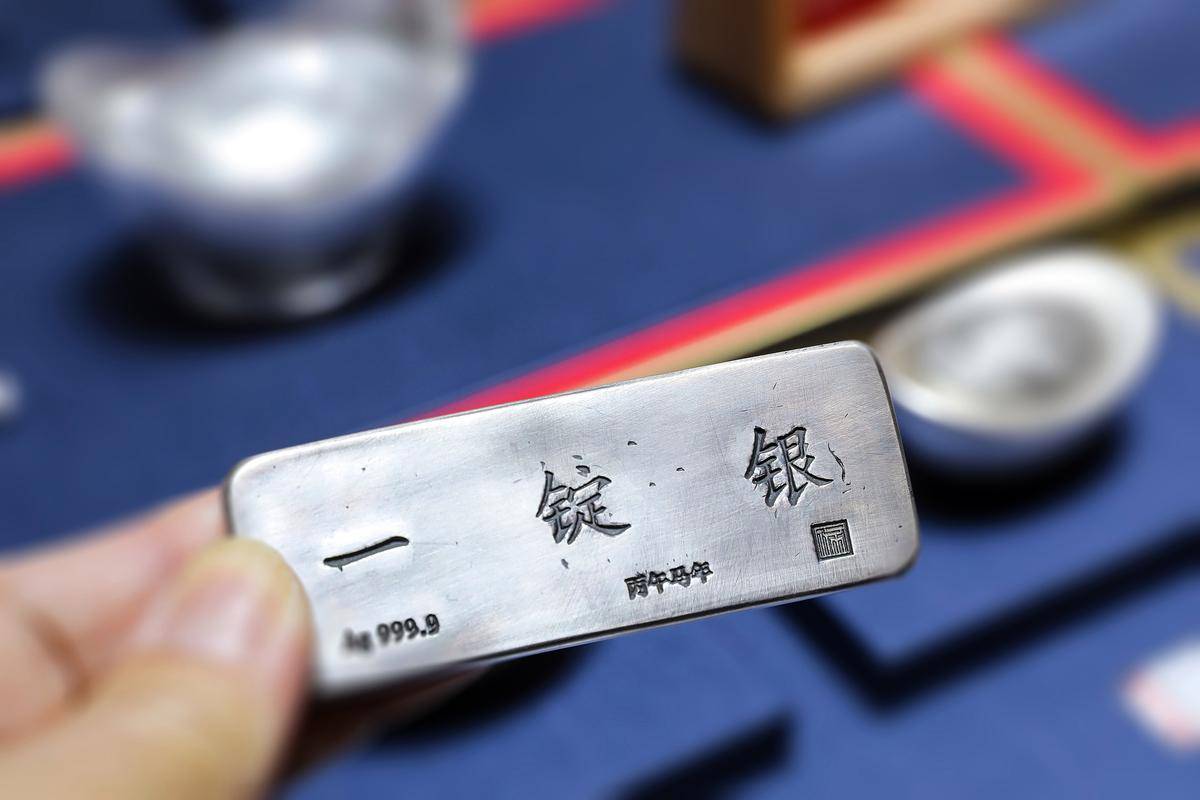
2026年开年,什么资产最疯狂?不是黄金,而是白银! 如果你还只盯着金价看,那你可能已经错过了这一轮贵金属市场最猛烈的行情。继2025年白银价格狂飙175%之后,2026年的白银不仅没有停下脚步,反而 以更"脱缰"的姿态创下历史新高 。 在深圳水贝,投资者们正在抢购一种"新贵"——投资银条;在工厂里,生产线甚至为了它连夜赶工。今天,我们就来深度聊聊,站在当前的历史高位,投资 银条究竟还有没有价值? 现货白银价格在2026年1月下旬一举突破117.00美元/盎司,创下历史新高 。如果把这个数字拆解开来,会更震撼:这个价格是2020年低点(11.23美元)的整 整10倍 。 白银的涨势有多凶猛?来看一组直观的对比。根据得物App的数据,在近一周的时间里,投资银条价格飙涨了41% 。作为对比,投资金条的涨幅仅为8.5%。 这意味着,白银的涨幅是黄金的4.8倍 。 在深圳水贝零售市场,1000g的投资银条价格已经高达30860元 。而在央视财经的镜头下,一公斤的标准投资银条,在2025年9月价格刚破1万元,不到4个月 就突破了2万元 。价格的持续拉升,让原本主打首饰生产的工厂也不得不调整策略,加班加点将银条生产从"副 ...

现货黄金、白银双双上涨!开盘白银涨近3%
Sou Hu Cai Jing· 2026-02-23 00:28
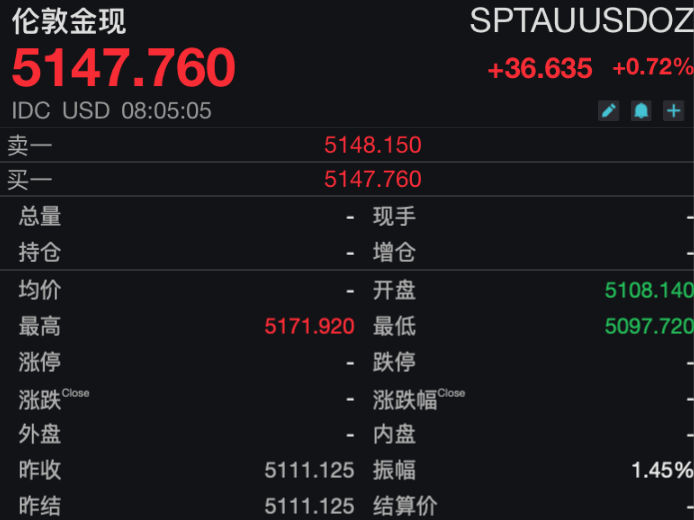
Group 1 - The core viewpoint of the article indicates that both gold and silver prices have seen significant increases, with gold rising to $5147.760 per ounce, up 0.72%, and silver reaching $86.979 per ounce, up 2.85% [1][3]. - The opening price for gold was $5108.140, with a daily high of $5171.920 and a low of $5097.720, reflecting a trading range of 1.45% [2]. - For silver, the opening price was $84.690, with a daily high of $87.269 and a low of $84.569, showing a trading range of 3.19% [3]. Group 2 - Institutions remain optimistic about the future of gold prices, with ANZ Bank predicting a rise to $5800 per ounce in the second quarter of this year [3]. - China Merchants Bank Capital Market Research Institute has a more aggressive forecast, suggesting that gold prices could challenge $6500 per ounce this year, driven by a focus on the reconstruction of dollar credit and global order [3].
闭环已成!数字人民币迎来关键一跃,实现突破,每个人都将受益
Sou Hu Cai Jing· 2026-02-23 00:26
2026年1月1日,你手机里的数字人民币突然开始"生钱"了。 不是错觉,也不是营销活动,而是央行白纸黑字的新规:数字人 民币钱包里的余额,自动按年化0.05%计息。 钱躺在手机里,每天都能赚回几分钱。 但这区区0.05%的背后,是一场静悄悄却足以颠覆我们钱包的金融革命。 它意味着,你用了好几年的那个"电子零钱包",从这一天起,在法律和金融意义上,变成了一本真正的"银行存折"。 过去,数字人民币是央行发行的"数字现金",属于M0范畴。 它安全、纯粹,像你口袋里的纸币一样不计利息,丢了也没人 赔。 但从2026年元旦开始,一切都变了。 根据中国人民银行的《行动方案》,你在商业银行实名钱包里的数字人民币,性质发生了根本转变。 它从央行的负债,变成 了开户银行的负债。 用大白话讲,以前是"央行印的电子钞,请银行帮忙保管",现在是"银行欠你的存款,央行负责监督"。 这一跃迁,让数字人 民币从只能用于支付的"现金",升级为具备完整储蓄功能的"存款货币"。 最直观的变化,就是钱包里的钱开始自动增值。 工商银行、农业银行、中国银行、建设银行、交通银行、邮储银行、招商银 行、兴业银行、网商银行和微众银行,这10家运营机构集体官 ...

2025年A股上市银行成绩单:规模质量并进,城商行会改写格局吗?
Sou Hu Cai Jing· 2026-02-22 20:27
2025年A股上市银行的年度成绩单正逐步揭晓,42家银行中已有11家率先披露了关键数据。从资产规模 到净利润增长,从不良贷款率到净息差表现,这些数字背后不仅反映了银行业的整体韧性,更暗藏着一 场关于利润与风险的深度博弈。 资产规模扩张与经营质量并重 中信银行和浦发银行双双迈入"10万亿资产俱乐部",前者资产总额达10.13万亿元,后者以10.08万亿元 紧随其后。招商银行则以超过13万亿元的资产规模和7.5%的增长率继续领跑。这些数据不仅体现了头 部银行的规模优势,也印证了中国银行业在复杂经济环境下的稳健性。然而,规模扩张只是表象,经营 质量才是核心。南京银行以两位数的营收增速脱颖而出,青岛银行归母净利润增长超过20%,齐鲁银行 和杭州银行同样实现了两位数的利润增长。城商行的亮眼表现,似乎正在打破市场对"大行垄断"的固有 认知。 资产质量改善:风险管控的精细化 不良贷款率是衡量银行资产质量的关键指标。苏农银行、中信银行、招商银行等机构的不良率均有所下 降,南京银行、杭州银行和宁波银行则保持稳定。拨备覆盖率虽小幅回落,但整体仍处于健康区间。 杭州银行拨备覆盖率超过500%,招商银行也维持在391.79%的高位, ...
存1000元比存20万元利率高,银行用“吃奶劲”抢压岁钱
Hua Xia Shi Bao· 2026-02-22 13:17
Core Insights - The article highlights the increasing focus of banks on children's financial education and the competition for the "lucky money" market during the Spring Festival, indicating a shift from merely attracting deposits to building long-term customer relationships [2][5]. Group 1: Market Trends - In 2026, commercial banks are launching specialized financial products centered around "lucky money" and "children's accounts," utilizing strategies like interest rate increases and unique benefits to convert this seasonal funding into a vital link with family customers [2][5]. - Major banks such as China Merchants Bank, Guangfa Bank, and Huaxia Bank are introducing dedicated financial products for children's lucky money, with offerings that include savings, investment, and insurance [5]. Group 2: Product Offerings - Beijing Rural Commercial Bank's "Sunshine Baby Card" offers a minimum deposit of 1,000 yuan with interest rates of 1.5%, 1.6%, and 1.75% for 1-year, 2-year, and 3-year terms, respectively, which are higher than standard rates [5]. - Other banks like Beijing Bank and Mengshang Bank are also providing competitive interest rates for children's savings accounts, with some rates exceeding those of regular fixed deposits [6]. Group 3: Customer Engagement Strategies - Banks are enhancing customer attraction through various promotional activities, such as prize draws and gifts for children who open accounts, thereby creating a more engaging experience [7]. - The introduction of "parent-child co-managed accounts" and financial education services signifies a shift towards comprehensive family financial services, moving beyond traditional deposit competition [10]. Group 4: Long-term Strategy - The strategy of offering high-interest rates on children's accounts is aimed at capturing long-term family value, as these accounts can lead to future banking relationships in areas like education loans and investments [9][11]. - By establishing early connections with young customers, banks can position themselves as integral to family wealth management, enhancing customer loyalty over decades [11].

银行股分红大比拼!谁才是真现金奶牛?
Sou Hu Cai Jing· 2026-02-22 08:54
Core Viewpoint - The article highlights the significant cash dividends offered by major Chinese banks, positioning them as reliable investment options compared to traditional financial products in a volatile market [2][10]. Dividend Overview - In 2024, the total dividends from China's six major state-owned banks are expected to exceed 420 billion yuan, accounting for 78% of the entire banking sector's dividends [6]. - Industrial and Commercial Bank of China (ICBC) leads with a total dividend payout of 109.8 billion yuan, followed by China Construction Bank (CCB) with nearly 100 billion yuan [6]. - Agricultural Bank of China (ABC) and Bank of China (BOC) each exceed 60 billion yuan in annual dividends, showcasing strong performance [6]. Dividend Policy and Stability - The China Securities Regulatory Commission encourages cash dividends, with state-owned banks maintaining a dividend payout ratio of over 30% [9]. - Some joint-stock banks, like China Merchants Bank, have even higher payout ratios exceeding 35% [9]. - The introduction of mid-year dividends alongside annual dividends effectively doubles the cash flow for investors [9]. Yield Comparison - The average dividend yield for major state-owned banks ranges from 4.2% to 5.8% in A-shares, with Hong Kong shares reaching around 7% [9]. - Agricultural Bank of China boasts an average dividend yield of 6.41% over the past five years, significantly outperforming the current one-year fixed deposit rate of approximately 1.5% [9]. Investment Characteristics - Bank stocks are characterized by consistent dividends, making them suitable for conservative investors and long-term holdings [10]. - The article emphasizes that bank stocks are not about capital gains but rather about stable cash flow and dividends, providing a sense of security for investors [10]. - The low volatility of bank stocks makes them ideal for retirement planning and managing family savings [10].



金价跌了价!2月21日最新黄金价格!各大金店、黄金回收价格
Sou Hu Cai Jing· 2026-02-22 07:50
2月21日,国际金价在4900美元/盎司关口震荡,国内金价同步调整至1110元/克附近,品牌金饰价格普遍回落至1500元/克左右,较前一日下跌约17元。 一、金价走势与市场报价 国际现货黄金(XAU)报4982美元/盎司附近,日内小幅上涨0.14%;国内AU9999现货黄金收于1110元/克,基础金价同步。 品牌金饰方面,周大福、六福珠宝、老庙黄金等主流品牌足金价格集中在1499元/克,周生生报1500元/克,老凤祥以1518元/克居首,菜百首饰与中国黄金为 1505元/克。 深圳水贝市场的批发价明显较低,足金999报价1284元/克,反映出品牌溢价与工艺成本对终端售价的显著影响。 在金饰消费整体承压的背景下,老铺黄金凭借独特的"一口价"策略和精湛工艺逆势走强,与传统品牌按克计价不同,老铺黄金所有产品实行一口价销售,价 格中蕴含较高的工艺与品牌溢价。2月18日,老铺黄金宣布将于2月28日进行2026年首次调价,延续其每年2至3次的定期调价节奏。 国金证券研报指出,老铺黄金门店终端供不应求,背后是消费者对品牌价值的认可度持续提升,产品采用"一体成型、无焊点"等古法工艺,并创新推出"金 胎烧蓝""足金镶嵌钻石"等 ...

2026年数字人民币2.0正式落地!商户零手续费收款,六大行业迎来重大机遇
Sou Hu Cai Jing· 2026-02-21 18:22
数字人民币突然能生利息了! 2026年1月1日起,央行正式启动数字人民币2.0,从此你的电子钱包不再只是付款工具——实名钱包里的余额每天都能自动计 息,活脱脱一个会下蛋的"电子存钱罐"。 这场升级背后藏着万亿级商机:支付即结算、零手续费、跨境转账分钟到账不再是梦。 六大行业已被推上风口浪 尖,有人靠它每月省下上千手续费,有人躺着赚取技术红利。 银行和支付机构最先吃到螃蟹。 工商银行、招商银行等已完成账户体系大改造,专门开发的数字人民币钱包管理系统订单暴涨300%。 技术人员忙着给POS 机加装智能合约模块,就像给收银台装上"自动导航"——餐饮店老板娘李姐说:"以前收钱提现扣手续费,现在顾客扫一下,钱秒进钱包还带利息! "金融IT 服务商透露,仅今年一季度智能合约开发项目就接到87亿大单。 这场静悄悄的革命正在改写规则。 当便利店阿姨熟练地教顾客领数字红包,当外贸公司财务总监盯着秒到账的货款傻笑,当程序员们在深夜的代码世界里 搭建金融新基建——数字人民币2.0早已不是实验室概念,而是真金白银改变着每个人的钱袋子。 做外贸的张总最近笑开了花。 他经手的泰国榴莲订单,过去汇款要等三天,现在通过"多边央行数字货币桥" ...
多家银行密集出手,盯上孩子“压岁钱”
Xin Lang Cai Jing· 2026-02-21 13:08
Core Viewpoint - The competition among banks to attract children's "lucky money" during the Spring Festival has intensified, with various financial products and services being launched to convert this influx of funds into long-term customer assets [1][5]. Group 1: Product Offerings - Banks are focusing on three main types of products related to "lucky money": exclusive savings or card accounts for minors, short-term fixed deposits with enhanced interest rates or incentives, and "managed" funds linked to parent accounts for comprehensive family asset management [1][3]. - Examples include Guangfa Bank's "Free Card" which allows for independent accounts for children, and China Merchants Bank's "Golden Little Aui Housekeeper Service" that includes features for managing children's bank cards and educational accounts [1][2]. Group 2: Interest Rates and Terms - China Merchants Bank offers a one-year deposit annualized interest rate of 1.3% and a two-year rate of 1.4%, both higher than standard rates. Beijing Rural Commercial Bank's "Sunshine Baby Card" has rates of 1.5%, 1.6%, and 1.75% for one, two, and three-year terms, respectively [2]. - Zhejiang Jiaxing Pinghu Rural Commercial Bank's "Children's Savings Book" requires a minimum deposit of 10,000 yuan, with one-year and three-year rates at 1.5% and 1.65% [2]. Group 3: Strategic Focus - Banks emphasize that these products are not merely aimed at short-term deposit growth but are part of a strategy to engage with customers over their lifecycle, fostering savings habits and financial literacy among children [3]. - The influx of "lucky money" is seen as a low-cost funding source and a way to attract young families, with potential for cross-selling in areas like education funds and insurance [3][5]. Group 4: Regulatory Considerations - The design of products targeting "lucky money" must balance compliance with long-term value, as regulations govern account management, risk warnings, and fund usage permissions for minors [4]. - Banks must ensure that marketing does not undermine trust in their professionalism, maintaining a balance between helping parents manage money and establishing rules for children [4]. Group 5: Market Trends - The focus on "lucky money" reflects a broader trend in retail finance from simply "grabbing deposits" to "grabbing relationships" and "long-term customers," indicating a shift in the industry [5].
单笔金额不高的压岁钱,银行为何纷纷开“抢”?
Xin Lang Cai Jing· 2026-02-21 11:53
Core Viewpoint - The competition among banks to attract children's "lucky money" during the Spring Festival has intensified, with various financial products and services being launched to convert this influx of funds into long-term customer assets [1][5]. Group 1: Product Offerings - Banks are focusing on three main types of products related to "lucky money": exclusive savings or card accounts for minors, short-term fixed deposits with enhanced interest rates or incentives, and "managed" funds linked to parent accounts for comprehensive family asset management [1][3]. - Examples include Guangfa Bank's "Free Card" which allows for independent accounts for children, and China Merchants Bank's "Golden Little Aui Housekeeper Service" that includes features for managing children's bank cards and educational accounts [1][2]. Group 2: Interest Rates and Terms - China Merchants Bank offers a one-year deposit annualized interest rate of 1.3% and a two-year rate of 1.4%, both higher than standard rates. Beijing Rural Commercial Bank's "Sunshine Baby Card" has rates of 1.5%, 1.6%, and 1.75% for one, two, and three-year terms, respectively [2]. - Zhejiang Jiaxing Pinghu Rural Commercial Bank's "Children's Savings Book" requires a minimum deposit of 10,000 yuan, with one-year and three-year rates of 1.5% and 1.65% [2]. Group 3: Strategic Focus - Banks emphasize that these products are not just about short-term deposit growth but aim to cultivate savings habits and financial literacy among children, positioning themselves as integral to family financial planning [3][5]. - The influx of "lucky money" is seen as a low-cost funding source and a gateway to acquiring young family customers, with potential for cross-selling in education funds, insurance, and consumer finance [3]. Group 4: Regulatory Considerations - The design of products targeting "lucky money" must balance compliance with long-term value, as regulations govern account management, risk warnings, and fund usage for minors [4]. - Banks must ensure that marketing does not undermine trust in their professionalism, maintaining a balance between helping parents manage money and establishing rules for children [4]. Group 5: Market Trends - The focus on "lucky money" reflects a broader trend in retail finance from "competing for deposits" to "competing for relationships" and "long-term customers," indicating growth potential in this niche market as family financial needs evolve [5].