礼来

Search documents
最火板块,集体跳水
Zhong Guo Ji Jin Bao· 2026-01-13 02:41
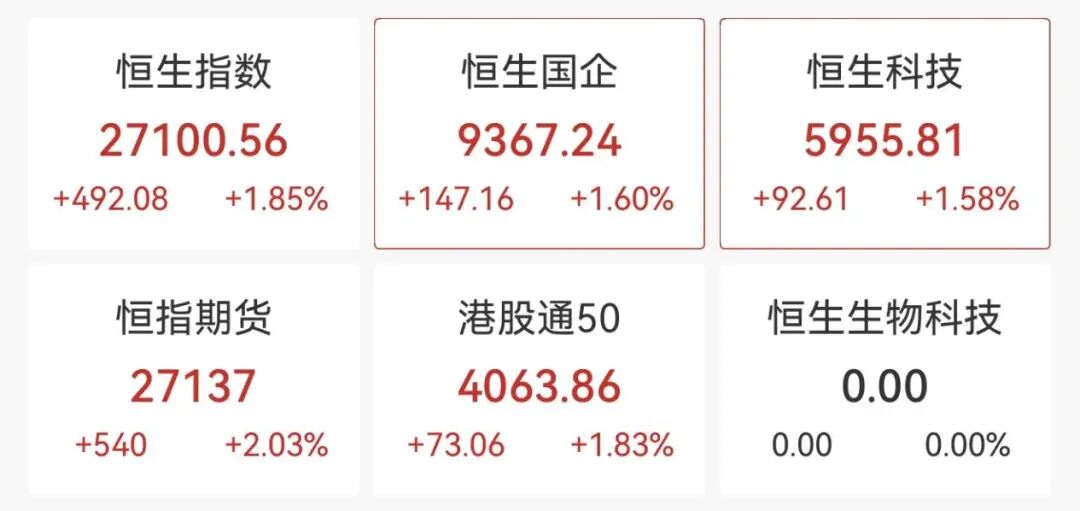
Market Overview - The A-share market opened higher on January 13, with the Shanghai Composite Index up by 0.31%, the Shenzhen Component Index up by 0.36%, and the ChiNext Index up by 0.59% [1] - In the Hong Kong market, all three major indices rose by over 1%, with notable gains in stocks like Alibaba Health, BYD, and Xpeng Motors [1] AI Medical Sector - AI medical stocks showed strong performance, with companies like Hongbo Pharmaceutical, Prusis, and Dian Diagnostics achieving a 20% limit-up, while Meien Health recorded three consecutive trading limits [3][4] - Nvidia announced a $1 billion investment with Eli Lilly to establish an AI drug laboratory over the next five years, focusing on accelerating medical discoveries and production [5] Cultural Media Sector - The cultural media and AIGC sectors also saw significant gains, with Tianlong Group achieving a 20% limit-up, and other companies like People's Daily and Xinhua News also hitting their trading limits [5][6] Commercial Aerospace Sector - The commercial aerospace sector experienced a sharp decline, with stocks like Aerospace Hanyu hitting a 20% limit-down, and other companies such as Aerospace Development and China Satcom also facing significant drops [7][8] - A number of companies, including Aerospace Hanyu and China Satellite, issued risk warnings regarding stock price volatility and potential trading suspensions due to abnormal trading activities [9]


ETF盘中资讯|AI医疗催化密集,港股通医疗ETF华宝(159137)触及涨停!创新药同步拉升,520880溢价摸高3%
Jin Rong Jie· 2026-01-13 02:32
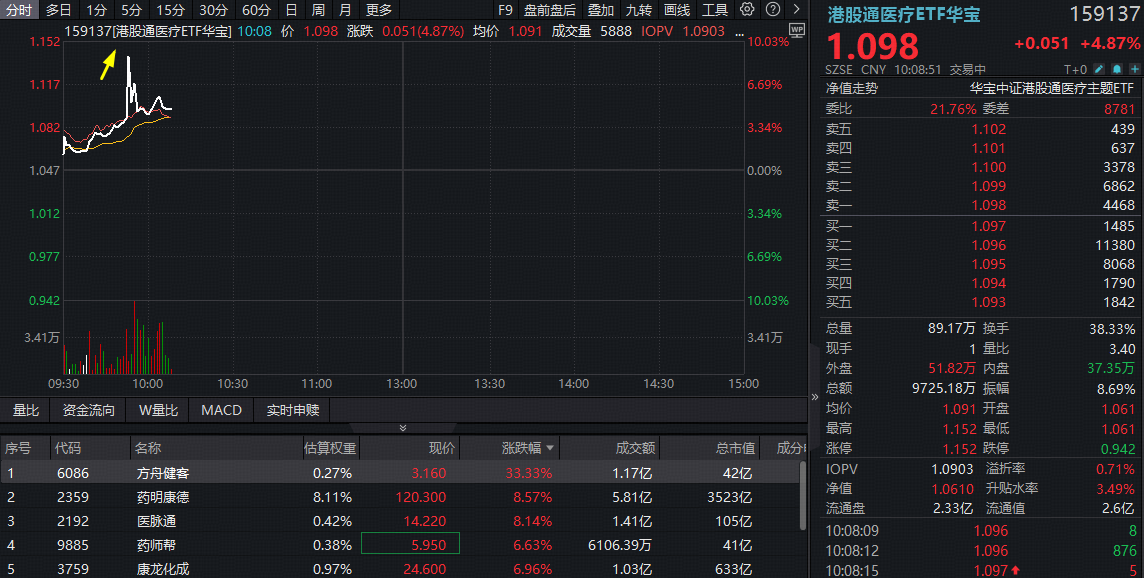
Core Viewpoint - The Hong Kong stock market is experiencing a significant rally in the healthcare sector, particularly in AI healthcare stocks, with notable gains in companies like Ark Health and Yimaitong, driven by recent developments in AI and drug innovation [1][4]. Group 1: Market Performance - The Hong Kong healthcare sector has seen an 8-day consecutive rise, with AI healthcare stocks like Ark Health surging by 33% and Yimaitong increasing by over 10% [1]. - The Hong Kong Stock Connect Medical ETF (Huabao, 159137) reached a peak increase of 4.87% during trading, reflecting strong investor interest [1]. - The innovative drug sector within the Hong Kong Stock Connect also saw gains, with Rongchang Bio leading with over a 9% increase and Sanofi Biopharma rising by more than 7% [1]. Group 2: AI Healthcare Developments - Nvidia and Eli Lilly announced a joint investment of $1 billion to establish a lab in San Francisco focused on using AI to accelerate drug development [4]. - TempusAI reported FY25 revenue of approximately $1.27 billion, marking an 83% year-over-year increase, with a total contract value exceeding $1.1 billion [4]. - Zhejiang Qiang Brain Technology recently submitted an IPO application to the Hong Kong Stock Exchange, potentially becoming the first listed company in China's brain-computer interface sector [4]. Group 3: AI Integration in Healthcare - The penetration rate of AI in consumer healthcare is rapidly increasing, with Ant Group's AI assistant surpassing 30 million monthly active users and OpenAI's ChatGPT Health reaching over 40 million daily users globally [5]. - The healthcare sector is identified as a direct downstream application for medical information technology and AI, with expectations for significant productivity improvements [5]. - The exploration of business models in innovative drugs is highlighted as a core focus, with AI-driven drug development platforms forming strategic partnerships with pharmaceutical companies [5].
药明康德去年净利预计翻倍,创新药ETF(159992)涨超2%,机构:继续推荐创新药及产业链
2 1 Shi Ji Jing Ji Bao Dao· 2026-01-13 02:07
资金流向方面,Wind数据显示,该ETF近5个交易日连续获资金净流入,累计"吸金"近9亿元。 创新药ETF(159992)紧密跟踪中证创新药产业指数。该指数选取主营业务涉及创新药研发的上市公司 作为待选样本,按照市值排序选取不超过50家最具代表性公司作为样本股,以反映创新药产业上市公司 的整体表现,为投资者提供新的投资标的。 1月13日,A股创新药板块盘初持续走强。 热门ETF中,创新药ETF(159992)持续拉升,截至发稿涨超2%,成交额超2亿元,交投活跃。 成分股中,荣昌生物涨超16%,泰格医药涨超6%,药明康德涨超5%,安科生物、康龙化成、昭衍新 药、三生国健等股涨幅居前。 此外,1月12日,药明康德(603259.SH)发布2025年度业绩预告,预计归属于上市公司股东的净利润为 191.51亿元,同比增长约102.65%。 国信证券表示,关注JPM年会及创新药在海外的临床进展。中国创新药产业已经体现出长期向好的发展 趋势,并在近年集中体现在BD交易的爆发式增长。值得注意的是,对于大部分国产创新药,对外授权 通常只是全球开发的起点,合作伙伴在海外的开发进度,以及后续全球临床数据的读出可以进一步加强 产 ...

英伟达与礼来将五年内斥资10亿美元共建联合研究实验室
Xin Lang Cai Jing· 2026-01-12 16:38
Core Insights - Nvidia and Eli Lilly announced a $1 billion investment to establish a joint research lab in the San Francisco Bay Area over the next five years, utilizing Nvidia's latest AI chip, the Vera Rubin [1][3] - This announcement coincided with the opening of the J.P. Morgan Healthcare Conference, highlighting the growing reliance of pharmaceutical companies on advanced AI models for drug design and development [1][3] - Eli Lilly aims to significantly reduce the time it takes to bring new drugs to market, reflecting a broader trend in the pharmaceutical industry [1][3] Company Strategies - Nvidia's strategy in the biotech market involves providing open-source AI models and software, allowing pharmaceutical companies to build dedicated drug development platforms based on Nvidia's hardware [2][4] - Nvidia recently released a series of new models, including an upgraded model that ensures drugs designed with AI tools can be successfully synthesized in real laboratory environments [2][4] - The specific location of the new lab will be announced in March, and both companies are investing "incremental resources" into this collaboration [2][4]

医药生物行业周报(1月第1周):AI赋能医药制造业战略升级-20260112
Century Securities· 2026-01-12 12:58
Investment Rating - The report indicates a positive investment outlook for the pharmaceutical and biotechnology sector, with a focus on AI-enabled strategic upgrades in pharmaceutical manufacturing [2]. Core Insights - The pharmaceutical and biotechnology sector experienced a 5.6% increase from December 29, 2025, to January 9, 2026, outperforming the Wind All A index (4.76%) and the CSI 300 index (2.18%). Key segments leading this growth include hospitals (12.95%), medical research outsourcing (9.25%), and medical devices (7.96%) [2][7]. - The report highlights the rapid development of AI in healthcare, emphasizing the government's initiative to foster AI in drug development, supply chain management, surgical robotics, and intelligent diagnostic systems by 2027. This initiative aims to cultivate 2-3 leading ecological enterprises and a number of specialized companies [2][11]. - The upcoming JPM Healthcare Conference from January 12 to 15, 2026, is expected to boost the sentiment in the innovative drug sector, with over 500 listed companies and thousands of startups participating [2][11]. Market Weekly Review - The pharmaceutical and biotechnology sector rose by 5.6% during the last interval, with hospitals, medical research outsourcing, and medical devices leading the gains. Notably, the stock of Sanbo Brain Science surged by 63.53%, while *ST Changyao saw a decline of 44.9% [7][10]. - The report provides detailed performance metrics for various sub-sectors, with hospitals showing a 12.95% increase, medical research outsourcing at 9.25%, and medical devices at 7.96% [8][9]. Industry News and Key Company Announcements - On January 7, eight departments jointly issued the "AI + Manufacturing" action plan, marking AI drug development and medical supply chain intelligence as national priorities [11]. - Notable company announcements include: - Yilian Bio's exclusive licensing agreement with Roche for the YL201 project, which includes a $570 million upfront payment [11]. - Merck's discussions to acquire Revolution Medicines for $28 billion to $32 billion [11]. - Structure Therapeutics' agreement with Roche and Genentech for a non-exclusive patent license, resulting in a $100 million upfront payment [11][12]. - Eli Lilly's acquisition of Ventyx Biosciences for $1.2 billion [14].
盘前大涨超12%!AI医疗公司Tempus AI公布2025年初步业绩:营收约为12.7亿美元,同比增长83%
美股IPO· 2026-01-12 12:56
Core Viewpoint - Tempus AI has reported strong preliminary performance for 2025, with projected revenue of approximately $1.27 billion, reflecting an 83% year-over-year growth, and an organic growth of about 30% excluding Ambry business [1] Business Segments - The diagnostics segment is expected to generate approximately $955 million in revenue, showing a year-over-year increase of about 111%, driven by a 26% growth in tumor testing volume and a 29% increase in genetic testing volume [3] - The data and applications segment is projected to achieve total revenue of around $316 million, with a year-over-year growth of approximately 31%, primarily fueled by a 38% increase in the Insights (data licensing) business [3] Fourth Quarter Performance - For the fourth quarter, Tempus AI reported revenue of approximately $367 million, representing an 83% year-over-year increase. The diagnostics segment revenue was about $266 million, up 121% year-over-year, attributed to a 29% growth in tumor testing and a 23% increase in genetic testing volume [4] - The data and applications segment revenue reached $100 million, reflecting a 25% year-over-year growth. Excluding the impact of AstraZeneca's warrants in Q4 2024, the Insights business revenue grew by approximately 68% [4] Contract Value - As of December 31, 2025, the total contract value (TCV) reported by the company exceeded $1.1 billion, marking a historical high [5] Client Agreements - Throughout the year, Tempus established data agreements with over 70 clients, including leading pharmaceutical companies such as AstraZeneca, GlaxoSmithKline, Bristol-Myers Squibb, Pfizer, Merck, AbbVie, Eli Lilly, and Boehringer Ingelheim, as well as biotech firms like Incyte, Syneos Health, Aspera Biomedicines, Inc., and Whitehawk, Inc. [6] Revenue Retention - The company anticipates a net revenue retention rate of approximately 126% for 2025 [7] Management Commentary - The CEO of Tempus, Eric Lefkofsky, stated that the genomic (oncology) product sales in the diagnostics business have accelerated for the third consecutive quarter, reaching the highest growth rate in years. Both core business segments are experiencing accelerated growth, leveraging the inherent financial leverage of the platform, and the company is entering 2026 with strong momentum. Artificial intelligence is expected to act as a catalyst for all products, and the company is optimistic about 2026 [8]

晶泰控股(2228.HK):AI FOR SCIENCE领军 实现临床里程碑突破 生发产品有望成为C端爆款长
Ge Long Hui· 2026-01-12 05:50
Core Insights - The company is a rare player in the "AI for Science" sector, founded by three MIT physicists in 2015, focusing on quantum physics first-principles computing combined with AI and robotics to provide drug and materials science R&D solutions [1][2] - The company achieved a revenue of RMB 517 million in H1 2025, representing a year-over-year increase of 404%, with a net profit of RMB 83 million, a significant turnaround from a loss of RMB 362 million in the same period last year [1] Drug Discovery Solutions - The drug discovery solutions segment generated revenue of RMB 435 million in H1 2025, a year-over-year increase of 616%, accounting for 84% of total revenue [1] - The company signed a record-breaking collaboration with DoveTree worth HKD 47 billion (USD 5.99 billion), with an initial payment of USD 51 million and potential milestone payments totaling USD 58.9 billion [2] Pipeline Progress - The company’s incubated pipeline, RTX-117, received approval for clinical trials in China and has also been granted orphan drug designation by the FDA, allowing for expedited review and extended market exclusivity [3] - The global market for CMT treatment is projected to grow from USD 1.013 billion in 2024 to USD 11.394 billion by 2035, indicating significant clinical demand and market growth potential [3] Hair Growth Products - The company developed two innovative hair growth products, Remeanagen (XTP-118) and AquaKine (XTP-016), which have received FDA approval and are set to be launched in overseas markets [4] - The global hair loss treatment market is expected to reach USD 5.044 billion by 2025 and expand to USD 6.146 billion by 2033, with over 2.5 billion people affected by hair loss globally [4][5] Intelligent Robotics Solutions - The company established a scalable standardized intelligent robotics wet laboratory, automating over 80% of chemical experiments to enhance data accumulation and AI model iteration [6] - A strategic partnership with JinkoSolar aims to develop a fully closed-loop solar cell manufacturing line, integrating AI decision-making and robotic execution [6] Investment Recommendations and Profit Forecast - Revenue projections for 2025-2027 are RMB 787 million, RMB 998 million, and RMB 1.465 billion, with year-over-year growth rates of 195.3%, 26.8%, and 46.7% respectively [6] - The company is expected to transition from a "0 to 1" phase to a "1 to N" growth stage, with a validated business model and a high growth trajectory [6][7] Recommendation Logic - The company's foundation in quantum physics provides reusable capabilities in drug discovery and chemical raw materials, positioning it as a leader in the AI for Science infrastructure [7] - Collaborations with major pharmaceutical companies are anticipated to enhance R&D success rates and shorten development cycles, leading to stable cash flow contributions [7] - The partnership with JinkoSolar is expected to open broader application spaces in physical and chemical industries, enhancing the company's reputation and experience [7]
小核酸药物行业跟踪点评:技术迭代驱动,慢病市场打开成长空间
EBSCN· 2026-01-10 07:31
Investment Rating - The report maintains an "Overweight" rating for the small nucleic acid drug industry [1] Core Insights - The small nucleic acid drug sector is experiencing a paradigm shift from "symptomatic treatment" to "root cause treatment," marking it as the "third wave of pharmaceutical innovation" following small molecules and antibody drugs. This innovation is driven by the ability of RNA drugs to overcome traditional drug development limitations, significantly expanding target ranges and improving drug development efficiency [4][5] - The global small nucleic acid drug market is projected to reach USD 20.6 billion by 2029 and USD 54.9 billion by 2034, with a compound annual growth rate (CAGR) of 21.6%, indicating high growth potential [5] - The industry is entering a commercialization phase, with key players like Alnylam, Ionis, and Arrowhead leading the market, supported by significant investments from multinational corporations (MNCs) [5] Summary by Sections Market Growth and Trends - The small nucleic acid drug market is expected to see rapid expansion, particularly in the fields of rare diseases and major diseases such as cardiovascular and metabolic disorders [5] - Alnylam's core product, Amvuttra, is projected to exceed USD 2 billion in sales by 2025, contributing to the company's profitability [5] - Domestic companies in China are overcoming delivery technology barriers and demonstrating global competitiveness in target selection and molecular design [7] Technological Advancements - Breakthroughs in delivery technologies and chemical modifications are enhancing the efficacy and half-life of small nucleic acid drugs, improving patient compliance in chronic disease management [4][5] - Arrowhead's TRiM platform has successfully developed RNAi therapies for various diseases, expanding the application of small nucleic acid drugs beyond liver diseases [5] Industry Ecosystem - The domestic small nucleic acid drug industry has established a complete industrial chain, with upstream raw materials achieving localization, thus reducing research and development costs [9] - Significant business development (BD) transactions have occurred, with notable collaborations between Chinese companies and global pharmaceutical giants, marking a historic high for the industry [9]
AI for Science投资与创业:下一个十年的机会在哪?
3 6 Ke· 2026-01-09 05:47
Core Insights - The article discusses the transformative impact of AI in the field of science, particularly in drug development and related industries, highlighting the significant advancements made by companies like JingTai Technology in AI-driven pharmaceutical innovations [1][3]. Group 1: AI in Pharmaceutical Development - AI in pharmaceuticals has reached a "fruit-bearing" stage, with companies like JingTai securing major partnerships and contracts, such as a $3.45 billion collaboration with Eli Lilly and a nearly $60 billion agreement with DoveTree [5][11]. - The success of AI in drug development is evidenced by JingTai's MTS-004 oral disintegrating tablet reaching Phase III clinical trials, marking it as the first AI-enabled new drug in China to achieve this milestone [5][11]. - AI's ability to enhance drug discovery processes has shown efficiency improvements ranging from 20% to 80% in preclinical drug discovery [8][10]. Group 2: Future Opportunities in AI for Science - The conversation emphasizes the potential for AI to extend its capabilities beyond pharmaceuticals into fields like chemistry, materials science, and physics, suggesting that AI could drive foundational innovations in these areas [5][6]. - The "14th Five-Year Plan" indicates a strategic focus on high-tech industries, including quantum technology and bio-manufacturing, which could benefit from AI integration [6][11]. - The discussion highlights the importance of merging technological innovation with industrial applications to maximize the impact of AI in scientific research [6][11]. Group 3: Data as a Strategic Asset - The article notes that data will be a crucial asset in the AI-driven biopharmaceutical sector over the next 3-5 years, with a focus on improving data collection and quality [10][12]. - JingTai is actively working on building a competitive advantage through automated experimental platforms to enhance data acquisition and standardization [12][29]. - The importance of high-quality, rapidly feedback-capable data is emphasized, as it is essential for training AI models effectively [33][34]. Group 4: AI's Role in Drug Development Processes - The integration of AI in drug development processes is seen as a way to optimize both sequence design and modification design in nucleic acid drugs, allowing for more efficient and innovative drug development [41][44]. - The article discusses the potential for AI to redefine traditional drug development workflows, leading to new discoveries and commercial opportunities in emerging modalities [46][47]. - The need for a collaborative approach in drug development, where AI assists in both the design and clinical phases, is highlighted as a key to future success [14][41]. Group 5: Cross-Industry Innovations - The article suggests that AI's applications are not limited to pharmaceuticals but extend to materials science, energy, and agriculture, indicating a broad potential for innovation across various sectors [47][48]. - The shared technological foundations across industries allow for quicker adaptation and value realization in new fields, although the speed of data feedback and validation processes may vary [48][51]. - The potential for AI to enhance productivity in sectors like bio-manufacturing and quantum computing is also discussed, positioning China as a leader in these emerging industries [51].


速递|不靠少吃多动,靠关基因:Arrowhead 把减肥战场推进到脂肪源头
GLP1减重宝典· 2026-01-07 14:50
Core Viewpoint - Arrowhead Pharmaceuticals is targeting the obesity market with two gene-silencing candidates showing potential for fat reduction rather than just weight loss, leading to a significant stock price increase after the announcement [5][8]. Group 1: Clinical Data and Mechanisms - Arrowhead disclosed early clinical data for two assets with different mechanisms: one targeting liver INHBE gene expression and the other targeting ACVR1C gene in adipocytes [5]. - In a small exploratory study, participants with obesity and type 2 diabetes showed an average weight loss of 9.4% after 16 weeks of treatment with ARO-INHBE combined with tirzepatide, compared to 4.8% in the control group using tirzepatide plus placebo [6]. - The combination therapy also resulted in reductions in visceral fat, total fat, and liver fat content, although Arrowhead did not disclose data on ARO-INHBE as a monotherapy [6][8]. Group 2: Industry Insights and Regulatory Changes - The industry consensus suggests that such molecules are more likely to serve as enhancers of GLP-1 drugs rather than standalone weight loss medications [7]. - Regulatory pathways are evolving, with the FDA potentially accepting "additional quantifiable fat reduction effects on top of GLP-1" as a primary endpoint, shifting focus from mere weight loss to fat distribution and muscle preservation [7]. - Arrowhead's ACVR1C-targeting asset, ARO-ALK7, showed an 88% average reduction in ALK7 mRNA in adipose tissue at a 200 mg dose, with a 14.1% average reduction in visceral fat after 8 weeks [7]. Group 3: Market Reaction and Future Outlook - The market reacted positively, with Arrowhead's stock rising approximately 17% to $75, indicating investor confidence in the potential of next-generation obesity treatments that may focus on deeper metabolic regulation rather than solely on incretin-based therapies [8].