
LG

Search documents
深度|2026 CES,不容错过的7款全球首款智能产品
Z Potentials· 2026-01-07 04:42
Core Insights - CES 2026 showcases over 4,000 companies, with more than 1,000 from China, highlighting a blend of serious technology and innovative ideas [2] - The event features groundbreaking AI hardware products that integrate technology into daily experiences [3] Group 1: Innovative AI Hardware - MorningBlues introduces the world's first fashionable headphones with a built-in screen, allowing users to customize visuals and enhance their music experience [7][12] - CyboPal ONE is presented as a "moving desktop companion," capable of understanding user gestures and voice, redefining desktop interaction [14][22] - Cilin X, a desktop motion control robot, targets content creators by simplifying professional filming techniques with intuitive controls [25][27] Group 2: Smart Home and Lifestyle Products - Sunflower X is introduced as the world's first smart AI sleep lamp, designed to monitor and enhance sleep quality through automated adjustments [28][31] - Jackery's Solar Mars Bot is a self-walking power source that autonomously tracks sunlight for charging, representing a shift in energy solutions [32][33] - Seattle Ultrasonics unveils the C-200, an ultrasonic chef's knife that reduces cutting effort through high-frequency vibrations [36][37] Group 3: Interactive and Personalized Experiences - BreakReal R1 is launched as the first conversational AI cocktail machine, allowing users to create personalized drinks through natural language input [40][41]


CES 2026 最疯狂的 25 个脑洞,全在这里了
3 6 Ke· 2026-01-07 02:50
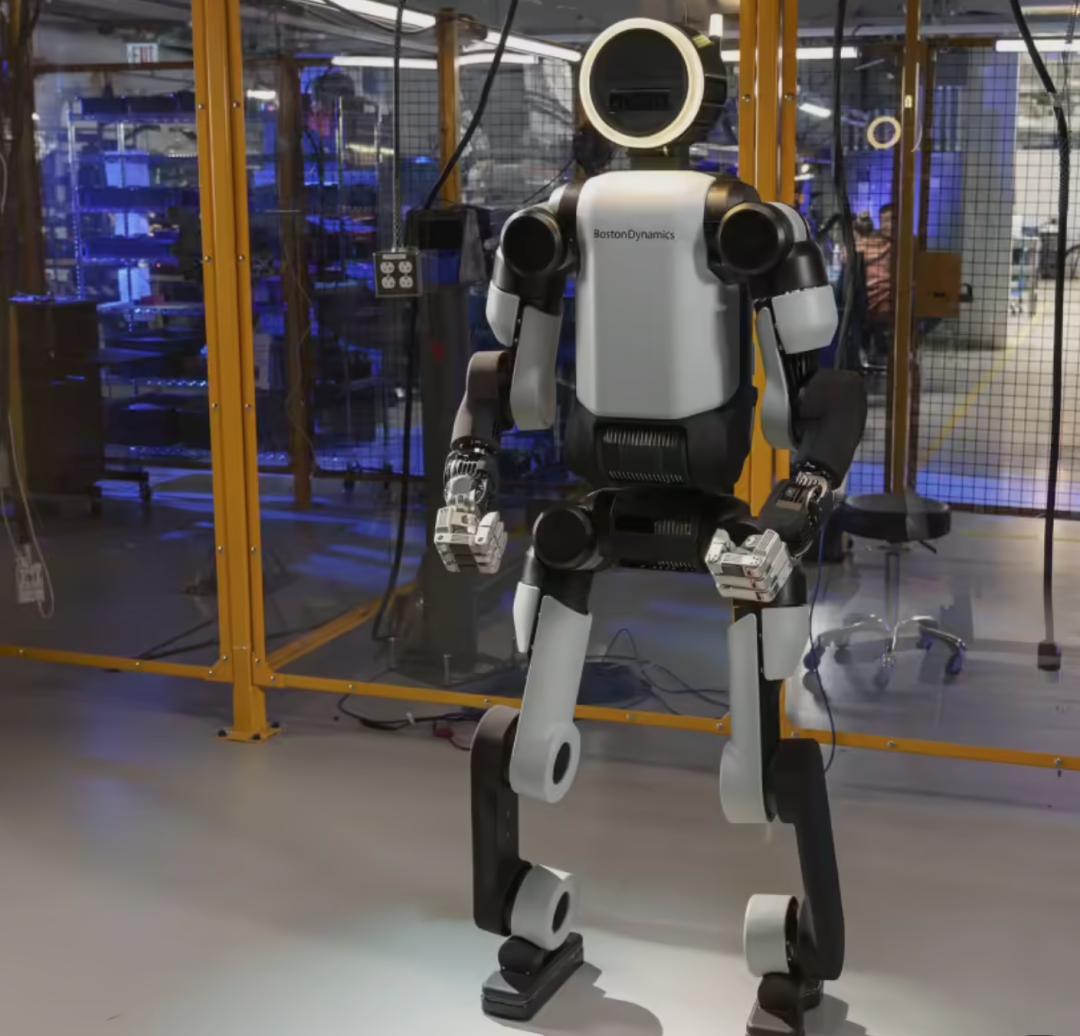
Core Insights - CES 2026 showcases a significant shift in AI integration, moving from software applications to physical world applications through various hardware innovations [1][2] - The event features over 4,100 exhibitors and is expected to attract more than 150,000 attendees, indicating a full recovery and heightened interest in technology [1] - The focus is on four key areas: robotics and embodied intelligence, smart vehicles, AI hardware, and innovative tech, which are seen as the main drivers of innovation this year [1] Robotics and Embodied Intelligence - CES 2026 marks a turning point for robotics, with a dedicated exhibition hall for embodied intelligence, indicating a shift from novelty to practical applications in manufacturing, transportation, and healthcare [4] - Chinese companies dominate the robotics sector, with over half of the exhibitors showcasing advancements in embodied intelligence, highlighting the competitive landscape [4] - Boston Dynamics' Atlas robot demonstrates its evolution from a prototype to a functional industrial product, set to perform real manufacturing tasks [5][7] AI Hardware - AI is becoming seamlessly integrated into everyday products, moving beyond mere automation to enhance functionality and user experience [27] - The trend of AI companionship is evolving, with products tailored to different life stages, emphasizing emotional support and interaction [27] - The recording technology sector is becoming increasingly competitive, with innovations aimed at capturing and processing information more effectively [27] Smart Vehicles - The automotive sector at CES 2026 presents a stark contrast between the vibrant Chinese market and the subdued American presence, reflecting a shift in global automotive dynamics [42] - Nvidia's Alpamayo introduces advanced logical reasoning capabilities for autonomous driving, marking a significant advancement in vehicle intelligence [43][45] - Strutt's Ev1 smart electric wheelchair enhances user independence by incorporating advanced navigation technology, showcasing the potential for smart mobility solutions [46][48] Innovative Products - The NuraLogix "longevity mirror" offers health monitoring capabilities without invasive procedures, representing a shift towards proactive health management [67][69] - Withings' Body Scan 2 smart scale provides comprehensive health assessments, aiming to transform daily health monitoring into a routine practice [70][72] - Mui Lab's wooden sleep monitoring board exemplifies a blend of technology and natural materials, offering a non-intrusive way to track sleep quality [73]

竞合韩国,锚定全球:李东生阐释TCL全球化3.0
2 1 Shi Ji Jing Ji Bao Dao· 2026-01-07 02:00
Core Viewpoint - The article emphasizes the significant cooperation potential between China and South Korea in emerging fields such as artificial intelligence, semiconductor displays, new energy vehicles, and biotechnology, as highlighted by TCL's chairman, Li Dongsheng [1][2]. Group 1: Cooperation and Strategic Initiatives - The China-South Korea Business Forum invited over 200 entrepreneurs from South Korea, including leaders from major companies like Samsung and SK Group, to discuss collaboration amidst new industrial competition challenges [2]. - Li Dongsheng outlined three key areas for deepening cooperation: utilizing the China-South Korea Free Trade Agreement, leveraging each country's industrial advantages for technological innovation, and optimizing regional supply chain layouts [2][5]. - TCL aims to enhance its market presence in South Korea by deepening partnerships with local channel customers and service providers, focusing on product market share and brand influence [5]. Group 2: Technological Advancements and Market Position - TCL has established a strong foothold in the South Korean market through its technological capabilities and strategic partnerships, including collaborations with major local companies like Samsung and LG [4]. - The company has successfully penetrated various product categories in South Korea, including televisions, air conditioners, refrigerators, and washing machines, and has achieved increasing product penetration rates [4]. - TCL is recognized as a leader in Mini LED technology and has pioneered mass production of printed OLED technology, marking significant advancements in display technology [4]. Group 3: Globalization Strategy - TCL's globalization strategy includes the establishment of five overseas operational entities, aiming to create localized supply chains and enhance industrial capabilities in foreign markets [8]. - The company has set up 47 R&D centers and 39 manufacturing bases globally, employing 160,000 people and serving over 1.3 billion users [9]. - TCL's participation in CES 2026 will showcase its global competitiveness, with a focus on advanced display technologies and a comprehensive range of smart terminal products [10][12].


竞合韩国,锚定全球:李东生阐释TCL全球化3.0
21世纪经济报道· 2026-01-07 01:50
Core Viewpoint - The article emphasizes the significant cooperation potential between China and South Korea in emerging fields such as artificial intelligence, semiconductor displays, new energy vehicles, and biotechnology, as highlighted by TCL's founder and chairman, Li Dongsheng, during the China-South Korea Business Forum [1][6]. Group 1: Cooperation and Market Strategy - Li Dongsheng advocates for a long-term perspective and global orientation in industry collaboration, suggesting three specific areas for deepening cooperation: utilizing the China-South Korea Free Trade Agreement, leveraging industrial advantages for technological innovation, and optimizing regional supply chain layouts [1][8]. - TCL has successfully established a presence in the South Korean market by forming deep cooperative relationships with local leading companies, enhancing its product penetration across various categories such as TVs, air conditioners, refrigerators, and washing machines [4][5]. Group 2: Technological Advancements - TCL is recognized for its technological strengths, being the first globally to achieve mass production of Mini LED TVs and leading in printed OLED technology, which has facilitated its entry into the South Korean market [5][9]. - The company has formed multi-layered strategic partnerships with major South Korean firms like Samsung and LG in the semiconductor display sector, covering core electronic categories [4][9]. Group 3: Future Plans and Global Strategy - Looking ahead, TCL aims to enhance its market share and brand influence in South Korea by deepening collaborations with leading local channel partners and service providers, particularly in mobile devices and automotive displays [9][12]. - The company has set a strategic goal of "recreating five TCLs overseas," focusing on establishing localized supply chains and industrial capabilities in various regions, which is expected to contribute to both the company's growth and China's national income [12][16]. - TCL's global strategy has led to the establishment of 47 R&D centers and 39 manufacturing bases worldwide, with a workforce of 160,000 and over 130 million users served globally [13][15].

蓝光兴衰史:从高清之争到流媒体时代的技术传承
Xin Lang Cai Jing· 2026-01-07 01:45
Core Insights - The Blu-ray technology, launched by Sony and the Blu-ray Alliance in 2006, significantly increased storage capacity from 4.7GB in DVDs to 25GB, marking a major advancement in optical storage [1][4] - Despite winning the format war against HD DVD in 2008, Blu-ray's subsequent growth has been hindered by the rise of streaming services and increased internet bandwidth, leading to a decline in physical disc usage [1][4] - The Japanese market has shown a longer reliance on optical media, with some environments still using floppy disks, which has allowed Blu-ray products to persist longer in that region [3][4] Industry Developments - Production of Blu-ray products is shrinking, with LG announcing the cessation of Blu-ray drive manufacturing in 2024 and Sony ending the production of recordable Blu-ray discs in 2025 [5] - Sony remains active in the Blu-ray space through gaming consoles, with the PS5 featuring a detachable Blu-ray drive and plans for the next-generation console in 2027 to support external Blu-ray devices [5] - Although hardware like Blu-ray drives and discs are declining, the Blu-ray video format standard continues to be widely used for 4K ultra-high-definition movie content, influencing the digital media landscape for the foreseeable future [6]
CES 2026,万物皆可汽车?
汽车商业评论· 2026-01-07 00:39
Core Insights - The CES 2026 is shifting focus from electric vehicles to "physical AI," which integrates sensors, computer vision, and actuators to enable machines to interact with and adapt to their environments [4][6][8] - The automotive industry is evolving from electrification to intelligence, with discussions centered on how vehicles can become autonomous "physical AI" entities [8][10] - Major companies like NVIDIA, Uber, and Sony Honda Mobility are showcasing advancements in autonomous driving technologies and smart vehicle systems [10][14][19] Automotive Innovations - NVIDIA introduced the Alpamayo platform, aiming for L4-level autonomous driving capabilities, marking a significant step in AI-driven vehicle technology [10][12] - Uber unveiled its luxury autonomous taxi, featuring personalized passenger experiences and advanced perception systems, with plans for public service by the end of the year [10][14] - Sony Honda Mobility is developing the AFEELA model, which aims to create a "creative entertainment space" within the vehicle, enhancing user experience beyond mere transportation [14][19] Smart Cockpit Developments - BMW is integrating Alexa and generative AI into its vehicles, enhancing user interaction and personalization [21][23] - Mercedes-Benz launched the electric GLC model in the U.S., featuring advanced AI integration and immersive audio systems [23][25] - LG's smart cockpit platform aims to evolve user experience through context-aware adjustments, although still in early deployment stages [25][27] Chinese Automotive Brands - Geely and Great Wall are the only major Chinese brands participating in CES 2026, showcasing their advancements in AI and smart driving technologies [27][19] - Geely's G-ASD system aims to enhance safety and confidence in complex driving scenarios, while Great Wall focuses on intelligent driving capabilities [15][19] Battery Technology Innovations - Donut Lab introduced the world's first solid-state battery for OEM vehicles, promising high energy density and rapid charging capabilities [39][41] - Lyten showcased lithium-sulfur battery technology with a clear commercialization timeline, targeting military and automotive applications [43] - ProLogium and Electra Vehicles presented advancements in battery management and solid-state technology, aiming to enhance safety and efficiency in electric vehicles [45][47]

三千多家展商同台,中企表现成为焦点,人工智能主导拉斯维加斯消费电子展
Huan Qiu Wang· 2026-01-06 22:57
Core Insights - The CES 2026 is expected to showcase a significant focus on AI applications that are "human-centered," reflecting the industry's shift towards how consumers interact with technology [3][4] - Over 3,500 exhibitors are anticipated to participate, covering various sectors including robotics, healthcare, automotive, and gaming, with AI being a central theme [3][4] - The competition in the AI chip manufacturing sector is heating up, with major players like NVIDIA and AMD showcasing their latest technologies, indicating a forthcoming "chip war" at the event [5][6] Group 1 - The CES 2026 is being referred to as the "Spring Festival of the Tech World," with high expectations for AI to dominate the discussions and presentations [1] - The event will feature a record number of robotic products, particularly humanoid robots, aimed at testing consumer acceptance in various applications [4] - AI's impact on healthcare and autonomous mobility will be significant topics at the exhibition [4] Group 2 - NVIDIA's CEO announced the full production of their next-generation AI supercomputer chip platform, Vera Rubin, which will begin customer deliveries later this year [5] - The presence of major semiconductor CEOs, including those from Intel and Qualcomm, highlights the competitive landscape in AI infrastructure development [5] - Chinese companies are gaining prominence at CES, with their displays increasingly capturing attention, previously dominated by South Korean firms [7][8]

2026年北交所IPO首单花落浙江
Mei Ri Shang Bao· 2026-01-06 22:15
Core Viewpoint - The successful IPO of Zhoushan Chenguang Electric Motor Co., Ltd. marks the beginning of the 2026 IPO season on the Beijing Stock Exchange, with the company aiming to raise 399 million yuan for expansion projects in high-speed motors and R&D [1][2] Company Overview - Chenguang Electric Motor specializes in the research, production, and sales of micro-special motors, recognized as a national high-tech enterprise and a "little giant" in the industry [2] - The company has over 20 years of experience in the micro-special motor sector, with products primarily used in cleaning appliances like vacuum cleaners [1][2] - Chenguang Electric Motor holds 77 patents, including 8 invention patents, covering key technologies such as integrated structures for brushless DC motors and noise control [2] Financial Performance - The company's revenue for 2022, 2023, and 2024 was 495 million yuan, 712 million yuan, and 827 million yuan, respectively, reflecting a compound annual growth rate (CAGR) of 29.23% [3] - In the first half of 2025, the company achieved a revenue of 437 million yuan, a year-on-year increase of 23.47%, with a net profit of 43.24 million yuan, up 52.36% [3] Market Potential - The global micro-special motor market is projected to exceed 60 billion USD, with a forecasted market size of 66.41 billion USD by 2029, growing at a CAGR of 6.14% from 2025 to 2029 [5] - The Chinese micro-special motor market is expected to grow from 20.83 billion USD in 2021 to 34.27 billion USD by 2029, with a CAGR of 6.66% from 2025 to 2029 [6] IPO Fund Utilization - The IPO proceeds will be allocated primarily to two projects: 370 million yuan for high-speed motor and control system expansion, and 28.7 million yuan for R&D center construction [4] - The expansion project in Zhoushan is expected to achieve an annual production capacity of 12 million sets of permanent magnet brushless motors and systems, among other products [4]
海内外多家厂商亮相CES 2026 人形机器人板块投资机遇凸显
Zhong Guo Zheng Quan Bao· 2026-01-06 21:53
Core Insights - The humanoid robot industry is approaching a pivotal moment, with significant advancements showcased at CES 2026, highlighting its central role in global technological competition and industrial transformation [1][2] - The humanoid robot concept index has increased by 12.92% since December 17, 2025, indicating a positive market trend [1] Industry Developments - CES 2026, held from January 6 to January 9 in Las Vegas, has seen a surge in the humanoid robot sector, with the concept index rising by 0.54% on January 6, 2026 [2] - Notable companies like NVIDIA are emphasizing the shift towards "general-specialized robots," which combine broad knowledge with specialized skills, marking a significant evolution in robot capabilities [2] Product Innovations - LG showcased the CLOiD household robot capable of performing various domestic tasks, while Boston Dynamics announced the mass production of its Atlas robot, set to be deployed in Hyundai's factories starting in 2026 [3] - Several leading domestic humanoid robot manufacturers, including Yushu Technology and Zhiyuan Robotics, presented their latest products at CES 2026, indicating a strong domestic presence in the market [3] Supply Chain and Collaboration - A-share listed companies are actively positioning themselves across different segments of the humanoid robot supply chain, with firms like Haozhi Electromechanical and Tongda Power focusing on key components such as precision reducers and servo systems [4] - Companies like Orbbec are providing comprehensive 3D vision sensor solutions, essential for the autonomous movement and interaction capabilities of humanoid robots [4] Market Potential - The Chinese embodied intelligent robot market is experiencing rapid growth, driven by policy, capital, and industry chain advancements, transitioning from "technological breakthroughs" to "value realization" [5] - Analysts suggest that the humanoid robot sector is poised for significant expansion, with potential applications in manufacturing and logistics, particularly in high-demand industries like automotive and 3C [6][7] Future Outlook - The year 2025 is anticipated to be a milestone for mass production of humanoid robots, with 2026 expected to showcase their practical capabilities in real-world applications [6] - The market for humanoid robots could reach a demand of 840,000 units by 2028 in key sectors, highlighting the substantial potential for automation in labor-intensive industries [7]

人形机器人板块投资机遇凸显
Zhong Guo Zheng Quan Bao· 2026-01-06 20:42
Core Insights - The humanoid robot industry is approaching a pivotal moment, with significant advancements showcased at CES 2026, highlighting its central role in global technological competition and industrial transformation [1] - The humanoid robot concept index has risen by 12.92% since December 17, 2025, indicating a positive market trend [1] - Analysts predict a broad market potential for embodied robots, with continuous technological breakthroughs and successful commercialization efforts [1] Industry Developments - CES 2026, held in Las Vegas from January 6 to 9, 2026, featured humanoid robots as a key focus, with significant participation from leading global companies [1] - NVIDIA's CEO announced that the robotics field has entered its "ChatGPT moment," emphasizing the shift towards "general-specialized" robots that combine broad knowledge with specialized skills [1] - NVIDIA introduced new models aimed at enhancing robots' understanding of physical properties and spatial relationships [1] Application Scenarios - LG showcased the CLOiD household robot capable of performing various domestic tasks, while Boston Dynamics announced the mass production of its Atlas humanoid robot, set to be deployed in Hyundai's factories starting in 2026 [2] - Numerous domestic humanoid robot manufacturers, including Yushu Technology and Zhiyuan Robotics, presented their latest products at CES 2026, indicating a strong domestic presence in the market [2] Industry Chain Collaboration - A-share listed companies are actively positioning themselves across different segments of the humanoid robot industry, leveraging their technological expertise for diversified development [3] - Key components such as precision reducers and servo systems are being tested and developed by companies like Haozhi Electromechanical and Tongda Power, indicating a focus on enhancing core robotic technologies [3] Market Analysis - The Chinese embodied intelligent robot market is experiencing rapid growth, driven by policy, capital, and industry chain support, transitioning from "technological breakthroughs" to "value realization" [4] - Analysts suggest that the humanoid robot sector will see significant investment and development, with Chinese companies leading in hardware and operational control, while AI technology remains a competitive focal point [4] Future Projections - 2025 is anticipated to be the year of mass production for humanoid robots, with 2026 expected to mark a significant advancement in their practical application [5] - The commercial progress of humanoid robots is accelerating, with potential applications in inspection and navigation expected to expand significantly [5] - The manufacturing and logistics sectors are projected to be the first to adopt humanoid robots at scale, with substantial demand anticipated in automotive and 3C manufacturing by 2028 [6]