
大疆

Search documents
商络电子拟收购立功科技88.79%股权,交易对价为7.09亿元
Ju Chao Zi Xun· 2025-09-15 14:25
Core Viewpoint - Nanjing Shangluo Electronics Co., Ltd. announced the acquisition of 88.79% equity in Guangzhou Ligong Technology Co., Ltd. for a total consideration of up to 842 million yuan, marking a significant step in enhancing its position in the high-end component distribution sector in China [2] Group 1: Acquisition Details - The acquisition involves a cash payment of 709 million yuan, with a performance adjustment cap of 133 million yuan, bringing the total consideration to a maximum of 842 million yuan [2] - After the acquisition, Ligong Technology will become a core subsidiary of Shangluo Electronics, elevating the company to the "first tier" in the automotive and industrial high-end component distribution field in mainland China [2] Group 2: Ligong Technology Overview - Ligong Technology, established in 1999, specializes in the distribution of automotive electronics and industrial IoT chips, with projected revenues of 3.14 billion yuan and a net profit of 87 million yuan for 2024 [5] - The company has authorized distribution lines for globally recognized brands such as NXP, ISSI, and others, with a customer base exceeding 2,000, including major firms like DJI and Mindray [4] Group 3: Strategic Integration and Future Plans - Post-acquisition, Shangluo Electronics plans to integrate over 100 original factory agency qualifications and 7,000 customer resources, creating a one-stop component supply platform for high-end applications [4] - The company aims to complete warehouse network integration by the end of 2026, targeting a reduction in logistics costs by 0.6 percentage points, which could release approximately 50 million yuan in net profit annually [4]

2025全球消费电子十大头部品牌权威榜单:AI与绿色技术重塑格局
Sou Hu Cai Jing· 2025-09-15 11:33
Group 1: Industry Transformation - The global consumer electronics industry is undergoing a profound transformation driven by artificial intelligence (AI) and green technology, with a new landscape dominated by brands from China, the US, and South Korea [1][11] - The IFA 2025 and CES 2025 exhibitions highlighted that AI technology and sustainable development are the core competitive focuses for global consumer electronics brands [1] Group 2: Rise of Chinese Brands - The most significant change in the global consumer electronics landscape by 2025 is the collective rise of Chinese brands, with Huawei and Midea ranking in the top ten of the Brand Finance's global electronics brand value list [3] - Huawei's brand value reached $31.921 billion, growing by 2.7% year-on-year, and it has a 25% market share in the high-end European market [3] Group 3: Display Technology Competition - High-end display technology is becoming the most competitive arena, with various technological routes driving the industry into a critical phase of experience upgrades [4] - Hisense has achieved large-scale production of RGB-Mini LED TVs, setting a benchmark in the high-end display market with its U7S Pro series [4] Group 4: AI Integration - AI has fully integrated into consumer electronics, evolving from an additional feature to the core driving force of products [5] - Xiaomi's strategy covers over 1 billion connected devices globally, with a 52.6% year-on-year increase in Bluetooth earphone shipments in the first half of 2025 [5] Group 5: Green Technology Innovation - Green low-carbon technology has become a new battlefield for consumer electronics brands, with unprecedented emphasis on sustainable development at IFA 2025 [6] - Midea's AI ECO smart energy-saving solution achieves a 30% energy-saving effect, while TCL's ECORA™ technology promotes low-carbonization throughout the product lifecycle [6] Group 6: Global Brand Value Rankings - According to Brand Finance's 2025 global electronics brand value rankings, Apple, Samsung, and Huawei lead the market, with Apple valued at $574.51 billion, growing by 11.2% [7] - Midea's brand value is $8.723 billion, maintaining its position in the global top ten despite a slight decline [7] Group 7: Emerging Product Categories - 2025 is marked as the year of AI smart glasses, with projected sales reaching 55 million units by 2029 [8] - The CES 2025 showcased various AI companion robots, indicating a growing trend in this emerging category [9] Group 8: Technological Innovation Trends - The global consumer electronics industry is forming a tri-polar structure dominated by the US (Apple/NVIDIA), South Korea (Samsung), and China (Huawei/Xiaomi/Lenovo), with seven out of the top ten brands from these regions [10] - Chinese brands are breaking monopolies in fields like chips and robotics, with DJI holding over 70% of the global drone market [10]






商络电子(300975.SZ):子公司拟收购立功科技88.79%股权
Ge Long Hui A P P· 2025-09-15 11:17
Group 1 - The company Changying Holdings plans to acquire a total of 88.79% equity in Guangzhou Ligong Technology Co., Ltd. to gain actual control over the target company [1] - The transaction price is set at 708.879 million RMB, with an adjustment cap of no more than 133.1864 million RMB [1] Group 2 - Ligong Technology specializes in the distribution of electronic components, focusing on high-end chip agency and technical services in the automotive electronics and industrial control sectors for over 20 years [2] - The company has built a product matrix covering core components such as MCU, power devices, and sensors, driven by user demand and technological innovation [2] - Ligong Technology's distribution products are widely used in various fields including industrial IoT, automotive electronics, rail transportation, power energy, medical equipment, and home security [2] - The company represents major chip brands such as NXP, ISSI, 3PEAK, Rockchip, and GigaDevice, and serves as a key supplier for well-known enterprises, providing products and solutions to over 2,000 companies [2]
商络电子:子公司拟收购立功科技88.79%股权
Ge Long Hui· 2025-09-15 11:11
Group 1 - The company plans to acquire an 88.79% stake in Guangzhou Ligon Technology Co., Ltd. through its wholly-owned subsidiary Changying Holdings (Nanjing) Co., Ltd. to gain actual control over the target company [1] - The total transaction price is set at 708.879 million RMB, with an adjustment cap of no more than 133.1864 million RMB [1] Group 2 - Ligon Technology specializes in the distribution of electronic components, focusing on high-end chip agency and technical services in the automotive electronics and industrial control sectors for over 20 years [2] - The company has built a product matrix covering core components such as MCU, power devices, and sensors, driven by user demand and technological innovation [2] - Ligon Technology's distribution products are widely used in various fields, including industrial IoT, automotive electronics, rail transportation, power energy, medical equipment, and home security [2] - The company represents major chip brands such as NXP, ISSI, 3PEAK, Rockchip, and GigaDevice, and serves as a key supplier for well-known enterprises, providing products and solutions to over 2,000 companies [2]
全球硬件大爆款,生于中国|深氪
36氪· 2025-09-15 11:05
Core Viewpoint - The article highlights the emergence of a new generation of hardware entrepreneurs in China, inspired by successful companies like DJI, who are now aiming for global markets and high-value products, showcasing a shift from low-cost manufacturing to innovation and brand recognition [5][12][39]. Group 1: Globalization and Market Strategy - Plaud AI, a Shenzhen-based company, has rapidly gained traction in the global market with its AI recording pen, selling over one million units since its launch [4][5]. - The current entrepreneurial mindset emphasizes the necessity for hardware companies to target global markets and create high-margin brands, reflecting a significant shift in the industry [5][6]. - The success of DJI has set a precedent, demonstrating that Chinese companies can command high prices and achieve substantial market share in global markets [12][39]. Group 2: Evolution of Hardware Companies - The article traces the evolution of Chinese hardware companies over the past decade, noting that many have transitioned from low-cost, imitation products to innovative, high-quality offerings [12][18]. - Companies like影石 (Insta360) and正浩 (EcoFlow) have emerged as leaders in their respective markets, showcasing the potential for Chinese brands to achieve global recognition and success [13][14][39]. - The new generation of entrepreneurs is characterized by a global perspective and a desire to create products that resonate with international consumers, moving away from the traditional reliance on low-cost manufacturing [17][46]. Group 3: Supply Chain and Innovation - The strength of China's supply chain has been pivotal in enabling hardware startups to innovate and scale rapidly, with access to a vast network of suppliers and manufacturers [68][69]. - The article emphasizes that the evolution of the smartphone industry has significantly enhanced the capabilities of the Chinese supply chain, allowing for the development of advanced hardware products at competitive prices [78][79]. - The success stories of companies like拓竹 (Bambu Lab) and影石 (Insta360) illustrate how effective supply chain management and innovation can lead to rapid growth and market leadership [35][38][90]. Group 4: Investment Landscape - The investment landscape for hardware startups has shifted dramatically, with increased interest from investors as successful companies demonstrate the potential for high returns [106][110]. - Notable investors like李泽湘 and高秉强 have played crucial roles in supporting emerging hardware companies, providing not just capital but also mentorship and strategic guidance [102][106]. - The article notes a growing trend where investors are now actively seeking opportunities in the hardware sector, reflecting a broader recognition of its potential for growth and innovation [111][112].

消费需求拉动低空经济 大疆运载无人机解四川甘孜州痛点
Zheng Quan Shi Bao Wang· 2025-09-15 09:39
Core Insights - The emergence of multi-rotor transport drones addresses various needs in mountainous regions, including package delivery, power line maintenance, and disaster relief [1][2] - DJI's FC100 drone, launched in June, demonstrates advanced capabilities such as automatic stabilization, terrain-following flight, and cargo drop functions, significantly enhancing logistics in remote areas [2][3] - The FC100 drone's maximum payload has increased to 80 kilograms, doubling the capacity of its predecessor, and features improvements in smart assistance, obstacle avoidance, and charging speed [3] Group 1: Applications and Impact - DJI's transport drones are essential tools in mountainous and special operational environments, particularly in power transportation, emergency rescue, and logistics in regions like Ganzi [3] - The use of drones in emergency rescue operations involves multiple types of drones working together, showcasing their effectiveness in disaster scenarios [1] - The ability to deliver packages to remote villages in minutes, overcoming geographical barriers, enhances e-commerce accessibility in underserved areas [2] Group 2: Technological Advancements - The FC100 drone includes a "cargo drop protection" mechanism to ensure safety during operations, along with a parachute system for emergency landings [2] - The introduction of flexible payload solutions and compatibility with third-party loads enhances the operational versatility of the FC100 [3] - The industry is focused on maximizing drone potential, with ongoing challenges related to battery capacity impacting performance [3] Group 3: Economic Implications - The consumer sector is identified as a key driver of the low-altitude economy, with drones evolving from novelty items to critical components of high-quality economic development [4]
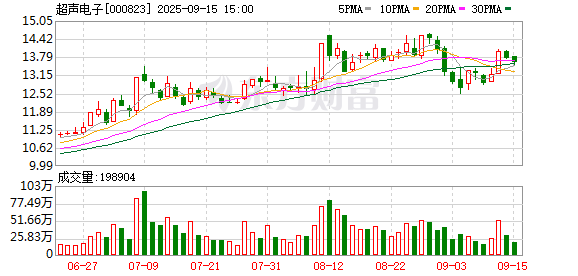
公司与大疆是否有合作?超声电子:公司有向其提供配套的PCB产品
Mei Ri Jing Ji Xin Wen· 2025-09-15 08:58
Group 1 - The company has confirmed its collaboration with DJI by providing supporting PCB products [2]

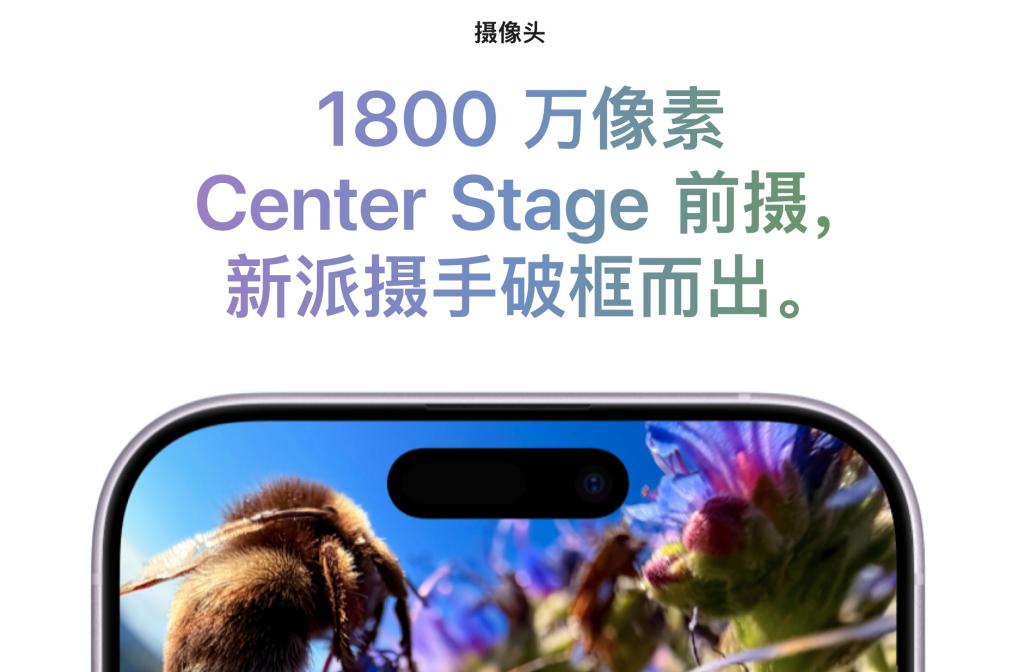
前置摄像头,是我想在 iPhone 17 上看见的「果味」创新
3 6 Ke· 2025-09-15 05:15
Core Viewpoint - The iPhone 17 introduces a new feature called "Center Stage" for its front camera, which allows for automatic framing and tracking of users, enhancing the selfie experience [1][5][6]. Group 1: Center Stage Feature - The "Center Stage" feature utilizes AI algorithms to keep users centered in the frame during video calls and selfies [6][8]. - This feature is more advanced than similar functionalities on Mac and iPad, as it can automatically adjust the camera's aspect ratio to accommodate multiple faces [10][12]. - Users have expressed excitement about this feature, particularly for its ability to maintain a natural appearance in selfies, especially when holding the phone vertically [16][18]. Group 2: Technical Innovations - The iPhone 17 is equipped with a square CMOS sensor, allowing for high-quality horizontal photos even when the phone is held vertically, maintaining image quality [22][24]. - This sensor has a resolution of 24 million pixels, enabling 18 million pixel output for standard 4:3 photos, which is an improvement over the previous model's 12 million pixels [24][26]. - The square CMOS design is a unique innovation by Apple, aimed at enhancing user experience rather than merely increasing specifications [30][39]. Group 3: Market Implications - The introduction of the square CMOS sensor may not be suitable for rear cameras due to higher parameter demands, but it addresses specific user needs for front-facing photography [31][33]. - The design philosophy behind the iPhone 17's camera system reflects a shift towards making devices more adaptable to user behavior, rather than forcing users to adjust their habits [39].
中企品牌出海下一程:流量之后,何以立足?
2 1 Shi Ji Jing Ji Bao Dao· 2025-09-15 02:11
Core Insights - The narrative of "Chinese manufacturing" is evolving into "Chinese brands," indicating a shift in international competitiveness and brand perception [1][3][10] - Chinese brands are increasingly recognized for quality and innovation, moving from low-cost products to high-end offerings in global markets [3][5] Group 1: Market Trends - Chinese brands are experiencing a diversified and clustered ecosystem in international markets, with rising overseas revenue and improved profit margins [1][4] - In 2024, China led the world in generative AI patent applications, and cross-border e-commerce reached 2.63 trillion yuan, growing by 10.8% [1] - The number of Chinese companies participating in the IFA 2025 Berlin International Consumer Electronics Show reached approximately 764, accounting for about 38% of exhibitors [3] Group 2: Brand Performance - Pop Mart's LABUBU IP saw significant success, with a revenue increase of 204.4% year-on-year, and overseas sales contributing nearly 40% of total revenue [4] - Chinese brands dominate the high-end market, particularly in products priced over $500, with significant pricing power in flagship categories above $800 [5] Group 3: Challenges in Brand Expansion - Companies face challenges in efficient budget allocation and effective marketing strategies, as traditional advertising methods are becoming less effective [6] - Localization remains a critical issue, with many brands focusing on sales volume rather than building brand narratives and understanding local cultures [7] Group 4: Consumer Behavior - Consumer trust is shifting from price to innovation, with 89% of consumers trusting personal recommendations over advertisements [8] - The purchasing journey has become more complex, requiring brands to establish trust through local partnerships and community engagement [8][9] Group 5: Future Directions - The next phase for Chinese brands will involve building a cooperative network based on cultural resonance and value co-creation [10] - Companies are increasingly recognizing the importance of strategic partnerships to enhance brand credibility and market penetration [9][10]

大摩闭门会-入境游前景及投资机会
2025-09-15 01:49
Summary of Conference Call on Inbound Tourism Prospects and Investment Opportunities Industry Overview - The conference call focused on the inbound tourism industry in China, highlighting its significant recovery and growth potential post-pandemic [1][2][4]. Key Insights and Arguments Inbound Tourism Growth - In the first half of 2025, the growth rate of foreign tourists reached 30%, with tourism service exports increasing by nearly 70% [1][2]. - By June 2025, the dollar value of tourism exports had reached 160% of pre-pandemic levels, with a year-on-year growth rate of nearly 50% [1][2]. - Inbound tourism is expected to contribute significantly to China's GDP, with projections of cumulative inbound tourism revenue reaching $2-4 trillion over the next decade, potentially increasing its GDP contribution from less than 1% to nearly 2% [1][4]. Infrastructure and Technological Improvements - China has enhanced its infrastructure, including transportation and cultural sites, and improved software aspects such as airline connectivity and payment convenience [1][5]. - AI technology is being utilized to reduce language barriers, and the expansion of visa-free entry is expected to further boost inbound tourism [1][5]. Impact on the Aviation Industry - The aviation sector is benefiting from the expansion of international flight capacity and increased revenues, although it faces challenges such as aircraft delivery delays and maintenance capacity issues [1][7]. - Current high capacity utilization rates are leading to a demand structure deterioration, with a recommendation to hold airline stocks until a price inflection point is reached [1][8]. Hotel Industry Opportunities - Inbound tourism is projected to generate approximately $15 billion in revenue for the hotel industry in 2024, increasing to $65 billion by 2034 [2][9]. - High-end hotels are particularly benefiting from foreign tourists, who spend significantly more than domestic travelers [10][11]. - International hotel brands are rapidly expanding in China, with a significant portion of their business focused on high-end offerings [12][13][14]. Retail Sector Benefits - Inbound tourism has a notable positive impact on the retail sector, with Chinese brands gaining prominence and competitive pricing attracting foreign consumers [16]. - The introduction of a "buy and return" policy and the opening of the Hainan Free Trade Port are expected to further stimulate retail growth [16][17]. OTA Platforms and Market Position - Ctrip's inbound tourism business is experiencing triple-digit growth, primarily driven by tourists from the Asia-Pacific region [18][20]. - The company aims to increase its overseas and outbound business to account for half of its revenue in the foreseeable future, indicating significant growth potential [21]. Cathay Pacific's Position - Cathay Pacific is expected to benefit from the growth in inbound tourism, as Hong Kong serves as a major transit hub for international travelers [22][23]. Additional Important Points - The hotel industry's revenue growth is expected to be driven by high-end and ultra-high-end hotels, with a notable resilience in RevPAR compared to budget hotels [10][11]. - The retail sector's growth is supported by favorable policies and the increasing attractiveness of Chinese products to foreign consumers [16][17]. - Ctrip's strategic initiatives, including enhancing its service offerings and marketing efforts, are aimed at improving its profitability and market share in the inbound tourism segment [20][21].
